How to Use Keeping Gear Dry the Right Way
Keep your gear dry by choosing water-resistant fabrics like GORE-TEX® and sealing seams with taped or welded finishes—rain won’t stand a chance! These materials are essential for keeping gear dry in wet conditions.
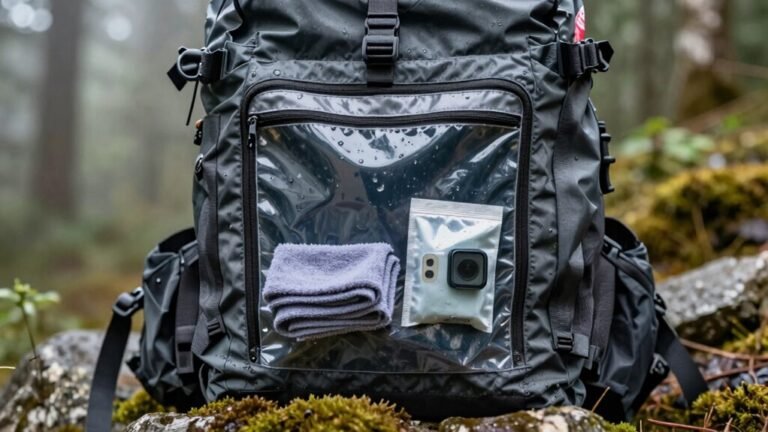
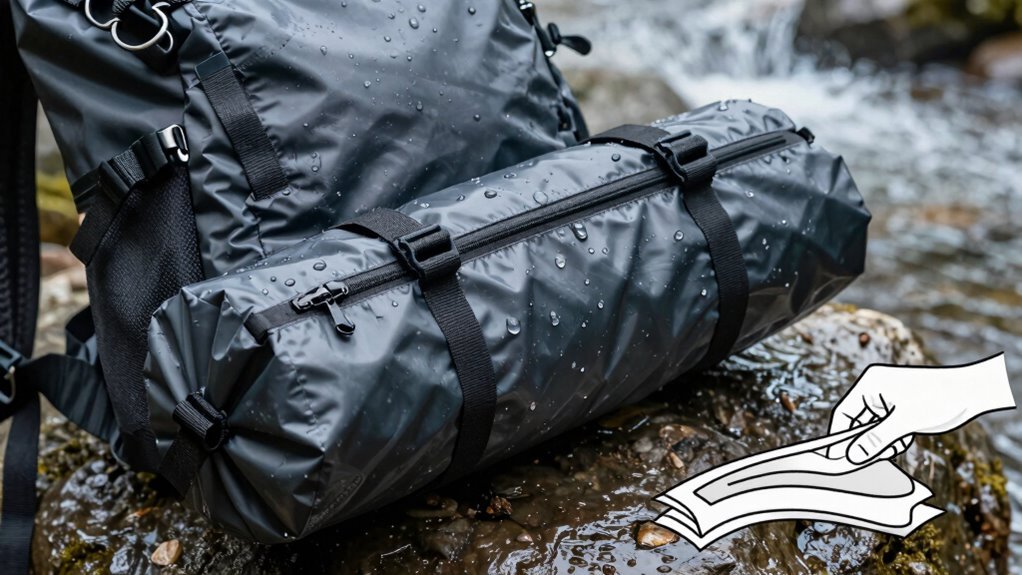
Use roll-top dry sacks and zip-lock bags for quick, splash-proof access during outdoor adventures. They help keep your essentials protected from moisture.
After getting wet, shake out your gear, wring it gently, and air it in the shade. Avoid direct sunlight, as UV rays can damage technical fabrics.
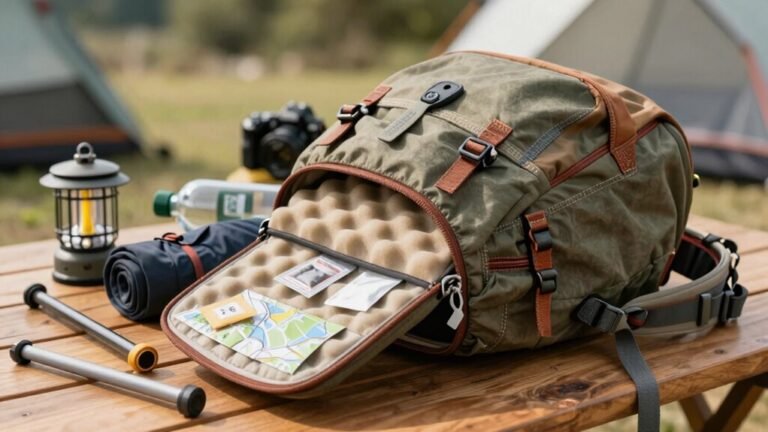
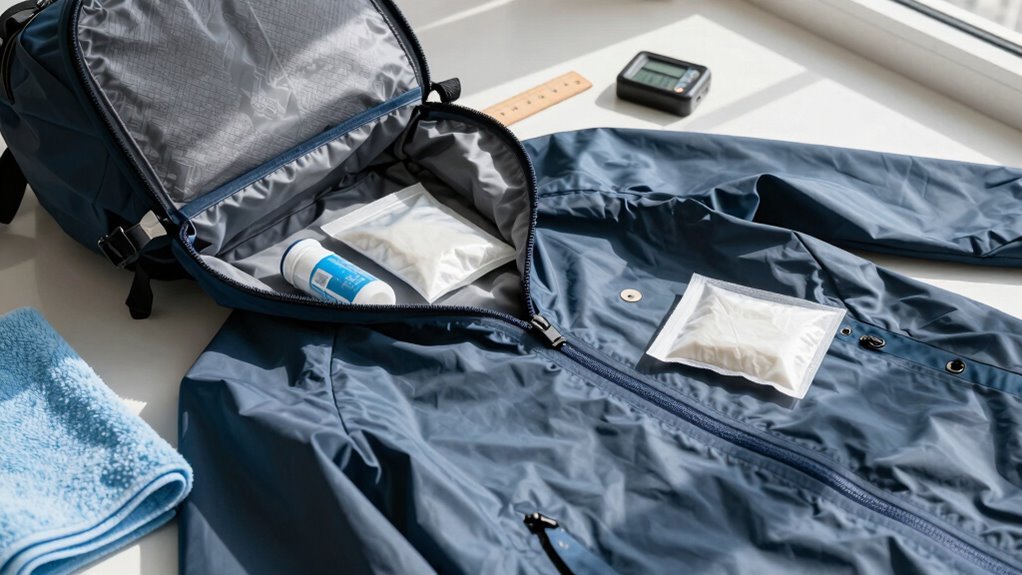
Store your gear with silica gel packs in a cool, breezy place to prevent moisture buildup. Proper storage helps keep gear dry and mold-free.
Spot a crack or tear? Patch it fast to maintain waterproof integrity. Regular maintenance ensures your gear stays dry and reliable.
Choose the Right Materials for Water Resistance
You’ve got rain in your forecast and a trail calling your name, so let’s talk gear that won’t leave you soggy.
Skip the cheap raincoat that breathes like plastic wrap—go for smart materials instead.
GORE-TEX® and Dermizax® block rain and wind but let sweat escape, so you’re dry from both sides.
These membranes use tiny pores—20,000 times smaller than raindrops—to keep water out while you stay comfy.
Need flexibility? Torain®’s 4-way stretch fabric moves with you, not against you.
Look for high hydrostatic head ratings—20,000 mm is solid for downpours.
Tight-weave nylon or polyester with DWR coating works for light rain, but it won’t save you in a storm.
And hey, DWR fades, so reapply it like sunscreen for your jacket.
Waterproof membranes beat coatings any day when the sky opens up.
Your back’s gonna thank you when you’re not sloshing after mile five.
Rain’s no reason to bail—just gear up right!
Several of our shells use Dermizax HDM Membrane for reliable waterproofing without sacrificing breathability.
Use Waterproof Bags and Dry Sacks Strategically
When the river’s eyeing your gear like a snack, don’t just toss your stuff in a regular bag and hope for the best—lock it down with a proper dry sack.
Pick the right one for your adventure, whether it’s a roll-top for total waterproofing or a zip-lock for quick access while fishing.
Size matters too: go small for day trips, large for multi-day missions, and grab a backpack-style sack if you’re hiking out.
Keep your essentials safe and organized like a pro.
- Roll-top dry sacks – trusted, tough, and made to survive full dunks
- Zip-lock bags – fast access without the splash, perfect for on-the-go anglers
- Duffel-style or backpack dry bags – haul big loads comfortably, even when portaging
Smart packing isn’t just smart—it’s sog-free!
Ensure seams are fully taped or welded to prevent water from seeping in during immersion.
Properly Seal and Store Gear in Humid Conditions
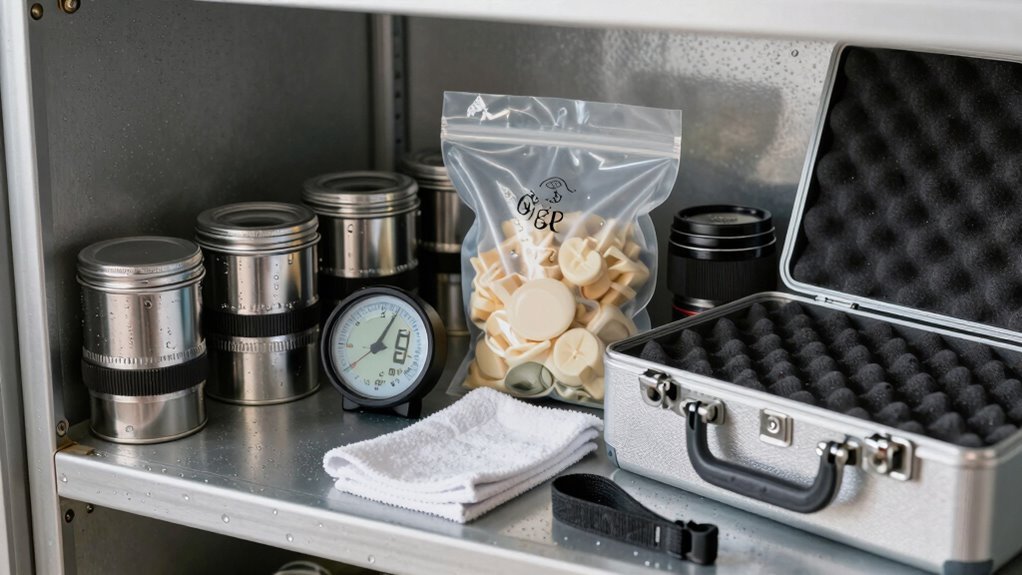
Ever wonder how your favorite gear stays fresh when the air feels like a wet towel? You’ve got this!
First, stash your stuff in climate-controlled storage—think 55°F to 80°F with humidity under 60%—to dodge mold and warping.
Toss in silica gel or Cargo Dry Pak desiccants to keep moisture at bay, and don’t forget charcoal briquettes for a natural boost.
Use plastic bins (never cardboard!) and lift them off the floor—because, hello, damp basements are gross.
Leave lids slightly open at first so gear can breathe, then seal it tight.
Keep things flowing with smart spacing—air needs to move, not nap in dark corners.
Check back often, swap out full desiccants, and laugh at mold like it’s a bad joke.
Your tent, skis, and down jacket will thank you—dry, happy, and ready for adventure. This helps prevent moisture-induced corrosion in sensitive materials like metal and electronics.
Dry Items Immediately After Exposure to Moisture
As soon as you step out of the rain, lake, or sweaty hike, don’t let your gear sulk in its soggy sadness—spring into action and start drying things off fast.
The quicker you move, the better your chances of avoiding stink, mold, and damage.
First, shake out excess water like you’re甩ing off a bad dance partner, and wring clothes gently—just don’t twist down-filled items.
Turn gear inside out and pull out boot insoles so damp spots don’t hide.
- Shake it out – ditch surface water immediately
- Wring gently & flip inside out – speed up evaporation where it counts
- Use dry cloths or socks – press them inside boots or layers to soak up sneaky moisture
Keep airflow going, swap wet helpers for dry ones every few hours, and never let your gear nap while damp—it’s a one-way ticket to Mildew Town.
Avoid Direct Sunlight When Drying Sensitive Fabrics

Sometimes, skipping the sunshine is the smarter move—especially when you’re drying your favorite delicate pieces.
Sunlight might seem like a quick fix, but those UV rays are sneaky little fabric troublemakers.
They break down fibers, especially in silk, cotton, wool, and linen, making them weaker and more likely to fade or turn yellow.
Silk? It’s basically sun-sensitive drama royalty—losing strength and color fast.
Even dark dyes can’t escape fading when UV light teams up with moisture.
Instead of roasting your clothes like beachgoers, try drying them in the shade or indoors with good airflow.
Hang them inside out—it’s like giving your fabrics a secret shield.
Bright colors stay vibrant, and fibers stay strong.
Think of it as sun protection for your wardrobe.
Your silk blouse will thank you (though, okay, it can’t talk… but you get the idea).
Utilize Silica Gel Packs for Moisture Absorption
You’ve already saved your delicate fabrics from a sunburn by drying them in the shade—smart move.
Now, level up your game by tossing in some silica gel packs to keep moisture at bay.
These tiny beads are like bouncers for your gear—kicking out dampness before it crashes the party.
Just pop a few in your storage bags or cases, and let them work their magic.
- They can absorb up to 40% of their weight in moisture—talk about punching above their weight!
- Use color-changing packs so you’ll know when they’re soaked (literally).
- Reuse them after heating; they’re tougher than your gym socks.
- They’re perfect for electronics, fabrics, and anything that hates humidity.
- Don’t let soggy surprises ruin your stash—silica gel’s got your back, one dry breath at a time.
Ventilate Gear During Storage to Prevent Mold
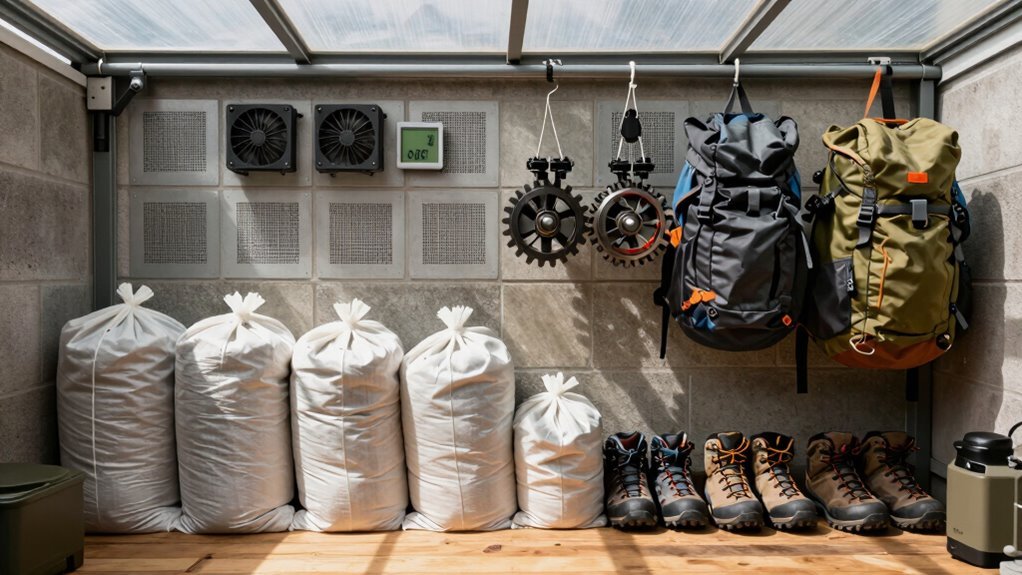
When damp decides to crash your gear’s storage space, mold throws the wildest unwanted house party—so stay one step ahead by letting fresh air call the shots.
Space your gear a few inches from walls and off the floor so air can move freely and keep things dry.
Don’t pile items too close together—give shelves room to breathe and avoid blocking vents or airflow paths.
Open windows when you can, or run a fan to blow moisture away, especially after wet adventures.
In stuffier spaces, pop in a dehumidifier or exhaust fan to kick humidity to the curb.
Keep indoor humidity between 30% and 50%—a handy hygrometer’ll let you know if you’re winning.
Clean shelves regularly and make sure HVAC drip pans aren’t clogged.
Vent everything that breathes moisture—dryers, fans, you name it—outside, never into tight, dark corners.
Let your gear live its best (and driest) life with smart airflow!
Pack Smart to Minimize Water Exposure Risk
How’s your gear handling the wet stuff when you’re not looking?
Packing smart keeps your stuff safe and dry—no soggy surprises later.
Use breathable containers so air can move and moisture doesn’t stick around.
Keep wet and dry items apart like exes at a reunion—awkward and leaky situations avoided!
Toss in desiccants to suck up extra humidity, because nobody likes mildewy-smelling gear.
Roll, don’t crush, your bags to keep insulation fluffy and membranes happy.
And label everything—yes, even that one bag of “mystery socks.”
- Color-code dry bags (red for wet, blue for dry—fashion meets function!)
- Loosely roll sleeping bags in breathable sacks to avoid squished fluff
- Slide silica gel packs into zipped pockets to fight damp like a tiny moisture superhero
Pack right, laugh later when everything’s dry—and ready to go.
Inspect and Maintain Waterproof Coatings Regularly
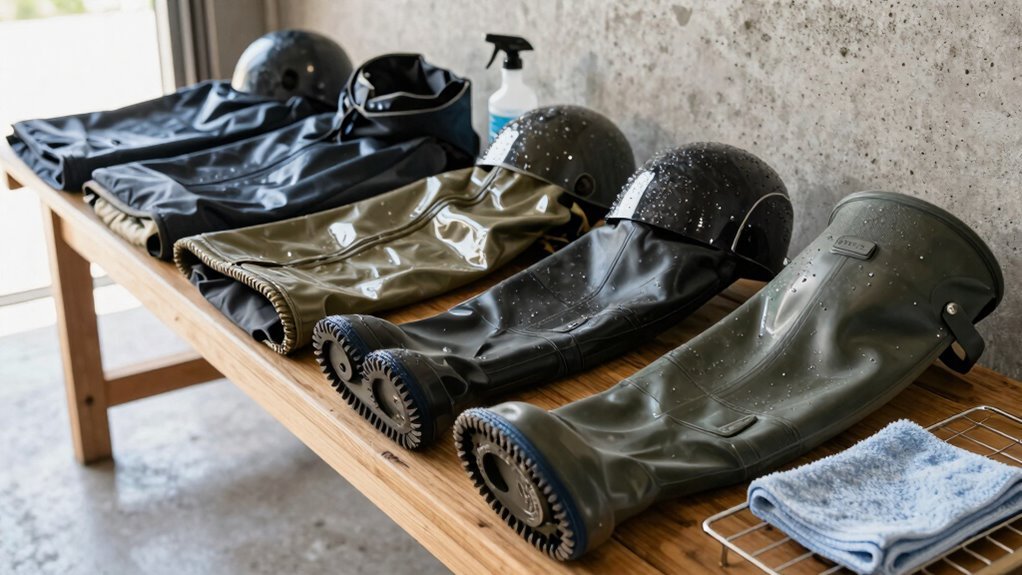
Just because your gear stayed dry on the last trip doesn’t mean it’s bulletproof forever—waterproof coatings wear down like your favorite hiking socks after too many trails.
You’ve got to inspect them regularly, buddy.
Look closely for cracks, blisters, or stains, especially at seams and joints, and check for mold or efflorescence—that’s nature’s “uh-oh” sign.
Clean surfaces with mild detergent and a soft brush; skip the mop, it’s not your kitchen floor.
Found a crack? Patch it fast with silicone or polyurethane sealant.
Use moisture meters or infrared cameras like a gear detective—because who doesn’t love a good mystery?
Reapply coatings every few years, follow the manufacturer’s lead, and schedule pro checkups—think of it as a spa day for your stuff.
Stay ahead of leaks, because soggy gear is a mood killer.
Your gear’s got your back—so return the favor!
Frequently Asked Questions
Can I Use Plastic Bags Instead of Dry Sacks?
Yeah, you can totally use plastic bags instead of dry sacks—they’re cheap, light, and work in a pinch!
Just zip-lock or double-bag important stuff, and you’re golden.
Sure, they’re not as tough or watertight as real dry sacks, but hey, they’re better than nothing.
Toss them in your pack, peek through the plastic like a sneak peek window, and smile—your gear’s dry, and your wallet’s happy!
How Often Should I Replace Silica Gel Packs?
You should replace silica gel packs every 6 to 12 months, depending on humidity—wetter areas? Swap them sooner.
If they feel squishy or changed color (blue to pink?), they’re done.
High heat or oil exposure ruins them faster, so keep them clean and sealed.
Pro tip: bake them at 250°F to reuse and save cash—just don’t forget to label them so you don’t accidentally season your gear!
Win!
Is It Safe to Use a Hairdryer to Dry Gear?
Yeah, you can safely use a hairdryer to dry gear—you just gotta be smart about it.
Keep it moving, don’t blast one spot too long, and stick to medium heat to avoid melting or warping.
Think of it like styling your hair—no one wants a crispy scalp, same with your gear.
Modern dryers with ALCI plugs? Even better, they’ve got your back near moisture.
Just treat it like a dance, not a heat war, and you’ll be golden.
Do Waterproof Coatings Expire Over Time?
Yeah, waterproof coatings do expire—sorry, no magical fountain of youth here!
Heat, sun, or time can wreck them, and you’ll know by funky smells, gooey clumps, or stuff that won’t mix.
Think of it like salad dressing: if it’s separated and won’t shake out, it’s done.
Always check the date, store it cool and dry, and give it a good stir.
If it acts up, toss it—your gear deserves better!
Can I Machine Wash Gear With Waterproof Coating?
Yeah, you can totally toss that waterproof gear in the washing machine—no need to summon a 19th-century laundress by hand!
Just zap pockets, loosen cords, and zip up.
Use a gentle cycle, cool water, and tech-safe soap.
Skip the bleach and softener—they’re like kryptonite to coatings.
Rinse twice, spin slow, and hey, your jacket’ll come out fresh, not stressed.
Easy peasy!
Conclusion
You’ve got this, explorer! Keep your gear dry like a knight protecting his shiny armor from dragon breath. Use the right bags, seal tight, and stash silica packs like treasure. Dry things fast, skip the harsh sun, and give your stuff room to breathe. Check those waterproof coats often—no soggy surprises! Pack smart, stay sharp, and your gear will thank you. Happy adventuring, Captain Dry Socks!
References
- https://www.kuiu.com/pages/raingear-comparison
- https://www.mammut.com/us/en/stories-guides/waterproof-vs-water-resistant-materials-whats-the-difference
- https://renegadeplastics.com/blog/waterproof-fabric/
- https://geckobrands.com/blogs/blog/waterproof-vs-water-resistant-understanding-the-differences-in-outdoor-gear
- https://www.ergodyne.com/blog/waterproof-vs-water-resistant-how-to-choose-best-rain-gear
- https://greatlakesworkwear.com/blogs/gear-guides/differences-in-waterproof-jackets-all-you-need-to
- https://www.sierra.com/lp2/waterproof-guide/
- https://eventfabrics.com/the-ultimate-guide-to-waterproof-breathable-fabrics/
- https://raidlight.com/en/blogs/infos/tout-savoir-sur-les-vetements-impermeables-et-respirants
- https://www.climaguard.co/blogs/climaguard-news/the-ultimate-guide-to-choosing-a-dry-bag-everything-you-need-to-know