Breathing Tips for Hiking at Altitude Over 50
You’re breathing thinner air up there, so it’s important to adjust your breathing for hiking at altitude over 50. Start by taking slow, deep belly breaths through your nose—feel that air expand your stomach like a balloon.
Exhale fully, as if blowing out birthday candles, to clear out used air and make room for fresh oxygen. This conscious breathing helps your body adapt to lower oxygen levels.
Pace your steps with your breath by trying a 3:2 rhythm—one breath for every three steps, then exhale over two. This rhythm supports steady oxygen flow and reduces fatigue.
Take short breaks to reset and re-center your breathing as needed. Staying hydrated and watching for symptoms like headaches can help you avoid altitude issues.
Ease up if you’re gasping—don’t push too hard too soon. There’s also a neat trick with box breathing that’s worth trying next.
Understand How Altitude Affects Breathing
Ever wonder why you’re huffing and puffing just climbing stairs when you reach a high-altitude trailhead?
That’s because the air’s thinner up there—fewer oxygen molecules in each breath, even though the air looks and smells the same.
At higher elevations, atmospheric pressure drops, so oxygen enters your blood more slowly, leaving you breathless fast.
Your body’s not slacking; it’s just working with less.
Right away, you’ll breathe faster and deeper—your lungs trying to grab every precious O2 molecule.
This over-breathing can make you lightheaded, but it’s your body’s smart first move.
And while it feels like you’re running a marathon just walking, this struggle actually kickstarts helpful changes inside you.
Think of it as nature’s way of nudging you to slow down, breathe, and enjoy the view—one deep gulp of thin air at a time.
This immediate increase in breathing depth and rate is triggered by carotid bodies detecting hypoxia.
Recognize the Signs of Low Oxygen
Why do some hikers suddenly feel like they’ve traded their boots for anvils halfway up the trail?
Because your body might be screaming for more oxygen.
If you’re feeling a pounding headache, dizzy, or oddly tired, that’s altitude talking.
Nausea, loss of appetite, or trouble sleeping? Classic signs your oxygen tank’s running low.
You might even huff harder than usual climbing a small hill, notice your heart racing, or feel wobbly like you’ve had too much cocoa by the campfire.
Watch for a dry cough turning nasty—maybe even pink and frothy—that’s a red flag.
Blue-tinged nails or confusion? Uh-oh.
Those mean trouble.
Symptoms usually show within a day of ascending, especially above 6,000 feet.
Don’t shrug it off.
Rest helps, but if things worsen—get lower fast.
Your lungs and brain will thank you.
Staying hydrated can reduce the risk of worsening symptoms because dehydration impairs oxygen delivery and heightens AMS susceptibility.
Practice Diaphragmatic Breathing Daily
You’re probably breathing wrong without even realizing it—no offense, your body’s just used to the lazy, shallow way most of us power through the day.
But guess what?
You can retrain it—like giving your lungs a daily workout.
Practice diaphragmatic breathing daily and your diaphragm gets stronger, like a well-tuned engine.
You’ll use your full lung capacity, not just the top inch like a sipping straw.
Deep belly breaths boost oxygen uptake, help your body deliver O2 where it’s needed, and even calm your nerves—less cortisol, more chill.
It’s not just for yogis; it preps you for altitude by increasing lung elasticity and improving how efficiently you swap oxygen for carbon dioxide.
Think of it as fitness for your breath.
Do it while brushing your teeth, watching TV, or pretending to meditate.
Soon, your body will thank you—especially on that high-altitude trail.
This type of training also stimulates erythropoietin (EPO) release, enhancing red blood cell production for better oxygen delivery at elevation.
Focus on Slow, Deep Inhalations
Now that your diaphragm’s warming up and ready to work, let’s fine-tune your breath for the big leagues—altitude.
Instead of gasping like a fish out of water, slow it down: take deeper, deliberate inhales through your nose.
This isn’t just fluff—slowing your breath while going deeper helps your body adapt to thinner air and can boost oxygen in your blood by nearly 8%.
Think of your lungs as hidden superpowers—deep belly breaths activate them fully, pulling in more oxygen and calming your nerves.
Try inhaling for a count of four, feeling your stomach rise like a balloon.
Over time, you’ll need fewer breaths but get more punch from each.
It’s like upgrading your engine without buying a new car.
Do this consistently, and you’ll march uphill with way less huffing.
Your future self—calm, steady, and not wheezing—will thank you.
Exhale Fully to Release Carbon Dioxide
Blow out the candles—well, metaphorically speaking—and make room for fresh oxygen by fully emptying your lungs with each exhale.
At altitude, your body tends to hyperventilate, which sounds helpful but actually drops CO2 levels too low, throwing off your balance.
By exhaling completely, you help reset your system and avoid that groggy, dizzy feeling.
Think of it like hitting a refresh button with every breath!
Here’s how full exhalations help you thrive:
- Kick out excess CO2 – helps prevent respiratory alkalosis and headaches.
- Boost oxygen flow – clearing out old air makes space for fresh, oxygen-rich breaths.
- Steady your breathing – reduces the risk of periodic breathing at night.
- Support acclimatization – keeps your blood chemistry in check as your body adjusts.
Breathe out like you’re blowing frustration away—your brain and muscles will thank you!
Use Rhythmic Breathing Patterns on the Trail
Find your flow on the trail by syncing your breath to your steps—like a drummer keeping time for your body’s high-altitude symphony.
Breathe deep and slow, around six times per minute, to boost oxygen in your blood and keep your energy steady.
Use your diaphragm—pull air low into your belly—and you’ll hike easier and feel calmer, even when the path gets steep.
Try a 4-count inhale, hold, exhale, hold rhythm to stay relaxed and focused.
Consistent patterns prevent your breathing from going haywire, reduce fatigue, and train your lungs to work smarter.
It’s like giving your body a reset button with every step.
Over time, your system becomes a finely tuned machine, handling thin air like a pro.
Plus, you’ll look cool breathing like a zen mountain warrior—bonus points if you don’t pass out humming a tune.
Sync Breathing With Your Steps
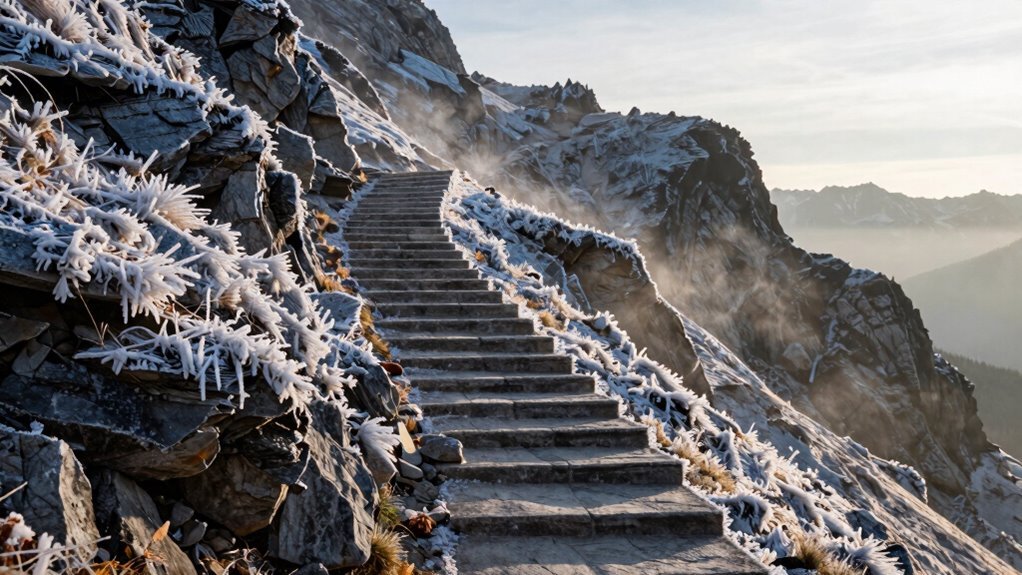
How’s this for smart hiking—what if your breath could march in lockstep with your feet, turning each step into a rhythm of efficiency?
Syncing your breath with your steps isn’t just poetic, it’s practical.
You’ll move smoother, feel stronger, and outsmart altitude woes.
Here’s how to nail it:
1. Step up, breathe in—rest step, breathe out
Match your inhale to uphill motion and exhale when you pause or step down.
2. Try the 3:2 rhythm
Inhale for three steps, exhale for two—this balances oxygen intake and reduces one-sided strain.
3. Let bones bear the load
Synced breathing helps you shift weight naturally, so you’re not fighting gravity with muscle alone.
4. Go full-lung, not half-cocked
Deep breaths mean more oxygen, fewer cramps, and happier muscles at altitude.
Breathe smart, hike happier!
Avoid Shallow Chest Breathing
You’re trekking higher, the air’s getting thin, and your breath starts acting like it’s half-asleep—short, quick sips instead of deep, satisfying gulps. That shallow chest breathing? It’s sneaky. It tricks you into thinking you’re getting enough air while starving your body of oxygen. At altitude, those tiny breaths increase dead space, mess with your rhythm, and can even worsen fatigue or chest tightness. Worse? They’re linked to HAPE, where fluid seeps into your lungs and makes every breath a struggle. Yikes.
But here’s the good news: your body *wants* to fix it. By focusing on deeper, fuller breaths—like filling your belly like a balloon—you boost oxygen intake and stay stable. Acclimatization helps too, turning your lungs into efficient altitude machines over time. So don’t let your breath get lazy. Stay sharp, stay deep, and outsmart the thin air with every step up.
Stay Hydrated to Support Lung Function
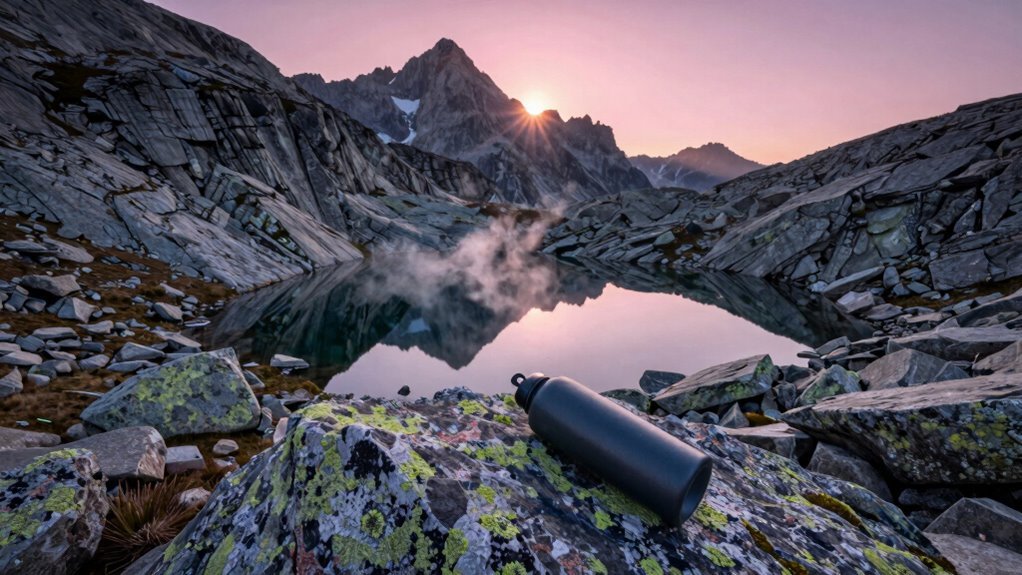
Breathing hard as you climb? That air’s dry, and every breath you take steals moisture from your lungs—yep, you’re losing water just by breathing!
Staying hydrated isn’t just about quenching thirst; it keeps your lungs working smoothly and your blood delivering oxygen like a champ.
At altitude, your body’s playing rough: thinner air means faster breathing, bigger fluid losses, and a sneaky drop in plasma that slows you down.
Skip the headache, fatigue, and brain fog—drink up and stay sharp on the trail.
To crush your climb and keep your lungs happy:
- Drink water steadily—don’t wait to feel thirsty.
- Add electrolytes—sodium and potassium help your body hold onto fluids.
- Watch your pee—it should be light, not dark gold.
- Avoid chugging plain water; balance it with nutrients to avoid “dilution fatigue.”
Warm Up Your Breathing Before Climbing
Ever wonder why pro hikers seem to glide up steep trails like mountain goats with jetpacks?
They’re not just fit—they warm up their lungs too!
Before you start climbing, spend a few minutes prepping your breath.
Try box breathing: inhale for four, hold for four, exhale for four, pause again for four.
It’s like meditation with a rhythm section.
Or do breath holds—exhale, pinch your nose, and nod your head for 10–15 seconds.
Then, gulp air deep with your diaphragm.
Belly breathing works wonders: inhale through your nose, let your stomach pop out like you’re hiding a burrito, then slowly blow out like you’re cooling soup.
Pursed-lip exhales keep air pressure up in your lungs, helping oxygen hop into your blood.
These tricks boost CO₂ tolerance and oxygen efficiency—so you’ll feel stronger faster.
Warm up your breath, and crush that climb like a pro.
Breathe Through Your Nose When Possible
When the trail starts to tilt skyward and your lungs are begging for every sip of air, here’s a pro move: keep your mouth shut and breathe through your nose.
You’ll pull in cleaner, warmer, moister air—perfect for your picky mountain-starved lungs.
Plus, you’ll stay calmer, use your diaphragm like a pro, and actually get more oxygen where it counts.
Think of it as nature’s performance hack—no gadgets needed!
Here’s why nose breathing rocks:
- Boosts oxygen delivery by prepping air before it hits your lungs.
- Strengthens your diaphragm so breathing feels easier on long climbs.
- Balances CO2 levels to reduce panting and boost stamina.
- Keeps your heart calm and your pace sustainable, not squirrel-energy frantic.
Stay cool, stay steady, and let your nose do the know-how!
Switch to Mouth Breathing When Needed
How’s your air supply holding up when the trail turns into a staircase to the sky? When the climb gets tough and your nose just can’t keep up, don’t be shy—switch to mouth breathing.
It’s your go-to move for steep surges and high-intensity pushes, letting more oxygen flood your lungs fast.
At altitude, thinner air means drier mouth, sure, but your mouth is built for this—wider opening, freer airflow.
Try pressure breathing: inhale deep, then exhale hard through pursed lips, like blowing out birthday candles.
It boosts lung pressure and oxygen uptake, giving you a second wind even above 6,000 meters.
You’ll feel your stride strengthen and your legs thank you.
Just don’t forget to ease back into nasal breathing when you catch your rhythm.
Your lungs will love the teamwork.
Maintain a Steady Breathing Pace
Find your rhythm and ride it like a mountain wave—syncing your breath with your steps isn’t just smart, it’s your secret weapon for conquering high-altitude trails.
When you lock into a steady breathing pace, your body chills out, your oxygen use gets smarter, and the trail feels less like a boss fight.
Here’s how to nail it:
- Try the 3:2 beat—breathe in for three steps, out for two—to keep your body balanced and groove into a natural stride.
- Breathe deep into your belly, not just your chest, so you grab every bit of oxygen the thin air offers.
- Go slow at first—let your diaphragm learn the dance so it runs on autopilot when things get steep.
- Stick with it—your lungs will adapt, making steady breathing as easy as morning coffee.
Stay cool, breathe smart, and let your lungs lead the way.
Use the Talk Test to Monitor Effort
You’ve got your rhythm down, syncing breath and步 like a pro on the high trails—now let’s turn that groove into real-time feedback with something you already know how to do: talk.
If you can chat comfortably in full sentences, you’re cruising below your ventilatory threshold—perfect for steady uphill progress.
Start gasping between words? That’s stage two: you’re hitting 50–75% effort, right around your aerobic limit.
If speaking feels impossible and all you can rasp is a breathy “nope,” you’ve gone anaerobic—ease up!
At altitude, where oxygen’s scarce, this trick’s gold: no gadgets needed, just your voice.
Singing’s out (sorry, trail karaoke fans), but easy talk means you’re pacing smart.
Listen to your breath, adjust your stride, and keep that oxygen saturation steady.
You’ve got this—just keep talking your way up the mountain.
Take Frequent Short Rest Breaks to Reset
Why do the best hikers always seem to float up the trail while you’re huffing like a steam engine?
They’re not superhuman—they’re strategic.
Taking short, frequent breaks helps your body and mind reset, especially at altitude.
You’ll recover faster, think clearer, and enjoy the views without gasping.
Here’s how quick pauses boost your hike:
- Your heart slows and pumps more efficiently, giving you more power per beat.
- Oxygen levels in your blood rebound, fighting off altitude fog and fatigue.
- Your brain gets a mental refresh—mood lifts, focus sharpens, stress melts away.
- You tune into your body, noticing fatigue before it hits, so you stay strong longer.
Think of breaks as mini-reboots.
You’re not slacking—you’re optimizing.
Even two minutes sitting on a rock can make the next stretch feel effortless.
So go ahead, pause, breathe, and laugh at your own dramatic puffing.
You’ve got this.
Try Box Breathing for Calm and Focus
So you’ve been pacing yourself with smart little breaks, letting your body catch up and your mind clear—but what if you could do even more in those moments of pause?
Try box breathing: inhale for 4, hold for 4, exhale for 4, hold again for 4. It’s like a reset button for your nervous system.
You’re not just resting—you’re calming your mind, slowing your heart, and boosting focus. The counting keeps your brain busy in the best way (no room for trail panic or overthinking squirrel noises).
At altitude, where oxygen’s low and stress can spike, this trick keeps you steady, present, and strangely chill.
Plus, no gear needed—just you, your lungs, and a tiny bit of math. Who knew breathing could feel like a game? Give it a go.
You’ll feel sharper, calmer, and weirdly in control—even uphill.
Practice Pursed-Lip Breathing on Declines
When the trail starts heading downhill, don’t just let your feet run wild—your breath can keep pace too.
Pursed-lip breathing helps you stay smooth and steady, even when gravity’s pushing you faster.
Here’s how to rock it on the descent:
- Inhale through your nose for two counts, like you’re quietly smelling your morning coffee.
- Purse your lips (think: blowing on hot soup) and exhale slowly for four counts.
- Feel the burn of back pressure—it’s keeping your airways open and your O₂ levels happy.
- Sync it with your steps to stay relaxed, efficient, and in rhythm with the trail.
You’ll clear out stale air, boost oxygen exchange, and avoid huffing like a steam engine.
Practice it for 3–5 breaths at a time, and your lungs will thank you all hike long—no drama, just flow.
Avoid Holding Your Breath During Scrambles
Ever found yourself halfway up a rocky scramble, clinging to a ledge and realizing you’ve totally forgotten to breathe? It happens!
But holding your breath, even briefly, can spike carbon dioxide levels and make your body scream for air—especially at altitude.
Without steady oxygen, hypoxia sneaks in, and your lungs and brain are at risk.
Worse, breath-holding raises pressure in your lung vessels, which can lead to fluid leakage and even HAPE—a serious condition with chest tightness and breathlessness.
Scrambling already stresses your heart, and skipping breaths makes it work overtime.
Instead, keep air moving steadily.
Think: “breathe through the burn.”
Your lungs will thank you.
Descend fast if symptoms arise—it’s not quitting, it’s staying safe.
Just like you wouldn’t skip sipping water, don’t skip breaths.
In, out, keep it flowing—your rhythm is your rhythm.
Build Lung Capacity With Daily Exercises
You’ve nailed the art of breathing through tough scrambles—now let’s supercharge that breath to handle the thin air up high.
Building lung capacity isn’t just for pro climbers—it’s your secret weapon for easier hikes and fewer “I need a minute” moments.
The best part? Just 5–10 minutes a day can make a real difference.
Try these simple, science-backed exercises at home, no gear required:
- Diaphragmatic breathing: Lie back, hand on belly, and breathe deep—your lower lungs hold the most air!
- Pursed lip breathing: Inhale through your nose, exhale like you’re blowing out candles—slow and steady wins the race.
- Kapalbhati pranayama: Quick, forceful belly pumps (start with 10, work up!) to energize and clear stale air.
- Chest stretches: Open up tight shoulders and ribs so your lungs have room to expand like a pro.
Use Breath Control During Steep Ascents
Conquering steep trails just got easier when you sync your breath with every step.
Inhale before you step, then exhale as you push forward—simple, smooth, and smart.
If you’re hauling a heavy pack, this rhythm keeps your energy steady and your lungs happy.
Shorten your stride? No problem—keep the same breath pattern and find your groove.
Try the 3:2 rule: inhale for three steps, exhale for two.
It spreads the effort evenly and makes breathing feel less like work.
Feel winded? Slow down, don’t panic—your pace should match your breath, not the other way around.
On serious climbs, purse your lips and power-breathe out to fight thin air.
Pair this with the rest step—lock your knee, catch your breath, and smile.
You’ve got this!
Pay Attention to Breathing at Higher Camps
Why does your breath feel like it’s playing tricks on you at higher camps?
At altitude, thinner air makes your lungs work harder, but you’ve got tricks up your sleeve.
Tune in to your breathing and use these smart techniques to stay strong and calm up high.
- Diaphragmatic Breathing: Breathe deep into your belly, letting it rise on inhale and fall on exhale—like your lungs are filling a balloon.
- Pursed Lip Breathing: Inhale through your nose, then blow air out slowly like you’re sipping a thick milkshake through a straw.
- Alternate Nostril Breathing: Close one nostril, breathe in, switch, and breathe out—great for chilling out with a view.
- Kapalbhati Practice: Quick, punchy exhales from your belly wake your lungs up like a morning splash of cold water.
Stay breath-aware and own the thin air!
Elevate Your Head While Resting
When you’re kicking back at camp, give your head a little lift—just six to eight inches—like you’re lounging in a first-class seat, minus the fancy snacks.
It might seem small, but that tilt helps your body handle altitude better, especially if you’re feeling rough.
Propping up your head eases pressure in your brain, which can be a game-changer if things take a serious turn—think HACE, the scary kind of altitude sickness.
While this move isn’t for everyday aches, it’s a smart tactic if someone’s unresponsive and needs urgent care before descending.
Pair it with rest, hydration, and getting lower, and you’re giving your body a real fighting chance.
Think of it as a pit stop upgrade: simple, quick, and surprisingly effective.
Your head will thank you—no airport lounge required!
Minimize Caffeine and Alcohol Intake
While you might’ve heard the old campfire tale about skipping caffeine and alcohol at altitude, turns out your morning coffee isn’t the villain here—so you can breathe easy, sip easy, and keep that energy steady.
In fact, if you’re a regular caffeine fan, quitting cold turkey could give you headaches and make altitude adjustment tougher.
Studies at high elevations show caffeine doesn’t dehydrate you or slow acclimatization—it might even help!
But when it comes to alcohol, play it smart: avoid it early on.
Here’s what really matters:
- Keep drinking your usual coffee or tea—it won’t hurt your hydration.
- Skip alcohol for at least 48 hours after arriving high up.
- Let your body adjust before toasting with a drink—safety first!
- Use caffeine to stay alert, focused, and mentally sharp on the trail.
Your brew’s not the problem—pace yourself and stay sharp up top!
Avoid Overexertion in the First 24 Hours
Right off the bat, your first day at altitude isn’t the time to channel your inner mountain goat—take it slow and let your body do the real climb.
Skip intense workouts or long hikes; your muscles and lungs are still catching up.
Plan a chill day with easy walking, light stretching, or just sipping water and enjoying the view.
Overexerting now can trigger headaches, nausea, or worse—nobody wants that.
Even if you feel great, give yourself 2–3 days to adjust before pushing hard.
Think of it as dating the mountains: get to know them slowly.
Stay hydrated, snack on carbs, and listen to your body like it’s giving you trail tips.
If you feel off, rest—no shame in letting the altitude win the first round.
Remember, you’re not racing anyone.
Ease in, breathe deep, and save the superhero moves for when your lungs are fully on board.
Acclimatize Gradually Before Long Hikes
You’ve given your body a break in those first 24 hours—smart move, because now it’s time to start playing the long game with the mountains.
Acclimatizing slowly isn’t just smart, it’s your secret weapon against altitude’s sneaky punch.
Think of your body as a high-altitude apprentice—give it time to learn the ropes.
Here’s how to nail it:
- Climb just 300–500 meters a day once past 3,000 meters—your red blood cells will thank you.
- Sleep no more than 300 meters higher each night—don’t let your pillow betray you with thin air.
- Take a full rest day after every 1,000 meters up—Netflix can wait, but your acclimatization can’t.
- Use “climb high, sleep low”—play with the thin air by day, then retreat to thicker zones at night like a cautious mountain squirrel.
Recognize Symptoms of Altitude Sickness
What if you woke up feeling like you partied all night—except you didn’t touch a drop of soda? You might’ve acute mountain sickness (AMS), and it’s more common than you think—hitting about one in four people above 6,000 feet.
If you’ve got a pounding headache, nausea, dizziness, or extreme fatigue within 12 to 24 hours of ascending, your body’s begging to acclimate.
You might also feel sluggish, lose your appetite, or toss and turn all night.
Muscle aches, a racing heart, or shortness of breath even on mild trails? Those count too.
Watch for pins and needles or nosebleeds—they’re weird but real.
If symptoms worsen after 48 hours, or you can’t walk straight, get confused, or cough up pink, frothy stuff, don’t wait—this is serious.
Recognizing the signs early means you can rest, descend, and bounce back fast—so you’re back hiking, not hiding in your tent.
Use Supplemental Oxygen if Advised
Once you’ve got a handle on spotting altitude sickness, it’s smart to think about what comes next—especially if the trail keeps climbing and your breath starts lagging behind.
If your doctor or guide suggests it, don’t hesitate to use supplemental oxygen—it’s like giving your body a high-altitude power-up!
Here’s why it helps:
- Eases symptoms fast – It fights off headaches, dizziness, and nausea from AMS, HAPE, or HACE.
- Boosts energy and focus – You’ll think clearer and feel less tired, so you can enjoy the view without feeling foggy.
- Helps above 10,000 feet – That’s when oxygen drops enough to make hiking feel like sucking air through a straw.
- Supports your body’s stress levels – Less cortisol means you stay calm, cool, and ready for adventure.
Think of it as trailside backup—not cheating, just breathing smarter.
Strengthen Respiratory Muscles With Training
Breathing stronger starts with training your lungs like a muscle—because up high, every gulp of air counts.
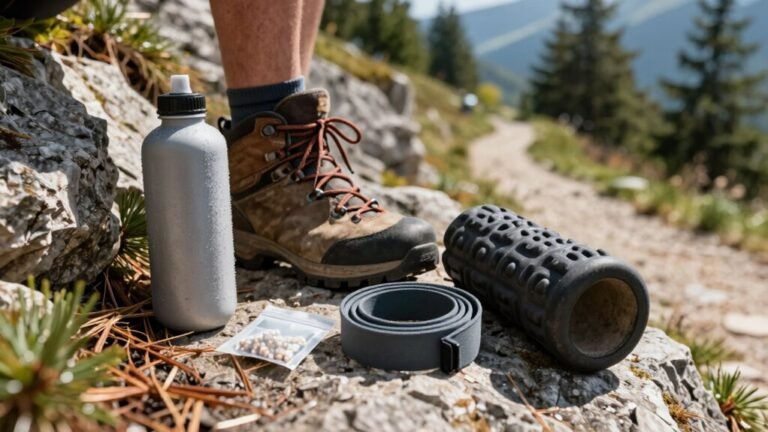
You can boost your inhale power with devices that make breathing feel like a workout, strengthening your diaphragm and ribs just like lifting weights.
At altitude, your breathing muscles hog oxygen, so training them means more stays in your blood.
Try pursed-lip breathing through a straw or a mask to level up exhalation strength—think of it as breath push-ups.
For serious gains, blast 50 breaths a minute with special gear a few times a week (yes, it’s as wild as it sounds).
Even wrapping a band around your ribs helps.
Studies show these tricks improve endurance and oxygen levels—because nobody wants to wheeze at 10,000 feet.
Train smart for 5–6 weeks, and you’ll climb higher, longer, and way cooler than the unprepared.
Practice Breath Awareness During Meditation
Tuning into your breath like it’s your favorite song on repeat might sound odd, but with breath awareness meditation, you’re hitting play on a powerful tool for calm and focus.
You don’t need apps or gear—just you and a few quiet minutes.
Science backs this ancient practice, showing it lowers stress and anxiety fast.
Best of all? It sharpens your mind for the trail ahead.
Here’s why you’ll love it:
- Reduces stress quickly – Just 4 weeks can make a real difference.
- Boosts brainpower – Helps you stay sharp, calm, and aware.
- Works anywhere – Your tent, a trailhead, or your living room.
- Improves focus – Trains your mind like fitness for your thoughts.
Breathe in, chill out, and get ready to hike smarter.
Wear Layers to Prevent Breathing Cold Air
Zip up, layer on, and give cold air the cold shoulder—literally.
Wearing layers isn’t just about staying cozy; it’s your secret weapon for easier breathing at altitude.
Start with a thin, sweat-wicking base layer that keeps you dry and breathes well.
Add a fleece or down mid layer to trap heat without weighing you down—warmth you can count on, even when damp.
Top it off with a windproof, breathable shell that blocks cold gusts but lets vapor escape so you don’t steam up like a teapot.
You’ll create a warm zone around your core, which helps your body manage respiration better in thin, chilly air.
Adjust layers as you hike—zip, peel, or add—to stay in the sweet spot between too hot and too cold.
Stay warm, stay dry, and let your lungs thank you.
Use a Buff or Balaclava to Warm Inhalations
A snug layer over your face isn’t just for ski bunnies or Arctic explorers—you’ll love how a Buff or balaclava turns icy air into something your lungs can actually handle.
It traps your warm breath, so each inhale feels gentler, not like you’re chugging freezer air.
Plus, you’ll dodge that nasty cold-air shock that makes you cough halfway up the trail.
Your face stays cozy, your breathing stays smooth, and hey—frostbite hates this one weird trick!
- Traps warm air – Re-breathing your warmth pre-heats each inhale.
- Blocks wind – A Windstopper membrane shields your face without suffocating you.
- Stays comfy – Breathable fabric keeps you from overheating on steep climbs.
- Fights frostbite – Covers nose and ears, because frozen nibbles aren’t a good look.
Breathe easy, stay warm, and keep grinning at 10,000 feet.
Reduce Pack Weight to Ease Breathing
You’ve warmed your breath and shielded your face from the icy kiss of high-altitude air—now let’s talk about what’s *really* sucking the wind out of your sails: that pack on your back.
Lighten up—literally. Focus on the Big Three: shelter, sleep, and pack.
Swap that heavy tent for a 2-pound Dyneema wonder, trade thick sleeping pads for a 14-ounce Z-Lite, and your lungs will thank you.
Ditch the pack cover—use a trash compactor bag liner instead. It’s waterproof *and* saves ounces.
Trail runners beat boots by pounds, and packing just one outfit? Smart move.
Cut snacks down, skip the stove if you can, and share gear with friends.
Every ounce adds up—drop nearly 3 pounds with small cuts!
Audit your load with a scale, snip loose straps, and leave luxuries behind.
Lighter pack? Easier breathing.
You’ll stride higher, smile wider, and laugh at steep climbs.
Breathe easy, friend—light is right.
Maintain Good Posture on the Trail
Walking tall, not slouching like a question mark, makes all the difference when the trail starts heading skyward. Good posture keeps your lungs open and your energy flowing—no hunched-over turtle vibes allowed!
Here’s how to stay upright and strong:
- Lock in a neutral spine: Keep your back straight and hips level—think “proud chest,” not “curled shrimp.”
- Use the rest step: Lock your back leg with each step to give muscles a mini-vacation and breathe easier.
- Sidestep the strain: Angle your uphill foot and face uphill—your calves will thank you like it’s their birthday.
- Stay rhythmic: Sync your steps and breath, loosen hip and chest straps, and zigzag when the climb gets spicy.
Stand strong, breathe deep, and let your posture do the heavy lifting—so you don’t have to.
Choose Gradual Trails Over Vertical Gains
When the air gets thin and your legs start to feel like overcooked noodles, picking a trail that climbs slow and steady beats the pants off a straight-up grind.
You’ll breathe easier on paths gaining 200–400 feet per mile—those are easy, and your heart won’t throw a fit.
Even 700 feet per mile can feel brutal when you’re huffing at 3,000 meters, so skip the 1,000+ gains unless you’re built like a mountain goat.
Trails with just 78 feet per mile, like gentle loops, are golden—they let you sip altitude without chugging it.
Remember, above 2,500 meters, your uphill pace drops to about 300 vertical meters per hour.
That’s slower than your grandma’s Wi-Fi, so go easy.
A gradual climb means fewer gasps, less fatigue, and way more fun.
You’re not racing—you’re surviving with style.
Save the lung-busters for when you’re acclimatized, not just ambitious.
Smart trail choice? That’s your secret oxygen tank.
Plan Hikes With Downhill Recovery Sections
Though climbing up is where the burn hits, it’s on the way down that your body really starts to thrive—so don’t skip the downhill recovery like it’s just an afterthought.
You’re not just cooling down; you’re turbocharging your health with every step.
Downhill hiking strengthens muscles, tames inflammation, and even helps control blood sugar—all while asking less effort than climbing.
Plus, it gives your lungs a breather after high-altitude ascents.
Want to do it right? Check this out:
- Pick trails with 540m+ downhills after climbs—your quads (and heart) will thank you.
- Use cable cars up, then hike down—yes, it’s like a nature-made elevator!
- Descend slow with poles to protect knees; no need to race gravity.
- Go 3–5 times a week for real metabolic magic at elevation.
Downhill isn’t defeat—it’s recovery with rewards.
Incorporate Rest Days at Mid-Altitudes
You might think pushing through day after day is the way to conquer the high trails, but your body actually thrives when you hit pause—especially at 5,000 to 8,000 feet, where the air’s thin enough to challenge you but not knock you flat.
Take a rest day every three to four days, or each time you gain 2,000–3,000 feet—your blood will thank you.
At this mid-altitude sweet spot, your hemoglobin boosts oxygen delivery by up to 7%, all while your muscles stay strong and happy.
It’s the perfect balance: enough stress to adapt, not enough to crash.
Resting here helps you sleep deeper, cut stress hormones, and arrive at higher camps feeling fresh, not fried.
Skip the superhero act—your lungs need downtime to catch up.
Trust us, stopping doesn’t make you weak; it makes you way more likely to finish that summit push grinning, not gasping.
Monitor Breathing Rate With a Smartwatch
Ever wonder how your body really handles the thinner air the higher you climb? Your smartwatch can help you keep track—no lab coat required!
Modern wearables measure your breathing rate with surprising accuracy, giving you real-time clues about how well you’re adjusting to altitude.
While not perfect, many devices track respiration within a breath or two of clinical tools.
Just remember, they work best when you’re not sprinting uphill or throwing punches at thin air.
Here’s how to make the most of your tech:
- Check your resting呼吸 rate each morning – a steady drop means you’re acclimating.
- Use trends over time, not single readings, to spot changes.
- Stay calm during measurement – excitement (or spotting a mountain goat) skews results.
- Pair data with how you feel – if your watch says 25 breaths and you’re gasping, listen to your body.
Tech’s cool, but you’re the real expert.
Avoid High-Altitude Hikes With Respiratory Illness
When your lungs are already putting in extra work due to a respiratory illness, hitting the trail at high altitude is like asking your body to run a marathon with a backpack full of rocks—suddenly, every breath feels twice as hard.
Altitude reduces oxygen, and if you have asthma, COPD, or another lung issue, your body can’t adjust well.
You’re more likely to get sick, especially above 11,000 feet, where almost everyone struggles.
Even worse, fluid can leak into your lungs—a serious condition called HAPE.
If you’ve had a respiratory infection recently or live with a lung condition, skip the high hikes.
Rapid climbs make it riskier, and your body won’t have time to adapt.
Talk to your doctor before heading up, and be honest about your health.
Your adventure will be safer—and way more fun—when you let your lungs heal first.
Save the summit for another day!
Use Inhalers if You Have Asthma or COPD
While your lungs might throw a little tantrum at high altitude, especially if you’re managing asthma or COPD, the right inhaler can be your trailside superhero.
Pack it like your favorite snack—because nobody wants a surprise breathing battle halfway up a mountain.
Use these smart moves to stay on top of your game:
- Grab your Ventolin 15 minutes before hiking—it’s like a warm-up for your airways, especially if cold or effort tends to trigger wheezing.
- Stick to your regular maintenance inhaler, like budesonide, to keep lung inflammation in check without harsh side effects.
- Consider salmeterol if you’ve had HAPE before—starting it a day early could keep fluid out of your lungs and fun in your adventure.
- Talk to your doc if you have severe COPD—some peaks aren’t for every hero, and that’s okay. Know your limits and hike strong.
Practice Controlled Hyperventilation Drills
You’ve got your inhaler packed and ready—smart move—because now it’s time to give your lungs a secret power-up before you even hit the trail.
Try controlled hyperventilation: deep, rapid breaths on purpose, not like you’re scared of a mountain goat. This trick pumps extra oxygen into your blood so your body’s ready for thin air. Do 3–4 rounds daily, morning and night, in a chill spot where you won’t scare the dog.
Start slow, then boost depth and pace over 5–9 days before your climb.
It’s not magic—it’s science. You’ll boost circulation, think clearer, and adapt faster.
Plus, holding your breath after breathing hard? That helps too. Just pair it with calm, belly breathing when you hike. Add water so your lungs don’t dry out, and boom—you’re training your body to laugh at altitude sickness.
Breathe strong, stay steady, and own that peak.
Train With Interval Workouts on Flat Ground
Turning up the heat on flat ground? Good! You’re prepping smart. Interval workouts here mimic altitude stress and boost your body’s oxygen game—no mountains needed.
You’ll power through climbs easier when it counts. Try these moves weekly and feel the burn (in the best way):
- Sprint intervals: 30–60 seconds at 85–95% effort, same time easy—repeat 4–8 times.
- Fake the altitude: Use masks or elevation simulators (2,750m+ setting) for 30% more oomph.
- Pair strength & cardio: Squats between sprints? Yes, please—builds leg power and stamina.
- Hydrate and feed your blood: Iron-rich snacks and water keep red cells rolling strong.
Do this for four solid weeks, ramp up gently, and your lungs will thank you on that high trail. Who knew flat could feel so fierce?
Visualize Smooth Breathing During Climbs
You’ve got your legs firing and your heart pumping from those killer interval workouts, but don’t forget—your breath is your secret trail weapon.
Seriously, your brain believes what you imagine, so picture your air moving like a calm river, not a bouncy mountain stream.
When you visualize smooth, steady breathing on climbs, your body actually uses oxygen better—even in thin air.
It’s like hacking your stamina: climbers who mentally rehearse easy breathing boost endurance by 1.4%.
That’s free energy!
Think warm air flowing in, cool air out, no strain, no panic.
Your lungs love the signal, and your mind stays cool while the trail gets steep.
It’s not mumbo-jumbo; it’s mental conditioning that works.
So next time you’re grinding uphill, close your eyes for a sec (okay, not literally), and imagine breathing like you’re napping on a cloud.
Smooth wins the race.
Focus on Relaxing Your Shoulders and Neck
Shrug it off—literally.
Tense shoulders and a stiff neck make breathing harder at altitude, especially with a pack digging in.
Keep your upper body loose so air flows freely and your stride stays strong.
A few quick moves can save you from that hunched, “trapped turtle” look on the trail.
Try these anytime you feel the crunch:
- Shoulder Shrugs: Lift shoulders to ears, hold for three seconds, then drop—10 reps to reset tension.
- Shoulder Rolls: Fingertips on shoulders, roll elbows back in big circles—loosen up in under a minute.
- Neck Side Stretch: Tilt ear toward shoulder (gently!) and hold—breathe deep for 30 seconds per side.
- Ear-to-Shoulder Hold: After rolling shoulders back, stretch each side without forcing—say no to strain.
Stay loose, breathe easy, and hike happier.
Keep a Breathing Journal on Multi-Day Hikes
Ever wonder how your body adapts to the thin air as you trek higher each day?
Keep a breathing journal to track the journey.
Note your breathing rate, how you feel, and your SpO2 levels daily—seeing progress is oddly satisfying, like altitude bragging rights.
Write down if you’re doing slow, deep breaths at 6 per minute (it helps more than you’d think).
Jot down if you’re breathing easy or gasping like a fish on land.
Tracking patterns helps catch issues early—think less “doctor,” more “intrepid explorer.”
You’ll spot how your body adjusts over days: less huffing, better sleep, fewer “why is the sky spinning?” moments.
Plus, reading last week’s panic-breathing entry while calmly sipping tea at base camp? Priceless.
Your journal becomes a map of resilience—proof you’re not just surviving, you’re syncing with the mountains, one deep breath at a time.
Eat Iron-Rich Foods to Support Oxygen Flow
Even if you’re not a superhero, your body’s got a secret weapon for handling high-altitude adventures—iron.
It helps your red blood cells carry oxygen like tiny backpacks straight to your muscles and brain.
Skip it, and you might feel zapped, dizzy, or winded faster than you can say “mountain summit.”
To keep your energy soaring like a happy eagle, fuel up with these iron-packed favorites:
- Clams – Pop open a can (3 oz) for a whopping 23.8 mg of iron.
- Liver – One serving packs 36% of your daily iron—and enough vitamin A to see in the dark (almost).
- Quinoa – This grain delivers 16% DV iron and protein for a hearty lift.
- Tofu & legumes – Plant-powered, heart-friendly, and great with a squeeze of citrus.
Just add vitamin C, skip coffee with meals, and your body will thank you every uphill step.
Prioritize Quality Sleep During Acclimatization
You’ve powered up with iron-rich foods to keep your blood buzzing with oxygen, and now it’s time to let your body do some serious work while you snooze. Sleep low, hike high—it’s not just smart, it’s science. Staying below 3,000 meters at night cuts your chances of altitude sickness by 30%. Your body regenerates better when it’s not gasping for air in its sleep. Yeah, altitude can mess with your rest—waking up gasping, dreaming less, feeling like a zombie—but don’t panic. Give it 7–14 days, and your sleep fights back, stronger and deeper. Climb no more than 300–500 meters nightly above 3,000 meters, and pause every 1,000 meters. Hydrate, skip the coffee late, and let natural light reset your internal clock. Your body heals and adapts most when you’re out cold—so treat sleep like your secret basecamp weapon. Sweet dreams, mountain warrior!
Limit Screen Time to Reduce Mental Fatigue
While your phone might beg for attention, giving it less face time actually gives you more—more focus, more calm, and way more fun on the trail.
Slashing screen hours helps your mind stay sharp and happy, especially when altitude’s already doing its best to mess with you.
Think of your brain as a hiking buddy: you wouldn’t drag a sluggish, grumpy teammate up the mountain, so why treat yourself that way?
- Sleep deeper by ditching screens an hour before bed—your mood (and snoring tentmate) will thank you
- Boost focus and actually notice the epic views, not just your Instagram feed
- Chill out with less anxiety and mental static from constant pings and scrolls
- Save your eyes and neck—nature’s already stunning, no need to squint at a tiny screen
Unplug a little, breathe easier, and let the real world recharge you.
Stay Mentally Present With Breath Anchoring
Ever wonder how to keep your head in the game when the trail starts to feel like a mind maze?
Ground yourself with breath anchoring—focus on your inhales and exhales like they’re your trail GPS. It’s not woo-woo; it’s science.
By tuning into your breath rhythm, you slash mental clutter and stay present, even when the air thins.
Feel your belly rise, your nostrils tingle, your lungs expand—each breath a mental pit stop.
Sync it with your steps: in for two, out for two.
On tough climbs, pressurize your exhales like you’re blowing out birthday candles uphill.
You’ll boost oxygen efficiency, steady your heart rate, and dodge altitude fog.
Practice briefly before hiking, and soon it’s second nature—like breathing, but smarter.
Your mind stays sharp, your body works better, and hey, you might even enjoy the view more.
Who knew your breath could be such a trail buddy?
Practice Breathing Drills Before You Leave Home
You’re already anchoring your breath like a pro on the trail, letting each inhale and exhale keep your mind locked in the moment.
But back home, your lungs need a workout too—no mountains required!
Think of breathing drills as gym for your diaphragm.
They prep your body to sip oxygen like a wine connoisseur, not chug it like cheap soda.
Start early and practice consistently to build real grit before you hit the thin air.
- Diaphragmatic Breathing: Lie down, breathe deep into your belly—like inflating a balloon below your ribs.
- Alternate Nostril Breathing: Calm your nerves and balance airflow with a quick nose-switching rhythm.
- Kapalabhati Breathing: Power-clean your lungs with sharp, pump-like exhalations—feels like a windshield wiper for your chest.
- Breath-Holding Drills: Train low-oxygen tolerance by holding breath during stretches or jogs—yes, even while pacing around your living room.
Celebrate Small Gains in Respiratory Endurance
Since your body’s already hard at work turning each breath into a little victory, why not give those wins the high-five they deserve?
You’re not just hiking—you’re training your lungs like a pro, one steep step at a time.
In just a couple of days, your breathing gets smarter, deeper, and more efficient, even if you don’t notice right away.
After a week, your red blood cells start multiplying, quietly boosting your oxygen power.
And hey, that extra huffing on a climb? That’s progress talking.
Celebrate when you catch your breath faster or sleep easier at camp.
Even small signs—like not gasping at 8,000 feet—mean your body’s adapting.
Track your gains, toast your stamina, or just grin like a mad scientist who cracked the code.
Every breath builds resilience, so pat yourself on the back.
Altitude’s tough, but you’re tougher—one triumphant breath at a time.
Frequently Asked Questions
Can I Use Breathing Techniques While Sleeping at High Altitude?
Yes, you can use breathing techniques while sleeping at high altitude—and they actually help!
Try deep, slow belly breaths to calm your body and boost oxygen flow.
Pursed-lip breathing adds gentle resistance, making each breath more effective.
Even practicing breath holds before bed trains your lungs for the thin air.
It might feel funny at first, like you’re snoring a secret code, but it works.
Keep it relaxed, stay consistent, and you’ll sleep better, one breath at a time.
Do Breathing Exercises Help With Altitude Sickness After Descent?
Yes, you can absolutely use breathing exercises to help ease altitude sickness symptoms after descent—think of it as hitting the reset button for your body.
“An ounce of prevention is worth a pound of cure,” and those slow, deep breaths calm your nervous system, boost oxygen levels, and help you recover faster.
Just five minutes of steady, diaphragmatic breathing can make you feel like yourself again—no magic, just science with a side of zen.
Is It Normal to Feel Short of Breath at Rest During Acclimatization?
Yeah, it’s totally normal to feel short of breath at rest when your body’s adjusting to higher altitude.
You’re basically training like a mountain athlete—your lungs are working overtime to grab more oxygen from thin air.
It usually kicks in 12–24 hours after ascending, but don’t panic; it often eases in a couple of days.
Just hang tight, hydrate, and let your body do its thing—nature’s version of hitting the gym!
How Long Does It Take for Breathing to Normalize at High Altitude?
It usually takes about a week for your breathing to stabilize at high altitude, though you’ll feel better in just 1–3 days.
You’re breathing faster and deeper, which feels weird, like your body’s overdoing it—but it’s actually smart, not silly.
By day 7, your lungs and kidneys team up, balancing your blood chemistry.
In 20 days, everything clicks into place, making high-elevation breaths feel totally normal.
Can Children Safely Use These Breathing Methods During Hikes?
Can your child handle high-altitude hikes?
Yes, they can!
Their breathing adjusts just like yours—faster and deeper—to grab more oxygen.
You’ll notice they might pant or breathe heavily, especially uphill, but that’s normal and safe.
They may even snore or have funny breathing patterns at night—don’t panic, it’s common!
Just keep them hydrated, warm, and away from alcohol (obviously!).
With smart pacing, they’ll thrive while having a blast!
Conclusion
You’ve got this! Think of your lungs as mountain goats—strong, sure, and getting better with every step. Deep breaths fuel your climb like a cozy campfire on a chilly peak. Laugh at the thin air; it didn’t see your diaphragm coming. With each exhale, you’re not just surviving—you’re thriving, one playful puff at a time. Keep going, breathe easy, and own that summit swagger. You’re golden.
References
- https://pmc.ncbi.nlm.nih.gov/articles/PMC3463062/
- https://en.wikipedia.org/wiki/Effects_of_high_altitude_on_humans
- https://pmc.ncbi.nlm.nih.gov/articles/PMC3654241/
- https://www.ahajournals.org/doi/10.1161/circulationaha.106.650796
- https://www.youtube.com/watch?v=P_4wk33cTVo
- https://respiratory-therapy.com/disorders-diseases/cardiopulmonary-thoracic/pulmonary-hypertension/respiratory-effects-of-altitude/
- https://www.atsjournals.org/doi/10.1164/rccm.201207-1323CI
- https://www.osmosis.org/learn/Pulmonary_changes_at_high_altitude_and_altitude_sickness
- https://my.clevelandclinic.org/health/diseases/15111-altitude-sickness
- https://www.backpacker.com/skills/altitude-sickness-prevention/