Beginner Guide to Pack Fit
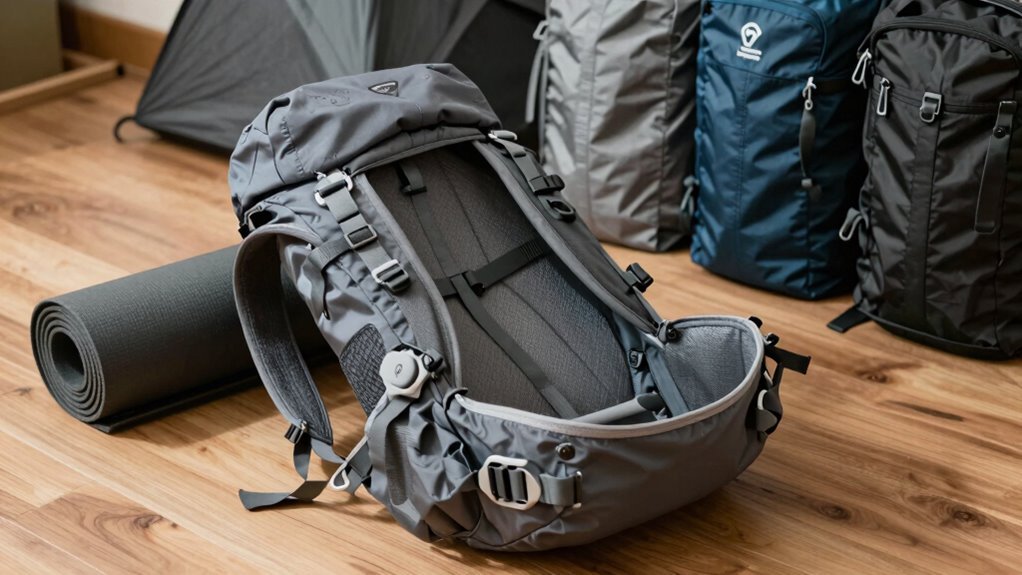
Start by measuring your torso from the neck bump to your hipbones—yep, that’s the iliac crest. Pick a pack that matches your measurement to ensure proper pack fit.
Wrap a tape around your hips at the iliac crest for the right hipbelt size, snug like your favorite jeans. A good pack fit starts with the hips, as they carry most of the load.
Slide the pack on and tighten the shoulder straps until they hug comfortably. Then, adjust the stabilizers—like load lifters and sternum straps—to balance the weight.
Too tight? That’s uncomfortable. Too loose? You’ll be waddling down the trail. Get the pack fit just right, and hiking suddenly feels effortless.
How to Measure Your Torso Length
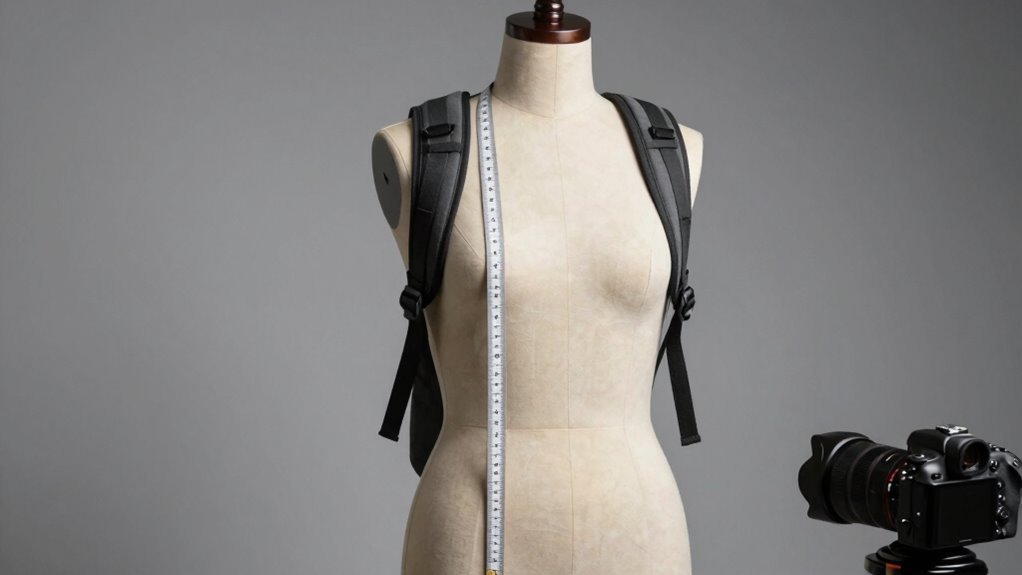
Where’s the magic number for your perfect pack fit? It starts at the bony bump at the base of your neck—C7—where your spine says, “Hey, measure me!” Tilt your head forward and feel that knob right where your T-shirt collar sits; that’s your starting line.
Next, find your iliac crest—the top of your hipbones—by sliding your thumbs down your sides until they hit bone, then draw an imaginary line across your back. Have a friend help, or go solo with a string.
Run a flexible tape from C7 straight down your spine’s curve to that hip line, snug but not tight. Do it three times—because hey, accuracy’s free.
Not between sizes? Size down for better hip support. Remember, it’s your torso, not your height, that matters. Extra Small: 14 & 15 inches
When in doubt, try it on. Trust us, your future backpacking self will thank you—no more “why does this feel like a backpack rodeo?”
Choosing the Right Hipbelt Size
Now that you’ve nailed down your torso length, it’s time to give your hips the spotlight—because a backpack that fits right doesn’t ride up like a startled squirrel or sag like soggy jeans.
Grab a flexible tape measure and wrap it snugly around your hips at the iliac crest—those bony points just above your pants’ waistband.
This number isn’t your pant size, so don’t guess! Measure right over your skin for accuracy.
Most small belts fit 26–39”, mediums 29–41”, and larges 36–55”, but brands vary—LiteAF, Seek Outside, and SWD all have unique ranges.
Check for at least one inch of clearance on each side of the buckle.
A well-fitted hipbelt sits centered on the iliac crest, with padding hugging your hipbones just right—not too high, not too low.
Adjusting Shoulder Straps for Comfort
Wondering how to make your backpack feel like it was made just for you?
Start by loosening all straps and loading your pack like you’re about to hit the trail.
After you’ve set the hip belt snugly on your hipbones, swing it on using your legs—save your back!
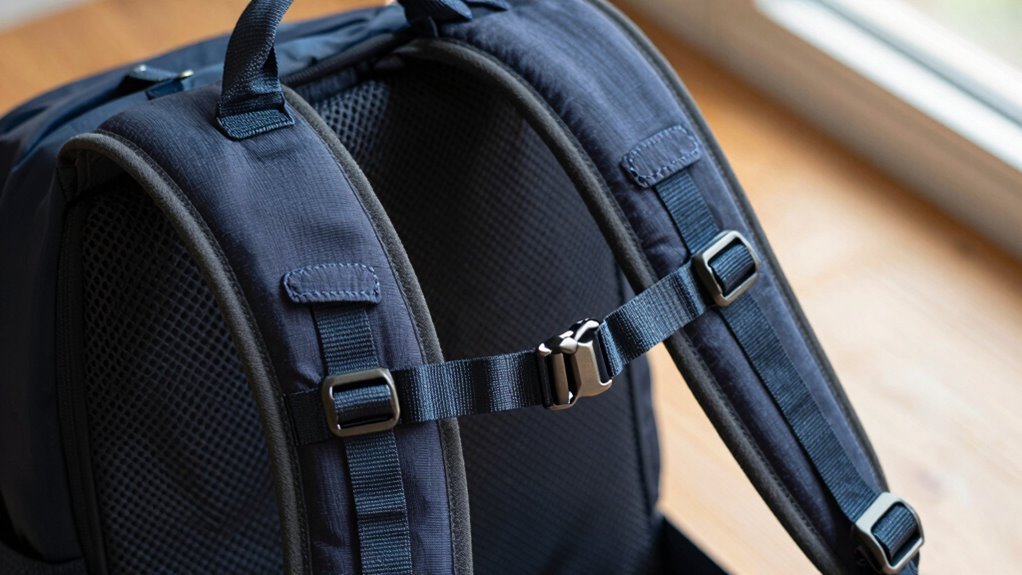
Now, pull the shoulder straps down while leaning forward to let your body help.
Tighten them until there’s no gap, but don’t go overboard—squeezing too hard turns comfort into a wrestling match.
Aim for the padding to hug your shoulders fully, sitting between your shoulder blades.
The pack should follow your shoulders’ natural curve, with no sagging or tugging.
If one side pulls more, check your load.
This helps ensure 60-70% of the weight is on your hips, where your body can handle it best.
Fine-Tuning Load Distribution With Stabilizer Straps
You’ve got your shoulder straps snug and your hip belt anchored right where it belongs—now let’s turn that comfortably fitted pack into a seamless extension of your body. Grab those stabilizer straps and give them a tweak—they’re not just extra cords, they’re your pack’s secret weapon. Tighten them to pull the base closer, creating a 30- to 45-degree angle with your shoulders, and feel how the weight shifts from your back to your hips. They latch corner-to-corner on the frame, helping pivot the load forward and down so it rides right over your lumbar curve. On rocky trails, they cut side sway like a hug for your backpack. Don’t over-tighten—you’re fine-tuning, not wrestling. Loosen slightly after setting your hip belt so breathing stays easy. Think of them as the final nudge that turns “meh” into “heck yeah.”
Common Fit Issues and How to Fix Them
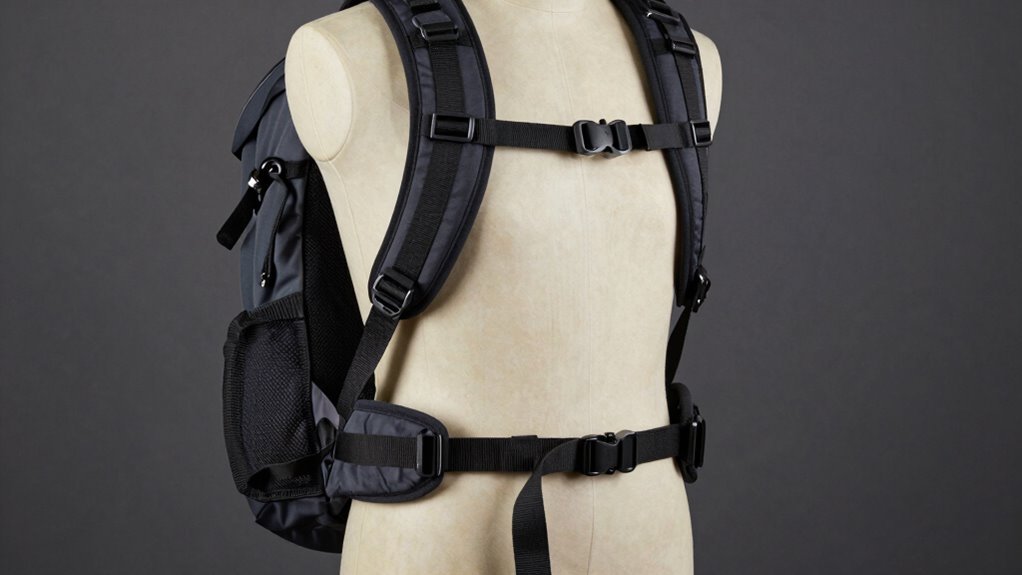
Why does your pack keep riding up like it’s trying to escape your shoulders?
You’re probably dealing with a torso length mismatch—too long, and the shoulder straps gap; too short, and they dig in.
Measure from your neck bump to the top of your hips for the right fit.
If your hipbelt pinches or slides around, it’s either too small or too big—snug on the iliac crest, not your waistband.
Over-tightened shoulder straps? Relax them!
They’re sidekicks, not pack mules.
The hipbelt should carry the load, not your neck.
And please, stop letting water bottles hang off the side like jungle gym accessories—keep weight close and balanced.
Adjust straps in order: hips, shoulders, sternum, then fine-tune as you hike.
Fix these, and your pack won’t feel like a rebellious backpacking pet.
Frequently Asked Questions
Can I Use a Pack Designed for Men if I’M a Woman?
You can absolutely use a men’s pack if you’re a woman—no rules say otherwise!
If it fits your torso, hips, and shoulders, go for it.
Many women rock men’s or unisex packs with no problem.
Just check the adjustable harness, hipbelt comfort, and shoulder width.
Fit beats labels every time—think of it as fashion freedom with extra pockets.
Own your trail style, and let the pack work for you, not the other way around.
How Do I Know if My Pack Is Too Big?
Your pack’s too big if it wobbles like jelly when you walk—no one wants that dance partner.
Shoulder straps hang low, hipbelt gaps or digs in, and weight smushes your shoulders instead of sitting cozy on your hips.
You’re lugging around empty space like a backpack full of hot air.
Try it loaded—aches in minutes mean it’s time to downsize.
Fit beats volume, always.
Should My Backpack Touch the Base of My Neck?
No, your backpack shouldn’t dig into the base of your neck—it should sit just below it.
If it’s poking your neck, the shoulder straps are too high, and that’ll make your hike feel like a wrestling match.
Position the yolk about an inch below that bony bump at your neck’s base.
That way, weight transfers smoothly to your hips, not your shoulders.
You’ll feel balanced, comfy, and ready to crush the trail—no neck wrestling required!
Is It Normal for Hipbelts to Press on My Ribs?
No, it’s not normal—1 in 3 hikers wear packs that dig into their ribs, and that’s a red flag.
You’re feeling pressure there because the hipbelt’s too high, probably from a short torso fit or loose shoulder straps.
You want that padding hugging your hip bones, not squishing your ribs.
It’s like wearing a belt on your chest—awkward and painful.
Adjust the straps, check the fit, and let your hips do the heavy lifting, not your ribcage.
Do I Need a Different Pack for Winter Hiking?
Yeah, you definitely need a different pack for winter hiking—your summer setup won’t cut it when snow and cold crash the party.
Look for insulated sleeves, waterproof fabric, and snow-shoe-friendly straps.
You’ll want space for layers, a thermos, and extra gear without bulging like a penguin.
And hey, nobody wants a frozen water bottle—or a grumpy hiker.
Stay warm, stay dry, and let your pack work as hard as you do.
Conclusion
Nailing pack fit’s no magic trick—just smart tweaks. Measure your torso, hug that hipbelt snug, tweak those shoulder straps, and cinch the stabilizers. Boom: hiking bliss! Like a good dance partner, your pack should move with you, not against you. Feel it click? Suddenly, even uphill groans become happy trails. Who knew comfort could be this *pack*-tastic?
References
- https://www.outdoorsgeek.com/backpack-torso-size/
- https://www.gregory.com/fit-guide.html
- https://www.rei.com/learn/expert-advice/backpacks-adjusting-fit.html
- https://www.caminodesantiago.me/community/threads/how-to-properly-size-fit-and-adjust-a-backpack.73307/
- https://www.bigagnes.com/blogs/support/backpack-fit-guide
- https://hyperlitemountaingear.com/pages/hiking-backpack-size-chart
- https://www.youtube.com/watch?v=3PJRZkjvTPY
- https://atompacks.co.uk/blogs/how-to/how-to-find-your-size
- https://liteaf.com/torso-sizing/
- https://www.sixmoondesigns.com/products/flight-hip-belt