Bear Canisters Vs Boots: Which Should You Pick?
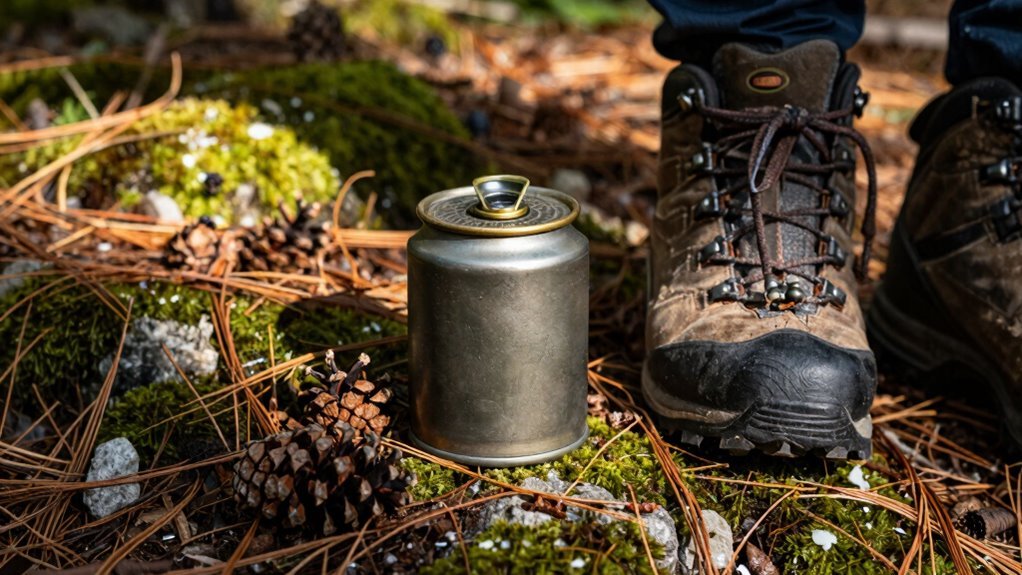
You definitely pick the bear canister—your boots won’t keep snacks safe from a curious bear with a nose like a satellite. Bear canisters are specifically designed to protect your food in the wilderness, making them the clear choice for backcountry safety.
Canisters block scents, survive claw attacks, and follow park rules, while boots just invite trouble. Using a bear canister ensures you’re not only protecting your supplies but also complying with regulations in bear-prone areas.
Lightweight, tough, and bear-smart, they’re your camp’s MVP. Stick with the bear canister, and you’ll see why smarter choices win when wilderness meets snack time.
How Bears Find Your Food in the Wild
Ever wonder how a bear snacks on your sandwich before you even unpack your backpack?
It’s all in the nose—bears smell up to 20 miles away, thanks to a sniffing superpower that treats your lunch like a dinner bell.
If it’s got a scent, they’re on it: food, soap, even your sunscreen.
Their night vision teams up with that crazy sense of smell, so sneaking in a midnight snack? Not really a secret.
You’d be amazed what they’ll check out—trash cans, coolers, even fuel canisters.
And once they find food, they remember the spot, returning faster than you can say “bear canister.”
They’re smart, curious, and *very* hungry, especially when natural foods get scarce.
That half-eaten granola bar? Basically a neon sign.
So yeah, your boot’s no match for their nose.
Better skip the short cuts and pack smart—your sandwich (and the bear) will thank you.
Their sharp color vision helps them spot ripe fruit in daylight, making brightly colored food wrappers even more tempting.
The Myth of the Boot Storage Hack
Who knew your boots could throw a tantrum if you store them the wrong way?
That cute skirt hanger hack? It might stretch your favorite leather boots into sad, saggy versions of themselves.
And clipping on the outside? Yeah, that’ll leave marks—like battle scars you didn’t sign up for.
Piling heavy stuff on top? Don’t do it.
They’ll get squished and lose their shape fast.
Garages and damp closets are basically boot nightmares, inviting mold, mildew, and rusty eyelets to the party.
Even stacking them willy-nilly in a suitcase spells trouble unless they’re on top or in a protective bag.
But here’s the good news: boot bags, labeled boxes, and shelf organizers keep them happy, dry, and ready for action. Adding cedar shoe trees helps maintain their form while absorbing moisture and controlling odor.
Rotate them now and then, give ’em a little love, and they’ll last way longer.
Your boots aren’t just footwear—they’re teammates.
Treat them right, and they’ll carry you through every adventure in style.
Why Bear Canisters Are Built to Protect
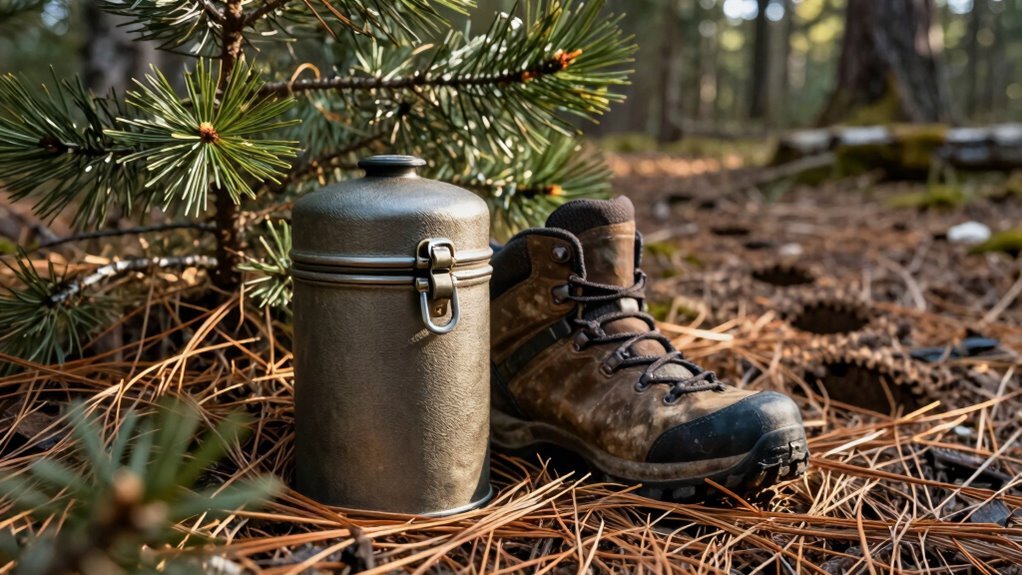
Keeping your snacks safe from sneaky bears isn’t just smart—it’s kind of like playing high-stakes hide-and-seek with nature’s fluffiest (and strongest) athletes.
You’re not just protecting your jerky; you’re protecting the bears too.
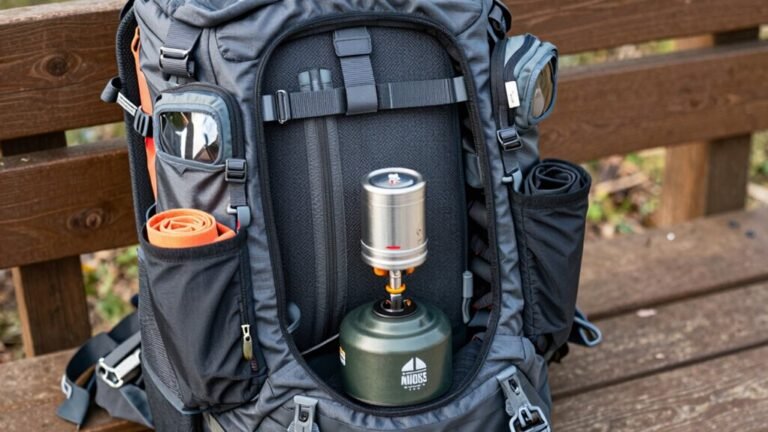
Bear canisters are built tough—thick plastic or polycarbonate shells laugh off claws and bites, while clever latches or screw-top lids outsmart paws.
They’re tested and approved by the Interagency Grizzly Bear Committee, so you know they work.
When you use one, you keep food from bears, rodents, and even curious marmots.
Plus, bears quickly learn these annoying cans give zero snacks, so they stop bothering campsites.
That prevents habituation and keeps bears wild and safe.
In places like Yosemite and Denali, canisters have slashed conflicts and saved bear lives.
You’re not just storing food—you’re part of a smarter, kinder way to explore the wild.
Bears learn to associate canisters with frustration and wasted effort.
Weight and Portability: Canisters vs. Boots
When you’re hiking miles with everything on your back, ounces turn into pounds real quick—and that’s where the showdown between bear canisters and bear bags heats up.
You’ll love how light bear bags are, with an Ursack tipping the scales at just 7.6 ounces—imagine carrying less than a granola bar for your whole food shield!
Most weigh under 8 ounces, while canisters range from 25 to 44 ounces.
That’s a big leap when you’re counting every ounce.
Bear bags squish into packed corners, strap outside your pack, and let you stuff food anywhere.
Canisters? Bulky, sure, but some, like the Bearikade Scout, pack smart and even save space with better volume per weight.
Yes, they take up room, but they won’t crumple your dinner.
Lightness wins for miles, but don’t underestimate clever design.
Your back will thank you either way—for different reasons.
Regulations and Where Bear Canisters Are Required
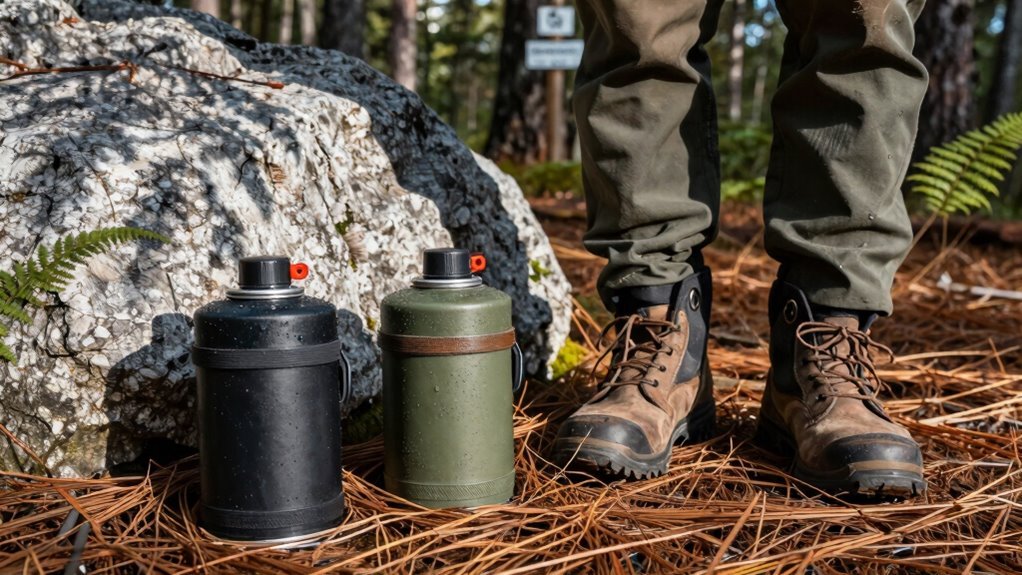
- You’re required to use bear canisters in places like Yosemite, Denali, and Yellowstone—no exceptions unless lockers are provided.
- On the PCT and JMT, you’ll need them in California’s high country and select forests; better pack one just in case.
- Alaska’s Gates of the Arctic and Katmai? Canisters are mandatory—though rentals are free, thank goodness.
- Grand Teton and Rocky Mountain National Parks don’t play around—IGBC-approved canisters are a must from spring through fall.
- Break the rules and you could face fines up to $5,000, a one-way ticket to the trailhead, or even jail time (yes, really).
Real-World Critter Encounters and Lessons Learned
Ever wonder what happens when a curious bear meets your backpacker dinner? In Yosemite, bears have raided open canisters for trail mix, bars, even meds — one snatched food while hikers yelled and backed away.
These bears aren’t just hungry; they’re food-conditioned, bold from past wins.
Leave a canister open, and it’s basically a bear snack dispenser.
Certified models like BearVault often survive pro-bear testing, but no canister is 100% bear-proof.
Human error? Huge factor.
Cooked soup? One unsealed canister? That’s an open invitation.
And sorry, raccoons and chipmunks mightn’t open cars, but they’ll exploit any gap.
Keep canisters shut, stay close, and never tempt fate — or turn a wild bear into a junk food junkie headed for trouble.
Play it smart, and everyone (bear and human) stays wild, safe, and happy.
Setting Up Your Bear Canister: Best Practices
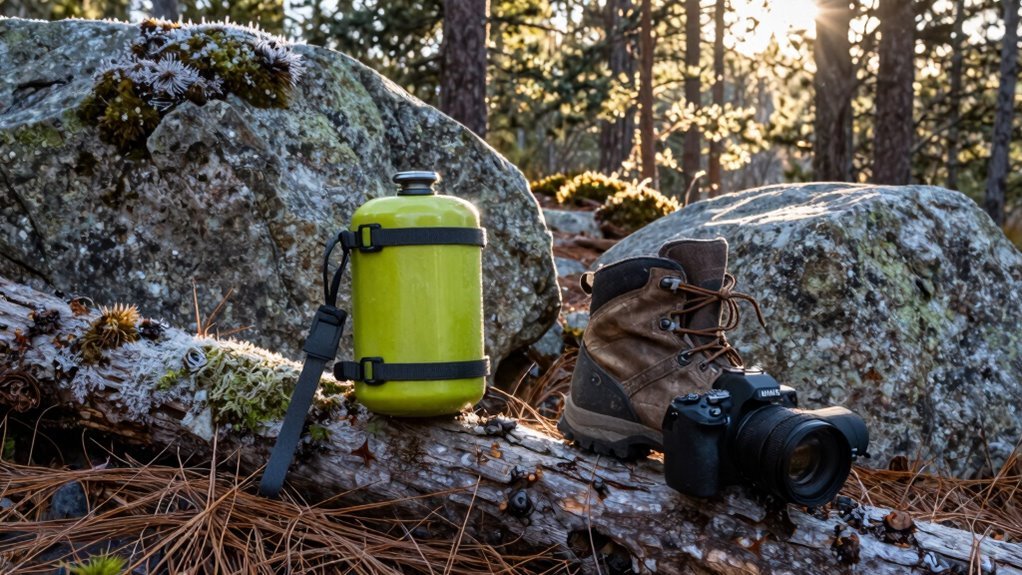
How’s your bear IQ looking—ready to outsmart a 300-pound furry opportunist?
Setting up your bear canister right isn’t just smart—it’s your ticket to sleeping soundly in griz country.
Nail it with these simple steps:
- Stash it 100 feet from camp, flipped upside-down to block rain and pesky paws.
- Load it in your pack’s core, near your back, with heavy stuff centered for balance.
- Pack meals in reverse—last night’s dinner on top—so you’re not digging at dusk.
- Tuck toiletries and scented gear inside; double-bag anything with DEET.
- Wedge it between rocks or logs, 200 feet from cooking, and keep it clean and tagged.
Do it right, and you’ve just outplayed nature’s nosiest foodie—with snacks andsanity intact.
When Boots Might Actually Make Sense
While you’re probably not lacing up your boots expecting to fend off a bear, there’s a wild truth every outdoor lover should know—your footwear can actually play a role in keeping you safe and dry when the wild throws its worst at you.
Meet BearGuard, the old-school secret made from real bear fat and Maine beeswax that keeps your boots waterproof and tough.
Backcountry legends—trappers, guides, hunters—they relied on this stuff, and now it’s back without any synthetic junk.
It doesn’t just block water; it nourishes leather, too.
Black or brown version? Both revive and protect.
Unlike silicone or mink oil, this stuff works—for real, especially on Bean boots.
One skeptic tried it on a weeks-long turkey hunt and won’t go back.
Frequently Asked Questions
Can I Use a Bear Bag Instead of a Canister?
You can’t always use a bear bag instead of a canister—it depends where you’re hiking.
If you’re on trails like the PCT or in bear-heavy zones, rangers require canisters by law, so a bag just won’t cut it.
Even if bears don’t raid your bag, they might wreck it just for fun—talk about bad luck!
Canisters are heavier, yeah, but they’re tough, waterproof, and legally approved where it counts.
Play it safe and check the rules before betting your snacks on a sack!
Are Bear Canisters Necessary for Day Hikes?
No, you don’t need a bear canister for day hikes—phew, one less thing to strap to your pack!
Just stash smelly snacks and toothpaste in trailhead lockers or your car.
Bears are nosy, so don’t tempt them with a lunch buffet.
In places like Desolation Wilderness, rules only kick in for overnight trips.
But hey, if you’ve got a canister already, why not use it?
It’s bear-proof, pack-proof, and peace-of-mind-proof!
Do Bear Canisters Work in Snowy Conditions?
Yes, bear canisters work fine in snowy conditions—you just need to keep them warm.
Tuck them under your coat or in a pocket, and they’ll fire off like a champ, even when it’s freezing.
Snow won’t stop them, but a cold canister might sputter.
Think of it like your fingers—stiff and slow when icy, zippy when warmed up.
Keep it cozy, aim right, and you’re good to go—bear spray’s got your back, no matter the winter wonderland chaos.
Can I Rent Bear Canisters Near Trailheads?
Yes, you can rent bear canisters near trailheads—no need to hike in unprepared!
Spot them at visitor centers like Taylor Creek by Lake Tahoe or Yosemite’s wilderness hubs.
They’re easy to grab, affordable, and often right where your adventure starts.
Just show up, snag one, and go!
It’s way smarter than letting a bear raid your snacks.
Who knew staying safe could be this simple—and kinda fun?
Are There Bear-Resistant Backpacks Available?
You won’t find bear-resistant backpacks—wouldn’t that be handy, though?
Instead, you’ve got bear-resistant food bags like the Ursack Major or Adotec Grizzly Bag.
They’re light, tough, and IGBC-certified, meaning grizzlies have tried and failed to crack them.
Just stash your food inside, hang it right, and sleep easy knowing dinner’s safe.
Not magic, but pretty close!
Conclusion
You zip through trails, laugh at squirrels, dream of summit views. You pack smart, sleep sound, keep critters guessing. Bear canisters shield your snacks, save your trip, *and* the wild. Boots? Great for feet, not for food. You respect the rules, protect the places, stay one step ahead. You choose safety, simplicity, surprise-free nights. You choose the canister—because dinner’s too precious to gamble on a dirty shoe.
References
- https://academic.oup.com/jmammal/article/94/2/378/910245
- https://bearwithus.org/understanding-bears/searching-for-food/
- https://andrewskurka.com/food-protection-techniques-in-bear-country/
- https://www.pnt.org/pnta/know-before-you-go/plan-your-trip/food-storage-pnt/
- https://backpackinglight.com/dispatches/the-nose-of-a-bear/
- https://www.nps.gov/articles/bearsafetyfood.htm
- https://igbconline.org/be-bear-aware/food-storage/
- https://wildlifemanagement.institute/node/18
- https://www.battlbox.com/blogs/outdoors/how-to-protect-food-from-bears-while-backpacking
- https://defenders.org/blog/2015/12/too-tough-bears