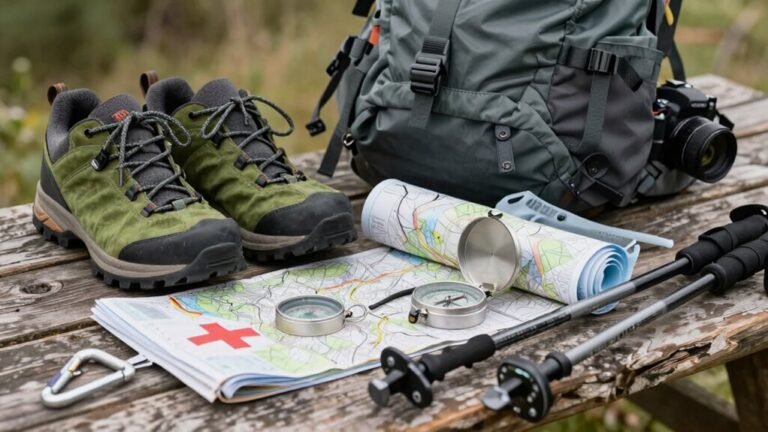
Do You Really Need Boot Fit?
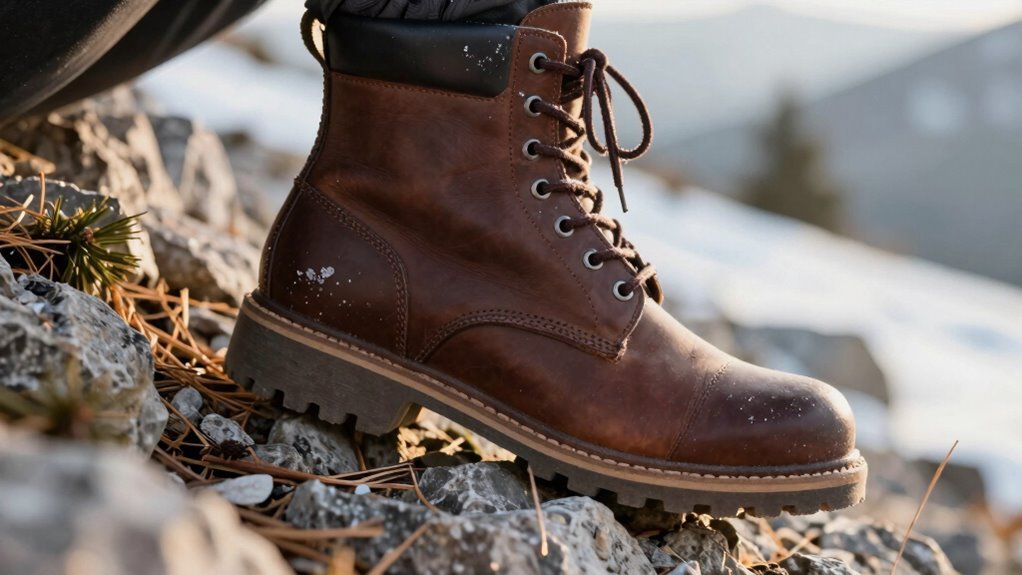
You really do need the right boot fit—honestly, your feet will thank you. A proper boot fit ensures comfort and support, helping you stay on your feet longer without pain.
A snug, comfy boot boosts your stride and prevents blisters, keeping your whole body aligned. No more achy knees or grumpy back from wobbling around due to ill-fitting footwear.
Plus, good arch support gives you a little energy boost with each step—like tiny foot power-ups! Skip the pain and embrace the pep in your walk.
And hey, there’s even more fun stuff to uncover about keeping your soles happy.
Why Boot Fit Matters More Than You Think
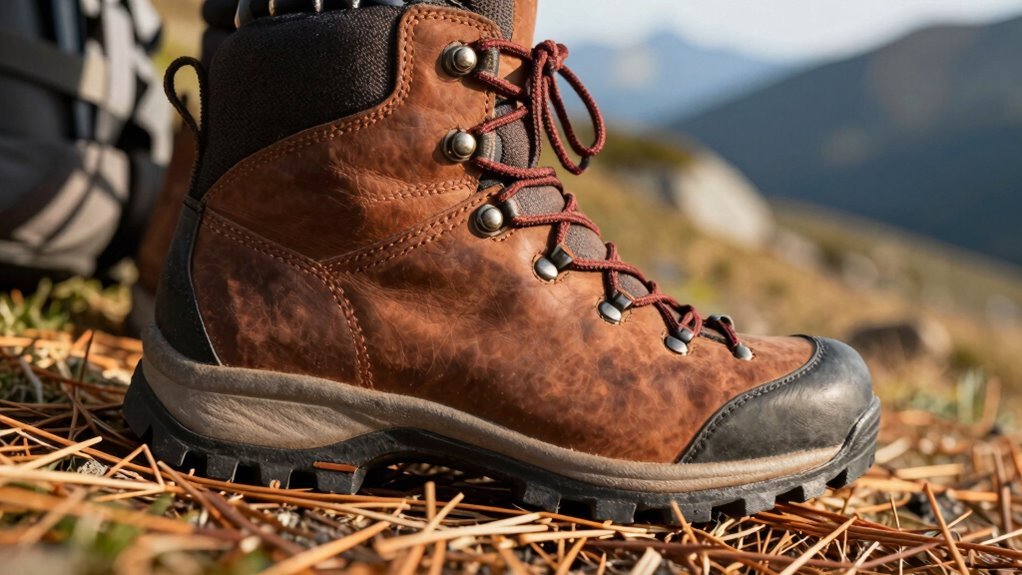
Ever wonder why your feet feel like they’re throwing a full-blown protest by midday? It’s probably your boots—they might look tough, but if they don’t fit right, they’re working against you.
Snug, well-fitting boots boost your performance, helping you move faster and with less strain.
They cut down on foot pressure, support your natural stride, and keep you stable on slippery or uneven ground.
You’ll dodge slips, avoid blisters, and say goodbye to constant foot fatigue.
Plus, a proper fit means no painful break-in period—your boots should feel good from day one.
When your shoes move with you, not against you, you’re sharper, safer, and way more productive.
And let’s be real, happy feet mean you’re not counting minutes till quitting time.
Great fit isn’t just comfort—it’s your secret weapon for powering through the day with energy, balance, and way more wins.
This is especially true when your boot selection includes profession-specific features that match your job’s physical demands.
How Poor Fit Leads to Foot Problems
Your boots might look like they mean business, but if they’re squeezing, slipping, or rubbing the wrong way, they’re actually setting you up for trouble.
You’re not alone—63% of people wear the wrong size, and more than half of workers link foot pain to poorly fitting footwear.
Tight boots squish your toes, leading to bunions, hammertoes, or even Morton’s neuroma, which might need surgery.
Flip-flops? They’re basically betrayal in sandal form—no support, just corns and pain.
Blisters, calluses, and nerve damage aren’t just ouch-worthy; they’re red flags.
Over time, bad fit messes with your whole body’s alignment, making your knees and back pay the price.
And let’s not forget—slippery, sloppy boots can boost fall risks or even, in extreme cases, lead to amputations.
Poorly designed footwear can also result in inadequate shock absorption, increasing stress on joints and connective tissues.
The Role of Arch Support in Comfort and Stability
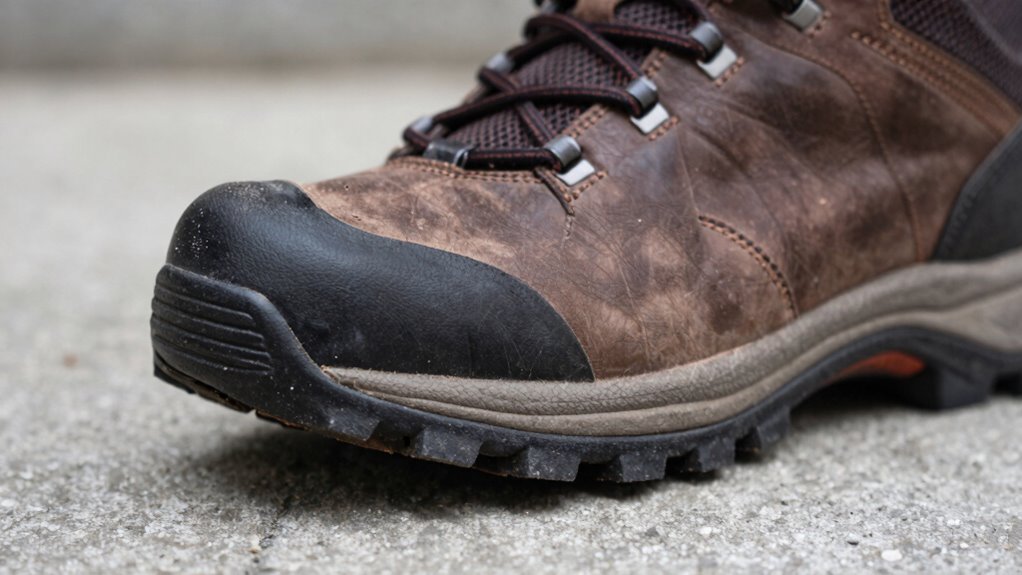
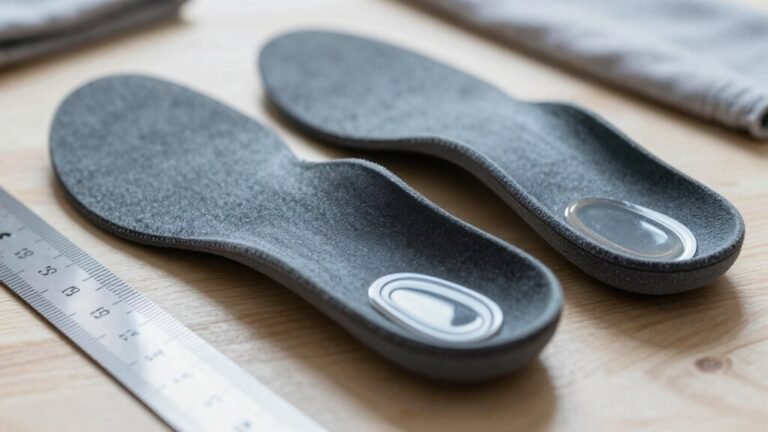
What if the secret to happier feet wasn’t just in the boot, but in the hidden hero underneath—the arch support doing silent gymnastics with every step? It’s true—you’re not just standing, you’re spring-loading with every move thanks to that sneaky little curve holding you up.
Arch supports keep your feet from flattening out like tired balloons, preventing pain and plantar fasciitis before it starts. They smooth out pressure, especially on your heel and ball of foot, and even return up to 17% of energy to help push you forward—talk about a free upgrade!
They stabilize your stride, fix overpronation, and keep your whole body aligned, so you’re not wobbling like a wonky table.
Whether you’re flat-footed or high-arched, this unsung MVP keeps you balanced, comfy, and ready to tackle the day—one bouncy step at a time. Dual-density construction enhances both cushioning and stability for optimal support.
Finding the Right Toe Room for Healthy Movement
How does it feel to let your toes do a little dance every time you take a step? Pretty great, right?
A wide toe box lets them splay naturally, reducing stress and keeping your stride smooth.
You’ll avoid nasty issues like bunions, hammertoes, and blisters—if your toes are squished, yikes, no thanks!
Aim for 10–12 mm of space past your longest toe; that’s roughly ⅜” to ½”.
Not enough room? You’re begging for misalignment and pain.
Hiking or working? Keep 1–5 mm above toes to handle swelling or steel toes without bumps.
Kids need extra wiggle room too—their feet are still growing!
A roomy, rounded toe box spreads pressure evenly, boosts circulation, and keeps feet strong.
Think of it as a happy home for your feet.
Trust me, your toes will thank you with every step.
Happy feet = happy life!
Matching Boot Fit to Your Activity Level
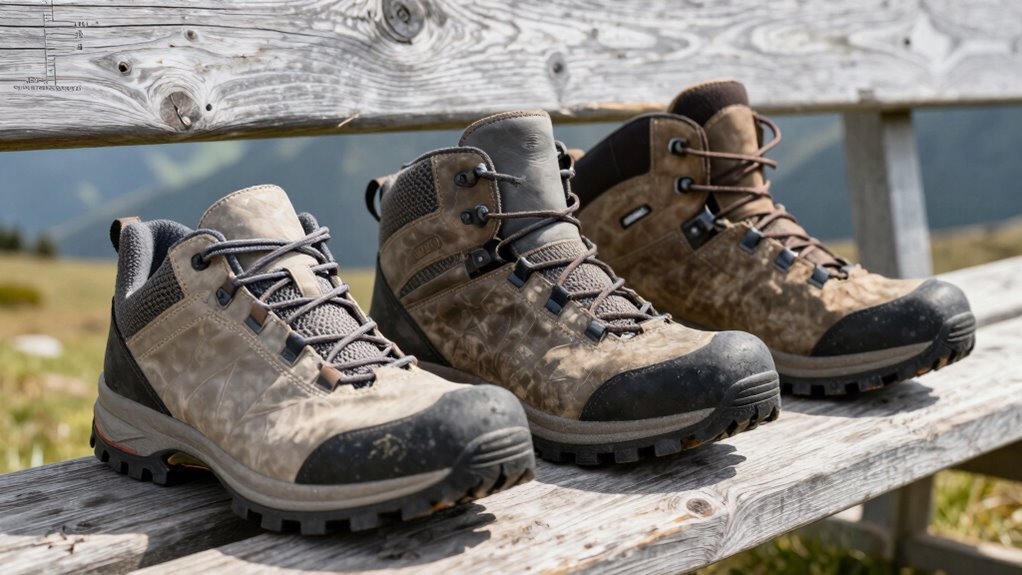
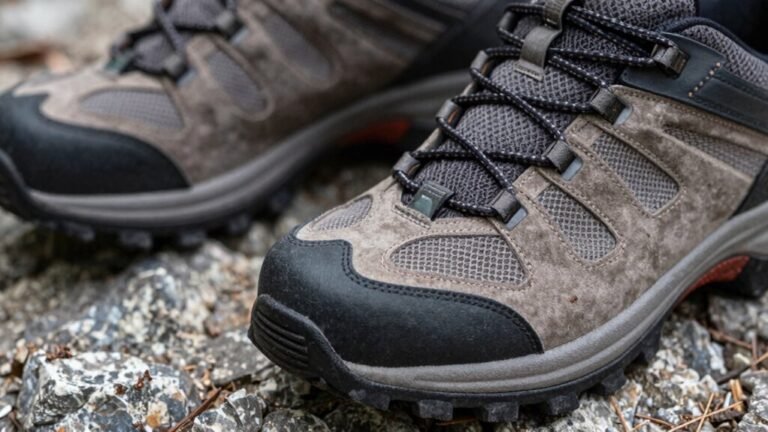
A roomy toe box keeps your feet happy, but what works for a stroll in the park mightn’t cut it when you’re climbing a muddy trail
or hauling a heavy pack.
If you’re trekking uphill with a full load, stiffer, supportive boots help manage the extra stress on your knees and hips—your body will thank you.
But if you’re speed-hiking or trail running, lighter shoes with less stack height let you move freely and breathe easier.
Heavy boots hike up your heart rate and breathing, so match the shoe to your pace.
Think about it: why wear mountain armor for a nature walk?
Your activity level changes how your body moves and tires.
Choose wisely—your fitness, comfort, and even your cortisol levels depend on it.
Go big when the trail demands it, go light when you’re out for fun.
Your adventure, your rules—but make ’em fit!
Signs Your Boots Are Too Tight or Too Loose
Ever had your boots scream at you mid-hike?
It’s not just drama—tight boots squish your toes, leaving them numb or tingly, and if you can’t wiggle them freely, it’s a red flag.
You’ve seen toe creasing or felt that dull ache?
That means they’re too small.
On the flip side, if your heel slips with every step or blisters pop up from foot sliding, your boots are likely too loose.
Blisters, calluses, and shiny red marks are your skin’s way of begging for mercy.
Feel instability, foot cramping, or see weird bulges through the sides?
That’s a fit disaster in motion.
Even worse, improper fits can lead to shin bang, toe bang, or long-term pain.
Whether it’s circulation cuts or annoying heel lift, your feet are talking—listen closely.
A happy foot means a happy hike, so don’t ignore the whispers before they turn into screams!
Steps to Achieve a Perfect Fit Every Time
You’ve heard your boots loud and clear—maybe even a little too loudly, with every toe crunch and heel slip shouting for attention.
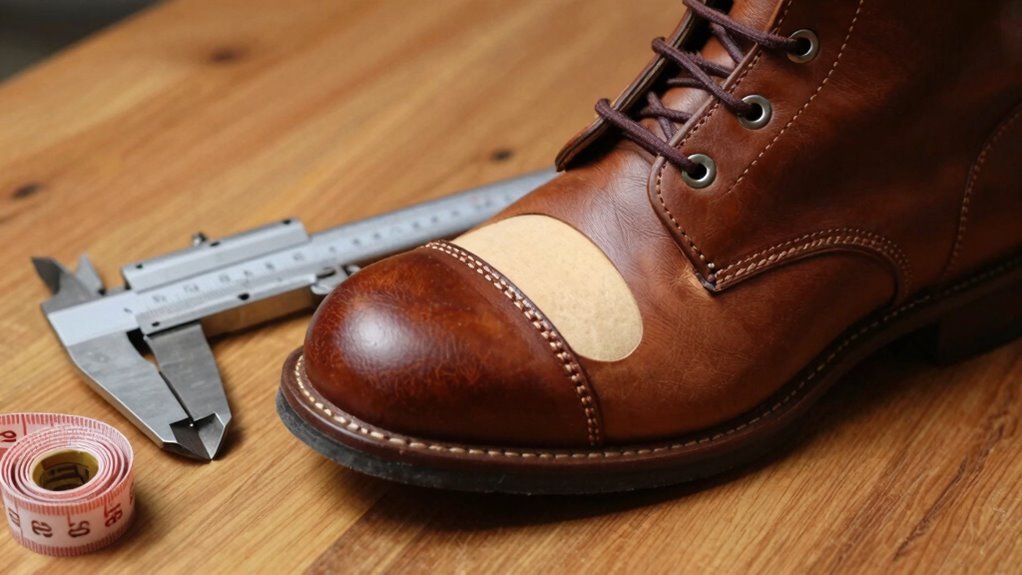
Stop guessing and start scanning: 3D tech and pressure pads map your foot like a high-tech fingerprint.
Your fitter checks for bunions, arch quirks, and volume—no foot left behind.
Try shells like you’re speed-dating boots; big toe to the front, wiggle room for your heel (one to one-and-a-half fingers—that’s science!).
Need tweaks? Heat-mold liners, pour in squishy memory foam, or let experts stretch, grind, and shim like boot whisperers.
Align cuffs and orthotics so knees track true, then hit the slopes to test ride.
Love them? Done. Feel a hot spot? Pop back in—fine-tuning is part of the magic.
Perfect fit isn’t luck—it’s skill, tech, and a little boot love.
Frequently Asked Questions
Can I Wear Orthotics With Fitted Boots?
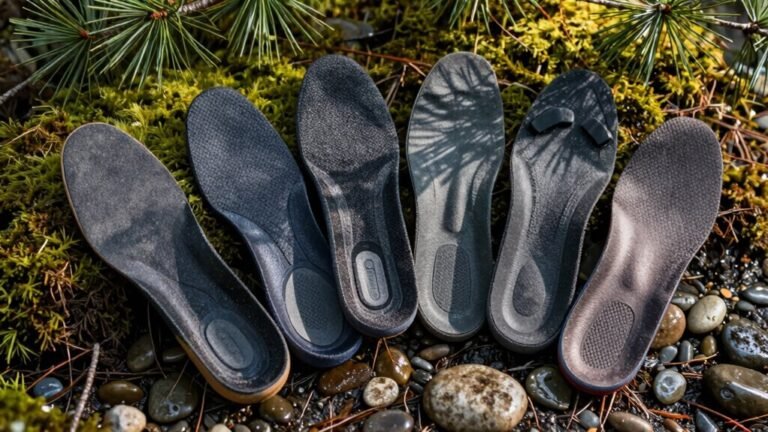
Yes, you can wear orthotics with fitted boots—just make sure they’re roomy enough to avoid squishing your toes!
Swap out the stock insoles, try ¾-length orthotics for a snugger fit, and always test them with your favorite socks.
Some boots fight back, but the right pair makes your feet feel like they’re on a cloud.
Trust us, happy feet mean happy days—all season long!
Do Boot Sizes Vary by Brand?
Yeah, boot sizes really do vary by brand—no two are exactly alike!
You might wear a size 9 in Red Wing but need a 10 in Dr. Martens.
Brands use different molds, so your foot gets a unique fit every time.
It’s kind of like dating: one size never fits all!
Always try boots on, or at least check reviews.
Trust us, your feet will thank you later—no one wants surprise blisters on a big adventure!
How Often Should I Replace My Boots?
You should replace your boots every 6 to 12 months, depending on how hard you work them.
If you’re on your feet all day or in tough conditions, swap them every 6 months—safety first!
Watch for smooth soles, squished cushioning, or cracks, and don’t wait until they’re held together by duct tape and hope.
Rotate pairs, keep ‘em clean, and hey, your feet will thank you—no one wants surprise blisters on a Tuesday.
Are Snug Boots Supposed to Loosen Over Time?
Yes, snug boots do loosen a bit over time—think of them like a stiff new song that finds its groove after a few plays.
Leather flexes, liners mold, and pressure points ease, especially around the heel.
But don’t expect magic—they won’t stretch like sweatpants!
Wear them regularly, let them dance with your feet, and they’ll settle into a comfy, supportive fit that feels like they were made just for you.
Can I Stretch Boots if They’Re Slightly Tight?
Yeah, you can stretch boots if they’re slightly tight—no sweat!
Just don’t go all Hulk on them.
Condition the leather first, then use a stretcher, spray, or heat *gently*.
Wear them with thick socks and wiggle around—think cozy, not torture chamber.
Target tight spots, check often, and avoid overdoing it.
A little love goes a long way.
Soon, they’ll feel like they were made for your feet.
Phew!
Conclusion
Perfectly planned boots prevent blisters, boost balance, and banish boredom on every adventure. Don’t dodge discomfort—detect the details: snug spots, sad soles, or sliding sideways. Seek support, secure spacing, and seriously satisfying strides. Your feet will thank you with trust, tenacity, and tons of trail-trotting thrills. So step smart, stay snug, and savor every stride—superb fit sets you free!
References
- https://www.beckshoes.com/work-blog/the-science-behind-work-boot-fit-ensuring-safety-and-comfort-for-your-busy-feet
- https://www.boafit.com/en-us/content-hub/why-fit-matters/does-fit-of-footwear-matter-performance
- https://iambic.co/blogs/news/the-importance-of-proper-shoe-fit-human-global-impacts
- https://ohsonline.com/articles/2022/08/25/finding-the-right-fit.aspx?m=1
- https://www.boafit.com/en-us/content-hub/why-fit-matters/does-fit-footwear-matter-performance
- https://pmc.ncbi.nlm.nih.gov/articles/PMC9518076/
- https://www.hexarmor.com/posts/expert-work-boot-tips-for-men-and-women
- https://pmc.ncbi.nlm.nih.gov/articles/PMC11352624/
- https://badworkwear.com/blogs/workwear/the-importance-of-choosing-the-right-size-in-work-boots
- https://work-fit.com/blog/what-6-qualities-should-a-good-work-safe-boot-have/