Hiking Shoes Checklist for Your Next Hike
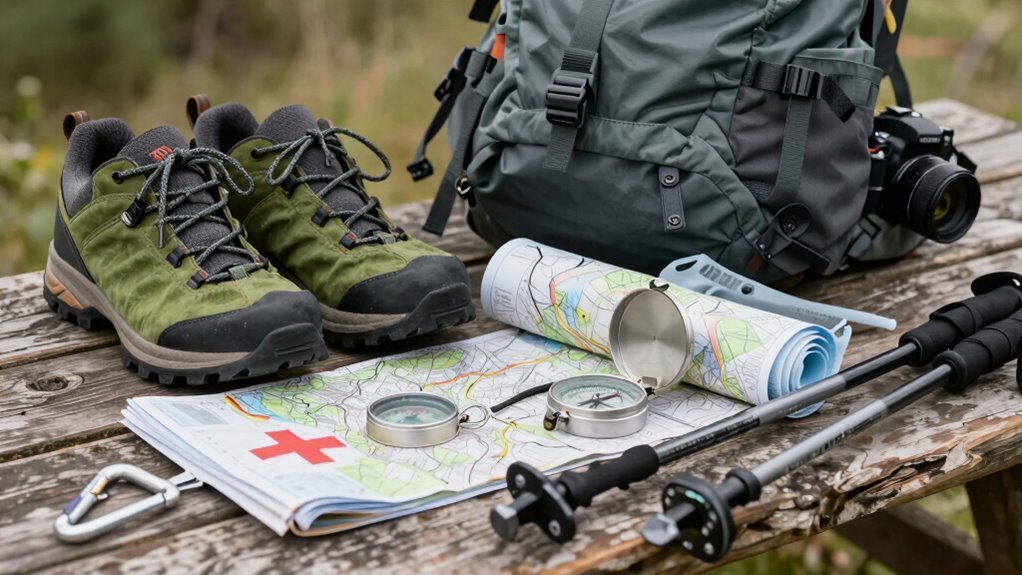
When choosing hiking shoes for your next hike, prioritize grip—look for sticky rubber outsoles like Vibram and aggressive lug patterns that tackle slick rock and muddy trails with ease. A solid tread design ensures stability and reduces slip risk on uneven terrain.
Make sure your hiking shoes fit snugly but not too tight, allowing room for your toes to move and eliminating any heel slip. A proper fit enhances comfort and prevents blisters during long miles on the trail.
Waterproof hiking shoes are excellent for wet conditions, keeping your feet dry in puddles and light rain. However, breathable liners help prevent excess sweating, balancing moisture control and comfort.
Opt for models that offer ankle support and ample sole cushioning to handle rough terrain and reduce fatigue. Lightweight hiking shoes make each step easier, especially on extended hikes.
Durable materials like reinforced nylon and leather resist rips and abrasions on rugged trails. Investing in high-quality hiking shoes means better performance and longevity over time.
Traction and Outsole Design
Ever wonder why some hiking shoes grip like a mountain goat while others slip like a banana peel?
It’s all about traction and outsole design.
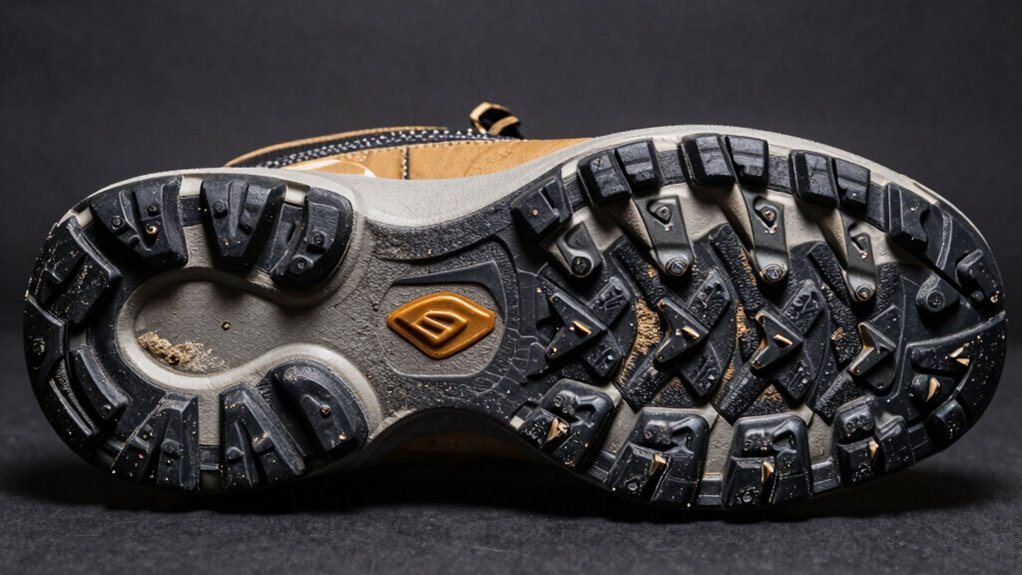
You need lugs—those chunky rubber bits—that dig into dirt, not just look tough.
Spaced hexagonal or multi-directional lugs? Perfect for gravel, mud, or slick rock.
And that rubber compound matters: softer rubber grips better when wet (though it wears faster), while harder rubber lasts longer but slips more.
Premium mixes, like Vibram or Contagrip, give you the best of both worlds.
Stiffer outsoles boost stability on steep climbs, while flexible ones feel more natural on easy paths.
Wider rubber zones and smart tread patterns mean more contact, more grip.
Oh, and brake lugs at the heel? They’re like built-in stop signs for steep descents.
Choose smart, and your feet won’t end up in a slapstick skid.
Partnerships like Vibram + Hankook are pushing material engineering to enhance grip through advanced rubber compounds.
Waterproofing and Breathability
You’ve got your grip down—those lugs are ready to claw into the trail like nature’s own crampons—but what about when the path turns soggy?
Don’t let wet socks ruin your vibe.
Waterproof membranes like GORE-TEX and B-Dry keep your feet dry in rain, puddles, and creek crossings, while still letting steam escape so you’re not hiking in mini swimming pools.
GORE-TEX Surround even breathes 360°—perfect when things heat up.
Sure, waterproof shoes aren’t quite as airy as non-waterproof ones, but with breathable recycled polyester uppers and smart venting, they’re way better than old-school rubber boots.
Nubuck leather and synthetic overlays add a tough outer shield, and fewer seams mean less chance for leaks.
The Oboz Katabatic Low LT GTX uses GORE-TEX Invisible Fit for durable waterproofing that integrates seamlessly with the upper, enhancing both comfort and moisture protection.
So go ahead, splash through that puddle.
Your socks will stay dry, promise—no fish-in-boots scenario here.
Fit and Sizing Considerations
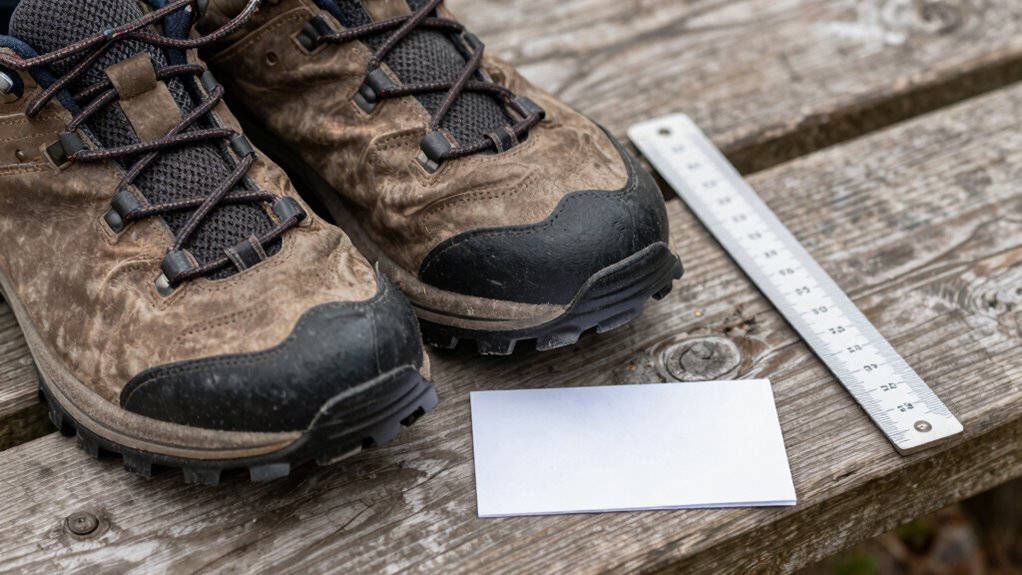
How does it feel when your hiking shoes fit just right?
Like magic, right? Your foot hugs the boot snugly—no tightness, no sliding—just enough wiggle room for your toes.
You’ve measured both feet (yes, one’s probably bigger!) and sized to the longer one.
You’re wearing your hiking socks, tried them on at the end of the day, and laced up fully.
There’s a thumb’s width between your longest toe and the tip, and zero heel lift—just a finger’s space behind.
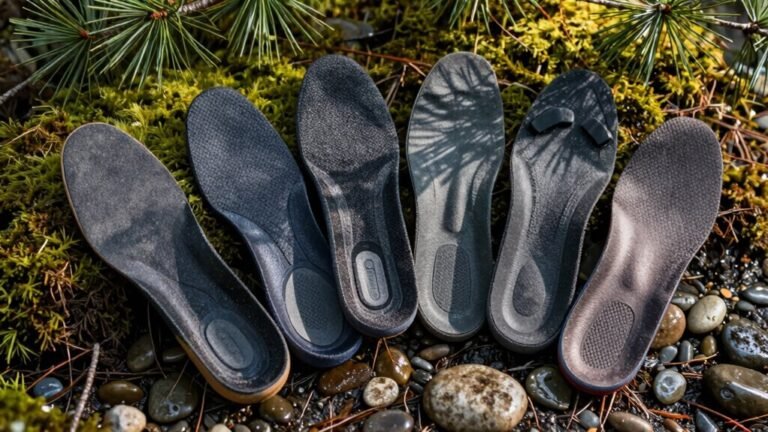
You stood on the insole, checked the fit, and maybe even tried a half size up.
Flex lines match your arch? Perfect.
Too wide? Blisters await.
Too narrow? Ouch.
Remember, leather stretches a bit—about 5%—but synthetics won’t budge.
A little width wiggle room is great, but no side-to-side slide.
Arch length is key—ensure your shoe’s flex point aligns with where your foot naturally bends to avoid strain and maintain comfort on the trail.
Happy feet mean happy trails!
Ankle Support and Stability
A solid pair of hiking shoes doesn’t just carry you up the trail—they’ve got your back, especially when it comes to your ankles.
High-top designs reduce risky twists by nearly 4.5 degrees and slow down rollouts like a pro bodyguard.
Their stiff collars and firm lacing keep your heel locked down, so no more “Oops, I slipped!” on rocky paths.
Need extra backup? Look for reinforced collars and adjustable laces—they hug weak ankles like a supportive friend.
Inside, TPU midsoles and shanks add stiffness without feeling like a brick, while rock plates block bruising from jagged surprises.
Vibram outsoles and heel brakes dig in on descents, so you stay steady.
And with grippy chevron treads, even slippery slopes don’t stand a chance.
Think of it as ankle armor—without the clunkiness.
Your joints will thank you when you’re laughing at sketchy terrain instead of limping past it.
Cushioning and Comfort Level
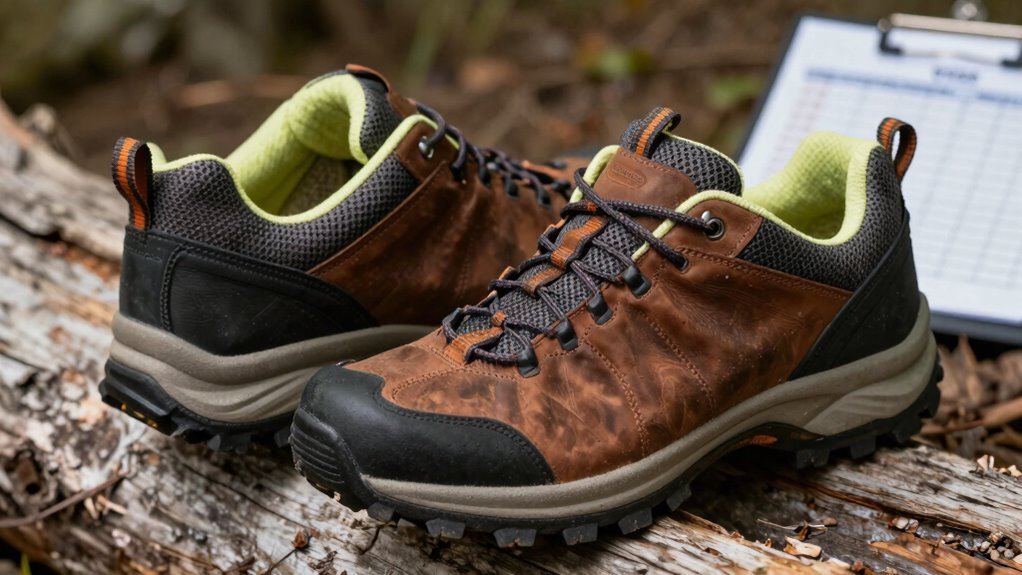
Ankle support keeps you steady, but let’s be real—your feet still need a comfy ride, especially when the trail keeps going and going like it’s training for a marathon.
Look for plush cushioning with soft top layers and firmer bases to cradle your feet while keeping them stable.
Midsoles like DNA LOFT v3 or Helion superfoam absorb impact and bounce back with every step, making rocky descents feel surprisingly smooth.
High stack heights, like HOKA’s 42mm, act like shock absorbers for your joints—your knees will thank you.
If you’re tackling hard surfaces or long distances, max-cushion shoes like the Challenger 8 or Olympus deliver leg-saving comfort.
Want a balance? Moderate options give you cushioning without losing touch with the trail.
And don’t forget a roomy toebox—swollen toes after hours of hiking? No problem.
With breathable mesh and low-durometer foam, your feet stay happy, cool, and ready for the next mile.
Weight of the Hiking Shoe
That trail isn’t going to hike itself, and neither will your boots—if they’re weighing you down like bricks in a backpack.
Lighter shoes, like the women’s Salomon X Ultra at just 0.7 lbs, help you move faster and easier.
On average, ditching heavy boots can boost your speed—light trail runners hit 3.17 mph versus 2.99 in heavier pairs.
Even small weight savings matter: every extra ounce feels like 4 times the load on your body.
Most long-distance hikers now pick light shoes or trail runners—over 95% do!
Sure, ultra-heavy boots like the HOKA Kaha 3 clock over 2 pounds, but you’re likely burning more energy with each step.
Lighter packs mean you don’t need clunky support anymore.
Just match the shoe to your needs—don’t hike a mountain if you’re really just chasing a sunrise.
Your feet will thank you later.
Material Durability and Construction
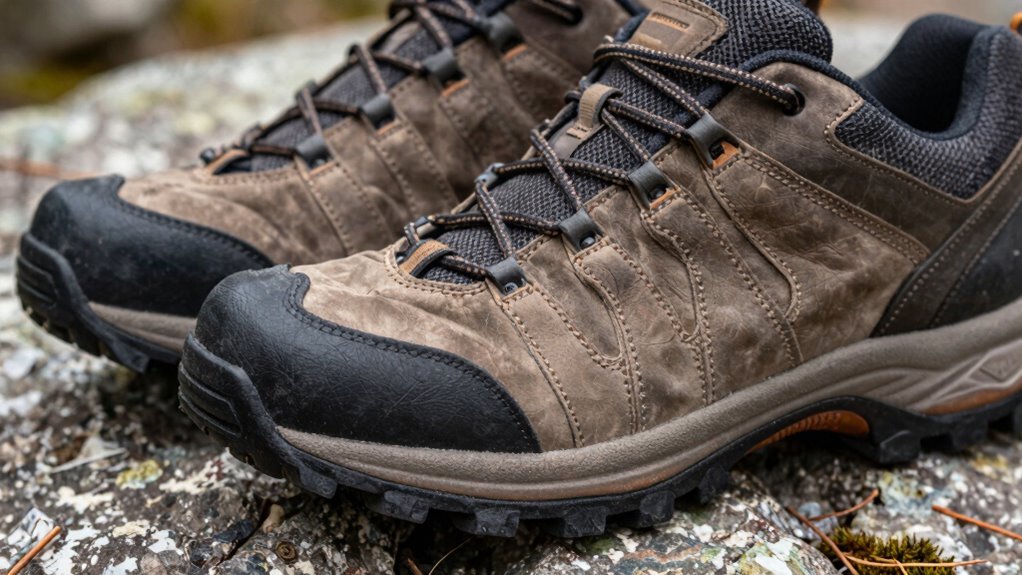
You just shed those heavy boots, so now let’s talk about what happens when lighter doesn’t mean flimsy—because nobody wants their shoes falling apart like a soggy sandwich.
Tough uppers like full-grain or nubuck leather resist scrapes and water, while synthetics keep things light and breathable.
Want durability without the bulk? Leather-synthetic blends strike a sweet balance.
Inside, EVA cushes your step, but PU or TPU midsoles go the distance on long hikes.
Supercritical foam? It’s like air-light bounce without breaking down.
Down below, sticky rubber—think Vibram Megagrip—sticks to wet rocks but wears faster; harder rubber shrugs off rough trails.
Deep lugs grip mud, while rock plates and shanks armor your feet and stop twisting.
Gore-Tex? It keeps water out and lets sweat escape—even if your feet throw a party.
Premium builds cost more, sure, but they laugh at trail abuse.
Pick smart, and your shoes won’t ghost you mid-hike.
Terrain and Trail Conditions
While you’re picking your next adventure, don’t forget the ground beneath your feet shapes how your hiking shoes need to perform—because trail terrain isn’t just dirt and roots, it’s a dynamic combo of slope, wear, and weather that can turn a peaceful hike into a wobbly mess.
You’ll want serious grip for:
- Steep, slippery slopes – especially on informal trails that dig 6.3 cm deep and get extra chewed up by off-path wanderers.
- Busy, packed pathways – where six times more hikers mean wider, flatter trails but hidden hazards like exposed roots or erosion cracks.
- Winding, uneven terrain – where smart shoe support saves your ankles when trail grade fools you with sudden dips or rocky zigzags.
Your soles aren’t just rubber—they’re your balance crew on uneven ground, so pick a tread pattern that laughs at mud, grips rock, and keeps you upright when the trail throws a curveball.
After all, nobody wants to eat dirt on a downhill dash—unless it’s metaphorically, after crushing the hike like a pro.
Frequently Asked Questions
How Do I Break in New Hiking Shoes?
You break in new hiking shoes by wearing them around the house first—yep, even with socks and insoles, like you’re sneaking snacks at midnight.
Start with 2-3 hours, then walk the block, town, or even to grab coffee.
Gradually hit tougher trails, and if they’re leather, soften ‘em with a hairdryer or dampness—just don’t go full caveman with heat.
Listen to your feet; they’ll tell you what’s up.
Can I Wear Hiking Shoes for Everyday Use?
Yeah, you can wear hiking shoes every day, but they’re not always the best pick for city life.
They’re tough and supportive, sure, but they’re also heavy, less flexible, and can make your feet sweat buckets on pavement.
Think of them like all-terrain trucks—awesome off-road, overkill at the mall.
For daily errands or walking urban streets, lighter, breathable shoes like trail runners or comfy sneakers let your feet breathe and move naturally—your dog will still think every sidewalk’s a trail.
Are Expensive Hiking Shoes Worth the Cost?
Yeah, expensive hiking shoes aren’t always worth it—you *can* find killer deals.
Sure, you’d think pricier means better, but budget models like the Merrell Moab 3 or Quechua MH100 crush it just as hard.
They’re light, comfy, and tough, thanks to smart materials like EVA foam and waterproof kicks.
Save your cash, skip the brand tax, and still stomp through mud like a boss.
Your feet (and wallet) will thank you later—with dry socks *and* extra snacks money.
Win-win!
How Often Should I Replace My Hiking Shoes?
You should replace your hiking shoes every 500 to 800 miles, or roughly every 12 to 18 months with regular use.
If the treads look slick, the soles feel flat, or your feet start aching more than usual, it’s time for a new pair.
Think of it like socks—just way less cute, but way more important.
Keep an eye on wear, and you’ll keep crushing trails in comfort!
Do I Need Special Socks for Hiking Shoes?
Yeah, you absolutely need special socks for hiking—regular ones just won’t cut it.
They keep your feet dry, comfy, and blister-free while tackling trails.
Think of them as your foot’s best friend: cushioned, supportive, and sweat-wicking.
Plus, they smell way better than cotton crew socks (no one wants stinky feet at camp).
Pair ‘em with your hiking shoes and boom—happy feet, awesome adventures!
Conclusion
You’ve got this! Just ask Sarah, who learned the hard way when her flimsy sneakers turned into soggy pancakes during a sudden downpour in the Smokies. With the right hiking shoes—solid traction, breathable but waterproof, snug but not tight—you’ll crush trails like a pro. Light on your feet, tough on terrain, they’re basically superhero boots for your adventures. Now go out there and step into fun, one awesome hike at a time!
References
- https://runrepeat.com/guides/insights-into-road-and-trail-running-shoe-outsoles
- https://www.cleverhiker.com/footwear/hiking-boot-shoe-soles-for-grip-traction-different-terrains/
- https://www.backpacker.com/gear-reviews/deep-dive-hiking-footwear-outsoles/
- https://shoemakersacademy.com/outsole-design-for-footwear/
- https://stories.hanwag.com/en/sole-facts-everything-about-hiking-shoe-grip/
- https://kahtoola.com/traction/microspikes-footwear-traction/
- https://www.rei.com/learn/expert-advice/hiking-boots.html
- https://www.treelinereview.com/gearreviews/best-hiking-shoes
- https://runrepeat.com/guides/best-waterproof-hiking-shoes
- https://www.rei.com/learn/expert-advice/the-best-hiking-boots.html