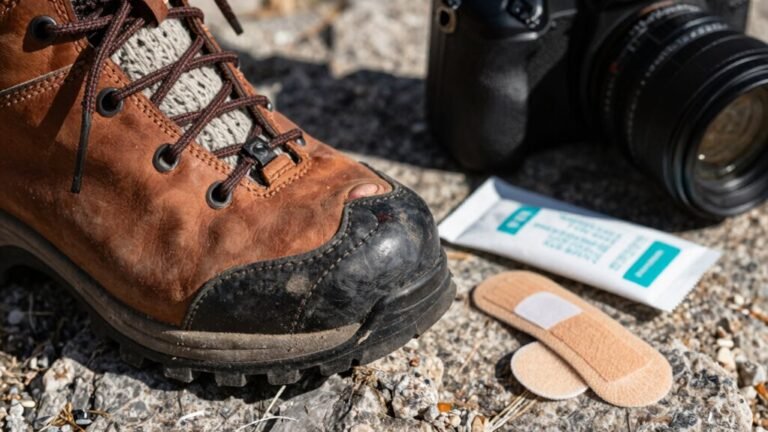
How to Choose Hiking Boots
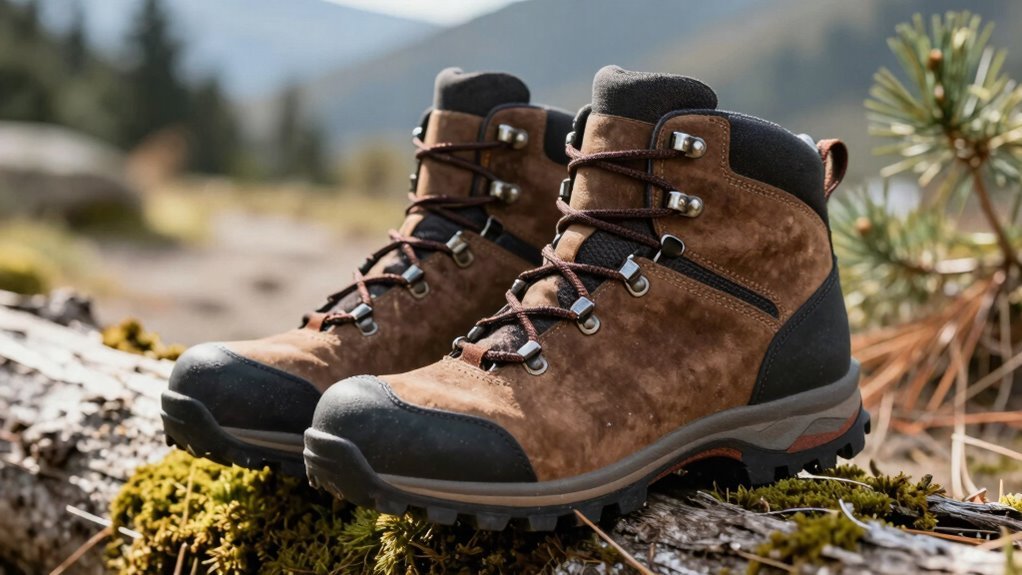
Think of your hiking boots as your trail teammates—they’ve gotta handle rocks, mud, and surprise puddles without bailing on you. When choosing hiking boots, prioritize a snug fit with room for your toes to wiggle to ensure comfort and prevent blisters.
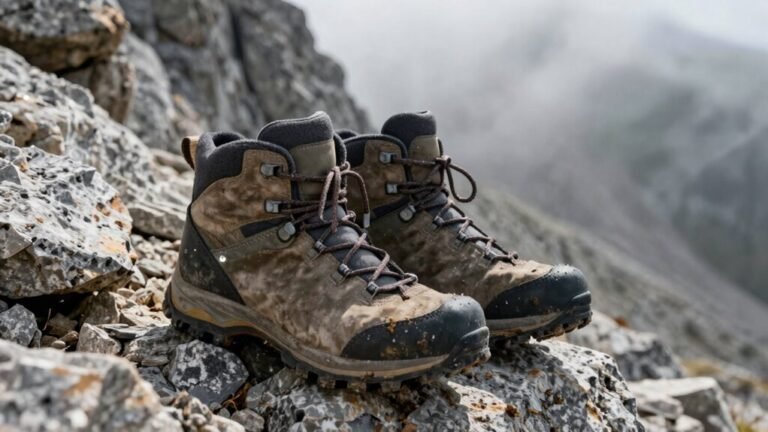
Pick mid-height hiking boots for rocky paths, as they offer added ankle support. Go rugged with full-grain leather or waterproof hiking boots if the trail gets messy with rain or streams.
Your feet will thank you when things get dicey on uneven terrain. There’s even more to consider to match your stride and hiking style.
Understand Your Hiking Terrain
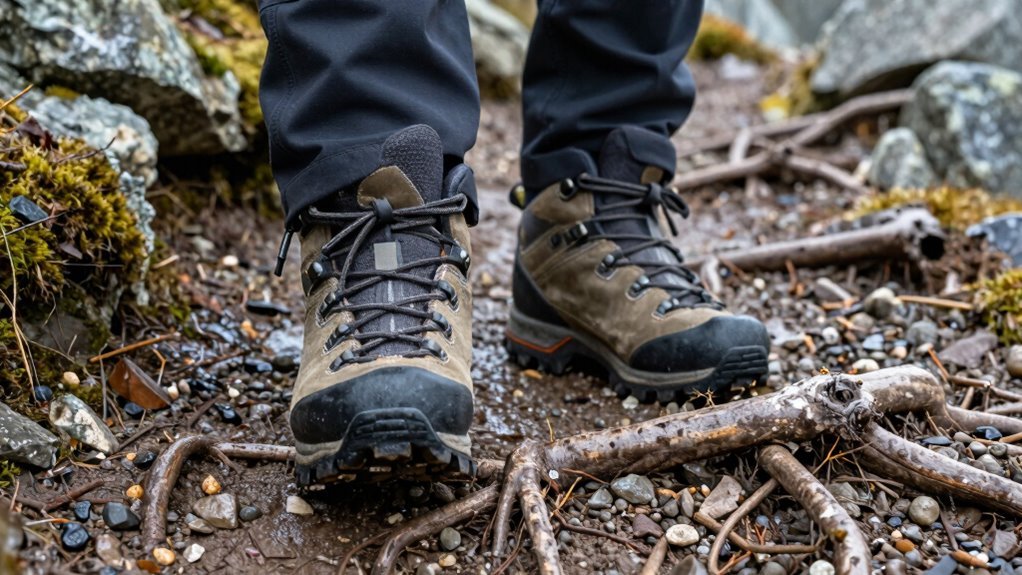
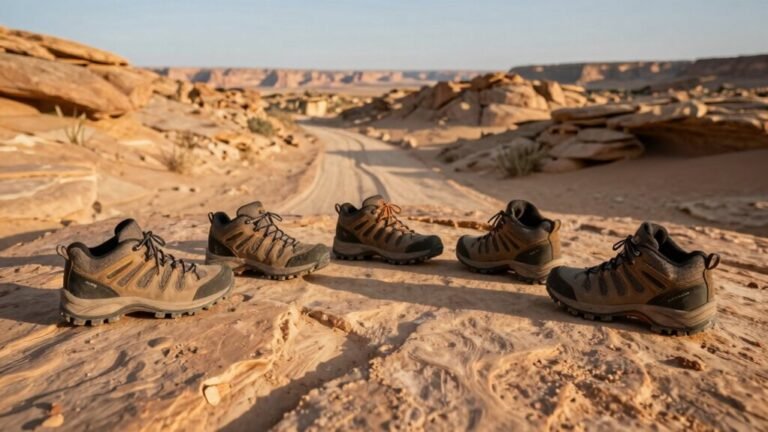
Wondering what kind of ground you’ll actually be stepping on out there?
Well, it’s not just dirt and pretty views—your boots will tackle all kinds of wild surfaces.
If you’re hiking on scree or talus, you’re walking on loose, wobbly rocks that shift like marbles underfoot.
Boulder fields? You’ll be scrambling over giants, using your hands like a mountain goat.
Slickrock trails are smooth and grippy when dry, but they turn slicker than a banana peel when wet.
Hard-packed dirt trails are predictable, like nature’s sidewalk, while sandy paths suck at your steps like cookie dough.
Off-trail routes mean no map-printed path—you’re reading cairns and trusting your gut.
And snowfields? They’re scenic hide-and-seek adventures with hidden dips and drifts.
Each surface asks different things from your boots, so knowing your terrain means you won’t end up slipping, sliding, or joking your way back to the trailhead.
Route markers like cairns or painted blazes may guide your path across rocky or undefined terrain.
Prioritize Fit and Comfort
Lace up and step into the sweet spot of hiking comfort—your boots should fit like a handshake from an old friend, firm and reassuring but never squeezing.
Lock your heel in tight to stop slippage and blisters—nobody wants hot spots after mile two.
Give your toes room to dance; aim for a thumb’s width of space so they won’t slam into the front on downhills (black toenails aren’t a flex).
Snug everywhere, tight nowhere—that’s the golden rule.
Too much space above your foot? That’s a red flag.
Adjust laces to tame instep wobble and keep your heel grounded.
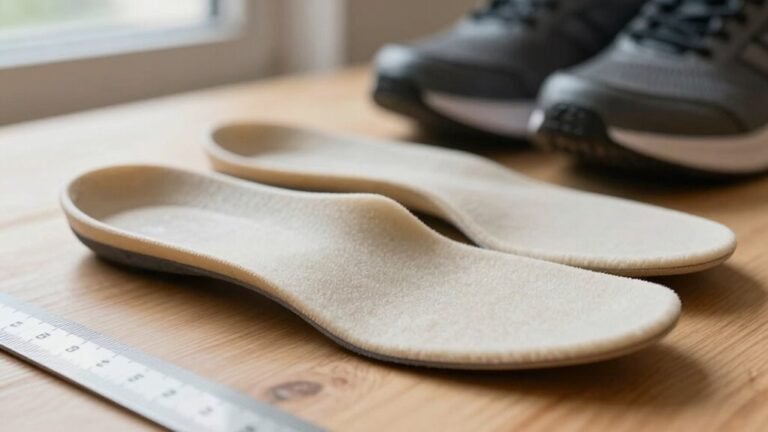
And hey, if your foot’s wide or your arch is quirky, don’t sweat it—measure up, try different lasts, or swap in a footbed.
A happy foot means a happier hike, and that’s no joke.
Make sure to heel should be locked in place to prevent friction and maintain stability with every step.
Choose the Right Boot Height
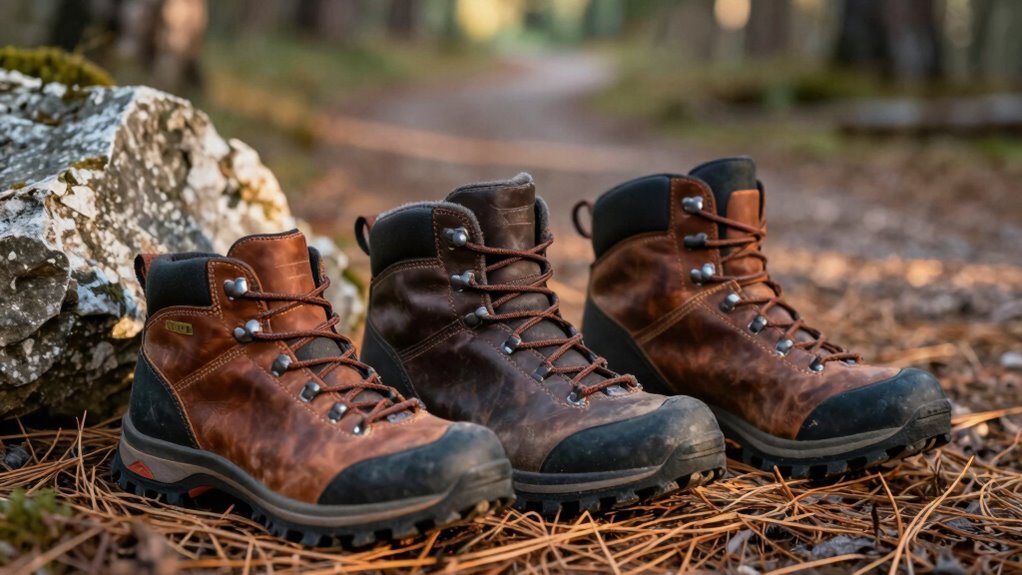
How’s your ankle feel when the trail gets rowdy?
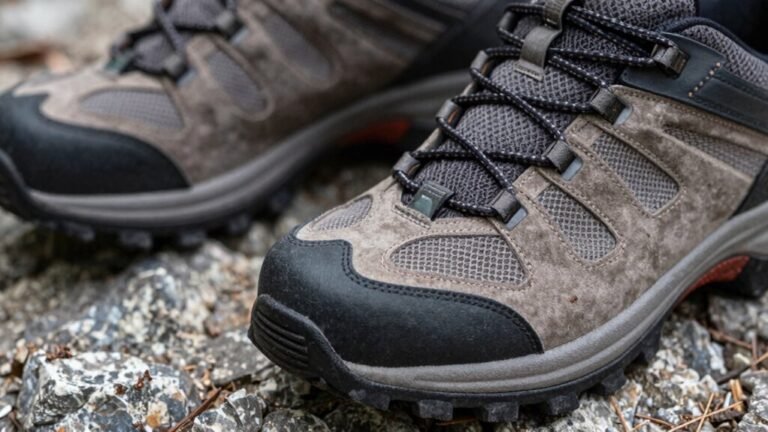
If you’re on smooth paths with light gear, low-cut boots are your go-to—lightweight, breathable, and perfect for quick, agile hikes.
But when the ground turns rocky or you’re packing a heavy load, mid-height boots step in like a trusty sidekick, balancing support and mobility while keeping mud and pebbles out.
Love scrambling off-trail or trudging through snow? High-cut boots have your back—literally—with max ankle protection and stability on gnarly terrain.
Just don’t forget: higher means heavier, so ask yourself—do you need armor, or speed?
Boot stiffness should match the terrain, with stiffer boots for rougher ground.
Match your boot height to your hike’s demands, and your feet will thank you with every step.
After all, nobody wants a twisted ankle ruining their mountain views—choose smart, hike happy!
Evaluate Materials and Durability
What’s standing between you and that rocky ridge?
Your boot materials—and how tough they are.
Full-grain leather’s your go-to for rugged adventures; it shrugs off scrapes, handles heavy loads, and lasts forever (with care).
But it’s stiff at first—break ‘em in before going wild.
Nubuck’s sleek and tough, like full-grain’s cooler cousin, while suede’s softer, better for gentle trails.
Both need a wax coat for water protection.
Want lighter kicks?
Split-grain and synthetics blend nylon and leather for breathability and comfort, but trade some durability.
Don’t forget midsoles—EVA cushions your stride, while TPU delivers support for long hauls.
Supercritical foam? Magic for comfort minus weight.
Rock plates, TPU shanks, and Vibram soles armor your feet against twisting and wear.
Pick smart—they’ll save your soles (literally).
Consider Waterproofing Needs
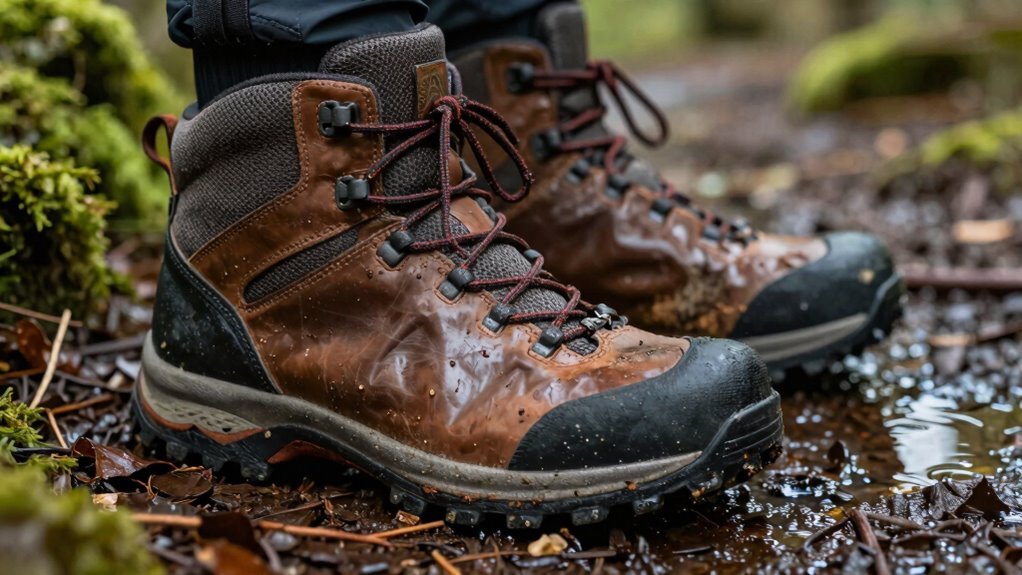
You’ve picked your materials, and now it’s time to think about staying dry—because no one wants soggy socks halfway through a hike.
If you’re trekking through puddles, mud, or morning dew, waterproofing is your best friend.
Boots with Gore-Tex or Merrell Waterproof membranes keep water out while letting sweat escape—seriously, they pass 10-minute dunk tests with ease.
Microporous membranes work like tiny breathing straws, and non-porous ones, like Sympatex, wick moisture through magic chemistry.
Just remember: more waterproofing often means less breathability, so don’t wear them on super hot days unless you’re okay with sweaty feet.
Leather and suede love wax treatments to boost water resistance, especially nubuck with Gore-Tex Invisible Fit.
For wet trails or backpacking, go for Salomon Quest 4 GTX or Scarpa Rush 2 GTX—they’ve got you covered.
Stay dry, stay happy, and keep those toes toasty!
Frequently Asked Questions
How Long Do Hiking Boots Typically Last?
Your hiking boots usually last between 500 and 1,000 miles, depending on how much you use them and where you take them.
If you’re clocking serious trail time, expect around 800–1,200 km before they start sagging like tired socks.
Rocky paths and heavy loads speed up wear, especially on soles.
Keep them clean, reproof them, and store them right—you’ll stretch their life further than your last pair of jeans.
Can I Wear Hiking Boots for Everyday Use?
You can wear hiking boots every day, but here’s the twist—they *love* trails more than sidewalks.
They’ll hug your ankles like a supportive friend and grip wet streets like magic, true, but pavement wears them down fast.
Plus, they’re chunky, a bit sweaty in summer, and need a break-in dance you won’t forget.
Light models? Perfect for city strolls.
Heavy-duty ones? Save ‘em for adventures—your feet will thank you later!
Are Expensive Hiking Boots Worth the Cost?
yeah, expensive hiking boots are worth it if you’re tackling tough trails, scrambling over rocks, or trudging through squishy bogs regularly.
they’re tougher, last longer, and coddle your feet like a luxury hotel.
but if you’re just strolling park paths or hiking occasionally, a solid budget pair works just fine—save your cash for snacks, because nobody regrets more trail mix.
How Do I Clean and Maintain Hiking Boots?
You clean and maintain hiking boots like you’re prepping a muddy puppy for a spa day—gentle but thorough.
After every hike, knock off dirt, then deep clean twice a year with a specialized gel and stiff brush.
Never toss them in the washer—trust me, I once turned my favorite boots into floppy pancakes that way.
Rinse, air dry naturally, and re-waterproof while slightly damp to keep them trail-ready and happy.
Should I Buy Hiking Boots a Size Larger?
Yeah, you should usually go a half to full size up—that extra room keeps your toes happy when they start swaying like they’re on a trail dance.
Feet swell, boots pack down, and downhill hikes get brutal without it.
Just make sure you’re not swimming; snug sides and no heel slip are a must.
Think Goldilocks: not too tight, not too loose, just right with a thumb’s wiggle room up front.
Conclusion
You’ve got this! Think of Sarah, who swapped her flimsy sneakers for sturdy, ankle-high hiking boots before tackling the muddy Pacific Crest Trail. Instant game-changer—no blisters, just bliss. When you pick the right pair, your feet stay happy, dry, and ready for adventure. Remember, comfort isn’t luck—it’s choice. Lace up wisely, laugh at puddles, and let every step feel like a high-five from your future self. Hiking boots? More like joy-launchers!
References
- https://www.adventuresingoodcompany.com/hikers-glossary-part-1-trail-types-2
- https://wildlandtrekking.com/trip-rating-system/
- https://myoutdoorbasecamp.com/hiking-class-system-explained/
- https://www.fs.usda.gov/recreation/programs/trail-management/documents/trailfundamentals/02-TrailPhotosHandout_Sec508_01-24-17_150dpi.pdf
- https://www.nps.gov/subjects/trails/types-of-trails.htm
- https://bookatrekking.com/en/blog/sac-hiking-scale/
- https://www.outdoors.org/resources/amc-outdoors/outdoor-resources/hiking-footwear-101/
- https://www.thehikinglife.com/2020/08/trail-runners-vs-hiking-boots-a-30-year-perspective/
- https://commons.nmu.edu/cgi/viewcontent.cgi?article=1605&context=theses
- https://www.rei.com/learn/expert-advice/hiking-boots.html