Beginner Guide to Hiking Boots
You want hiking boots that match your hike, not just your foot size, right? Choosing the right hiking boots means considering the terrain, load, and conditions you’ll face on the trail.
Pick flexible hiking boots for easy, well-maintained trails where agility matters. For rocky or uneven paths, go with sturdier hiking boots that offer more protection and stability.
When carrying a heavy pack or tackling rough terrain, opt for tough, durable hiking boots with strong support. Look for grippy soles, solid ankle support, and waterproofing if you’ll face mud or streams.
Make sure your hiking boots fit snug but not tight, with room for toes to wiggle. Break them in slowly and wear the right socks to prevent blisters—your feet will thank you, especially when the trail gets tough.
Understanding Hiking Boot Types
Thinking about hitting the trail but unsure which boots to lace up?
You’ve got options, and it’s not just about looks—your adventure decides the right fit.
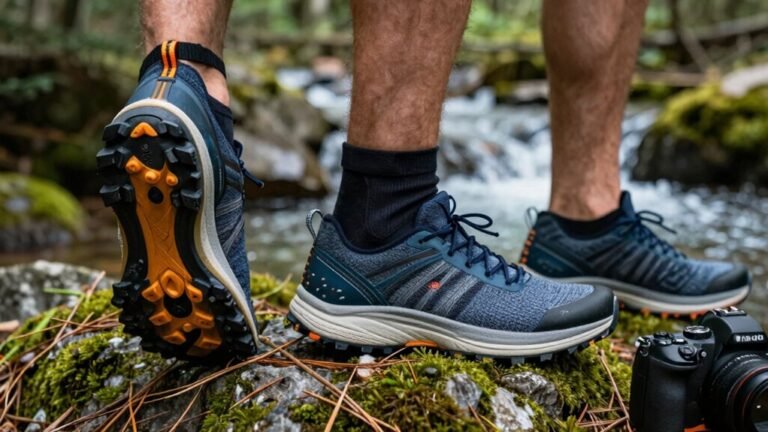
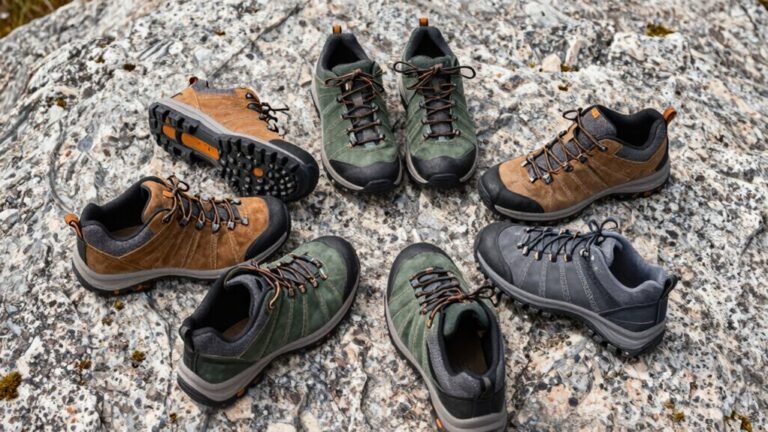
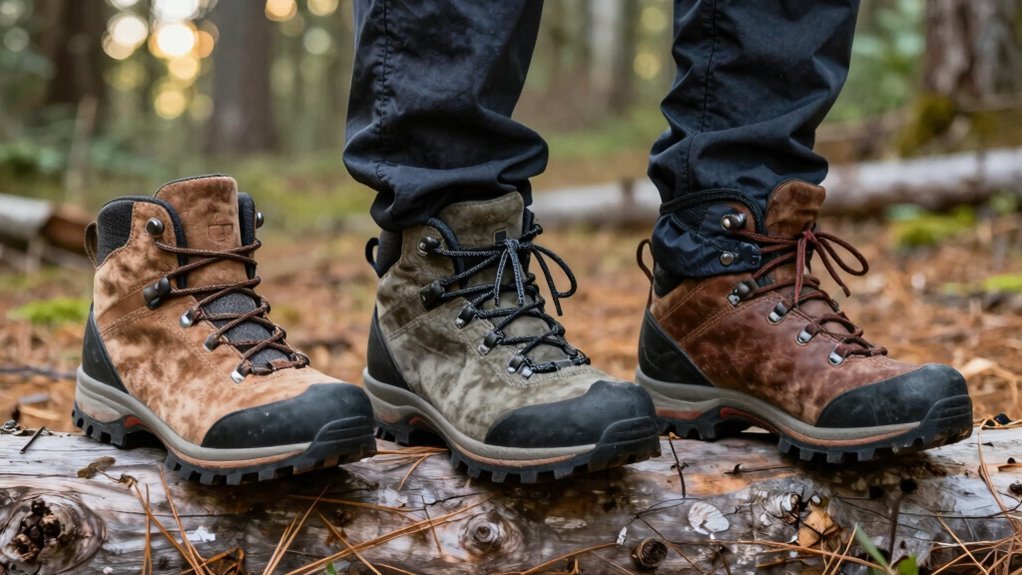
If you’re strolling on smooth paths with a light pack, grab flexible Category A boots—they’re comfy like sneakers but won’t bail on dirt trails.
Hitting rocky roots or weekend hikes? Category B steps in with mid-weight support and solid grip—most beginners start here, and for good reason.
Go wild off-trail or carry heavy gear? Category C’s stiffness and armor-like protection have your back, even if they take time to break in.
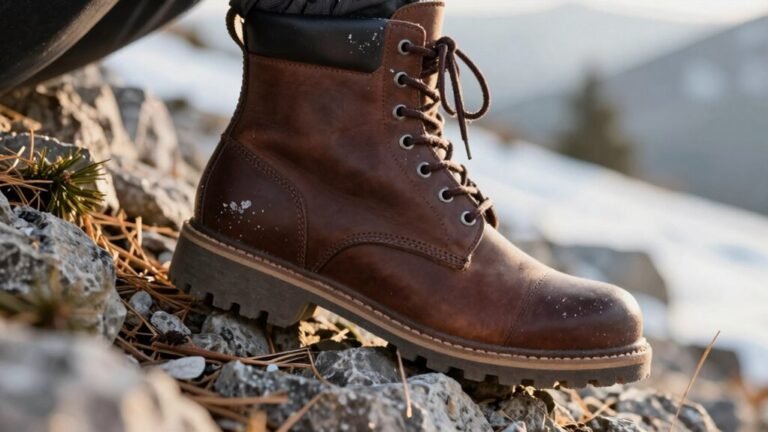
And if you’re chasing snow or scrambling up snowy peaks, mountaineering B1–B3 boots bring the heat—literally, with insulation and crampon-ready soles.
Pick your path, then pick your boot—your feet will thank you later! These boots often feature torsional stiffness to match the terrain and load demands.
Key Features to Look For
You’ve picked your trail type and nailed down the boot category—now it’s time to talk features that’ll make those boots work for you, not against you.
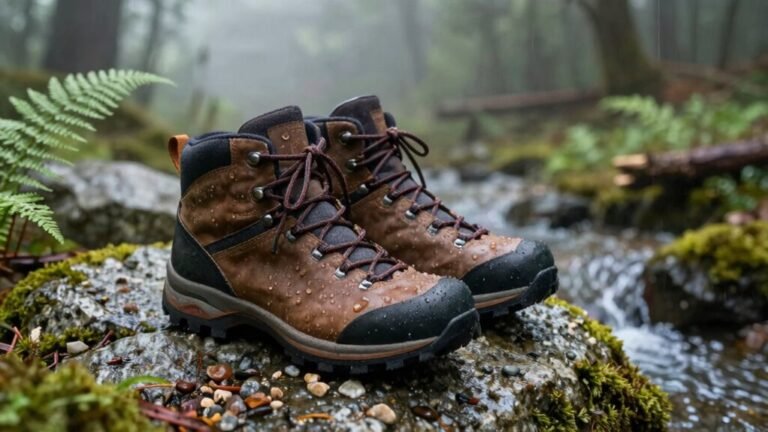
Look for waterproofing like GORE-TEX® or Spotex if you hate soggy socks—it keeps water out and breathability in, though your feet might run hot in summer.
For grip, go for deep lugs on the outsole; Vibram® soles are tough and clingy, especially in mud, thanks to widely spaced patterns.
Need cushioning? EVA is light and comfy, while polyurethane lasts longer and supports heavy loads.
Stiff midsoles and shanks add stability on rocky paths—think of them as your foot’s bodyguard.
Higher cuts offer more ankle support, great for uneven terrain or if you’re a little clumsy.
Don’t skip protection: rubber rands, reinforced toes, and durable leather shrug off scrapes and stubs like they’re no big deal.
Your foot may swell during long hikes, so ensure there’s enough room in the toe box to prevent blisters and discomfort, especially in the afternoon when feet swell about 5%.
Choosing the Right Fit
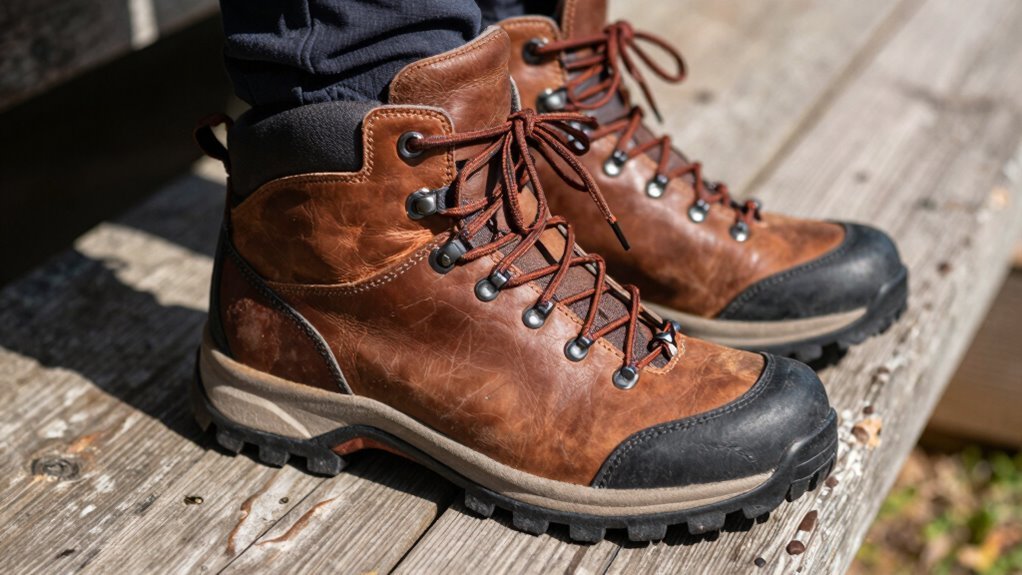
How does it feel when your boot fits just right—like a handshake from an old friend, not a wrestling match?
You’ll know it when your foot feels snug but never squeezed, with toes wiggling freely and heels locked in place.
Start by measuring your longer foot—use a Brannock device or your thumb: leave about a finger’s width past your longest toe.
Push your foot forward to check for two fingers’ space at the heel.
Wear your hiking socks when trying them on, lace up, and walk around—pretend you’re already on a trail.
Check for side-to-side wiggle, and make sure the arch bend matches yours.
If it pinches, it’s too tight; if it slides, it’s too loose.
Leather molds over time, but don’t count on miracles.
When it feels *just right*, you’ll be ready—happy trails!
Make sure to test the boots in the evening when your feet are slightly swollen for a more accurate fit, as feet naturally enlarge during the day.
Materials and Their Benefits
When you step onto the trail, your boots are your co-pilots, and what they’re made of makes all the difference.
Full-grain leather’s tough—it laughs at rocks and roots, shrugs off water, and gets comfier with wear, even if it’s a bit stuffy.
Nubuck’s like its cooler cousin: just as tough but with smoother style and a little more flex.
Split-grain leather trims the cost and weight, great for breezy day hikes, though it won’t grunt through years of mud like full-grain.
Synthetics? Lightweight and quick-drying, they’re the breathable, budget-friendly champs—just don’t expect them to survive a yeti encounter.
Hybrids, though, are the smart mixers: they blend leather and synthetics for durability, breathability, and comfort, making them trail stars without the baggage.
Your boot’s material shapes your hike—so pick one that matches your adventure, not just your foot.
Waterproof vs. Non-Waterproof Options
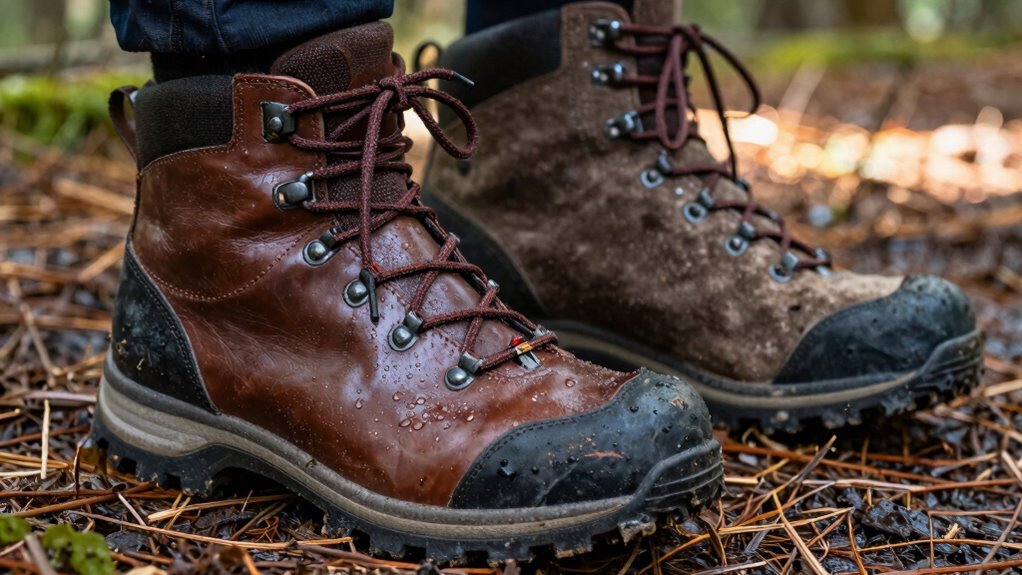
Now that you know what your boots are made of, let’s talk about what they’re up against—water.
If you’re trudging through puddles, snow, or streams, waterproof boots with GORE-TEX or a full bootie seal the deal—literally.
They withstand serious wetness, though they trap sweat like a sauna (not ideal when your feet start marinating).
Non-waterproof boots, on the other hand, breathe better and dry fast—perfect for hot hikes or surprise creek dips.
Mesh uppers let your toes party in the breeze, and draining water? No problem.
Waterproof might sound like a win, but in warm, dry weather, your feet might rebel.
They’re heavier, less flexible, and membranes wear out.
For most sunny trails, non-waterproof keeps you cool and comfy.
Choose waterproof for soggy terrain, but don’t overpack protection where you don’t need it—your feet will thank you.
Ankle Support and Stability Explained
Ever wonder why your ankles don’t wobble like jelly on a steep trail?
That’s thanks to your boot’s ankle support and stability features kicking in.
Mid- to high-cut collars hug your ankle, while firm lacing keeps everything locked down—no more surprise rolls when you step on a loose rock.
Need extra oomph?
Ankle guard boots with reinforced collars and stiff midsoles (often with TPU or EVA) add serious stability, especially with a heavy pack.
Shanks and rock plates add hidden strength, stopping twists and bruising on rugged terrain.
Lacing matters too—snug up, and your heel stays put, reducing slippage and fatigue.
On rocky or slippery trails, this combo keeps you steady, confident, and upright (much better than face-planting in mud).
Whether you’re day hiking or climbing scree slopes, good support means less wobble, fewer aches, and way more fun.
How to Break In Your Hiking Boots
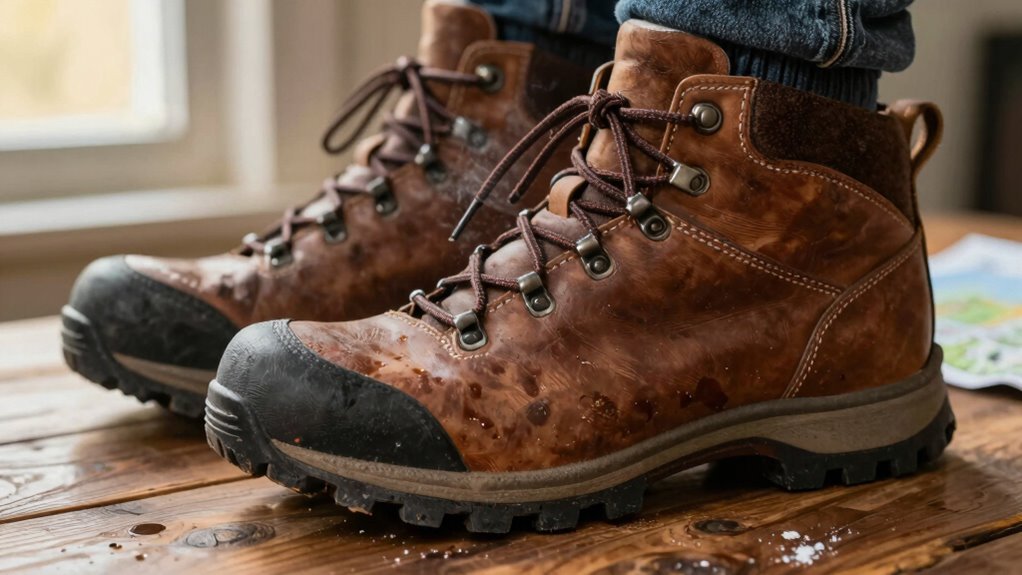
Breaking in your hiking boots doesn’t have to feel like a battle between your feet and a pair of cardboard tanks.
Start by wearing them around the house for a couple hours each day with the socks you plan to hike in—merino wool works great, and skip the cotton!
Make sure the tongue’s straight and they’re laced snugly.
Feel any hot spots?
That’s your cue to adjust or tape early.
After a week, head outside for short walks on flat ground, gradually increasing distance over 1–2 weeks.
Leather boots love a little damp—try walking in morning dew—while synthetics break in faster.
Stiff mountaineering boots? Yeah, they’re the drama queens, needing extra time.
Never soak, freeze, or bake them—seriously, no shortcuts!
Prevent blisters with moleskin and proper lacing, like a surgeon’s knot.
Your feet will thank you when trail time comes.
Caring for Your Boots After the Trail
You’ve trekked through mud, danced over roots, and earned every scuff on your boots—congrats, your feet survived the wilderness in one piece!
Now, don’t just toss them in the corner like yesterday’s socks.
Treat your boots right so they keep doing all the heavy lifting (and foot-lifting) on future trails.
Here’s how:
- Pull out the laces and give the soles a good knock or scrub to ditch the dirt clumps.
- Wash the uppers with lukewarm water, gentle soap, and a soft brush—keep it chill, not boiling.
- Let ‘em air dry (no radiators or hairdryers—seriously, your boots aren’t spaghetti).
- Once dry, re-lace and stash ‘em in a cool, dry spot—your boots will thank you next hike.
A little love goes a long way—your soles deserve the aftercare!
Frequently Asked Questions
Can I Wear Hiking Boots for Everyday Use?
Yeah, you can totally wear hiking boots every day—you’ve got great support and grip for walking around town or tackling uneven sidewalks.
Just remember, they’re a bit heavy and stiff, so your feet might huff and puff at first.
Break them in slow, or they’ll give you blisters instead of compliments.
Once they mold to your feet? Pure comfort.
Perfect for long days on your feet, but maybe skip them for dance class.
Are Expensive Hiking Boots Worth the Price?
Yeah, expensive boots can be worth it—if you’re hiking tough trails where grip, support, and durability matter.
But if you’re strolling on easy paths, splurging’s overkill.
Mid-range boots like the Merrell Moab 3 nail comfort and quality without breaking the bank.
Think terrain, not price tags.
Your feet (and wallet) will thank you when you match the boot to the adventure—no need to pay for mountain-tech features on a walk in the park!
How Often Should I Replace My Hiking Boots?
You should replace your hiking boots every 500 to 1,000 miles, depending on how much beat-up they take.
If you’re clocking 10 miles a week, they’ll last about 1–2 years.
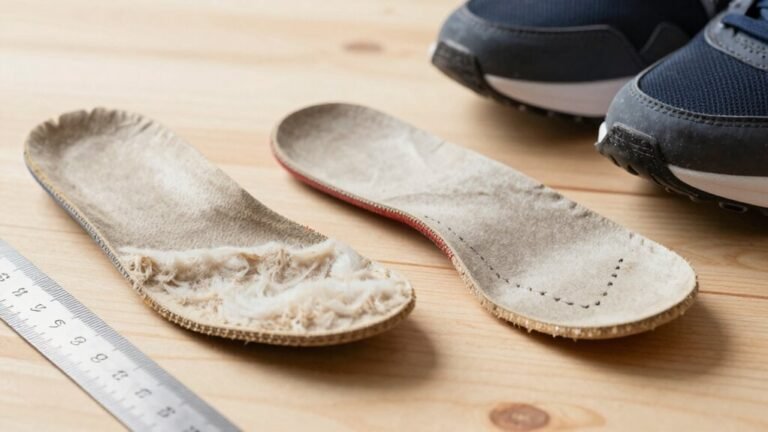
Watch for worn treads, stiff insoles, or cracks—your feet will complain before you notice!
Swap them sooner if hikes start feeling like torture sessions.
Rotate pairs and clean them often—they’ll thank you by lasting longer (and so will your feet).
Do Hiking Boots Work in Snowy Conditions?
Yeah, hiking boots can handle snow, but only if they’ve got the right features.
You’ll want waterproofing like Gore-Tex, insulation for warmth, and grippy outsoles—Vibram Arctic Grip’s siped rubber rocks on ice.
Without those, you’re basically wearing fancy paperweights in a blizzard.
Traction? Essential.
Add microspikes for icy trails.
Stick to packed paths, keep moving, and your toes won’t turn into popsicles.
Snow’s no joke, but your boots don’t have to cave.
Can I Machine Wash My Hiking Boots?
No, you can’t machine wash your hiking boots—don’t even think about it!
The machine will wreck the glue, ruin the shape, and destroy the materials, leaving your boots sad and saggy like a deflated balloon.
But hey, relax!
You can toss the laces and insoles in the wash, just not the boots.
Stick to hand cleaning with a damp sponge, mild soap, and a soft brush.
Air dry with newspaper inside, keep them away from heat, and they’ll stay happy, healthy, and ready for adventure.
Conclusion
So, you’ve picked the perfect hiking boots—congratulations! You’re all set to conquer mountain peaks, only to realize your backyard trail counts as “adventure” this weekend. Who knew blister prevention involved breaking in boots more than breaking your promises to floss? Just remember: perfect fit, proper care, and a little mud never hurt anyone. Well, except your socks—they’re definitely getting ditched along the way. Happy hiking!
References
- https://footstepsintheforest.com/different-types-of-hiking-boots/
- https://www.highlandascents.co.uk/2023/11/decoding-mountaineering-boots/
- https://www.trekking-alps.com/how-to-choose-alpine-hiking-boots/
- https://www.mammut.com/us/en/stories-guides/how-to-choose-the-right-hiking-boots
- https://www.adamantgear.com/blogs/news/70394947-the-four-categories-of-hiking-footwear
- https://www.absolute-snow.com/buying-guides/the-absolute-guide-to-mountaineering-boot-grades-b0-b1-b2-b3
- https://www.overlookboots.com/blogs/boots/the-different-types-of-boots-and-their-uses
- https://www.rei.com/learn/expert-advice/hiking-boots.html
- https://meindlusa.com/blogs/meindl-blog/how-to-choose-the-right-pair-of-hiking-boots
- https://nicksboots.com/blogs/blog/what-to-look-for-in-hiking-boots-a-guide-to-comfort-durability