How to Pace Yourself on Steep Climbs
You’ve got this! When tackling steep climbs, pace yourself by spinning at 75–90 RPM to save your legs, shifting early, and focusing on deep, controlled breathing—imagine you’re slowly blowing up a bike tire. This rhythm helps you conserve energy and maintain stamina.
Break the climb into mini-races between landmarks like trees, signs, or switchbacks to stay mentally engaged and track progress. Keep your effort steady, aiming to hold your heart rate in zone 3, and remember to sip water every few minutes to stay hydrated.
At higher elevations, ease the effort slightly—your body is working harder than it feels due to thinner air. Staying smooth and calm allows your pacing to shine. Let your rhythm do the talking, and know there’s a whole playbook of tricks waiting to make climbing feel easier.
Find Your Natural Rhythm
Finding your groove on a steep climb starts with spinning, not grinding. You’re not a steamroller—save the mashing for the flatlands!
Most riders thrive between 75–90 RPM, so aim to keep your legs spinning smooth, like a sewing machine, not like you’re crushing walnuts.
Cadences below 70 tire you out fast, while cranking above 95 burns energy like a phone on 1% battery.
Shift to an easier gear and spin—your quads will thank you.
Sure, your rhythm slows on climbs, but targeting 75–80 RPM keeps fatigue at bay.
Think light and quick, not heavy and slow.
You’re dancing up the hill, not dragging a sofa.
Spin smart, stay fresh, and save energy for the top.
After all, the only thing that should be grinding is your coffee, not your gears.
Maintaining this cadence supports optimal mitochondria function, helping your muscles produce energy more efficiently and delay fatigue.
Focus on Controlled Breathing
When the road tilts skyward and your legs start begging for mercy, don’t forget the power move hiding in plain sight—your breath.
Breathe into your belly, not your chest, letting it rise and fall like a steady tide while your upper body stays calm.
That deep diaphragmatic breath? It’s your secret weapon.
On the steepest bits, exhale hard—like you’re blowing out a row of birthday candles—to blast out stale air and suck in fresh oxygen.
Let your breath sync with your pedals: two strokes to inhale, three to empty, keeping a smooth rhythm.
Try box breathing when you need control—4 in, 4 hold, 4 out, 4 chill—and toss in sharp exhales to fight fatigue.
You’ll avoid that panicky panting, stay cooler, and actually enjoy the climb.
Who knew your lungs could be the boss of the hill?
This rhythmic, controlled breathing helps maintain core stability and supports a strong, efficient riding position even under strain.
Break the Climb Into Sections
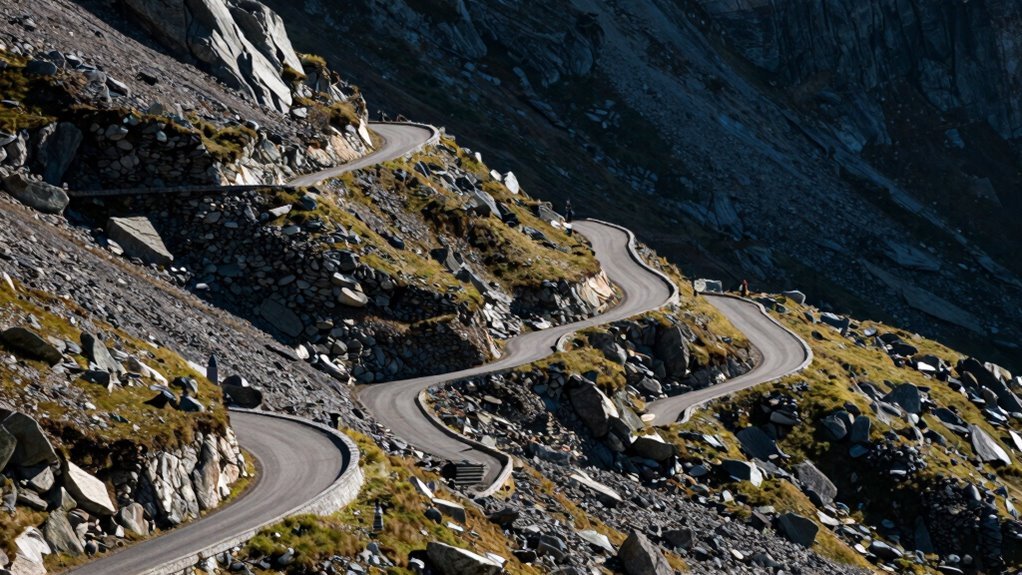
You’ve got your breath under control, riding that deep belly rhythm like a pro, so now let’s play a little mind game to beat the mountain—because staring at the top from the bottom is just asking for sore legs and second thoughts.
Chop that climb into bite-sized chunks, like three-minute segments on a ten-minute grind. Pick landmarks—bent trees, power poles, sharp turns—and race yourself to each one. Keep your rhythm smooth, seated and steady, with a cadence around 80–95 RPM. Shift early when you see steeper ground coming.
Save the standing bursts for the final push—trust me, your legs will thank you. Treat each section like a mini-effort: strong but sustainable. Nail this, and the summit sneaks up on you. Mountain? More like a staircase in disguise.
Pacing strategy helps you maintain endurance when others begin to crack.
Monitor Your Heart Rate
Ever wonder why your legs are screaming halfway up a climb while your heart feels like it’s trying to power a jet engine?
That’s your body begging for smarter pacing.
Strap on a chest-based heart rate monitor—it’s way more accurate than your watch, which lags by 5 to 10 minutes.
See, wrist monitors miss quick changes, like when you spike from 170 to 120 bpm in seconds.
Steep climbs rocket you into zone 5 fast, but you want to stay in zone 3 (around 135–141 bpm) for steady progress.
Use the MAF method to keep effort low, even uphill.
If your heart rate skyrockets, shift to an easier gear—no shame in staying in control.
Pair heart rate data with your position to spot wasted energy.
Over time, you’ll nail your zones and crush climbs without frying your engine.
Your heart will thank you—promise.
Maintain a Consistent Cadence
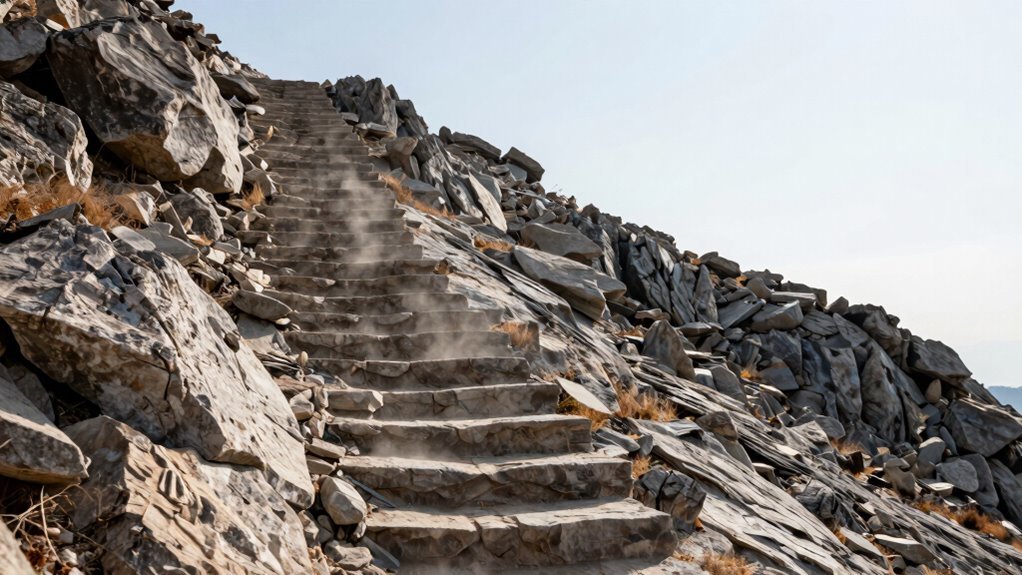
While your heart settles into its sweet spot, don’t let your legs turn into tangled spaghetti on steep slopes—keeping a smooth, steady cadence is your ticket to climbing smarter, not harder.
You’ll feel stronger and breathe easier when you spin steadily between 65–90 rpm, even if the hill wants to make you grind like a morning coffee lover.
Matching your gear to the slope helps you stay rhythmic, not ragged.
Over time, training across different cadences builds resilience and finesse.
- Find your sweet spot: spin smoothly where effort feels sustainable
- Shift smart: use easier gears on steep grades to protect your legs
- Train varied cadences: mix slow grinds and quick spins to adapt faster
- Breathe with the beat: let your rhythm guide your breath, not your burn
Consistency keeps you climbing strong, one smooth pedal stroke at a time.
Use Rest Steps Strategically
When the trail starts tilting sharply upward and your legs start whispering (or yelling) for a break, that’s the perfect time to shift from spinning smoothly to stepping smart.
Use rest steps—plant your uphill foot solidly, lock that knee, and pause just a split second.
That tiny break lets your muscles recharge without losing momentum.
Quick lift, quick pause, repeat—like a rhythmic dance up the slope.
You’ll save energy with every step, and over thousands of steps, those savings add up fast.
It’s not lazy; it’s strategic.
Think of it as “micro-naps for your quads.”
On steeper pitches, keep your arms straight, shake them out, and stay light on your feet.
You’re not plodding—you’re pacing with precision, turning burn into steady progress.
Soon, you’ll be grinning at the summit, legs surprisingly fresh, ready to say, “Again?”
Stay Hydrated Without Slowing Down
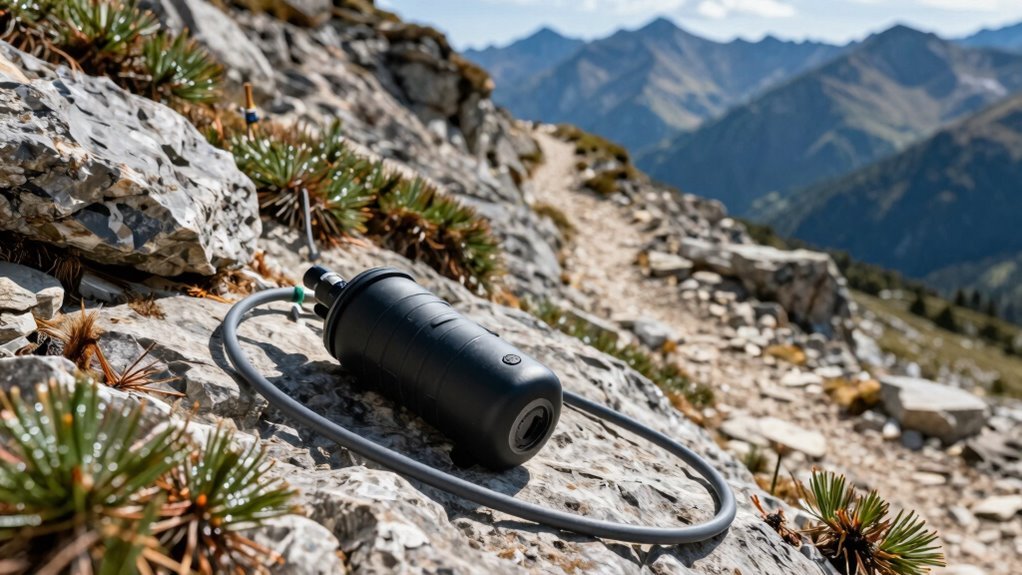
Sipping your way up a steep climb mightn’t sound like a game-changer, but trust us—it’s the secret weapon you’re not using.
You don’t need to stop to stay hydrated; in fact, you shouldn’t.
Sip early, sip often, and keep your body humming like a well-tuned engine.
Aim for 8 ounces every half hour, especially in heat, and use marked bottles or apps to track intake.
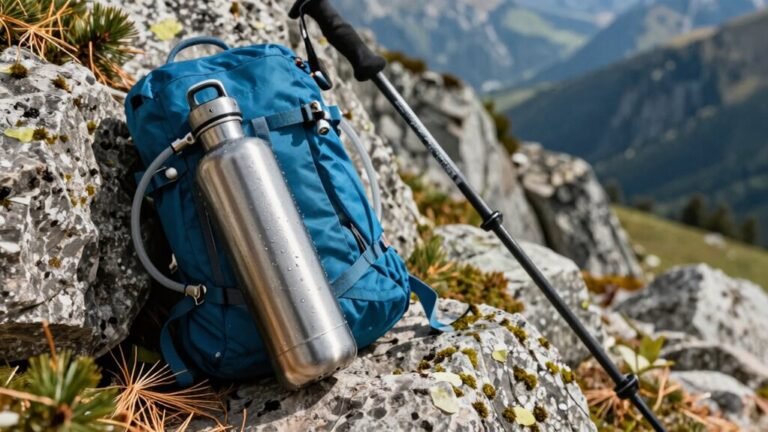
Ditch the bladder if it freezes or leaks—bottles let you see what’s left.
And hey, pee pale yellow, not dark gold—that’s the real win.
- Drink 8 oz every 30 minutes during long climbs
- Use bottle markings or apps to track sips
- Choose bottles over bladders to avoid freeze-ups
- Mix DIY electrolytes: salt, sugar, lemon, and water—cheap and tasty!
Adjust for Elevation and Terrain
Ever wonder why you’re gasping like a fish out of water halfway up a high-altitude climb—even if you’re pacing yourself perfectly?
That’s because at 5,000 feet, your FTP drops about 9%, and every 1,000 feet adds another 1% loss.
Less oxygen per breath means your heart works overtime, recovery takes longer, and sustained efforts feel brutal.
But here’s the fun twist: thinner air also means less resistance, so you’ll actually go faster at the same power.
Sprinters barely notice the altitude, but your aerobic engine takes a hit.
If you’re not acclimated, expect a rough few weeks—then, boom, your body fights back with more red blood cells.
Eventually, you’ll perform better up high, and when you return to sea level? Pure rocket fuel.
Adjust intensity during climbs, keep training volume similar, and give yourself grace.
Elevation’s tough, but it’s also your secret weapon—if you play it smart.
Frequently Asked Questions
What Gear Helps Most on Steep Climbs?
You’ll love spinning uphill when you use a low gear like a 39×27 or even smaller—it keeps your legs happy and your rhythm smooth.
Trust me, bigger rear cogs (think 34+ teeth) are total game-changers, especially on 10%+ slopes.
You’re not grinding like a coffee bean; you’re gliding with ease.
And yep, compact or triple chainrings help you conquer climbs without turning your legs into jelly.
How Do I Prevent Cramps During Long Ascents?
Back in the Stone Age, you’d have blamed cramps on angry mountain gods—now you know better!
You prevent cramps by sipping electrolytes early and often, especially every 500 feet up.
You fuel with 30g carbs per hour, stretch calves and quads at stops, and strengthen those muscles in training.
You also stay hydrated, use your Camelback, and give cramped muscles a quick massage—because nobody’s got time for drama halfway up a hill!
Is Walking Uphill Better Than Running?
Yeah, walking uphill can be better than running—especially if you want a killer workout without beating up your joints.
You still torch calories, build serious leg strength, and give your heart a great challenge, all while staying low-impact.
Running burns slightly more in the same time, sure, but hiking uphill feels like stealth fitness: it’s so fun, you barely notice you’re sweating like a sprinter.
Win-win!
Should I Eat While Climbing Steep Terrain?
Yeah, you should eat while climbing steep terrain—your body’s burning fuel fast!
Sip an energy drink or munch a gel to keep energy steady without slowing down.
Avoid heavy snacks; they’ll sit like rocks in your gut.
Think light, quick carbs with a bit of protein, like a banana with peanut butter.
And hey, starving mid-climb? That’s your cue you waited too long.
Snack early, snack often—your legs will thank you when the slope keeps going!
How Do I Train for Steeper Climbs?
You’ve got this—training for steeper climbs is like turning your legs into climbing rockets!
Mix hill intervals with Strava segments for spicy, real-world practice.
Spin in big gears on flats to mimic uphill grinds, or hop on your Wahoo for faux climbs.
Add squats and deadlifts to build muscle armor.
Practice seated, then standing, like a bike-shaped accordion.
It’s hard work, but hey—you’re not just riding hills, you’re bossing them.
Conclusion
Keep calm, climb cleverly, and conquer those crazy climbs with confidence. Breathe boldly, break it down, and beat the burn with smart steps. Steady strides, savvy pacing, and sips of water keep you strong. Laugh at the uphill struggle—it’s your secret strength builder! Soon, summits will smile, and you’ll say, “That wasn’t so steep after all!” You’ve got this, trail warrior!
References
- https://www.bicycling.com/training/g20033826/this-is-your-body-on-a-climb/
- https://pubmed.ncbi.nlm.nih.gov/10718566/
- https://pubmed.ncbi.nlm.nih.gov/28657804/
- https://trainright.com/cycling-tips-climb-any-hill-mountain-faster/
- https://nomadfrontiers.ca/cycling/training/cycling-workouts-to-improve-climbing/
- https://www.elite-wheels.com/technology/conquer-steep-climbs/
- https://www.welovecycling.com/wide/2023/04/05/how-to-climb-effectively-and-efficiently-by-matt-stephens/
- https://bike.shimano.com/stories/article/steep-steeper-steepest.html
- https://rouvy.com/blog/how-to-breathe-efficiently-while-cycling
- https://www.polygonbikes.com/how-to-ride-with-racers-breathing-techniques/