Filter Vs Purifier: Which One Do You Need?
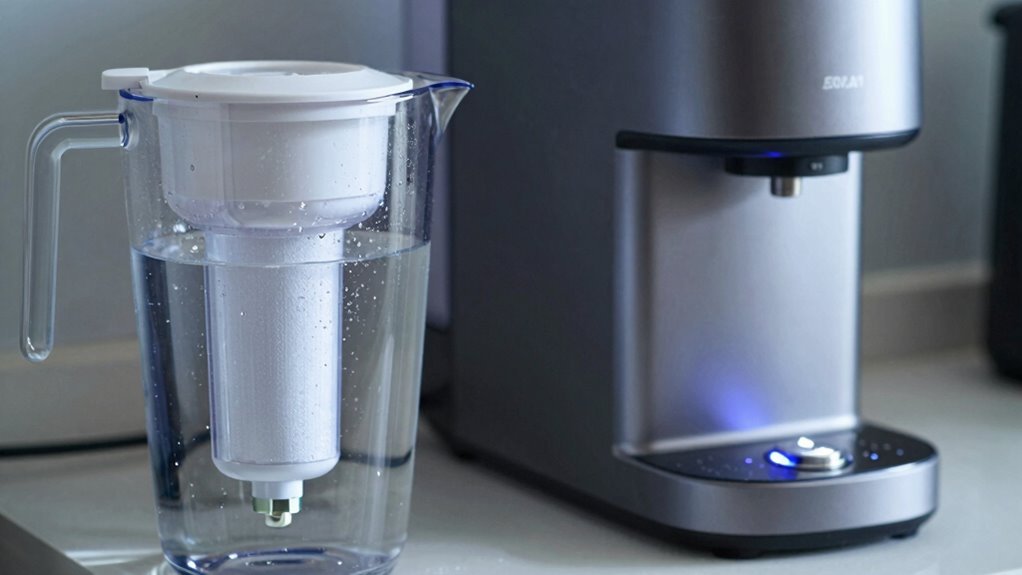
You’re packing a filter, but do you *really* need a purifier? When it comes to backpacking essentials, knowing the difference between a filter vs purifier can make or break your trip.
If you’re hiking in the U.S. backcountry, a filter’s got your back—nixing gunk, bacteria, and yucky-tasting chlorine. Most domestic water sources are relatively safe, so a solid filter handles the job well.
But hit a sketchy tap overseas or a muddy village water hole? Viruses don’t play nice, and filters won’t stop them.
That’s when a purifier, with UV or advanced membranes, becomes your liquid superhero. It nukes viruses, chemicals, and critters alike—going beyond what a standard filter vs purifier setup can do.
Think of it this way: filters clean, but purifiers *obliterate*. Your stomach will thank you later—especially if you’re chasing adventure where water looks questionable.
Understanding the Key Differences Between Filters and Purifiers
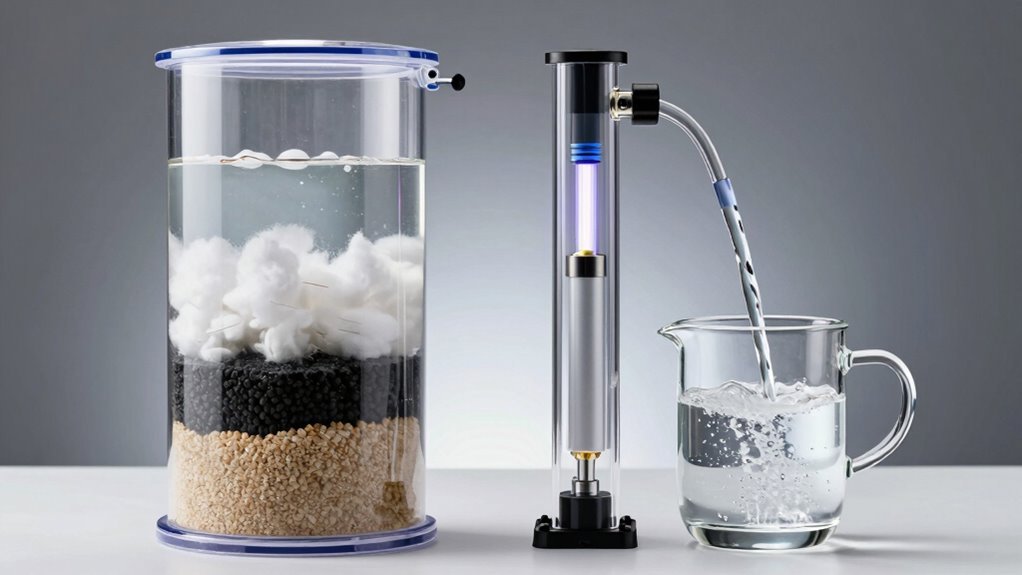
While you’re trying to decide how to make your water safer and taste better, it’s important to know that not all systems do the same job—think of filters as the bouncers that block the big, obvious troublemakers, while purifiers are like elite security squads that kick out even the tiniest, sneakiest invaders.
You’ll find most filters stop bacteria and protozoa, but viruses often slip through—unless it’s an ultrafiltration model.
Purifiers, though, nuke viruses with UV light, reverse osmosis, or chemicals.
Filters are cheaper, easy to install, and great for clean-looking water.
Purifiers cost more and need power, but they’re your best bet for well water or sketchy backcountry streams.
One’s like a screen door, the other’s Fort Knox.
Choose based on your water source—you wouldn’t bring a sieve to a virus fight, right? Carbon and sediment filters remove impurities like rust, dust, chlorine, and VOCs carbon and sediment filters.
What Contaminants Do Water Filters Remove?
You already know filters and purifiers play different roles in cleaning your water, so let’s zero in on what your everyday filter can actually knock out.
Most filters start by trapping dirt, rust, and sediment—think of it as a bouncer for your tap water, keeping the gunk out.
Activated carbon steps in next, ditching chlorine, bad tastes, and sketchy chemicals like pesticides and VOCs.
It even tames lead and mercury a bit, and yep, it handles annoying PFAS too—though not perfectly.
Some filters use KDF or ion exchange to tackle heavy metals and hardness, while reverse osmosis goes all superhero, zapping up to 99% of nasties including fluoride and nitrates.
Multi-stage systems? They’re the dream team, combining forces to clean more without slowing your flow.
Just don’t expect filters to kill viruses—save that for purifiers.
Your filter’s job? Making water taste great and feel safe, one clean sip at a time.
Reverse osmosis systems are especially effective, removing up to 99% of contaminants.
How Water Purifiers Handle Viruses and Other Microorganisms
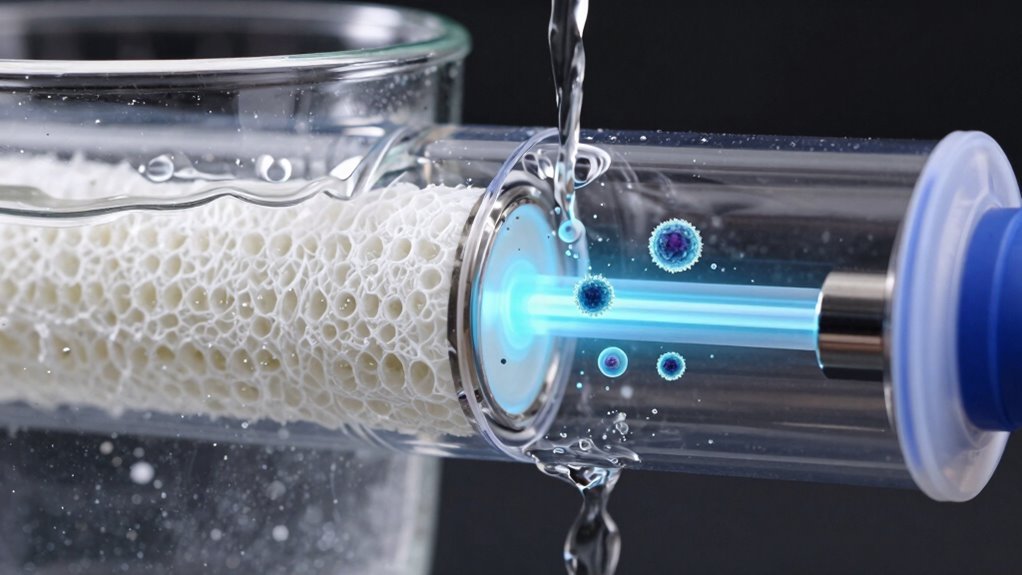
Ever wonder how something as tiny as a virus gets knocked out of your drinking water?
Good purifiers don’t just filter—they *destroy*.
Using advanced tech, they zap, block, or neutralize even the craftiest bugs.
Here’s how the heavy hitters do it:
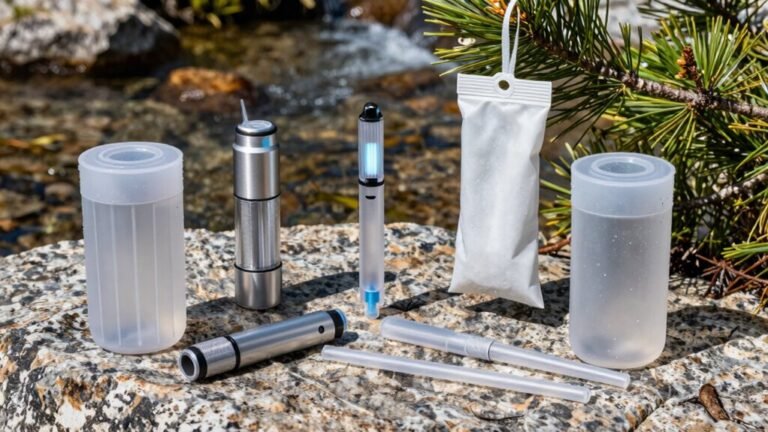
- UV Purification – A built-in UV lamp zaps water with light that messes up microbe DNA, so they can’t multiply (bye-bye, viruses and Giardia!). This process happens fast—microbes are neutralized in seconds as water flows past the UV lamp emitting 254 nm light.
- Nanofiltration & RO – Super-fine membranes trap viruses and bacteria; NSF P231-certified ones crush 99.99% of pathogens, including norovirus.
- Ultrafiltration with Failsafe Tech – Think of it as a bouncer with a checklist—nothing sneaks through, not even the smallest invaders.
No chemicals, no guesswork—just clean, safe sips.
Your water’s safer than a squirrel’s stash in winter!
When a Filter Is Enough for Your Outdoor Adventures
Why trek with heavy gear when nature’s giving you crystal-clear streams right at your feet? When you’re hiking solo or on short trips through pristine backcountry, a lightweight filter is all you need.
Models like the LifeStraw Peak Squeeze or Membrane Solutions straw are perfect—small, fast, and tough. They knock out bacteria like E. coli and protozoa, so you stay healthy without worrying about taste or toxins.
Sip straight from the source with a straw filter, or use a squeeze or pump system to fill your bottle fast. They’re great for clear lakes and streams where viruses aren’t a concern.
Plus, gravity filters like Platypus GravityWorks make group trips a breeze—just fill up and go. With clean water this easy, why carry extra weight?
Your pack will thank you, and your taste buds will, too—no chemical aftertaste here!
High-Risk Areas That Demand a Water Purifier
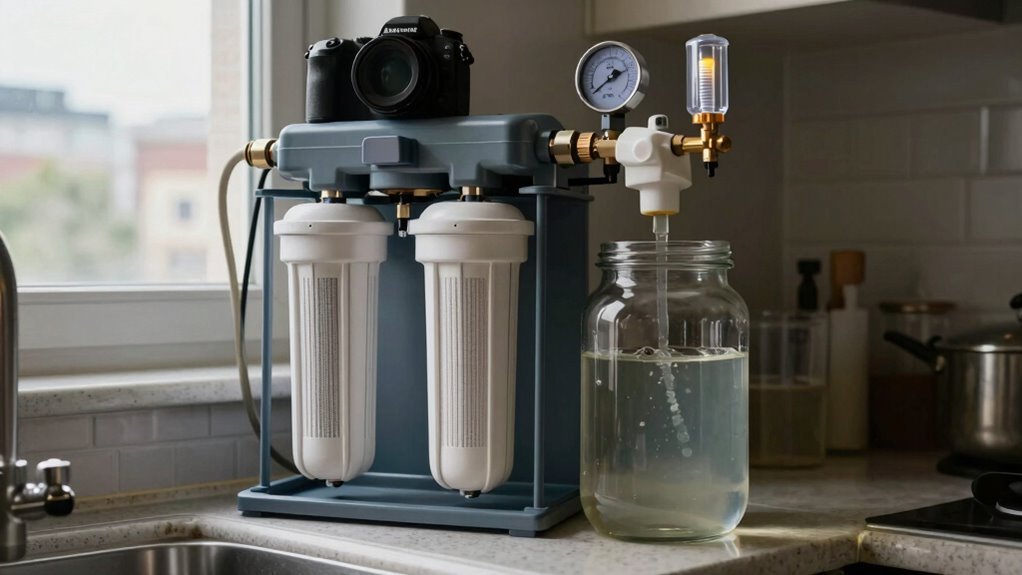
- Industrial hotspots teeming with PFAS or PCBs—from Spain to Paraguay—can poison water long after factories close.
- Countries with crumbling water access, like Niger or Somalia, often mix microbes, chemicals, and zero treatment.
- POPs-laden zones where DDT or dioxins linger in soil *and* water, turning dinner into a game of contamination roulette.
Skip the gamble. Your body will thank you—seriously, it’s not asking for much.
Comparing Effectiveness: Filters Vs Purifiers in Real-World Conditions
How clean is your water, really?
If you’re using a filter, it’s tackling gunk like dirt, bacteria, and protozoa—great for city taps or clear streams.
But out in the wild, where viruses like norovirus lurk, filters miss the tiniest threats (they’re smaller than 0.2 microns—crazy, right?).
That’s where purifiers shine.
They nuke viruses, chemicals, even heavy metals, using UV, reverse osmosis, or smart tech like UltraCeram’s charged surfaces.
Cloudy water can slow UV purifiers down—silt’s a sneaky blocker—but systems like RapidPure and Berkey keep knocking out 99.99% of nasties, no drama.
Filters flow faster and clog less, sure, but purifiers deliver peace of mind when the stakes are high.
Bottom line: for hiking or sketchy sources, purifiers do the heavy lifting.
Your belly will thank you—no “adventures” on the trail!
Weight, Speed, and Portability: Practical Considerations
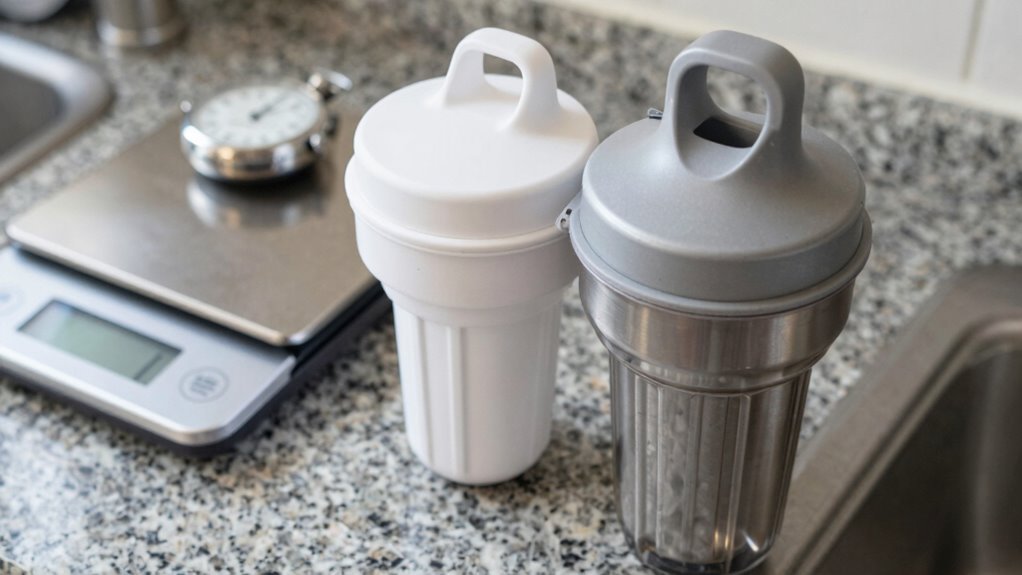
You just learned how purifiers outshine filters when the water looks sketchy and the germs go viral—now let’s talk about what really matters on the trail:
how much you’re lugging, how fast you’re filling, and whether your gear plays nice in your pack.
- Weight: Go ultralight with a Sawyer Mini (under 2 oz) or LifeStraw—perfect for fast, solo trips.
- Speed: Need water *now*? Grayl GeoPress purifies 5 liters a minute, while gravity setups like Platypus let you chill as they fill.
- Portability: Squeeze filters screw right onto bottles; straws fit anywhere. Pump systems? Bulky. Save those for base camp.
Your pack will thank you when you skip the clunky gear.
Whether you’re sprinting a summit or meandering through the woods, smart choices here keep you light, fast, and ready for the next sip—no shoulder strain, no fuss.
Maintenance and Longevity of Filtering and Purifying Devices
Ever wonder why some water gadgets seem to kick the bucket faster than a campfire in the rain? Filters clog fast, especially in gritty water, so you’ll clean or swap cartridges often—ceramic ones yearly, others after a few thousand gallons.
Prefilters help, and gravity systems last longer if stored right. Microfilters flow quick but wear out faster without backwashing. Purifiers, though pricier, usually need less tinkering.
UV types crave clean water and fresh batteries, while reverse osmosis systems tick along nicely with checkups. Ultrafiltration grabs viruses but clogs easier, so flush it regularly. Combined units boost longevity with smart staging.
Filters save cash upfront and on replacements, but purifiers justify cost with less hustle and broader protection. Bottom line? You’ll spend time or money—one way or another—so pick your maintenance battle wisely. Your future self will thank you on trail, tap, or travel.
Making the Right Choice Based on Your Travel Destination
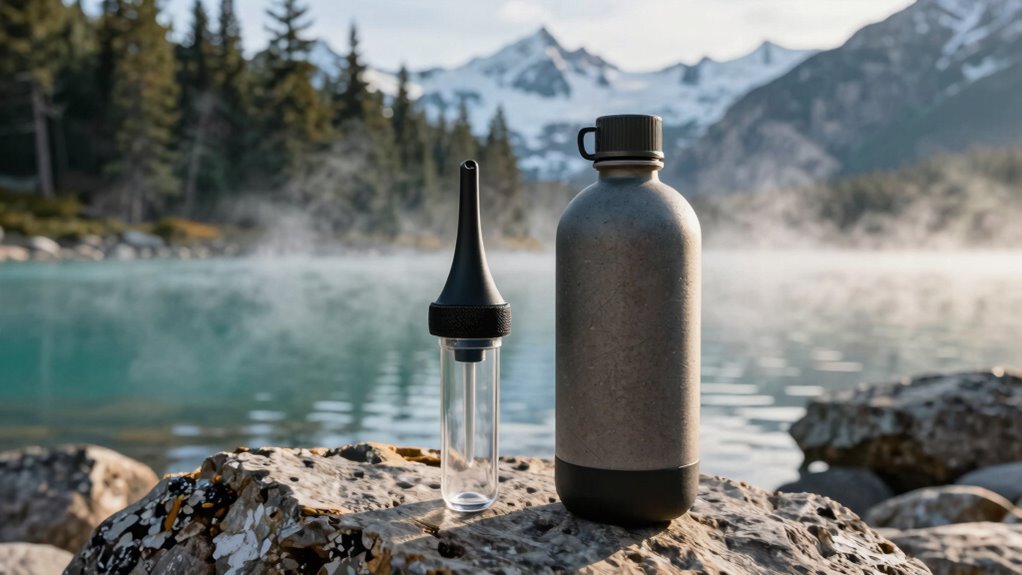
Where in the world are you headed, anyway?
Your destination decides whether you need a filter or a purifier—don’t pack the wrong gear and end up with a belly full of trouble!
- U.S. or Canadian backcountry? Grab a filter—it crushes bacteria and protozoa like Giardia, and that’s all you’ll usually face in those pristine trails.
- Exploring foreign cities or remote villages? Go for a purifier; viruses are sneaky, tiny troublemakers filters can’t catch, especially in sketchy tap water.
- Trekking through developing regions with sketchy lakes or urban taps? You’ll want a purifier with activated carbon—it nabs viruses, chemicals, and even makes nasty water taste better.
Filters are great, but purifiers are the superhero squad for international chaos. Pick right, stay safe, and keep that travel tummy happy—nobody likes surprise souvenirs!
Frequently Asked Questions
Can I Use a Filter and Purifier Together?
You bet you can use a filter and purifier together—they’re like superhero teammates for your water!
The filter handles dirt, grit, and gunk, while the purifier zaps tiny troublemakers like viruses and bacteria.
Together, they give you cleaner, safer, tastier water, no matter the source.
It’s a power combo that’s tough to beat, especially when you’re adventuring or unsure about water quality.
Plus, who doesn’t love peace of mind with a side of refreshment?
Do UV Purifiers Work in Cloudy Water?
Oh, absolutely—because nothing says “I love cloudy water” like inviting invisible hitchhikers to a UV light show that never happens! You’re out of luck if the water’s murky, since gunk shields germs like tiny parasols.
You *can* fix it, though—just pre-filter first. Sediment’s no match for a good filter, and once things clear up, your UV purifier will actually, you know, purify. Win!
Are Boiled Water and Purifiers Equally Effective?
Nope, boiled water and purifiers aren’t equally effective—you’re only killing germs when you boil, not removing gunk like chemicals or microplastics.
Purifiers do way more, tackling viruses, metals, and pollutants while boiling just plays whack-a-microbe. Think of boiling as a campfire buddy, but purifiers? They’re your water’s full-time bodyguard, minus the tiny sunglasses.
How Often Should I Replace Purifier Batteries?
You don’t need to replace purifier batteries—most models don’t even have them!
They plug in or run on permanent internal power, so no swapping needed.
You’ll only deal with filter changes, not batteries.
Think of it like your phone: it’s always charging, not battery-swapping.
Just focus on cleaning or replacing filters regularly, and you’re golden.
Easy, right?
Can Freezing Temperatures Damage My Water Purifier?
Yeah, freezing temps can totally wreck your water purifier.
Ice expands and cracks the filter media, even if it doesn’t look broken.
Those tiny holes let dirty water sneak through—yuck!
Hollow fibers snap, RO membranes fail, and surprise leaks happen.
If it froze, don’t risk it—test it or toss it.
Better safe than thirsty, right?
Stay warm, keep your gear warm, and save yourself a nasty surprise later.
Conclusion
You filter when you backpack through clean streams, purify when bugs hide in murky ponds. You filter for speed, purify for safety. You filter with ease, purify with peace of mind. Whether you’re sipping from a mountain spring or a muddy puddle, pick the right tool—because clean water keeps you hiking, not hiding in a tent with a grumbling gut. Stay smart, stay hydrated, and let your adventures flow!
References
- https://briowater.com/blogs/blog/home-water-purifiers-vs-water-filters-what-s-the-difference
- https://www.3wayplumbing.com/2025/10/14/water-purification-vs-water-filtration/
- https://www.pureitwater.com/blog/post/understanding-the-difference-between-water-filters-and-water-purifiers
- https://help.lifestraw.com/article/92-what-is-the-difference-between-a-filter-and-a-purifier
- https://cascadedesigns.com/blogs/msr-gear-guides/water-filter-vs-water-purifier
- https://etrlabs.com/key-differences-between-water-filtration-and-purification-explained/
- https://berkey-store.com/en/content/56-water-filter-or-water-purifier
- https://www.rei.com/learn/expert-advice/water-treatment-backcountry.html
- https://qualitywaterlab.com/contaminants/which-water-filter-removes-the-most-contaminants/
- https://uswatersystems.com/pages/what-do-water-filters-remove