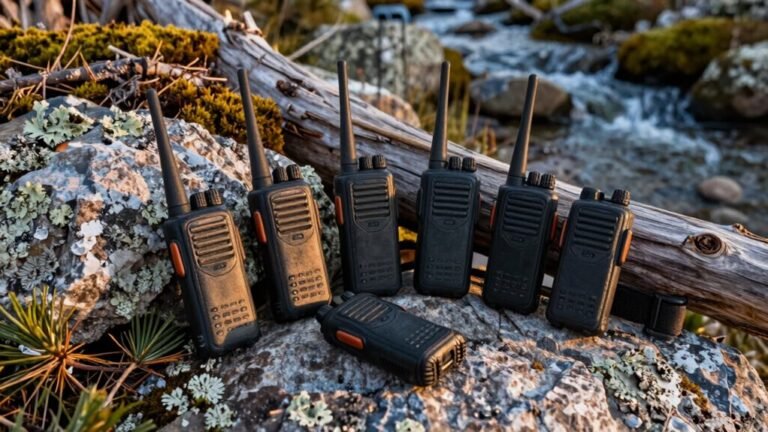
Hiking Safety Checklist for Solo Hikers
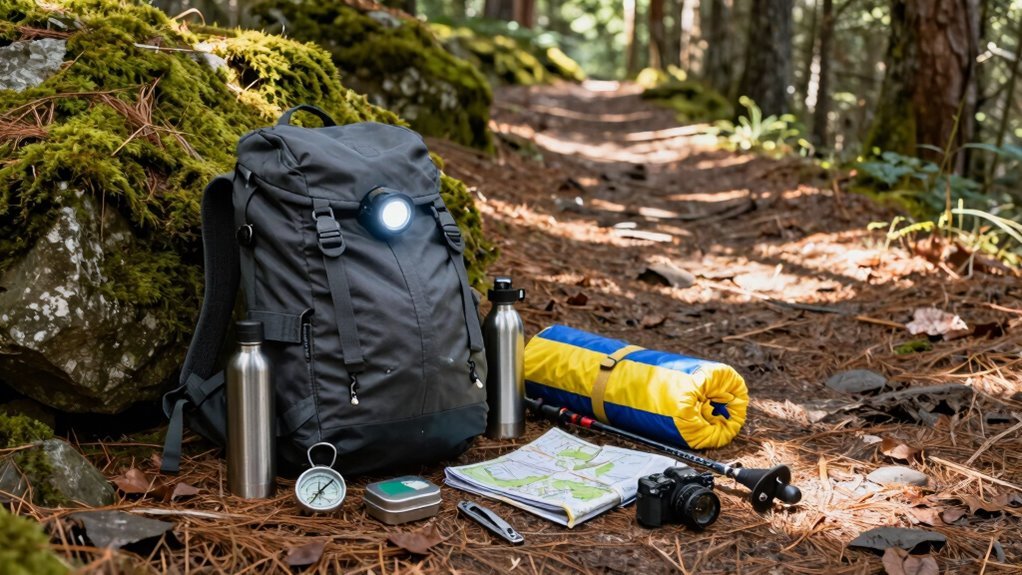
Check the weather before dawn and again before you head out—mountain storms pop up fast. Share your plans with someone trustworthy to ensure your safety as a solo hiker.
Pack the Ten Essentials, and always bring extra water, snacks, and layers. Wear solid hiking shoes and stick to marked trails to stay safe on the trail.
Carry a map and compass, yes, even if your phone works—relying solely on technology can be risky. Make noise as you hike to avoid surprising wildlife.
Give animals plenty of space, and never pet the “cute” squirrels—they’re feistier than you think. If something feels off, trust your gut and turn back.
There’s no shame in hiking another day—your future self will thank you. You’ve got more trail-smarts coming your way.
Check the Weather Before You Go
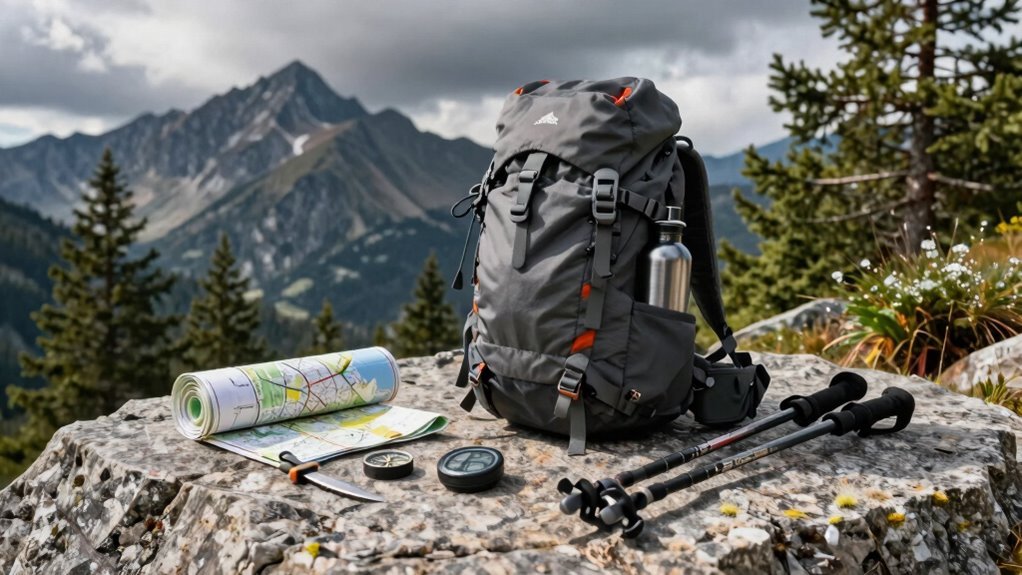
Ever wonder why so many hiking mishaps happen when the sky’s clear and the sun’s shining?
Turns out, ideal weather—blue skies, light breeze, comfy temps around 16–28°C—is actually tricking you.
You’re not alone if you’ve skipped checking the forecast; 90% of accidents happen in these “perfect” conditions.
But clear skies don’t mean safe trails—lost footing leads in mishaps, even on sunny days.
Winds of 6–8 km/h? That’s when people get bold.
Humidity between 60–65%? Yep, prime for trouble.
Don’t wing it: check NOAA before and the morning of your hike, bookmark it like your favorite snack spot.
Toss a mini weather station in your pack for real-time updates.
Storms love sneaking up, especially in mountains by noon—so peek at alerts, watch for sudden clouds or weirdly quiet birds.
Nature’s got drama, and you’ve gotta stay one step ahead—sunny doesn’t mean simple.
loss of footing is the leading cause of hiking accidents, especially when conditions feel deceptively safe.
Share Your Itinerary With Someone Reliable
Always, always let someone you trust know where you’re headed before you hit the trail—because even if you’re going solo, you shouldn’t be a mystery.
Picture search and rescue showing up with your boot size, meds list, and car color—it’ll make finding you way easier. Share your full plan, from trail name to return time, and stick to check-ins like they’re hiking dates you can’t miss.
- Leave a detailed note with your route, car details, and medications
- Pick a reliable contact who’ll call for help if you don’t check in
- Set clear check-in times and a plan if you’re overdue (no ghosting!)
- Update them immediately if the trail changes or weather turns weird
- Stay private—skip posting plans online or telling sketchy trail strangers
In remote areas with limited or no cell service, emergency communication depends entirely on pre-arranged check-ins and accurate itinerary sharing.
You’re solo, not secret. Stay safe, stay smart, and hike on!
Pack the Ten Essentials for Every Hike
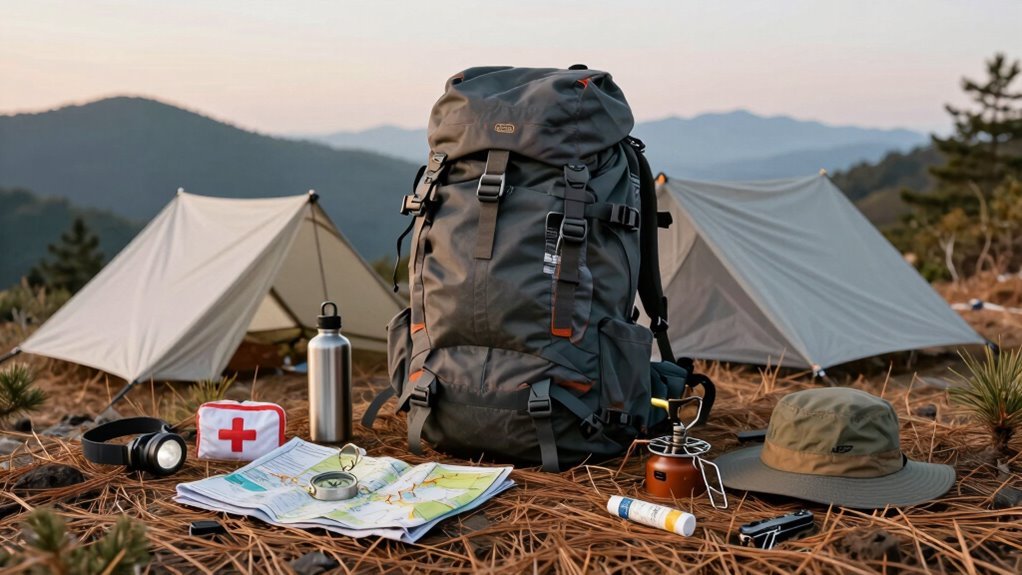
You’re about to hit the trails, and while going solo means freedom, it also means you’re your own backup—so load up on the Ten Essentials like your adventure depends on it, because sometimes it really does.
Bring a map and compass, and know how to use them—your phone might ghost you where service doesn’t reach.
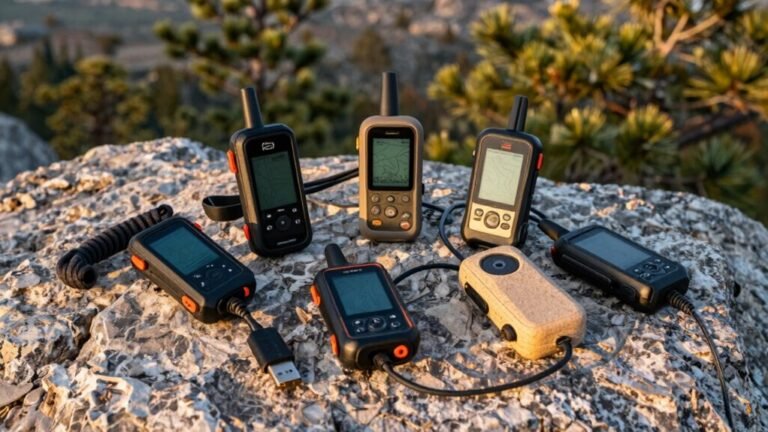
Toss in a GPS or satellite messenger just in case.
Slather on sunscreen, even if it’s cloudy—sun doesn’t take days off!
A hat, sunglasses, and SPF lip balm are your skin’s BFFs.
Pack extra layers: think wool socks, gloves, and a trusty rain jacket—nature’s mood swings are real.
Don’t forget a headlamp with spare batteries, because no one plans to hike in the dark… but it happens.
Finally, carry a first aid kit you actually know how to use—because boo-boos don’t care how far from help you are.
Always include a fire starter in your pack for emergency warmth or signaling.
Be smart.
Be safe.
And keep smiling on the trail!
Wear Appropriate Footwear and Clothing
Lace up, because your feet are about to do more than just walk—they’re about to dance over roots, tiptoe across slick rocks, and stomp through mud like a trail-savvy hero.
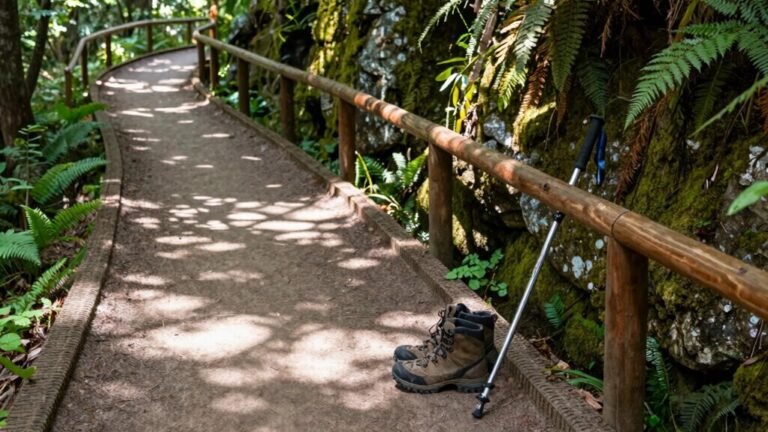
Pick the right footwear: trail runners for easy paths, mid-cut shoes for rocky rolls, or high-cut boots when things get wild.
Make sure they fit snug—heel locked, toes happy, socks synthetic to avoid blisters.
Break in stiff boots before the hike, and never skip testing them on slopes and stairs.
Keep feet dry and cool with non-waterproof uppers in warm weather.
Now imagine this:
- Your soles gripping like gecko feet on slick roots
- Rock plates shielding you from jabby stones
- A reinforced toe cap deflecting rogue boulders
- Synthetic socks wicking sweat like magic towels
- High tops blocking sparks, debris, and surprise puddles
You’re not just hiking—you’re foot-first fabulous.
Bring Extra Food and Water Supplies
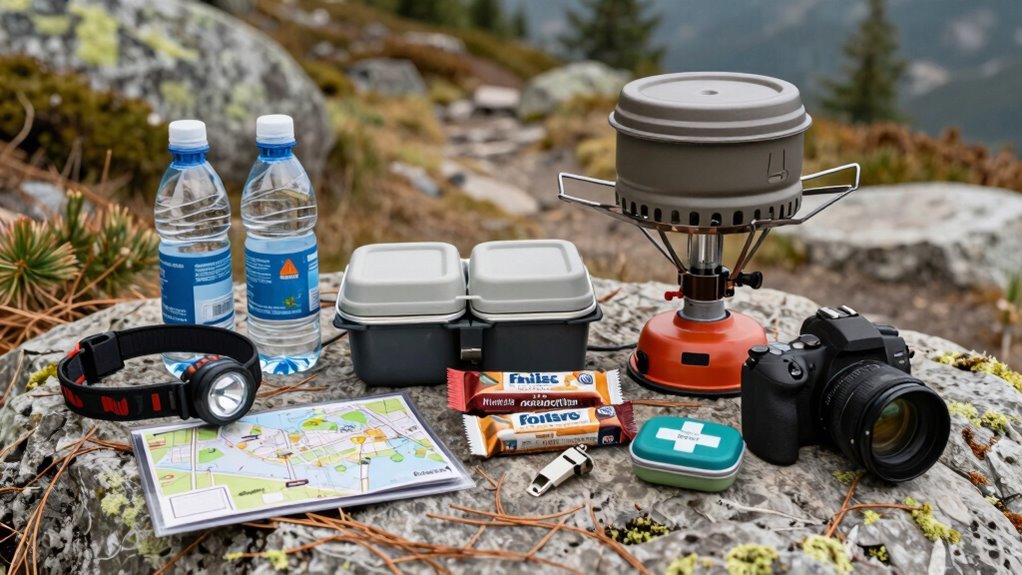
Pack smart, because your stomach and hydration status are your hike’s unsung heroes—fuel them right and you’ll power through miles like a champ.
Carry at least 1 liter of water per 5 miles, or 1 per hour hiking, and boost that in heat, sun, or at altitude—you’ll sweat more than you think!
Bring extra capacity, ideally one additional liter, just in case plans go sideways. Use bottles, bladders, or reservoir systems so you can sip easily all day.
Add hydration tablets to keep your electrolytes happy during long stretches.
For food, stash away extra snacks like nuts, bars, or trail mix—no-cook, calorie-dense, and tasty.
Toss in an emergency meal like ramen; bonus points if it fits your backpack and your sense of humor.
After all, nothing ruins a solo adventure faster than a hangry hiker miles from nowhere.
Carry a Fully Charged Power Bank and Navigation Tools
When your snacks are stashed and your water bottle’s full, don’t forget the little tech that keeps you found and connected—your phone, GPS,
and the trusty power bank that’s basically your trail lifeline.
- You’re topping up your phone at sunrise, sunlight glinting off your BioLite as it zips to 80% in an hour
- Your Goal Zero Flip 24 snugly powers your GPS through three rugged days without a blink
- Rain starts falling, but your IPX7-rated Nitecore laughs it off like a grumpy cloud
- You’re sipping tea while your gear recharges, knowing 20,000 mAh means five playful selfies and still enough juice to call for a ride
- And hey—no panic when the map app loads slow, ’cause your power bank’s got more stamina than your hiking boots
Stay charged, stay smart, and let your tech keep pace with your curiosity.
Know the Trail and Have a Physical Map
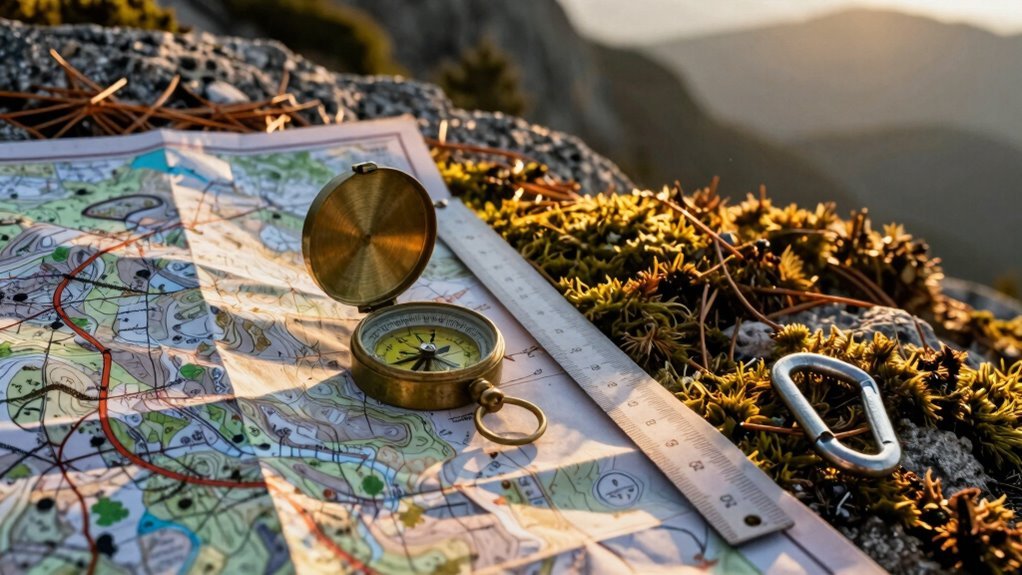
Even if your phone’s GPS has never let you down, nature’s full of surprises—like that one time you swore the trail went left, but somehow ended up chatting with a confused cow instead of fellow hikers.
That’s why you always grab a physical map before heading out.
It won’t die on you, fade in the sun, or lose signal at the worst moment.
Study the trail ahead of time—know the distance, elevation, and key landmarks.
Mark your start, checkpoints, and turnaround points in bright ink.
Tuck the map in a waterproof case so rain or a rogue creek splash won’t ruin it.
Keep it handy, not buried in your pack.
Getting turned around happens fast, but with a real map in hand, you’ll laugh, retrace, and stay on course—no cow needed.
Stay on Marked Paths and Avoid Shortcuts
Sticking to the trail isn’t just good advice—it’s your hiking superpower.
You’re safer when you stay on marked paths because they’re cleared, monitored, and built to keep you out of trouble.
Skipping off-trail looks fun, but it’s like playing hide-and-seek with rescuers if things go wrong.
Keep it simple and smart:
- Picture yourself just two miles from safety, completely lost, like that backpacker in the Appalachians
- Imagine hiking through dense brush with no signs, sun fading, and no clue which way leads back
- Visualize a fall on slippery rocks in an unmarked ravine—no help nearby and no one who knows you’re there
- Think about how trail markers are like breadcrumbs, guiding you safely back if you turn around
- See rescue teams racing to a trailhead vs. scratching their heads in the wilderness
Stay the path, stay alive—it’s that simple.
Recognize and Respond to Wildlife Encounters
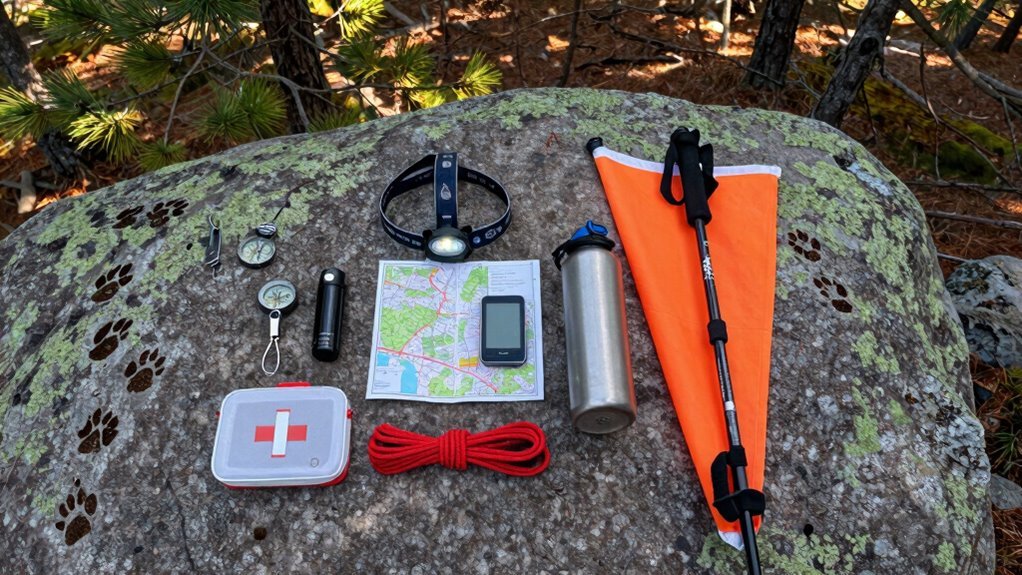
What’s that rustle in the bushes—just a squirrel, or something with a little more attitude?
Stay alert and you’ll handle wildlife encounters like a pro.
Make noise as you hike so animals know you’re coming—most want to avoid you anyway.
Keep 25 yards from wildlife, 100 from bears and wolves, and never wear headphones so you don’t miss warning sounds.
If an elk charges or a bison stares, back up slowly—don’t run!
With mountain lions, stand tall, face them, and make yourself look bigger.
And hey, squirrels injure more visitors in the Grand Canyon than you’d think—so respect even the “cute” ones.
Remember, animal attacks are rare—cars, falls, and water cause most park deaths.
Stay smart, give animals space, and you’ll enjoy the wild side safely.
Nature’s awesome—just don’t be *that* hiker who gets too close.
Trust Your Instincts and Turn Back if Needed
You’ve just sized up a curious elk and laughed off a squirrel side-eye—wildlife? Done.
But now your gut whispers, *this trail feels off*.
Listen.
Your instincts are your real-time safety net, especially solo.
Don’t shrug off that creeping unease as paranoia—it’s your brain spotting subtle red flags.
Turn back without guilt.
- You’re on a narrow ledge, wind howling like a movie villain
- The path vanishes into sketchy fog, and your map’s no help
- Your legs burn climbing what feels like a vertical staircase
- A stranger’s vibe doesn’t match the peaceful woods
- Your satellite messenger sits ready, just in case
Prep boosts confidence, but instinct rules.
Even experts bail when gut-checks flash.
Smart hikers know: turning back isn’t failure—it’s triumph in disguise.
Frequently Asked Questions
What Should I Do if I Lose My Map?
You lose your map? No panic—stay cool, you’ve got this!
First, stop wandering and take a breath.
Check if you’ve got a backup, like a paper copy or offline app.
Use landmarks or climb high for a better view.
Spot anything familiar?
Pull out your compass or whistle.
If all else fails, stay put, signal for help, and snack while you think.
Lost doesn’t mean helpless—you’re still the trail’s boss!
How Can I Protect My Phone From Water?
You won’t believe how easy it’s to save your phone from watery doom—just don’t treat it like a fish.
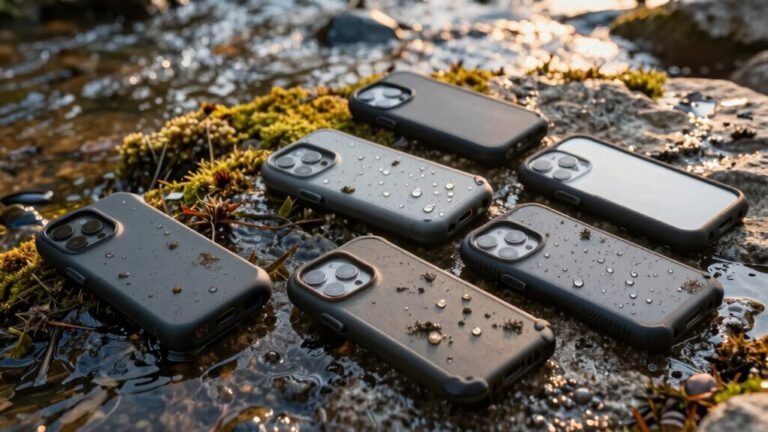
Slip it into an IP68-rated case, like Aquapac or Catalyst, so rain, rivers, or clumsy drops won’t kill your vibe.
Need touch control? Pick TPU pouches from Sea to Summit.
Add a floatie, ’cause soggy phones are *so* last season.
Test seals, snap that lanyard on, and hike worry-free—your phone’s practically invincible now.
Almost.
Is It Safe to Hike During Early Morning Hours?
Yeah, it’s totally safe to hike in the early morning—and smart, too!
You dodge the sweltering heat, avoid most bugs, and hit the trail when it’s calm and quiet.
Plus, you’ve got hours of daylight ahead, so if you slip or get turned around, help’s more likely nearby.
Starting early means you’re off the mountain before storms roll in—bonus: your phone stays drier, and you might even catch a sunrise worth sharing!
What if I Encounter Another Solo Hiker in Distress?
You see a fellow hiker in trouble?
Stay calm and assess the situation quickly.
Check if they’re hurt, lost, or tired—most emergencies aren’t life-or-death.
Talk to them, offer water, and use your phone or emergency device to call for help if needed.
You don’t need to be a hero—just kind, smart, and ready to act.
Every hiker’s a trail buddy when it counts!
How Do I Handle Sudden Altitude Sickness Symptoms?
You spot the warning signs—your head throbs like a drum, you’re dizzy, and nausea creeps in—so you halt, just like a wise old mountain goat would.
You don’t push on; you drop descent fast, even a thousand feet helps.
You chug water, rest like you’ve won a nap marathon, and if things worsen, you zoom lower—fast.
You know this trail doesn’t reward pride, only smart, humble steps.
Conclusion
You’ve got this, trailblazer! With your trusty gear, solid plan, and a healthy dose of common sense, you’re ready to conquer the wild like a modern-day Lewis and Clark—without the powdered wigs, thankfully. Listen to your gut, laugh at the little hiccups, and remember: every step’s an adventure. Now lace up, stay safe, and go make memories the woods will whisper about for years.
References
- https://www.revistaclinicapsicologica.com/archivesarticle.php?id=433
- https://media.market.us/hiking-accident-statistics/
- https://www.hiking-for-her.com/safehikingweather.html
- https://hike2hut.com/weather-preparedness-checklist-for-mountain-travel/
- https://americanhiking.org/lightning-safety/
- https://www.nps.gov/articles/hiking-safety.htm
- https://walkbikecupertino.org/2023/05/stay-safe-and-keep-moving-on-hiking-trails/
- https://www.weather.gov/rnk/outdoorslightning
- https://www.kurufootwear.com/blogs/articles/hiking-injury-statistics
- https://www.roadscholar.org/blog/national-park-safety-tips/