Sizing Hiking Boots: What Most People Miss
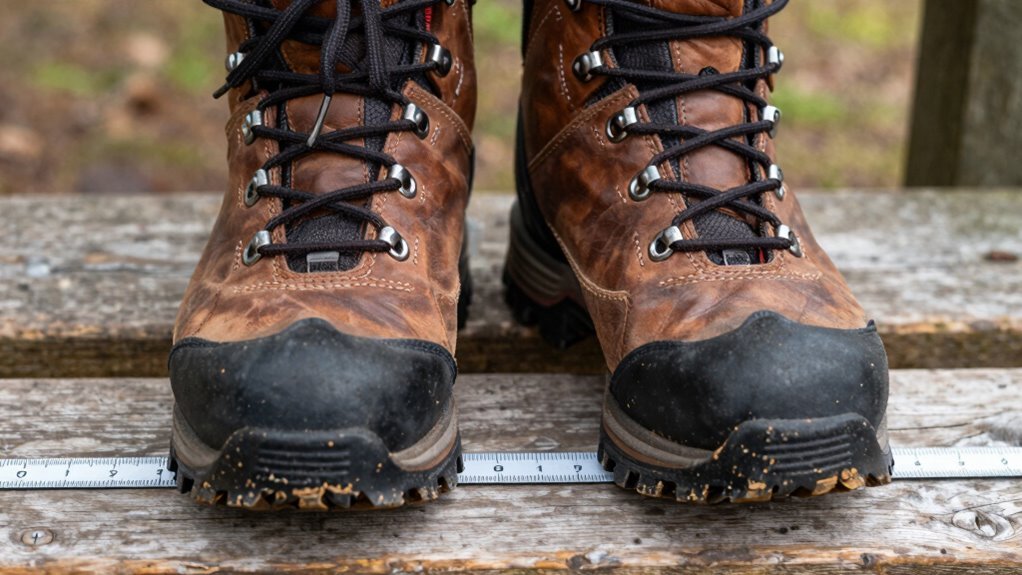
You’re probably trying on hiking boots first thing in the morning—bad move. Your feet swell as the day goes on, so it’s crucial to size hiking boots after lunch when your feet are at their largest.
Wear the thick, moisture-wicking socks you’ll actually hike in to get an accurate fit. Test boots on a ramp to mimic downhill trail conditions and ensure there’s a thumb’s width of space in front of your toes.
Make sure your heel stays locked down to prevent slipping, which can cause blisters on long descents. Remember, pack weight compresses your feet forward, putting pressure on your toes—this is something many hikers overlook when sizing hiking boots.
The Importance of Timing: When to Try On Hiking Boots
Ever wonder why your hiking boots feel snug halfway through a trail?
It’s because your feet swell as the day goes on, and if you’re shopping in the morning, you’re not seeing the real story.
By afternoon, your feet are bigger—thanks to walking, standing, and just living—making that post-lunch window the sweet spot for boot shopping.
Try them on then, and what you see is what you get on the trail.
Skip this trick, and you’ll end up with boots that start comfy but turn into torture devices by mile three.
Heel slippage? Blisters? No thanks!
Walk around the store a bit, maybe even hit an incline ramp—yep, really—so your feet mimic actual hike life.
Save yourself the pain, boost your comfort, and let your feet call the shots when they’re at their largest.
Smart timing means happy trails (and toes).
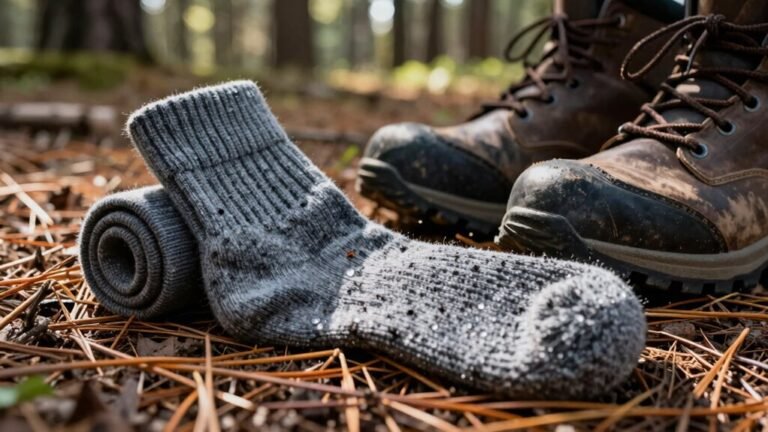
Wear the hiking socks you plan to use on the trail to ensure an accurate fit.
Choosing the Right Socks for an Accurate Fit
Where do your socks fit into the hiking boot puzzle? Right at the heart of it!
Thick socks eat up space, turning a comfy boot into a toe crusher, while thin liners might leave you slipping around.
You’ve gotta match your sock thickness to your boot fit—test with the exact pair you’ll hike in.
Try the sock sandwich: a slim liner under a cushy outer sock for smart volume and blister defense.
Make sure they hug your feet like a second skin—snug, no bunching, no pressure.
No wrinkles, no blisters, no drama.
Reinforced heels and toes handle rub and wear, while proper arch support keeps socks from sagging.
Wear crew socks with boots—they stay put and protect.
And always, *always* wear them when you size boots.
Don’t hike in cotton—they’re basically party crashers.
Moisture-wicking magic keeps things fresh and friction-free.
Your feet will thank you.
This snug, seamless fit ensures blister prevention by minimizing friction and moisture buildup inside the boot.
Understanding How Pack Weight Changes Foot Fit
How much do your boots really weigh on the trail?
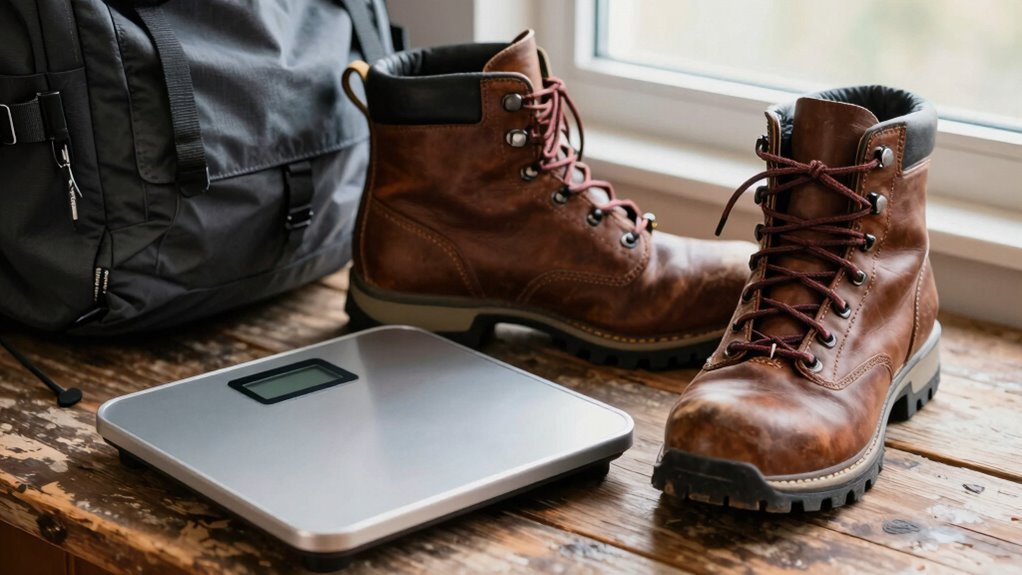
Well, one pound on your feet feels like five in your pack—thanks to the 1 lb = 5 lbs rule backed by science. Yep, your boots are working out harder than your backpack!
Heavier boots mean quicker fatigue, especially on long hikes over 10 miles.
At slow speeds, it’s less of a deal, but ramp up the pace or hit steep climbs, and that weight really bites.
Stiff soles help with heavy loads but cost you energy with every step.
Lightweight boots save juice, while hefty ones (up to 5 lbs a pair!) offer support at a price.
Your pack weight changes everything—boost it past 35 liters, and you’ll want sturdier boots.
So, if you’re hauling a fortress on your back, don’t shortchange your soles.
After all, tired feet make grumpy hikers!
Why Toe Room Matters on Downhill Terrain
Why does your toe feel like it’s punching a wall every time you head downhill?
Because without enough toe room, your foot slides forward and smacks the boot’s front with every step.
On descents, gravity pulls your foot ahead, and if there’s no 15mm (about a finger’s width) of space, your toes take the hit—hello, soreness and black toenails!
Proper room in the toe box lets your foot move naturally without jamming.
It’s not like your everyday shoes; hiking boots need extra space upfront.
Test it by walking downhill on a ramp—your toes shouldn’t touch.
Tap the ground or kick a wall to mimic trail impacts.
If they graze the front, it’s too tight.
Enough space means happy toes, no blisters, and way more fun on steep trails.
Give your feet the freedom they crave—you’ll stomp those downs without a single toe protest!
Assessing Heel Slip and Ankle Support
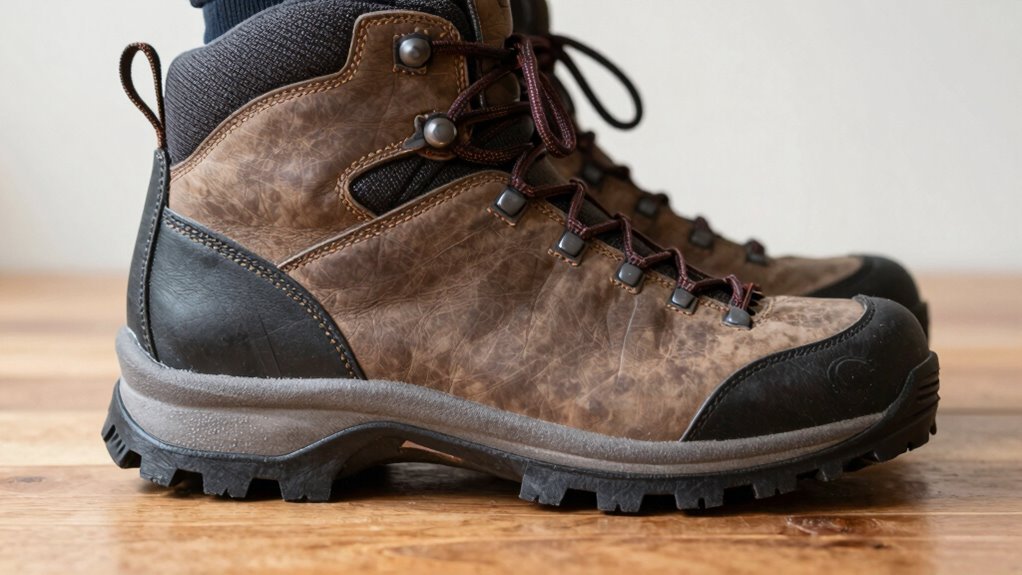
Ever taken a step down a trail only to feel your heel playing escape artist inside your boot?
That slip isn’t just annoying—it can lead to blisters, chafing, or even a nasty fall.
While a tiny bit of movement is normal, especially in stiff boots, you’ve gotta keep it under control.
Make sure your heel is fully seated and laced snug over the instep.
Try heel-lock lacing or add heel lifts and grippy pads if your heel’s narrower than average.
Thicker socks or double-knotting helps too.
A well-secured heel means happier hikes and strong ankle support.
- Imagine blister-free hikes with every step secure.
- Picture yourself confident on steep descents.
- Feel the relief of no more sore heels.
- Know you’re avoiding preventable injuries.
The Role of Foot Shape in Boot Selection
You’ve got your heel locked down tight and your ankles feeling sturdy—awesome.
But don’t forget, your foot’s shape plays a huge role in choosing the right boot.
Seriously, it’s not just length—width, arch length, and volume matter just as much.
Stand when you’re measured (yes, even in-store) because your foot spreads under your weight.
Use a Brannock device—it’s the gold standard for nailing foot length, width, and arch.
Both feet? Measure them; one’s probably bigger!
The boot’s flex point should match where your foot naturally bends, or you’re asking for arch trouble.
Sizing up for width throws that off, causing discomfort.
And don’t forget sock thickness—test with the pairs you’ll actually wear.
A proper fit means wiggle room for toes, no creasing, and no squeezing.
Your feet aren’t average—so why should your boots be?
Breaking In Boots Without Blisters
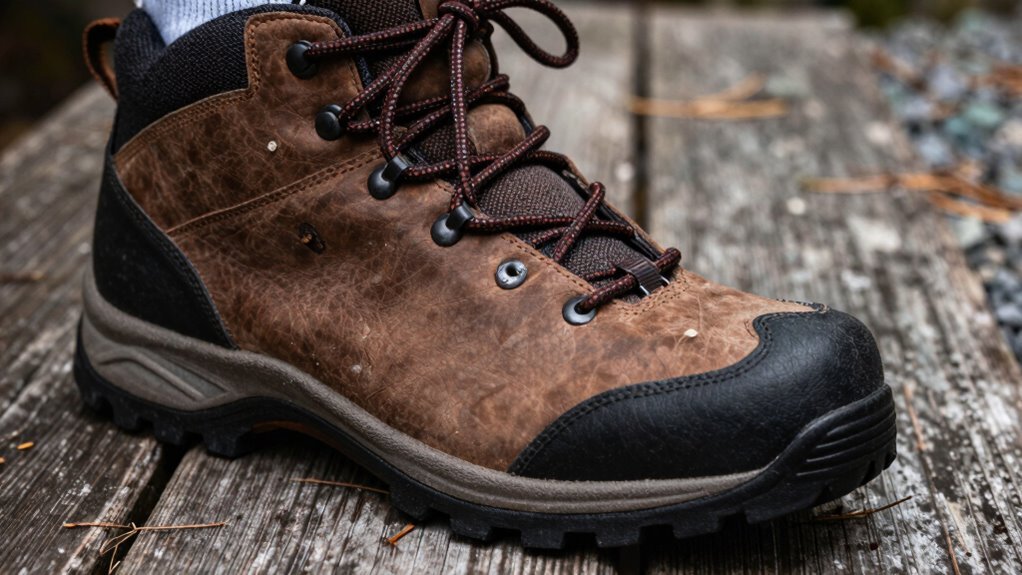
- Save your big adventure — Imagine tackling a summit hike only to bail because of a blister. Yikes.
- Feel that first rub — That tiny red spot? It’s screaming, “Help me now!”
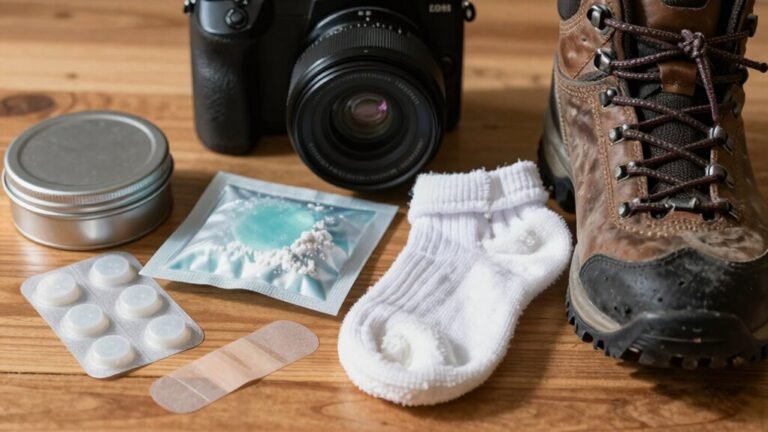
- Gear up like a pro — Body Glide and hydrocolloid patches feel like victory bandaids.
- Love your feet enough — They carry you everywhere; treat ‘em like VIPs.
No blisters, just bliss on every mile.
Frequently Asked Questions
Can I Wear Hiking Boots for Daily Use?
You can absolutely wear hiking boots daily—if you pick the right pair.
Lightweight, flexible styles won’t weigh your feet down or groan on sidewalks.
They’re tough enough for rain, snow, or trail mix-ups and still look cool with jeans.
Just don’t expect to sprint in them—save the sprinting for sneakers.
Break them in slow, and your feet will thank you.
Urban adventures? Bring it on!
How Do I Clean Hiking Boots Properly?
You clean hiking boots right by tackling mud fast—don’t let it dry!
Stomp off gunk, then scrub with a stiff brush and soapy water.
Use a butter knife to flick off stuck-on crud.
Rinse well, never toss them in the washer.
Air-dry away from heat—patience keeps them happy.
Pop insoles in soapy water, and remember, vinegar kicks mold’s butt.
Boom—fresh boots, ready for dirt’s next sneak attack!
Are Waterproof Boots Worth the Extra Cost?
Yeah, waterproof boots are worth the extra cost if you hike in wet weather or snowy trails—they keep your feet dry, comfy, and blister-free.
Sure, they’re pricier, but think of them like rain jackets for your feet.
You’ll skip soggy socks and soggy moods.
For dry climates? Maybe overkill.
But when puddles laugh at your shoes, you’ll be glad you invested.
Do Hiking Boots Stretch Over Time?
Yeah, hiking boots stretch a bit, but don’t expect miracles—they’re not socks!
Leather ones soften and mold to your feet over time, especially with a solid break-in using thick socks and short walks.
Synthetics? Meh, they barely budge.
You’ll get more comfort from material breaking in than actual size gain.
Take it slow, or you’ll blister faster than you can say “ouch!”
Trust the process, and your boots will feel like they’re made just for you.
What’s the Lifespan of Hiking Boots?
Hiking boots usually last you 500 to 1,000 miles, depending on how often and where you hike.
Tough trails chew them up faster, while gentle paths help them last longer.
Good boots, especially full-grain leather ones, can go the distance if you care for them.
Clean ’em, condition ’em, and stash ’em properly.
Watch for worn soles or sad squish—your feet will throw a party when you replace them!
Conclusion
You’re not just lacing up boots, you’re welcoming future adventures with open toes. Think of them as cozy clouds that hug your feet just right—snug, but never squishing. Get the fit singing and your hikes will dance. Skip the blisters, embrace the trails, and let every step whisper, “Nice choice!” Who knew happy feet could grin?
References
- https://www.thenorthface.com/en-gb/help-section/faq/products/how-should-hiking-shoes-fit
- https://www.rei.com/learn/expert-advice/hiking-boots.html
- https://footstepsintheforest.com/best-rated-hiking-boots-on-amazon/
- https://www.outdoorgearlab.com/topics/shoes-and-boots/best-hiking-boots
- https://trailsense.enwild.com/how-to-fit-a-hiking-boot/
- https://www.youtube.com/watch?v=Thfppi04CR4
- https://www.icompressionsocks.com/which-socks-define-the-best-hiking-experience/
- https://www.rei.com/learn/expert-advice/backpacking-socks.html
- https://www.wrightsock.com/blogs/news/running-vs-hiking-socks
- https://jihua3515.com/faqs/why-is-it-advised-to-bring-hiking-socks-when-trying-on-new-boots