Is Trekking Pole Shock Absorption Worth It?
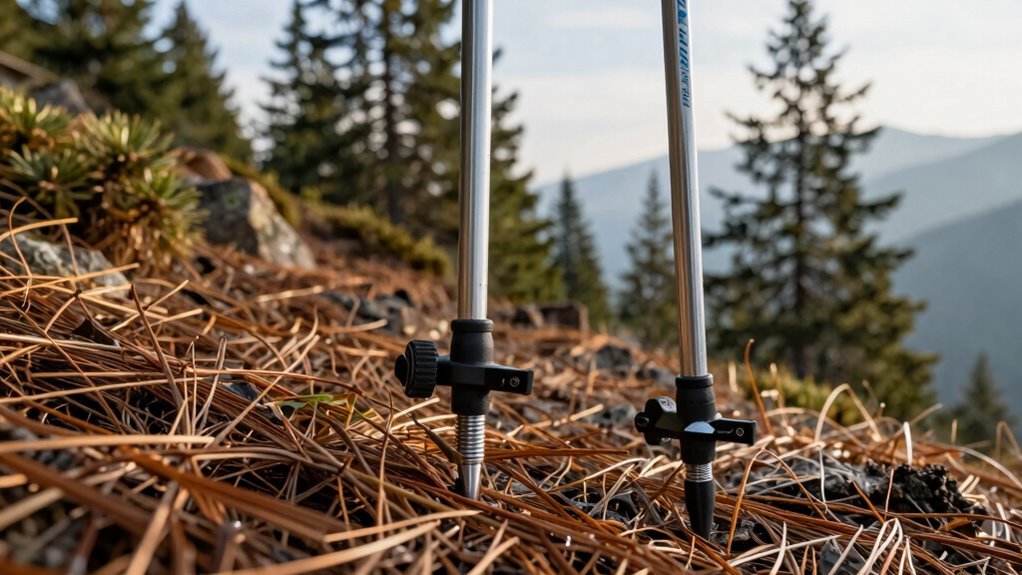
You’re flying down a rocky trail and every step jolts your knees—annoying, right? Trekking pole shock absorption is designed to tackle that exact problem, acting like a tiny trampoline with springy mechanisms built into the shaft.
These internal systems cushion each impact, reducing stress on your knees and joints. That means less fatigue and greater comfort, especially during long or steep descents.
Sure, shock-absorbing trekking poles are slightly heavier and may develop creaks over time. But when the trail gets rough, the added comfort makes them worth it for many hikers—particularly those who love downhill sections.
How Shock Absorption in Trekking Poles Works
Ever wonder how your trekking poles keep your wrists from screaming after a long day on the trail?
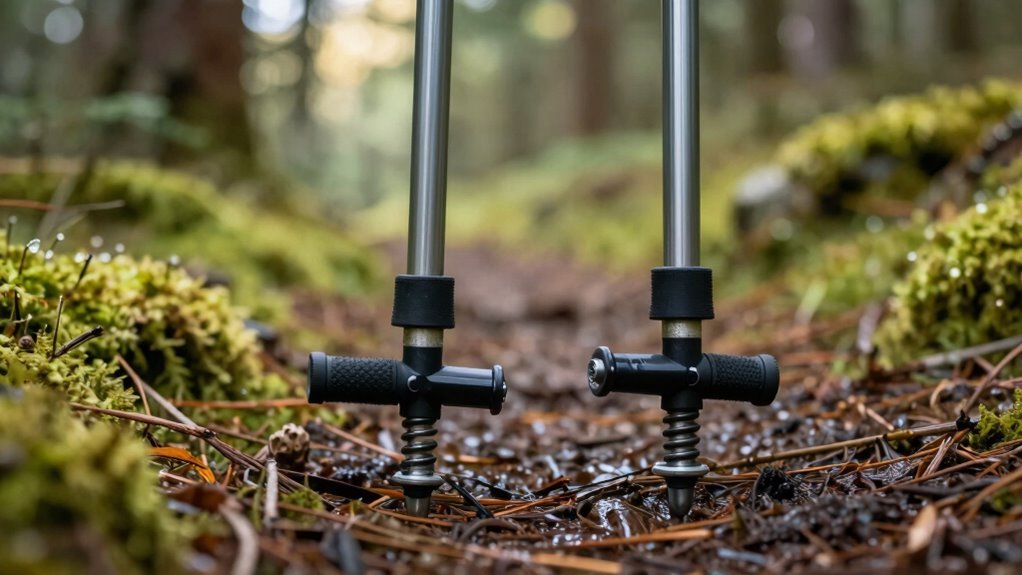
When the pole hits the ground, a metal cylinder inside compresses into a spring-loaded plastic sheath with a T-shaped runner—think of it as a mini shock absorber doing parkour in your shaft!
The system soaks up impact, cutting jarring vibrations before they reach your hands.
A clever spring gives just enough resistance to soften the blow, especially on rocky descents.
It’s hidden smartly under the grip and foam extension, so you get smooth action without bulk.
And if you prefer a stiffer pole? Just twist the cylinder 180 degrees into a snug hole to lock it out—no slop, no fuss.
Carbon fiber helps dampen shocks naturally, but this setup? It’s like suspension for your stride, and honestly, your arms will throw a silent thank-you party.
Some users report that over time, the anti-shock mechanism can develop play or slop, leading to a less stable feel, particularly after hundreds of miles of use long-term wear].
Benefits of Using Poles With Built-In Dampening
While your boots handle the dirt, your trekking poles with built-in dampening quietly go to work absorbing the jolt of every downhill step—like tiny bodyguards for your joints.
You’ll feel the difference fast, especially when your knees stop screaming at you after a long descent.
These poles don’t just support—they smooth out the ride, so you can hike longer, recover faster, and still walk straight when you get home.
Think of them as shock absorbers for your skeleton.
- Less muscle damage—you’ll have less soreness and stronger legs post-hike.
- Joint stress relief—up to 25% less pressure on your knees, thanks to smarter load distribution.
- Better balance—extra points of contact keep you stable on sketchy terrain, so you’re less likely to faceplant into a bush.
Your body will thank you—honestly, it might send a card.
Using poles increases upper-body engagement while reducing lower-body muscle activity, helping maintain mobility over long distances with reduced lower body muscle activity.
Drawbacks and Limitations of Shock-Absorbing Models
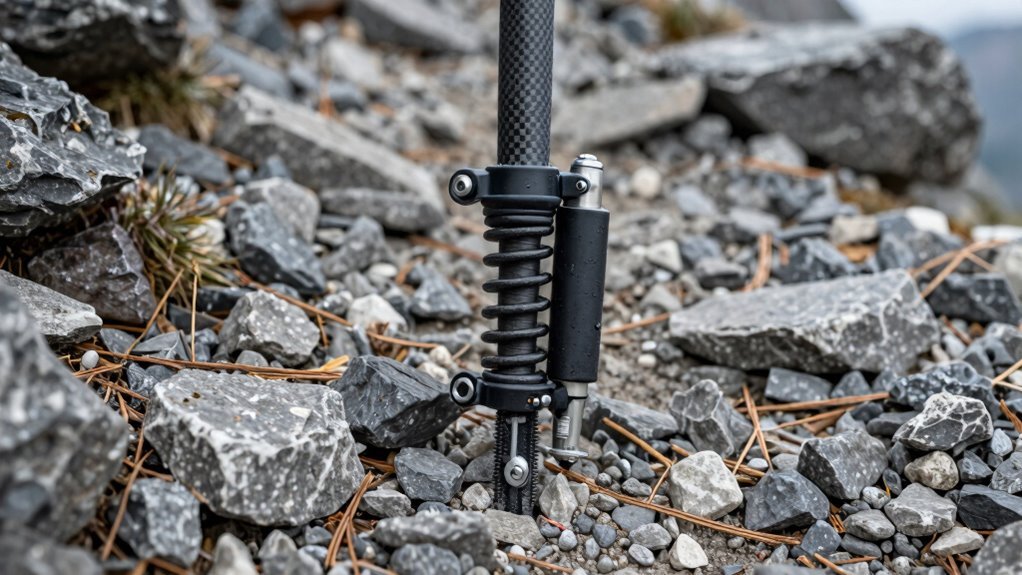
You might love the idea of cushy, shock-absorbing poles smoothing out every step, but there’s a catch—they come with a few trade-offs that can slow you down or drive you nuts.
They weigh more, thanks to springs and extra parts, and that adds up fast on long hikes.
Over time, those springs wear out, turning your smooth glide into a wobbly mess with annoying click-click sounds at every step.
It’s like your poles develop a squeaky knee!
They also cost more upfront, and let’s be real—spending extra for something that might break sooner? Not ideal.
And honestly, studies don’t strongly back up the joint-protection claims.
Despite their appeal, these poles may not deliver on reducing knee load as effectively as hikers hope.
When the Feature Makes the Most Difference
When does that spring-loaded squish in your trekking poles actually matter?
It’s not magic, but it sure feels like it—especially when your knees are begging for mercy on long descents.
You’ll notice the biggest benefits in these situations:
- Long downhill stretches – the anti-shock system cushions each step, reducing joint stress and making you feel like you’re bouncing on clouds instead of crunching down on rocks.
- Heavy backpack days – with extra weight, your body works harder, but shock absorption softens the jolt on your elbows and shoulders, letting you power through steep terrain with less fatigue.
- Technical, uneven trails – every root and rock transmits less shock up your arms, helping you stay balanced, upright, and out of the “I-misjudged-that-drop” faceplant zone.
Sure, it’s not a miracle cure, but on brutal downhills, that little spring might just save your next hike—and your dignity.
Alternatives to Built-In Shock Absorption
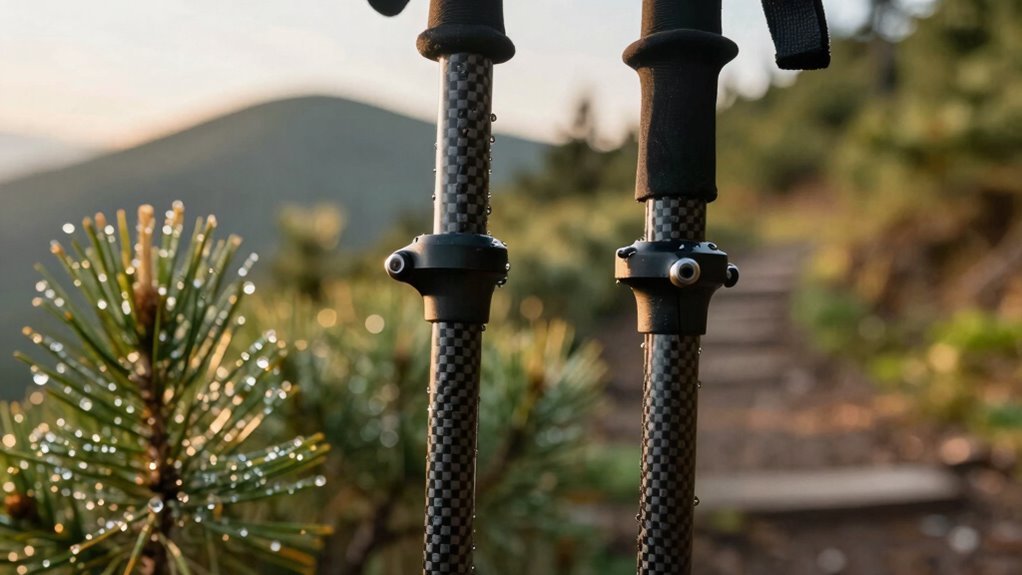
Forget the spring, skip the bounce—turns out, you don’t need a fancy shock system to keep your joints happy on the trail.
Rigid poles give you solid, no-nonsense support, especially on rocky terrain where stability matters more than cushion.
You’ll love how carbon models flex just enough to soften impacts, without extra hardware slowing you down.
Prefer something simple? Try a single collapsible stick—it’s light, travel-friendly, and great for stairs or city walks, even post-surgery.
Some poles even let you *choose* when to use shock with handy lockout features—go rigid on pavement, bounce on gravel.
And let’s be real, planting your pole right gives feedback no spring can match.
No skittering, no surprise give—just pure trail connection.
Plus, lighter weight means less fatigue.
Skip the gimmicks, trust your technique, and let your poles do what they’re meant to: keep you moving, smoothly and strong.
Frequently Asked Questions
Do Shock-Absorbing Poles Make a Noticeable Difference on Flat Terrain?
Nope, shock-absorbing poles don’t make a noticeable difference on flat terrain.
You’ll feel just as steady with regular poles, and they’re lighter and simpler too.
On hard, even ground, anti-shock models can feel mushy—like walking with mini pogo sticks.
Most hikers prefer the solid feedback of rigid poles.
Save the shocks for rough descents; on flats, they’re overkill.
Your knees won’t mind, your wallet will thank you.
Can I Add Shock Absorption to My Current Trekking Poles?
Sorry, but you can’t slap shock absorption onto your current poles—no handy hacks or add-on kits out there.
They’re like socks, not shoes: built a certain way from the start.
If you want that springy, soothing step, you’ve got to snag a pair already sporting shocks inside.
Think Leki or Black Diamond models—they’ve got the guts for it.
Your old poles? They’ll have to stay stiff!
Are Shock-Absorbing Poles Heavier Than Standard Models?
Yes, shock-absorbing poles are heavier than standard ones—you’re carrying extra springs and moving parts.
That added tech bumps the weight, often by a few ounces per pair.
If you’re counting every ounce, like most backpackers, you’ll notice it.
Regular poles give you the same support without the bulk.
Think of it like wearing cushioned boots versus light runners—both work, but one definitely feels lighter on the trail!
Do Shock-Absorbing Poles Require Special Maintenance?
No, shock-absorbing poles don’t need special care—you treat them just like regular poles.
After mucking through trails, give them a wipe or rinse to shoo off grime, then let them dry like wet socks on a line.
Pop the sections apart, chase out moisture, and store them cool and dry.
The shock system’s a tough little ninja—no tinkering needed.
Just check tips and baskets now and then, swap worn bits, and you’re golden.
Are There Any Health Risks Linked to Using Shock-Absorbing Poles?
Yeah, there are some health risks you should keep in mind.
Using shock-absorbing poles can mess with your balance over time, especially on tricky trails, and might increase your chance of tripping.
They ramp up upper body effort, which is great for a workout but could lead to sore wrists, arms, or even chest inflammation if you overdo it.
Plus, relying on them too much might weaken your legs’ natural shock response—so use them smart, not hard!
Conclusion
You’ve got this, and shock absorption might just be the secret sauce you didn’t know you needed. When the trail gets rough, these poles take the punch so your arms don’t have to. Sure, they’re a bit heavier and cost more, but think of it like wearing sneakers instead of dress shoes on a muddy hike—way more comfy! For steep descents or joint aches, they’re worth their weight in gold.
References
- https://backpackinglight.com/forums/topic/29669/
- https://blackdiamondequipment.com/products/pursuit-shock-trekking-poles
- https://outdoors.codidact.com/posts/45998?sort=score
- https://www.cleverhiker.com/hiking/best-hiking-trekking-poles/
- https://www.youtube.com/watch?v=dirskTQhETI
- https://cascademountaintech.com/products/lite-tek-trekking-pole
- https://mtntactical.com/knowledge/trekking-pole-research-round-up/
- https://www.reserveamerica.com/articles/hiking/the-benefits-of-trekking-poles-for-hikers/
- https://pmc.ncbi.nlm.nih.gov/articles/PMC10135831/
- https://pmc.ncbi.nlm.nih.gov/articles/PMC4905913/