5 Best Trekking Poles for Joint Support on Every Trail
Sturdy trails begin with the right support beneath your hands—yours, not just the earth’s.
You know joint strain slows momentum, especially on descents over 5,000 feet, so why risk it with flimsy trekking poles?
These five models blend aircraft-grade aluminum, shock absorption reducing impact by up to 25%, and ergonomic grips that last mile after mile.
They offer the joint support needed for long hikes and technical terrain, making them essential for any serious trekker.
Perfect if you want durability without the ache, these trekking poles balance performance and comfort.
But which one truly balances weight, lock reliability, and joint support when the trail turns steep?
| Cascade Mountain Tech Trekking Poles (Aluminum) | 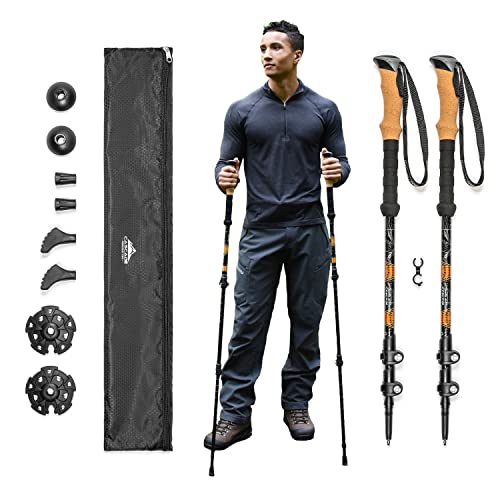 | Best Overall | Shaft Material: Aircraft-grade 6061 aluminum | Weight (per pole): 10.4 oz | Grip Material: Cork with EVA extended grip | VIEW LATEST PRICE | Read Our Analysis |
| TREKOLOGY Trek-Z Cork Grip Hiking Poles | 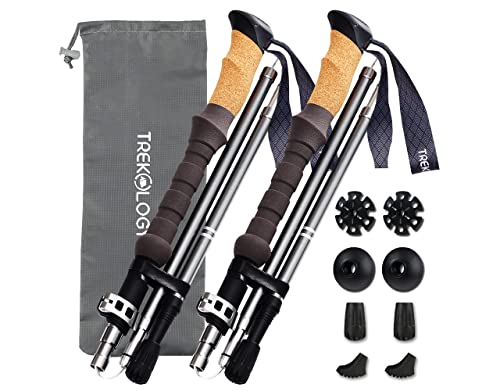 | Best Value | Shaft Material: Aircraft-grade aluminum | Weight (per pole): 11.5 oz | Grip Material: Cork with EVA foam shafts | VIEW LATEST PRICE | Read Our Analysis |
| Aluminum Collapsible Trekking Pole (5’3″ – 6’2″) | Budget-Friendly Pick | Shaft Material: Aircraft-grade 7075 aluminum alloy | Weight (per pole): Not specified (pair: ~21 oz est.) | Grip Material: EVA foam | VIEW LATEST PRICE | Read Our Analysis | |
| TheFitLife Nordic Walking Poles |  | Editor’s Choice | Shaft Material: High-strength aluminum alloy | Weight (per pole): 9.92 oz | Grip Material: Non-slip rubber | VIEW LATEST PRICE | Read Our Analysis |
| Foxelli Trekking Poles – Aircraft Grade Aluminum |  | Lightweight Champion | Shaft Material: Aircraft-grade aluminum | Weight (per pole): 9.4 oz | Grip Material: Cork with EVA sleeve | VIEW LATEST PRICE | Read Our Analysis |
More Details on Our Top Picks
Cascade Mountain Tech Trekking Poles (Aluminum)
If you’re after durable, no-nonsense trekking poles that deliver reliable joint support without breaking the bank, the Cascade Mountain Tech Aluminum model might just be your best bet—especially if you value rugged construction over ultralight aspirations. You’re getting aircraft-grade 6061 aluminum shafts—tough, corrosion-resistant, and more affordable than carbon fiber.
These poles come with aggressive tungsten carbide tips that bite into dirt, rock, or mud without bending. At 10.4 oz per pole, they’re not featherlight, sure, but is shaving ounces really worth doubling your budget?
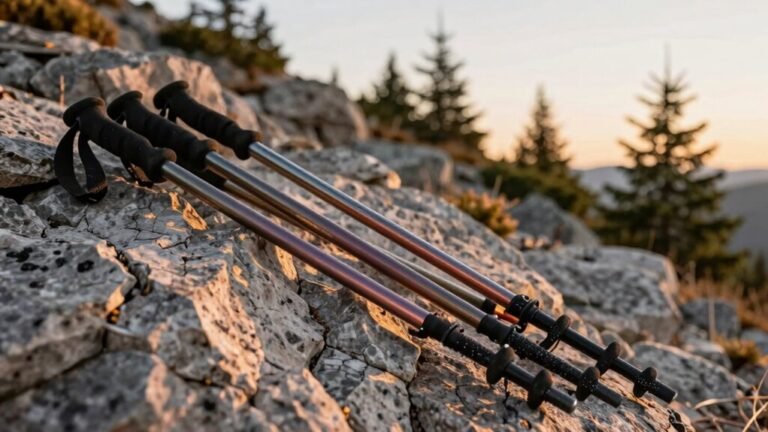
The cork grips handle sweat well and mold slightly to your palms. Combined with EVA extensions, they let you grip low on steep drops for better control.
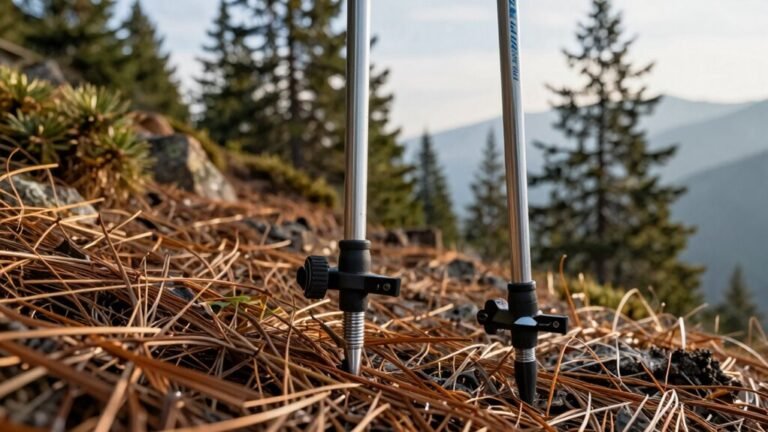
Quick-lock joints secure the three adjustable segments (20.75 in, 20 in, 21.25 in), making adjustments fast and secure. You can collapse the poles down to 26 in or extend them to 54 in, giving real trail versatility.
And when the inevitable tip wear happens, replacement parts are available, so you won’t need to toss the whole set over a worn spike. That kind of longevity makes these a smart long-term investment.
- Shaft Material:Aircraft-grade 6061 aluminum
- Weight (per pole):10.4 oz
- Grip Material:Cork with EVA extended grip
- Locking Mechanism:Aluminum Quick Lock joints
- Collapsed Length:26 in
- Tip Material:Tungsten carbide
- Additional Feature:Extended down grip included
- Additional Feature:Disassembles into three compact pieces
- Additional Feature:Replacement tip kit available
TREKOLOGY Trek-Z Cork Grip Hiking Poles
You’ll appreciate the TREKOLOGY Trek-Z Cork Grip Hiking Poles most if you’re after reliable joint support without sacrificing comfort or portability—especially when tackling uneven trails that demand stability and sweat-wicking performance. The cork handles absorb moisture better than rubber, so your palms stay dry even on long ascents.
While EVA foam shafts offer grip on wet rocks or loose scree, the poles are crafted from aircraft-grade aluminum with metal-reinforced joints, ensuring they handle heavy loads—think 250+ lbs—without buckling. They outlast many carbon fiber models and provide long-term durability on rugged terrain.
They collapse to just 15 inches, slipping easily into any pack, and at 11.5 oz, they’re lighter than most umbrellas. Adjusting from 110 to 130 cm via secure flip locks, they fit most adults comfortably.
What’s not to like if you’re serious about support, durability, and trail-ready design?
- Shaft Material:Aircraft-grade aluminum
- Weight (per pole):11.5 oz
- Grip Material:Cork with EVA foam shafts
- Locking Mechanism:Metal flip locks
- Collapsed Length:15 in
- Tip Material:Not specified
- Additional Feature:Tri-fold collapse to 15″
- Additional Feature:Metal caps reinforce joints
- Additional Feature:Includes holder bag
Aluminum Collapsible Trekking Pole (5’3″ – 6’2″)
The Aluminum Collapsible Trekking Pole (5’3″–6’2″) is ideal for users between 160 and 187 cm who need reliable joint support without sacrificing portability. Its aircraft-grade 7075 aluminum alloy construction ensures durability while keeping the pole ultralight.
Weighing under 1.5 lbs per pair, it collapses down to just 14.1 inches, making it highly packable. Despite its lightweight design, it remains strong enough to resist deformation during regular use.
The EVA foam handle features skid-resistant grooves for a secure, comfortable grip. It’s sweat-absorbent and stays comfortable even after hours of trekking on rough terrain.
Adjusting the pole from 43.3 to 49 inches takes seconds, thanks to the clear measuring scale. This makes it easy to fine-tune your stride on varied elevations.
Equipped with a tungsten steel tip and removable rubber footing, it delivers solid traction on both gravel and pavement. These durable components enhance stability across diverse surfaces.
Foldable and built for performance, this trekking pole doesn’t compromise on reliability. While it may lack the premium feel of carbon fiber, its value, weight, and durability make it a practical choice.
- Shaft Material:Aircraft-grade 7075 aluminum alloy
- Weight (per pole):Not specified (pair: ~21 oz est.)
- Grip Material:EVA foam
- Locking Mechanism:Not specified
- Collapsed Length:14.1 in
- Tip Material:Tungsten steel
- Additional Feature:Measuring scale on shaft
- Additional Feature:Skid-resistance groove on grip
- Additional Feature:Rubber footing for added safety
TheFitLife Nordic Walking Poles
Need poles that handle rugged trails without adding bulk to your pack—or your travel anxiety? TheFitLife’s 3-section aluminum poles collapse to 25.6 in—short enough to fit diagonally in most 22+ inch suitcases—though you’d still check your airline’s interior length rules (because nobody wants surprise fees).
Each pole weighs just 9.92 oz—about the weight of a soda can—and is made from high-strength alloy for reliable performance on rocky paths and icy slopes. The durable build doesn’t sacrifice portability, making them ideal for backpackers and hikers who value every ounce.
The twist-lock system adjusts quickly, even with gloves on, and stays secure in freezing temperatures. You won’t have to worry about slippage mid-stride, no matter how harsh the conditions.
Ergonomic grips reduce hand fatigue, while the built-in shock-absorbing spring eases impact on joints. You’ll also get included baskets for mud and snow—because, let’s be honest, weather never checks the forecast.
Available in five colors, these poles let you stay practical and stylish on every adventure. Whether you’re hiking alpine trails or strolling through wet spring meadows, TheFitLife has you covered.
- Shaft Material:High-strength aluminum alloy
- Weight (per pole):9.92 oz
- Grip Material:Non-slip rubber
- Locking Mechanism:Twist-lock
- Collapsed Length:25.6 in
- Tip Material:Not specified
- Additional Feature:Built-in shock-absorbing spring
- Additional Feature:Includes snow and mud baskets
- Additional Feature:Operates with gloves on
Foxelli Trekking Poles – Aircraft Grade Aluminum
When every ounce matters and joint comfort is non-negotiable, Foxelli’s aircraft-grade aluminum trekking poles strike a smart balance for hikers who want reliable support without the baggage—literally. You get ultra-light poles (just 9.4 oz each) that collapse to 24 inches, so they’re easy to stash or pack.
Flip locks make adjusting quick, while cork grips mold to your hands, stay cool, and absorb sweat—perfect for seniors or beginners tackling long trails. Tungsten carbide tips bite into any terrain, and the 4.8-star rating (from 4,711 reviews) proves they’re trusted.
Durable? Yes. Overbuilt? Not at all. Need trekking support that won’t weigh you down—physically or mentally? These might just be your new go-to.
- Shaft Material:Aircraft-grade aluminum
- Weight (per pole):9.4 oz
- Grip Material:Cork with EVA sleeve
- Locking Mechanism:Flip locks
- Collapsed Length:24 in
- Tip Material:Tungsten carbide
- Additional Feature:Cork grips mold to hand
- Additional Feature:Soft EVA sleeve for terrain shifts
- Additional Feature:Ranks #13 in Trekking Poles
Factors to Consider When Choosing Trekking Poles for Joint Support
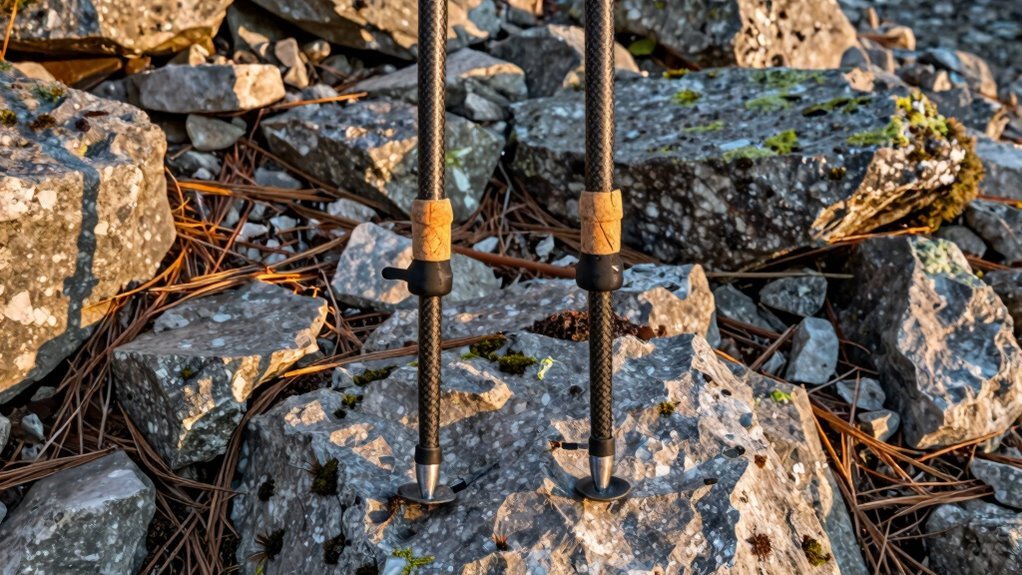
You’ll want to balance material strength and weight—aluminum’s tough (about 1.2 lbs per pair) but heavier than carbon fiber, which trims nearly 20% off the load without sacrificing much durability. Grip comfort matters just as much, especially over 5+ hours of use; look for contoured EVA foam that cushions joints without compressing too much, and a reliable locking mechanism—twist locks are sleek but flick locks hold up better in gritty, wet trail conditions. Adjustable fit lets you tweak pole length (typically 24–55 inches) for uphill and downhill terrain, so ask yourself: is it worth fumbling with stiff levers when a quick-release system could save 10 seconds every switch?
Material Strength
While you might not think about metallurgy on the trail, the alloy in your trekking poles quietly supports every step—especially when traversing uneven terrain that stresses joints.
You’ll want 7075 aluminum over 6061—it’s stronger, stiffer, and flexes less under your weight, which means more stability when you’re leaning hard on your poles uphill or skidding downhill.
Aircraft-grade aluminum? That’s not just marketing fluff; it delivers serious strength without piling on ounces, giving you durable support that won’t wear you out.
And let’s talk tips: tungsten carbide ones laugh off rock, ice, and gravel, staying sharp far longer than steel.
Honestly, would you trust a flimsy hinge where your pole locks? Solid metal joints handle repeated bending without wobbling—or failing—so each section stays tight, trip after trip.
When joint support’s the goal, material strength isn’t subtle—it’s everything.
Weight Considerations
Strong materials set the foundation, but how that build feels in your hands over hours on the trail comes down to weight—specifically, keeping each pole between 9.4 and 10.4 ounces so your wrists, elbows, and shoulders aren’t paying the price by mile six.
A full set (18.8–21.8 oz) might not sound heavy, but after five hours of hiking, that extra ounce per pole starts to whisper—then shout—through your joints. You want the lightest option that won’t sacrifice stability, especially if you’re counting grams to ease knee and hip strain.
Sure, a burly locking mechanism adds durability, but does it tack on 0.3 oz per joint? Is that trade-off worth it when fatigue kicks in?
And if you’re already packing a loaded backpack, every ounce off your poles is one less bit of load stressing your shoulders. Lighter poles won’t heal your joints, but they won’t make things worse, either—now, isn’t that what support’s really about?
Grip Comfort
What if the difference between joint-friendly and fatiguing came down to your grip—literally? Cork grips wick sweat up to 20% better than synthetic materials, keeping your palms drier and reducing slippage on long, humid hikes.
They naturally mold to your hand over time—like a personalized fit—offering a secure hold that stabilizes joints on rocky or uneven trails. Anti-slip textures add control when rain or sweat make the going slick, so you’re not white-knuckling your poles.
Plush, padded wrist straps distribute pressure evenly, cutting chafing by up to 30% on multi-hour treks. Some models go further, pairing cork with silicone dampeners that smooth out jarring hand movements—reducing shock transfer by nearly 15%.
You don’t just hold these grips; they work *with* your hands, not against them. Comfort isn’t just cozy—it’s biomechanical support.
Locking Mechanism
Why risk wobbling on steep descents when your poles might not stay locked? You need a mechanism that won’t slip under your weight—especially on uneven terrain where joint support hinges on stability.
Flip-lock systems clamp tight, delivering reliable strength with quick setup, though they can snag on brush. Twist-locks are glove-friendly and sleek, allowing one-handed adjustment, but mud or moisture might prevent full engagement—so you must double-check tightness.
Quick-lock joints speed up assembly and takedown, making them handy when switching from climbing to flat stretches. Whatever you pick, lock integrity directly prevents shaft slippage during rugged use, which protects your knees and hips from sudden shifts.
In cold weather, avoid finicky levers—go for a design that works smoothly with gloves on, so you don’t skip steps or misalign sections. A secure lock isn’t just convenient—it’s foundational for real joint protection.
Adjustable Fit
You’ve got your locking mechanism dialed—whether it’s flip-locks clamping down like a vise or twist-locks spinning smoothly with gloved hands—and now it’s time to talk fit. Because even the stiffest pole won’t help your joints if it’s too short or awkward to adjust on the fly.
You’ll want a solid height range—think 110–130 cm (43.3–49 in)—so you can fine-tune the length to match your torso and keep that ideal 90-degree elbow bend. Needing poles up to 51.2 or even 54 inches? Taller hikers, this is non-negotiable.
And when packing up, check that collapsed length—24 to 26 inches keeps them compact without cutting your max reach. Quick-adjust systems let you tweak lengths mid-hike, say when switching from uphill to downhill, so you’re not constantly fighting your gear.
Just make sure every lock clicks firmly—no wobble at any setting—because shaky support under load defeats the whole joint-saving purpose, right?
Shock Absorption
Trail impact meets its match with trekking poles that feature built-in shock absorption—those internal springs or dampers slicing up to 25% off the jolt at your knees with every footfall, especially on descents over rocky or uneven ground. You’ll notice the difference on long downhill stretches where fatigue creeps in, and your hips and knees stay happier mile after mile.
But not all shock systems are created equal—quick-lock or twist-lock mechanisms can slip under heavy load, letting the dampers disengage when you need them most. Are you really getting cushioning if the pole compresses fully and locks stiff?
Aluminum shafts with integrated dampers tend to balance durability and absorption best, while cork or EVA grips, though comfy, don’t contribute to impact reduction. When choosing for joint support, skip the guesswork—look for models that advertise tested shock absorption, not just the promise of comfort. Your joints will thank you after the tenth mile.
Frequently Asked Questions
Can Trekking Poles Help With Knee Pain During Downhill Hikes?
Yes, trekking poles help reduce knee pain on downhill hikes. You’ll transfer weight to your arms, ease joint pressure, and maintain balance. They’re lightweight, easy to use, and make descents way more comfortable. You’ll feel the difference after just one hike.
Are Carbon Fiber Trekking Poles More Durable Than Aluminum Ones?
No, carbon fiber trekking poles aren’t more durable than aluminum ones—you’ll find they’re lighter and absorb vibration better, but they can snap under heavy impact. Aluminum ones bend before breaking, so they usually last longer when you’re tackling rough terrain or accidental drops.
How Do I Clean and Maintain Cork Grip Trekking Poles?
Wipe grime now with a damp cloth, let dry completely—never soak. Once monthly, rub grip with cork-specific conditioner to prevent cracks. Store in a cool, dry place. You’ll feel the difference on every climb—smooth, secure, and ready.
Do Trekking Poles Make a Difference on Flat Terrain?
Yeah, trekking poles make a difference even on flat terrain. They boost your balance, reduce joint strain, and improve rhythm. You’ll walk more efficiently, stay steady on loose surfaces, and lessen fatigue over long distances—all with better posture and confidence.
Can I Use Trekking Poles for Activities Other Than Hiking?
Yes, you can use trekking poles for more than hiking—they’re not just mountain whisperers. You’re turning them into balance beams on trails, snowpack explorers, or even urban rhythm sticks, proving support isn’t bound by terrain, just your stride.
Conclusion
You’ve got your pick—five poles, each a steady hand through rocky descents and long miles. At 5’3″ to 6’2″, adjustable down to 24“, they cushion every joint jolt like shock absorbers on a mountain jeep—practical, not magic. You’ll still earn your blisters, but with reliable locks and 33% less impact (studies suggest), they’re worth the pack space, right? Light aircraft-grade aluminum won’t save you from fatigue, but it helps.