How to Prevent Cramps for Older Hikers
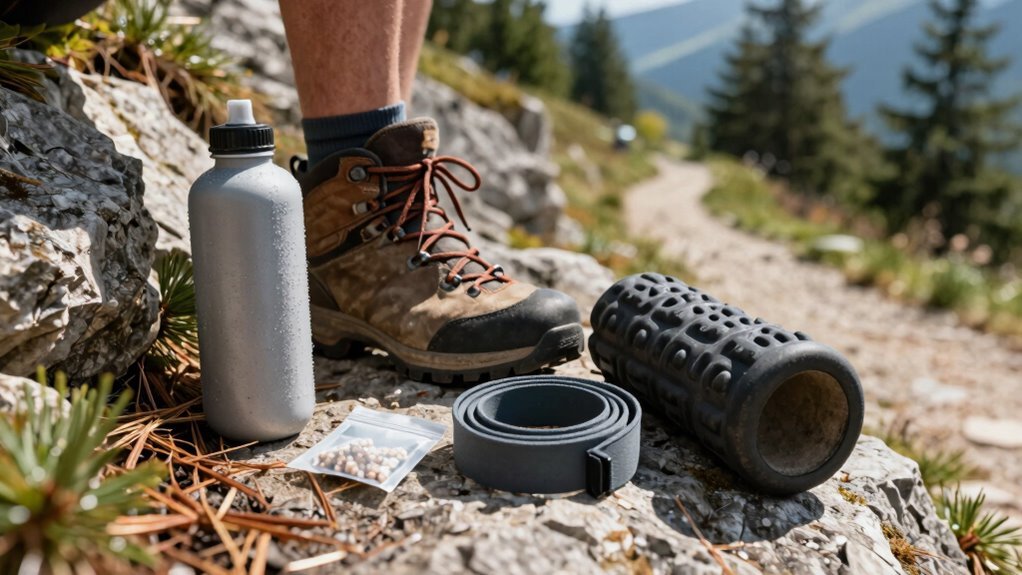
To prevent cramps for older hikers, start by hydr penalizing with 1–2 cups of water 30 minutes before hitting the trail. Stay consistent by sipping every 15–20 minutes—dehydration is a top trigger for muscle cramps.
Include electrolytes in your hydration routine, especially in hot weather, to replace lost salts and help prevent cramps. These minerals are essential for muscle function and balance.
Warm up with dynamic moves like leg swings and heel kicks before you start hiking. After your hike, stretch while your muscles are warm to support recovery and reduce cramp risk.
Wear comfortable, supportive shoes that fit well and cushion your feet. Proper footwear helps maintain form and reduces muscle strain over long distances.
Take regular breaks, enjoy the scenery, and tune in to your body’s signals. Listening to your body is key to preventing overexertion and helping older hikers stay steady and strong.
Stay Hydrated Before and During Your Hike
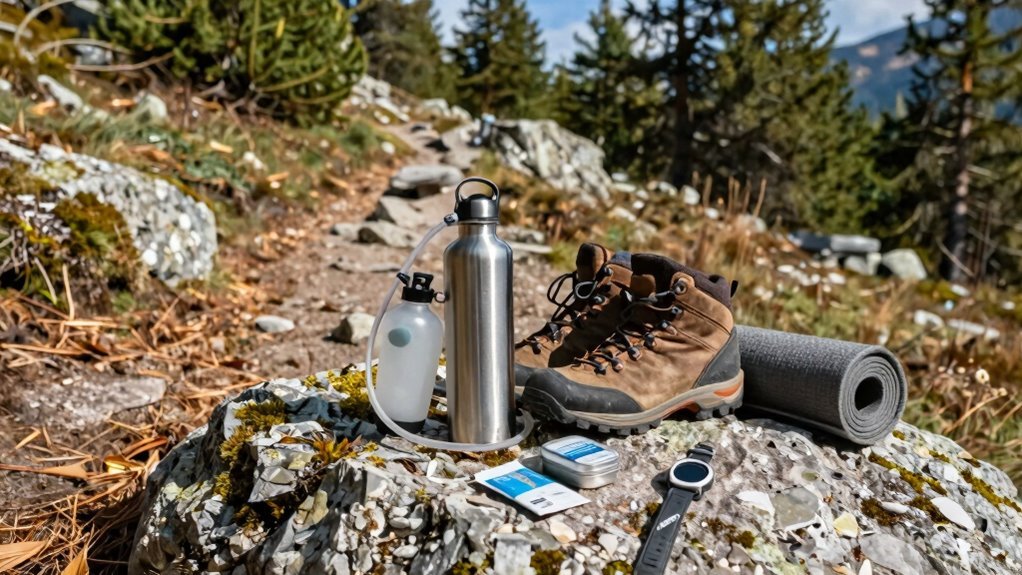
Even if you don’t feel thirsty, your body’s already asking for water—especially as you age—so think of hydration like packing snacks: you wouldn’t hit the trail without one, so don’t skip the other.
Start sipping 300–500 ml of water 30–60 minutes before hiking, and if you’re over 50, add another 250–500 ml—your thirst meter’s a bit rusty.
Hydrate smart the days before, not just that morning.
Early sips help you stay ahead of losses, especially when it’s hot.
On the trail, drink 150–250 ml every 15–20 minutes, or 400 ml every half hour in heat, in small gulps—no chugging contests here!
Sweating buckets? You might lose 60 ounces an hour.
Bring more than you think, because chances are, you didn’t bring enough.
And remember, your body’s older and wiser—but it still forgets to ask for water.
Replace fluids lost through electrolyte balance to prevent cramps and maintain muscle function.
Maintain Balanced Electrolyte Levels
A pinch of salt, a sip of smart—keeping your electrolytes in balance is your secret weapon for hiking strong, especially as the years stack up.
Your body holds 10% less fluid now, and thirst? It’s not as loud as it used to be, so you’ve gotta stay sharp.
Sweat wipes out sodium, potassium, magnesium, and calcium—hello, cramps!—and without enough, you’re risking fatigue or dizziness.
Don’t wait until you’re salty-crusted to react.
Pop an electrolyte tablet, sip a smart drink like RecoverORS, or toss a dash of salt and sugar in your water—it’s like a sports drink’s cooler cousin.
In hot weather, swap plain water with electrolyte mixes to keep up with double-time sweat.
Skip the beer pre-hike (sorry!), and lay off coffee too—it’s basically liquid sprinting to the bathroom.
Replenish during *and* after the trail, because your muscles will thank you tomorrow—no crampy surprises!
RecoverORS is sugar-free and gluten-free, making it a clean choice for sustained hydration without artificial additives.
Warm Up Properly Before Hitting the Trail
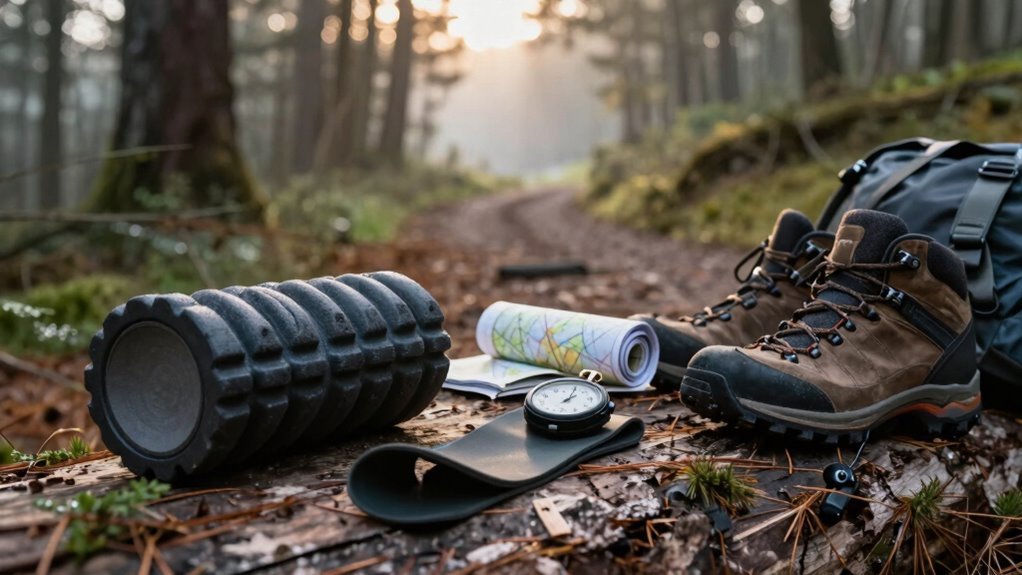
Before you race to the summit like you’re in a hiking version of *The Amazing Race*, take a few minutes to warm up—your muscles will thank you instead of staging a mutiny halfway up the trail.
Start with dynamic moves: rise onto your toes for heel raises, march with high knees, and kick your heels back to wake up your quads.
Swing your legs front and side to loosen hips, and don’t skip ankle circles—they’re secret heroes on rocky paths.
Do a few split squats to prep your knees, and fire up your glutes with standing leg curls.
Swing your arms backward, twist your mid-back, and take a slow stroll, maybe even using poles to ease into it.
These moves get your blood flowing, boost flexibility, and cut cramp risk—all without feeling like a chore.
Think of it as hitting “play” on your body’s engine before flooring it.
You’re not just walking—you’re warming up like a pro, one smart, playful step at a time.
Breathing in fresh air during your warm-up enhances oxygen flow and supports immune system boost.
Stretch Regularly to Support Muscle Flexibility
When your muscles feel tight, don’t wait for them to stage a full-on rebellion—stretch now and keep them flexible like a yogi with a snack stash.
Regular stretching helps prevent cramps and keeps you moving smoothly on the trail.
Hit these key moves after warming up or post-hike for best results:
- Calf stretch against a wall: Step back, press that heel down, and hold—simple, effective, and cramp-busting.
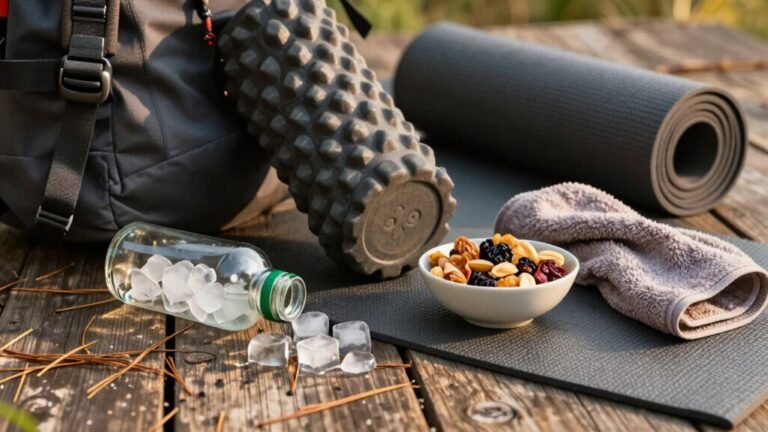
- Foam roll your calves and quads: It might sting a little, but it’s like a massage from a slightly angry friend.
- Try a wide-legged forward fold: Great for hamstrings, and hey, you’ll look dramatic doing it.
- Pull a knee to your chest: Works hips, glutes, and feels amazing after sitting on a log for lunch.
- Do reverse lunges: Stretch *and* strengthen—multitasking at its finest!
Choose the Right Footwear for Stability and Comfort
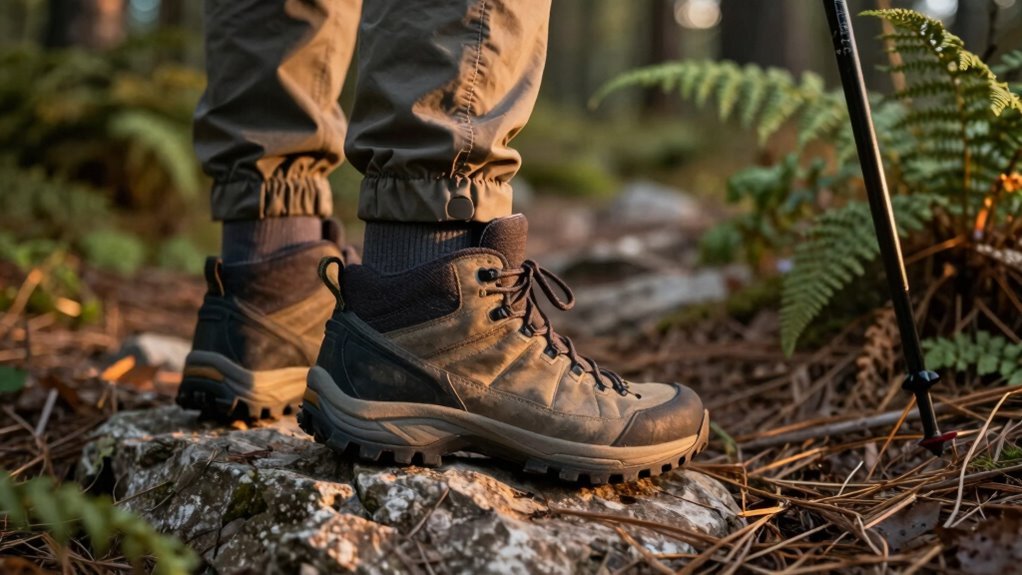
Why do some hikers breeze down the trail while others are wobbling like a newborn deer? It might be your boots.
As you age, your feet spread, swell, or develop bunions—so that old favorite pair probably doesn’t fit right anymore.
Tight shoes hurt; loose ones make you slip.
Aim for a snug but comfy fit and replace them every 8–12 months.
Look for strong soles, higher cuts, and heel counters that lock your foot in place.
Lighter boots, like the Merrell Speed Solo (just over a pound!), cut fatigue so you can hike longer.
Vibram outsoles grip wet rocks and muddy paths like magic.
Try the Keen Targhee for roomy toes or New Balance 990s for steady support.
The right shoe keeps you balanced, comfy, and cramp-free—because nobody likes eating dirt on a hillside.
Know Your Limits and Pace Yourself
How does that hiker zooming past you on the trail manage to look so fresh while you’re already feeling the burn?
They probably know their pace—and you should too!
Pushing too hard too soon is a fast track to cramps and exhaustion.
Instead, honor your body’s rhythm and keep hikes enjoyable, not grueling.
- Start slow with easy trails and build stamina like a pro—no rush, no race
- Take breaks every hour to sip water, stretch, and enjoy the view (hello, birds!)
- Let speed demons pass while you soak in nature at your own pace
- Pick shorter distances than you used to—aging isn’t slowing you down, it’s smartening you up
- Listen closely: if your body says “enough,” respect that with a smile and a turnaround
Pacing isn’t quitting—it’s hiking with wisdom and a whole lot of heart.
Frequently Asked Questions
Can Medications Increase My Risk of Cramps While Hiking?
Yeah, some meds can totally ramp up your cramp risk while hiking.
Diuretics, statins, and certain antibiotics like levofloxacin might leave your muscles twitching, especially on the trail.
They can mess with your minerals or irritate muscles and tendons.
If you’re over 60 or popping pills for blood pressure or cholesterol, just give your doc a shout—teamwork keeps your hikes cramp-free and fun!
Are Nighttime Cramps Related to My Hiking Activity?
Yes, those nighttime cramps might just be your muscles throwing a tiny tantrum after hiking!
They’re often linked to the day’s adventure—tired legs, dehydration, or even leftover electrolyte drama. Think of it as your calves whispering (okay, shouting) for some post-hike TLC. Stretch them gently, sip water, and maybe give your feet a cozy home in supportive shoes—you’ll both sleep better.
Should I Take Magnesium Supplements to Prevent Cramps?
No, you probably shouldn’t take magnesium supplements for cramps—it’s likely a waste of money.
Research shows they don’t help older adults much, and your hiking buddies over 50 won’t get relief either.
Save the cash, skip the upset stomach, and focus on stretching, hydration, and eating foods like bananas or nuts.
Your muscles will thank you—no pills needed!
Do Cold Temperatures Make Muscle Cramps More Likely?
Yeah, cold temps can totally crank up your cramp risk—even if it feels too chilly for typical heat-related cramping.
When it’s cold, your muscles stiffen, nerves slow down, and blood flow drops, which makes them twitchy and tired faster.
Plus, chilly muscles produce more lactate, adding to the burn and raising cramp odds.
Can Poor Sleep Contribute to Hiking-Related Muscle Cramps?
Yeah, poor sleep can totally crank up your cramp risk—studies show 60% of night crampers wake up at random hours, proof sleep’s a big cramp trigger.
You’re already hiking hard, so when you skimp on z’s, your muscles don’t recover right and go rogue.
No deep sleep? No stretching.
Tight fibers spasm, especially downhill.
Don’t let your legs throw a tantrum—nap, stretch, and snooze smart!
Conclusion
So, you wanna hike without turning into a crunchy potato? Hydrate like it’s your job, stretch so you don’t seize up mid-step, and please, for the love of blisters, wear real shoes—not your ancient flip-flops. Pace yourself; you’re not being chased by bears (probably). Do all this, and hey, maybe you’ll stop yelling at clouds—and your calves—every time you climb a hill. Happy trails, grandpa.
References
- https://wanderlusthiker.com/the-science-of-hydration-how-much-water-do-you-really-need-on-the-trail/
- https://www.allierambles.com/11-tips-for-older-hikers-to-stay-heathy-on-and-off-trail/
- https://pmc.ncbi.nlm.nih.gov/articles/PMC7312660/
- https://www.acefitness.org/continuing-education/certified/september-2020/7644/study-people-underestimate-how-much-water-they-ll-need-on-the-trail/
- https://journals.sagepub.com/doi/10.1177/02601060221150303
- https://pmc.ncbi.nlm.nih.gov/articles/PMC11582915/
- https://mountain-hiking.com/best-electrolytes-for-hiking/
- https://thetrek.co/appalachian-trail/how-much-water-should-you-carry-on-the-appalachian-trail/
- https://recoverors.com/electrolytes-for-hiking/
- https://adventuremedicalkits.com/blogs/news/5-tips-to-prevent-dehydration-while-hiking