How to Start Hiking Again After 60
You’ve got this—starting hiking again after 60 is a great way to stay active and enjoy nature. Begin by checking your fitness with simple tests like stepping in place or aiming for 6,000 steps a day to build endurance.
Pick easy, scenic trails that match your rhythm, not your ego, and focus on consistency over distance. Your goal when hiking after 60 should be enjoyment and steady progress, not speed or difficulty.
Grab supportive boots with cushy soles—your knees will thank you—and consider using hiking poles for balance and joint support. Warm up before each hike with ankle circles and high knees to prepare your body.
Pack water and trail mix for energy and hydration, and always let someone know your plans. Bring a buddy for motivation and safety, especially when starting out or trying a new trail.
Ease into longer hikes gradually, listening to your body every step of the way. With the right preparation, hiking after 60 can be a rewarding and sustainable adventure.
Assess Your Current Fitness Level
Feeling ready to hit the trails but not sure if your body’s up for it? Let’s find out—no guessing games.
Try the 4-stair climb: power up like you’re chasing a squirrel, and see how strong your legs feel.
Next, stand on one foot and rise onto your toes—how many can you do in a minute? That’s calf strength *and* balance in action!
Now step in place for two minutes, lifting those knees high; it’s aerobic fitness without the wobble.
If you’ve got balance on lock, try the Four Square Step Test—fancy footwork keeps you from face-planting on roots.
Check your flexibility too—can you bend without sounding like a creaky door? Stiffness is nature’s hint to stretch more.
Oh, and your heart? The 6-minute walk test tells you if it’s hiking-ready or still Netflix-and-chilling.
These quick checks show where you shine—and where to beef things up—before the trail does.
Strength training 3–4 times per week builds resilience, especially when focusing on lower-body strength.
Choose the Right Trail for Your Ability
Where should you start when the whole outdoors is calling, but you’re not sure which trail won’t leave you begging for a nap—or a rescue?
Start smart: match the trail to your ability, not your ego. Check local rating systems—some use easy/moderate/difficult, others use numbers or lengths.
A moderate 6-mile trail with steep bits isn’t the move just yet.
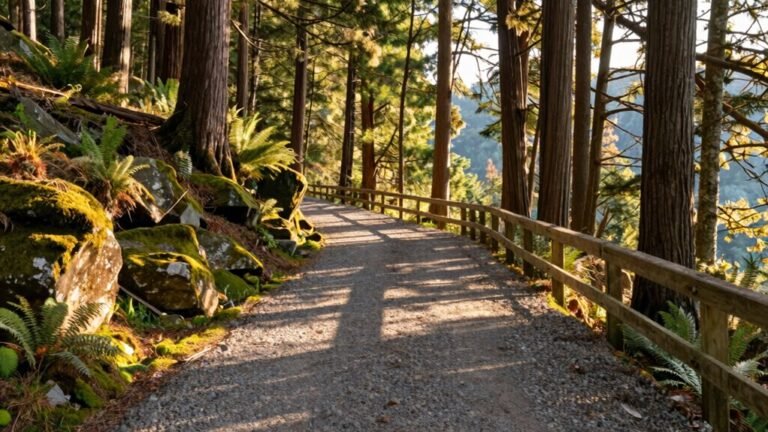
Instead, pick shorter paths—1 to 2 miles—with packed dirt, gentle slopes, and no surprise drop-offs.
Look for clear signs and good footing; your ankles will thank you.
Read recent reviews, check the weather, and peek at trail reports—mud or snow can turn a walk in the woods into a slapstick skit.
And hey, no shame in bringing a buddy or turning back early.
The trail isn’t going anywhere, but you want to come home feeling proud, not pooped.
Many parks categorize hikes by elevation gain, which directly impacts how hard a trail feels, especially as you age.
Invest in Proper Footwear and Gear
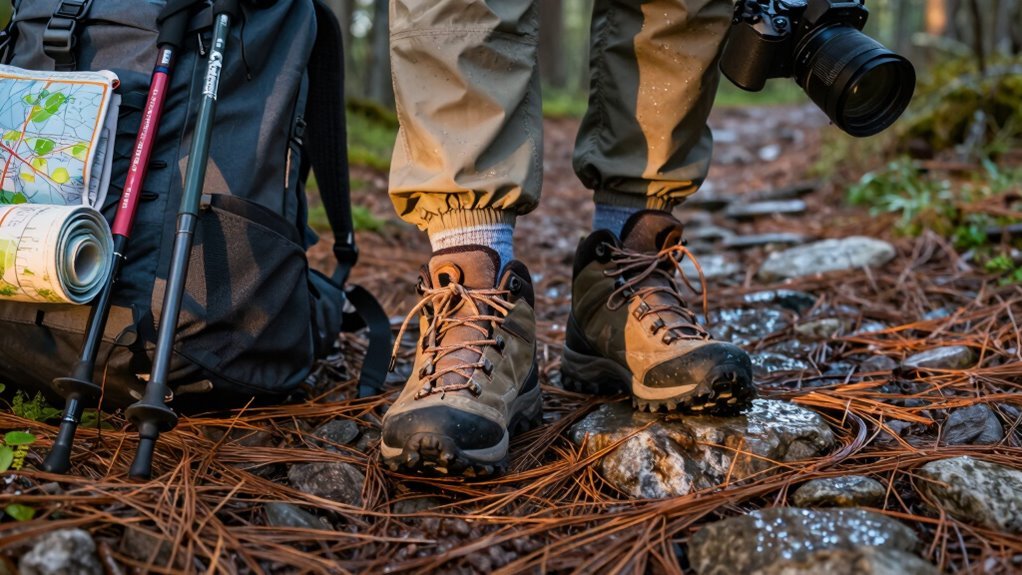
Lace up, because your feet are about to become your best hiking buddies—and they deserve some serious upgrades.
You’re not trudging through life in flip-flops, so why hike in worn-out sneakers?
Grab a pair like Merrell Moab boots—they hug narrow feet and offer great support.
If your toes need room, Vasque’s wide toe box is a game-changer.
Hiking in rain? GORE-TEX and Oboz B-Dry tech keep things dry and comfy.
Need cushioning? Hoka Anacapa or On Cloudrock deliver plush rides over rocks.
And for long walks, Orthofeet’s insoles fight arthritis pain like a pro.
Waterproof, grippy Vibram soles? Yes, please—especially when trails get slick.
You’ve got options: Danner’s leather lasts years, Oboz stays light, and Columbia won’t break the bank.
Great gear isn’t overkill—it’s your secret weapon for loving every step.
Ahnu Montara boots provide exceptional arch support, a deal breaker for comfort on long hikes.
Warm Up Before You Hit the Trail
Jump-start your hike with a quick warm-up, because nobody wants to face their first uphill climb with cold muscles playing deadbeat roommate.
Get those legs and joints fired up so you stride confidently, not stiffly.
Here’s how:
- High-knee marches – Step 2-3 paces between lifts to wake up hips and knees without tiring out before the fun starts.
- Ankle circles – Roll each ankle 5–10 times in each direction on uneven ground to prep for rocks and roots like a pro.
- Calf raises – Rise up on your toes, one leg at a time if you’re feeling bold, to fire up calves and beat stiffness.
- Butt kicks & shoulder rolls – Swing those legs backward and circle arms with deep breaths—loosen everything from toes to traps.
You’ll hit the trail feeling smooth, strong, and ready for adventure.
Use Hiking Poles for Stability and Support
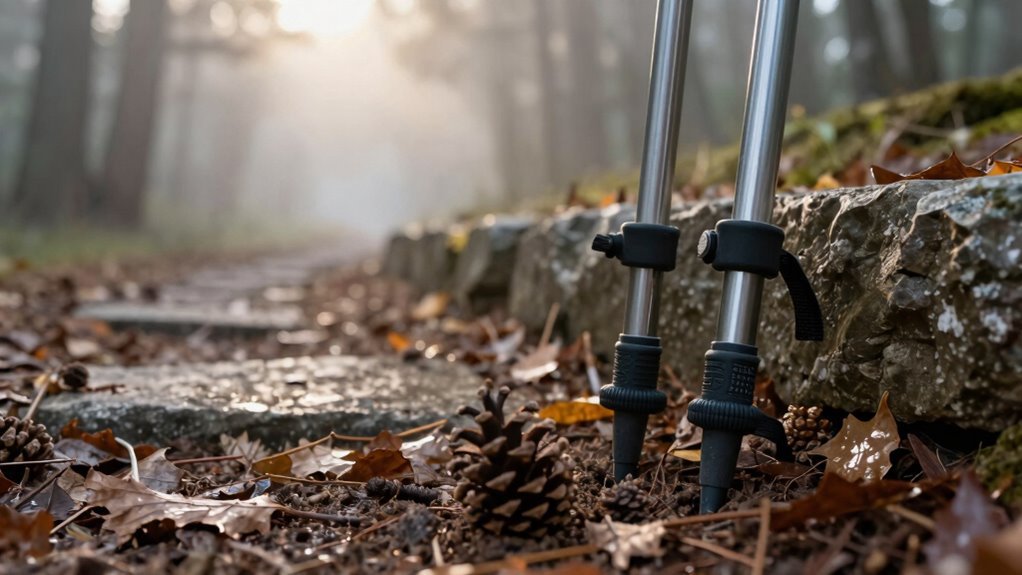
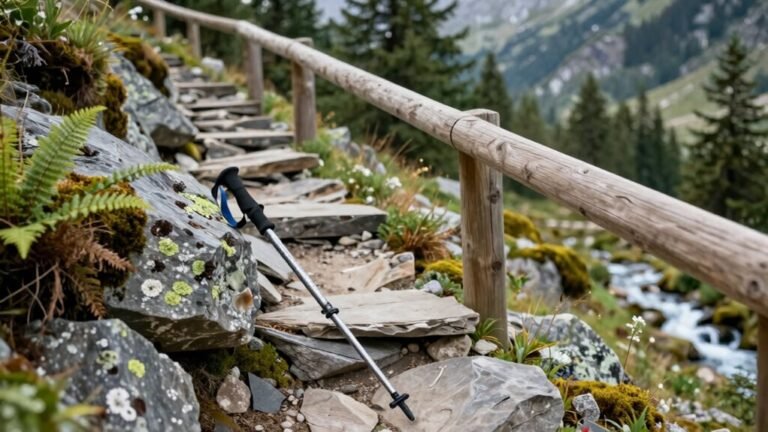
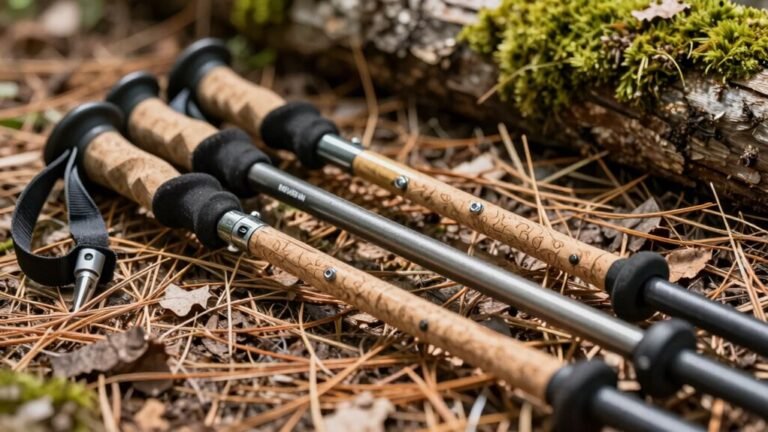
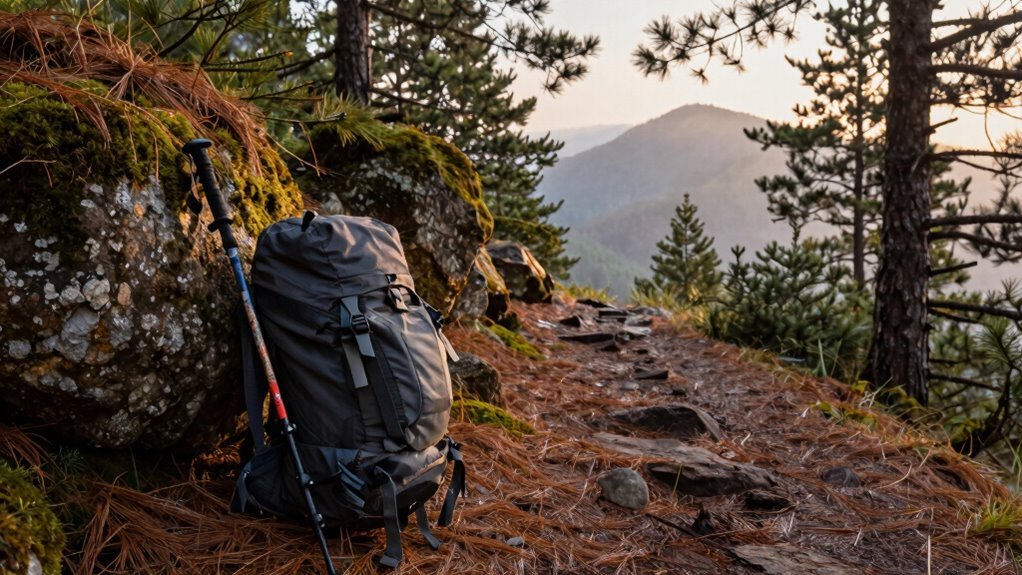
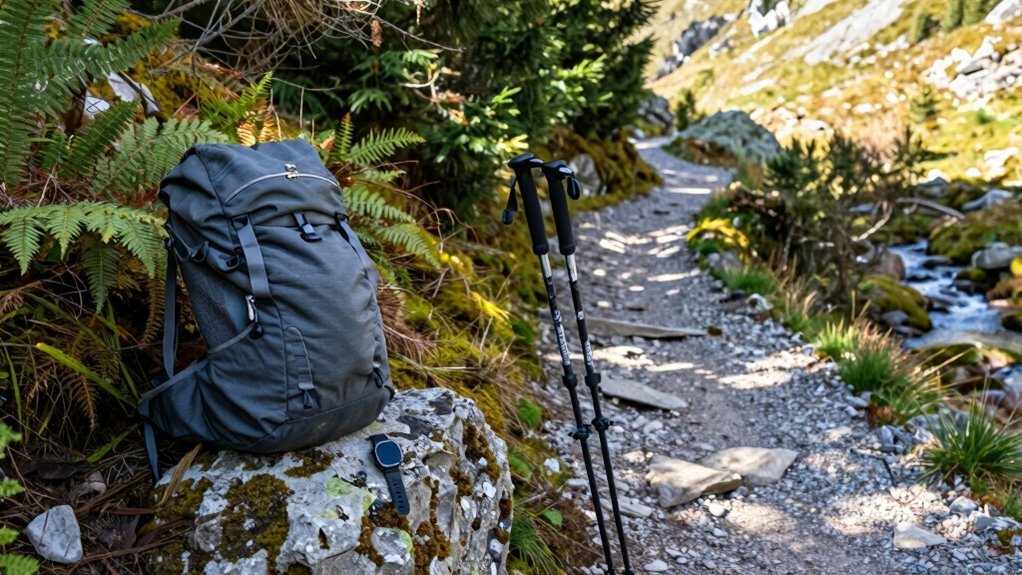
Trekking poles aren’t just for seasoned mountaineers or people who want to look like wildlife conductors on the trail—you’ll love how these trusty sticks turn you into a more balanced, confident hiker after 60.
They boost your coordination and cut fall risks way down, whether you use one or two.
You’ll ease pressure on knees, hips, and ankles by up to 16%, especially on steep trails.
Poles help you walk faster, stand taller, and move like a younger version of yourself.
After just eight weeks, your posture and stride improve noticeably.
Plus, they engage your upper body, building strength and stamina with every push.
Lightweight, adjustable poles are easy to master, and once you get the rhythm, you’ll wonder how you ever hiked without them—talk about a game changer!
Stay Hydrated and Bring the Right Snacks
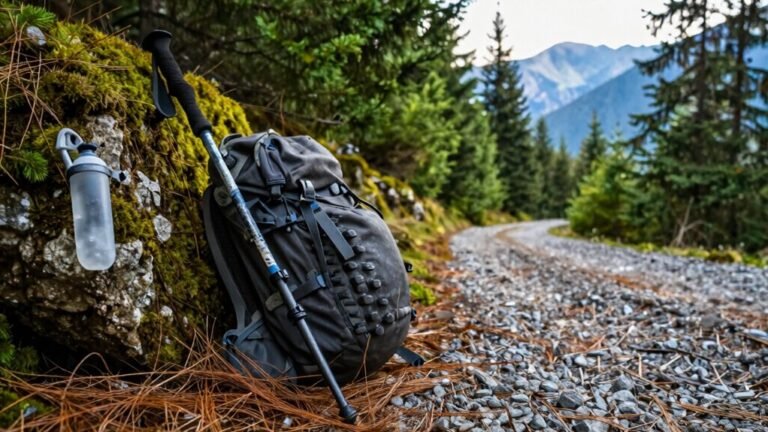
You’ve got your trusty poles in hand and your stride feeling strong—now let’s talk about what to pack in your pack, starting with the inside of your body.
As we age, thirst fades, so you mightn’t feel it, but your body’s screaming for water.
Stay ahead by sipping early and often—dehydration sneaks up like a ninja in hiking boots.
Aim for about one-third your weight in ounces daily, and toss in hydrating snacks to boost your intake.
Your body will thank you with steady energy and fewer “uh-oh” moments on the trail.
- A 2-liter hydration bladder or two large water bottles
- A salty snack like trail mix to hang onto fluids
- Fresh fruit like orange slices or grapes for hydration + zest
- A marked water bottle to track your hourly sips—because guesswork isn’t a strategy
Listen to Your Body and Rest When Needed
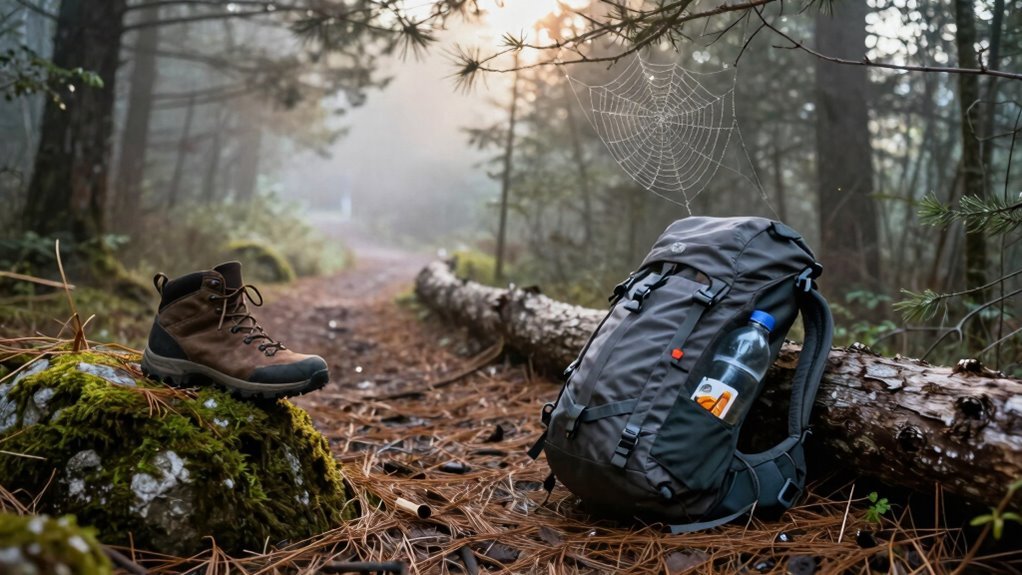
Tune in to your body like it’s your favorite playlist—because it’s playing you some important signals.
If you’re huffing and puffing, that’s your cue to pause or turn back.
Feeling tired? Don’t push it—rest now, not later.
Muscle soreness, joint strain, or just general “I’m done” energy? These aren’t signs of weakness; they’re your body’s way of saying, “Hey, let’s chill a sec.”
Take breaks often—they’re like mini-vacations on the trail.
Stretch, sip water, enjoy the view.
You’ll actually go farther by going slower.
Keep a steady, easy pace that matches your rhythm, not someone else’s.
And plan rest spots right into your hike—trail routes with benches or shady nooks are gold.
Remember, turning back early isn’t quitting; it’s hiking smart.
Your future self will thank you with happy knees and more trail days ahead.
Rest up, adventurer—you’ve earned it!
Hike With a Friend or Join a Group
You don’t have to walk the trail alone—grab a buddy and turn your hike into a heartwarming adventure with extra laughs and shared stories.
Hiking with others isn’t just fun, it’s a game-changer for staying active and happy after 60.
You’re 30% more likely to stick with it when you’ve got friends cheering you on.
Plus, group hikes do wonders for your heart, mood, and balance—talk about a full-body upgrade!
- Laugh your way to lower blood pressure on weekly 30-minute group strolls.
- Swap stories on the trail and feel loneliness fade like morning fog.
- Gain confidence with a buddy who’s got your back (and maybe trail mix).
- Join a local walking program where coaches keep you on track—no solo guesswork.
Team up, step out, and let the trail bring you joy.
Gradually Increase Your Distance and Difficulty
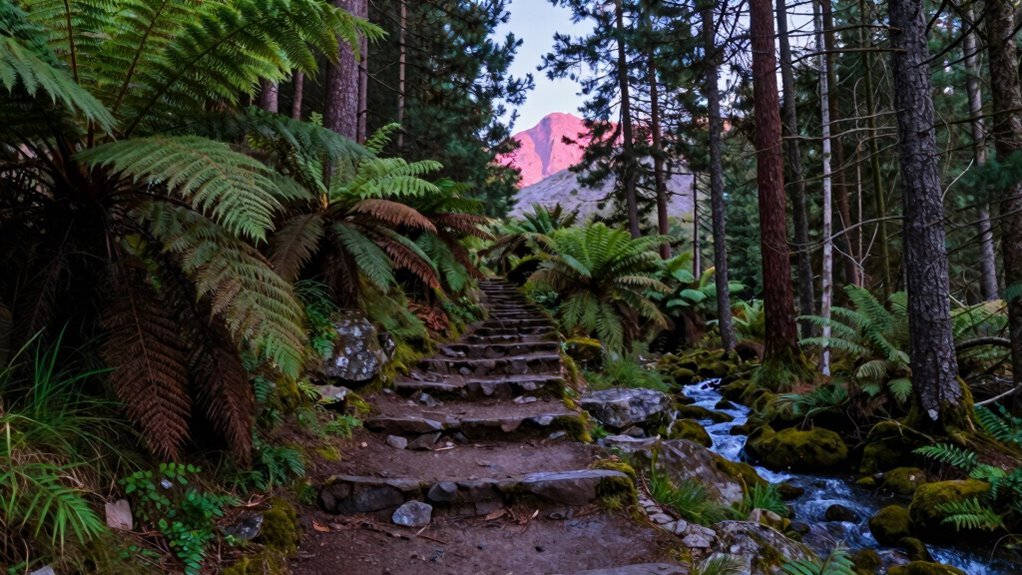
While your hiking boots are still fresh and the trail still feels new, now’s the perfect time to gently stretch your limits—like giving your body a daily high-five for getting stronger.
Start with 25-minute hikes on flat paths three times a week, aiming for a steady 20–30-minute mile pace.
In no time, you’ll be clocking 6,000–8,000 steps a day, slashing risks for heart disease, diabetes, and dementia.
By month two, add 10–15 minutes weekly until you hit 150 minutes of hiking—your body will thank you.
Toss in 15 minutes of hills three times a week to build power without overdoing it.
Backpacking? Scale back from 16 miles to a comfy 10–12 daily.
Speed up your pace to 2+ mph—faster walking boosts longevity and trims hypertension risk.
Hit 9,800 steps for sharper brain health, and keep tracking progress—you’re not just hiking longer, you’re living longer.
Every step’s a win!
Frequently Asked Questions
Can I Hike if I Have Arthritis?
Yeah, you can totally hike with arthritis—you’ve just gotta be smart about it.
Pick flat, smooth trails that don’t twist your knees into knots.
Use trekking poles, they’re like training wheels for grown-ups.
Wear comfy boots, stretch before and after, and take breaks when needed.
Stay hydrated, pack light, and laugh when your joints creak—it’s just your body telling fun stories.
What Should I Do if I Get Lost?
You stop moving the second you realize you’re lost—no panic, just breathe.
You’re not starring in a horror movie, so stay calm.
Look around, spot familiar landmarks, and retrace your steps if safe.
Use your compass or watch the sun’s move.
You mark your path with rocks or sticks, and if all else fails, you follow a stream downhill.
You’ve got this.
Are There Age-Restricted Trails?
Nope, you won’t find trails that slam the gate shut at 60—mother nature doesn’t do age discrimination!
Trails are rated by sweat level, not birth year.
You’ll see signs for easy, moderate, or tough, but never “seniors prohibited.”
If a trail’s tough, it’s about fitness, not wrinkles.
How Do I Prevent Blisters?
You prevent blisters by wearing moisture-wicking socks and breaking in your boots before hitting the trail.
You keep your feet dry, apply petroleum jelly on hotspots, and tape problem areas early.
You wear double-layer socks if needed, keep toenails short, and carry blister pads—because nobody’s got time for foot drama.
You stay alert on day two, when hotspots love to surprise you like uninvited guests.
Is Hiking Safe With High Blood Pressure?
Yeah, hiking’s usually safe with high blood pressure—as long as it’s not through the roof.
At moderate altitudes, your heart might work harder, but you’ll likely be fine if you’re feeling good and your numbers are modestly controlled.
Just keep an eye on how you feel, check your BP before and during hikes, and chat with your doctor first.
Pack water, go slow, and hey—your heart will thank you with every step!
Conclusion
You’ve got this! Start slow, gear up, and savor every step—why wait for adventure when the trail’s calling? Feel the breeze, smell the pines, and laugh if you wobble (we all do). Hiking after 60 isn’t about speed, it’s about joy. With each hike, you’re stronger, bolder, and more alive. So lace up, grab a buddy, and go find your next mountain moment—what are you waiting for?
References
- https://backpackinglight.com/forums/topic/a-strategy-for-older-people-for-thru-hiking/page/3/
- https://www.physio-network.com/blog/assessments-exercise-prescription-older-adults/
- https://houghtonphysicaltherapy.com/get-fit-to-hike-everything-seniors-must-know/
- https://www.backpacker.com/skills/backpacking-fitness/fitness-special-mdash-hike-forever-age-65-up/
- https://sectionhiker.com/exercise-aging-hikers/
- https://slowerhiking.com/health-and-wellbeing/multiday-hiking-for-seniors-part-2-managing-health-chronic-conditions
- https://www.swhealth.ne.gov/pdfs/healthylifestyle/frog/FROG-Senior-Fitness-Test-Kit.pdf
- https://www.aarp.org/health/healthy-living/how-well-are-you-aging/
- https://wildernesstimes.com/hiking-difficulty-scale/
- https://en.wikipedia.org/wiki/Trail_difficulty_rating_system