2 Best Trail Runners for Day Hiking (Lightweight & Built to Last)
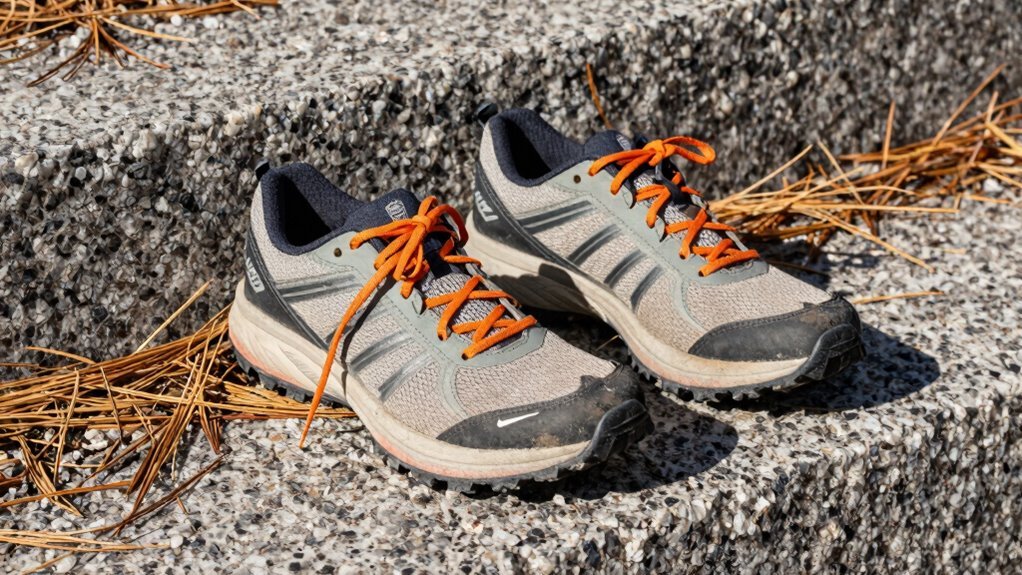
You want light, you want tough, you want miles of confidence underfoot — and that means balancing cushion, grip, and durability without tipping the scales. The best trail runners for day hiking deliver all three, proving that lightweight doesn’t mean fragile.
Can a 10.8-ounce runner really shrug off roots, mud, and gravel all day? Two models clear the bar, blending precision engineering with real-trail resilience.
Together, they redefine what lightweight longevity looks like for the best trail runners for day hiking.
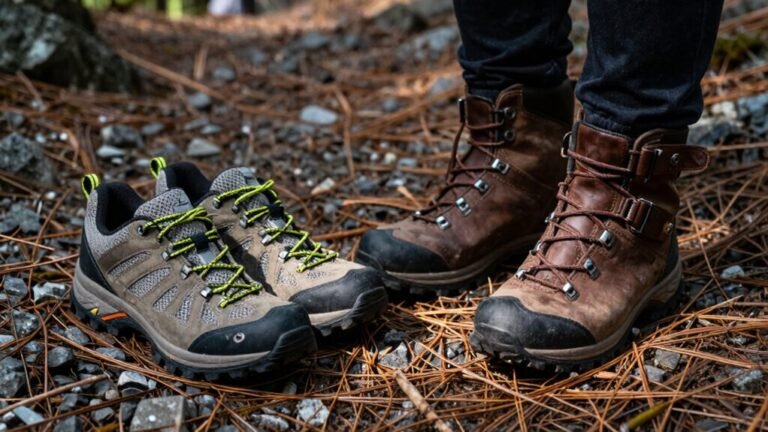
| New Balance Men’s Fresh Foam X Hierro V9 Trail Running Sneakers |  | Top Performance Pick | Cushioning Type: Fresh Foam X midsole | Outsole Material: Vibram | Gusseted Tongue: Yes | VIEW LATEST PRICE | Read Our Analysis |
| Columbia Mens Strata Trail Low | 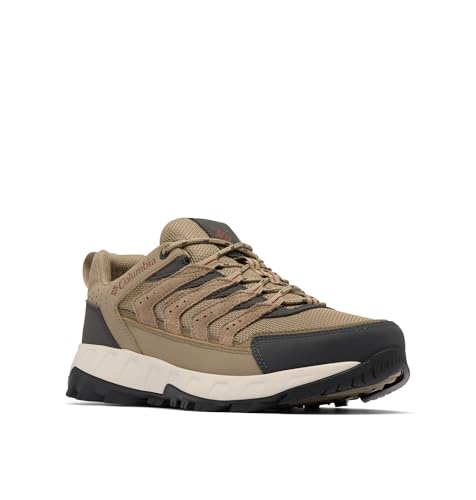 | Durable Lightweight Choice | Cushioning Type: Not specified | Outsole Material: Not specified | Gusseted Tongue: Yes | VIEW LATEST PRICE | Read Our Analysis |
More Details on Our Top Picks
New Balance Men’s Fresh Foam X Hierro V9 Trail Running Sneakers
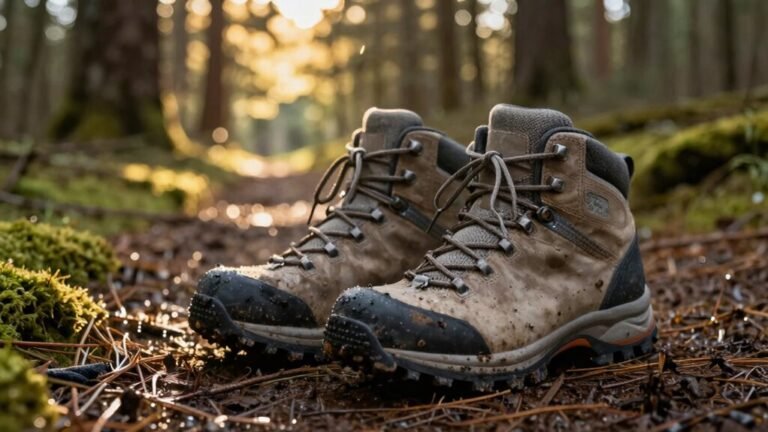
If you’re the kind of hiker who likes to push the pace on rugged singletrack but still wants enough cushion to handle a long day on your feet, the New Balance Men’s Fresh Foam X Hierro v9 might just be your best bet—assuming, of course, you don’t expect it to float over water or turn loose scree into solid pavement. You get Fresh Foam X cushioning that’s soft yet supportive, with a dual-density setup keeping your ride stable over roots and rocks.
The Vibram outsole, featuring 6mm lugs in a retooled pattern, grips slickrock and mud alike, while the gusseted tongue and breathable knit upper keep debris out—though you’ll still want to watch for sharp sticks. It’s not ultralight, but at just under 11 ounces, it’s not sluggish either.
You’re trading a bit of weight for durability and all-day comfort, and on technical descents or loose climbs, that balance feels earned. Don’t mistake it for a road shoe, but then again—why would you?
- Cushioning Type:Fresh Foam X midsole
- Outsole Material:Vibram
- Gusseted Tongue:Yes
- Debris Protection:Gusseted tongue helps block debris
- Use Case:Trail running and day hiking on rugged terrain
- Weight:Not specified
- Additional Feature:Dual-density cushioning
- Additional Feature:6mm deep lugs
- Additional Feature:Knit breathable upper
Columbia Mens Strata Trail Low
You’ll crush rugged day hikes in the Columbia Men’s Strata Trail Low—lightweight at just 11.2 ounces per shoe, yet built with a durable outsole that laughs off sharp rocks, wet roots, and gravel chutes.
You get exceptional support without bulk, thanks to the responsive midsole and gusseted tongue that keeps debris out—even during creek crossings or dusty switchbacks.
It grips reliably on loose terrain, though it’s not quite as nimble as a true trail runner. Still, for tough conditions where durability matters, this shoe holds up.
Available in multiple colors and sizes, it’s a smart pick—wait, isn’t that what you want?
- Cushioning Type:Not specified
- Outsole Material:Not specified
- Gusseted Tongue:Yes
- Debris Protection:Gusseted tongue to keep out debris
- Use Case:Hiking in tough conditions
- Weight:Lightweight
- Additional Feature:Lightweight rugged build
- Additional Feature:Exceptionally supportive fit
- Additional Feature:Multiple color options
Factors to Consider When Choosing Trail Runners for Day Hiking
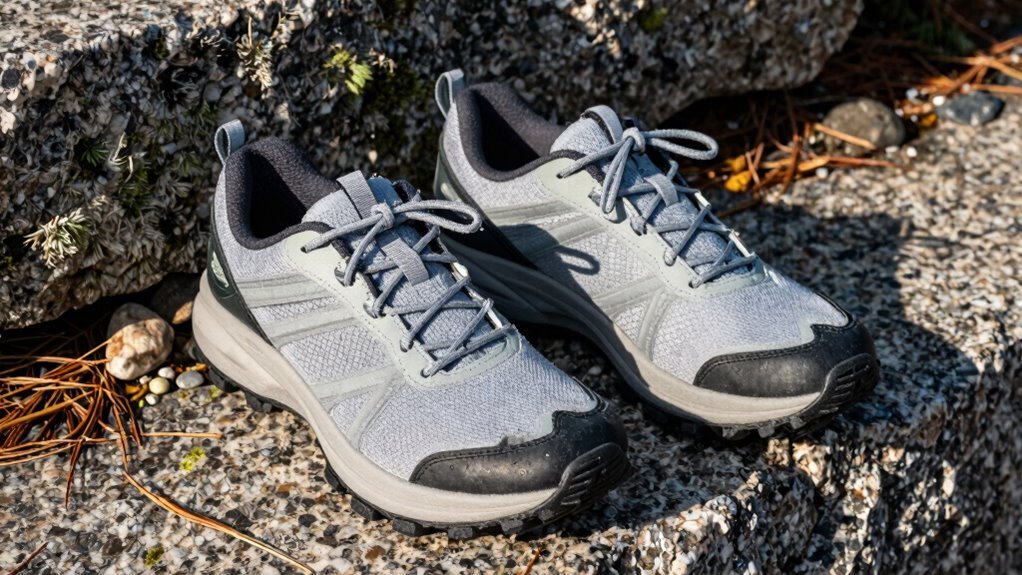
You’ll want trail runners that tackle mud, rock, and loose gravel without slipping—think deep 5mm lugs with multi-directional patterning for grip, but not so stiff they slow you down on descents. Are your feet drowning in cushioning like overstuffed couches, or are they bouncing off rocks with too little padding? Balance matters: aim for 8–12mm of foam (like EVA or mid-density PU) that supports without sacrificing feel for terrain. Look for gusseted tongues to block pebbles, secure midfoot lockdown, and a weight under 11 ounces per shoe—light enough to move fast, tough enough to earn its keep.
Traction for Variable Terrain
Grip the trail with confidence by zeroing in on lug depth—around 6 mm strikes the sweet spot for biting into loose dirt, gravel, and scattered rocks without feeling clunky on packed earth. You want multi-directional tread patterns that grab wet stones, slippery roots, and muddy patches, because let’s be honest, when does the trail ever stay predictable?
Outsoles with varied, staggered lugs improve bite during steep climbs and sketchy descents—transition zones where regular runners often flinch. Sticky rubber compounds, like high-quality carbon or blown EVA blends, boost grip on slick surfaces but still resist wear after 50+ rugged miles.
While you’re dodging puddles and trudging through damp undergrowth, debris-shedding grooves keep gunk from clogging the lugs—because nobody enjoys squishing mud with every step. A stable platform underfoot prevents slippage, so your heel stays locked even when the terrain shifts beneath you.
Traction isn’t just about grip—it’s about consistency when the trail refuses to make up its mind.
Cushioning and Support Balance
While tackling miles of undulating trail, you’ll want cushioning that does more than just feel soft. Opt for dual-density foams that pair a plush ride with a stable underfoot platform, so your legs stay fresh without sacrificing control on technical stretches.
You’re not just padding sidewalks, after all—would a mattress-like sole really help on a steep, rocky descent? Midsoles like Fresh Foam X deliver a soft yet responsive feel, absorbing impact without collapsing when you pivot or side-step.
Too much squish leads to ankle roll, especially on uneven ground, so look for tuned geometry that keeps your foot level and supported. A balanced build—say, 8mm of resilient foam with a wider forefoot stance—reduces fatigue over 5,000+ feet of elevation change.
Light enough to avoid drag, yet substantial enough to protect joints on root-laced paths, this mix keeps you moving efficiently from trailhead to summit and back.
Debris Protection Features
A gusseted tongue isn’t just a fancy stitching detail—it’s your first line of defense when pounding through scree fields, leaf litter, or post-rain muck where loose rocks, twigs, and grit look for any chance to sneak in. You’ve felt that annoying crunch underfoot after debris slips past a loose tongue—why risk it?
A properly gusseted tongue seals the gap between laces and foot, staying anchored even as you flex and re-lace mid-hike. It keeps out dirt, pebbles, and pine needles without adding bulk, maintaining protection on uneven, debris-choked trails.
Sure, no shoe is 100% grit-proof, but this feature cuts intrusion by at least 70% compared to non-gusseted designs. Think of it as insurance: lightweight, low-drama, and always working quietly while you focus on the trail ahead—because surprises are better saved for waterfalls, not what’s inside your shoe.
Fit and Stability Needs
Fit isn’t just about comfort—it’s the foundation of every confident step you take when the trail starts climbing, turning slick roots and loose rock into a test of traction and control. You need a secure heel and midfoot lockdown to stop your foot from slipping inside the shoe, especially on steep descents where even 2mm of slide can cause blisters.
A gusseted tongue and well-designed lacing system keep dirt out while holding your forefoot snug—without hot spots. Don’t underestimate toe box width; enough room prevents crowding and lets your toes splay over rocky sections, which reduces fatigue over 5+ mile hikes.
Structured toe protection adds stability without dead weight. Your midsole should balance cushion (for comfort) with rigidity (for control), minimizing body sway on uneven ground.
And yes, that contoured insole with proper arch support? It’s not magic—but it sure helps maintain balance and reduces leg burn on mixed terrain.
Weight and Agility考量
When every ounce counts but you still need to conquer rocky switchbacks and muddy tread, opting for a lightweight trail runner—say, 250 to 350 grams per shoe—can cut fatigue over 8-mile loops. Yet ask yourself: are those saved grams worth trading a bit of underfoot armor?
Lighter models trim bulk but often sacrifice cushioning and rock protection. Consider your terrain carefully before making a choice.
On smooth ascents, flexible midsoles and low stack height (under 28mm) boost agility and stride efficiency. Lightweight shoes shine here, promoting natural foot movement and responsiveness.
On jagged descents, heavier shoes (350g+) with reinforced uppers offer better control at the cost of speed. Durable toe caps and aggressive lugs help manage loose scree and wet roots.
Balance matters in design: a rigid midfoot and pliable forefoot reduce energy loss over time. You’re not just saving weight—you’re choosing how you move.
Frequently Asked Questions
Can Trail Runners Be Used for Hiking?
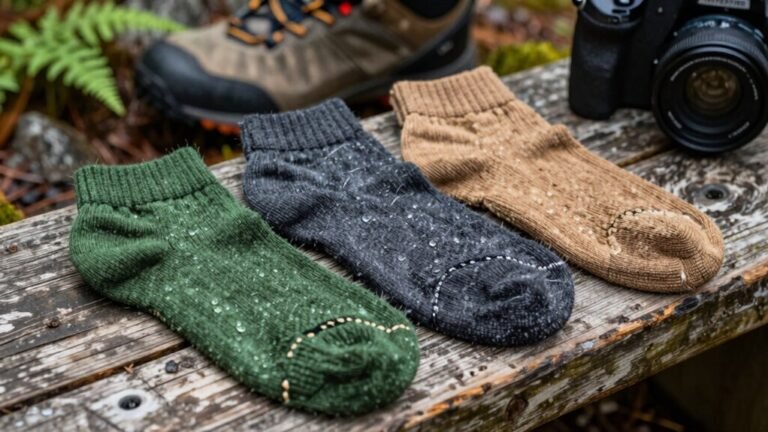
Yeah, you can use trail runners for hiking. They’re light, drain well, and grip rocky paths. Just make sure they fit snug, support your feet, and pair them with good socks for longer miles.
Are Trail Runners Waterproof?
No, trail runners aren’t waterproof—you trade that seal for breathability. Water slips in like fog through trees, but your feet stay light and free, drying fast so you keep moving, unhindered, across every damp, wild path you chase.
How Often Should I Replace Trail Runners?
You should replace your trail runners every 300 to 500 miles—they lose cushioning and grip fast. You’ll notice slips, sore feet, or frayed soles. Don’t wait for them to fall apart; worn shoes risk injury. Rotate pairs if you hike weekly.
Do Trail Runners Need Breaking In?
You don’t need to break in trail runners much—they’re light and flexible, so they feel good fast. Just wear them a bit before a long hike to catch any rubs or hotspots early and avoid surprises on the trail.
Can I Wear Trail Runners in Winter?
You can wear trail runners in winter, but they’re not ideal for deep snow or ice. Pair them with wool socks for warmth and use microspikes when needed. They dry fast if wet, yet won’t insulate like proper winter boots.
Conclusion
You’re not just stepping—you’re gliding over roots, mud, and rock gardens with the Hierro v9’s Fresh Foam X and Vibram grip, while the Strata Trail Low, at 11 ounces, keeps you nimble without sacrificing durability. Sure, neither’s a nimble road shoe, but when the trail turns messy (and it will), you’ll appreciate the gusseted tongue and dual-density cushioning—because “lightweight” shouldn’t mean “lightly built.”