How to Choose Keeping Gear Dry
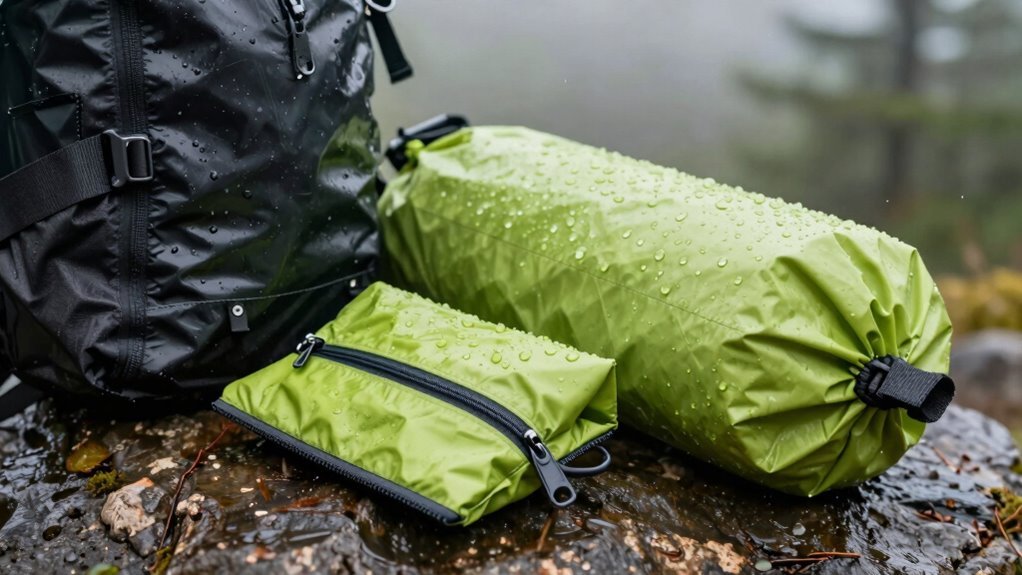
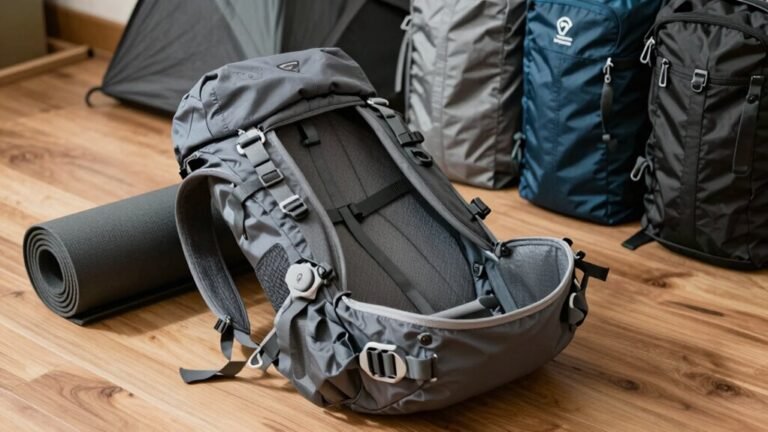
You want your gear dry, not damp like a sad sandwich, so make sure to choose fully waterproof options—this is key when you need reliable keeping gear dry performance. Skip water-resistant junk and go for trusted solutions like GORE-TEX or sealed dry bags.
Choose roll-top closures for kayaking, as they offer a secure seal against water. Zippered bags are better when you need quick access, while submersible styles are ideal if you’re heading into extreme conditions.
For maximum protection, opt for gear with taped seams and DWR coatings to enhance water resistance. Layering these features adds extra defense, especially in heavy rain or wet environments.
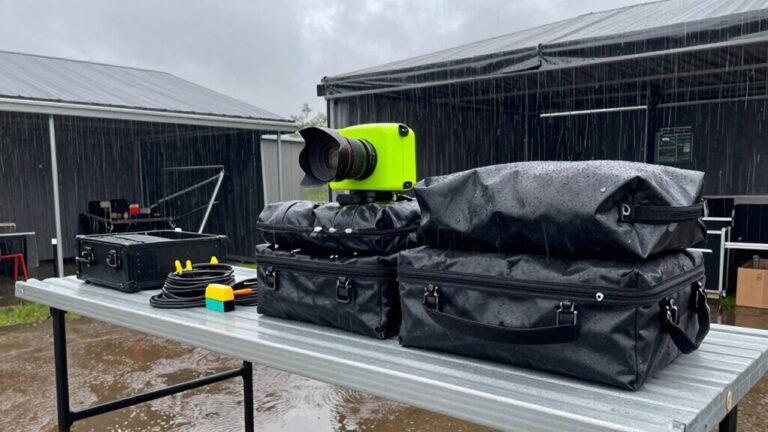
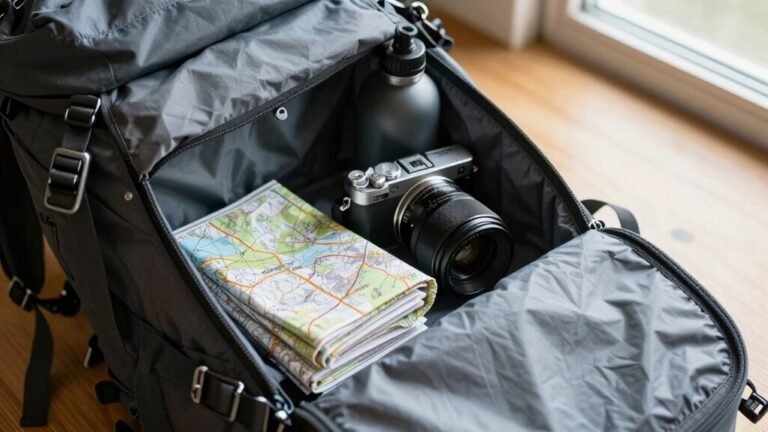
Store electronics in IPX7-rated cases and throw in silica gel packs to absorb moisture. Always keep zippers and seals snug—like a submarine’s O-ring, even small gaps can let water in.
When the weather turns violent, stick to 3-layer jackets and gear with fully welded seams for unbeatable protection. Brightly colored bags help you spot your gear quickly in low light or clutter.
Always pick the right size bag so it fits securely without overstuffing. Proper fit prevents leaks and ensures your mission to keep gear dry stays successful—there’s more gold where that came from.
Understanding Waterproof vs. Water-Resistant
Staying dry in the great outdoors starts with knowing your gear—and when it comes to weather protection, not all jackets (or backpacks, or boots) are built the same.
You might think “waterproof” and “water-resistant” are just fancy ways of saying “keeps rain out,” but trust us, they’re not.
Waterproof gear, like GORE-TEX, blocks every drop, even in a downpour or snowstorm—no soggy surprises.
Water-resistant? It’s like a polite “maybe” to light rain, but folds under heavy or long exposure.
Think of it as an umbrella with a small leak: fine for a drizzle, useless in a monsoon.
Waterproof means zero water gets in, ever.
Water-resistant wears off, lets moisture sneak through, and won’t save you when the skies open up.
So if you’re chasing storms or hiking through squalls, skip the guesswork—go waterproof and stay gloriously dry.
Your future self will thank you (and maybe even do a happy dance in the rain).
Garments with GORE-TEX membrane technology feature billions of tiny pores that block liquid water while allowing sweat vapor to escape.
Types of Waterproof Gear Protection
What’s really standing between you and a soggy surprise in the middle of a downpour?
Your gear’s waterproof protection—and it’s working hard behind the scenes.
You’ve got layered builds: 2-layer for light rain, 2.5 for packability, and 3-layer for serious storms (though it’s a bit stiff).
Seams are sealed smart too—critically taped for light duty, fully taped or welded for when the sky truly opens.
Membranes like Gore-TEX or MP+ keep rain out while letting sweat escape—fancy, right?
Coatings like DWR make water bead up and roll off, like rain on a waxed car, but they need love (read: reapplication).
For a natural touch, wax or beeswax treatments work great on leather or canvas.
And don’t forget rubber gaskets—they’ve got your back (and wrists) in wet adventures.
Choose wisely, and laugh in the face of drizzle.
PFAS-free DWR treatments are now widely available and offer effective, eco-conscious alternatives for maintaining your gear’s waterproof performance.
Choosing the Right Dry Bag for Your Activity
How do you keep your phone dry when the kayak tips or your campsite turns into a puddle?
Start by matching your dry bag to your adventure.
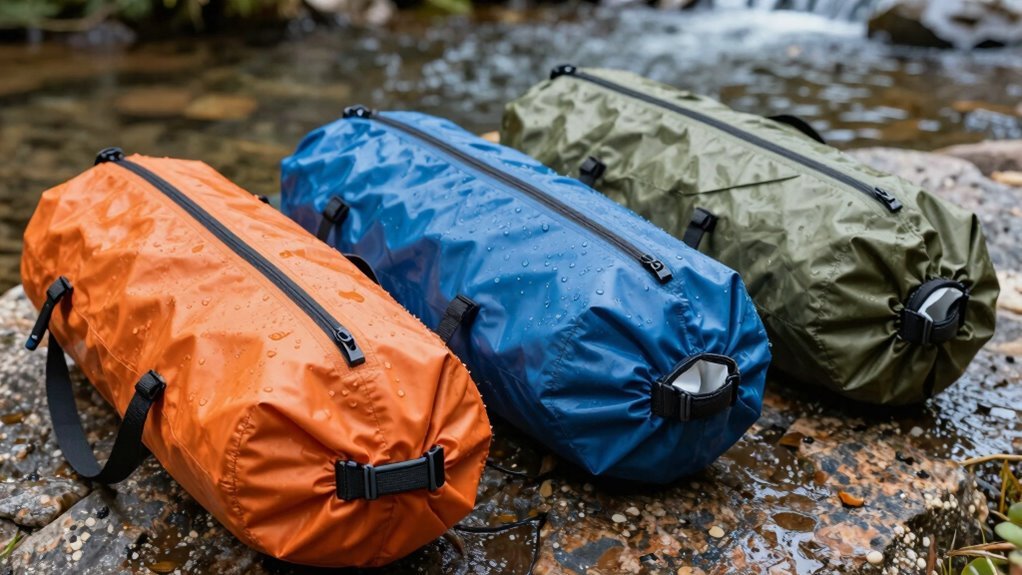
For kayaking or hiking, grab a roll-top bag—it seals tight with a simple fold and buckle.
Sailing or jet-skiing? Zippered bags let you plunge in and out fast.
Heading into wild rapids or scuba diving? Go submersible—it laughs in the face of total dunks.
Pick the shape that fits: cylindrical for snug kayak hatches, backpack styles for trail life.
Size it right—5L for snacks and phones, 28L for weekend warrior gear.
Lightweight? Perfect for backpacking.
Tough 600D+ material? Ideal for rocky rivers.
And don’t forget bright colors—they’re easy to spot, unlike your missing water shoe.
Compression Dry Bags use a one-way valve to expel air and reduce bulk while keeping gear dry.
Pick smart, stay dry, and laugh when the splash hits!
Protecting Electronics in Wet Conditions
Shielding your gadgets from water isn’t just smart—it’s the difference between snapping epic underwater pics and kissing your phone goodbye.
You’ve got options: grab a device with solid IPX7 or IPX8 rating if you’re diving deep, or stick with IPX4 for rainy trails.
Coat your gear with UV-curable soldermask or a spritz of special PCB varnish—cheap nail polish works in a pinch!
For serious splash zones, seal enclosures with rubber gaskets or 3M VHB tape; they laugh in the face of leaks.
Potting in epoxy? That’s overkill for most, but hey, if you’re strapping sensors to a submarine, go wild.
Toss in silica gel to fight condensation, or fill the case with dry nitrogen to keep moisture out.
Just don’t let coatings creep onto USB ports—nobody likes gummy chargers.
With the right prep, your tech stays alive, dry, and ready for adventure.
How Seals and Closures Impact Performance
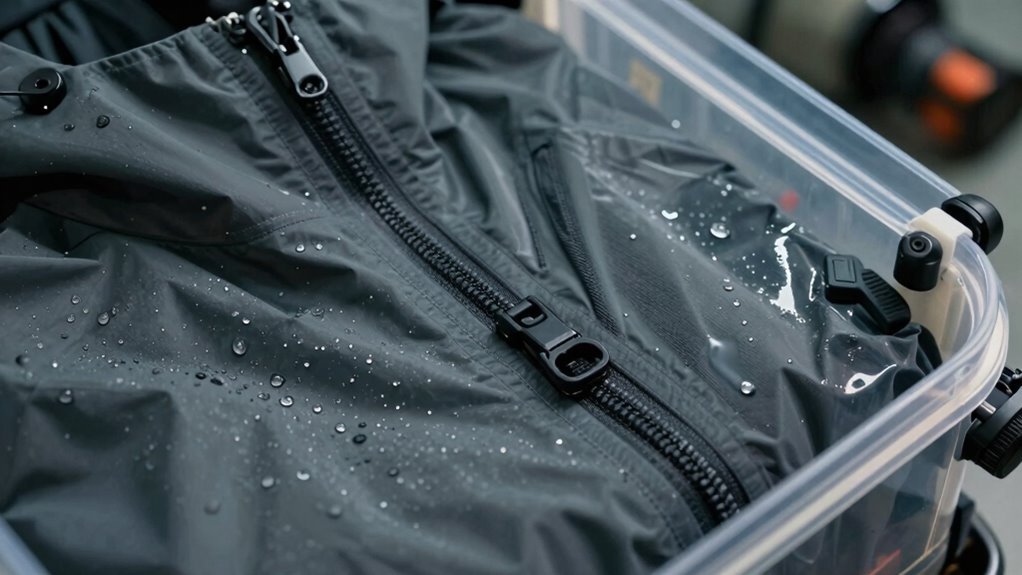
You’ve armed your gadgets with solid waterproofing, but don’t pop the celebration bubbles just yet.
How well your seals and closures behave can make or break that hard-earned dry zone inside.
A weak seal is like a screen door on a submarine—totally useless.
Keep these key factors in mind:
- Compression matters: Squeeze your O-ring just right—30% to 50%—too little and gaps form, too much and you’ll squish it into failure.
- Material toughness: Harder materials handle high pressure, while cold makes seals brittle and heat softens them—choose wisely for your environment.
- Static vs. dynamic: If parts move, your seal must too—lubricate and reinforce to fight wear, or stick with static seals for simple, steady jobs.
A happy seal means a dry gadget—so treat it right, and it’ll keep your gear’s insides safe, snug, and splash-free!
Sizing and Capacity Tips for Maximum Dry Space
Where do you even begin when your gear needs room to breathe—but not collect moisture?
Start by sizing up your stuff like you’re playing Tetris for real life.
Need space for a studio apartment?
A 10-footer’s got you, with about 550 cubic feet.
Moving a whole house?
Go 20-foot or bigger—there’s nearly 1,200 cubic feet for that three-bedroom haul.
Got tall furniture?
Grab a high cube container; that extra foot in height is a game-changer.
And remember, interior space matters more than outside size—account for walls and stacking.
Fit bulky items through the 7-foot-8-inch-wide door like a boss.
Match your load to weight limits too—don’t turn your 20-foot unit into a 60,000-pound disaster.
Play it smart, measure twice, and you’ll max out space without the damp drama.
Sweet, dry victory!
Durability and Material Considerations
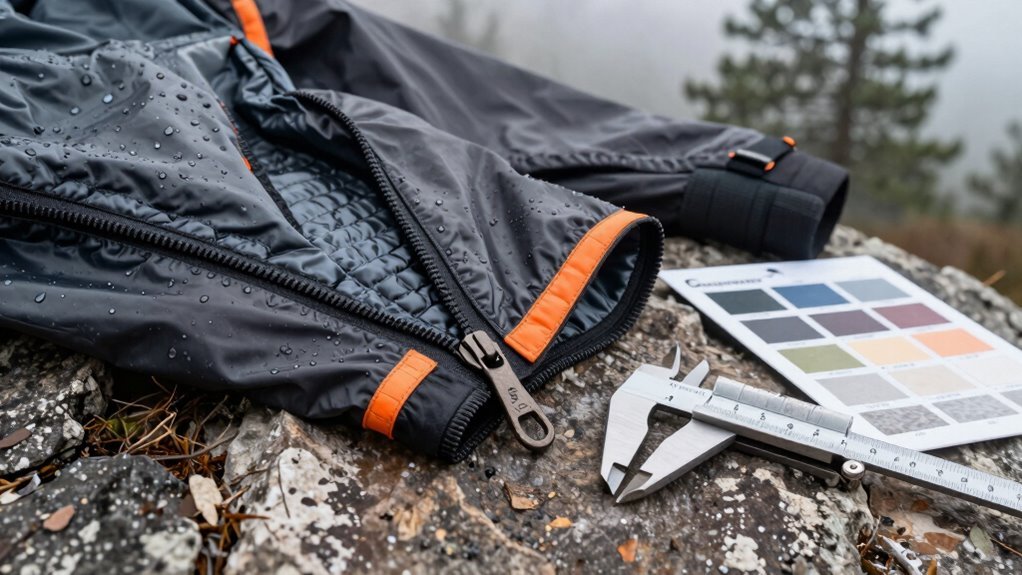
Packing smart gets your gear in the door, but what keeps it safe once it’s there?
You need tough materials that won’t quit when adventure calls. Think of your gear like a superhero—its suit has to handle scrapes, downpours, and all-nighters without flinching. Here’s how to pick armor that lasts:
- Strong fabrics win: Go for ripstop nylon or heavy-duty polyester—they laugh at rock scuffs and pack straps.
- Smart layers protect: A 3-layer build with taped seams and a beefy membrane (20,000mm+?) laughs at puddles and pressure.
- DWR is your friend: This magic finish makes water bead up and roll away—reapply it now and then, unless you enjoy wearing a wet sponge.
Treat your gear right—rinse it clean, fix tiny tears fast, and never stuff it damp. Your dry socks will thank you.
Frequently Asked Questions
Can I Use Regular Trash Bags as Dry Bag Alternatives?
Nope, regular trash bags won’t cut it—they tear too easily.
But trash compactor bags? Totally different story.
They’re thicker, way tougher, and keep your gear bone-dry even in downpours or accidental swims.
Just roll the top down, squeeze out the air, and you’re golden.
White ones even let you peek inside fast.
They’re cheap, float, and laugh at sticks and rocks.
Duct tape fixes small rips, and they’ll last seasons—seriously, Mother Nature won’t stand a chance.
Are Waterproof Gear Liners Worth the Extra Cost?
Oh, you *bet* waterproof gear liners are worth it—unless you enjoy paying for soggy socks and regret!
They’ve got your back when the storm hits, keeping everything dry like a trusty umbrella with a PhD in protection.
Yeah, they cost more, but so does therapy after your laptop dies in a downpour.
Skip ’em only if you love wet surprises—and, clearly, drama.
How Do I Clean and Maintain My Dry Bags?
You clean your dry bags by rinsing them with fresh water after messy trips, then giving them a gentle scrub with mild soap and a soft brush—think of it as a spa day for your gear.
Air dry them upside down, away from sunburns and heat.
Check seams, wipe zippers with a toothbrush, and dodge dryers like they’re Monday mornings.
Keep ‘em dry before storing, and boom—your bags stay fresh, funky-free, and ready for adventure.
Do Waterproof Zippers Require Special Lubrication?
Yep, waterproof zippers do need special lubrication—don’t skip it!
You keep things running smooth by lubing just the slider and seal area, not the whole zipper.
Wax sticks like ZipStick or Zipper Ease work great and won’t gunk things up.
It keeps salt, sand, and grime out, so your zipper won’t stick like a frozen soda.
Think of it as chapstick for your gear—tiny bit goes a long way, and everything stays happy underwater.
Can I Check Dry Bags as Airline Luggage?
Yeah, you can totally check dry bags as airline luggage—good news, right?
Airlines like British Airways and American Airlines say it’s all good, as long as you’re not smuggling rocket fuel in there.
Just make sure it’s under 62 linear inches and 50 pounds.
Roll it tight, zip it shut, and voilà—your gear stays dry and your bag flies happy.
Never thought packing could feel like a win-win!
Conclusion
Pick, pack, and protect your precious possessions with perfection! Proper dry gear means fun without fuss, come rain or river crossings. Don’t dawdle—durable, well-sealed bags beat soggy surprises every time. Choose wisely, zip tightly, and laugh at leaks! Whether hiking, paddling, or splashing around, your stuff stays safe, sound, and seriously dry. Stay smart, stay dry, and savor every splashy second of your adventure!
References
- https://www.gorewear.com/nl-en/explore/water-resistant-vs-waterproof-gear
- https://www.youtube.com/watch?v=6XHFDAQ2aIw
- https://www.trespass.com/advice/difference-between-water-resistant-and-waterproof-jackets/
- https://www.ergodyne.com/blog/waterproof-vs-water-resistant-how-to-choose-best-rain-gear
- https://www.thenorthface.com/en-lu/help-section/faq/products/water-resistant-vs-waterproof
- https://www.rei.com/blog/hike/what-does-it-mean-if-a-jacket-is-water-resistant
- https://mainesport.com/blogs/journal/how-to-waterproof-your-rain-jackets-and-other-outdoor-gear
- https://www.686.com/blogs/news/demystifying-waterproof-outerwear-key-components-and-performance-expectations
- https://fop.fas.harvard.edu/raingear
- https://www.sierra.com/lp2/waterproof-guide/