Quick Tips for Trail Runners
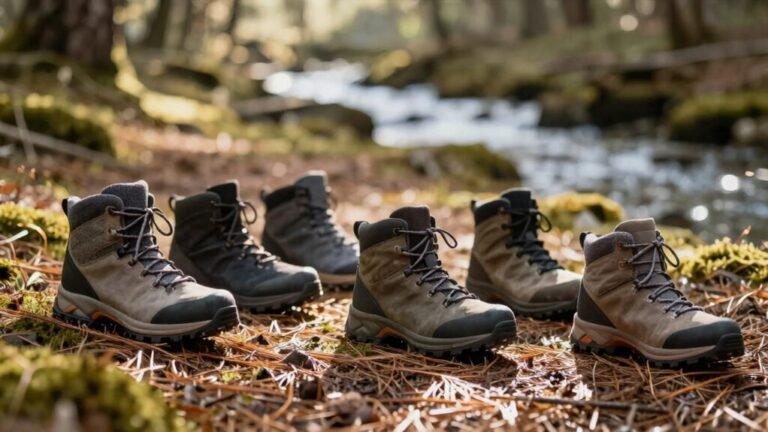
You’ve got this—lace up with shoes that grip like glue, even when the trail gets slick. Trail runners need reliable footwear to handle uneven, wet, or muddy terrain with confidence and control.
Check the weather, pack light with water, snacks, and a whistle, and know your route before you go. Stay fueled, stay upright on roots and rocks, and keep your phone handy with offline maps.
Tell someone where you’re headed—safety first! Be kind to critters and fellow runners. Oh, and there’s plenty more where that came from…
Choose the Right Footwear for Traction and Support
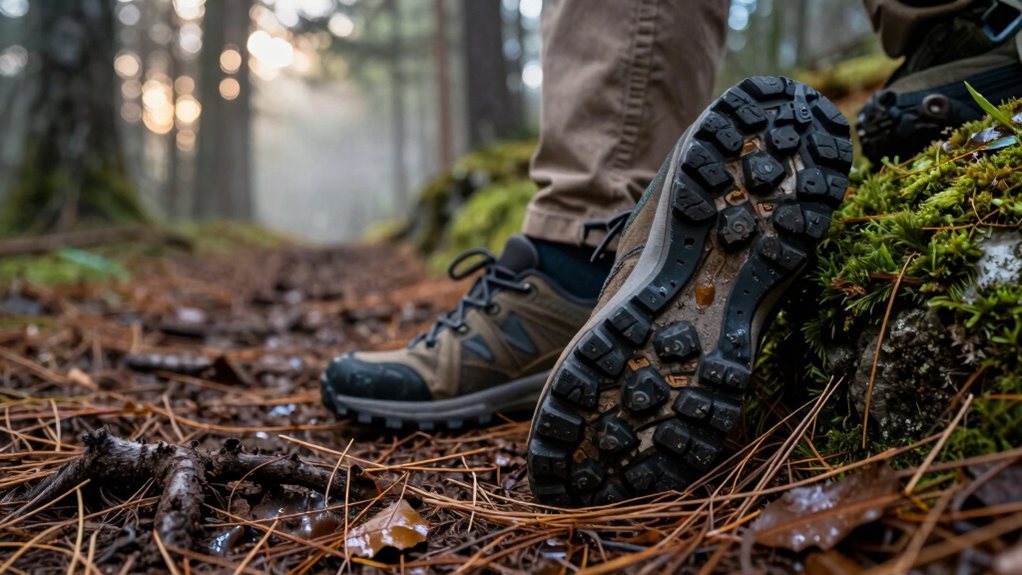
Finding your footing on the trail starts with one smart move—lacing up the right shoes.
You’re not just walking; you’re conquering mud, rocks, and roots, so grab kicks with aggressive lugs—like the 5mm ones on Saucony Peregrine 15—for killer grip.
If slippery snow or technical terrain’s in your path, Vibram Megagrip on Altra Lone Peak 9+ or Contagrip on Salomon Speedcross 6 won’t quit on you.
Need stability? Stiffer builds and rugged uppers, like on the Peregrine 15, guard your feet like a bodyguard.
Midsoles matter too—Pwrrun foam cushions hard landings without slowing you down.
And with heel drops between 5–8mm, you can strike how you want, not how your shoes demand.
TrailTalon models feature 6-millimeter multidirectional lugs, offering reliable traction in wet and muddy conditions.
Trust us, your ankles will thank you when you’re not doing the unexpected salsa on a slick slope.
Choose smart, run happy, and keep the trail laughs rolling—faceplants are overrated.
Check the Weather Before You Head Out
Watching the sky isn’t just for poets and nosy neighbors—when you’re gearing up for a trail run, it’s your first line of defense. Mountain storms pop up fast, especially in the afternoon, and getting caught without a plan is no joke.
You don’t need a meteorology degree, but checking the forecast a few times before you go? That’s just being sneaky-smart. Apps like AllTrails drop real-time weather tea from other runners, and local forecasts help you dodge thunder, hail, or surprise snow squalls.
- Re-check the weather right before you leave—yes, even if you did it this morning.
- Know the regional patterns: when storms typically strike, and which peaks attract lightning like drama queens.
- Set a turnaround time based on the forecast so you’re not playing hero in a downpour.
- Prepare gear and plans based on forecast Weather considerations should inform risk assessment.
Stay savvy, stay dry, and keep those trail stories epic for the right reasons.
Pack the Essentials Without the Extra Weight
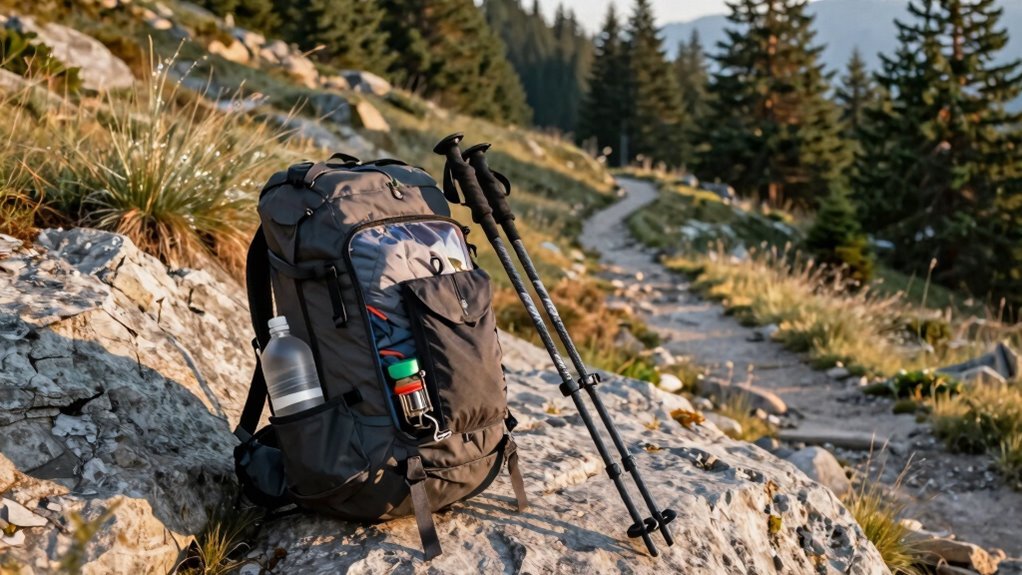
Lacing up light doesn’t mean rolling the dice—it means being the trail-smart runner who’s ready for anything without feeling like a pack mule.
Ditch the kitchen sink, but keep the essentials snug in a well-fitted hydration vest with easy-reach pockets—your snacks, water, and emergency gear stay secure and sweat-free.
Opt for a lightweight hydration belt if you’re out short and sweet.
Toss in energy gels and bars—they’re tiny but mighty fuel.
Don’t forget a packable windproof jacket or emergency blanket (yes, it weighs less than your keys!).
A hat fights sun, rain, and sweat while bright colors make you easy to spot.
Sunglasses? Non-negligible.
Tuck a mini first-aid kit, whistle, and headlamp in a corner—they’ve saved more runs than we’d like to admit.
Light layers, smart pockets, and prep that doesn’t weigh you down? That’s trail magic.
Upgrade your foot foundation with a shoe built for the rugged stuff—look for aggressive tread and a deep lugged outsole to keep you stable on loose terrain.
Know the Trail Before You Start Running
Scouting the trail before you hit the dirt is like showing up to a surprise party—only you’re the one who gets the thrill of knowing what’s coming. You’ll dodge surprises like sudden drop-offs, slick mud, or “helpful” rocks waiting to trip you.
Studying the course keeps you confident and in control, not caught off guard at mile six.
- Review elevation profiles and practice on similar climbs to prep your legs and lungs.
- Walk tricky sections first—those exposed ridges or root mazes are easier the second time.
- Check aid station spacing and race rules so you’re never stranded or disqualified.
You wouldn’t run a road race blindfolded, so why do it on trails? Peek at the map, feel the terrain, and spot landmarks that say, “Yup, still on track!” It’s not cheating—it’s playing smart. And hey, bonus: you get to brag you “know this trail like the back of your muddy hand.”
Stay Hydrated Throughout Your Run
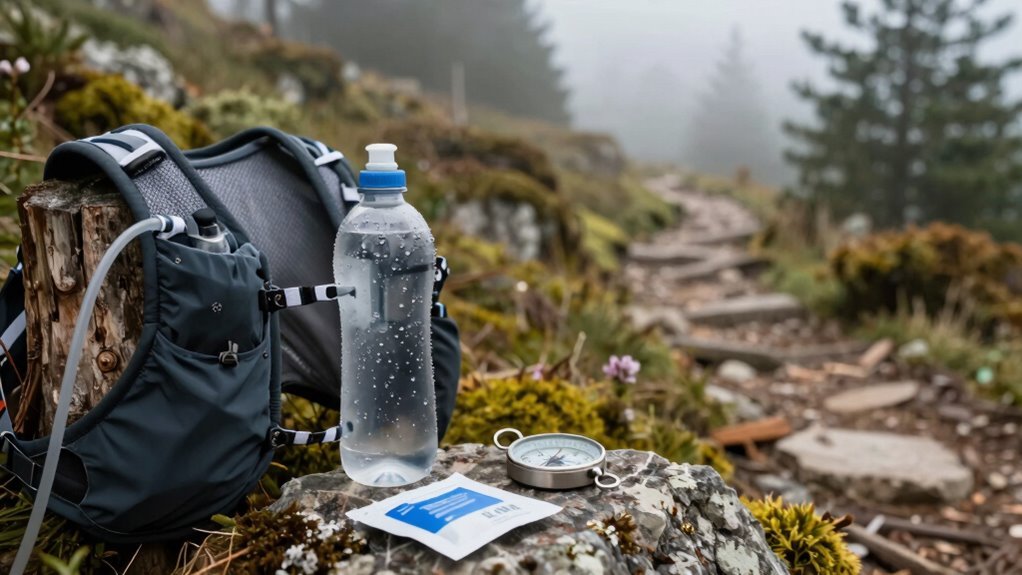
You’ve mapped out the trail, scoped the slick roots, and practiced every switchback—now let’s make sure you don’t turn into a dried-up version of yourself before you even hit the halfway point.
Start hydrating early: sip 500–600 ml two hours before you run and kick off morning miles with electrolyte fluids.
Don’t chug right before—nobody likes a sloshy stomach.
On the move, take small sips every 15–20 minutes; aim for 0.5 to 1 liter per hour, especially when it’s hot.
Carry a vest or handheld with enough capacity, or plan refill spots.
For runs over 90 minutes, add sodium to your water—your muscles will thank you.
Test your drink mixes in training so race day isn’t a salty surprise.
And hey, dehydration isn’t just cramp city—it’s bonk town.
Stay smart, stay wet, and keep crushing those climbs like a well-oiled machine.
Practice Proper Running Form on Uneven Terrain
How’s your balance when the trail throws a curveball—or, well, a root, rock, or sudden drop?
Staying upright on uneven terrain isn’t just luck; it’s smart form.
Keep your strides short and quick, landing with feet under your body so you can react fast.
Look 10–15 feet ahead to spot trouble early—your brain needs time to plot the perfect path.
And don’t forget your arms; they’re not just along for the ride!
Use them to stay balanced, especially on sketchy downhills.
- Scan the trail ahead to anticipate obstacles and adjust smoothly
- Engage your core to stabilize your torso and maintain efficient posture
- Land mid-foot under your center for better control and less impact
Move with the trail, not against it, and you’ll glide over chaos like a pro—almost like you meant to do that.
Watch Your Step on Rocks, Roots, and Mud

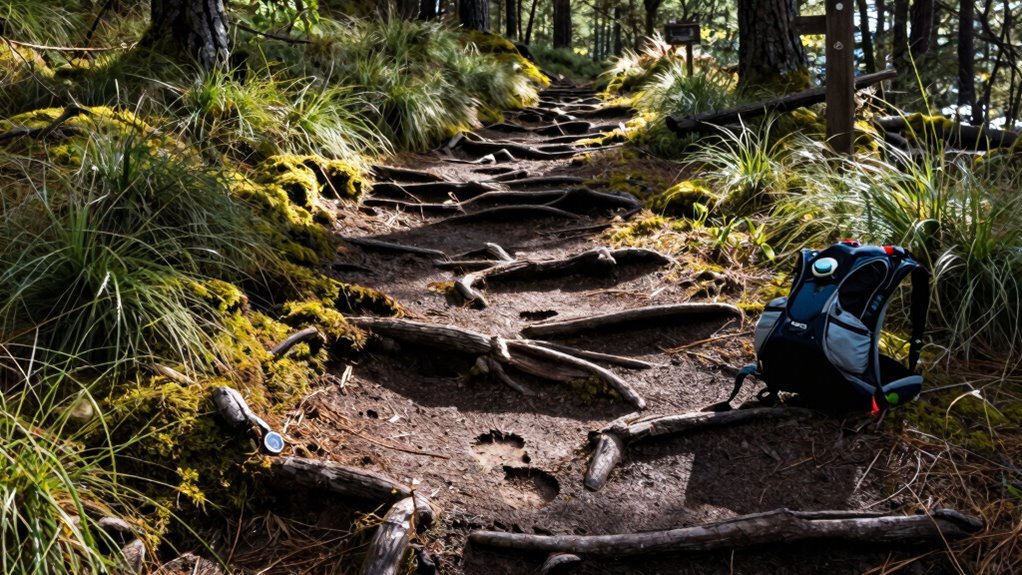
Step lightly and stay sharp—those rocks, roots, and mud aren’t just hanging out to admire the scenery, they’re waiting to test your trail smarts. Scan 10–15 feet ahead to pick your line like a mountain biker dodging trouble.
Rocks hide in desert dust or shift underfoot in streams—watch for sliding hazards on hills.
Roots? They’re sneaky tripwires, slick when wet and sometimes snap like twigs—jump over risky ones, especially on descents.
Mud’s a funcore workout for your core, but don’t zigzag through it—plow straight through puddles instead.
Tiptoeing just makes you slip. Stay balanced by avoiding sudden turns or speed changes.
Your shoes matter—bigger lugs grip mud, smaller ones handle mixed terrain.
And roots? They stretch for miles, so practice makes perfect.
Stay alert, trust your feet, and keep laughter in your stride—trails are tough, but so are you.
Carry a Map or Use a Trail Running App
What’s your move when the trail splits and no signs point the way?
Don’t panic—just tap your phone or unfold a trusty paper map.
Whether you’re deep in the backcountry or looping a local park, staying found beats being lost (and mildly embarrassed).
Apps like Gaia GPS and ON X Backcountry give you offline maps, real-time tracking, and cool topo details, while Strava’s heatmap shows where runners actually run—not just where the path looks good on paper.
But tech fails, batteries die, and phones take unexpected naps.
That’s why smart runners hedge their bets.
- Pair digital tools with a Caltopo printout for zero-tech backup
- Download offline maps in multiple detail levels before hitting remote zones
- Use FATMAP’s 3D preview to visualize climbs and avoid surprise scrambles
Let Someone Know Your Running Route and Time
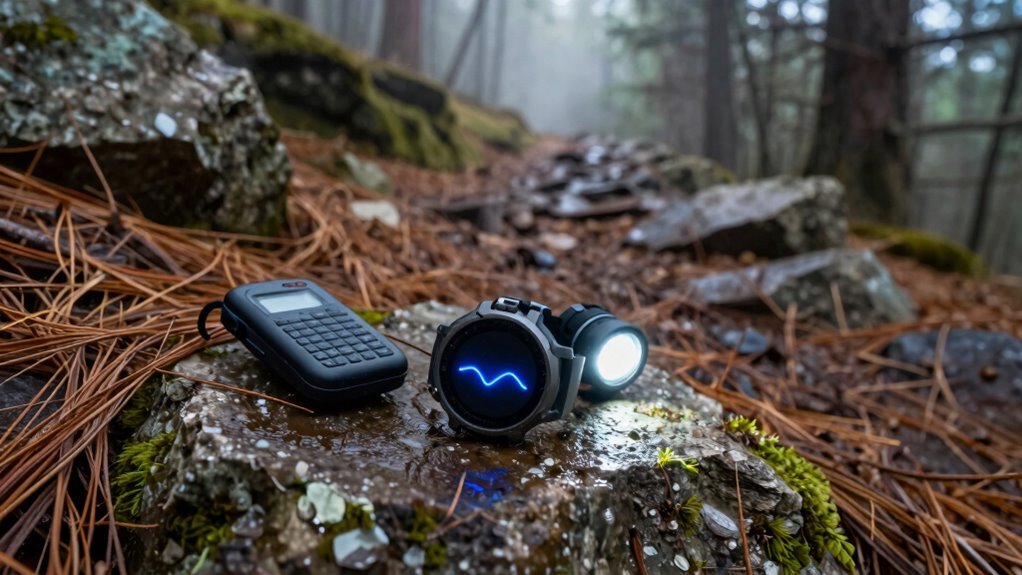
You’ve nailed the trail app, downloaded offline maps, and even printed a paper backup—nice work, smarty-pants navigator.
Now, don’t ghost your people—tell a friend or family member your route and when you’ll wrap up. It’s simple: text them the trail name, distance, start time, and expected return.
Toss in weather, your phone number, and any escape routes, just in case. Sharing isn’t just polite; it’s your safety net if things go sideways.
Use an app, jot a note, or shoot a quick voice memo—just make sure someone knows where you are, even if you’re chasing views in the middle of nowhere.
Set a check-in time, and if you’re late, boom—your contact knows to act.
Smart runners plan for fun, but geniuses plan for what-ifs. So don’t wing it solo—keep someone in the loop and run with peace of mind.
Respect Wildlife and Other Trail Users
- Announce your presence on blind trail sections
- Maintain safe distances from all animals, young and adult
- Pack out waste and leave no trace of your visit
You’re part of the ecosystem now—act like it.
Frequently Asked Questions
How Often Should I Replace My Trail Running Shoes?
You should replace your trail running shoes every 300 to 500 miles, or sooner if they’re lightweight models.
Heavy use, rough trails, or your body weight can wear them faster.
Watch for dead midsoles, bald treads, or new aches in your legs—your shoes are screaming for retirement.
Keep ’em fresh by rotating pairs and tracking miles.
When in doubt, thank your shoes—and then send them to trail runner heaven.
Are Trail Running Poles Necessary for Beginners?
No, trail running poles aren’t necessary for beginners—40% of new runners ditch them after the first try, saying they feel like robots on stilts.
But hey, they’re like training wheels: optional, but handy for tackling steep hills or staying upright on sketchy trails.
You won’t need them every time, but when the path gets wild, they might just save your bacon.
Can I Run Trails After Rainfall?
Yeah, you can run trails after rain, but be smart about it. Watch for slick mud, hidden puddles, and slimy roots—they’ll surprise you!
Traction’s a game-changer, so wear trail shoes that grip. Skip bare metal or painted surfaces; they’re basically nature’s banana peels.
And hey, if the sky’s rumbling, save the run—lightning’s not a fan of excuses. Stay visible, stay dry where it counts, and yeah, bring the fun—just not the slips!
What Should I Do if I Get Lost?
You’re lost—don’t panic, just hit pause like you’re buffering on a hill.
Stop, breathe, and take stock.
Pull out your GPS or map like it’s a lifeline (because it is).
If you’re unsure, stay put—wandering makes rescue harder.
Backtrack if you can, or call for help with your SOS.
Snack, stay warm, and remember: even experts get turned around—just don’t let the trails prank you twice!
Is It Safe to Run Trails Alone at Dawn?
You’re safer running with others, especially at dawn when it’s colder and visibility’s low.
Alone, you’re more vulnerable to hypothermia or slips as temps drop fast.
Wildlife’s usually not the issue—surprise encounters are rare.
But cold and falls? Those’ll get ya.
Carry a jacket, wear a safety device, and tell someone your route.
Play it smart, stay seen, and maybe save solo dawn runs for well-traveled paths.
Nature’s cool, but don’t let it catch you off guard!
Conclusion
You’ve picked the perfect shoes, packed snacks like a squirrel preparing for apocalypse, and checked the weather—congrats, you’re basically Bear Grylls now. Just don’t forget to tell someone where you’re off to, unless you enjoy dramatic search-and-rescue missions. Trails? Respect ’em. Mud? Expect it. Wildlife? Admire from afar—no selfies with porcupines. Stay alert, stay light, stay hydrated, and for the love of blisters, watch your step. Run wild, but not *that* wild.
References
- https://www.irunfar.com/best-trail-running-shoes
- https://runrepeat.com/guides/best-trail-running-shoes
- https://www.runnersworld.com/gear/a22115120/best-trail-running-shoes/
- https://www.outdoorgearlab.com/topics/shoes-and-boots/best-trail-running-shoes
- https://www.rei.com/learn/expert-advice/trail-running-shoes.html
- https://www.nyfootdoctor.net/blog/item/937-choosing-the-right-trail-running-shoes-for-different-terrains
- https://www.on.com/en-us/stories/choosing-the-best-trail-running-shoes
- https://www.youtube.com/watch?v=7kttHOgqwCI
- https://adventuremedicalkits.com/blogs/news/trail-running-safety-tips-what-to-know-before-heading-off-road
- https://www.newtonrunning.com/blogs/the-running-front/trail-runners-guide-to-unforeseen-dangers