Hiking Shoes Vs Boots: Which Should You Pick?
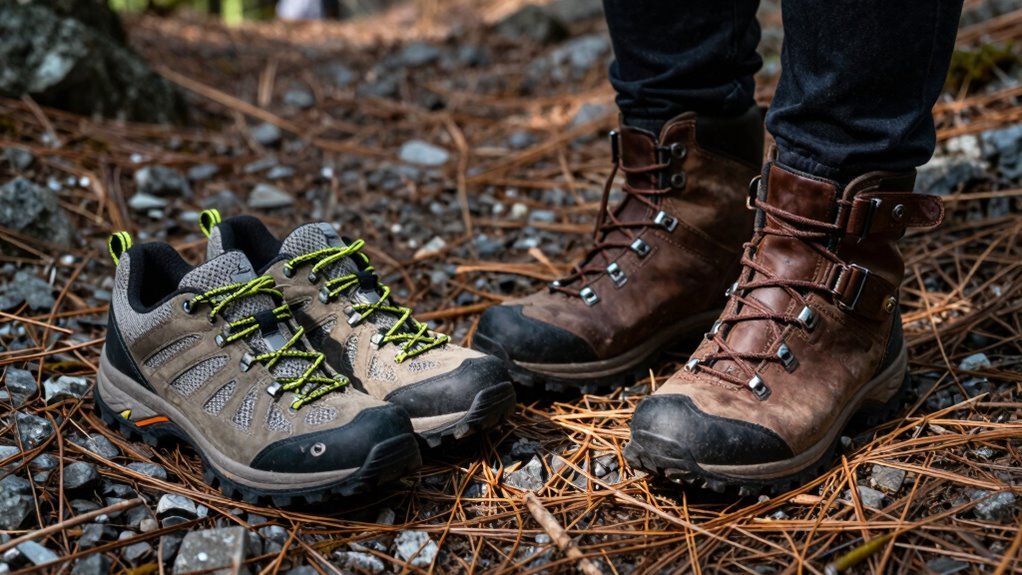
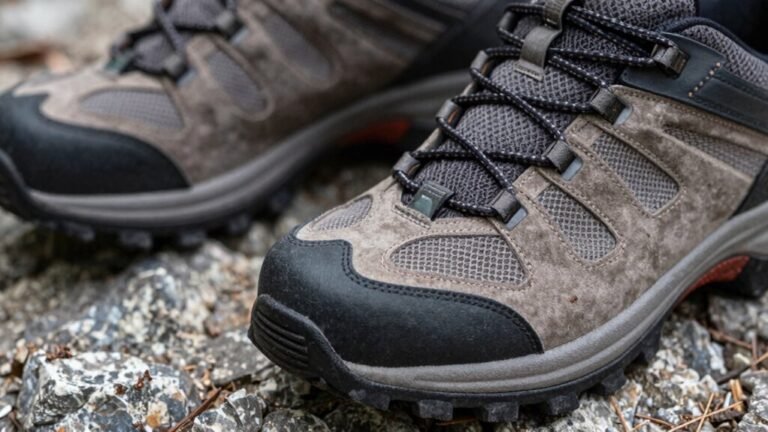
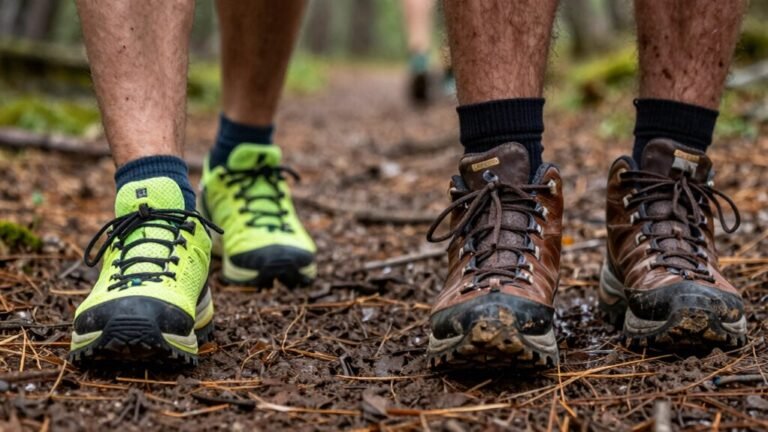
When hitting the trail, your choice between hiking shoes and boots can make or break your experience. For smooth trails and quick outings, hiking shoes are the go-to—they’re light, peppy, and feel like slippers with grip, giving you extra bounce and saving energy.
But when conditions turn tough, hiking boots prove their worth. With beefy treads, ankle support, and durable construction, they act like overprotective parents guarding against mud, rocks, and unstable terrain.
Sure, boots weigh more, but they offer stability and protection on rugged paths where hiking shoes might fall short. Still curious how to nail the perfect match for your next adventure?
Weight and Comfort: How They Feel on the Trail
Ever wonder why your feet feel like they’re dragging after a few miles on the trail?
That heaviness mightn’t be in your head—it’s likely your boots.
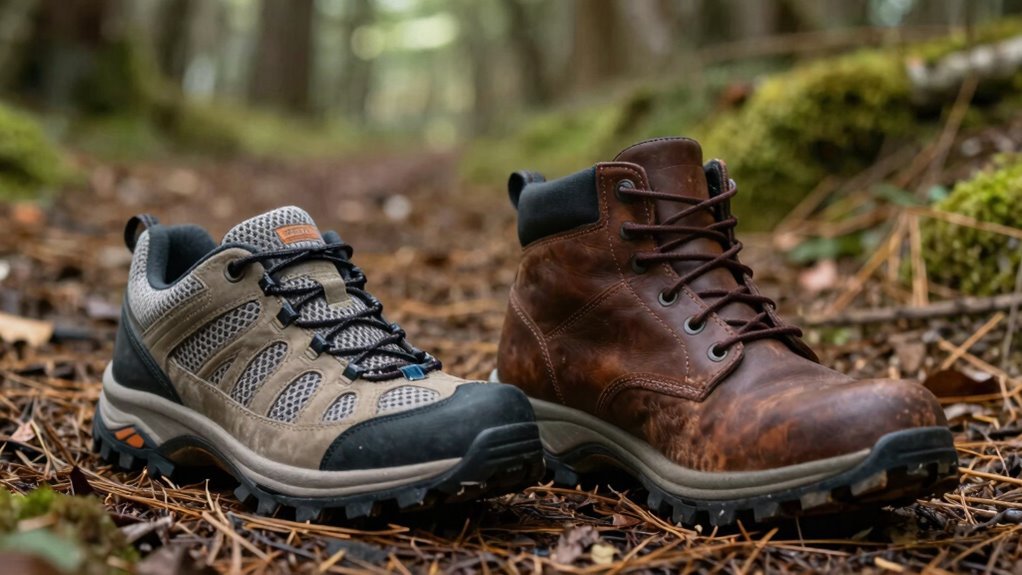
Every extra pound on your feet feels like five on your back, and studies prove it takes up to 6.5 times more energy to move with heavy shoes.
Swap 4.6-pound boots for 1.8-pound trail runners, and you’ve saved energy like ditching six liters of water!
Lighter shoes mean faster speeds, less fatigue, and way more bounce in your step.
On a 2-mile test, just half a pound slowed hikers by 0.1 mph—imagine that over 20!
Most long-distance hikers now choose nimble shoes, not clunky boots.
They’re breathable, comfy, and keep your legs feeling fresh.
Yes, heavy boots have their place, but unless you’re hauling a pack the size of a small fridge, lighter gear lets you hike longer, faster, and with way more fun.
Hiking shoes typically weigh around ~1 pound, making them a top choice for low-weight efficiency.
Ankle Support: Understanding Stability Needs
While that chunky mid-cut boot might look like a bodyguard for your ankles, don’t be fooled by the height—it’s not the hero you think it is.
True stability doesn’t come from cuff height but from a wide outsole, solid heel counter, and proper fit.
Think of it like this: a wobbly table won’t help no matter how tall the legs are.
High-cut boots can help on rugged trails with heavy packs, offering protection from debris and better lace security.
But they won’t stop sprains like you’d hope—some studies even say stiff cuffs might make rolling worse.
Lightweight hikers often prefer low-cuts for agility on steep or rocky terrain.
Your skill, foot placement, and a shoe’s internal support matter more than ankle height.
Mid-cut designs often include lacing hooks at the ankle, enhancing fit and stability through secure lacing.
So skip the fashion show—focus on fit, stability, and how it feels when you move.
Your ankles will thank you.
Traction and Grip: Performance on Different Terrains
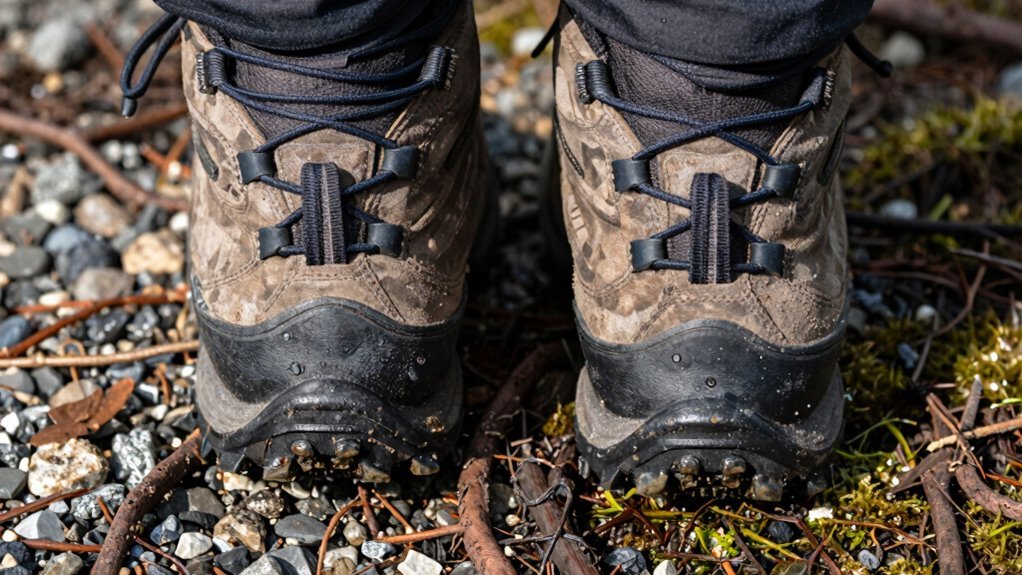
When the trail gets rowdy, your shoes better keep up.
Hiking boots? They’ve got your back with deep, grippy lugs that bite into rocky, muddy, or slippery terrain like a hungry squirrel on a nut.
Whether you’re scrambling over loose gravel or tiptoeing through a stream, those aggressive outsoles keep you stable and upright—no embarrassing face-plants.
On wet trails or soggy ground, boots outshine shoes with waterproof builds and superior traction, so you won’t slide like a penguin on ice.
Hiking shoes work well on dry, smooth paths—they’re nimble and light, perfect for breezy day hikes.
But when the ground turns tricky, they can slip up.
Boots dominate on varied, rough terrain, while shoes shine on gentler trails.
Boots provide better ankle stability on uneven ground, reducing the risk of twists and sprains during steep ascents or descents.
Pick boots for wild, unpredictable paths; grab shoes when the route’s chill.
Either way, your feet will thank you—just don’t blame us if they start demanding adventure snacks.
Durability and Protection: Longevity in Harsh Conditions
A solid pair of hiking boots isn’t just built to last—it’s built to go the distance, no matter how rough the trail gets.
You’ll rack up thousands of miles on tough terrain, thanks to thick, reinforced uppers that laugh in the face of rocks and roots.
Leather or tough synthetics shrug off scrapes, while sturdy soles keep gripping, mile after mile.
Sure, they weigh a bit more, but they’ve got your back when you’re deep in the wild with a heavy pack.
Hiking shoes? They’re great for lighter trips but usually tap out around 800 miles—less when things get gnarly.
And trail runners? Don’t even get us started—500 miles max.
Boots also shield your toes, lock in waterproofing high up, and handle icy dips like champs.
When it’s wet, rocky, or rugged, boots don’t quit.
They’re the unsung heroes keeping your feet safe, dry, and ready for anything.
Break-In Time and Fit Flexibility
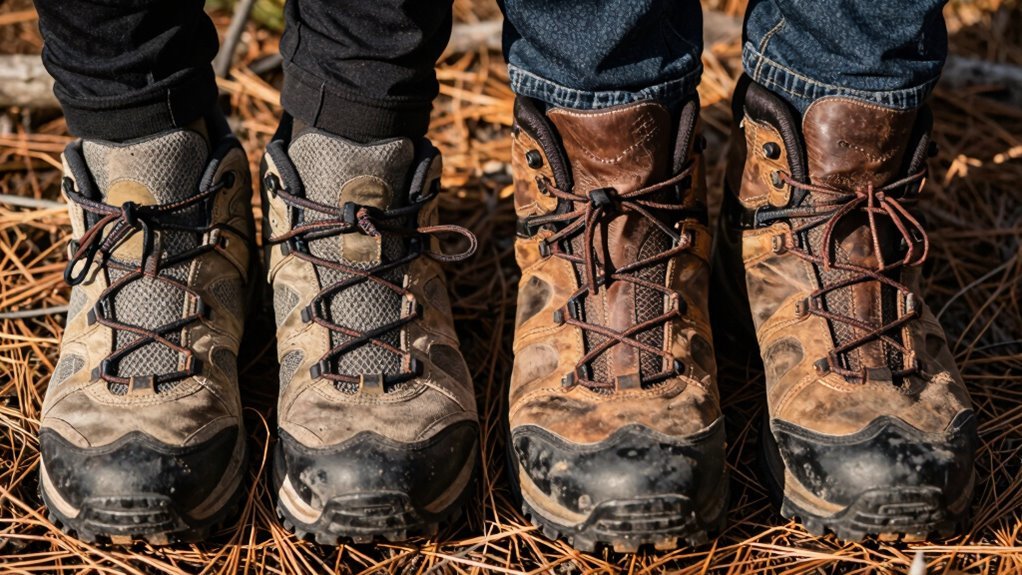
What if your hiking boots could morph to your feet like a favorite pair of jeans—just with more attitude and way fewer laundry trips?
Well, they can—but it takes time.
Stiff leather boots need 1–4 weeks of breaking in, especially heavy-duty ones built for rugged terrain.
You’ll want to wear them on short hikes first, letting dirt, rocks, and elevation help them shape up.
Heavier models? They start tight on purpose, then soften and hug your feet just right.
Hiking shoes, though, are the chill cousins—they flex fast and often need zero break-in.
Slap ’em on, walk a few miles, and boom: comfort.
Modern materials adapt quick, so you skip the blisters and weird rubs.
Whether boots mold slowly or shoes flex instantly, both find their groove—just at different paces.
Your feet will thank you for the fit.
Best Use Cases: Matching Footwear to Your Hike Type
If you’ve ever tried scrambling over slick rocks in sneakers and ended up sideways in a bush, you already know that not all hikes demand the same footwear—your trail time improves big time when your shoes actually match the mission.
For quick walks on smooth trails, grab lightweight hikers or trail runners like the On Cloudrock Low—they’re comfy, flexible, and feel like sneakers with grip.
Tackling rocky, uneven terrain? Stiff-soled boots with toe protection, like the Salomon X Ultra Mid GTX, keep you steady and shield your feet.
Long miles? Go for cushy, wide-toebox picks like the Altra Olympus 6 or Teva Terra Fi 5 to avoid achy dogs.
Snowy or wet paths? Pull on waterproof, high-cut boots—think Merrell Moab2 Mid—to stay dry and stable.
And if you’re climbing or scrambling, snug, sticky-soled approach shoes give you precision without slipping.
Pick right, and every step feels like it’s on your side.
Frequently Asked Questions
Can Hiking Shoes Be Resoled When Worn Out?
Yeah, you can totally resole hiking shoes when they wear out—don’t toss ’em just yet!
If the tread’s slick or the chopstick test shows dents, it’s repair time.
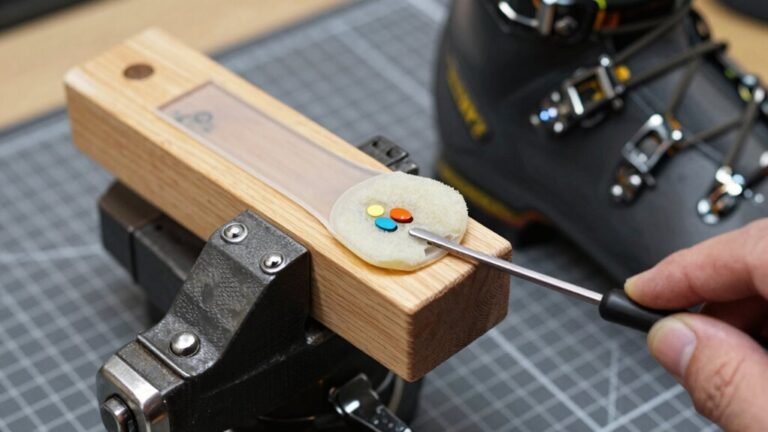
Pros cut off the old sole, reshape the shoe on a last, and glue on a fresh one.
Brands like Scarpa and La Sportiva even design theirs to be resoled multiple times.
It’s cheaper than new, eco-friendly, and keeps your favorite kicks happy on the trail—talk about a win-win!
Are Hiking Boots Waterproof by Default?
Nope, hiking boots aren’t waterproof by default, just like a raincoat isn’t guaranteed to keep you dry if it’s got holes!
You’ve gotta look for features like Gore-Tex liners or sealed seams.
Leather resists water, sure, but without proper tech, moisture sneaks in like a sneaky raccoon.
Check labels carefully—some boots are built for puddles, others?
Best kept on dry trails.
Stay smart, stay dry!
Do I Need Different Shoes for Day Hikes vs. Backpacking?
Yes, you do need different shoes—day hikes love lightweight, breathable sneakers that keep your feet cool and nimble.
But when you’re lugging a pack full of snacks, tents, and who-knows-what, hiking boots give you the ankle support and durability you’ll thank them for later.
Think comfort versus survival: shoes for quick escapes, boots for epic quests.
Your feet will cheer either way!
Can I Wear Hiking Shoes in Snow?
Yep, you can wear hiking shoes in snow—just don’t expect miracles.
Think of them as sneakers with a winter coat: cozy, grippy, and tough, but not invincible.
With waterproofing and chunky lugs, they handle light snow like a champ.
Add gaiters and microspikes, and you’re golden.
Just skip deep powder or icy trails; save those for real boots.
Stay warm, stay dry, and keep grinning—snow’s no match for your clever foot fashion!
How Often Should I Replace My Hiking Footwear?
You should replace your hiking footwear every 500 to 750 miles, depending on what you’re wearing.
Trail runners and hiking shoes wear out faster, but tough hiking boots can go up to 1,000 miles—or even more if they’re built like trail tanks.
Watch for frayed uppers, flat midsoles, or slippery soles.
If your boots creak like a haunted house, it’s probably time to let them retire—peacefully, not tragically, in a gear graveyard.
Conclusion
So, there you have it—choosing between hiking shoes and boots is like picking the right dance partner. Light shoes glide gracefully on easy trails, while sturdy boots tango tough terrain with gusto. Your adventure, your rhythm. Match your moves to the path, and your feet will thank you, one happy step at a time. Now lace up, laugh off the blisters, and let the trail surprise you!
References
- https://www.rei.com/learn/expert-advice/hiking-boots-hiking-shoes.html
- https://www.walks4all.com/gear/does-the-weight-of-hiking-boots-matter/
- https://faroutguides.com/hiking-shoe-weight/
- https://backpackinglight.com/forums/topic/exploding-myths-footwear-and-energy-consumption/
- https://www.youtube.com/shorts/pcc4B0vfYpM
- https://www.altrarunning.com/en-us/about-us/blog/hiking-shoes-versus-hiking-boots.html
- https://www.merrellaustralia.com.au/blog/mid-cut-vs-low-cut-hiking-shoes-2
- https://hikingguy.com/how-to-hike/hiking-boots-or-shoes-do-i-really-need-hiking-boots/
- https://backpackinglight.com/forums/topic/22522/
- https://obozfootwear.com/en-us/community/mids-vs-lows