How to Choose Insoles
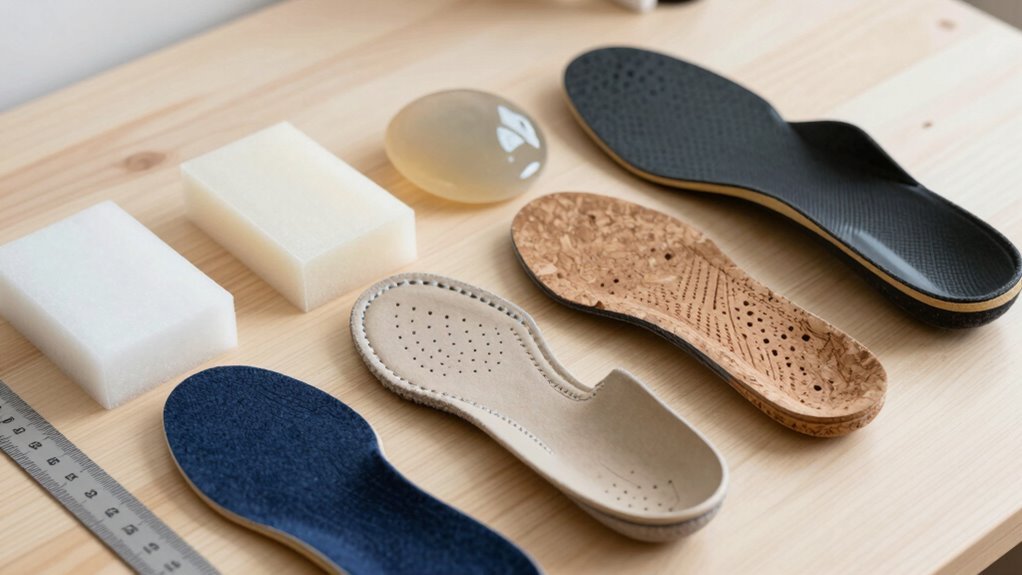
When choosing insoles, start by understanding your foot type—are you flat-footed, high-arched, or somewhere in between? Match the support level to your arch: low for flat feet and extra cushioning for high arches.
Pick insoles that fit your shoe type—opt for 3/4-length insoles in tight-fitting flats or full-length for athletic shoes. This ensures proper support without compromising comfort or fit.
For all-day comfort, choose materials like breathable EVA foam or shock-absorbing gel. These help reduce fatigue, especially if you’re on your feet for long periods.
Replace your insoles every few months, particularly with heavy daily use. Regular replacement maintains support and hygiene, keeping your feet feeling their best.
Know Your Foot Type
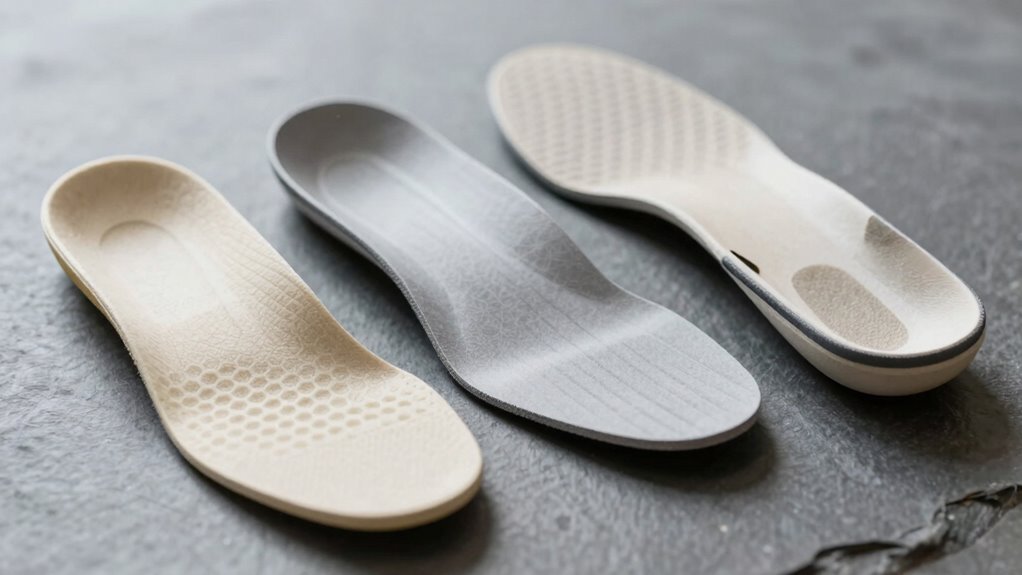
Ever wonder why your feet feel great in some shoes but scream for mercy in others?
That’s because your foot type plays a huge role in comfort.
If you have planus (flat) feet, your arch collapses inward, making your foot roll too far—hello, over-pronation!
Cavus (high-arched) feet do the opposite, staying rigid and pushing impact to the outer edge—ouch, supination.
Or maybe you’re lucky and neutral—balanced, stable, and smooth with every step.
And don’t forget your toes! Got an Egyptian foot with a long big toe? Most shoes fit you best.
Greek foot with a dominant second toe? That longer toe might get squished.
Knowing your shape and structure helps you avoid pain and pick the right fit—no guesswork, just happy feet.
Feet are naturally widest at the toe area, so proper insole support should allow for this natural shape.
Determine Your Arch Support Needs
So, how do you know if your feet need a soft lift or full-on architectural support?
If you have flat feet, you likely need low arch support—just enough to stabilize and stop your ankles from rolling inward.
Overpronation’s no joke; it can lead to plantar fasciitis, bunions, or even shin splints.
Medium arches? Lucky you! You only need moderate support to stay aligned and avoid aches in your knees or back.
High arches scream for extra cushioning and shock absorption—without it, you risk stress fractures or ball-of-foot pain.
Supination (that’s the fancy word for rolling outward) can make your ankles wobble like jelly.
Match your insole to your arch: low for flat, medium for neutral, high for elevated.
And hey, if your feet ever complain louder than your knees after hiking, it’s time to rethink support.
Your soles deserve to strut, not suffer! Arch support helps distribute pressure evenly across the feet, promoting even pressure distribution.
Match Insoles to Your Shoe Type
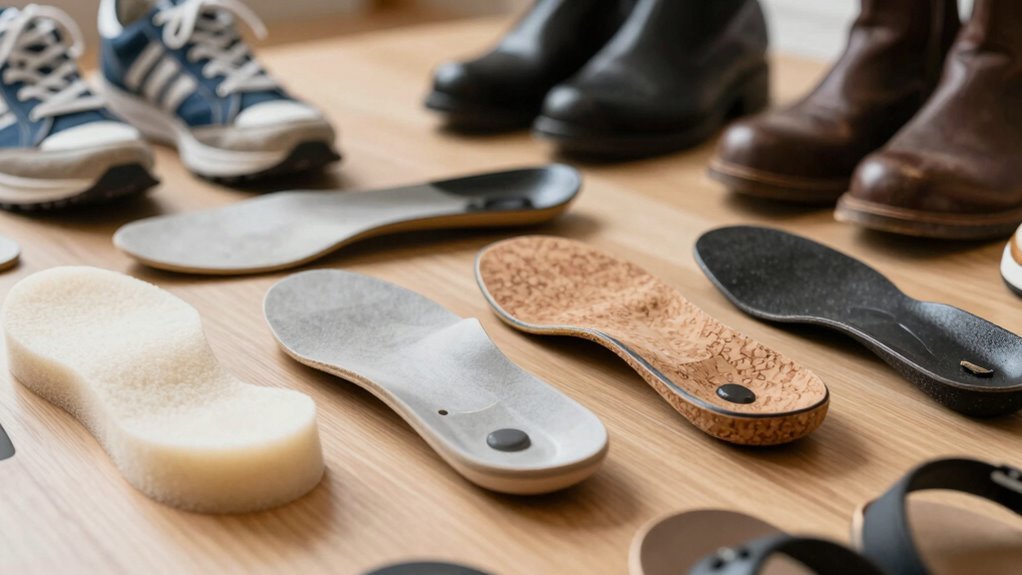
While your arch type sets the foundation, picking the right insole for your shoe is where the real magic happens—because no one wants their feet throwing a tantrum halfway through a hike or a night out.
If you’re hitting the trails, go for high-volume insoles in hiking or running shoes—they’re thick, cushy, and perfect for high arches.
Rocking dress shoes or ballet flats? Try 3/4-length insoles; they slip right in without cramping your toes.
Cycling or skating? Low-volume insoles save the day in tight boots by cutting bulk and boosting comfort.
Medium-volume insoles are your everyday heroes, fitting snuggly in casual kicks.
And hey, don’t forget socks—thick ones change the fit too.
Whether it’s heels, cleats, or pumps, there’s a snug, supportive insole that’s just right.
Your shoes (and feet) will thank you.
Supportive insoles differ from soft, cushy drugstore versions because they provide structural support and stability.
Consider Your Daily Activity Level
You’ve picked the perfect insole for your favorite shoes, but here’s the kicker—how much you move determines how long it’ll last and how hard it needs to work.
If you’re on your feet all day or pounding the pavement, your insoles take a serious beating.
Runners, jumpers, or anyone with high-impact moves should swap them out every 2–3 months—foam just can’t bounce back forever.
Standing all shift on hard floors? Replace every 3–6 months to keep your joints happy.
Even daily walkers need fresh insoles every few months since constant pressure flattens support fast.
Light office duty? Lucky you—your insoles can chill longer, lasting 4–6 months.
Heat, sweat, and heavier loads speed up wear, so don’t ignore the signs.
Keep your step springy, pain-free, and fun—because nobody likes a flat foot.
Choose the Right Material for Comfort and Durability
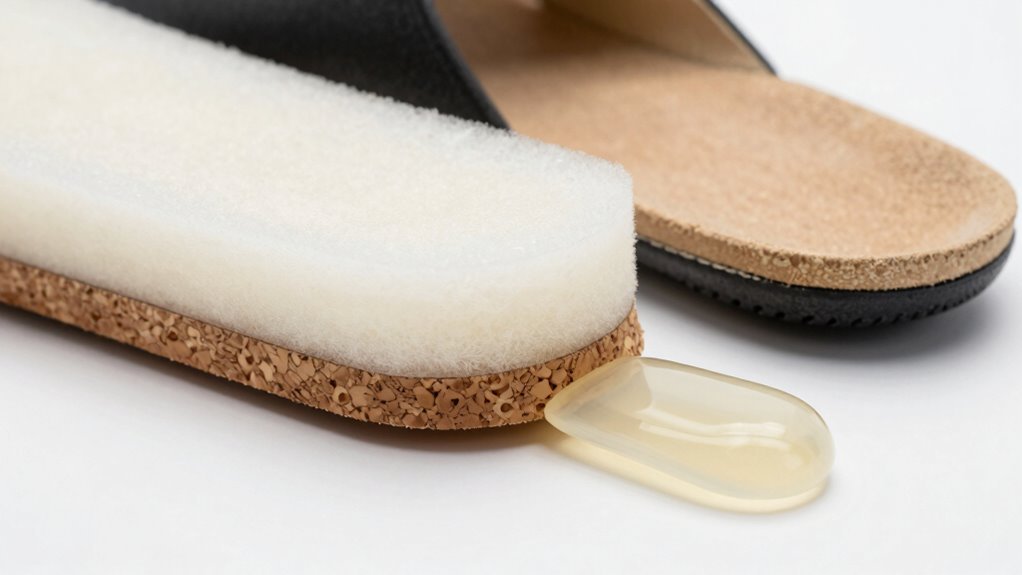
What’s the secret to happy feet that keep up with your hustle? Picking the right insole material—your feet’s personal pit crew.
You want comfort that lasts and support that doesn’t quit by lunchtime. Let’s break it down:
- EVA – Your go-to for bounce and breathability; it cushions every step without flattening out, unlike basic foam or stiff PVC.
- Gel – Perfect for shock absorption during high-impact moves, like jumping or jogging—think of it as a trampoline for your heels.
- Cork & Leather – These mold to your feet over time, offering firm, custom-like support while staying fresh and fancy-free from sweat buildup.
Whether you’re sprinting through deadlines or dancing through dinner plans, matching material to your mission keeps you light on your toes.
Your feet won’t just survive the day—they’ll own it.
Address Specific Foot Conditions or Pain
Your feet do more than carry you through the day—they’re the foundation of your whole groove, and when something’s off, everything feels out of sync.
If plantar fasciitis greets you with sharp heel jabs every morning, proper insoles cushion and support, cutting pain by over half.
Flat feet? They’re not doomed to flop—orthotics lift, align, and stop that wobbly overpronation before it messes up your knees.
High arches? Don’t let them act like stubborn hills; insoles stabilize and cushion, smoothing each step.
Got diabetes? Your feet need extra love—soft, pressure-relieving inserts help dodge ulcers and serious trouble.
Tendinitis, shin splints, even cranky knees or back pain? Yep, insoles help there too.
They spread pressure, absorb shock, and bring your body back into harmony.
Treat your pain like an unwelcome guest—show it the door with smart insole support.
Understand the Difference Between Over-the-Counter and Custom Options
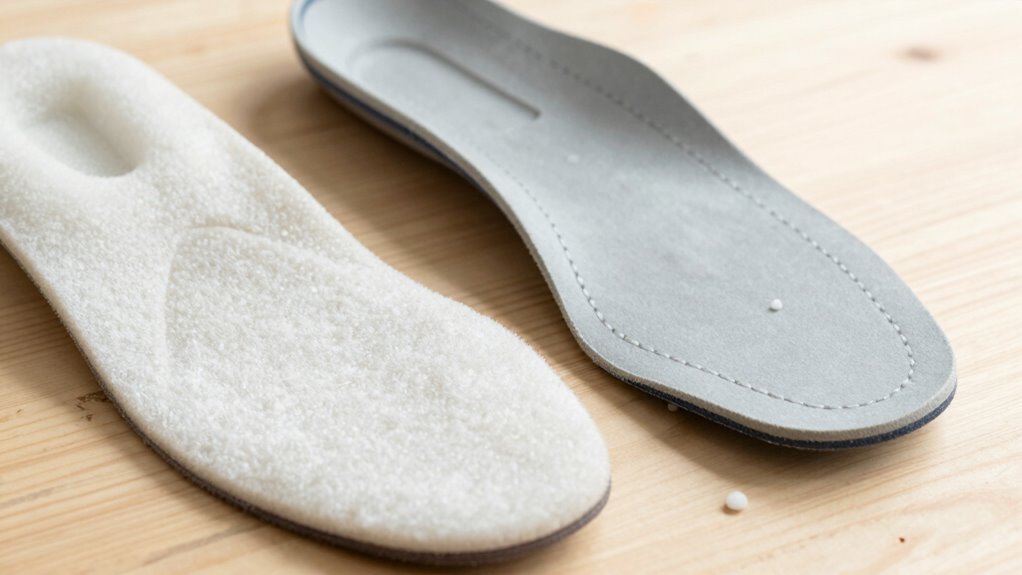
Ever wonder why some insoles feel like they were made just for your feet while others fall flat—literally?
That’s because custom orthotics are built just for you, while over-the-counter (OTC) ones are like a one-size-fits-most hat—sometimes it works, but not always.
Here’s the scoop:
- Fit & Function: Custom insoles use your foot’s exact shape—thanks to scans or molds—while OTC versions guess what your feet need.
- Support & Relief: Custom options target your pain points and fix real biomechanical issues, while OTCs offer basic cushioning—great for a short-term boost, not long-term fixes.
- Durability & Cost: Custom means pricier upfront, but they last years and save trouble later; OTCs are cheap and easy, but they wear out fast—like flip-flops at a stampede.
Choose wisely—your feet will thank you!
Test the Fit and Make Adjustments
Step into the right fit like a pro—because slipping on insoles shouldn’t be a game of foot-sized roulette.
First, pull out your shoe’s original insole and stand on it barefoot, toes splayed like you’re gripping sand.
If your foot spills over, it’s a no-go—your toes need room to breathe and move.
Check both feet; nobody’s perfectly symmetrical!
For length, place the insole against a wall, step on it, and make sure your toes don’t hang off.
Got extra length? Trim it—snip wisely for a custom hug.
Use smart sensors to map pressure and spot hot zones, or take a fun 12-question comfort quiz to rate cushioning and fit.
And hey, if your insole cracks after bends, it’s not tough enough—SATRA-tested ones last longer.
Test, tweak, and tailor.
Your feet will thank you!
Frequently Asked Questions
How Long Do Insoles Typically Last Before Needing Replacement?
Insoles usually last 6 to 12 months, but hey, it depends on how hard you work ’em!
If you’re sprinting like a superhero or on your feet all day, replace them every few months—foam flattens fast.
Custom ones? They can go 1–3 years.
Watch for squished arches, funky smells, or if your feet start complaining.
Don’t wait till they’re toast—your feet will thank you!
Can I Wash My Insoles, and How Should I Clean Them?
Think of your insoles as tired feet—they need a spa day, not a tornado!
You can wash them, but skip the machine.
Hand-clean with soapy water and a soft brush, gently scrubbing dirt away.
Gel and foam? They’re tough.
Leather? Dab with a damp cloth—don’t drench!
Air-dry flat, never in direct heat.
Toss in baking soda overnight to zap stink.
Voilà—fresh, happy insoles ready to roll!
Are More Expensive Insoles Always Better Than Cheaper Ones?
No, pricier insoles aren’t always better—you might be surprised!
Studies show cheap or even fake ones work just as well for most foot pains.
Superfeet or PowerStep give great support without breaking the bank.
Custom orthotics cost hundreds, but often perform no better than drugstore picks.
Save your cash unless you’ve got serious issues like bunions.
Try a solid OTC pair first—you’ll likely skip the custom trip and still strut pain-free!
Should I Wear Socks With Orthotic Insoles for Best Results?
Yes, you should definitely wear socks with orthotic insoles—you’re teaming up two foot heroes!
Socks boost comfort, cut friction, and keep things fresh (nobody wants stinky surprises).
Plus, breathable or compression socks add extra support and help your insoles stay in place.
Think of it like peanut butter and jelly—great alone, but magic together.
Your feet will thank you with happy dances all day long!
Can Insoles Help With Knee or Back Pain Caused by Foot Issues?
Yeah, insoles can definitely help with knee or back pain if foot issues are at the root—think of your feet as the foundation of a wobbly table.
Poor alignment down there can send shockwaves up your body.
Orthotics tweak your stance, ease pressure, and may quiet that nagging pain.
They’re not magic slippers, but hey, they’re like a good wingman for your joints—subtle, supportive, and quietly heroic.
Conclusion
You’ve got this, foot-hero! Picking the right insoles is like giving your feet a cozy hammock for every step. Whether you’re strolling, sprinting, or just surviving a long shift, the perfect pair keeps things smooth, happy, and pain-free. Think of it as a shoe spa—luxury you can walk on. Your feet aren’t asking for a throne, just a little love. Slip in, shine on!
References
- https://pmc.ncbi.nlm.nih.gov/articles/PMC3594140/
- https://www.amputation.research.va.gov/limb_loss_prevention/Morphology_of_Foot_Types.asp
- https://barefootuniverse.com/what-is-my-foot-type/
- https://piedreseau.com/en/tips-advice/what-are-the-different-types-of-feet/
- https://www.podexpert.com/en/blog-pathology-type-feet-pxl-151_159.html
- https://kcfoot.com/there-are-9-types-of-feet-which-type-are-you/
- https://kizik.com/blogs/news/types-of-feet-shapes
- https://fitmyfoot.com/blogs/footprints/five-ways-to-determine-your-foot-type
- https://freedomclinics.com/podiatry-chiropody/foot-types/
- https://www.lifebalance.ae/common-foot-types/