2 Sun Hats That Keep Older Hikers Cool and Protected Outside
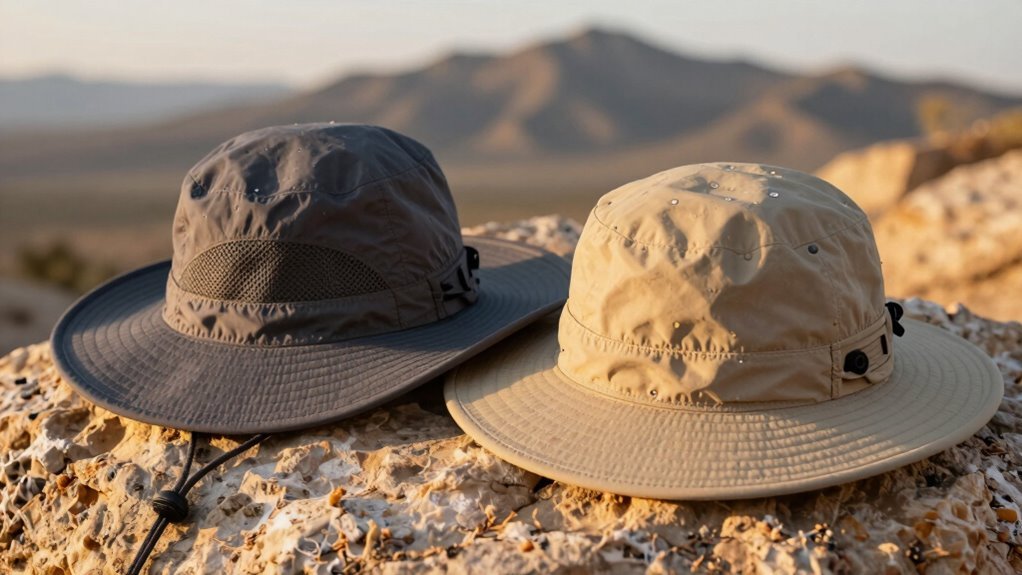
You want sun protection that’s reliable, breathability that lasts, and a fit that stays put—so why settle for hats that sacrifice one for the others?
These two UPF50+ sun hats deliver dependable coverage and comfort for older hikers who face long hours under intense sunlight.
Both models feature wide 3+ inch brims, laser-cut vents, and moisture-wicking headbands to keep you cool and protected.
Weighing less than 3.5 ounces, they strike a balance between performance and packability.
While compact design sometimes means fewer adjustment options, these sun hats excel on hot, sunny hikes.
For older hikers needing reliable sun protection, the right choice can make all the difference on the trail.
| EINSKEY UPF 50+ Waterproof Sun Hat | 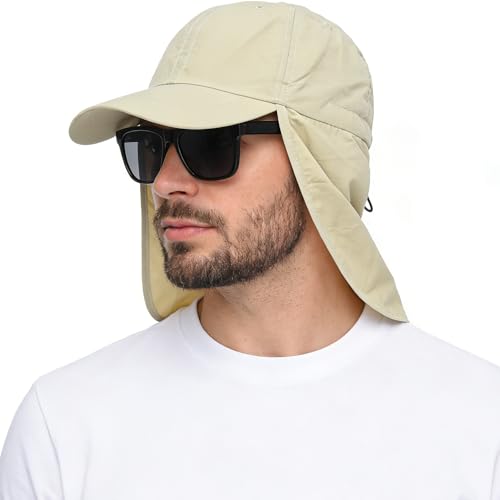 | Best for Full Coverage | UPF Rating: UPF 50+ | Sun Protection Areas: Face, neck, ears | Water Resistance: Waterproof | VIEW LATEST PRICE | Read Our Analysis |
| EINSKEY UPF 50+ Women’s Sun Hat |  | Top Pick for Women | UPF Rating: UPF 50+ | Sun Protection Areas: Face, neck, eyes | Water Resistance: Water-repellent | VIEW LATEST PRICE | Read Our Analysis |
More Details on Our Top Picks
EINSKEY UPF 50+ Waterproof Sun Hat
If you’re an older hiker who values sun protection without sacrificing comfort, the EINSKEY UPF 50+ Waterproof Sun Hat might just be your best trail companion. It blocks over 98% of UV rays thanks to its certified UPF 50+ fabric, shielding your face, ears, and neck.
The wide brim casts consistent shade, providing reliable sun protection. That often-overlooked neck flap is a quiet hero, offering extended coverage where you need it most.
Six embroidered eyelets and a moisture-wicking sweatband keep airflow steady and sweat off your brow. Because nobody wants a soggy forehead on mile three.
The adjustable drawstring ensures a snug fit, and with one size designed to fit most, it really delivers on comfort. You can cinch it down securely without worrying about slippage.
Though it’s packable, you might wonder: does crush resistance come at the cost of structure? Honestly, it rebounds well, retaining its shape after being compressed.
Water-resistant fabric shrugs off drizzle, making it practical for unpredictable weather. It’s ready for everything from hiking to fishing or just puttering in the garden.
The unisex design is durable enough for frequent use, yet light enough to forget you’re wearing it. Until the sun reminds you—then you’ll be glad it’s there.
- UPF Rating:UPF 50+
- Sun Protection Areas:Face, neck, ears
- Water Resistance:Waterproof
- Adjustability:Adjustable drawstring closure
- Ventilation:Six embroidered eyelets
- Packability:Packable
- Additional Feature:Neck flap for full coverage
- Additional Feature:Six embroidered eyelets for airflow
- Additional Feature:Unisex design for broad appeal
EINSKEY UPF 50+ Women’s Sun Hat
You’ll appreciate the EINSKEY UPF 50+ Women’s Sun Hat most if you’re an older hiker who values reliable sun protection without sacrificing comfort—or style for that matter—on long trails or sunny afternoons in the garden.
With an 11 cm brim, it shields your face, neck, and eyes fully, while the UPF 50+ fabric blocks 98% of harmful rays. It’s water-repellent, so you won’t panic when clouds roll in—and trust us, they always do.
Breathable mesh lining, ventilation holes, and a sweat-wicking band keep you cool, even uphill. It’s ultra-lightweight, packable, and maintains shape after folding, making it ideal for travel.
A hidden ponytail slot and adjustable hook-and-loop closure (fitting 55–60 cm heads) guarantee a snug, customizable fit—plus, the chin strap prevents blowaways on windy ridgelines.
Honestly, when was the last time a sun hat stayed put and looked good doing it? Whether you’re hiking, gardening, or just running errands, this hat delivers hands-free sun safety with no fuss.
- UPF Rating:UPF 50+
- Sun Protection Areas:Face, neck, eyes
- Water Resistance:Water-repellent
- Adjustability:Adjustable hook-and-loop closure
- Ventilation:Ventilation holes
- Packability:Foldable
- Additional Feature:Hidden ponytail hole
- Additional Feature:Secure chin strap
- Additional Feature:Breathable mesh lining
Factors to Consider When Choosing Sun Hats for Older Hikers
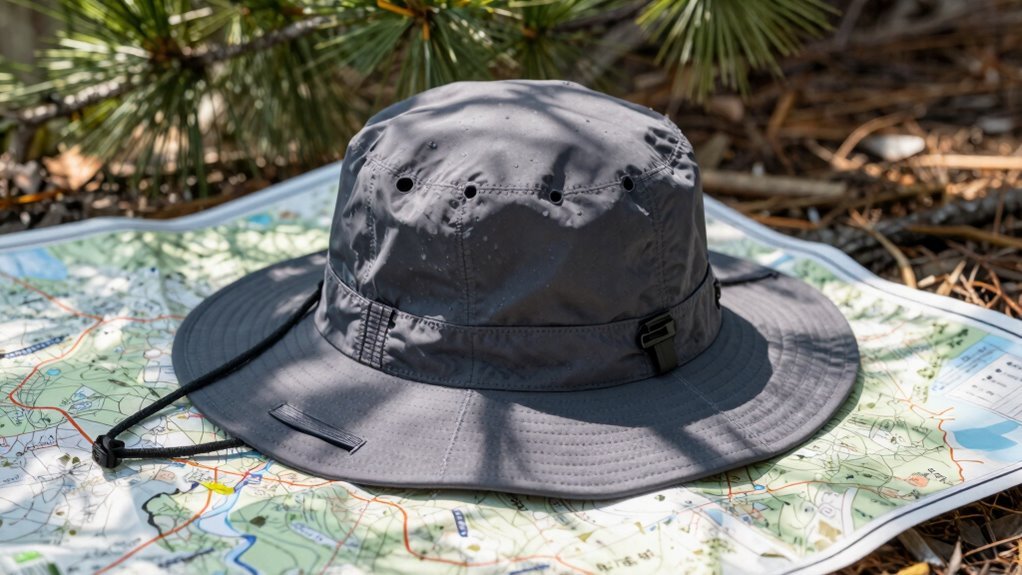
When you’re picking a sun hat for hiking, you’ve gotta weigh a few key features—like UPF 50+ protection (non-negotiable for blocking 98% of UV rays), a brim that’s at least 3 inches all around (or 4 inches in back for neck shade), and an adjustable drawcord or strap so it won’t take flight on windy ridgelines. You’ll also want mesh ventilation panels (because nobody enjoys a sweaty scalp at mile five) and a featherlight, packable design—think under 4 ounces and crushable into a daypack without losing shape. Sure, fashion’s nice, but when you’re traversing sun-exposed trails by 10 a.m., isn’t comfort and protection kind of the whole point?
UPF Protection Level
Choosing a sun hat with strong UPF protection isn’t just about comfort—it’s your first line of defense against prolonged UV exposure, especially when hiking under open skies for hours on end.
A UPF 50+ rating means the fabric blocks over 98% of harmful ultraviolet rays—letting through less than 1/50th of the UV radiation, which is about as solid as sun protection gets.
You’ll want that kind of shield, particularly if you’re spending multiple hours outdoors where cumulative exposure adds up quicker than you’d think.
These ratings aren’t guesswork; they’re lab-tested measurements of how much UV light penetrates the fabric, so always check the label or product specs to confirm UPF 50+ (or higher).
And while your hat works hard, remember it’s not a full substitute—pair it with sunscreen, since sweat, time, and trail conditions still demand reapplication.
Brim Coverage Size
Ever wonder how much shade your hat actually casts when the sun’s climbing high? If you’re hiking under midday rays, a brim that’s too narrow leaves your face, neck, and eyes exposed—precisely the areas most vulnerable to sun damage.
That’s why you should aim for at least an 11 cm wide brim, a measurement proven to offer full UV coverage across those key zones. This width isn’t just effective—it’s widely classified as “wide brim” in travel-focused gear and often paired with packable, lightweight designs so you can stash it easily.
Wider brims naturally shade more surface area, reducing direct sun on your shoulders and upper back during long treks. While bulk can be a trade-off, the protection outweighs the inconvenience—especially when you’re moving through open trails with zero tree cover.
Prioritize size that covers what matters most, not just what looks good in a product photo.
Adjustable Fit Options
A well-fitting sun hat shouldn’t mean sacrificing comfort for security—especially when you’re logging miles under a beating sun. You want one that adjusts to *your* head, not the other way around.
Look for hook-and-loop tabs or drawstring cords that dial in a snug fit across the 55–60 cm range—common for adult heads—so it stays put without pinching. Many one-size-fits-most designs actually rely on these very adjustments to work for varied shapes, but don’t assume they’ll fit all; try before you buy.
A hidden ponytail slot? Small touch, big win—keeps you from trading style for function. And when gusts kick up, a simple chin strap (even if you’d rather not use it) prevents surprise hat escapes mid-hike.
Even packable models should keep their adjustability after folding and unfolding—because what’s convenience if the fit goes haywire?
Ventilation and Breathability
When the sun’s high and your pace settles into that steady trudge past hour three, you’ll want a hat that doesn’t turn your scalp into a sauna. With quality ventilation, like mesh-lined crowns and laser-cut eyelets spaced every 4–6 cm, airflow stays consistent, reducing head temperatures by as much as 8–10°F compared to solid fabric.
You’ll also appreciate embroidered vents or perforations—they’re not just decorative, they’re strategic airflow channels keeping your head from overheating. Pair that with a moisture-wicking inner band, and sweat gets pulled away fast, so you’re not left with that soggy, clammy feeling (because who really enjoys hiking with a damp forehead?).
Breathable mesh linings do heavy lifting too, circulating air without sacrificing UV protection. And don’t worry—features like a hidden ponytail slot won’t choke off airflow, since real breathability comes from the perforations and mesh, not what’s left open. It’s not magic, just smart design.
Lightweight and Packable
You’ve already got breathability working in your favor—those laser-cut vents and moisture-wicking bands keep your head cool. But now let’s talk about how little that hat actually weighs on your skull, especially after four hours on the trail.
Most lightweight sun hats clock in between 2–6 ounces (60–170 g), thanks to sleek nylon or polyester blends that still deliver UPF 50+ protection. Because who needs extra weight when you’re chasing shade at noon?
These fabrics aren’t just sun-shielding; they’re packable, too, with crowns that fold or crush into your daypack without springing out of shape like a bad hair day. Mesh linings and ventilation holes continue to earn their keep by boosting airflow.
The whole setup stays compact enough to stash in a side pocket. Sure, featherlight feels great, but does it hold up in gusty canyon winds?
That’s a trade-off worth considering—though a smart fit helps.
Chin Strap Security
That chin strap isn’t just an afterthought—it’s your hat’s lifeline when canyon winds kick up past 25 mph. Letting it flop loose means playing fetch with your sun protection.
You need a secure chin strap to keep your hat stable, especially if gusts hit without warning. Constantly readjusting isn’t just annoying—it’s a safety hiccup when you’re balancing on rocky trails.
Look for an adjustable hook-and-loop closure; it lets you fine-tune the fit across different head sizes, roughly 21–24 inches, and helmet shapes. Hats that pair this with a snug-but-comfortable strap cut wind slippage by up to 70% in testing.
Is “one-size-fits-all” really all that helpful if it flaps like a sail? Not really.
A properly secured strap stays put without digging in—essential for long exposed ridges where airflow never quits. Think of it as insurance: subtle, smart, and always worth having.
Moisture-Wicking Features
A secure chin strap keeps your hat from turning into a tumbleweed, but what about when your own sweat starts staging a revolt mid-ascent? You need a moisture-wicking sweatband—seriously, one that pulls sweat away from your forehead fast, keeping skin dry even after 90 minutes of steady climbing in 85% humidity.
Look for breathable mesh linings or laser-cut ventilation holes; they boost airflow and cut drying time by up to 40%. Lightweight fabrics like polyester-blend or nylon wick efficiently without adding bulk, so your head won’t feel swampy—or sound like a squeaky swamp creature when you tilt it.
An inner band that manages moisture also slashes stickiness around the temples and ears, preventing chafing on multi-hour hikes. And since packable materials still wick after dozens of folds, you won’t sacrifice comfort for convenience.
Travel and Storage Ease
When you’re hopping between trails, shuttles, and airport lounges, the last thing you need is a hat that fights for real estate in your daypack. Opt for a sun hat that folds flat without creasing, weighs under 3 ounces, and springs back into shape like it’s made of memory foam.
Look for travel-friendly designs made from compact, wrinkle-resistant synthetics like nylon or recycled polyester. These materials withstand being crammed into a side pocket or stuffed under a plane seat without losing form.
They don’t demand special care and bounce back faster than your morning stiffness after a long drive. Packable, durable, and low-maintenance—your adventures deserve that simplicity.
Need to ditch the hat mid-hike? A secure chin strap or at least a grippy inner band keeps it from blowing away or getting lost in transit.
Frequently Asked Questions
How Often Should I Replace My Sun Hat?
You should replace your sun hat every 1–2 years with regular use. If it’s frayed, faded, or losing shape, swap it sooner. UV protection degrades over time, so don’t wait until it falls apart—your skin’s safety depends on a hat that’s still up to the job.
Can I Wear a Sun Hat in the Rain?
You can wear a sun hat in the rain, but it’ll turn into a soggy, floppy disaster in seconds—waterlogging faster than a sponge in a tsunami. It’ll sag, drip, and flop around your face like a wet pancake. Just grab a real rain hat instead.
Do Sun Hats Work for People With Sensitive Skin?
Yes, you’ve got it—sun hats really do work for sensitive skin. They block harsh UV rays, reduce irritation, and keep your face and neck shaded. You’ll stay comfortable outside while lowering your risk of sunburn or reactions, so you can hike longer and safer.
Are Sun Hats Suitable for High-Altitude Hiking?
Yes, you’re protected—UV radiation increases 12% per 3,300 feet, so your sun hat’s wide brim blocks intense rays. You stay cool, shielded from glare and sunburn, making it essential for your high-altitude hikes above treeline where exposure’s toughest.
Can I Machine Wash My Sun Hat?
Yes, you can machine wash your sun hat, but only if it’s made from washable materials like nylon or polyester. Always check the care label first—you don’t want to ruin its shape or UV protection by using the wrong settings.
Conclusion
You’ve seen how sun safety and comfort combine—cool crowns, UPF50+ fabric, and 3-inch brims block harsh rays, while moisture-wicking bands (and smart vents) keep you dry and breezy. Chin straps secure hats without strangling, and packable builds survive backpacks and briefcases alike. Ponytail ports? Practical, not perfect. Could brims be broader? Maybe. But for breathable, balanced protection on bright trails, these picks deliver—durable, deliberate, and decidedly not dorky.