How to Choose Trail Runners
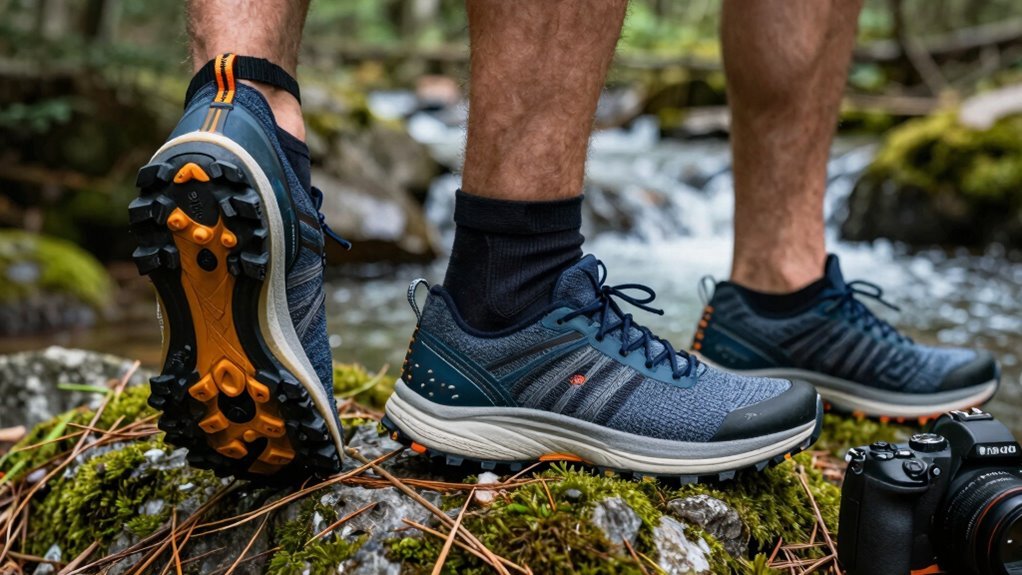
You’re hitting the trails, so choosing trail runners that match the terrain—mud, rocks, or roots—is essential for stability and control. Look for shoes that support quick steps and smart foot placement, especially on technical ground.
Pick trail runners with cushioning that fits your stride: light, moderate, or max, depending on your typical mileage. Make sure the drop aligns with your foot strike, and prioritize a snug heel with enough room to wiggle your toes.
Opt for grippy lugs and sticky rubber outsoles to handle slippery or uneven surfaces. Durable, water-resistant materials help keep your feet safe and dry through wet sections and debris.
And hey, there’s a little trail magic hiding just beyond the next turn.
Understand the Terrain You’ll Be Running On
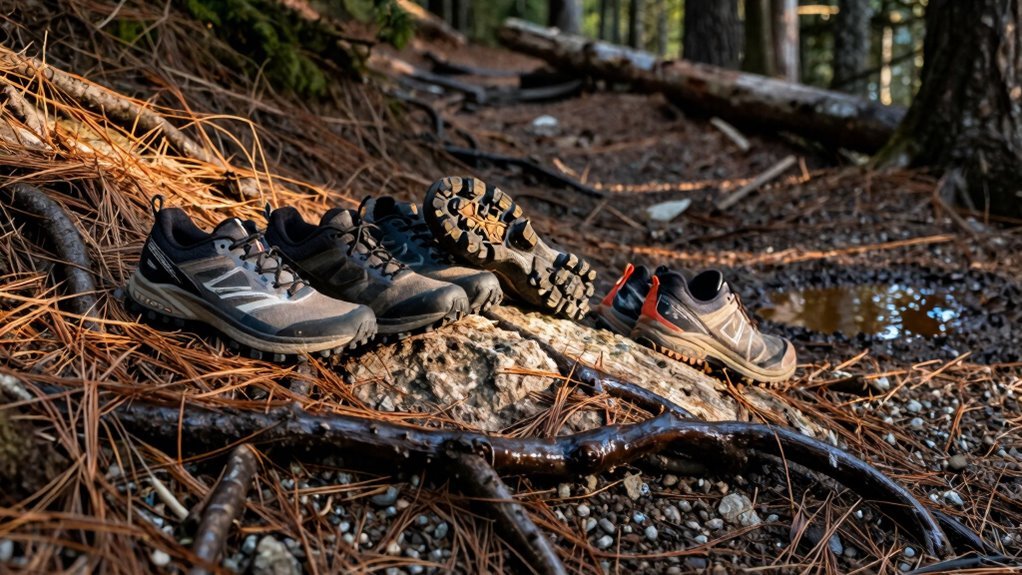
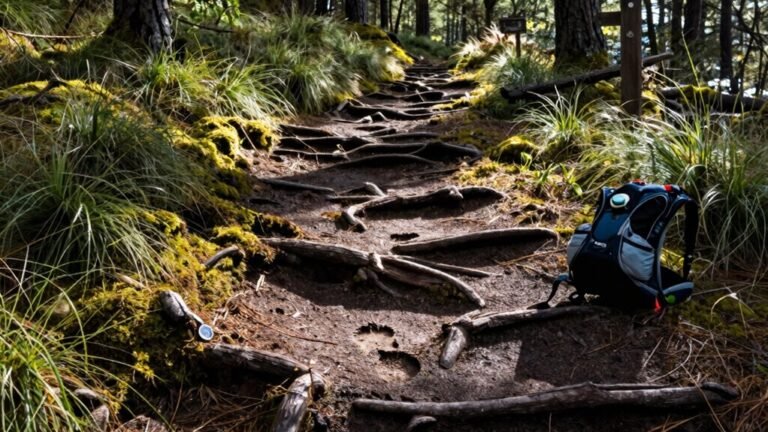
Ever wonder why your trail run feels like a full-body adventure instead of just a footrace? That’s because you’re dodging roots, hopping rocks, and splashing through mud—nature’s obstacle course!
Trail surfaces vary wildly, from soft grass that’s easy on your legs to sand that turns each step into a mini sandpit struggle.
You’ll need quick, light steps in mud or loose gravel, and serious focus on rocky or root-packed paths.
Technical trails demand smart foot placement and sharp eyes—you’ve gotta look ahead, not down!
Hilly routes with steep climbs or zippy descents challenge your balance and build serious strength.
And don’t forget weather—rain turns dirt to soup, and streams might try to ambush you.
Each trail throws something new your way, so knowing your terrain isn’t just smart—it’s your secret weapon for crushing the run with a grin.
Grass is forgiving on joints but requires vigilance for hidden hazards like small debris.
Choose the Right Level of Cushioning and Support
Now that you’ve got a handle on what the trail will throw at your feet—think roots, rocks, mud pies after rain, and surprise puddles that totally judge your life choices—it’s time to talk about how your shoes cushion the chaos.
If you love feeling every bump, go minimalist with under 25 mm of cushioning for light, agile rides.
Most runners thrive with 25–35 mm—it’s plush enough to protect your feet, yet still lets you dodge roots like a pro.
Max cushioning (34+ mm) feels like floating on clouds, perfect for long, punishing miles.
Firmer foam adds stability on jagged terrain, while soft foams, like DNA LOFT v3 or SalomonFOAM+, soak up impact without squishy wobble.
Higher stacks can wobble sideways, but smart design keeps you locked in.
Start with moderate cushion—it’s forgiving, versatile, and won’t leave your Achilles screaming.
The ZoomX midsole provides a plush, bouncy ride, making it ideal for runners seeking both comfort and responsiveness on mixed terrain.
Evaluate Outsole Traction and Grip
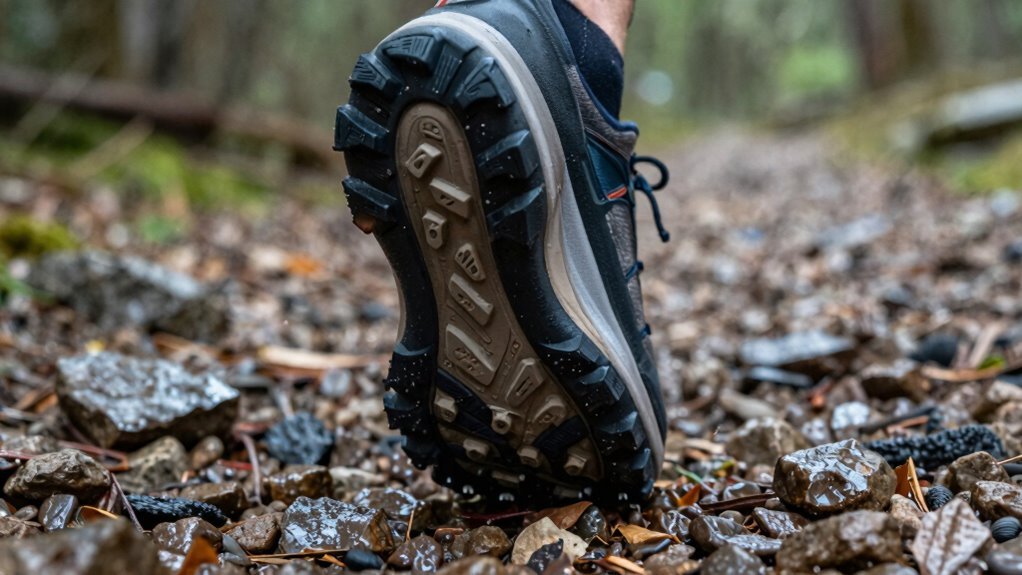
What’s the point of all that cushioning if your shoes can’t hold their ground when the trail gets slippery? You need an outsole that bites into mud, grips wet rocks, and doesn’t quit halfway through. Go for premium rubber like Continental or ASICSGRIP—they stick like tape and last longer, thanks to smart material engineering.
Softer rubber grabs better, but high-end compounds now offer grip *and* durability, so you don’t have to choose.
Deep, widely spaced lugs eat up mud and loose dirt like lunch, while shallow lugs work fine on dry trails but slip when things get slick. Look for directional lug patterns—they push you forward and steady you on downhills.
Full outsole coverage gives max grip on rocky terrain, though partial coverage cuts weight. And hey, sticky rubber’s great, but only if the lugs match your trails—no sense bringing a climbing shoe’s grip to a paved path.
Some brands now partner with tire companies to boost grip, thanks to tire-rubber collaborations.
Consider the Heel-to-Toe Drop and Fit
How does your foot land when you hit the trail—heel first, flat, or springing off your toes?
If you’re a heel striker, go for a 10–12mm drop—it’ll cushion each step and keep your joints happy.
Midfoot lovers thrive with 5–10mm, offering balance and a smooth ride.
Forefoot flyers? Try low (0–4mm) or zero-drop shoes that match your natural spring—just ease into them to protect your Achilles.
Your fit’s just as essential: measure both feet late in the day when they’re plump from use.
Size to your bigger foot and secure a snug heel—no slippage allowed!
Lock down the midfoot with laces so your foot doesn’t slide around on steep climbs or drops.
Leave wiggle room in the toe box—squeezed toes are grumpy toes—and pick arch support that props you up without pinching.
It’s like Goldilocks: not too loose, not too tight, just right for flying over roots and rocks.
Look for Durable and Protective Materials
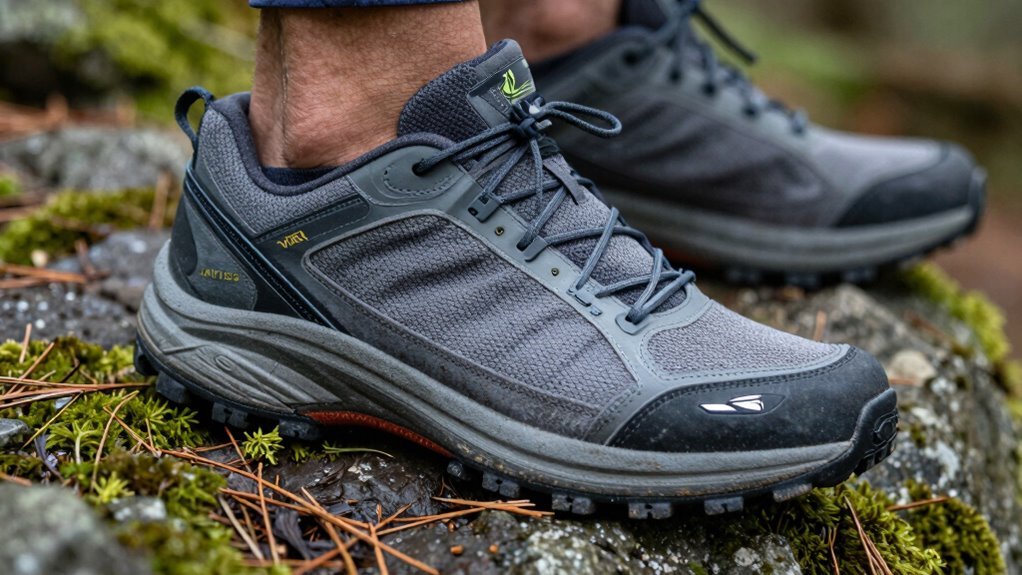
Stamp through sharp rocks, brush past brambles, and laugh off rogue roots—your trail shoes should take the hits so your feet don’t.
Look for rubber toe caps to guard against stubs and flying debris.
Full-coverage rubber outsoles, like Vibram Megagrip or Saucony’s Pwrtrac, crush rugged terrain while 5mm lugs keep foam off rocky ground.
Contagrip rubber rated at 93.9 HC? That’s tough stuff—barely a scratch after a Dremel test.
Inside, plastic or carbon plates, like Brooks’ Ballistic Rock Shield, block sharp pokes from below.
Firmer midsoles and high stack heights, like on the ASICS Metafuji Trail, cushion every footfall.
Ripstop mesh with Kevlar or Dyneema threads resists tears, while TPU overlays beef up vulnerable spots.
These aren’t just shoes—they’re armor with a pulse, ready to charge every trail you throw down.
Assess Water Resistance and Breathability
Ever wonder why your feet stay dry sprinting through puddles but feel swampy on long, sweaty climbs? That’s where smart water resistance and breathability come in.
Look for shoes with GORE-TEX or similar waterproof membranes—they block outside water while letting sweat escape.
A 10,000–20,000 mm water pressure rating means real waterproof protection, not just a splash guard.
Seam-sealing and DWR coatings add extra defense.
But don’t forget breathability: mesh uppers with moisture-wicking linings keep air flowing, so your feet don’t turn into sweaty saunas.
Think of it like a raincoat that also lets you sweat!
Generous synthetic layers and full gussets add durability without killing airflow.
The sweet spot? A shoe that laughs at puddles *and* breathes hard on climbs—because soggy socks are never a good look.
Your feet will thank you, especially when the trail gets wild.
Frequently Asked Questions
How Often Should I Replace My Trail Running Shoes?
You should replace your trail runners every 300 to 500 miles, or sooner if they feel flat or uncomfortable.
If you’re a heavier runner or love rocky paths, expect to swap them earlier—rough terrain and your stride wear them down faster.
Watch for bald tread, squished cushioning, or sore legs after runs.
When your shoes stop loving you back, it’s time to treat yourself to a fresh pair—your feet will thank you!
Are Trail Runners Suitable for Road Running?
Yeah, you *can* run roads in trail shoes, but it’s like bringing a backpack full of rocks to a dance—awkward and tiring.
The stiff sole and bumpy lugs don’t roll smooth on pavement, and your joints feel every thud.
Short stretches? No biggie.
But long hauls? Ouch.
Save your knees and swap to road shoes—or grab hybrids with shallow lugs.
Your feet will thank you, and hey, fewer excuses to ditch the fun runs!
Do I Need Gaiters With My Trail Runners?
You bet you need gaiters if you’re charging through mud, snow, or scratchy brush—trust me, they’re a game-changer.
They keep gunk out of your shoes, so you avoid blisters and constant stopping to shake stuff out.
Plus, they shield your legs from thorns, ticks, and wet grass like tiny armor.
Not every run needs ‘em, but when things get wild, you’ll be glad you’ve got ‘em.
Can I Use Trail Runners for Hiking?
You *can* hike in trail runners, sure—because apparently walking slowly in fast shoes is now a crime.
They’re light, grippy, and comfy on moderate trails, so you’ll move quicker than a squirrel on espresso.
Just don’t blame us when sharp rocks mock your “flexibility” or you slip on mud like a cartoon character.
Skip them for heavy packs or brutal terrain—they’re not magic, just really good at pretending.
What’s the Break-In Period for New Trail Shoes?
You’ll usually need about 5 to 10 miles to break in your new trail shoes—think two or three short runs.
Start easy: walk in them around the house, then hit the pavement for 10- to 30-minute test runs.
Your feet will thank you.
Watch for blisters or numbness—they’re drama queens, but they’re trying to help.
Most shoes loosen up fast, especially flexible ones, so take it slow and let your feet call the shots.
Conclusion
You’ve got this! Pick trail runners that match your terrain, fit like a glove, and keep your feet happy mile after mile. Remember: “The right shoe won’t just carry you forward—it’ll make you want to run farther.” With great grip, cozy cushioning, and tough materials, you’re ready to laugh at puddles and dance over rocks. Now lace up, hit the trail, and let your feet play!
References
- https://www.fyke.eu/blogs/news/trail-running-mastering-diverse-terrains
- https://www.realbuzz.com/articles-interests/running/article/5-running-trail-terrains-and-how-to-cope-with-them
- https://scarpa.com/blogs/news/trail-running-race-vertical-trail-ultra
- https://www.trainingpeaks.com/blog/beginners-guide-trail-running/
- https://mtnath.com/trail-running-grade/
- https://believeintherun.com/how-to-start-trail-running/
- https://www.rei.com/learn/expert-advice/trail-running-basics.html
- https://www.redbull.com/in-en/running-terrains-tips-shoe-types
- https://runrepeat.com/guides/best-trail-running-shoes
- https://www.rei.com/learn/expert-advice/trail-running-shoes.html