Troubleshooting Boot Fit on the Trail
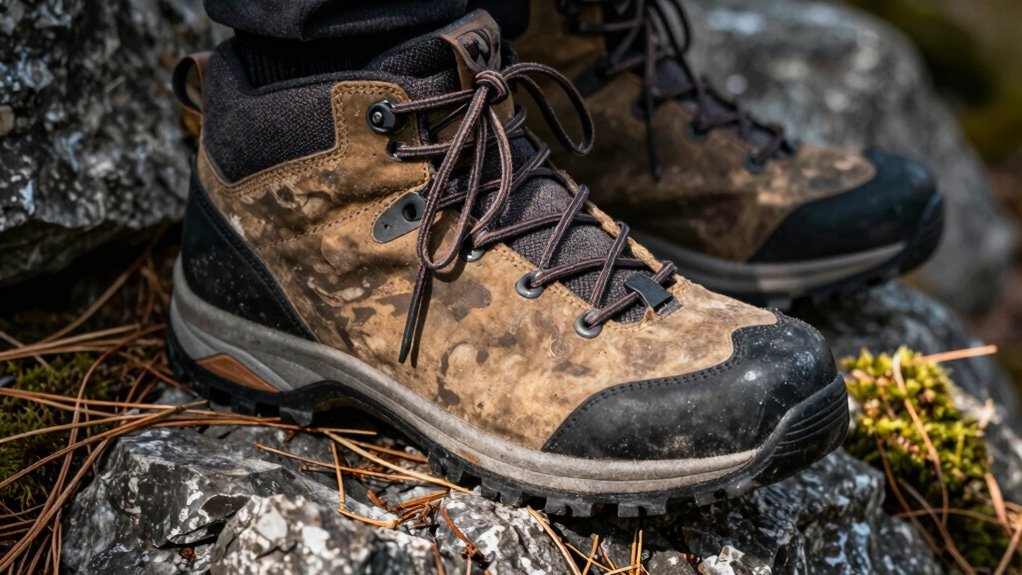
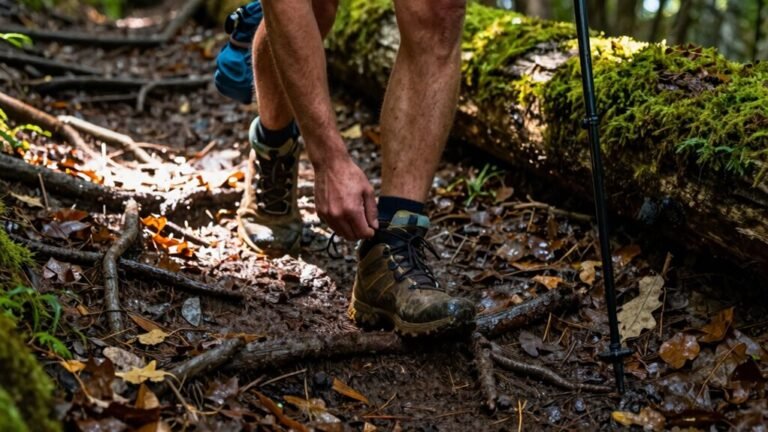
You’re on the trail, and suddenly your boots feel like they’re plotting against you—heel slipping, toes screaming, or hot spots flaring. Don’t panic! A quick fix can make all the difference when troubleshooting boot fit on the trail.
Try a surgeon’s knot or heel-lock lacing to lock things down, or swap out your socks if moisture or thickness is off. Loosen the laces slightly if your feet are swelling in the heat—sometimes a small adjustment brings big relief.
And if your boots still act up, clever fixes are just the beginning. There’s a whole trail of comfort secrets waiting for you.
Identifying Common Boot Fit Problems
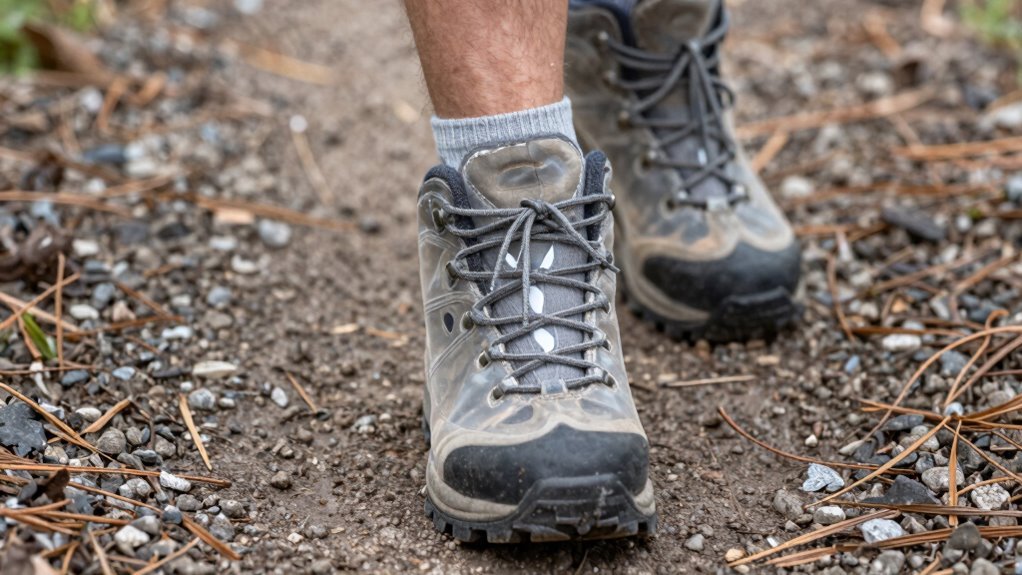
Let’s face it—your hiking boots should feel like teammates, not tormentors.
If they pinch, rub, or squeeze right out the gate, something’s off—snug doesn’t mean painful.
Blisters or hot spots popping up in the first hour? That’s friction talking, usually from cotton socks or a boot that lets your heel dance.
Black toenails aren’t a rite of passage—they mean your toes are ramming the front on every downhill.
And if your heel lifts more than a quarter-inch, even with tight laces, it’s sliding time.
Watch for creases digging into your instep or arch pain from a rigid sole—your foot shouldn’t fight the boot.
Too much wiggle room side to side or pressure points from folds? Nope.
A good fit feels secure, balanced, and comfortable from mile one—no heroic suffering required.
Save the drama for the trail scenery.
Consider whether your sock thickness is affecting fit—thicker socks can prevent slippage but may make tight boots uncomfortable.
How to Tell If Your Boots Are Too Big
How does your foot feel after the first few steps on a trail—like it’s locked in and ready, or sliding around like a loose marble in a shoebox?
If it’s the latter, your boots might be too big.
You’ll notice heel slippage with each step, even when laces are tight—your foot dances up and down, begging for blisters.
Check for extra toe box space: more than a centimeter means your toes will jam on downhills.
You’re not imagining that wobble on rocks; balance issues mean your boot’s not hugging your ankle.
That side-to-side slide? Yeah, it’s throwing off your swagger and straining your legs.
Even with broken-in boots and good socks, hot spots form from constant rubbing.
Cinch those laces all you want, but if your foot still drifts like a tumbleweed, it’s time to downsize—your feet will thank you mile after mile.
Sizing varies by brand, so always try on boots before buying, especially since some brands run smaller than others.
Signs Your Hiking Boots Are Too Tight
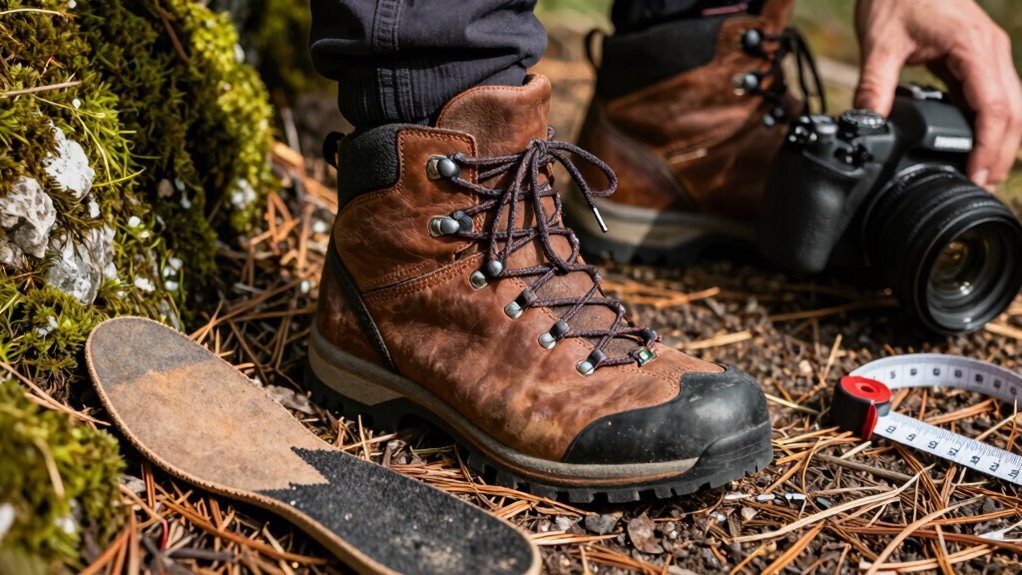
Just because your boots aren’t loose enough to double as sailboats doesn’t mean they should feel like foot-sized vices.
If your hiking boots are too tight, your feet will let you know—loudly. Don’t ignore the warning signs; your trail comfort depends on it. Here’s what to watch for:
- Your midfoot feels squeezed, like your foot’s being hugged by a bear
- You get immediate pinching or pain the second you tie the laces
- Blisters pop up from friction, not just from new boot break-in
- Your toes are constantly mashed, leading to bruised nails or numbness
- Your foot can’t expand naturally with each step, cutting off circulation
- Make sure there’s a half-inch gap between your toes and the insole’s edge—toes past the border indicate the boot is too short.
Tight boots don’t get better with miles—they get madder. Your feet swell when hiking, so snug shouldn’t mean suffocating. Listen to your feet; they’re carrying you, after all.
Dealing With Heel Slippage on the Trail
Ever felt like your heel’s staging a quiet rebellion every time you step downhill?
Yeah, heel slippage’s a sneaky trail nuisance, but you’ve got tools to shut it down.
If your boot’s too wide or the insole’s not hugging your heel snug, that extra space lets your foot dance around—no thank you.
Try a surgeon’s knot or heel lock lacing; they pull your foot down and back, keeping it put.
Aftermarket insoles or neoprene heel guards add grip and cut down wobble.
Even adjusting sock thickness helps—just don’t squeeze too tight.
A tiny slip? Normal.
But constant lift means trouble.
Left unchecked, it leads to hotspots, blisters, and awkward stumbles on rocky descents.
Lock that heel in, and suddenly trails feel smoother, safer, and way more fun.
Your boots and the dirt were meant to move as one—keep your heel where it belongs, and stomp on with confidence.
Preventing Toenail Bruising and Black Toenails
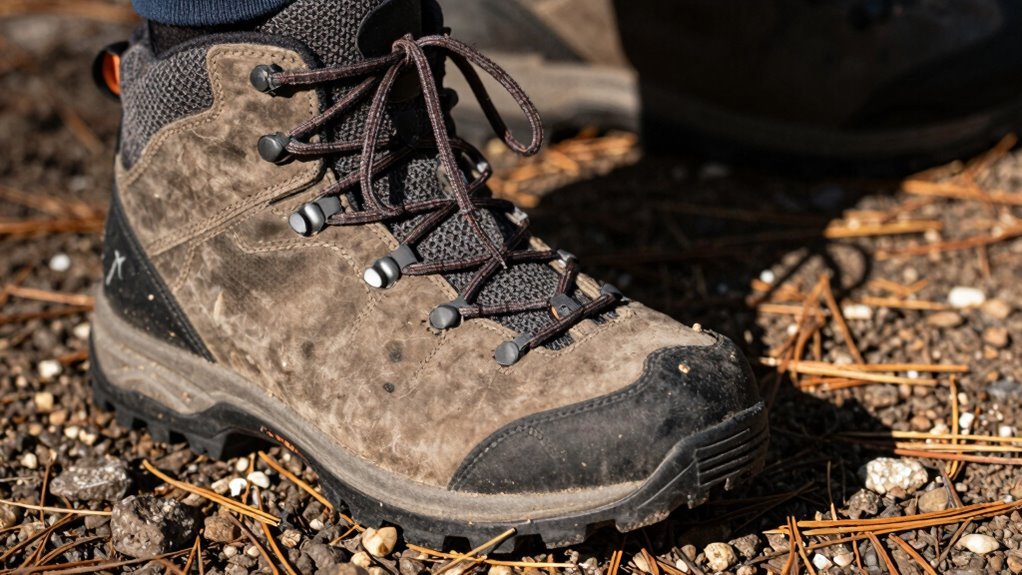
Dodging toenail disasters on the trail isn’t just luck—it’s strategy.
You’ve got the power to keep your toes happy with a few smart moves.
Forget losing nails like they’re trail souvenirs—nobody wants black toenails as hiking trophies!
Instead, set yourself up for success with these key steps:
- Size your boots right—they should have a finger’s space at the toe and snug heels when unlaced
- Trim your toenails a day or two before hitting the trail to avoid pressure and splitting
- Choose socks that cushion without cramming your toes into a tiny space
- Lock down your laces using the heel lock or surgeon’s knot to stop your foot sliding forward
- Remember: downhill = danger zone, so every detail matters even more on long descents
Protect your piggies, and they’ll carry you miles farther—happy toes, happy trails!
Fixing Pressure Points and Hot Spots
Feel that hotspot brewing on your foot?
Don’t wait—fix it fast before it turns into a full-on blister.
Try window lacing to ease pressure on your high arch or tight midfoot: skip the laces where it pinches, run them straight up the sides, then continue normally.
Boom—instant relief!
For cramped toes, use toe relief lacing by skipping the first few eyelets.
It gives your piggies room to wiggle, especially when they swell on long hikes.
And hey, don’t just lace up once and forget it.
Check your tightness every 15 minutes—loosen if things feel squishy, tighten if they’ve gone slack.
Use a surgeon’s knot to lock tension where you need it.
These tricks mean fewer ouch spots and more happy miles.
Your feet will thank you—no drama, just trail magic.
Adjusting for Ankle Support Without Rubbing
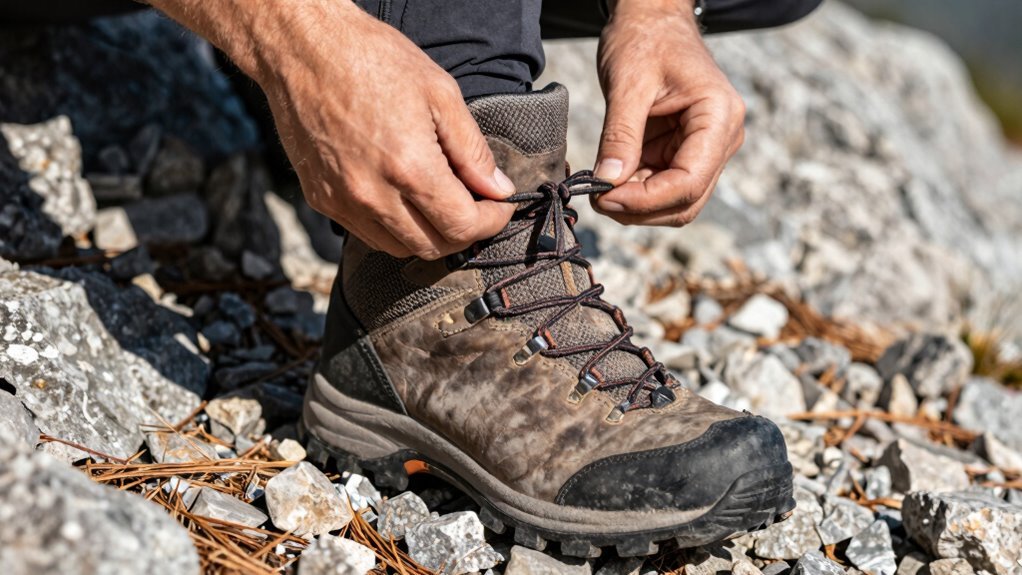
While your laces can’t turn a floppy boot into a fortress, they can help fine-tune your ankle comfort without turning your hike into a game of “Will I get blisters today?”
Think of lacing as your trail-side sidekick—it won’t replace a well-built boot, but it can dial in the fit just right.
- Tap your heel down first so it sits snug in the heel cup, no slippage allowed
- Use a heel lock on steep drops—it’s like a seatbelt for your ankle
- Skip cranking the ankle lace too tight; you’ll pinch nerves, not prevent rolls
- Try a runner’s loop for slight extra hold, but don’t expect miracles
- Remember: real support comes from stiff soles, not fancy knots
Good lacing helps, but if your boots wobble like jelly, it’s time for a proper upgrade—your ankles will thank you!
The Role of Socks in Boot Fit
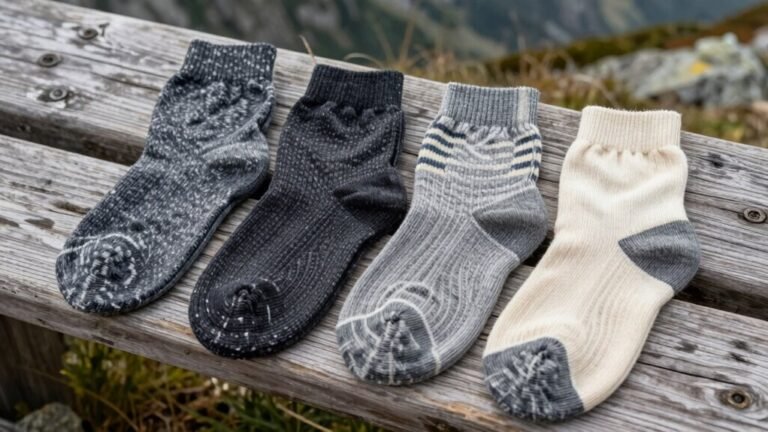
Think of your socks as the secret sauce in your hiking boot recipe—they don’t just soak up sweat, they actually shape how your boots feel on the trail.
Thick socks fill extra space, snug thin ones work great in narrow boots, and midweight? They’re your go-to for comfort, cushioning, and staying cool when you heat up.
Rock a two-sock combo—slick synthetic liner under cozy wool—and you’ll reduce friction while boosting warmth.
Just don’t skimp on fit: too loose and you’ll wrinkle; too tight and things get pinchy.
Match sock height to your boot cuff like a pro—no-show for lows, crew for highs—so nothing rubs or gapes.
And hey, never buy boots without testing them with your actual hiking socks!
Wool wicks, synthetics shield, and smart cushioning hugs your heel and arch just right.
Get it right, and your feet will thank you every mile down the trail.
Lacing Techniques to Improve Comfort
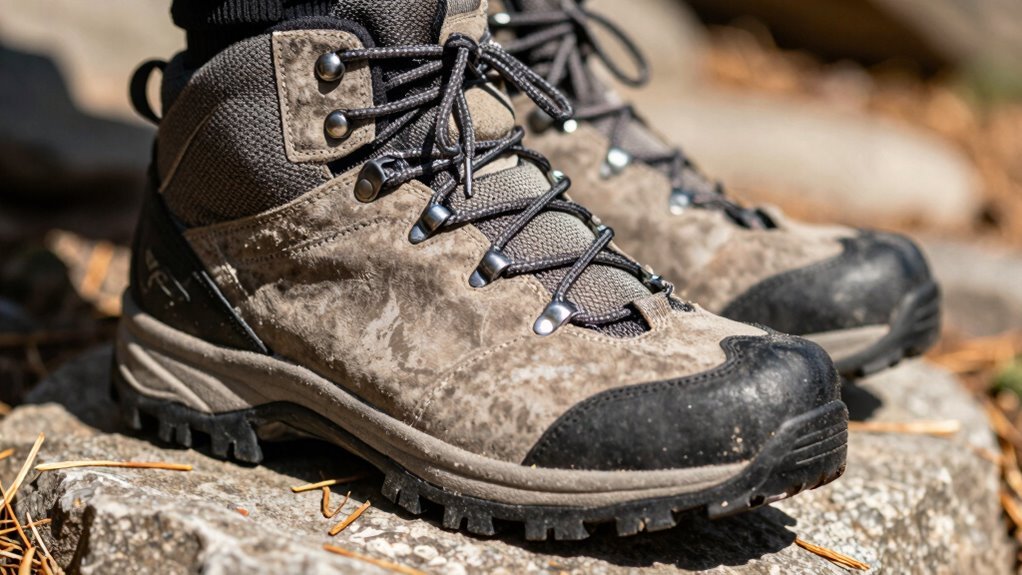
You’ve picked the perfect socks, now let’s get those laces working for you—because how you lace up can make the difference between happy feet and a hike you’ll never forget (for all the wrong reasons). Try these proven techniques to dial in comfort:
- Heel Lock Lacing: Snug that heel down like it’s trying to escape—no more slippage on steep drops.
- Window Lacing: Skip tight spots to give swollen or wide feet some breathing room (and sanity).
- Toe Relief Lacing: Free your poor toes from crunch-town and avoid numbness on long descents.
- Surgeon’s Knot: Double up mid-lace to lock tension where you need it—no more constant re-tying.
- Secure Knot Techniques: Knot it right, tuck the ends, and say goodbye to tripping on loose laces.
A few tweaks, and your boots start feeling custom-made.
When to Break In, Modify, or Replace Your Boots
How’s that boot feeling after a few hikes—like a cozy campfire companion or more like a sneaky cactus in your sock?
If it’s the latter, don’t panic—some boots just need time.
Break in high-cut or full-leather pairs over 50–100 miles; they loosen like stiff jeans.
Start around the house, walk the dog, then hit trails slowly.
But if blisters keep popping up or your feet scream after weeks, it’s time to tweak things.
Try different socks, insoles, or stretch the leather with gradual wear.
If your boots still feel like stubborn bricks after 100 miles, or you’re sore on easy terrain, face it—they mightn’t be your sole-mate.
When comfort’s nowhere and pain’s the only souvenir, skip the heartbreak and replace ‘em.
Your feet deserve happy trails, not hotspots!
Frequently Asked Questions
Can I Use Boot Stretchers for Immediate Trail Fit Fixes?
Nope, you can’t use boot stretchers for quick trail fixes—they’re homebodies, not adventurers.
You’ve gotta leave ‘em in overnight, like 6-8 hours, to work their magic.
Slap in a stretching solution, crank the stretcher gently, and let it sit.
They’re not instant, but hey, at least your boots won’t stage a mutiny mid-hike.
Plan ahead, and your feet will thank you later—no blister drama, just happy trails!
Should I Size up for Thicker Socks During Hikes?
No, you shouldn’t just size up for thicker socks—it’s like buying a canoe when you only need bigger shoes!
You’ll get sloshing around, blisters blooming like wildflowers, and zero control on trails.
Instead, pick a snug, true-to-size boot and pair it with quality wool-blend or medium-thick socks that cushion without cramming.
Trust us, your feet will thank you—no waltzing with blisters today!
Do Blister Plasters Really Prevent Hot Spots Effectively?
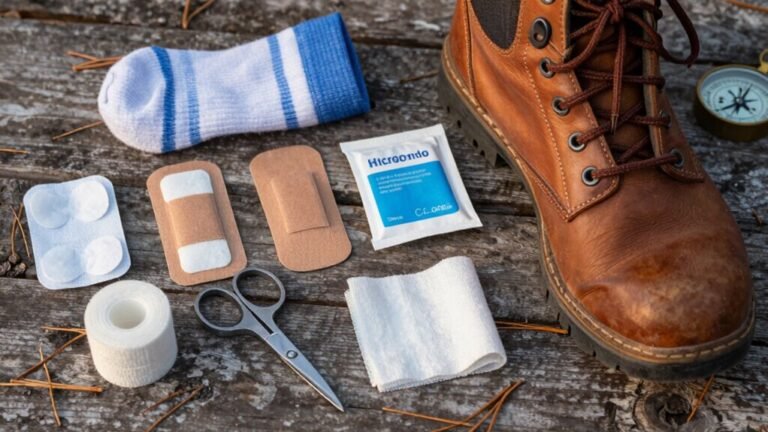
Yep, blister plasters really do stop hot spots in their tracks—think of them as tiny bodyguards for your feet.
Slap one on a tender spot, and it cushions friction before it turns into a full-blown blister.
Studies show they stick well, even when you’re sweaty, and actually work better than tape or powders.
Just don’t wait—preventive care wins every time, especially on day two of a hike.
Is It Normal for Boots to Feel Tighter at Altitude?
yeah, it’s totally normal for boots to feel tighter at altitude—your feet swell like little balloons from the elevation changes.
less oxygen makes your body hold onto fluid, and before you know it, your toes are playing musical chairs in your boots.
if they’re snug at sea level, they’ll scream at 10,000 feet.
go wider, stay comfy, and let those puppies breathe.
trust us, your feet will thank you with fewer tantrums on the trail!
Can Boot Fit Change With Temperature During the Day?
Yeah, your boots can totally feel different as the day heats up—warmth makes your feet swell, and that extra puffiness sneaks up on you like surprise popcorn at a movie.
Add sweat, and things get snug real fast.
Moisture builds, materials stretch (or don’t), and boom—your comfy morning fit now feels like a bear hug.
Keep socks breathable, and let your boots air out when you can!
Conclusion
You’ve got this! Remember, 60% of hikers swap boots within a year—don’t just stick with ill-fitting ones. If your toes keep yelling at you, or your heels are doing the cha-cha, it’s time to tweak, break in, or trade up. Pair smart lacing with cozy socks, and boom—happy feet! Trail adventures taste way better when your boots actually work *with* you, not against you. Now go crush those miles!
References
- https://jessebrowns.com/how-should-hiking-boots-fit-jfm/
- https://www.youtube.com/watch?v=kDdEscP54KE
- https://www.backcountryuk.com/blog/how-should-your-new-walking-boots-feel/
- https://obozfootwear.com/en-us/community/hiking-footwear-101-pro-tips-for-finding-fit
- https://www.whiteblaze.net/forum/showthread.php/116832-Problem-Foot-Wear-Hiking-Shoes
- https://acitygirloutside.com/how-to-tell-if-hiking-boots-are-too-big/
- https://outdooradept.com/how-to-tell-if-hiking-boots-are-too-big/
- https://stridewise.com/boots-too-big/
- https://www.greatoutdoors.ie/blogs/expert-advice/hiking-footwear-fit-guide
- https://www.outdoors.org/resources/amc-outdoors/outdoor-resources/new-hiking-boots-how-to-check-and-adjust-the-fit/