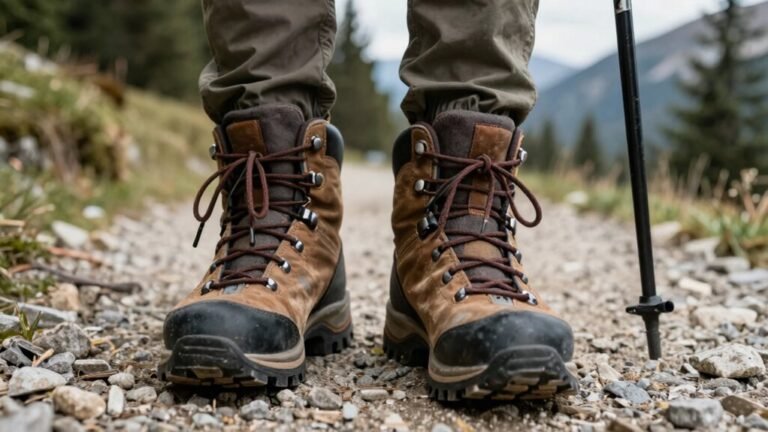
Beginner Guide to Hiking Shoes
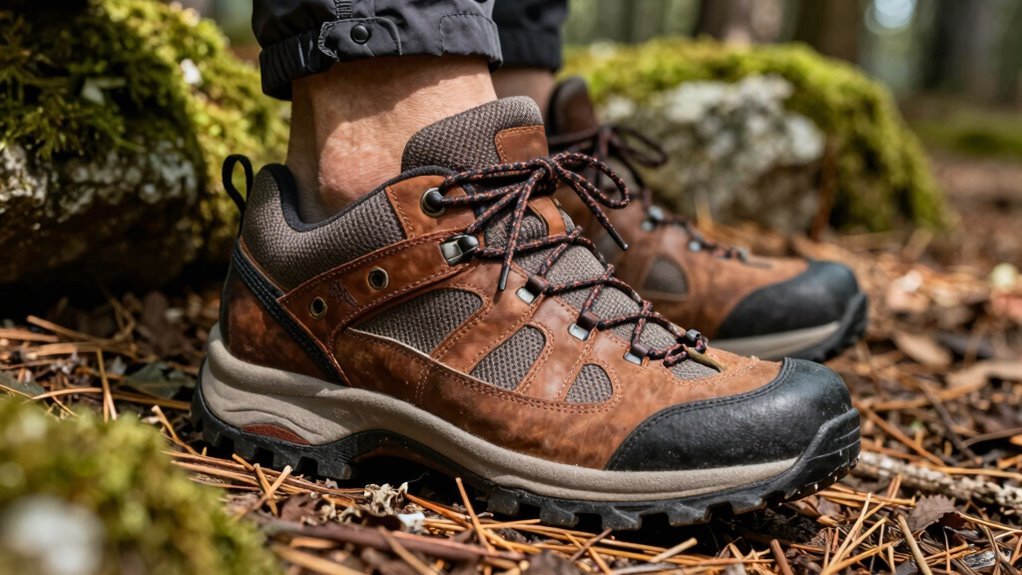
You’ve got trails calling, and the right hiking shoes make all the difference. Start by sizing up your feet—yes, both of them—and lace up in the socks you’ll wear on the trail.
Pick a shoe based on where you’re going: light and flexible for smooth paths, sturdier for rocky ground. A good fit means wiggle room for toes, no heel slip, and snug ankles.
Waterproof? Only if you’re trudging through slush or storms. Trail runners can be 40% lighter than boots, cutting fatigue fast.
Sticky rubber soles grip slick rocks, while deep lugs shed mud like it’s drama. Think of your hiking shoes as armor—tough, supportive, and ready for every twist.
And hey, there’s a little secret to picking the *perfect* sole…
Understanding Hiking Shoe Types
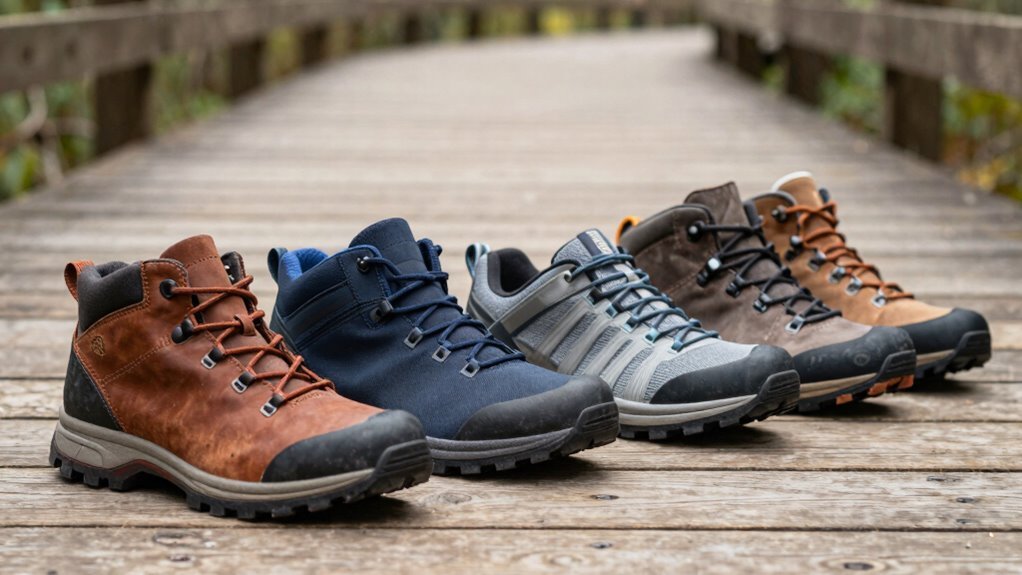
Ever wondered why your trail buddy’s boots look like mini mountain tanks while yours feel more like sneakers? That’s because hiking shoes come in types, each built for different adventures.
Yours might be Category A—light, flexible, and perfect for smooth trails and weekend strolls.
Theirs? Probably Category D, stiff and rugged, made for rocky cliffs and heavy packs.
In between, Category B gives you ankle support for weekend hikes with roots and rocks, while Category C handles off-trail scrambles with toughness and stability.
Some even crush ice with crampons!
Brands use ABCD systems, though names vary—like Mammut’s flex index—so don’t sweat the letters too much.
Think terrain, pack weight, and trail type instead.
Whether you’re ambling on dirt paths or charging up mountains, there’s a shoe ready to match your vibe—and keep your feet happy while doing it.
These categories align with torsional stiffness, which affects how the boot handles uneven ground.
How to Find the Right Fit
So, how does it feel when your hiking shoe fits like it was made just for you? Amazing, right? Start by measuring both feet—length, width, arch—with a Brannock or CURREX ArchMap (they’ll help at REI). Most folks have one bigger foot, so size to that one.
Wear your hiking socks, lace up, and stand tall. You’ll want a thumb’s width of space past your longest toe—no toes hitting the end, especially when going downhill.
No slippage either: a helper should slide one finger snugly behind your heel.
Your foot should feel snug but not squeezed, with wiggle room for toes and zero side sliding.
If it’s too tight on the sides, go wide—don’t size up and mess up the fit. Leather stretches a bit, but synthetics won’t.
Walk around, climb stairs, and check for pinch points. It’s like a first date—hopefully, it’s love at first step!
Also, ensure the heel lock is secure to prevent blisters during long hikes.
Choosing Shoes Based on Trail Conditions
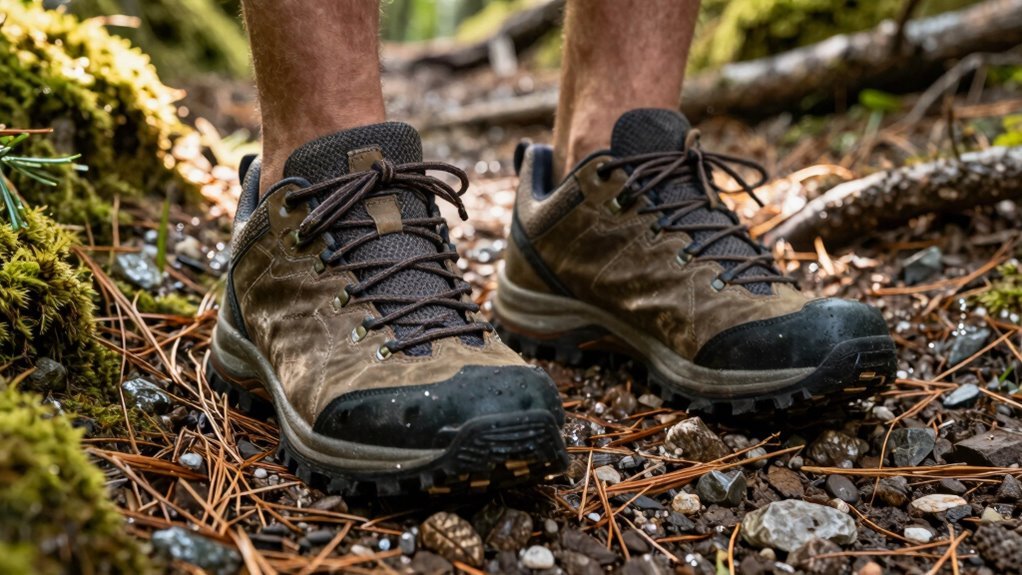
Now that you’ve nailed down the perfect fit, it’s time to match your kicks to the kind of trail you’ll be stomping—or gliding—across.
If you’re sticking to paved or smooth trails, go light—think Altra Superior or Brooks Caldera; they’re comfy, breathable, and perfect for dry, flat paths.
Hit roots, rocks, or stream crossings? Step up to sturdier trail runners like the Salomon XA Pro 3D or Hoka Speedgoat—they pack cushion, support, and enough grit for moderate hikes.
For rugged terrain with steep, rocky chaos, grab a beefy boot like the Salomon X Ultra 5 or La Sportiva Spire—they won’t quit when the trail does.
And if snow or wetness looms, waterproof mid-cut boots or Gore-Tex socks will keep things cozy. Keep in mind that 40% lighter trail runners reduce fatigue and improve mobility over long distances compared to heavier boots.
Pick smart, and your feet will thank you every mile.
The Importance of Traction and Sole Design
What if your shoes could grip like a gecko but look way cooler?
Well, great hiking soles do just that—keeping you steady with smart lug patterns and sticky rubber compounds.
Small, spaced-out tread blocks boost grip and stop slips by improving friction and whisking away fluid.
Need to scramble up rock?
Climbing zones at the toe help you inch up with precision.
Hitting muddy trails?
Deep, 6 mm lugs clear gunk and bite into soft ground.
On rocky paths, harder rubber holds firm on tiny ledges.
Heel marks and braking zones slow you down safely when descending.
Premium materials like Vibram last longer and grip better, while worn-out soles—especially over 800 mm²—mean it’s time to retire your pair.
Traction isn’t just about lugs; it’s rubber quality, pattern smarts, and how they work together.
Your feet will thank you when they don’t slide off the trail—literally.
Waterproofing: When You Need It and When You Don’t
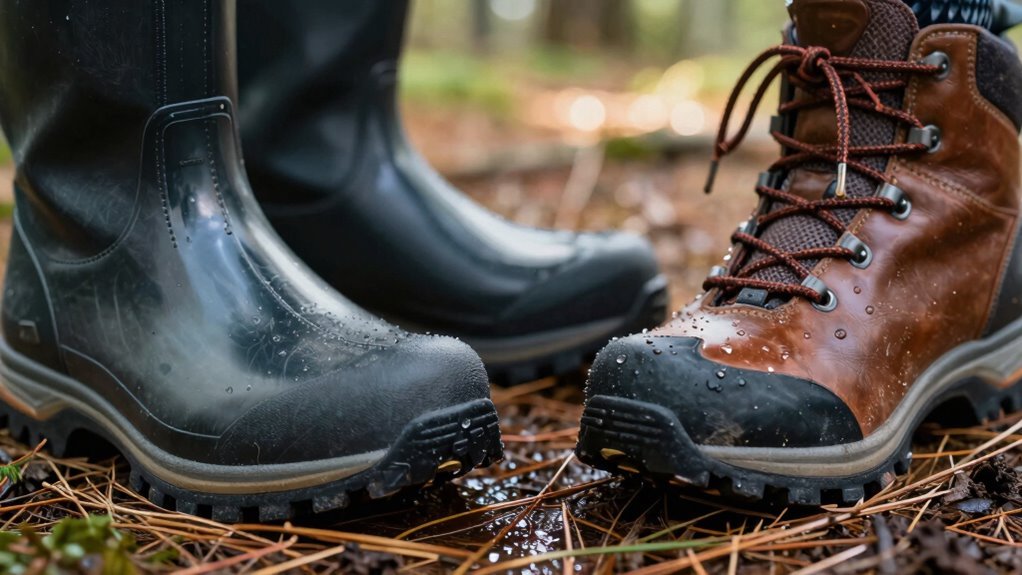
Sure, your hiking shoes might grip slick rock like they’ve got superpowers, but what happens when the trail turns into a mudslide or you’re facing down a drizzly mountain pass?
That’s where waterproofing steps in—if you want dry feet in wet, cold conditions.
But don’t slap on a waterproof shell for every hike!
Here’s when it really matters:
- You’re trudging through snowy slush, and your boots team up with gaiters like winter superheroes
- Rain’s turned the path into a squishy swamp, and every step splashes cold muck over your ankles
- You’re backpacking for days, and soggy socks mean blisters, not badges of honor
Skip waterproofing when it’s hot, though—your feet will steam like a pressure cooker. Breathable shoes dry fast and keep things cool. Waterproof boots aren’t invincible either—they’ll eventually soak through if you dive deep. Choose smart, hike happy!
Materials That Matter: Dur Grinding and Longevity
While your hiking boots mightn’t make it to Mount Everest, they’d better tough it out on rocky ridges, muddy switchbacks, and that one sketchy stream crossing everyone warned you about.
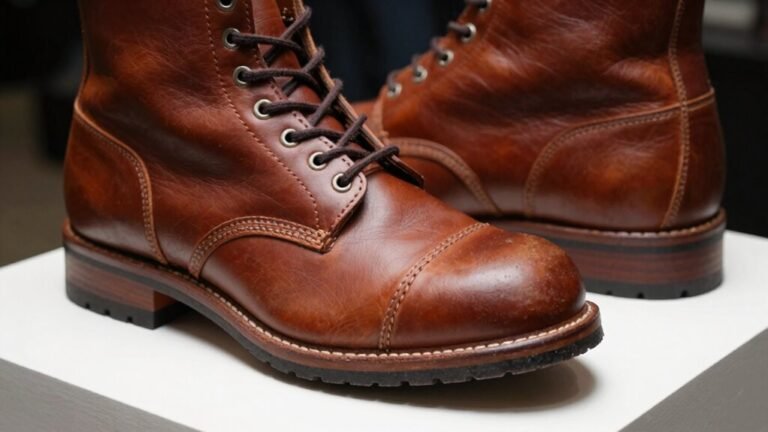
Full-grain leather’s your go-to for brute durability and natural water resistance—great for heavy loads, though it takes time to break in.
Nubuck looks sleek, feels tough, and stays flexible, but still needs patience before marathon hikes.
Split-grain’s lighter and cheaper but needs help from waterproof liners since it’s not as tough.
Synthetics like nylon and mesh dry fast, cost less, and feel comfy quick, but won’t last decades.
For support, EVA midsoles cushion well, while TPU and polyurethane hold up longer under strain.
Supercritical foam? Think bouncy comfort without the bulk.
Toss in a rock plate, and you’ve got foot armor.
Pick smart—you’ll thank yourself when your boots (and feet) survive trail chaos with flair.
Frequently Asked Questions
How Do I Break in New Hiking Shoes?
You break in new hiking shoes by wearing them around the house first, then slowly hitting trails.
Start short and easy, let your feet guide the pace.
Use thick socks, tweak the lacing, and flex them out—your boots should feel like buddies, not blisters.
Warm leather gently, stretch smart, and never rush.
Think of it as boot camp—for your boots.
Fun, right? They’ll hug your feet just right when adventure calls.
Can I Wear Hiking Shoes for Everyday Use?
Yeah, you can wear hiking shoes every day, but they’re not always the best pick.
They’re sturdy and supportive, great for rough paths or if your ankles need help, but they’re kinda heavy and stiff for city streets.
You’ll sweat more in warm weather, and they’ll wear down faster on pavement.
Think of them like all-terrain tires on a highway—overkill.
Swap them for lighter kicks if you’re just strolling or running errands.
Do Hiking Shoes Come With a Warranty?
Yeah, hiking shoes come with a warranty—because who *wouldn’t* want to sue over a frayed shoelace?
Most brands cover you for a year if the shoe self-destructs from bad glue or stitching.
But sorry, no warranty for tripping on a squirrel or wearing them to fancy brunch every Sunday.
They’ll fix or replace it, but only if you’ve been kinda responsible, not a walking disaster.
How Often Should I Replace My Hiking Shoes?
You should replace your hiking shoes every 500 to 1,000 miles, depending on the type and how much you’ve abused them.
Trail runners? Swap them around 500 miles—they wear out fast!
Heavy boots can go longer, but keep an eye on the soles.
If they’re smoother than a baby’s bottom or your feet ache more than your sense of adventure, it’s time.
Don’t wait for holes or blisters—your feet will thank you!
Are Expensive Hiking Shoes Worth the Price?
You’re not missing out on a miracle if you skip the pricey boots—comfort and grip don’t *have* to cost a kidney.
But if you’re tackling rocky ridges or monsoon-muddy trails, splurging gets you bombproof soles, cozy cushioning, and boots that practically laugh at blisters.
For weekend wanderers? Budget picks like Quechua or Columbia are total champs.
Save cash, rock on—your feet will thank you.
Conclusion
Now you’re ready to hit the trails with confidence! Did you know 80% of hikers say the right shoes make or break their adventure? That’s like four out of every five trail buddies high-fiving their footwear. Pick shoes that fit snug, grip tough, and match your terrain. Your feet will thank you—no blisters, just views. Go on, lace up and let the trail surprise you!
References
- https://footstepsintheforest.com/different-types-of-hiking-boots/
- https://www.adamantgear.com/blogs/news/70394947-the-four-categories-of-hiking-footwear
- https://www.twinseasons.eu/blog/92/what-types-of-hiking-shoes-are-there.html
- https://www.mammut.com/us/en/stories-guides/how-to-choose-the-right-hiking-boots
- https://stories.hanwag.com/en/how-to-choose-hiking-boots-finding-your-model/
- https://www.rei.com/learn/expert-advice/hiking-boots.html
- https://meindlusa.com/blogs/meindl-blog/how-to-choose-the-right-pair-of-hiking-boots
- https://meindl.de/service/type-of-use/?lang=en
- https://www.outdoors.org/resources/amc-outdoors/outdoor-resources/new-hiking-boots-how-to-check-and-adjust-the-fit/
- https://currex.com/blogs/news/ultimate-hiking-boot-fitting-guide