Do You Really Need Insoles?
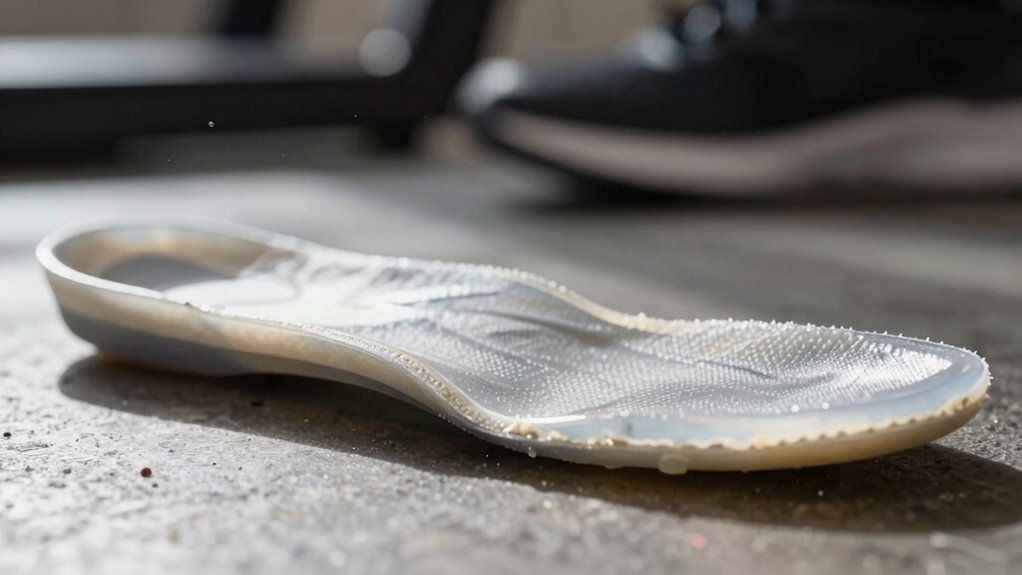
You might not *need* insoles, but if your feet ache after standing or your shoes feel like cardboard coffins, they could be a game-changer. Insoles provide added support and comfort exactly where you need it—underfoot.
They support your arches, cushion your steps, and help you stand taller—like tiny trampolines for your toes. Think of them as bodyguards for your feet, fighting flatness and fatigue. Spoiler: there’s more to this sole story.
Understanding the Purpose of Insoles
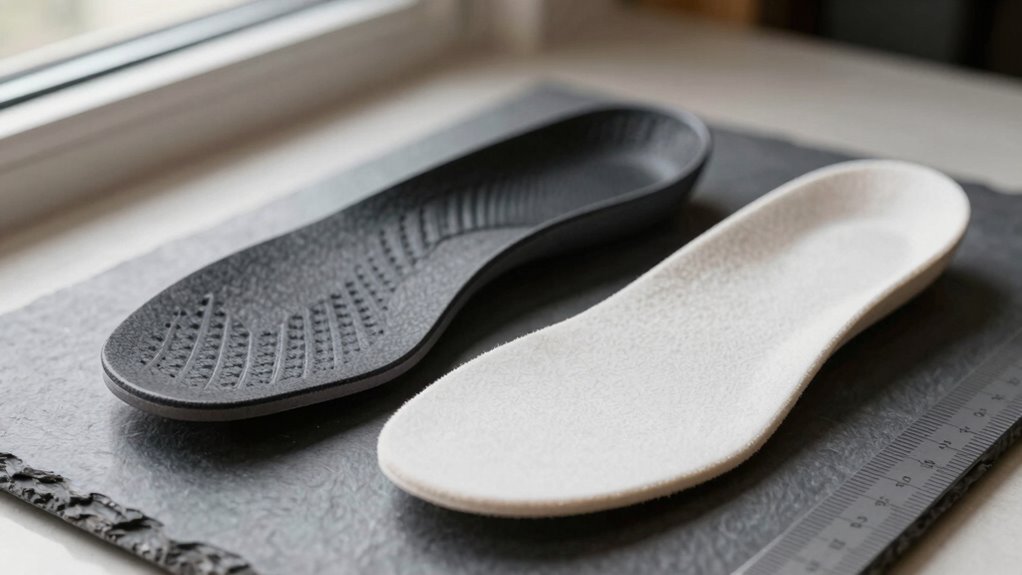
Ever wonder why your feet feel like they’re throwing a silent protest after a long day on your feet?
Well, insoles aren’t just padding—they’re your foot’s personal cheerleaders, keeping things aligned and comfy.
You’re not just standing or walking; you’re moving with purpose, and insoles help your body do it right.
They correct your gait, support your arches, and even out pressure so no one part of your foot throws a diva tantrum.
Whether you’re on your feet all day or just hate that “I’ve been walking on Lego” feeling, they’ve got your back—or, well, your soles.
Some cradle your heel, others cushion your stride, but all aim to keep you pain-free and springy.
Think of them as tiny bodyguards for your feet, working overtime so you don’t have to.
You’ve got places to go—let your feet handle it in comfort.
A professional gait analysis ensures they’re tailored to your needs, making custom-made orthopedic insoles more effective than generic ones.
Common Foot Problems That May Require Support
While your feet carry you through life, they sometimes pay the price—especially when common problems like plantar fasciitis, metatarsalgia, or bunions start calling the shots.
You’re not alone if you’re wincing with every step—over 2 million Americans seek help for heel pain yearly, and 34% report ball-of-foot discomfort.
81% of Americans have experienced foot pain at some point in their lives, highlighting just how widespread these issues are.
Tight shoes, long days, and pounding the pavement add up, leaving you with inflamed nerves, bent toes, or that “pebble in your shoe” feeling.
The good news? Support can make a world of difference.
- Plantar fasciitis: Heel pain that sneaks up when your arch takes a beating
- Metatarsalgia: Ball-of-foot soreness from too much hustle in flat shoes
- Morton’s neuroma: Nerve thickening that makes you feel like you’re toe-dancing on a rock
- Bunions: Bony bumps that crash the party thanks to cramped footwear
- Hammertoes: Toes that won’t lie flat—usually from playing dress-up with tight shoes
Signs Your Shoes Aren’t Providing Enough Cushioning
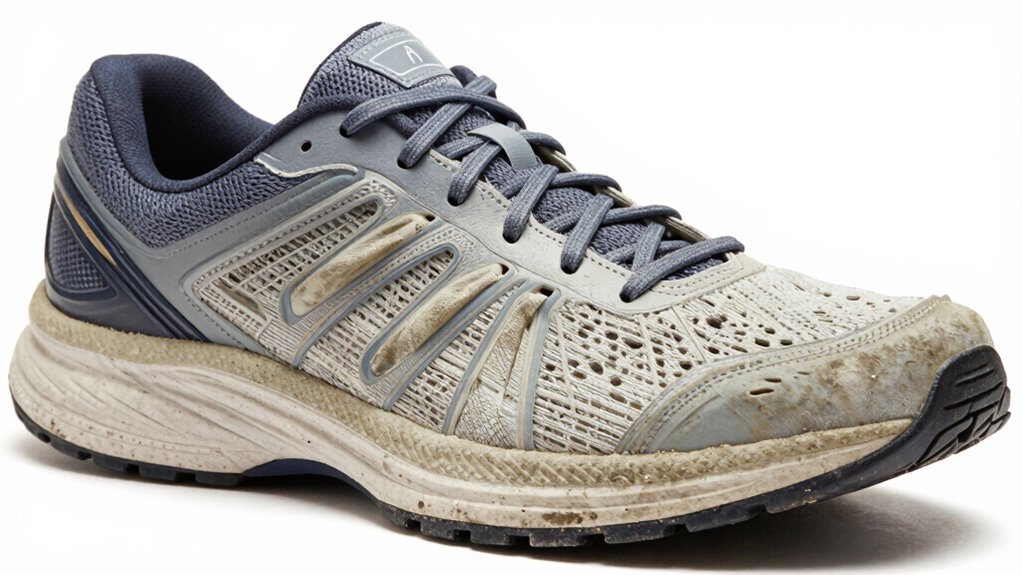
If your shoes have lost their spring and every step feels like a thud instead of a bounce, it’s probably not your imagination—cushioning wears out faster than most people realize.
You’re walking on what’s basically a sad, flat sponge that can’t absorb shock anymore.
If your feet ache after a short walk or your shoes bend like paper in half, they’ve given up the fight.
Notice new hip, knee, or foot pain? That’s your body waving a red flag.
Tingling toes or blisters from rubbing mean your shoes aren’t cradling you right—either too tight or too sloppy.
Ever see deep creases in the arch? That’s not character, that’s collapse.
When your soles feel dead and your steps feel rough, it’s time to admit: your kicks are kaput.
Shoes that are too big can cause the foot to slop and create friction, so save your feet before they file a complaint!
How Insoles Can Improve Posture and Alignment
How’s your posture holding up these days—slouching like you’re texting under the covers or standing tall like a proud skyscraper?
Insoles might be the unsung heroes your feet (and spine) have been begging for.
They don’t just cushion—they help align your whole body from the ground up.
By supporting your arches and stabilizing your rearfoot, insoles guide your posture into a healthier position with every step.
- They activate key muscles to keep you steady and reduce wobbling side-to-side
- Textured or vibrating insoles sharpen balance, especially if you’re older or recovering from injury
- They correct foot pronation, which helps straighten your hips and pelvis
- Medial posting shifts pressure away from heels, easing strain on legs and back
- They boost foot feedback, so your brain reacts faster to keep you upright and aligned
The Difference Between Over-the-Counter and Custom Options
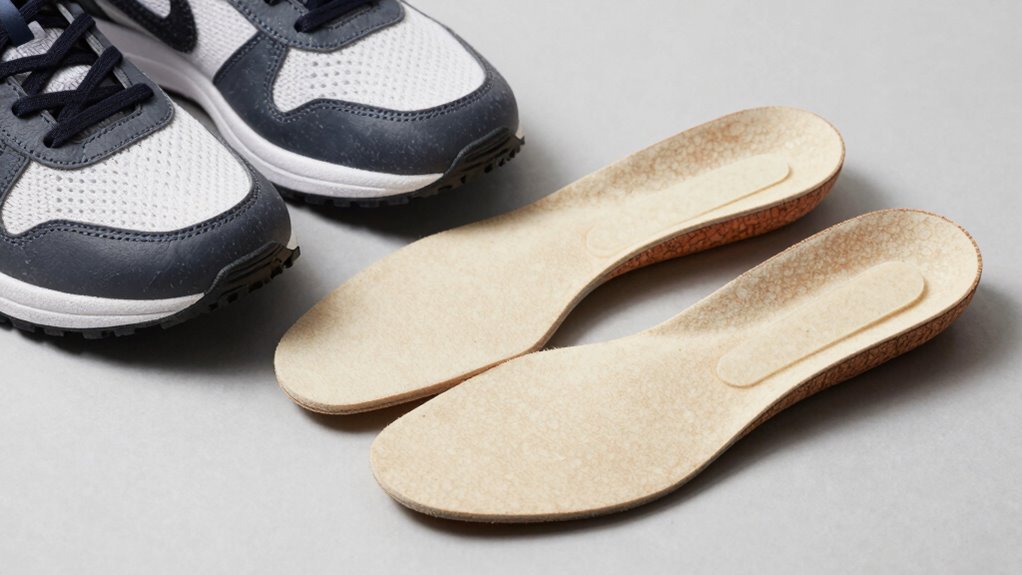
Ever wonder why some insoles feel like a quick fix while others seem built to transform your entire stride?
That’s because over-the-counter (OTC) options cost around $30 and are pre-made for general comfort—great for mild aches or tired feet after standing all day.
But custom orthotics, priced $400–$600, are made just for you using 3D scans or molds, and they last 3–5 years.
They correct real biomechanical issues, not just cushion your soles.
OTCs wear out faster with cheaper materials, while custom ones use tough, medical-grade stuff like graphite.
You grab OTCs off the shelf, but custom pairs need a podiatrist’s touch—worth it if you want long-term support.
Think of it like buying sneakers versus having them tailor-made.
One’s convenient, the other’s a game-changer.
Your feet will thank you either way—but in very different voices.
Who Benefits Most From Using Insoles
You’re not imagining it—your feet really do carry the weight of the world, especially if you’ve been on your toes all day, have a tricky arch situation, or battle foot pain like it’s your boss’s last-minute request for “just one small change.”
The good news? Insoles can be a total game-changer, especially for you if:
- You’re one of the many dealing with plantar fasciitis and tired of wincing with every first step in the morning
- You’ve got flat feet and want to walk easier, with better alignment and less fatigue
- You’re on your feet all day—like healthcare heroes or hardworking laborers—needing extra support to power through shifts
- You have high arches or specific issues like metatarsalgia, where targeted cushioning brings sweet relief
- You’re simply chasing better balance, posture, and comfort in your daily stride
Potential Drawbacks of Wearing Insoles
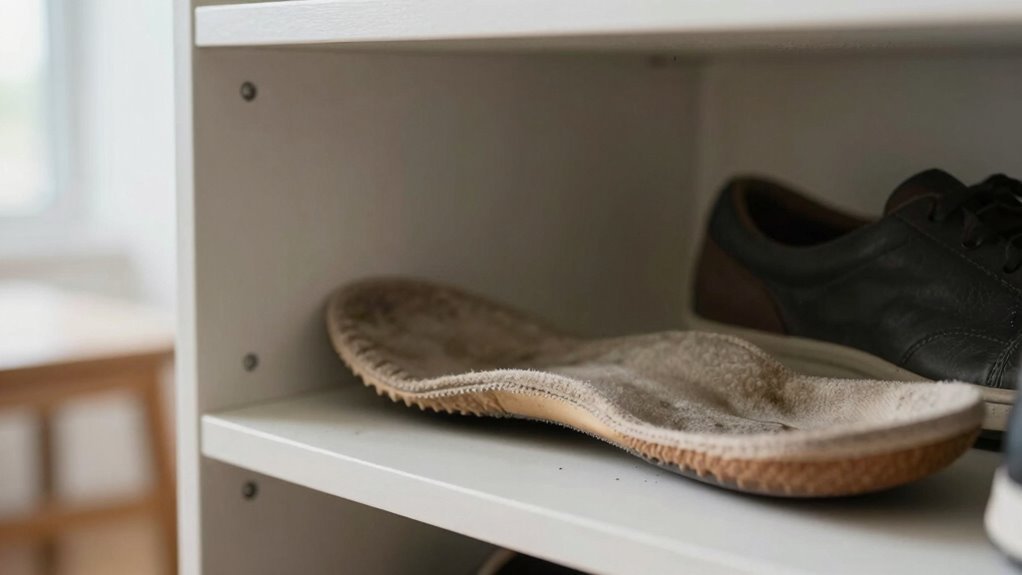
Slipping into a new pair of insoles can feel like giving your feet a standing ovation—until that excitement fades and you’re left wondering why your calves are staging a protest.
You might think support means comfort, but too much too soon can leave your feet, ankles, and legs aching like you ran a marathon in heels.
That firm arch or deep heel cup? It’s supposed to help, but your body mightn’t agree—at least not yet.
Hard edges or wobbly fit add pressure points, rubbing raw spots or even sparking blisters.
Worse, cheap or overly soft materials squish away support, messing with your posture and sending pain up to your knees or back.
And let’s be real—off-the-shelf insoles rarely fit *your* foot like a glove.
Without the right match, you’re not fixing problems—you might just be moving them around.
How to Choose the Right Insole for Your Foot Type
- Match your insole to your arch type for pain-free steps
- Choose ¾ or full length based on your shoe’s space
- Pick materials like memory foam for softness or firm foam for control
- Try PowerStep Pinnacle High for high arches or Run Support for runners
- Use SlenderFit in heels or Hike Support for trail adventures
Your foot type isn’t just a detail—it’s your insole GPS!
When Insoles Might Do More Harm Than Good
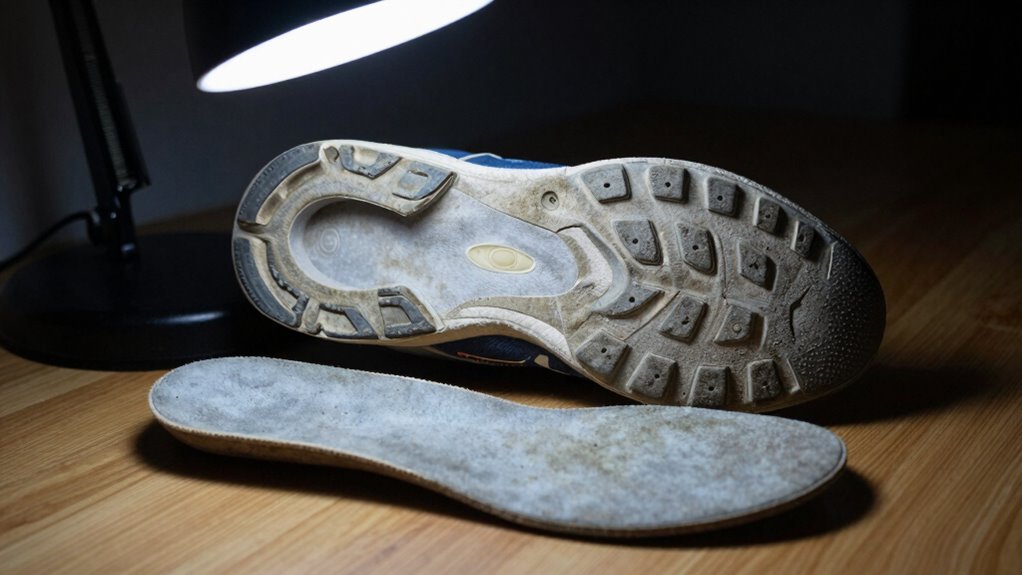
While insoles can be a foot’s best friend, they might also turn into a surprisingly pesky foe if you’re not careful. Slipping in the wrong pair? You might worsen pain instead of easing it—especially with arches too high, too low, or overly squishy. Those super-soft gel ones? They’re like a comfy hug that forgets to support, pushing your feet out of alignment.
And if you jump in suddenly, your muscles throw a tiny tantrum, risking strain or injury. Some insoles even crank up pressure in your midfoot by up to 35%, which sounds like a plantar fasciitis invitation. They can tweak your knee or ankle mechanics in sneaky ways, possibly nudging you toward long-term drama.
Flat feet, Achilles stress, mismatched needs—yeah, it’s personal. Your genetics and biomechanics matter big time. So, don’t assume “support” always equals “better.” Sometimes, less—or the wrong kind—is way worse.
Real-Life Scenarios Where Insoles Make a Noticeable Difference
Most of the time, you probably don’t think twice about what’s under your feet—until that all-day shift, marathon run, or morning walk leaves you wincing with every step.
That’s when insoles can swoop in like shoe superheroes.
Whether you’re on your feet all day, training for a race, or just trying to enjoy a pain-free walk, they make a real difference.
You’ll stand taller, move easier, and feel lighter on your toes—like your shoes finally got an upgrade.
- Nurses go from sore to soaring through 12-hour shifts
- Runners crush miles without the ache in their heels
- Plantar fasciitis pain? More like plantar fabulous
- Office workers stand all day without dreaming of a recliner
- Back pain fades when your feet finally get proper support
Frequently Asked Questions
Can Insoles Help With Back Pain Not Related to Feet?
Yeah, insoles can actually help your back pain even if your feet feel fine.
They absorb shock and improve alignment, which eases strain on your spine—especially if you’re on your feet all day.
Think of them like a cushion for your whole body, not just your soles.
Studies show real insoles reduce back pain by over 30%, so they’re worth a try.
Your back might just throw you a gratitude party!
How Often Should I Replace My Insoles?
You should replace your insoles every 6 months on average, but hey, life’s not one-size-fits-all!
If you’re jogging daily or hitting the gym hard, swap them every 3–4 months—trust me, your feet will thank you.
Light use? Maybe stretch to a year.
Keep an eye out for squished foam, weird smells, or sad-looking arches.
When they look tired, they *are* tired—don’t make your shoes support a sad sandwich!
Do Insoles Work in All Types of Shoes?
No, insoles don’t work in all shoes—some fight back!
Thin ones slide easily into tight flats or heels, while bulky inserts cram your sneakers.
Hard insoles need room, so snug shoes? Not a fan.
But sporty kicks? Perfect match.
Gel or 3/4-length? They sneak in smoothly.
Your shoe’s like a bouncer—only lets the right insole through.
Pick the right partner, and boom: comfort city!
Can Wearing Insoles Weaken Foot Muscles Over Time?
Nope, wearing insoles won’t weaken your foot muscles—we promise!
You’re actually helping them work smarter, not harder.
Studies show insoles boost muscle activity, especially in key areas like your arch support.
Think of them as teamwork boosters, not crutches.
Your muscles adapt, not quit.
So relax, your feet aren’t slacking off—they’re thriving with a little extra help.
Who knew support could be so *strong*?
Are There Insoles Safe for Barefoot Walking?
Yes, you can safely use certain insoles for barefoot walking—just think of Maya, the trail runner who slipped Barefoot Science insoles into her minimalist shoes and finally chased hills pain-free.
You’ll love how these insoles mimic barefoot motion while waking up foot muscles, boosting balance, and sneaking support in smart ways.
They’re not clunky crutches; they’re like friendly coaches for your feet, guiding without gripping.
Who knew support could feel this free?
Conclusion
So, do you really need insoles? Maybe, maybe not—your feet might just be whispering for a little love. Think of them like cozy pillows for your soles, quietly cheering you on. If your shoes feel flat and lifeless, a good insole could be the pep talk your feet deserve. Just don’t go overboard—sometimes less is more, unless your dogs are barking for real.
References
- https://elgeaditraumatologia.com/en/benefits-of-orthotic-insoles/
- https://masterfitinc.com/8-common-pains-insoles-help-relieve/
- https://www.bannerhealth.com/healthcareblog/better-me/are-over-the-counter-insoles-a-waste-or-worth-it
- https://ctorthostvincents.org/patient-support/news/news-detail?articleId=52384&publicid=780
- https://www.drscholls.com/blogs/expert-advice/the-difference-between-orthotics-insoles-and-shoe-inserts
- https://treadlabs.com/blogs/insoles-reach-your-stride/what-are-insoles-and-how-do-they-help
- https://www.dfpsole.com/blogs/news/the-benefits-of-our-ready-fit-insoles
- https://my.clevelandclinic.org/health/treatments/orthotics
- https://www.kurufootwear.com/pages/reports-foot-pain-2025
- https://www.orthopedicassociates.org/facts-about-foot-pain-that-you-probably-didnt-know/