Hiking Tips for Bad Knees (Older Hikers)
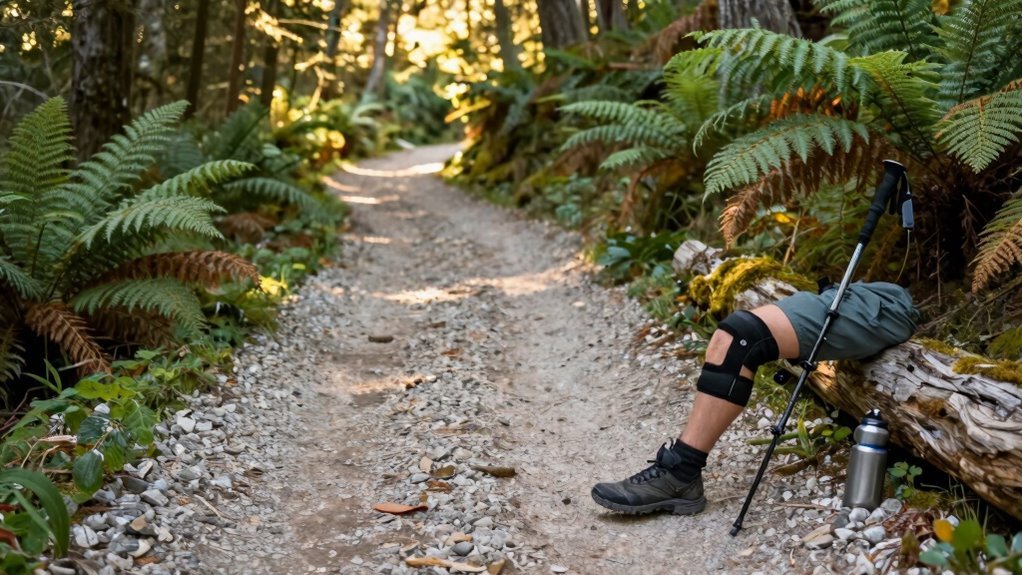
You’ve got bad knees? No problem—hiking with bad knees is entirely doable with the right approach. Choose gentle trails under 3 miles with soft surfaces like dirt or gravel, and use trekking poles to reduce joint stress by up to 游戏副本切换 25%.
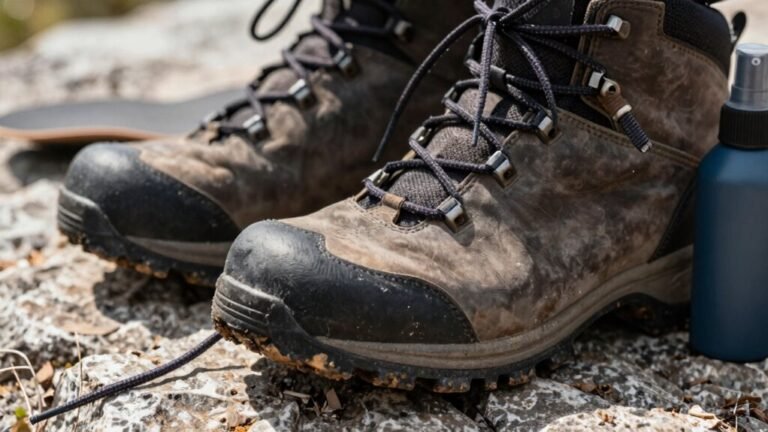
Wear cushy, supportive shoes with a low heel-to-toe drop to enhance comfort and stability. Warm up before your hike with quick dynamic moves like knee circles and calf stretches to prepare your joints.
Strengthen your legs with exercises like squats and lunges a few times a week. Building leg strength supports knee stability and makes hiking with bad knees easier over time.
Hike at a steady, manageable pace and take seated breaks every 10–15 minutes. Use the downtime to elevate your legs and stay hydrated, reducing strain and swelling.
Add a knee brace for extra support, especially on downhill sections. It boosts confidence and helps prevent that white-knuckle scramble down steep slopes.
Choose Low-Impact Trails With Gentle Terrain
Lace up your boots and start easy—your knees will thank you!
Pick trails with gentle slopes, ideally under 10%, so you’re not fighting gravity uphill or skidding downhill.
Stick to flat or softly rolling paths between 1–3 miles—perfect for building stamina without strain.
Avoid steep, muddy, or narrow routes where roots and rocks turn your hike into an obstacle course.
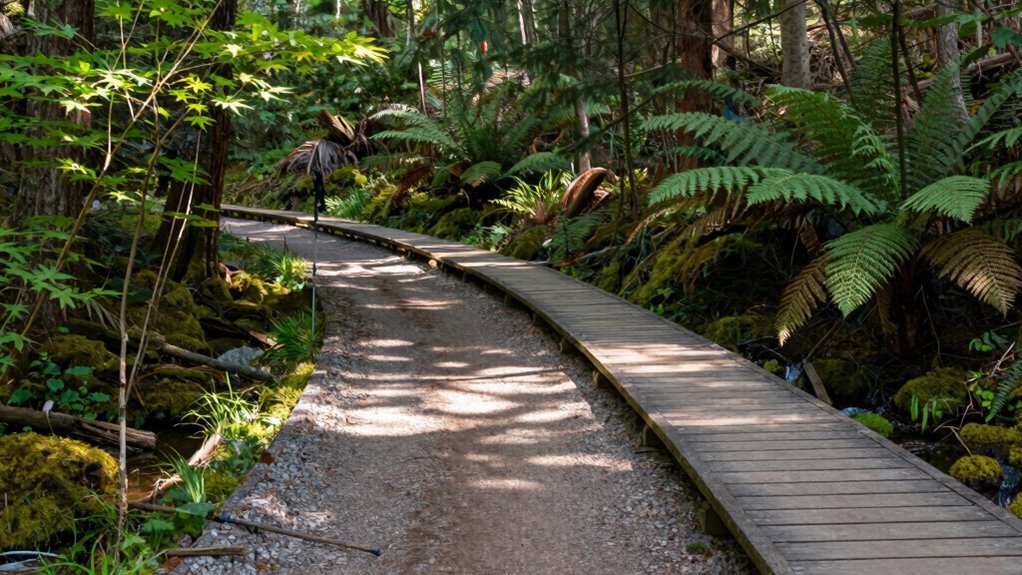
Instead, opt for well-maintained trails with porous surfaces like mulch or boardwalks that cushion each step.
Walk single file on the main tread to protect soft soil and keep your footing stable.
Trails with 5–10% outslope drain well and feel more natural underfoot—no awkward tilting like a crooked seesaw!
And hey, skip the mountain goat impersonation today; save the cliffs and wetlands for another adventure.
Your knees (and probably your ego) will survive intact—and you’ll actually enjoy the view!
Half Rule helps ensure trail sustainability by balancing slope and drainage design.
Use Trekking Poles to Reduce Knee Stress
Swinging those arms with a pair of trekking poles isn’t just for show—you’re actually giving your knees a break with every step.
You’re cutting joint stress by up to 25%, especially going downhill, where your knees usually scream for mercy.
Poles reduce muscle damage, ease soreness, and even protect your cartilage by cushioning each impact.
Sure, your arms work a bit harder, but your legs will thank you.
And let’s be real—walking pain-free means more trails, more views, and more “I still got it!” moments.
- Feel lighter on your feet, like you’re cheating gravity.
- Say goodbye to that “I climbed a mountain” ache the next day.
- Walk with confidence, knowing your joints are protected.
- Keep adventuring longer, without wincing on every step down.
This benefit is most pronounced on slopes, as flat-ground walking shows minimal force reduction with poles among experienced hikers.
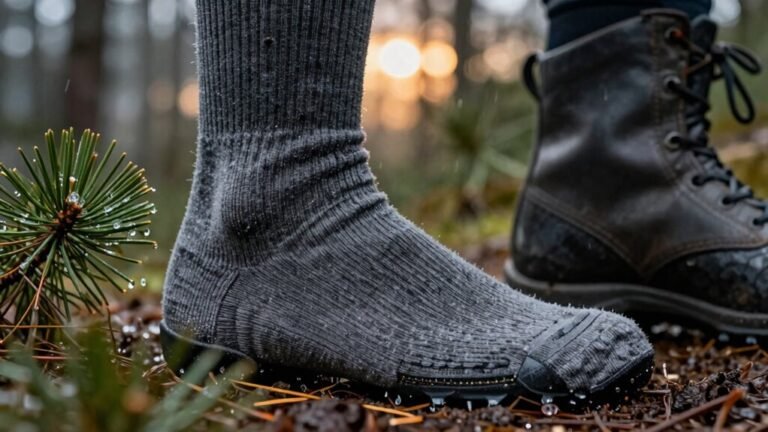
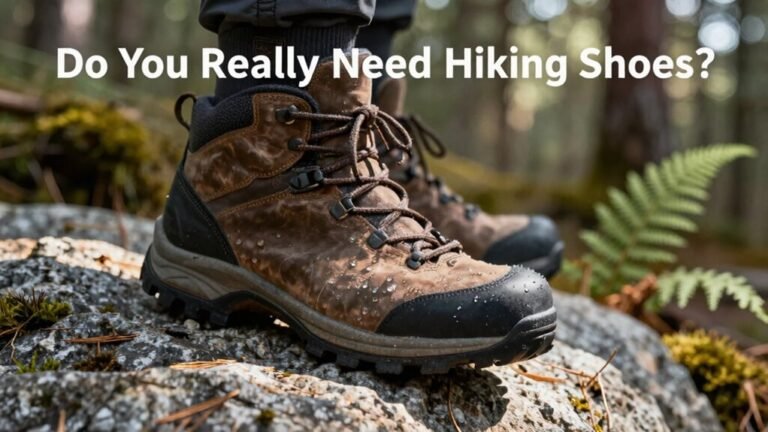
Wear Supportive Hiking Footwear With Cushioning
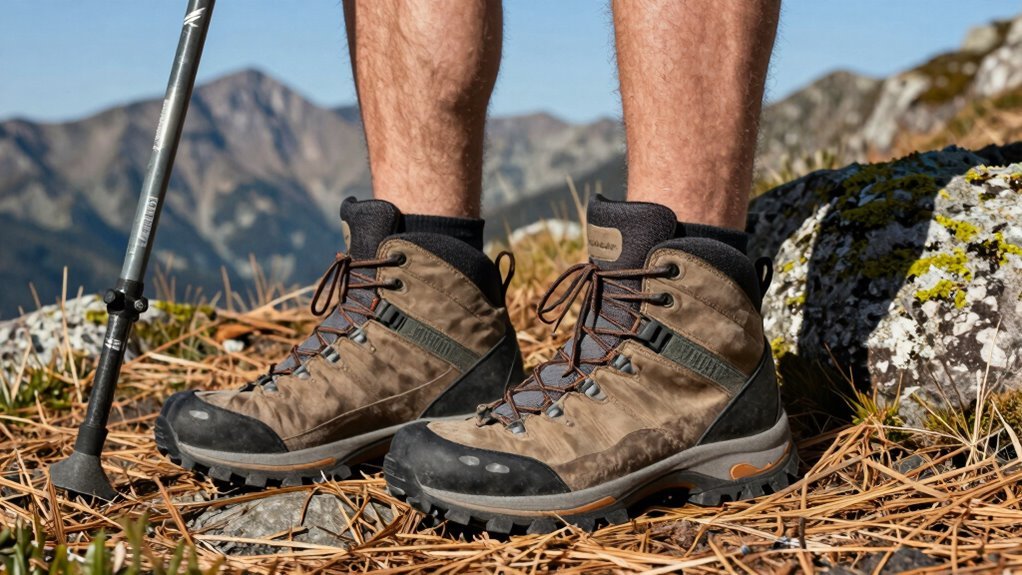
Stepping into the right pair of hiking shoes? You’re already giving your knees a high-five!
Look for max cushioning—like the New Balance Hierro v9 or Hoka Challenger—to soak up impact with every step.
Dual-layer foam and thick midsoles (think 37mm stacks!) keep your joints happier on hard trails.
Shoes with low drops, like 4–5 mm, encourage a natural stride that eases knee stress.
Plus, features like EVOLYTE® stabilizers and snug heels keep your foot from wobbling on rocky paths—because wobbles lead to grumbles (and sore knees).
Brands like Topo and Hoka deliver plush rides and wide toe boxes, letting toes splay freely—no toe jail here!
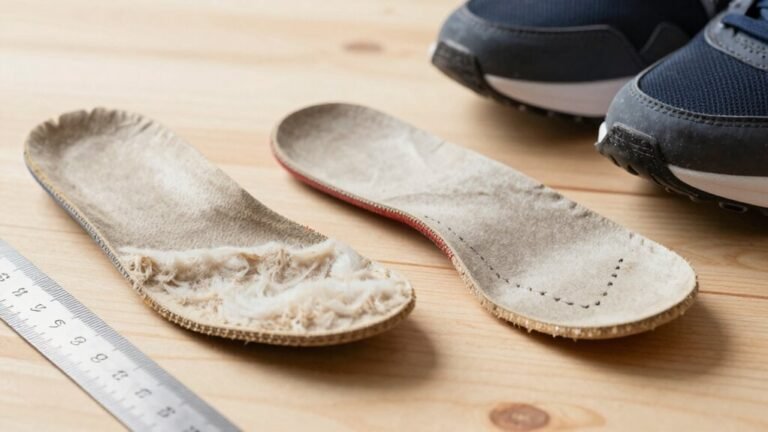
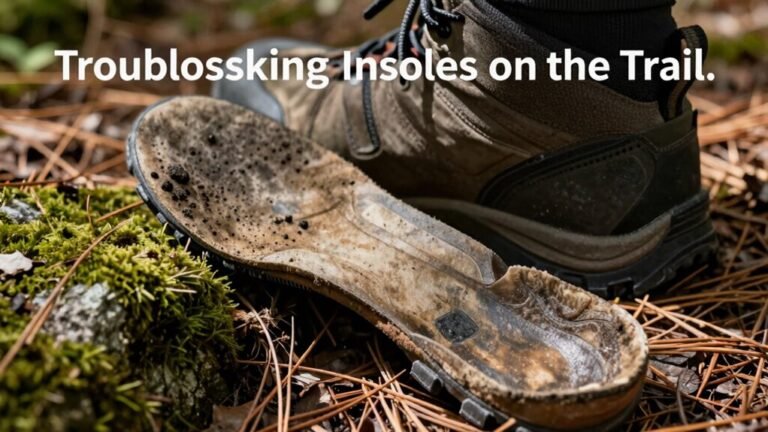
Toss in Superfeet insoles for extra arch support if needed.
These insoles feature a Dual-layer cushioning foam for added comfort on long hikes.
Trust us, your knees will thank you like it’s their job.
Happy trails, comfy feet!
Strengthen Leg Muscles With Targeted Exercises
You’ve got your cushioned kicks laced up, and your feet are ready for the trail—but let’s talk about building the real powerhouse: your legs.
Strong muscles support your knees and make hiking easier, especially as you age.
Try these moves a few times a week and feel the difference on your next trail adventure.
No fancy gear needed—just your body and a bit of grit.
- Step-ups – Climb stronger, one step at a time, like you’re conquering that rocky switchback with confidence.
- Squats – Power your way downhill without the knee ache—yes, it’s possible!
- Lunges – Stabilize your joints and crush uneven terrain like a pro hiker.
- Calf & Tib Raises – Build bulletproof ankles so you don’t wobble on the way back.
Your legs aren’t just moving you forward—they’re carrying memories in the making.
Warm Up Before Hiking and Cool Down After
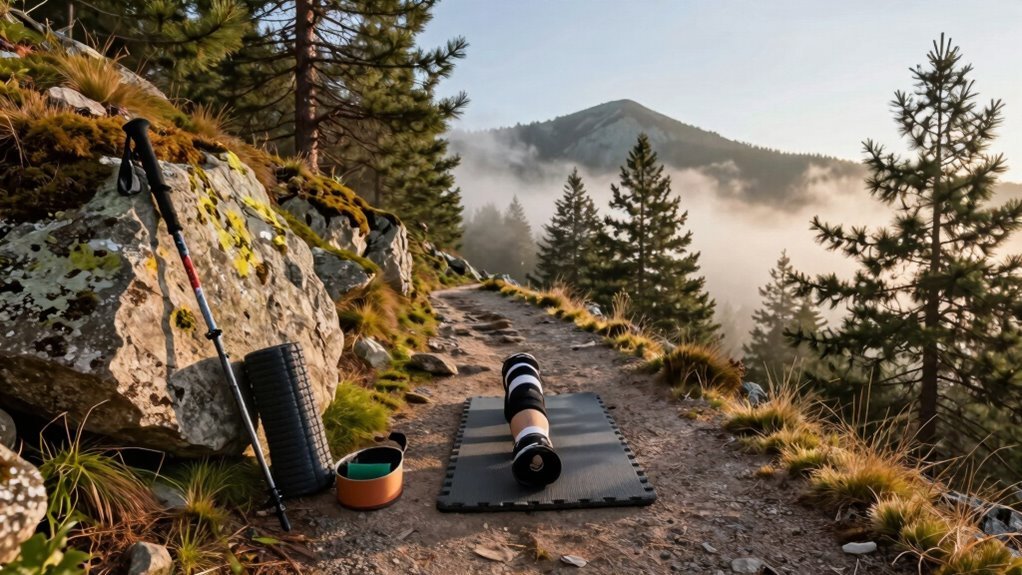
Getting your body trail-ready doesn’t mean diving straight into the hike like a squirrel fleeing a picnic. Start smart with a dynamic warm-up to boost blood flow to your knees and ease muscles into action.
Try knee circles, quad squeezes with a towel, or fire up those joints with banded ankle mobilizations—12 to 15 reps per leg works magic.
Add tri-planar calf stretches against a wall, 8–10 leans each way, to free up ankle mobility and support knee stability.
These moves wake up stabilizers, lubricate joints, and cut injury risk.
After your adventure, don’t park on the trailhead bench like a worn-out camp chair.
Keep moving—take a short walk, then stretch gently.
Cooling down prevents stiffness, flushes out fatigue, and helps you recover faster.
It’s short, it’s simple, and it makes your next hike feel like a breeze.
Maintain a Steady, Controlled Pace on the Trail
When gravity tries to turn your hike into a downhill sprint, don’t let your knees pay the price—slow and steady isn’t just for turtles, it’s your secret weapon for pain-free trail time.
Keep your pace controlled, shorten your stride, and let your quads do their job without overworking.
Land heel-first, roll through your foot, and use your muscles—not your joints—to brake.
Small steps mean less impact, better balance, and happier knees, especially if you’re managing aches or old injuries.
Build your endurance slowly, focus on one trail challenge at a time, and keep your speed consistent.
You’ll conserve energy, stay stable, and actually enjoy the view!
- Feel the relief in your knees with every gentle step down.
- Gain confidence knowing you’re protecting your joints.
- Savor the trail without dreading the downhill.
- Hike longer, stronger, and with a smile.
Take Frequent Breaks to Rest Your Joints
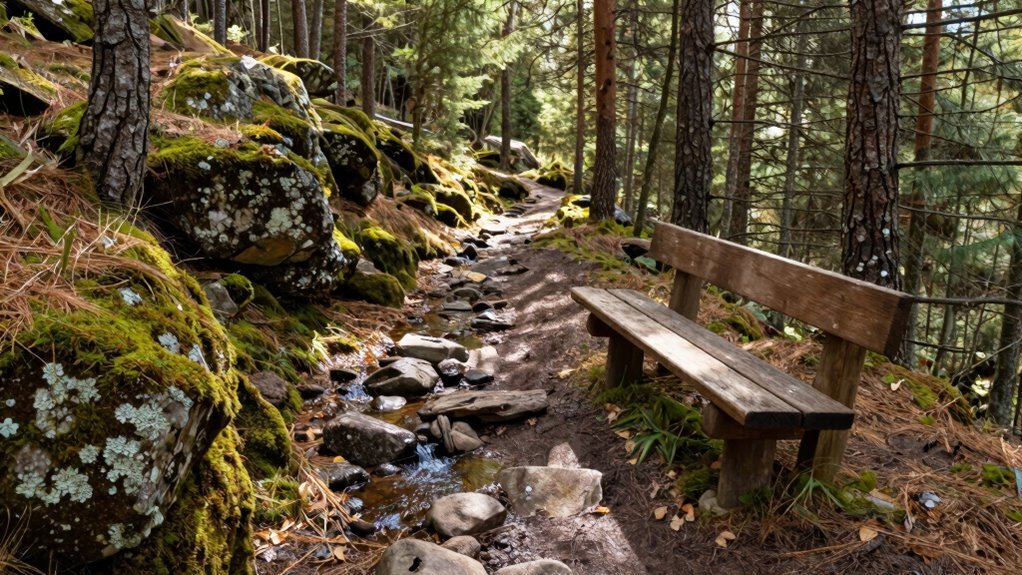
Even if you’re powered by sheer will and trail mix, your knees will thank you for hitting pause now and then.
Take a seat every 10 to 15 minutes—yes, really!
These little rest stops let your joints shake off stress, especially if you’re managing osteoarthritis.
Think of it as a mini-vacation for your knees.
Short breaks slow down wear and tear, cut pain risk by 40%, and keep you moving strong.
Sitting for a few minutes every 20–30 minutes also helps you log more steps safely—up to 7,500 a day—without overdoing it.
Studies show regular pauses mean less stiffness, better function, and way fewer aches.
You’ll maintain your pace, feel fresher, and actually enjoy the view!
So grab your water, munch a snack, and give those joints a well-earned timeout.
Your knees aren’t just along for the hike—they’re the VIPs!
Use Proper Technique on Uphills and Downhills
You’ve given your knees their well-earned breather, now let’s keep the momentum going—without turning your descent into a knee-crunching disaster.
Mastering hills is all about smart moves, not brute force.
Here’s how to protect your joints with finesse:
- Shorten your steps downhill—tiny strides mean less slamming on your quads and happier knees.
- Slow down and stay in control—no tobogganing! A steady pace keeps your joints from screaming.
- Keep your knees slightly bent—wiggle into a squat stance to shift impact from knees to thighs.
- Use both trekking poles like nature’s shock absorbers—plant them in rhythm to float down slopes, not crash land.
Think smooth, not speedy, and your knees will thank you—maybe even with a happy dance at the trail’s end.
Invest in a Quality Knee Brace for Added Support
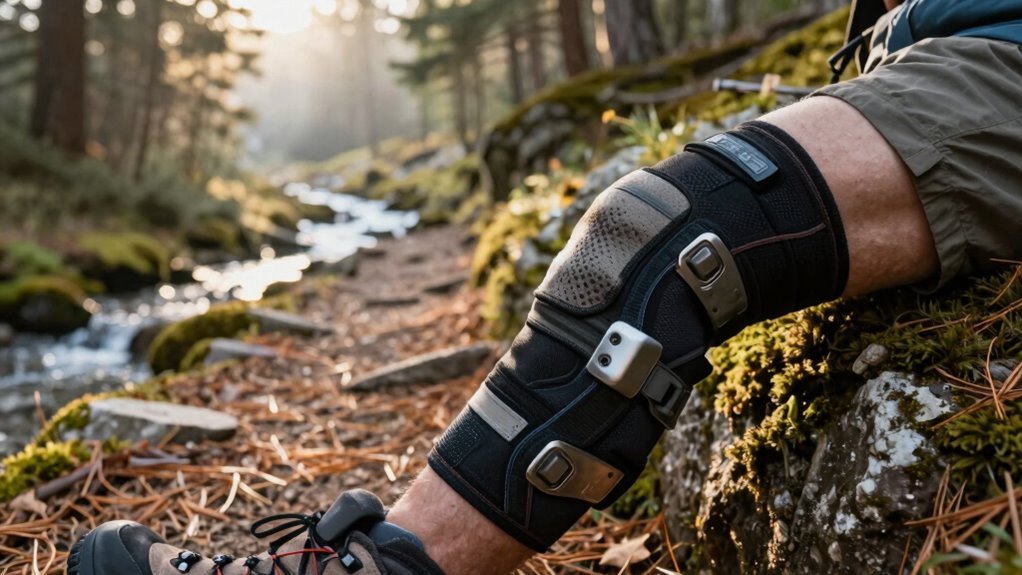
Lace up, because your knees are about to get a powerful sidekick—a quality knee brace that’s like a supportive hug for your joints on every trail twist and turn.
It slashes pain, boosts stability, and shields your cartilage, especially on tough uphill climbs.
Think of it as armor against slips, rocks, and surprise roots—no more white-knuckling every step.
It even helps your muscles wake up and do their job, so you’re not limping like a wobbly picnic table.
Slap one on and feel the difference: less swelling, more miles, and serious confidence on steep drops.
Bonus? You’ll stand taller, hike longer, and protect your hips and back without thinking about it.
Just don’t sleep in it—save the romance for the trail.
With a great brace, you’re not just hiking; you’re knee-ninjaing through nature.
Frequently Asked Questions
Can I Hike With a Knee Replacement?
Yes, you can hike with a knee replacement—many do and love it!
Start easy, stick to flat trails, and let your knee guide the way.
Build strength, use trekking poles, and wear supportive boots.
Your legs will thank you, and hey, even mountains weren’t built in a day—take breaks, enjoy the view, and keep it fun.
With time, you’ll be striding through trails like a pro, knee and all!
Are Knee Sleeves Better Than Braces for Hiking?
No, knee sleeves aren’t better than braces for hiking if you’ve got bad knees—they’re just different.
Think of Sarah, 68, hiking Utah’s slickrock trails: her hinged brace stopped wobbles that a sleeve couldn’t touch.
Sleeves offer light support and warmth, great for mild ache prevention.
But for real stability on rough terrain, braces win.
They lock your knee safely, so you stride confidently, not cautiously.
Choose smart, hike strong—and laugh when your knees feel springy again!
How Do I Know if My Knee Pain Is Serious?
You know your knee pain is serious if it won’t quit, even after days of rest, or if it’s so sharp you can’t walk down a hill without wincing—like your knee’s throwing a tantrum!
Swelling that won’t go down, a popping sound, or feeling locked up are red flags.
Don’t brush it off; your knee’s yelling for help, not just complaining about last weekend’s hike.
Is Hiking Safe for Arthritis Sufferers?
Yes, hiking’s safe for you with arthritis—if you play it smart.
You’ll keep joints limber, build strength, and boost heart health without turning your knees into creaky door hinges.
Start easy on flat trails, use trekking poles like a mountain explorer, and take breaks.
Just skip the downhills or zigzag like you’re dodging raindrops.
Listen to your body, it’ll tell you when to stop—trust us, your knees will thank you later.
Happy trails!
Should I See a Doctor Before Hiking With Bad Knees?
Yes, you should see a doctor before hiking with bad knees—take Mary, 68, who skipped this step and ended up worsening her meniscus tear on a trail.
You’d rather hike happily than hobble home, right?
A quick checkup spots trouble early, gives you clear marching orders, and lets you plan safe, fun adventures.
Think of it as a pit stop for your knees—smart, quick, and totally worth it!
Conclusion
You’ve got this—think of your knees as trusty old friends who just need a little extra care. With the right trail, some smart gear, and a bounce in your step, hiking can still be your happy place. Lace up, lean on those poles, and take it one joyful step at a time. Every hill’s a victory, every break a chance to laugh and breathe. Adventure’s not just for the young—it’s yours, too.
References
- https://trailism.com/trail-grades/
- https://thetrek.co/appalachian-trail/why-75-of-at-thru-hikers-wont-make-it-spoits-complicated/
- https://www.fs.usda.gov/rm/pubs_series/int/gtr/int_gtr265.pdf
- https://www.railstotrails.org/trail-building-toolbox/developing-trails-in-sensitive-areas/
- https://raleighnc.gov/parks-and-recreation/news/benefits-hiking-and-trail-running
- https://pmc.ncbi.nlm.nih.gov/articles/PMC4905913/
- https://thesportjournal.org/article/load-carriage-force-production-comparison-between-standard-and-anti-shock-trekking-poles/
- https://pmc.ncbi.nlm.nih.gov/articles/PMC10135831/
- https://journals.sagepub.com/doi/10.1016/j.wem.2020.06.009
- https://www.theuiaa.org/advantages-and-disadvantages-of-using-hiking-sticks-in-the-mountains/