Common Hydration Mistakes and Easy Fixes
You’re sipping water all wrong if you’re waiting until you’re parched—thirst means you’re already behind on hydration. Swap soda and coffee overload for balanced drinks to support better fluid intake throughout the day.
Don’t ditch hydration just because it’s cold outside; staying properly hydrated matters year-round. Check your urine—if it’s dark yellow, it’s a clear sign you need to drink more water.
Sip steadily throughout the day instead of relying on gulps when you feel thirsty. This steady intake helps maintain optimal hydration levels and supports overall energy and focus.
Fuel your body with water-rich foods like cucumbers, oranges, and watermelon to boost your hydration from within. These foods complement your fluid intake and provide essential nutrients.
Grab a reusable water bottle that fits your daily routine and keeps water within reach. Having a reliable bottle makes it easier to track and maintain consistent hydration.
Never let busy schedules interfere with your hydration goals—set reminders or use apps if needed. Staying hydrated keeps you feeling sharper, lighter, and more alive every single day.
Waiting Until You’re Thirsty to Drink Water
While your body’s thirst signal might seem like the obvious cue to grab a drink, waiting until you’re parched is kind of like waiting for the check engine light to come on before changing your oil—it’s already playing catch-up.
You might feel fine sipping after you’re thirsty, but your mouth and throat trick you into thinking you’re fully hydrated before your body actually is.
By the time you notice dryness, you could already be short 4–5 liters!
Kids, older adults, and some meds make it even worse—thirst lags hard.
Skip the game of dehydration roulette.
Sip water regularly, not just when you’re gasping.
Think of your water bottle as a sidekick—always nearby, always ready.
Your brain, muscles, and kidneys will thank you with better focus, energy, and fewer health hiccups.
Stay ahead, stay fresh, and beat thirst before it beats you.
Hydration’s not a sprint—it’s a smooth, steady win.
Recent research shows that drinking when not thirsty requires more effort due to an increased swallowing difficulty.
Relying on Coffee and Soda for Daily Fluids
Ever wonder if your daily coffee or soda habit is actually keeping you hydrated—or just giving you a caffeine-fueled illusion of refreshment?
Here’s the scoop: moderate coffee intake, like four cups a day, hydrates you about as well as water—no dehydration drama for regular drinkers.
But don’t celebrate with a soda just yet.
While it counts toward fluids too, it’s loaded with sugar, harms your heart, and raises stroke risk by 22% with just one a day.
Ouch.
Sure, the caffeine in both drinks doesn’t dehydrate you at normal levels, but soda’s health downsides are real.
Coffee in moderation? You’re good.
Relying on soda or chugging six espresso shots? Not so much.
Skip the fizz and sugar trap.
Water’s still the hydration superhero—free, clean, and always on duty.
Swap smart, drink balanced, and let your body thank you.
This is because regular caffeine consumers develop tolerance to its diuretic effects, meaning tolerance develops and the body no longer experiences significant fluid loss.
Overlooking Hydration Needs in Cold Weather
You might be sipping your coffee instead of sugary soda, and that’s a win for your hydration game—good call.
But don’t let winter fool you into ditching the water bottle.
Cold air dulls your thirst by up to 40%, so you’re not feeling parched even when you’re drying out.
Breathing in dry, chilly air? That steals nearly twice the moisture from your body.
Add in heated indoor air, and it’s a dehydration double-whammy!
And no, you don’t need less water in winter—your body still craves 8–11 cups daily.
Skiing, shoveling, or hiking? You’re burning energy and losing fluids fast.
That fatigue or headache? Mightn’t be “winter blues”—it could be dehydration playing tricks.
Skip the excuse that cold = low hydration needs.
Sip steadily, keep your lips and skin happy, and outsmart the season.
Stay cool—and hydrated!
cold-induced diuresis increases fluid loss as your body suppresses thirst while losing more water through urine.
Assuming Dark Urine Is Normal
Hmm, is that dark yellow glow in your toilet bowl trying to tell you something? Yeah, it’s probably screaming, “Drink water, dummy!”
Dark urine isn’t normal—it’s your body waving a dehydration flag.
While pale yellow or light straw means you’re crushing hydration, dark yellow or amber means you’re running on fumes.
And if it’s strong-smelling and concentrated? Chug 2–3 glasses ASAP.
Sure, B vitamins or beets might tint it, but don’t shrug it off.
Liver trouble, kidney strain, or even muscle breakdown could be lurking.
Overlook it, and you’re begging for trouble.
The fix? Sip water steadily—aim for 6–8 glasses daily, more if you’re sweating.
Add electrolytes after a workout.
Watch it lighten over a couple days.
Still dark? Time to call your doc.
Your pee shouldn’t look like apple juice—let’s keep it sunny, not murky!
Drinking Too Much Water Too Quickly
While chugging water like it’s your job might seem like the ultimate health flex, guzzling too much too fast can backfire in a big way.
Your kidneys can only handle about a liter per hour—any more and you risk water intoxication.
That excess water dilutes sodium in your blood, leading to hyponatremia, where your cells (yes, even brain cells) swell like overfilled balloons.
Early signs? Nausea, headaches, fatigue, or muscle cramps.
If things get worse, confusion, seizures, or even coma can follow—no joke.
Endurance athletes, soldiers, and marathoners are especially at risk, especially if they drink at every aid station blindly.
But here’s the fix: sip when you’re thirsty, not on a strict schedule.
Stick to no more than 1 liter per hour and aim for 9–13 cups of fluids daily.
Trust your thirst—it’s smarter than you think!
Choosing Sugary Sports Drinks for Light Workouts
Chugging water like it’s a competitive sport might win you points at the hydration Olympics, but grabbing a sugary sports drink after a light stroll? Overkill.
If your workout’s under an hour—like walking, casual jogging, or even a quick gym session—water’s got you covered.
Those flashy sports drinks? They’re built for intense, sweaty efforts lasting longer than 60 minutes, not your 30-minute bike ride.
Downing them anyway piles on extra sugar and calories you don’t need, especially if you’re watching your weight.
Your body doesn’t lose enough electrolytes in light workouts to need a recharge, so save the sodium boost for marathon days.
And no, it won’t make you faster or stronger now—studies say performance gains are a no-show here.
Stick with water, try zero-sugar electrolyte options if you’re feeling fancy, and keep it simple.
Your body—and waistline—will thank you.
Forgetting to Hydrate Before and After Exercise
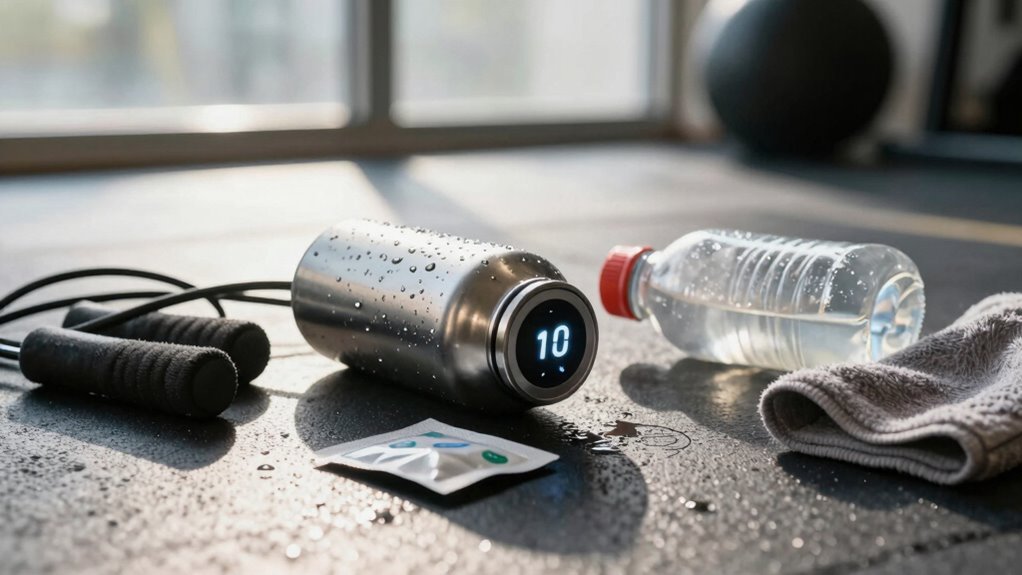
Ever show up to a workout already running on empty—hydration-wise? You’re not alone—nearly 89% of athletes start the day dehydrated, and 76% roll into practice still parched. That’s like trying to drive a car with no oil!
Drink 5–10 mL of water per kg of body weight 2–4 hours before exercising—so if you’re 73 kg, that’s about 12–17 ounces.
Sip another 7–10 ounces 10–20 minutes before, and you’ll crush your workout, not cramp in it.
Skipping this? You’ll overheat faster, feel sluggish, and think slower.
After exercise, don’t just towel off—rehydrate!
Replace 125–150% of lost fluids (think: 1.5 cups for every lost pound) and include sodium to hold onto that precious water.
Most stay dehydrated post-workout, but not you—you’re already one step ahead, sipping like a pro!
Ignoring Hydration From Food Sources
You just crushed your workout like a hydration hero, but don’t hang up your water bottle just yet—there’s another secret source of hydration hiding in plain sight, and it’s already on your plate.
Around 20% of your daily water comes from food, so skipping water-rich picks is like leaving free fluids behind.
Chomp on cucumbers or celery (both 95% water!), enjoy a slice of watermelon (hello, 92% H₂O!), or snack on strawberries—yep, they’re hydrating too.
Even broccoli and yogurt sneak in fluids while feeding you nutrients.
Soups, broths, and tomato sauce? Hydration in disguise.
And yes, even your morning oat milk latte counts—just skip the extra caffeine.
You don’t need to guzzle gallons if you’re loading up on juicy eats.
Turn meals into moisture boosts and hydrate without even thinking.
Who knew salad could be a sip?
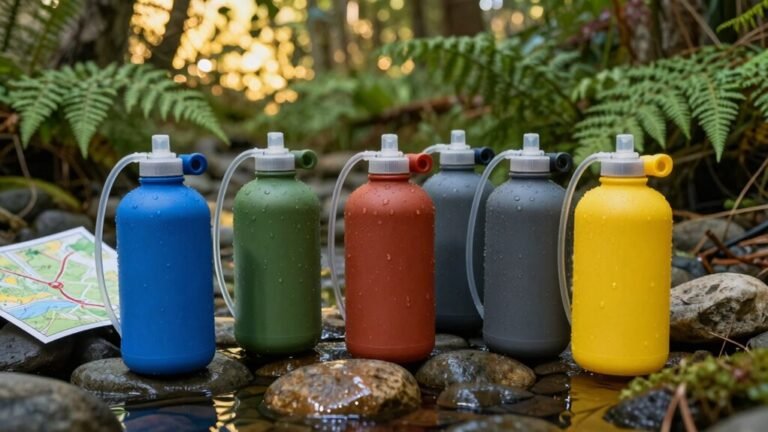
Using the Wrong Size Water Bottle
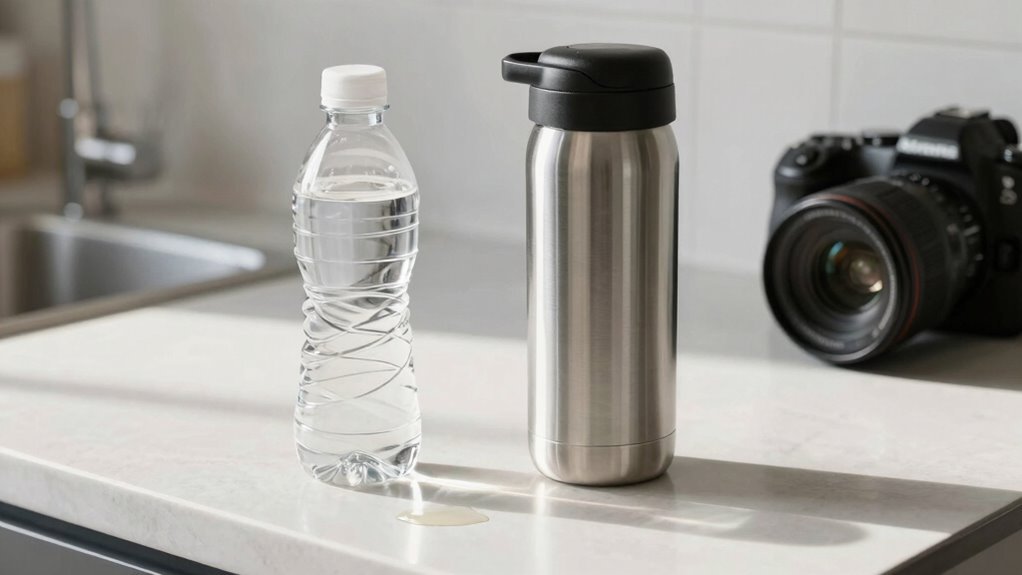
How’s your water bottle working for you—serving as a trusty sidekick or just taking up space? If you’re lugging around a 64oz giant, it might be waging war on your cup holder—or your shoulders.
Too small, and you’re refilling every hour like a hydration addict.
For most adults, 16–20oz is the sweet spot: light enough to carry but big enough to keep you on track.
Gym beast? Grab 32oz. Desk jockey? 16oz with easy refill access works.
Hikers need 1–1.5L for stamina, while travelers should stick to 12–23oz to avoid baggage drama.
That tiny 8oz bottle’s cute, but it won’t cut it past lunch.
And hey, moms-to-be or anyone with medical needs, aim higher—32–40oz helps crush those bigger goals.
Match your bottle to your day, and suddenly, drinking enough water feels effortless—like your bottle finally gets you.
Skipping Water When You’re Busy
Chasing deadlines and skipping water breaks? You’re not alone—but that dry spell tanks your brainpower fast.
Even mild dehydration zaps focus, slows reactions, and cranks up stress.
Think of it like running your brain on low battery: blurry thoughts, shaky moods, and zero motivation.
Yikes! And in air-conditioned offices or high-heat jobs, you’re losing fluids without even noticing.
Here’s what really happens when you skip sips:
- Your brain shrinks – 75% water, remember? Less H₂O = slower thinking.
- Productivity plummets – 1% dehydration drops output by 12%. Ouch.
- Accidents spike – reaction times mimic drunk driving. Not safe!
- Mood crashes – hello, irritability and brain fog.
Stay sharp, stay hydrated—your busy self will thank you.
Frequently Asked Questions
How Much Water Should I Drink Daily?
You should drink about 8 to 10 cups a day, but hey, your body’s unique—listen to it!
If you’re active or it’s hot, grab extra water.
Thirst? That’s your cue.
Your pee should be light—think lemonade, not apple juice.
Food and drinks count too, so fruits and tea help.
You’ve got this, hydration hero!
Just keep sipping and feeling great.
Can Herbal Teas Count Toward Hydration?
You bet herbal teas count toward hydration—100%!
They’re mostly water, zero caffeine, and totally hydrating, just like your favorite drink: H2O.
Sipping chamomile or mint is like giving your body a hydration high-five.
Studies show even 6+ cups of caffeinated tea won’t dehydrate you, so herbal ones? Smooth sailing.
Sip, smile, and let those soothing sips hydrate you all day long—bonus points if you pretend you’re fancy while doing it!
Is Sparkling Water as Hydrating as Plain Water?
Yes, sparkling water hydrates you just as well as plain water—no tricks, just bubbles!
Studies show your body absorbs it equally fast, thanks to that fizzy CO2 doing zero harm.
It’s mostly H2O, like still water, so you’re nailing hydration.
The fun fizz might even make you crave more, boosting your intake.
Just skip sugary versions, and you’re golden—bubbly *and* balanced!
Cheers to that!
Do Children Need the Same Hydration Rules as Adults?
No, kids don’t follow the same rules as adults—you’d think they’re tiny adults, but their bodies work like little engines revving faster on less fuel.
They need more water per pound than grown-ups, especially when playing hard.
Use their weight and age to guide you, and remember: a 125-pound kid needs about 64 ounces, not a full adult’s gallon.
Keep it fun, keep it flowing, and they’ll stay cool, sharp, and happily hydrated.
Can Dehydration Cause Headaches?
Yeah, dehydration can definitely cause headaches—and not just any kind, we’re talking throbbing, movement-magnified pain that says, “Hey! Drink water!”
Your brain temporarily shrinks from fluid loss, tugging on pain-sensitive areas, while lower blood flow starves it of oxygen.
You might feel dizzy, tired, or grumpy too.
The fix? Guzzle some water—often works in under three hours.
Stay hydrated, and your head will thank you like it just won the lottery.
Conclusion
You’re not failing—you’re just working with old info! Turns out, waiting until you’re thirsty really does mean you’re already behind, since thirst kicks in after 1-2% dehydration. But hey, nobody’s perfect, and now you know better! Swap soda for sips, snack on cucumbers, and keep your trusty bottle close. Hydration’s not just water—it’s a vibe. Stay fun, fresh, and slightly more cucumber-y today!
References
- https://www.medicalnewstoday.com/articles/313389
- https://hedonistlabs.com/en/blogs/blog/should-i-wait-until-i-m-thirsty-to-hydrate-
- https://pmc.ncbi.nlm.nih.gov/articles/PMC5790864/
- https://news.cuanschutz.edu/health-and-wellness/hydration
- https://newsnetwork.mayoclinic.org/discussion/mayo-clinic-minute-drink-to-thirst/
- https://ki.se/en/research/popular-science-and-dialogue/spotlight-on/spotlight-on-food-and-health/stop-gulping-away-youre-not-short-of-water
- https://www.physiology.org/publications/news/the-physiologist-magazine/2021/july/the-science-of-hydration
- https://news.virginia.edu/content/everything-we-think-we-know-about-drinking-water-may-be-wrong
- https://www.regionalonehealth.org/blog/2024/06/19/drink-up-staying-hydrated-prevents-medical-emergencies-and-promotes-overall-health-2/
- https://www.healthynursehealthynation.org/our-resources/blogs/2022/debunking-4-common-hydration-myths/