Quick Tips for Hiking Socks
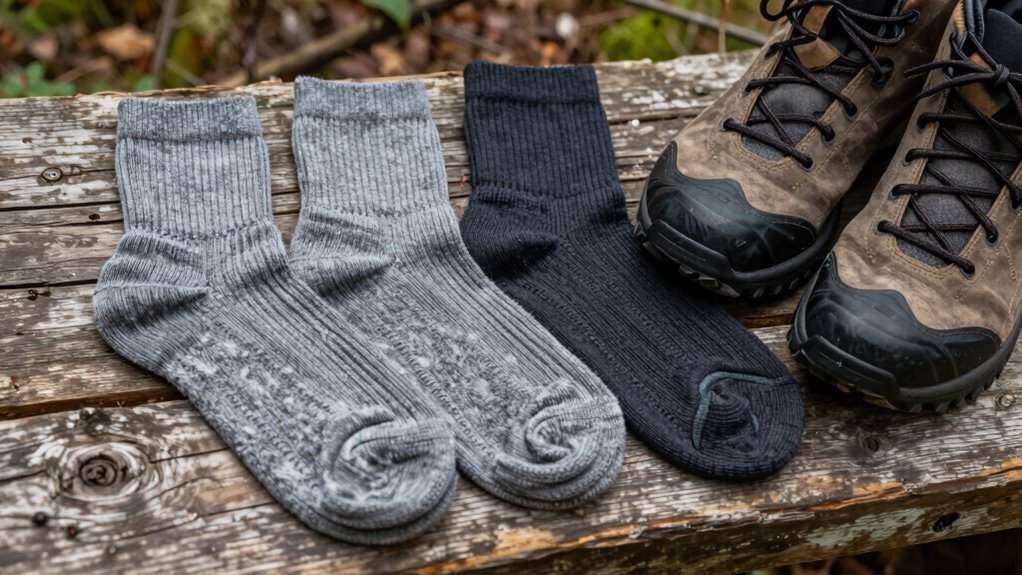
Ditch cotton—it’s a moisture magnet that’ll leave you soggy and blistered. For hiking socks, always choose materials like merino wool or synthetic blends that wick moisture effectively.
These fabrics pull sweat away from your skin, keeping your feet dry and comfortable even when damp. They also help regulate temperature, so your feet stay cozy in cool weather and breathable in heat.
Pick the right thickness based on conditions: lightweight hiking socks for hot days, medium for moderate trails, and thick for cold, rugged terrain. A snug fit is essential—your socks should stay in place without slipping or bunching.
Avoid bulky seams, especially over the toes, to prevent irritation and blisters. Match the cuff height of your hiking socks to your boot type for maximum protection and comfort.
Consider wearing liner socks—they reduce friction and act as a second skin, preventing hot spots. Combined with a durable outer sock, they’re a smart choice for long hikes. Your feet will thank you later.
Choose Moisture-Wicking Materials
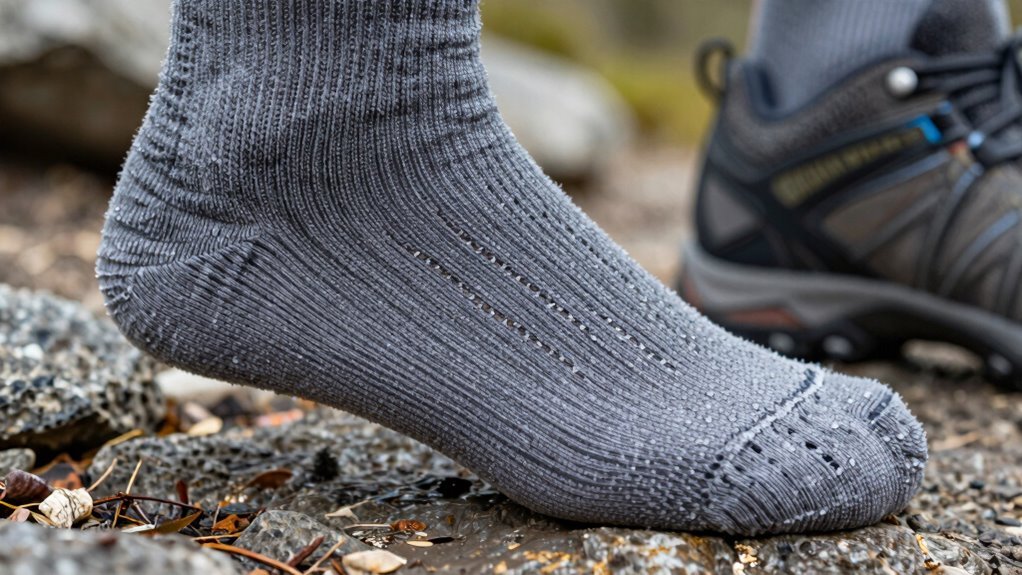
Ever wonder why your feet feel like they’re in a swamp halfway up the trail?
It’s all about moisture—what your socks do with it makes or breaks your hike.
Skip cotton; it holds water like a sponge.
Instead, grab socks with alpaca fibers—they absorb just 8% of their weight in water and wick like a champ.
Bamboo’s no slouch either, pulling sweat away fast and keeping things cool.
Synthetics like polyester and nylon? Great at moving moisture and drying quickly, especially with mesh zones that boost airflow.
Merino wool’s a superstar: its outer layer shuns water while the core soaks up to 35% moisture without feeling wet.
Blends? Even better—mix merino with synthetics and you get less damp, more comfort.
Its natural crimp creates air pockets that enhance insulation while remaining lightweight, helping regulate temperature during dynamic hikes.
Your feet stay dry, happy, and blister-free.
Choose right, and every step feels light.
Prioritize Merino Wool Over Cotton
Ditch the damp disaster of cotton and step into the smart sock upgrade: merino wool.
You’ll stay dry because merino wicks sweat away fast, while cotton holds onto moisture like a soggy sponge—hello, blisters!
Merino fights odor naturally, thanks to lanolin and smart fibers, so you can wear them longer without stinking up the trail.
Cotton? It’s a bacteria buffet.
When temps swing, merino adapts—warm in snow, cool in summer—while cotton leaves you shivering or sweating.
Plus, merino’s crazy tough, surviving 20,000 bends without breaking; cotton quits after 3,200.
That means lasting cushion, shape, and support mile after mile.
And on wet hikes, merino still insulates—even when damp—while cotton turns cold and dangerous.
So skip the “cotton kills” rep and keep your feet happy, fresh, and blister-free.
Your socks shouldn’t quit before you do!
elastic and breathable fibers make merino ideal for sustained physical activity.
Match Sock Thickness to Your Activity
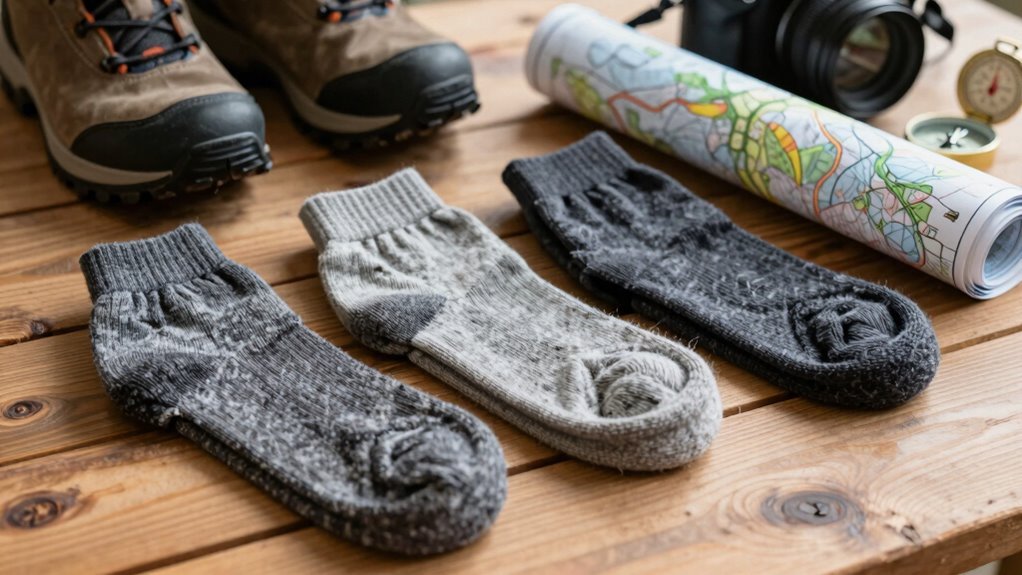
Picking the right sock thickness isn’t just about comfort—it’s your secret weapon for happy feet on any trail.
When it’s cold, go thick: heavy, cushioned socks trap heat and protect your feet on rugged, snowy paths.
Midweight works great for chilly thru-hikes—warm, durable, and tough.
But in summer? Thin is in.
Lightweight socks wick sweat fast and pair perfectly with low-cut boots when the sun’s blazing.
For moderate hikes, grab medium cushioning—it’s got shock-absorbing padding where you need it most.
Rough terrain? Crank up the thickness for extra armor.
Smooth trails? Light socks save space and stay cool.
On long trips, pack a few pairs of different thicknesses—switching keeps feet fresh and blisters at bay.
Play around!
Your boots, mileage, and weather say what thickness wins.
Get it right, and your feet will thank you with every step.
Choose materials like wool or synthetic blends for optimal moisture management and durability on the trail.
Ensure a Snug, Non-Restrictive Fit
When your socks fit just right, it’s like they were made for your feet—because, well, they kinda were.
You want snug, not squeeze-tight: think cozy high-five, not thumb wrestle.
A proper fit means no slipping, bunching, or sore spots—even when the trail gets spicy.
Keep these fit must-haves in mind:
- Your toes can wiggle freely, and your heel stays put in its comfy cup
- The sock hugs your foot smoothly, with zero wrinkles or pressure zones
- Ribbed cuffs and arch support hold firm without cutting off circulation
No one wants blisters crashing their hiking party—so skip the too-big (slippery) and too-small (ouch) socks.
Go for that Goldilocks fit: snug, supportive, and super comfy.
Your feet will thank you with happy miles, mile after mile.
Who knew socks could be this exciting?
Look for Strategically Placed Seams
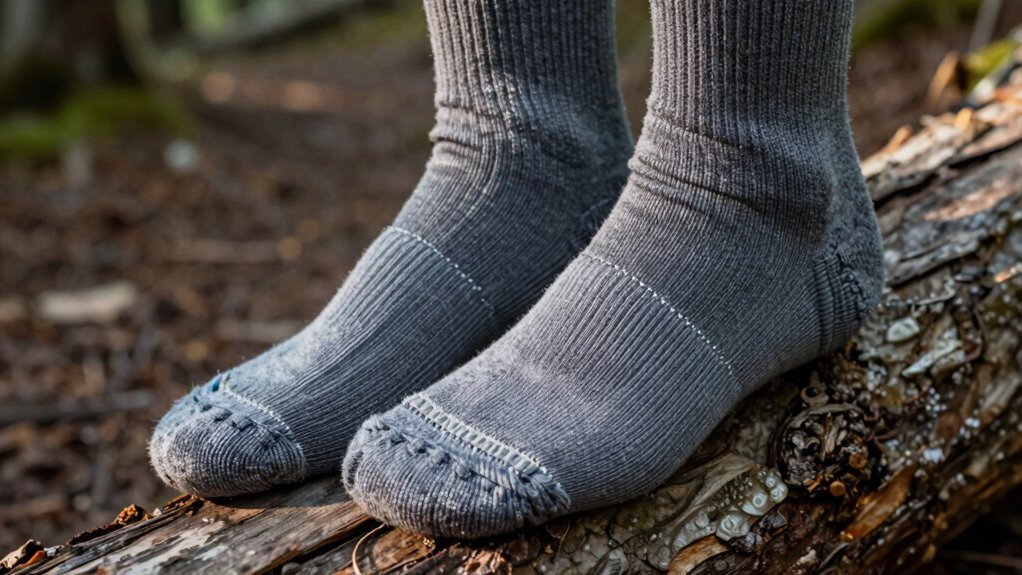
You’ve nailed the snug-but-not-too-tight fit—now let’s talk about what’s hugging your feet up close: seams.
Skip the bulky toe seams that rub like sandpaper—opt for seamless toe construction instead.
It’s like giving your toes a smooth, friction-free highway.
Advanced knitting creates a silky surface that won’t turn into a blister boot camp.
Heel seams? They should vanish too.
Seamless reinforcements there mean no pressure points, just solid support that laughs in the face of blisters.
These smart socks use tougher synthetic blends exactly where you need them—durable, comfy, and shock-absorbing.
Mesh panels add breathability, sweeping sweat away like tiny air traffic controllers.
Smooth fibers glide against skin and boots, keeping grit out and comfort in.
Think of it as a five-star hotel for your feet—no irritating bumps, just all-day trail bliss.
Smart seams mean happy feet.
And happy feet mean you’ll hike farther, smile wider, and never dread sock check time again.
Consider Liner Socks for Added Protection
Ever wonder how ultra-hikers trek for days without a single blister in sight?
The secret’s out—it’s all about smart layering with liner socks.
Think of them as your foot’s personal bodyguard, fighting friction and sweat before trouble starts.
You mightn’t have tried them yet, but once you do, you’ll question how you ever hiked without!
Here’s why they rock:
- Slash friction: They create a slick layer between your skin and outer sock, so rubbing doesn’t ruin your adventure.
- Wick moisture fast: Made from sweat-pulling fibers like Merino or COOLMAX, they keep feet dry even on swampy uphill climbs.
- Fit like second skin: These thin, snug liners add protection without bulk—perfect under your favorite hiking socks.
Trust the hikers, soldiers, and trail heroes who swear by them.
Your toes will thank you—especially when you’re miles from anywhere!
Select Proper Cuff Height for Your Boots
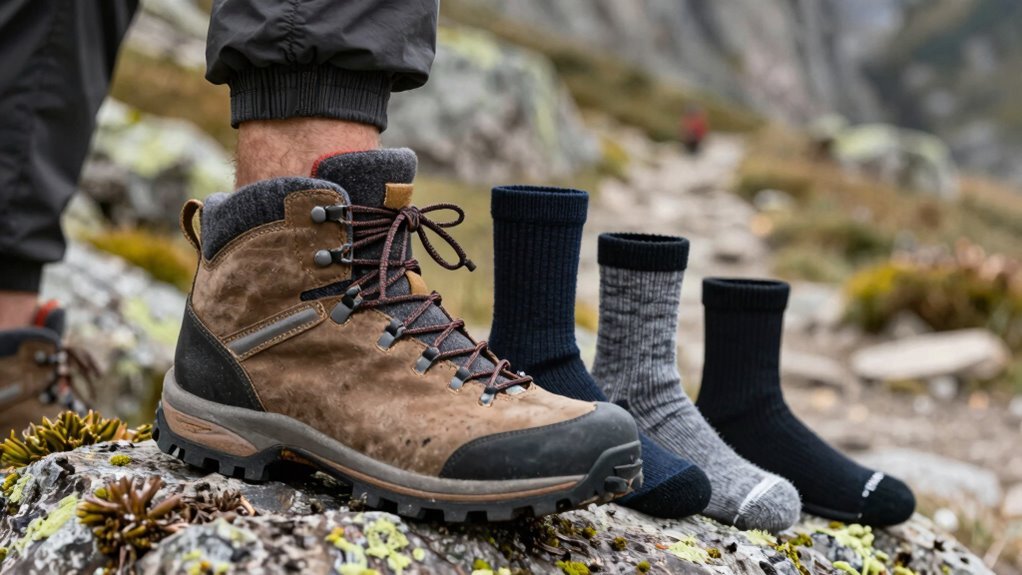
Why do some hikers strut off the trail with happy feet while others are side-eyeing their boots after mile two? It’s probably the sock cuff.
If your sock doesn’t match your boot height, you’re begging for blisters and chafing.
No-shows? Cute, but useless with anything taller than a trail runner.
Ankle socks work for light shoes, but once you hit mid-cuts or backpacking boots, go crew length—6 to 8 inches is the sweet spot.
Tall boots? You’ll need 8-10 inch boot crew or knee-highs so nothing slips or gapes.
Think of it like socks meeting boots in a perfect high-five: no gap, no rub, no drama.
And don’t size up if you’re between sizes—bunching is the enemy.
Get the right height, and your legs will thank you every mile.
Avoid Overlapping Toes With Precision Fit
Keeping your toes from stacking like pancakes during a hike isn’t just about comfort—it’s a full-on defense strategy for your feet.
Overlapping toes lead to pinching, hot spots, blisters, and nasty calluses—nobody wants that on trail.
Fight back with precision-fit socks that keep things aligned and friction-free.
Yes, bulky socks in tight shoes can backfire—so size up if needed.
With the right combo, you’ll step lighter, hike longer, and keep those toes happily independent.
Your feet will thank you—promise.
- Wear toe socks like Injinji or Creepers—they give each toe its own cozy sheath, reducing skin-on-skin drama.
- Use S-shaped ENGO patches between toes to gently hold them apart, especially if your pinky likes sneaking under its neighbor.
- Pick moisture-wicking materials that keep feet dry, reduce swelling, and help maintain proper toe alignment mile after mile.
Rotate Pairs to Manage Wear and Tear
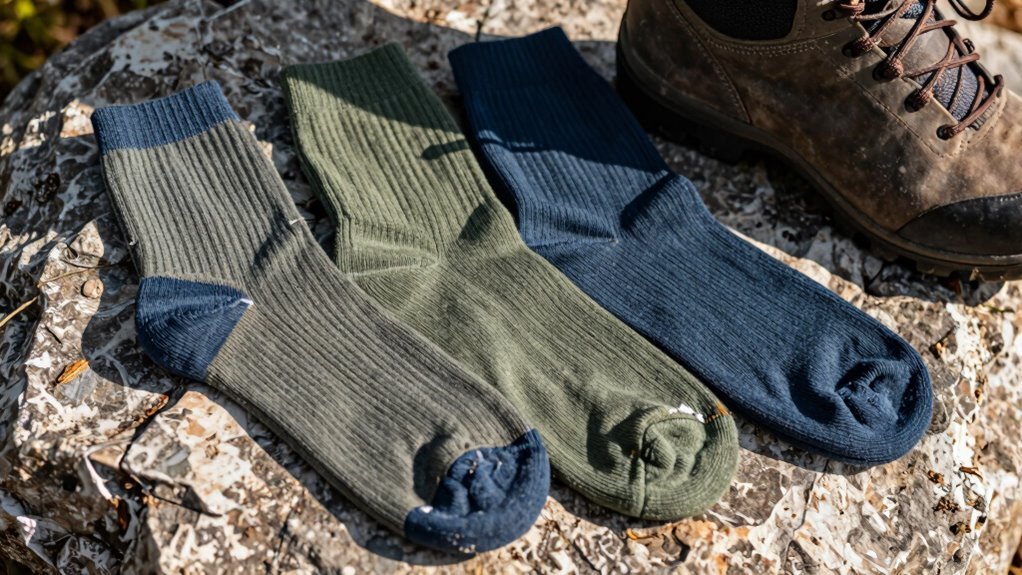
While your favorite trail socks carry you mile after mile, they’re also quietly taking a beating—especially in high-friction zones like the heels and toes.
Don’t let one pair bear the brunt!
Rotate three to five pairs to spread out the wear and keep your feet happy.
When you alternate socks, you dodge early holes, maintain cushioning, and avoid surprise blisters—because nobody likes sock casualties mid-hike.
Check for thin spots after each trek, especially in the heel and toe, and sideline any with lost bounce or sneaky holes.
Reinforced toes and merino wool help, but even tough socks need rest.
Think of it like giving your socks a mini-vacation!
With 4–6 pairs, you’ll stay trail-ready and extend their life.
Your feet (and wallet) will thank you when your socks last longer and perform better—plus, you’ll always have a fresh pair ready to roll.
Test Socks Before Hitting Long Trails
You’ve been rotating your socks like a pro, giving each pair a breather so they last longer and treat your feet right—now it’s time to make sure those fresh, well-rested socks actually earn their trail stripes.
Don’t just hop on a 20-miler blind—test them like a field scientist with your feet as the lab!
- Smash out a few 5–10 mile hikes to check comfort, fit, and whether they wick sweat like magic or turn into soggy sponges.
- Pair them with your go-to boots andtrail runners—watch for slippage, bunching, or rebellion at the heel.
- Throw in muddy scrambles, river splashes, and a midday sun broiler to see how they handle wet, hot, and wild.
Frequently Asked Questions
Can I Wear Hiking Socks With Sandals?
Yes, you can wear hiking socks with sandals—go ahead and rock that combo!
It’s great for chilly days, gritty trails, or when your feet need extra cushioning.
Just pick moisture-wicking socks that fit snugly so they don’t slide around.
Sure, your fashion police might frown, but your happy feet will thank you.
Stay comfy, stay protected, and hike on—because blister-free adventures are always in style!
How Often Should I Replace Hiking Socks?
You should replace your hiking socks every 3 to 6 months if you hike often—seriously, that’s about 500 to 1,500 kilometers of trail magic!
Thicker merino ones last longer, but once they’ve got holes, stink no matter what, or sag like tired noodles, it’s time to let go. Trust us, your feet will thank you—nobody wants blisters on a mountain date! Keep a few pairs rotated and they’ll treat you right.
Are Expensive Hiking Socks Worth the Cost?
Yeah, expensive hiking socks are totally worth it.
You’ll skip the blisters, thanks to snug fits and smart padding where you actually need it.
They last years, even with constant trail abuse—imagine one pair outliving three hikes and your favorite playlist.
Sure, cheap ones seem friendly to your wallet now, but you’ll replace them monthly.
Think long-term savings with happier feet.
Your future self, blister-free and stoked, will high-five you.
Seriously, it’s like socks went to college and aced the class.
Do I Need Different Socks for Winter Hikes?
Oh, absolutely, unless you enjoy frozen toes and makeshift toe warmers made of regret.
Winter hikes? They demand socks that actually care—think heavyweight, insulated, merino-rich magic with padding where it counts.
You’d never wear flip-flops in a blizzard, so don’t treat your feet like they’re on vacation.
Swap out those summer skivvies; your feet will stay warm, dry, and way more fun to be around.
Can I Machine Wash My Hiking Socks?
You can totally machine wash your hiking socks—no sweat!
Just flip ’em inside out, toss ’em in a mesh bag, and go easy with cold water and a gentle cycle.
Use mild detergent, skip the bleach and softener, and never blast them with hot water.
Air dry or tumble low—your socks (and feet) will thank you.
Think of it like spa day, but for footwear.
They’ll stay fresh, cozy, and ready for your next trail adventure!
Conclusion
You’ve got this! Picking the right hiking socks isn’t rocket science, but it *is* a game-changer—seriously, it’s like giving your feet a VIP ticket to comfort town. Just pick smart materials, get the fit snug but chill, and test them out. Treat your socks right, and they’ll practically carry you uphill. Happy feet mean happier trails, and who doesn’t want blister-free adventures that feel *that* good?
References
- https://www.heatholders.com/blogs/wow/how-merino-wool-socks-can-enhance-your-hiking-experience
- https://surisocks.com/blogs/news/complete-guide-to-moisture-wicking-socks
- https://ecosox.com/blog/how-do-hiking-socks-help-you-keep-your-feet-dry/
- https://darntough.com/blogs/the-alternate-stitch/merino-wool-makes-best-moisture-wicking-socks
- https://www.gowithsocks.com/blogs/socktalk-central/why-moisture-wicking-socks-are-a-must-have-for-sweaty-feet
- https://www.blister-prevention.com/blogs/products/moisture-wicking-socks
- https://vimvigr.com/blogs/our-blog/what-are-moisture-wicking-socks
- https://www.hughugoli.com/blogs/hugh-ugoli-blog/moisture-wicking-socks-that-actually-work-in-extreme-summer-heat
- https://www.wrightsock.com/blogs/news/wool-vs-cotton-socks
- https://www.qforquinn.com/blogs/news/merino-wool-socks-vs-cotton-socks