Common Hiking Socks Mistakes and Easy Fixes
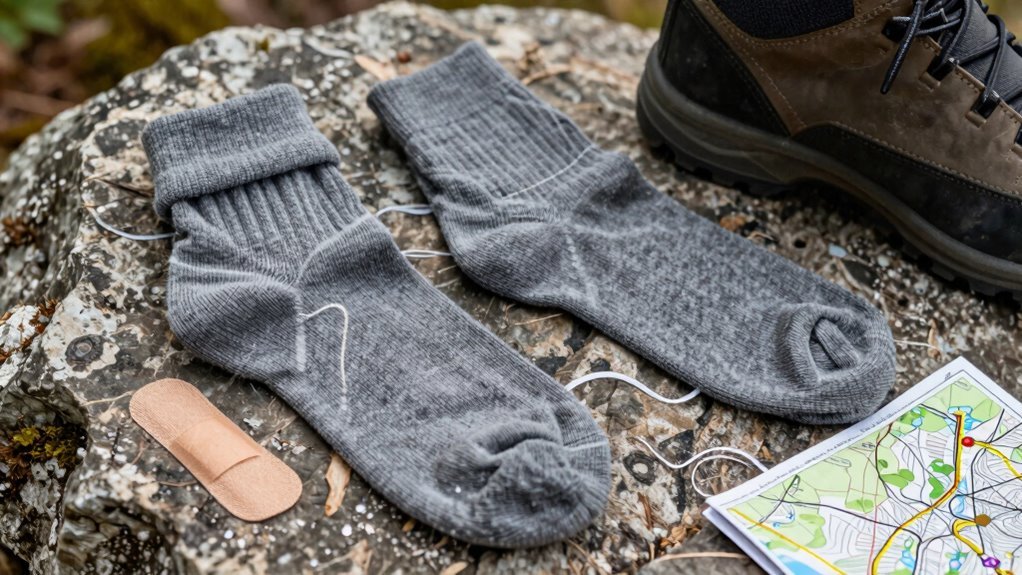
You’re begging for blisters if you’re hiking in cotton socks—it soaks up sweat like a sponge and chills your feet fast. Always choose moisture-wicking fabric like merino wool to keep your feet dry and comfortable on the trail. This simple switch can prevent common hiking socks mistakes that lead to discomfort and injury.
Don’t guess your size; measure your feet and consult sizing charts before buying. Ill-fitting socks either bunch up or squeeze too tightly, causing friction and hot spots with every step.
Match sock thickness to the weather and your hiking conditions for optimal performance. Seamless toes reduce irritation, and packing extra pairs in your pack is non-negotiable for long hikes. Your feet will thank you with every mile.
Wearing Cotton Socks in the Wilderness
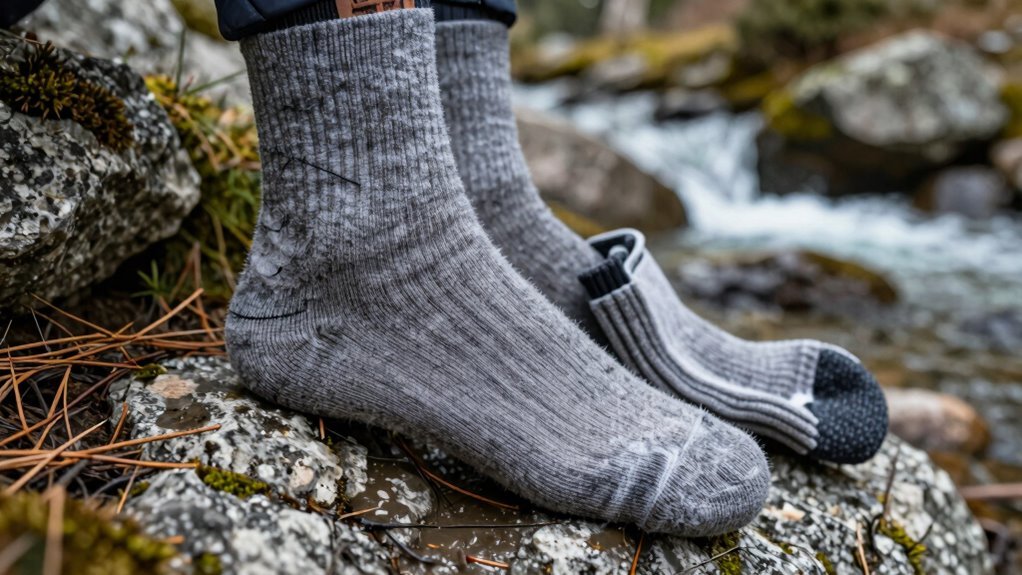
Ever wonder why your feet feel like they’ve been swimming halfway through a hike?
That’s cotton socks failing you in the wild.
They soak up sweat—up to 27 times their weight—and just sit there, wet and clingy.
Instead of pulling moisture away, they trap it against your skin, turning every step into a slippery, squishy mess.
Wet cotton rubs hard, spiking blister risk like a bad sunburn on your heel.
Blisters drop 80–90% when you switch to wool, which actually works while you walk.
Cotton also chills you, losing warmth fast when damp—dangerous in cold weather.
It dries slower than a sloth in mud, keeping you soggy all day.
Plus, it reeks, breeds rashes, and even risks trench foot.
Worst? Wet socks weigh more, making your legs work harder—like wearing ankle dumbbells!
Ditch cotton. Wool maintains insulation when wet, helping keep your feet warm even in damp conditions.
Your feet will thank you with every mile.
Ignoring the Importance of Proper Fit
Why do your socks feel like they’re staging a rebellion halfway up the trail?
Because ignoring fit turns your feet into blister battlegrounds.
Don’t just guess your size—measure your foot, not your shoe, and check brand charts; sizes vary!
If you’re between sizes, grab the smaller one—no extra fabric means no bunching.
Socks that are too big wrinkle, rub, and slip, causing hotspots fast.
Too small? They squeeze your toes, cut circulation, and still slide around.
Yikes.
Look for socks shaped for left and right feet—they hug every curve.
Elastic arch support and snug heels keep things in place.
Try them on with your boots: walk around, check for wrinkles, pressure, or slipping.
A perfect sock feels like a second skin—smooth, secure, and drama-free.
Your feet will thank you when the trail gets tough.
Heel alignment is critical—make sure the heel cup matches your foot’s heel position to prevent slippage and friction.
Choosing the Wrong Thickness for the Conditions
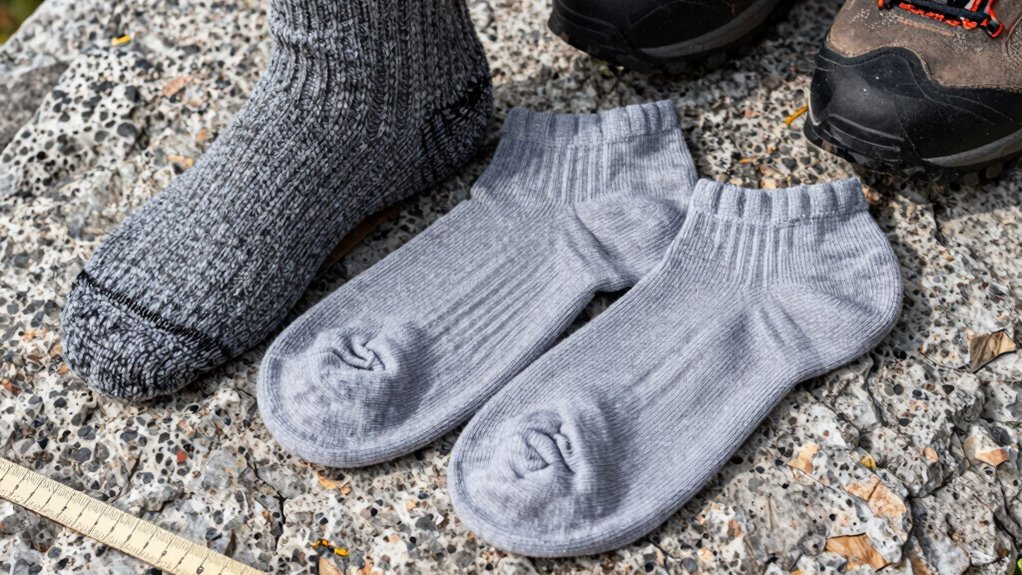
How’s this for a surprise? Picking the wrong sock thickness isn’t just annoying—it can ruin your hike before you hit the trail.
Too thick in summer? Hello, sweaty puddles!
Too thin in snow? Say hello to frosty toes.
Your conditions should call the shots, not your laundry pile.
Match your socks to the weather, terrain, and distance like a pro, and you’ll keep your feet happy mile after mile.
- Wear thin socks in warm weather—they breathe, dry fast, and keep heat at bay
- Choose thick, insulated socks when it’s cold—they trap warmth even when damp
- Pick heavy cushioning for rugged trails and long hauls to protect your feet
- Use medium thickness for backpacking in cool or changing conditions
- Always check boot fit—thick socks in tight boots spell trouble, no matter the weather
Proper moisture-wicking performance depends on selecting the right material, such as Merino wool and synthetic blends, which help regulate temperature and keep feet dry.
Skipping Moisture-Wicking Technology
What if the secret to happy feet isn’t just about keeping them warm—or cool—but actually letting them breathe?
If you’re skipping moisture-wicking tech, you’re basically inviting blisters to throw a party on your soles.
Cotton socks trap sweat like a swamp, increasing friction and sparking hotspots fast.
That soggy mess isn’t just gross—it’s a bacteria buffet, raising your chances of athlete’s foot and funky odors.
Regular socks also lose insulation when wet, leave feet cold, and sag with every step, killing comfort and performance.
But here’s the good news: wicking fibers like merino wool or COOLMAX pull sweat away, letting it evaporate quick.
Pair them with breathable shoes, and you’ve got a dry, cozy ride mile after mile.
Your feet won’t just thank you—they’ll practically do a happy dance.
Overlooking Seamless Construction
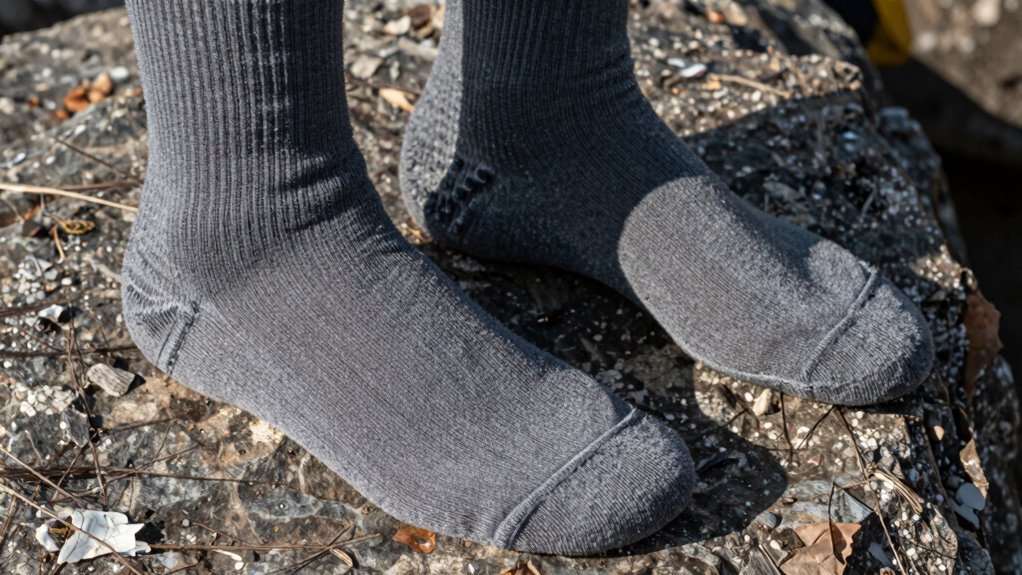
You’ve nailed moisture-wicking tech, so now let’s talk about what’s rubbing you the wrong way—literally.
Skipping seamless construction is like inviting blisters to a party on your toes.
Don’t hand out invites—shut the door with smart sock choices that keep friction low and comfort high.
- Seamless toes mean no raised ridges rubbing your skin raw, even after miles
- Flat-knit joints disappear on your feet, so you forget you’re even wearing socks
- Less friction = fewer hot spots and a 40% drop in foot issues reported by hikers
- Reinforced, smooth zones handle boot pressure without bunching or slipping
- Turn socks inside out to check—no ridge means you’ve found the holy grail of fit
Snag a pair with seamless magic, and your feet will thank you with every step.
Neglecting to Bring Extra Socks
Ever wonder why pro hikers always seem to have a spring in their step, even after miles of muddy trail?
It’s simple—they never skip extra socks.
Wet feet lead to blisters, chafing, and misery, especially if you’re stuck in damp cotton all day.
Don’t be that hiker limping into camp.
Pack at least two hiking pairs and a clean set for sleeping—your toes will thank you.
In rain or cold, toss in a third or fourth pair; they’re light and save your soles.
Dry feet mean fewer blisters, less fatigue, and way more fun.
Bonus: clean sleep socks keep your bag fresh and help you recover faster.
Swap midday, air them out, or wash one pair while wearing the other—smart and easy.
For winter or soggy trails, layer up with thick wool for warmth and dryness.
Just grab extras based on weather and trip length—better safe than soggy.
Your feet aren’t optional—treat ‘em right!
Frequently Asked Questions
How Often Should I Replace My Hiking Socks?
You should replace your hiking socks every 6–12 months, or sooner if they’re taking a real beating out there.
Thin ones wear out faster—think 500–750 km—while thick merino pairs can go 1,000–1,500 km.
Holes?
Smell you can’t kill?
Elastic gone limp?
Yep, time to say goodbye.
Keep your feet happy, stink-free, and blister-free—your trail buddies will thank you!
Can I Wear Hiking Socks With Sandals?
Yeah, you can totally wear hiking socks with sandals—just pick the right pair!
Thin, moisture-wicking socks keep your feet cool and blister-free, while split-toe designs snugly hug toe posts.
Match sock height to your sandal straps, guarantee a tight fit, and avoid cotton like the plague.
It’s like giving your feet a high-five: protected, comfy, and ready for adventure, even when the trail gets cheeky.
Should I Wear One or Two Pairs of Socks?
You should wear two pairs if you’re tackling long or rough trails, ’cause that combo slashes friction and blisters.
Slip on a thin liner under a cushy outer sock—they team up like hiking heroes!
But for short, sunny strolls? One lightweight sock’s plenty.
Just don’t let fashion override function—your feet’ll thank you later.
Seriously, happy feet mean happy trails, and nobody wants a blistered bear on the trail!
Are Wool Socks Itchy for Sensitive Skin?
No, wool socks aren’t itchy for sensitive skin—especially if you pick merino. You’ll love how soft and smooth they feel, not like scratchy holiday sweaters from your grandma. Merino wicks moisture, fights funk, and won’t irritate your skin. Think of it as a cozy hug for your feet, minus the itch. Your sensitive skin? It’ll thank you with every step.
Do Hiking Sock Colors Affect Performance?
Nope, sock color doesn’t make you hike faster—or slower—so don’t worry if you’re rocking neon pink on a midnight trail.
Performance comes from materials like Merino wool and smart construction, not dye jobs.
Think of color like lipstick on a mountain goat: fun, maybe flashy, but not changing the beast.
You’ll stay dry, warm, and blister-free thanks to fabric magic, whether your socks are boring beige or loud enough to scare bears.
Conclusion
Think of your hike as a dance with nature, and your socks? They’re your dance partners. Step in cotton, and you’ll slip into blisters. Wear the wrong fit, and it’s like two left feet. But glide on moisture-wicking, seamless socks, snug and smart, and suddenly, every step sings. Pack extras, because surprise wet feet are the clumsy cousin no one invited. Get it right, and you’re not just walking—you’re waltzing through wonder.
References
- https://thesocksource.com/why-not-to-wear-cotton-socks-hiking-the-case-for-wool-socks/
- https://hikemuch.com/cotton-socks-hiking/
- https://www.nordicsocks.uk/blogs/magazine/wool-vs-cotton-socks-for-hiking-which-is-the-best-material-for-hiking-socks
- https://darntough.com/blogs/the-alternate-stitch/cotton-socks-kill
- https://hackyourpack.com/all-posts/2018/5/18/why-hikers-say-cotton-kills
- https://www.alpargali.com/blogs/hiking/why-cotton-bad-hiking
- https://www.rei.com/learn/expert-advice/backpacking-socks.html
- https://sportfits.eu/magazine/how-to-choose-the-right-hiking-socks
- https://darntough.uk/blogs/the-alternate-stitch/how-to-choose-the-right-hiking-socks-1
- https://www.stio.com/blogs/hiking-gear/what-are-hiking-socks