Do You Really Need Hiking Shoes?
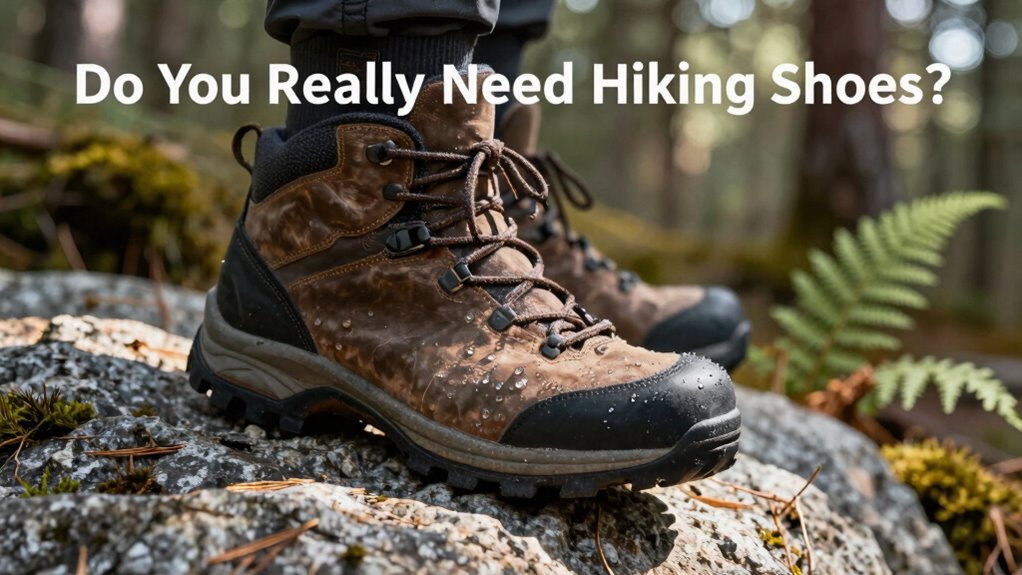
You don’t always need hiking shoes, but they make a real difference when trails turn challenging. Whether you’re facing mud, rocks, or slippery surfaces, hiking footwear is built to handle it all.
These shoes grip tough terrain, provide better support, and protect your feet from thorns, water, and rough ground. They’re tougher and more stable than regular sneakers, helping you move confidently without ending up with blisters.
For easier paths, lightweight trail runners are a great option. On tougher off-road terrain, more durable hiking boots offer the protection and support you need.
Stick to low or mid-cut styles for better mobility, especially when carrying a light pack. Let your feet move freely and enjoy the trail—hiking shoes keep you comfortable, blister-free, and ready for more.
Understanding the Difference Between Hiking Shoes and Regular Sneakers
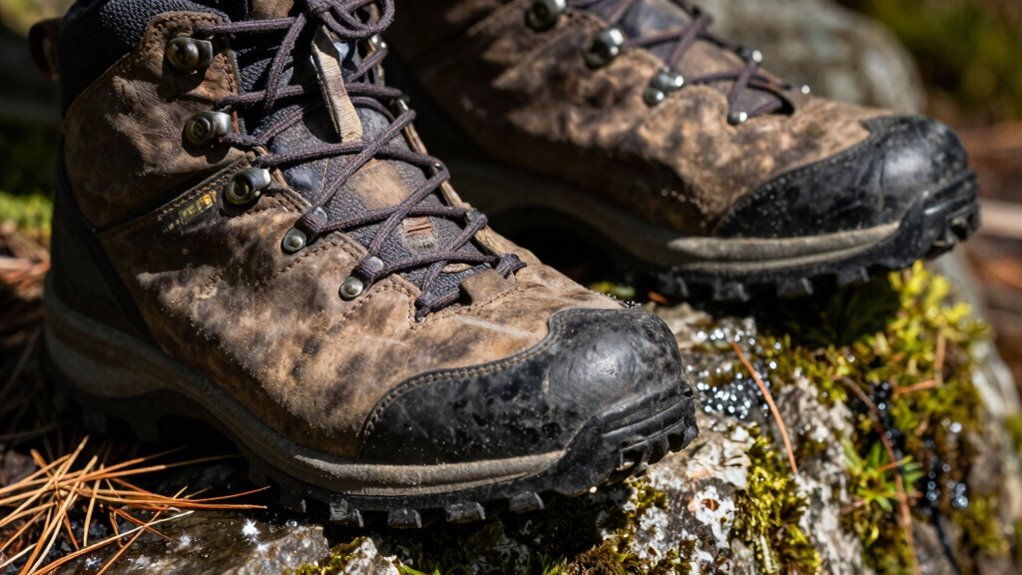
Ever wonder why your sneakers slip on a muddy trail while hiking shoes seem to stick like magic? That’s because hiking shoes pack deep, chunky treads that claw into dirt, gravel, and wet grass like tiny mountain claws.
Sneakers? They’re smooth operators built for sidewalks and gym floors, not slippery roots or rainy rocks. You’d be surprised how quickly a simple trail turns sneaker-friendly terrain into a face-first moment.
Hiking shoes also fight wobbles with stiffer soles and better ankle support, so you don’t roll an ankle stepping on a tilted log.
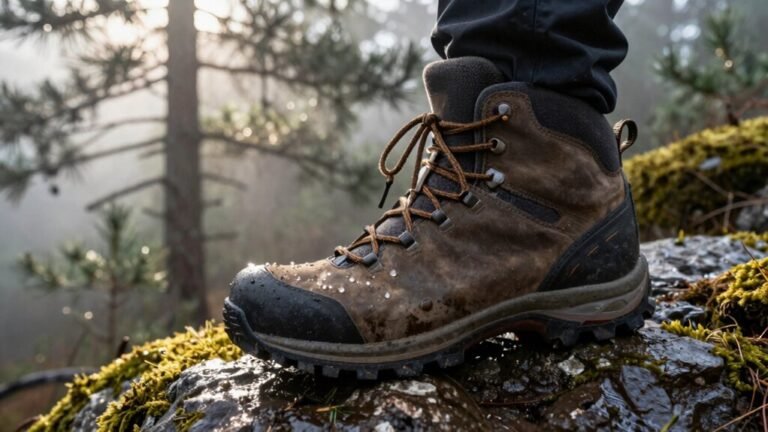
They’re tough, too—built with rugged materials that laugh at thorns and rocks. more durable materials
Sure, they might weigh a bit more, but they won’t quit on you halfway up a hill.
Think of them as adventure bodyguards: always ready, never slipping, and way more fun than a band-aid.
Key Features of Hiking Footwear That Enhance Performance
What makes your feet feel springy on a rocky downhill stretch or keep you steady when scrambling over slick boulders?
It’s the smart design baked into hiking footwear.
You get cushioning from EVA or polyurethane midsoles that absorb shocks without weighing you down, and stiff soles add stability when the trail gets wobbly.
Your ankles stay safe thanks to high-cut support, especially with a heavy pack, while reinforced toe caps shield against stubs and debris.
Aggressive tread patterns grip mud, rocks, and roots like a pro, and Vibram outsoles make sure you’re not slipping when it counts.
Breathable materials keep your feet cool and dry, even when sweat kicks in.
Plus, durable rubber and full-grain leather mean your boots won’t quit after a few hikes.
They’re built to last, shape to your feet, and keep you moving—because nobody wants a blistery exit from a great adventure.
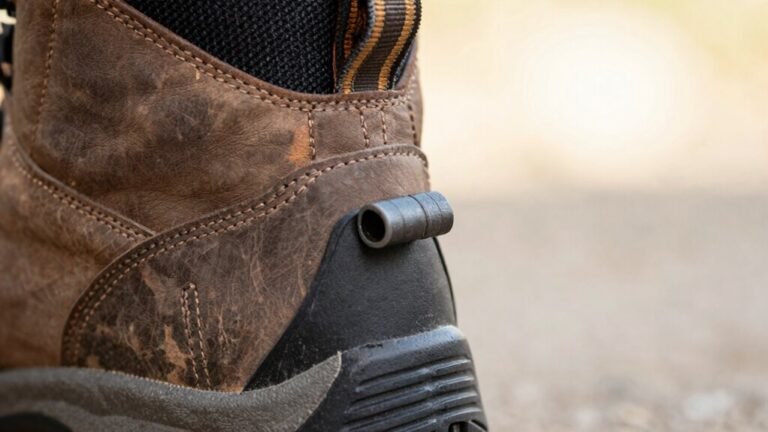
A snug heel prevents slippage and enhances overall fit, reducing hot spots and improving control on variable terrain.
How Trail Conditions Influence Your Footwear Choice
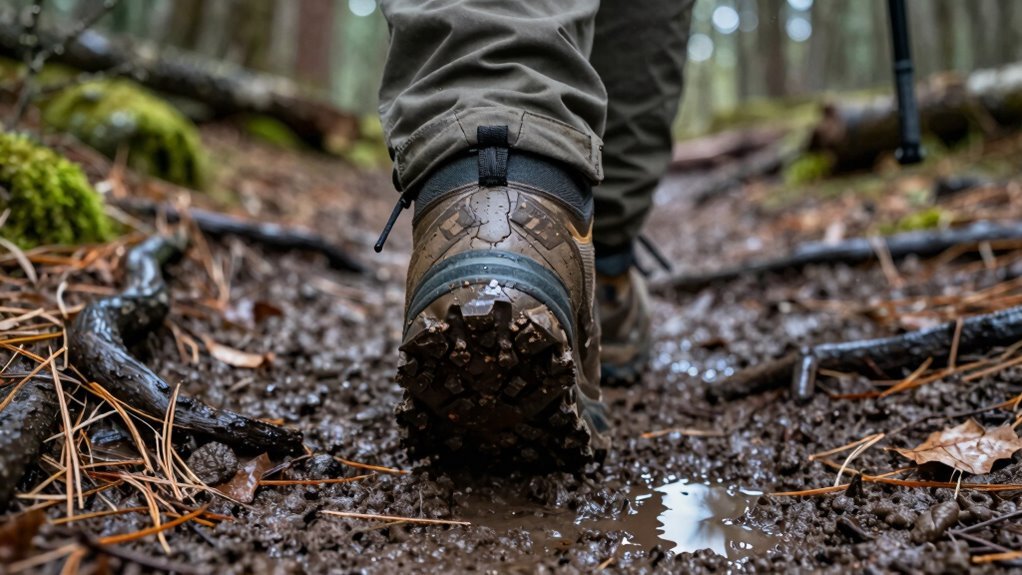
How’s your footwear holding up when the trail throws a curveball?
If you’re on smooth, dry paths, lightweight trail runners or even road shoes keep you nimble and cool—perfect for racking up miles without the sweat.
Hit roots, rocks, or creek crossings? You’ll want sturdier soles, extra grip, and a bit more cushion to bounce back.
Muddy and wet? Waterproof boots with chunky lugs save the day (and your socks), though they’ll cook your toes in the heat.
On rugged, unpredictable terrain, high-cut boots lock things down and protect your feet from gnarly drops and surprise puddles.
But in dry heat, breathable mesh is your best friend—just don’t go full sandal and risk toasty toes or blisters.
Pick your shoe like you pick your adventure: match it to the trail’s vibe, and let your feet celebrate every step.
Your ideal hiking footwear should feel almost forgettable on the trail.
The Role of Ankle Support on Uneven Terrain
You’ve picked your shoes to match the trail’s mood, but what happens when rocky scrambles and sudden drops test your balance?
High-tops may limit ankle rolling by a few degrees, but studies show they don’t actually reduce injury rates much.
Surprise—they’re not ankle superheroes.
Your body loves movement, and stiff boots can weaken your natural stability over time.
Strong, flexible ankles actually do a better job protecting you than a rigid shoe ever could.
Lightweight trail runners let your feet move freely, building strength with every step.
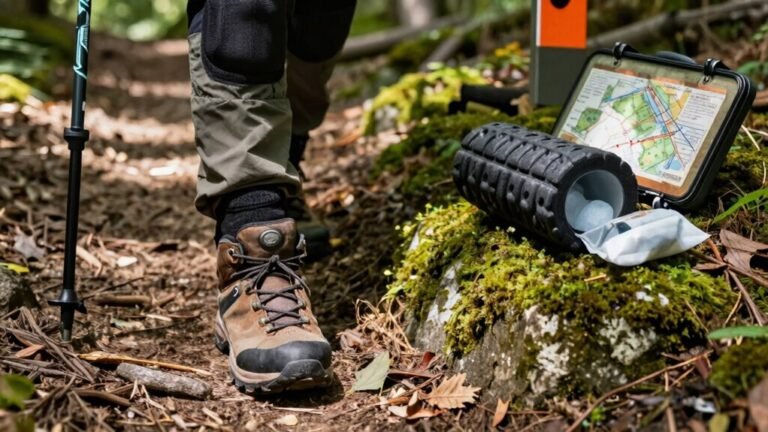
Trekking poles help too—shift weight, boost balance, and save your ankles on sketchy terrain.
And if you’re prone to rolling, a brace can help without locking things down.
So instead of banking on bulky boots, trust your body’s ability to adapt.
Your ankles might just thank you when the trail gets tricky.
Preventing Blisters and Foot Fatigue During Long Walks
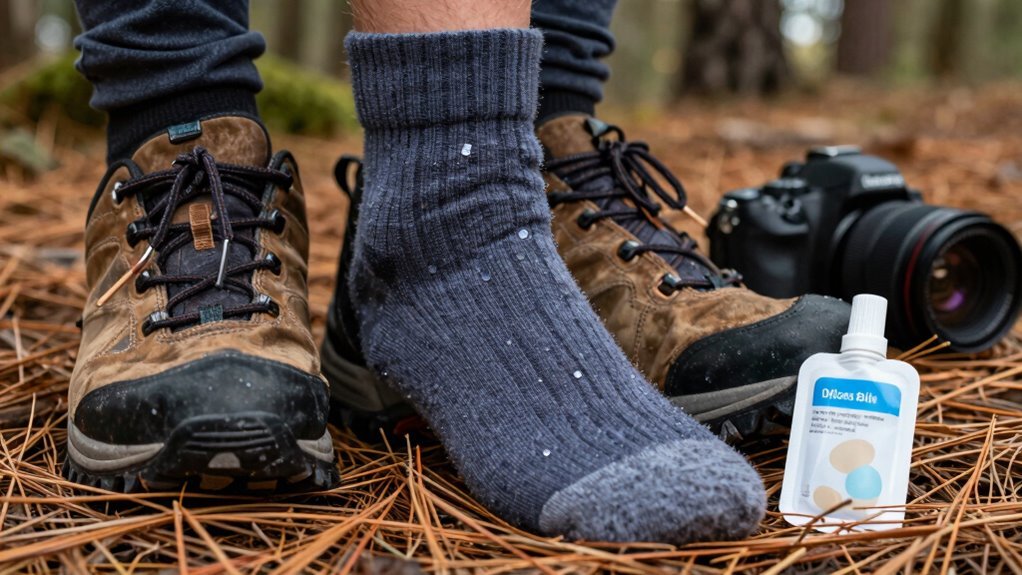
While your trail runners tackle the terrain, don’t let sore spots and sweaty feet steal the fun—blisters and foot fatigue are no match for the right prep.
Ditch cotton socks—they’re moisture magnets!
Go for synthetics or wool, and try double-layer socks; they slash blisters by creating smart friction zones.
Keep feet dry: swap sweaty socks fast, because soggy skin slips and burns.
Spot a hot spot? Tape it immediately—paper tape or Compeed patches work like body armor.
Try Engo patches in your shoes—they fight friction for weeks!
Slather on petroleum jelly if you like, but science says taping’s stronger.
Train your feet: toughen skin with low-level rubbing (yes, really).
And don’t forget: snug heel lacing stops slippage, while loose lacing up top prevents pressure.
Your feet aren’t just along for the hike—they’re the stars.
Treat ‘em right, and they’ll carry you happy and blister-free!
When Everyday Shoes Might Be Good Enough
If your idea of a wild adventure is a smooth trail through the woods with more flowers than boulders, your everyday running or walking shoes might just be up to the task.
You’re not climbing mountains—you’re strolling on 4-foot-wide paths where roots behave and rocks take the day off.
Your trusty runners offer plenty of cushion, and let’s be honest, they breathe way better than clunky boots.
Trail runners? Even better—light, springy, and ready to hustle.
Walking shoes work great too, especially with that little extra support and toe armor.
On these gentle hikes, you don’t need deep lugs—just decent grip on dry, friendly terrain.
Plus, less break-in time means more trail time.
Sure, they won’t last forever—maybe 500 miles—but hey, neither does your favorite playlist.
For short, sweet outings, everyday kicks aren’t just good enough—they’re kind of perfect.
Waterproofing and Weather Considerations for Hikers
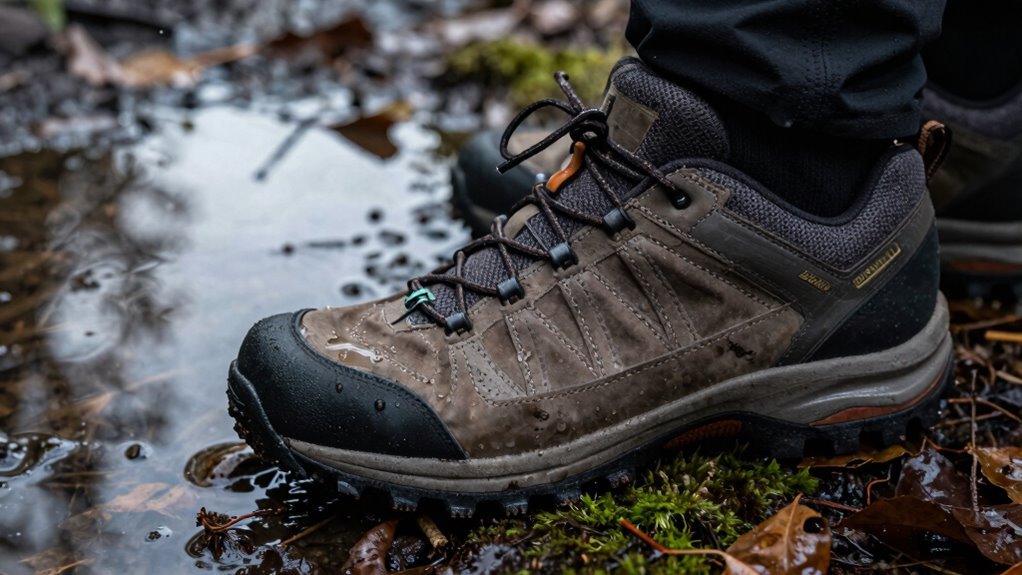
Ever wonder why your feet sometimes feel like they’re swimming even when the trail’s dry?
That’s waterproofing for you—great at keeping rain and puddles out, but not so great at letting sweat escape.
If you’re hiking in steady rain or snow, go for high waterproofing (10,000 mm+); boots with Gore-Tex or Nubuck leather have your back.
But in warm, humid weather, you might end up steaming your socks!
Non-waterproof shoes breathe better and dry faster—perfect for sunny 3-season hikes.
DWR coating helps at first, but reapply it when water stops beading.
And hey, no need to waterproof your breathable trail runners—trust us, you’ll thank yourself later.
Pick smart for the weather, and your feet will stay happy, dry, and ready for every splashy, mucky, or sunny mile.
Balancing Comfort, Durability, and Cost for Beginners
So, how do you pick the right hiking shoes without breaking the bank or your feet?
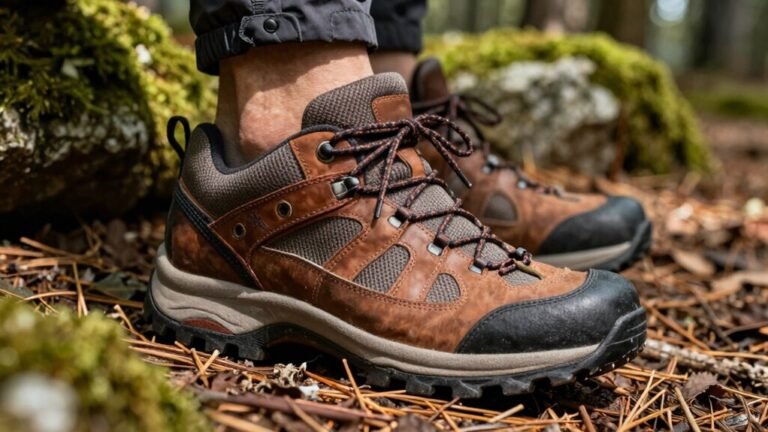
Start with comfort—go for trail runners (20–25 oz) or lightweight hiking shoes that bend easily and need zero break-in.
They’re a breeze on day hikes and won’t murder your calves on uphills, especially with a moderate heel drop.
Durability? Most hiking shoes last 800 miles—plenty for beginners clocking weekend trails.
Just avoid ruining the tread by stomping around the city daily.
And let’s talk cost: $100–150 gets you solid trail runners or shoes, while boots often cost twice as much.
Save those splurges for later.
If you’re new, skip the stiff boots and zero-drop models—they’re overkill and tough on rookie legs.
Stick to low-cut or mid-cut styles, pack light (under 30 lbs), and let your feet fly.
Happy trails—and no blisters, promise!
Frequently Asked Questions
Can I Wear Hiking Shoes for Urban Walking?
Yeah, you can totally wear hiking shoes for urban walking—just don’t expect them to moonlight as dance shoes.
They’re tough, supportive, and handle puddles like champs, but they’re a bit stiff on pavement and might make you feel like a sasquatch after a few hours.
If you’re clocking miles on concrete, they’ll work, but grab a pair with cushy soles.
Your feet will thank you—and your city strolls won’t feel like mountain climbs.
Are Hiking Shoes Suitable for Snowy Conditions?
Yes, you *can* hike in snow with hiking shoes—just not blizzards or sheer ice.
70% of winter hikers say their grippy soles handle light snow fine, especially with deep lugs and waterproofing.
You’ll stay dry and stable on packed trails, but when it’s slick, add microspikes.
Think of them like winter tires for your boots—suddenly, icy paths feel way less sketchy.
How Often Should I Replace My Hiking Shoes?
You should replace your hiking shoes every 500 miles or so, but hey, they’re not like milk—no strict expiration!
If you’re clocking weekly hikes, check them every 6 months.
Look for worn treads, funky bends, or sad-looking soles.
When they start feeling flat or sketchy on trails, it’s time.
Treat ’em well, and they’ll hike you happy—just don’t wait till they fall apart mid-adventure!
Do Hiking Shoes Require a Break-In Period?
Yeah, hiking shoes do need a break-in—though not like ancient torture devices your grandpa swore by.
You won’t need to suffer for weeks, but skipping it’s like jumping into a marathon barefoot—ouch.
Wear them around the house, then short walks, maybe even impress your cat with your new gear.
Gradually ramp up, check for hot spots, and tweak laces or socks.
A little love now saves blistered feet later—trust me, your toes will thank you on trail day!
Can I Machine Wash My Hiking Footwear?
No, you can’t machine wash your hiking footwear—save the drama for laundry day with towels, not your boots!
The washer beats them up, weakens glue, and ruins waterproof layers.
Just say no to soggy soles and sad seams.
Instead, hand clean with soapy water and a brush, then let them air dry naturally.
Your boots will thank you by lasting longer, looking fresher, and staying ready for the next trail crush.
Conclusion
So, do you really need hiking shoes? Well, if you’re swapping forest trails for city sidewalks, your sneakers might squeak by—but why risk sore feet or slips when the right shoes boost your adventure? Think of hiking boots as trusty trail guardians, shielding you from mud, rocks, and surprise puddles. They’re not magic, but close! Comfort, support, and dry toes? Yes, please! Your feet will thank you later—with fewer blisters and way more “let’s keep going!”
References
- https://www.chaar.us/pages/news.html/whats-the-difference-between-hiking-boots-and-sneakers/
- https://www.grisport.ca/blog/walking-running-and-hiking-shoes-whats-the-difference
- https://www.overlookboots.com/blogs/boots/hiking-boots-vs-trail-shoes
- https://www.rei.com/learn/expert-advice/hiking-boots-hiking-shoes.html
- https://www.outdoors.org/resources/amc-outdoors/outdoor-resources/hiking-boots-vs-hiking-shoes-vs-trail-runners-choosing-whats-right-for-you/
- https://www.adidas.com/us/blog/1000409-trail-running-shoes-vs-hiking-shoes
- https://www.alpenglowgear.com/blogs/adventureawaits/key-features-to-look-for-in-mens-light-hiking-shoe/
- https://nicksboots.com/blogs/blog/what-to-look-for-in-hiking-boots-a-guide-to-comfort-durability
- https://mtlodging.com/montana-hiking/
- https://www.wildernesstravel.com/blog/expert-tips-for-choosing-hiking-boots/