Leave No Trace Basics for Beginners
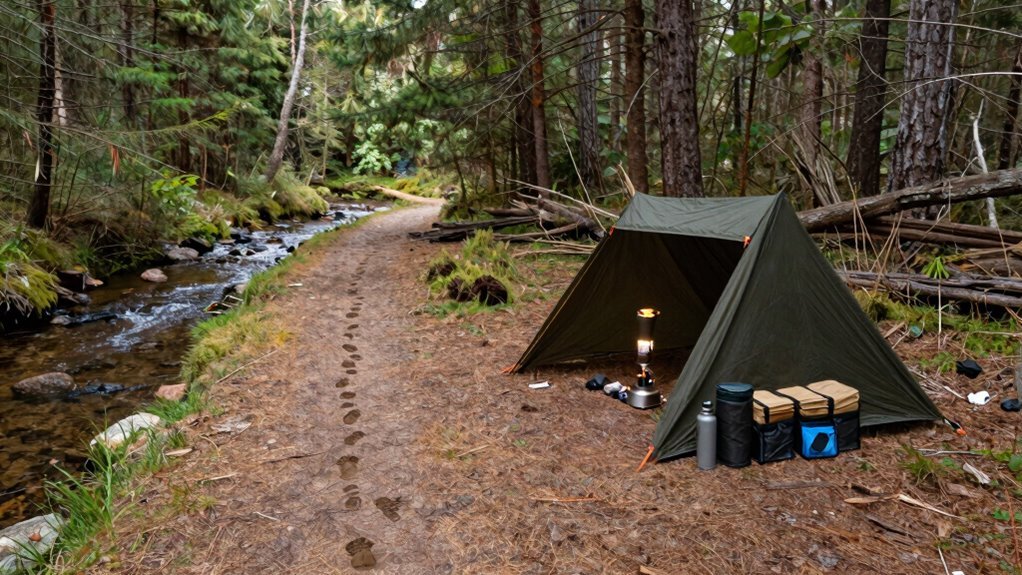
Pack smart, stick to trails, and camp on tough surfaces like rock or gravel—your choices protect nature. These Leave No Trace basics help minimize your impact and preserve the outdoors for future adventures.
Bring a stove instead of making a fire, and if you do have one, keep it small and clean. This simple practice reduces damage and supports responsible backcountry travel.
Pee 200 feet from water, bury poop in a cathole, and pack out toilet paper like a pro. Proper waste disposal is a core part of Leave No Trace basics for beginners.
Leave rocks, cones, and critters be—take only pics and epic memories. Respecting natural features keeps ecosystems intact.
Oh, and tell a buddy your plans—just in case you become a trail legend. Sharing your itinerary supports safety and accountability in the wild.
Plan Ahead and Prepare for Your Outdoor Adventure
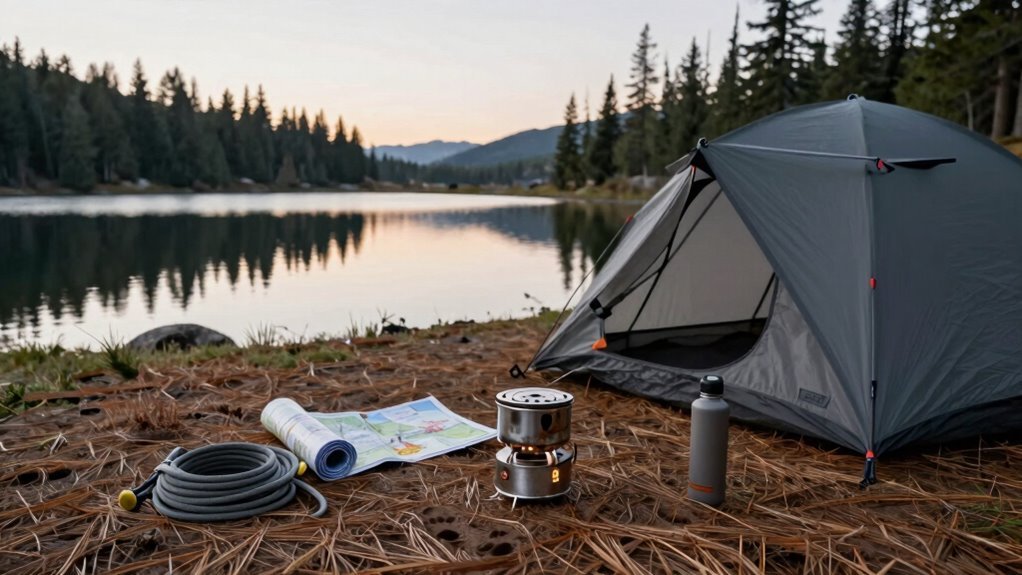
Before you lace up your hiking boots and head for the hills, a little prep goes a long way—like bringing snacks, but way more important.
You’ll want to snag permits early, ’cause nobody likes showing up to a trailhead only to find it’s full—talk about a mood killer!
Check for closures or weather snags so you don’t end up hiking into a surprise avalanche (not the vibe).
Know the rules: fire bans, bear canister musts, group size limits—you’ll look like a pro, not a rookie.
Match the hike to your crew’s skills, so no one’s crying by mile two.
Pack the 10 essentials, scout the terrain, and share your plans with a friend (text them a dramatic “if I’m not back by Tuesday…” for fun).
Proper planning helps minimize your impact on the environment, so always Plan Ahead and Prepare for the specific conditions and regulations of the area you’re visiting.
Planning isn’t just smart—it’s your secret weapon for epic, safe, nature-loving adventures.
Travel and Camp on Durable Surfaces
Step lively and keep your boots on the tough stuff—nature’s got a sweet spot for resilience, and it’s up to you to stick to it.
Stick to trails, rock, gravel, or sand to protect delicate plants and soil.
Muddy trail? Walk right through it—don’t trample roots and moss by going around.
Off-trail? Step on durable spots like stones or snow, not fragile alpine greens.
Skip shortcutting switchbacks; trails are built smart, and cutting erodes hillsides fast.
When camping, pick spots at least 200 feet from water and trails.
Use existing sites with rocks or gravel underfoot—your tent won’t mind, and the land will thank you.
Cook, sleep, and chill on durable surfaces, never on moss or baby plants.
And hey, lichens on rocks? They’re tough-looking but scar easily—treat ‘em like nature’s paint.
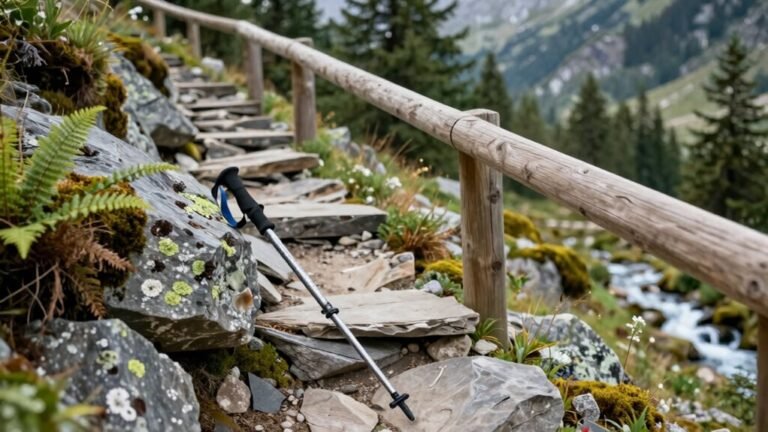
Platforms are installed on muddy trails to prevent erosion and protect surrounding vegetation.
Keep impacts small, stay centered, and let fragile areas stay wild and whole.
Dispose of Waste Properly
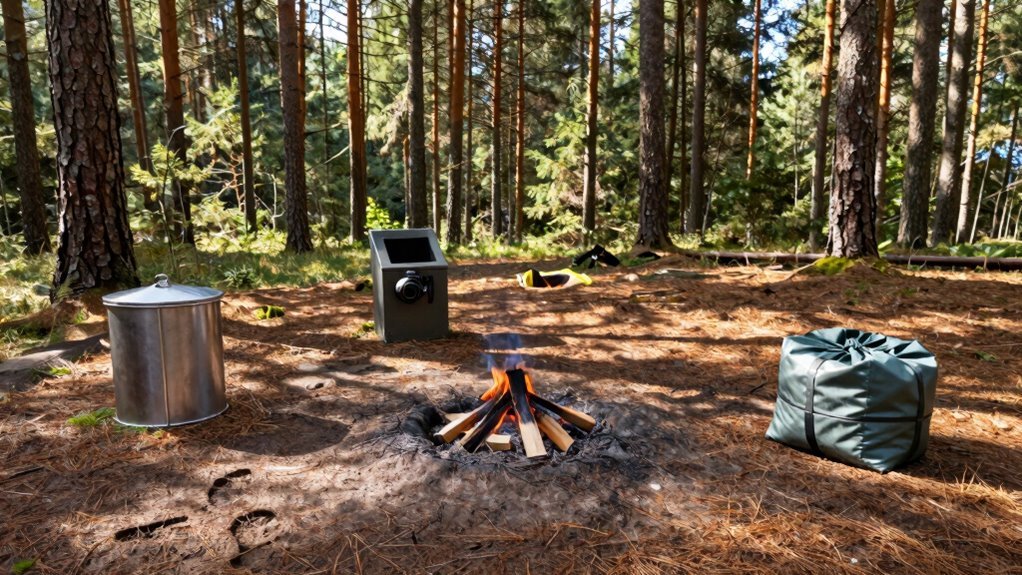
Dig deep and keep it clean—your backcountry bathroom game matters!
Use a trowel to dig a cathole 6–8 inches deep, at least 200 feet from water, trails, and camp.
Do your business, then cover it with dirt and natural stuff so it blends in.
If you’re staying multiple nights, spread out your holes—don’t turn one spot into a landfill!
When digging’s impossible—like on snow or rock—WAG bags save the day.
Pack out all solid waste in sealable, leak-proof containers.
And never bury toilet paper or personal items: toss them in ziplock bags with a pinch of baking soda to cut the stink.
Yep, that includes tampons and condoms—pack it all out!
Strain dishwater too, scatter the liquid far from camp, and bag the scraps.
Leave no trace means *no trace*—not even a soggy Q-tip!
Be the hero who leaves nature cleaner than you found it!
Pack it in, pack it out; this principle ensures that all waste is removed from natural areas.
Leave What You Find
While you’re out exploring, imagine every rock, pinecone, and ancient artifact as part of a giant outdoor museum—cool to look at, but not for taking home.
Resist the urge to pocket that shiny stone or snap off a piece of old woodwork; leave them be.
Touching artifacts can harm them, and taking them might even be illegal—no one wants a National Park fine for a souvenir.
Snap a photo instead, then let others have the same “Whoa!” moment you just did.
Move a rock and you could mess with a tiny creature’s home or speed up erosion—nature’s got its own design plan.
And skip the DIY projects: no stacking cairns, building forts, or hammering nails into trees.
Those cool spots you find? They’re perfect as-is.
Remember: take only pictures, leave only footprints, and let the forest keep its secrets (and its pinecones).
Minimize Campfire Impacts
You’ve already nailed the art of leaving nature’s treasures exactly where they belong—whether it’s that mysteriously smooth river rock or a crumbling piece of old pioneer wall—so now let’s talk about one of the most beloved (and tricky) outdoor traditions: the campfire.
First, ask yourself—do you really need one? Skip it if you can; your camp stove works just fine.
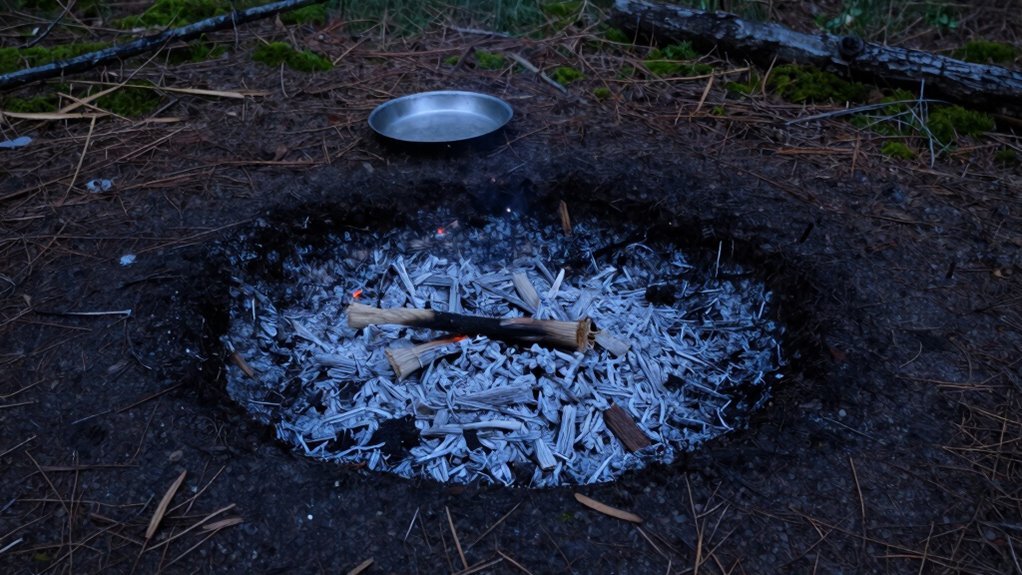
If you do light up, use established rings, keep it small, and gather only dead wood smaller than your forearm—no chopping trees, please.
Always check if fires are allowed, and never haul in firewood from home—those bugs hitching rides aren’t welcome.
Keep it burning hot so it turns to ash, not junky half-logs.
When you’re done, douse it *completely*—we’re talking soup-level soaked—stir, cool, and double-check with your hand.
Leave no trace, not even a warm rock.
Your fire game should be clean, safe, and invisible by morning.
Respect Wildlife
Ever wonder what it’s like to be a stealthy forest ninja? You can be one by respecting wildlife.
Keep 25 yards from most animals, 100 from bears and wolves—use the “thumb trick” to judge distance. If your thumb covers the animal, you’re far enough.
Bring binoculars for close-ups instead of stepping closer.
Back away slowly if an animal comes near—don’t wait for drama!
Never feed them; that chipmunk might love Cheetos, but they’re junk for wildlife.
Feeding harms health and gets animals in trouble (plus, it’s illegal!).
Store food, trash, and snacks in bear canisters, 200 feet from camp.
Keep pets leashed or leave them home.
Stick to trails, skip chasing critters, and never touch young ones—even if they look lost.
Observe quietly, leave no trace, and let animals stay wild.
Your ninja stealth? It’s the ultimate compliment.
Be Considerate of Other Visitors
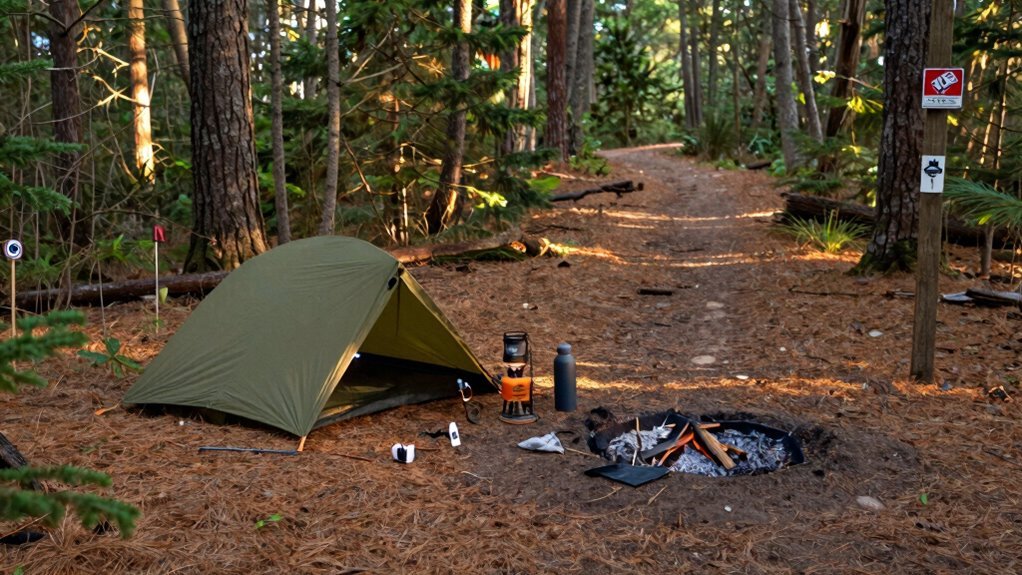
Step lightly and speak softly—your outdoor adventure doesn’t have to come with a loud soundtrack.
Keep the peace so everyone can hear the breeze, not your playlist.
Here’s how to be the considerate trail buddy people love to meet:
- Mind the noise – Use headphones, speak low, and skip phone calls (unless you’re narrating your hike to an imaginary audience).
- Keep groups small – Fewer people mean less noise, fewer traffic jams on narrow trails, and more room for others to enjoy nature’s serenity.
- Yield like a pro – Uphill hikers rule the trail, bikers give way, and always step aside politely—think of it as outdoor manners with dirt under your boots.
A little thought goes a long way.
Be the reason someone else’s day on the trail feels magical.
Practice Good Outdoor Etiquette
Treading lightly on the land means respecting the wild as a guest, not a conqueror, so stick to established trails and camp only where you’re supposed to—your footprint should be felt only in the stories you tell, not in the soil you trample.
Choose rock or gravel to rest on, not fragile moss or flowers, and keep groups small to avoid crushing nature underfoot.
Leave rocks, pinecones, and petroglyphs alone—let someone else discover that “lucky” striped stone or ancient carving.
Don’t stack cairns unless you’re following local rules; we’re here to explore, not redecorate.
Keep pets leashed and voices low so wildlife can stay wild—no surprise selfies with a startled deer!
Use a camp stove instead of a fire when you can, and if you do build one, keep it tiny and tidy.
Pack out every scrap, even apple cores—they’re not snacks for squirrels.
You’re not just hiking; you’re being nature’s cool, responsible BFF.
Frequently Asked Questions
Can I Bring My Pet on the Trail?
Yes, you can bring your pet on the trail—but check rules first, since many parks restrict where pets can go.
Keep them on a 6-foot leash, pack water and waste bags, and watch for overheating.
Stick to trails, yield to others, and never let your pup chase wildlife.
A well-behaved dog makes outdoor adventures more fun for everyone—plus, they’re way cuter in booties anyway!
Are Drones Allowed in Wilderness Areas?
No, you can’t fly drones in wilderness areas—it’s a firm no-go.
You’d be breaking the law, and trust me, rangers don’t hand out warnings like party favors.
Drones count as motorized gear, which is banned to protect wildlife and keep nature wild.
They scare animals, buzz like angry bees, and ruin the peace.
Plus, FAA rules keep drones way up high—soaring selfies aren’t happening.
Leave your drone at home and let the wilderness breathe.
What Should I Do if I Get Lost?
You stop, take a deep breath, and stay calm—panic won’t help you find your way!
Check your surroundings, look for landmarks, and retrace your steps if it’s safe.
If not, stay put, build a small shelter, and use a whistle or fire to signal for help.
You’ve got this—help’s coming, and you’re smarter than the wilderness!
How Do I Handle Menstruation in the Backcountry?
You’ve got periods, and Mother Nature doesn’t care if you’re summiting a trail—so be ready, not scared!
Slip in a cup, rock period panties, or go old-school with tampons, just pack out everything, yep, even the used bits.
Bury cup contents in a cathole, stash trash in odor-proof bags, and please, for the love of wilderness, don’t gift-wrap pads in toilet paper and call it “composting.”
Keep clean, stay comfy, and own your flow—literally.
Can I Use Soap in Natural Water Sources?
No, you can’t use soap in natural water sources—sorry, lake soapsuds aren’t a good look.
Even biodegradable soap harms fish and messes with water chemistry.
Those “eco-friendly” bubbles? They don’t break down fast in lakes and can fuel slimy algal blooms.
Instead, haul your soapy water 30 meters away and strain it through soil.
Your fish friends will thank you—no more soap opera disasters in their home!
Conclusion
You’ve packed light, left only footprints, and maybe even resisted singing campfire karaoke at full volume—good call. Nature tosses you a quiet high-five when you play it cool: no trash, no fuss, just happy trails. Keep those woods whispering your name, not groaning about your leftovers. Every small choice? That’s you, quietly being awesome. So go ahead, wander on—just don’t forget to be the forest’s best-kept secret.
References
- https://www.nps.gov/articles/000/idkt_lnt_1.htm
- https://www.scouting.org/outdoor-programs/leave-no-trace/
- https://www.outdoors.org/resources/amc-outdoors/conservation-and-climate/leave-no-trace-plan-ahead-and-prepare/
- https://www.greenmountainclub.org/hiking/leave-no-trace/
- https://appalachiantrail.org/news-stories/tips-for-applying-leave-no-trace-to-hiking-adventures/
- https://discovervail.com/blog/principle-1-plan-ahead-prepare/
- https://lnt.org/why/7-principles/
- https://www.outdoors.org/resources/amc-outdoors/outdoor-resources/leave-no-trace-travel-and-camp-on-durable-surfaces/
- https://www.pcta.org/discover-the-trail/backcountry-basics/leave-no-trace/travel-camp-durable-surfaces/
- https://www.nps.gov/articles/000/idkt_lnt_2.htm