Bear Safety Basics for Hikers
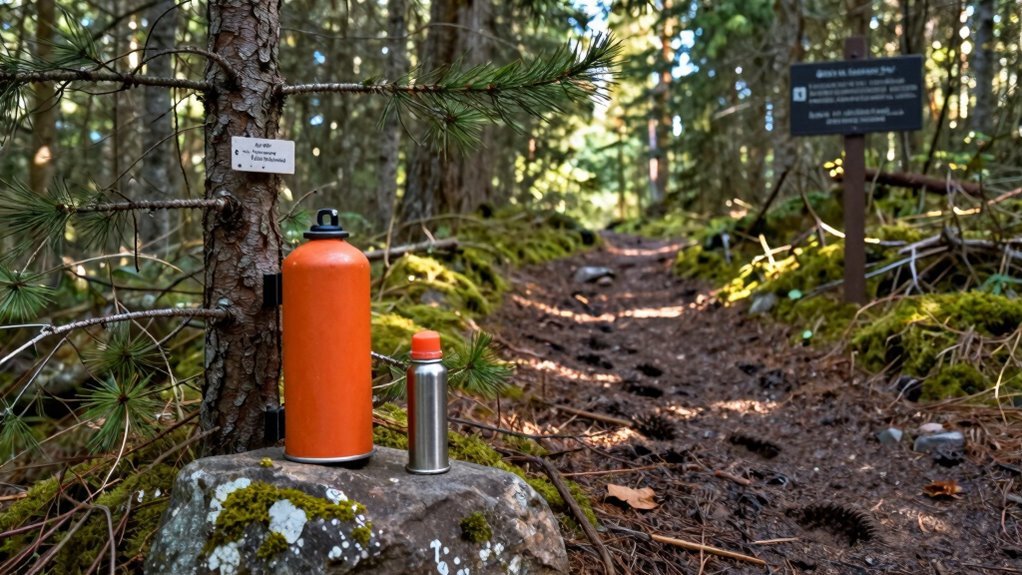
ators or hang it properly at least 10 feet off the ground and 4 feet from the trunk. Keep all scented items—like toothpaste, trash, and cookware—well away from your sleeping area to avoid attracting bears.
Spot fresh tracks, droppings, or claw marks on trees? These are signs of recent bear activity and should be taken seriously. Pay attention to the environment—it’s how bears communicate, and you need to read the signs.
Stay at least 100 yards from any bear and use binoculars or a zoom lens to observe quietly. Never approach, regardless of how calm the animal seems, and always prioritize distance and escape routes.
Carry bear spray within easy reach and know how to use it—don’t wait until a charge begins to find it. Hiking in groups also reduces risk, as bears are less likely to approach multiple people.
You’re in their home, so be smart, stay safe, and you’ll love every wild moment. There’s even more to keep you out of claw-did-you-know territory.
Know the Difference Between Bear Species
Hitting the trail? Great!
But first, learn to tell your bears apart—no, not by asking them politely.
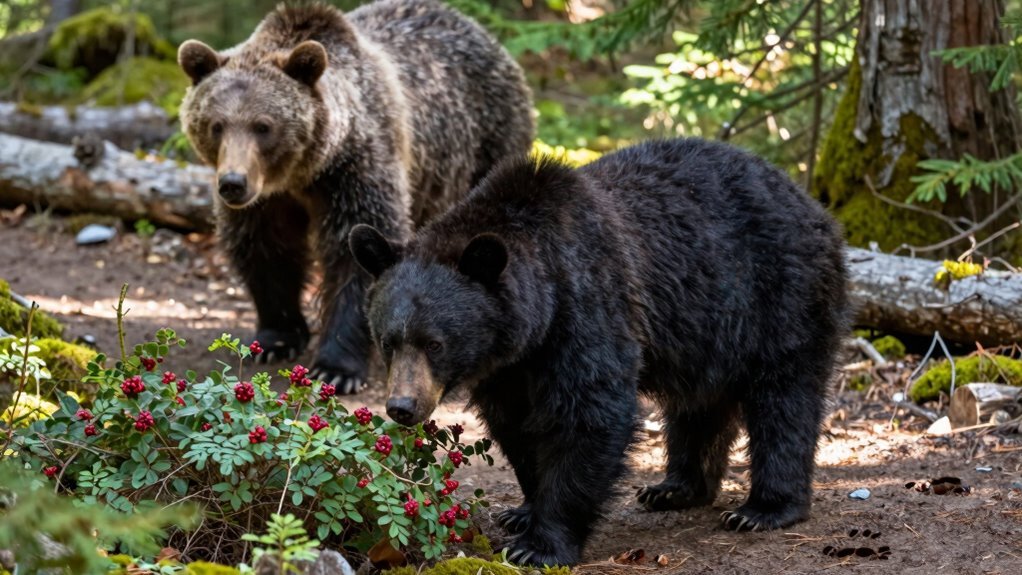
Black bears are smaller, with straight faces, no shoulder hump, and colors ranging from black to cinnamon or even creamy white.
They’re nimble climbers, so if one bolts up a tree, it’s probably a black bear.
Grizzlies are bigger, stocky, with a telltale hump and a face that dips like a spoon.
They don’t climb well and prefer staying grounded.
Black bears usually run when they see you—sometimes yelling or slapping the ground like drama queens—while grizzlies are more “I saw you, but I’m still grazing.”
Spotting the difference matters because your response changes.
Most bears on trails like the AT or PCT are black bears, so don’t panic.
Knowing who’s who keeps both you—and them—safe.
And isn’t that pawsome?
Black bears are far more widespread, found in ~41 of 50 states.
Make Noise to Avoid Surprising Bears
You’ve got the lowdown on telling black bears from grizzlies, so now let’s talk about how to keep them from popping up like surprise party guests—because nobody wants that kind of shock on the trail.
Make noise as you hike to let bears know you’re coming.
Yell “Hey, bear!” every now and then, clap, sing, or stomp through brush—anything loud and human-sounding works.
Bears hate surprises too, so they’ll usually wander off when they hear you.
Skip the bear bells; they’re about as useful as whispering sweet nothings to a grizzly.
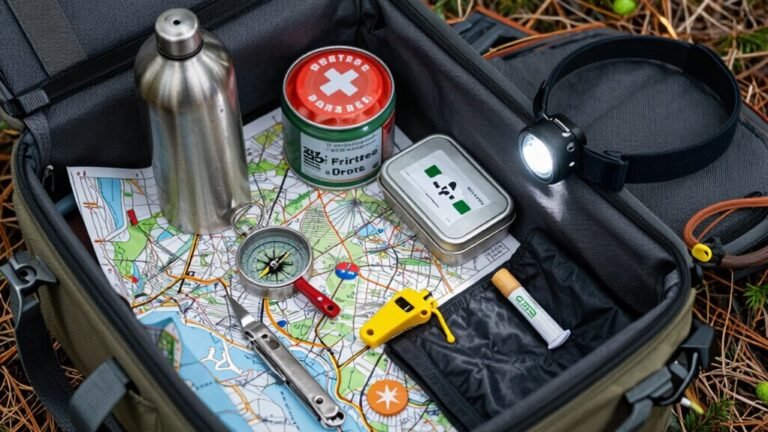
Go for air horns, whistles, or even a can of rocks instead.
In thick woods or windy spots, turn up the volume.
Just don’t blast an air horn right behind a bear—it’s rude and risky.
Some studies suggest ultrasonic devices have shown limited success in deterring bears, though evidence remains inconclusive.
Make noise, stay aware, and you’ll both enjoy a safer, drama-free hike.
Store Food and Scented Items Properly
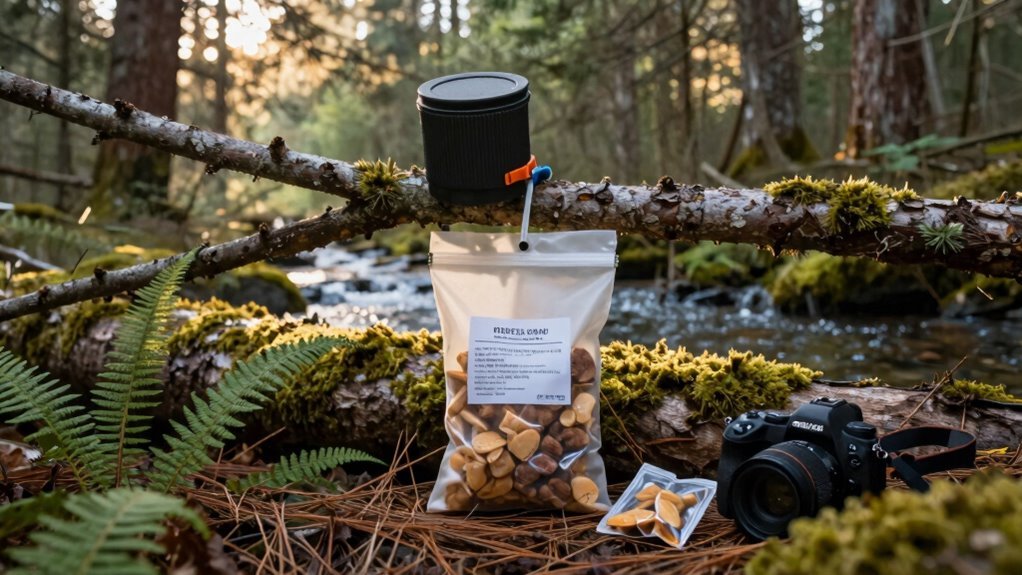
Even though you might pack the world’s best trail sandwich, it’s not a personal invitation for bears to crash your campsite—so don’t make it easy for them to find it.
Use bear canisters where required—they’re tough, no-hang-needed, and work even in open terrain.
If you’re in bear bag country, hoist high and wide with the PCT method, but don’t rely on it everywhere—some parks say “nope.”
Got food lockers? Use ’em!
They’re bear-proof and often right at camp.
Keep smelly stuff sealed in odor-proof bags, but remember: those aren’t enough alone in high-risk zones.
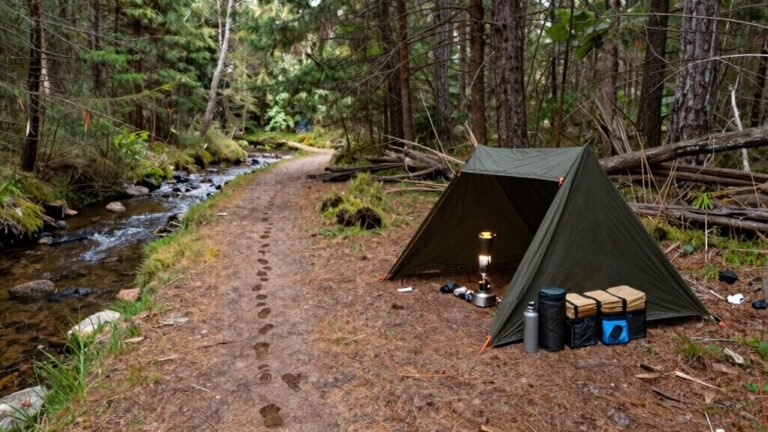
Always stash everything 50–100 feet from your tent, on flat ground, away from cliffs or streams.
Bear canisters block brute strength
Proper hangs outsmart climbers
Lockers protect your snacks (and the bear)
Smell locks respect super-sniffers
Smart storage keeps both of you safe
Some areas require canisters to prevent bears from breaking into food stores, so always check local regulations before heading out.
Recognize Signs of Bear Activity
Now that you’ve outsmarted the snack ninjas by stashing your food like a pro, it’s time to sharpen your detective skills—because bears may not send RSVPs, but they do leave plenty of clues.
Look for five-toed tracks with claw marks, especially fresh ones in the morning mud.
If you see low, brushy trails that make you crouch, skip them—bears love those shortcuts.
Keep an eye out for scat; fresh droppings mean a bear’s been nearby, maybe recently.
Combine that with clawed or bitten trees, and you’ve got “active bear” territory.
Bears rub trees to leave scent, sometimes leaving fur behind—nature’s sticky note saying, “I was here!”
Dug-up soil, flipped rocks, or torn vegetation mean foraging’s been happening.
A stinky, wet-dog smell? That’s bear perfume.
Spot scat and claw marks together? Time to be extra alert.
Heed trailhead warnings or closures too—they’re not jokes.
You’re not just hiking; you’re sleuthing.
Stay sharp, stay safe, and let the bears keep their privacy.
Keep a Safe Distance and Use Binoculars
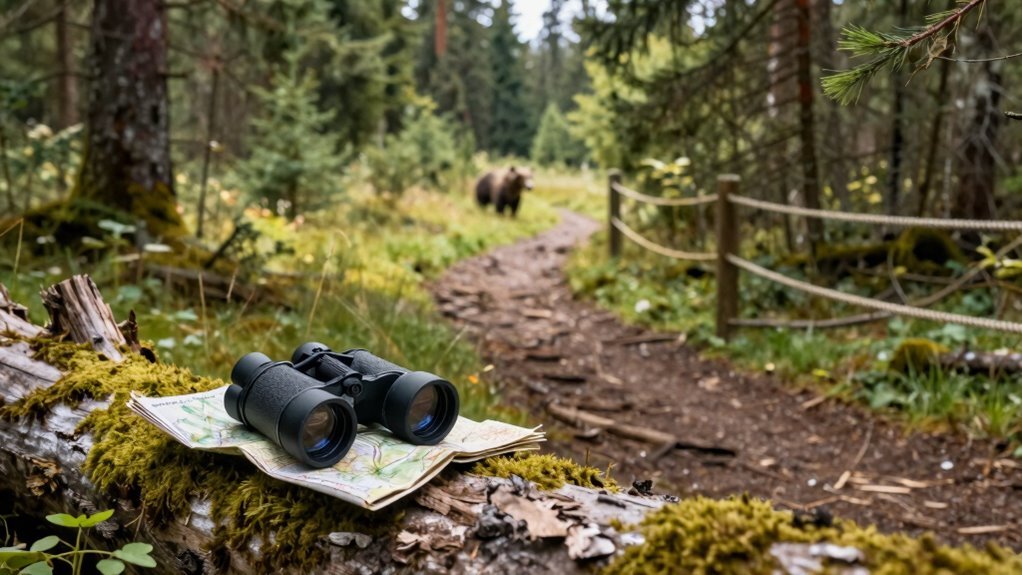
While bears might look like they’re posing for a selfie, give them the space they need to live their best wild life—treat every sighting like a backstage pass you’re not supposed to use.
Stay at least 100 yards (or 100 meters) away, especially in national parks, and never creep closer just for a photo.
If the bear notices you, you’re too close.
Instead, grab your binoculars or use a telephoto lens—see every twitch of that furry ear without spooking them.
Keeping your distance isn’t just safer, it protects their wild ways and keeps them out of trouble.
- You’re a respectful guest in their home, not an Instagram paparazzi
- Zoom with lenses, not your feet
- Calm bears mean safer trails for everyone
- Space prevents bad habits—and fines
- Real adventures don’t need souvenirs from a cage match
Respond Correctly to a Bear Encounter
If you happen to cross paths with a bear on the trail, don’t panic—your calm reaction can make all the difference.
Stay with your group, speak in a low, steady voice, and slowly back away without turning around.
Give the bear plenty of space—over 100 feet is ideal.
If it approaches, stand your ground, wave your arms, and shout “Hey bear!” like you’re politely asking it to leave.
Clap or toss a rock (non-food, please—your sandwich won’t help).
Bear lunges? They’re often fake; hold your ground, stay cool.
For grizzlies acting defensive, playing dead works—lie face down, legs apart, protect your neck.
But if a black bear or a predatory grizzly attacks? Fight back hard.
Carry and Know How to Use Bear Spray
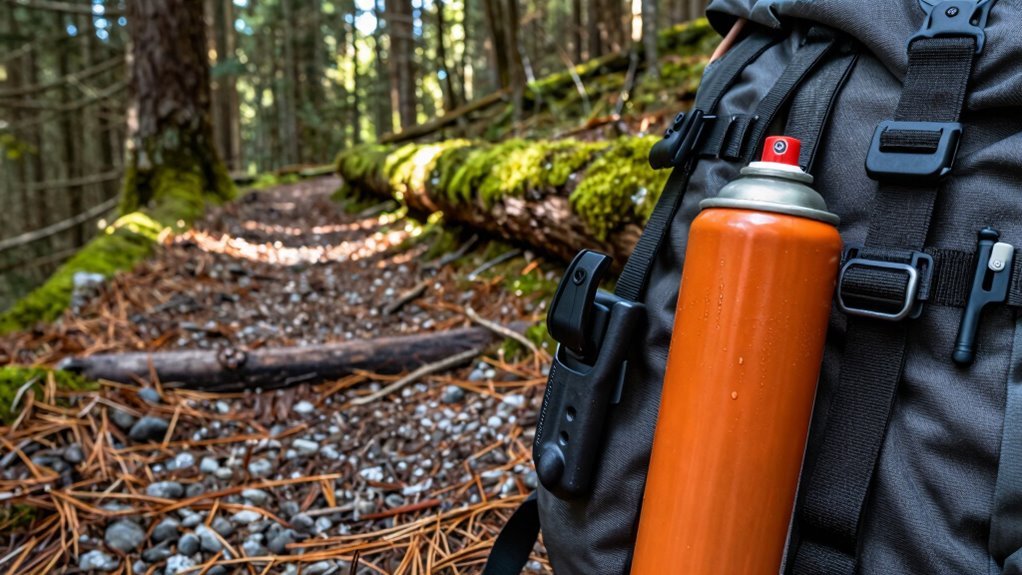
You’ve got the right move down when you meet a bear on the trail, but don’t forget the trusty sidekick that can turn a tense moment into a quick win: bear spray.
It stops bears 92% of the time—way better than guns—and keeps you safe in nearly every close encounter.
Hikers use it most, usually within 12 feet, when bears get too curious.
Wind can mess with aim, so practice first and never spray your tent—yep, bears liked one guy’s “bear perfume” a little too much.
- Bear spray works fastmost bears back off in seconds
- You’re more likely to stay unharmed than not, even up close
- It’s like superhero mist, but real and seriously tested
- An 8-ounce can is light, legal, and might save your bacon
- Success isn’t luck—it’s knowing when and how to pull the trigger
Travel in Groups for Added Safety
Traveling with a buddy is great, but bringing the whole squad? That’s even better for bear safety.
Parks like Yellowstone and Canada’s backcountry recommend hiking in groups of three or more—four is ideal—because bigger groups are louder, scarier (to bears), and way less likely to suffer a surprise attack.
Bears usually avoid the noisy, collective presence of a tight-knit crew.
Plus, kids stay safe when they’re not wandering off.
Traveling in daylight, sticking to trails, and keeping close in dense brush boost your odds even more.
Did you know your chance of a bear attack drops to just 1 in 232,613 trip days in the wild?
Hike smart, laugh loud, and pack the gang—bears hate a party.
You’ve got safety, stats, and seriously good vibes on your side.
Frequently Asked Questions
Are Bear Bells Effective for Keeping Bears Away?
You’re better off skipping bear bells—they’re not as effective as you’d hope.
Bears often ignore the tinkling, especially in windy or noisy areas, and they might even get used to the sound over time.
Instead, you’re safer shouting “Hey bear!” or clapping loudly as you hike.
That booming human noise? It works way better.
Toss in bear spray just in case, and you’ve got a real bear-deterring combo.
Stay loud, stay safe, and save the jingle for your keychain!
Can Bears Smell Through Vacuum-Sealed Food Packages?
Yeah, bears can smell through vacuum-sealed food—you’re not fooling them with plastic alone.
Their noses are 2,100 times sharper than yours, like nature’s ultimate detection dogs.
They pick up traces from handling, tiny leaks, or outer bag gunk.
Think of your seal as a welcome sign, not a lock.
Double-bag, wash the outside, and stash it in a bear canister.
That’s the real magic trick.
What Should I Do if I See a Mother Bear With Cubs?
You see a mama bear with cubs?
Don’t panic—you’ve got this.
Stay calm, back away slowly, and keep your eyes on them (no sudden moves!).
Don’t run, or you’ll look like a zigzagging snack.
Mama’s just protecting her fluffballs.
Give them space, respect their trail, and soon they’ll wander off, leaving you to brag about your wild encounter—safely!
Do Bears Attack at Night More Often Than During the Day?
Nope, bears don’t attack at night more than during the day—funny coincidence, since they’re actually out more after dark!
Most attacks happen in daylight, especially 9 AM to 3 PM, when you’re hiking and might surprise a bear.
Bears near people often feed at night to avoid you, but you’re still safest making noise on trail.
They’d rather flee than fight, especially in the dark.
Is It Safe to Hike With a Dog in Bear Country?
No, it’s not safe to hike with your dog in bear country — they can stir up trouble fast.
Your pup might bark, chase, or surprise a bear, turning a calm moment chaotic.
Off-leash dogs are especially risky, often pulling you into danger without meaning to.
Even on a leash, things get hairy quick.
Want peace of mind? Leave your furry buddy at home and go solo — your hike’ll be safer, calmer, and way less *ruff*.
Conclusion
You’ve got the know-how to hike smarter and safer in bear country. Make noise, stash your snacks, and keep your eyes peeled—you’re prepared, not paranoid. Bear spray ready? Good. Now go enjoy those trails with confidence and a little extra swagger. After all, isn’t it way more fun to hike when you’re not worrying about becoming a bear’s surprise snack? Stay alert, stay bold, and let the adventure begin!
References
- https://thetrek.co/worried-about-the-trail-your-questions-answered-black-bears/
- https://hikingguy.com/how-to-hike/bear-safety-for-hikers-and-campers/
- https://www.sabrered.com/blog/bear-safety-in-national-parks-things-you-should-know/
- https://www.backpackohio.com/what-about-bears/
- https://www.nps.gov/subjects/bears/safety.htm
- https://www.fs.usda.gov/visit/know-before-you-go/bears
- https://bearwise.org/bear-safety-tips/bear-encounters/
- http://hikinginglacier.blogspot.com/2011/11/do-air-horns-make-for-good-bear.html
- http://hikinginthesmokys.blogspot.com/2020/03/are-air-horns-effective-as-bear.html
- https://thehikingadventure.com/do-bear-bells-work