Hiking With a Heart Condition: What to Ask
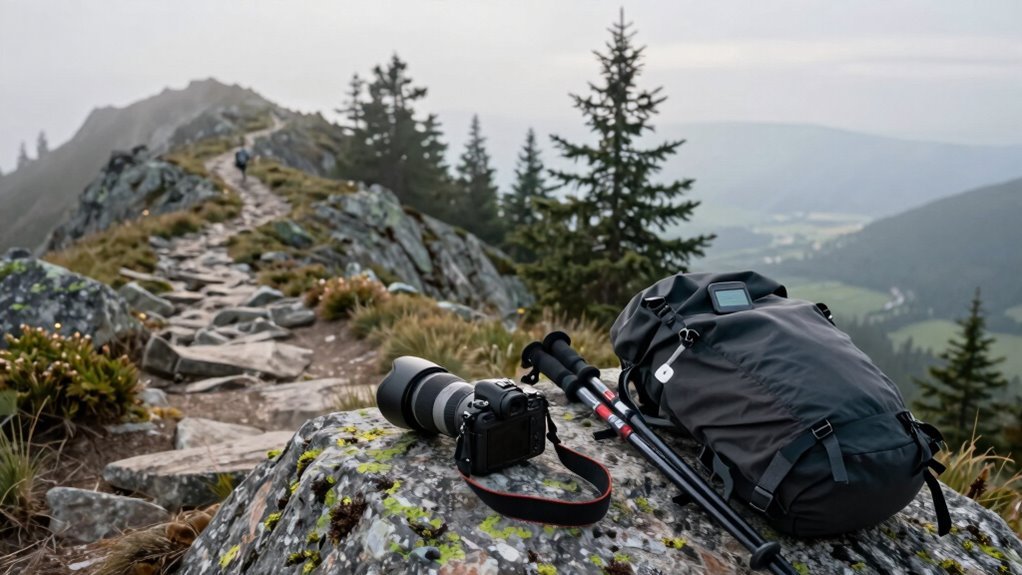
You’re cleared for adventure, but hiking with a heart condition requires extra precautions—especially at higher elevations. Ask your doctor: “Can I hike at higher elevations without tipping my heart into overtime?”
“Do I need to tweak my meds for thinner air?” and “What warning signs should I really watch for?” Think of these questions like checking your hiking boots—better safe than stranded.
Bring your portable monitor and pack nitro spray just in case. Always hit the trail with a buddy who knows your plan—your heart will thank you later. Smart questions now mean fewer surprises on the path ahead.
Understanding Your Physical Limits

Ever wonder why some hikers seem to breeze up mountain trails while others gasp for air halfway?
Your heart’s working overtime at high altitudes—above 9,840 feet, it’s pumping harder just to keep up, even if you’re standing still.
If you’ve got high blood pressure, heart disease, or a family history of early heart trouble, that uphill push is no joke.
Under-fit hikers are 27% more likely to face cardiac arrest, so don’t fake it till you make it—build your fitness slowly.
Start easy, walk more, and let your body adapt.
And hey, your heart isn’t a superhero—skip the summit if you’re not ready.
Talk to your doctor, know your limits, and remember: hiking’s about fun, not failure.
Take it step by step, and you’ll enjoy the view—without passing out in it.
Under-fit hikers have 27% higher risk of sudden cardiac arrest.
Recognizing Warning Signs on the Trail
What if your body sent you a memo mid-hike that something’s off—would you know how to read it?
Chest pressure, aching, or burning that spreads to your arm, jaw, or back could mean your heart’s crying for help—don’t shrug it off.
If you’re winded just walking uphill—or even at rest—your heart mightn’t be pumping right.
Feeling your heart race or skip like it’s doing jazz hands? That’s not just post-snack jitters; it could be an arrhythmia.
Dizzy spells, especially with clammy skin or greyish tones, aren’t “just altitude.”
And if you’re suddenly wiped out, or your shoes feel snug from swollen ankles, your body’s waving red flags.
Even a nagging cough with pink mucus or jaw pain without chest pain can be heart trouble in disguise.
Listen up: your trail safety depends on reading these signs loud and clear.
Many heart attacks occur due to blocked vessels reducing oxygen to the heart, so recognize symptoms early and seek help—know that reduced oxygen delivery can cause irreversible damage.
Choosing Heart-Safe Hiking Trails

Picking the right trail isn’t just about pretty views or bragging rights—it’s about keeping your heart happy while you roam.
Aim for trails with around 1000 feet of total elevation gain—steep enough (5% grade or more) to get your blood pumping, but not so tough your heart’s screaming for mercy.
Stick to soft, uneven terrain like forest paths or rocky stretches—they boost calorie burn without feeling like a punishment.
Keep hikes between 8–12 km with RPE 11–13, and don’t trust “easy” labels—some gentle-looking paths are sneaky hills!
Use apps like AllTrails to check elevation and reviews.
Avoid altitudes over 1500m and sweltering midday heat—start early, pack water, and take breaks.
And hey, if a trail looks like it’s for mountain goats, not humans—skip it.
Your heart will thank you.
Regular hiking once or twice a week increases core cardio, helping lower the risk of heart disease by up to 30%—a benefit supported by studies on brisk aerobic exercise.
Managing Medications While Hiking
While your boots carry you up the trail, your meds are the quiet teammates keeping your heart in the game—so don’t leave home without a solid plan.
Make sure your meds are stable and you’re cleared by your cardiac team before hitting the trail.
If you’re on beta-blockers, your heart rate won’t spike like it used to—no need to panic; just use how you *feel* (RPE) to gauge effort.
Always pack nitrates or GTN spray just in case, and keep anticoagulants close—watch your step to avoid falls.
Diuretics? Be extra careful with dehydration, especially at altitude.
Bring a portable blood pressure monitor if you need one, and tweak meds only with your doctor’s go-ahead.
Think of your meds like trail snacks: you wouldn’t forget those, so don’t skip your pills.
Your heart will thank you when you’re breathing in that mountain air.
Preparing for Altitude and Weather Changes

When you’re chasing mountain views and alpine breezes, don’t let altitude sneak up on you like an uninvited trail buddy.
At 9,840 feet or higher, your heart works harder—oxygen’s scarcer, your pulse races, and even resting feels like mild exercise.
If you’ve got heart disease, high blood pressure, or heart failure, those gains can backfire fast.
Skip intense climbs the first few days and let your body adjust—sleep lower first, rise slow, and cap daily climbs at 300–500 meters.
Stay hydrated; dehydration’s a sneaky trigger for trouble.
Acclimatization helps—after a week, your body catches up a bit.
But if you’ve had a recent heart event or struggle with rhythm issues or uncontrolled pressure, talk to your cardiologist before booking that alpine hike.
Better safe than dizzy—nobody wants to faint mid-trail while chasing the perfect sunrise.
Using Monitoring Devices Effectively
If you’re serious about hitting the trails with a heart condition, your best hiking companion might just be a high-tech gadget that’s got your back—and your beats.
Chest-strap monitors give the most accurate readings by sensing your heart’s electrical signals, while wrist-based watches offer continuous tracking with extra perks like sleep and stress data.
Want 24/7 coverage? Continuous ECG devices have you covered during every step.
On high-altitude hikes, pop a pulse oximeter to check oxygen levels.
Use vibration alerts to stay in safe heart rate zones without staring at your screen.
Waterproof, GPS-enabled, and packed with smarts, these devices track elevation, strain, and even recovery thanks to HRV insights.
Sync with apps like Strava or Apple Health to share trends, spot progress, and send reports to your doctor.
With battery life up to 400 hours, you’ll outlast the longest trek—no drama, just data.
Building a Support and Communication Plan
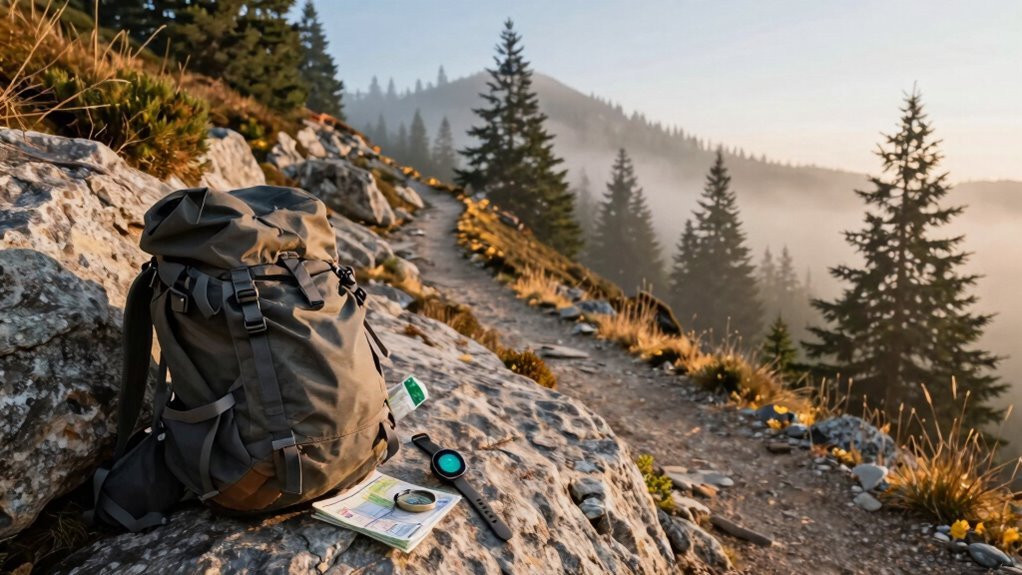
You’ve got your heart-monitoring tech synced, charged, and ready to roll—awesome!
Now, let’s make sure your people are in the loop too.
Talk to your doctor first—get the green light and tailor your hike to your fitness level.
Share your full plan—route, elevation, rest spots—with someone you trust, and pick a hiking buddy who knows your heart history and when to hit pause.
Set check-in times, load offline maps, and keep your phone juiced.
Use a medical ID app or card so help knows what’s up fast.
If things go south, everyone should know who calls for rescue or evacuation.
Bring a buddy who gets your limits and won’t dare peer-pressure you past RPE 13.
Think of it like a safety net—strong, simple, and always there.
Hiking’s way more fun when you’re covered, right?
Smart prep means you focus on the view, not the what-ifs.
Packing a Heart-Ready Emergency Kit
Toss your backpack on and double-check the zip—your heart-ready emergency kit isn’t just packing supplies, it’s packing peace of mind.
Tuck in aspirin for emergencies, plus nitroglycerin if your doctor says so.
Don’t forget your meds—pack extra in a waterproof bag, just in case Mother Nature throws a curveball.
A medical ID bracelet? Non-negotiable.
It’s like a superhero badge that says, “Help me right!”
Slap a copy of your pacemaker card and emergency contacts in there too.
Stash an AED if you’ve got one, or a satellite phone—because yelling “Help!” only works in movies.
Toss in glucose tabs, snacks, pain relievers, and a basic first aid kit.
Oh, and a whistle or flare? Because nothing says “I’m alive!” like a horn blast in the wilderness.
You’re not over-packing—you’re out-preparing.
Now go enjoy that trail!
Frequently Asked Questions
Can I Hike After a Recent Heart Procedure?
You can hike after a recent heart procedure, but you’ve gotta play it smart.
First, get your doctor’s okay—no sneaking off into the woods like a renegade!
Start with short, easy walks and gradually ramp up.
Before you know it, you’ll be striding through trails like a pro.
Just take it slow, listen to your body, and keep that adventurous spirit alive—your heart will thank you!
Are There Age Limits for Heart Patients Hiking?
No, there’s no hard age limit for heart patients who want to hike—you’re only as old as your heart feels!
If you’re managing your condition, stay active, and get your doctor’s thumbs-up, trails await at any age.
Just take it slow, listen to your body, and let smart choices—not fear—lead the way.
Adventure doesn’t clock out at 50. You’ve got this!
Should I Avoid Hiking Alone With a Heart Condition?
You really shouldn’t hike alone with a heart condition—your safety’s way more important than solitude.
If something goes wrong, like chest pain or a racing heart, there’s no one to call for help.
Even fit-looking trails can sneak up on you, especially uphill or at altitude.
Bring a buddy, carry your meds, and wear that medical ID.
Your heart will thank you—and so will the trail angels watching over you!
Is It Safe to Hike While on Blood Thinners?
It’s not super safe, but you can still hike while on blood thinners—if you play it smart.
You bruise easier, and a bump on the head could turn serious, so wear a helmet and use hiking poles for balance.
Skip risky trails, stick to gentle paths, and never push through pain.
Think of your body like a smartphone: stay charged, avoid crashes, and keep emergency help nearby—just in case.
Can Emotional Stress From Hiking Affect My Heart?
Yeah, emotional stress from hiking can definitely affect your heart—you’re pushing uphill, your breath’s racing, and your body’s reacting like it’s being chased by a bear (even if it’s just a squirrel).
That adrenaline rush spikes your heart rate and blood pressure, which feels great if you’re fit, but risky if your heart’s already working overtime.
Keep it fun, not frantic—pace yourself, enjoy the view, and let nature calm you instead of crank you up.
Conclusion
You’ve got this—every step beats to the rhythm of adventure, not alarm. Picture your heart as a trusty compass, steady and sure, guiding you up sunlit trails and through whispering pines. Just listen, prepare, and pack smart, and the wild will welcome you with open arms. Hiking with a heart condition? It’s not a full stop—it’s just a smarter, safer *go*. Happy trails, doc!
References
- https://drtrust.in/blogs/life-health-drtrust/heart-health-on-the-trail-tips-for-campers-and-hikers-with-cardiovascular-conditions
- https://www.pnwu.edu/hiking-can-break-your-heart-hiking-induced-stress-cardiomyopathy/
- https://adventuretripr.com/blog/how-to-protect-your-heart-while-hiking
- https://southdenver.com/what-is-the-relationship-between-high-altitude-and-heart-conditions/
- https://www.heart.org/en/news/2021/09/09/travel-to-high-altitudes-could-be-dangerous-for-people-with-heart-conditions
- https://pmc.ncbi.nlm.nih.gov/articles/PMC9779219/
- https://coscardiology.com/altitude-and-your-cardiovascular-health/
- https://goes.health/heart-disease-awareness-in-the-outdoors
- https://medlineplus.gov/ency/patientinstructions/000775.htm
- https://nyulangone.org/news/five-heart-disease-symptoms-you-should-never-ignore