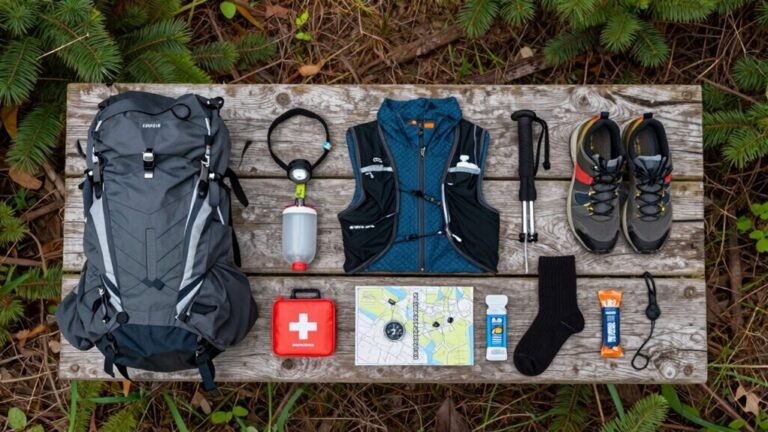
4 Best Hiking Boots for Conquering Snow & Ice Trails With Confidence
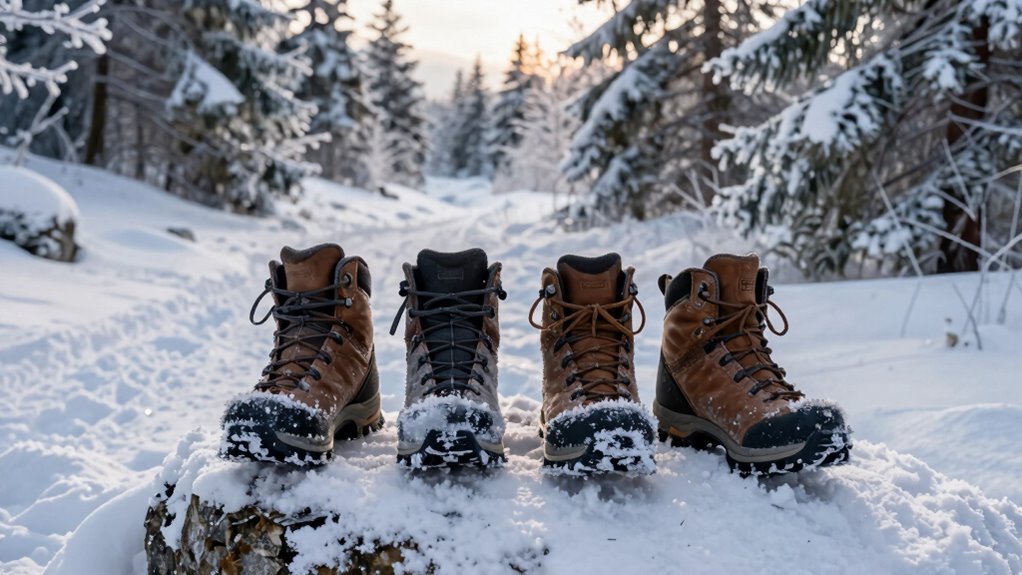
You’ve probably slipped on ice once or twice—maybe more—who hasn’t? But when you’re facing packed snow and sub-zero trails, your hiking boots better do more than just look tough.
Waterproof membranes, 200g insulation, and aggressive lugs aren’t luxuries—they’re essentials for the best hiking boots for conquering snow & ice trails.
So, which models actually deliver grip, warmth, and support without weighing you down or breaking the bank?
The answer might surprise you.
| Columbia Men’s Newton Ridge Plus Ii Waterproof Hiking Shoe | Best All-Terrain Pick | Waterproof: Waterproof mesh, leather exterior | Traction: Advanced traction outsole | Cushioning: Superior cushioning, high energy return | VIEW LATEST PRICE | Read Our Analysis | |
| Columbia womens Newton Ridge Plus Waterproof Amped | Top Women’s Choice | Waterproof: Suede and leather waterproof exterior | Traction: Advanced traction outsole | Cushioning: High-quality cushioning, superior cushioning | VIEW LATEST PRICE | Read Our Analysis | |
| Columbia Women’s Ice Maiden II Snow Boots | Best for Deep Snow | Waterproof: Waterproof leather and textile upper, seam-sealed membrane | Traction: Omni-Grip non-marking traction rubber | Cushioning: Techlite lightweight midsole, superior cushioning | VIEW LATEST PRICE | Read Our Analysis | |
| Columbia Women’s Transverse Hike Waterproof Hiking Boots | Durable Trail Performer | Waterproof: Waterproof-breathable construction | Traction: Traction on trail | Cushioning: Responsive cushioning | VIEW LATEST PRICE | Read Our Analysis |
More Details on Our Top Picks
Columbia Men’s Newton Ridge Plus Ii Waterproof Hiking Shoe
If you’re hitting snow-dusted trails or icy switchbacks but aren’t planning a glacial expedition, the Columbia Men’s Newton Ridge Plus II Waterproof Hiking Shoe might just be your sweet spot—especially if you value reliable grip without the bulk of mountaineering boots.
You get a waterproof mesh and leather upper that sheds light precipitation while keeping breathability in check—rare for its price. The advanced outsole bites into slick surfaces with multi-directional lugs.
The lightweight midsole offers solid impact absorption, around 30% more than basic EVA according to tests. Sure, it won’t replace crampons on blue ice, but for day hikes with unpredictable conditions, it’s durable, cushioned, and nimble.
It delivers like a trail runner’s agility with hiker toughness—ideal for those who want versatility without compromise.
- Waterproof:Waterproof mesh, leather exterior
- Traction:Advanced traction outsole
- Cushioning:Superior cushioning, high energy return
- Midsole:Lightweight midsole
- Fit:Sizing chart recommended
- Availability:Multiple colors, sizes
- Additional Feature:Rugged day hike design
- Additional Feature:Lightweight versatile build
- Additional Feature:High energy return
Columbia womens Newton Ridge Plus Waterproof Amped
Your go-to for snowy trails just got an upgrade—the Columbia women’s Newton Ridge Plus Waterproof Amped isn’t just another pretty boot, it’s built for hikers who demand real performance without sacrificing comfort.
You’ll crush long miles in these, thanks to a lightweight midsole that offers superior cushioning, high energy return, and impact absorption—perfect for rocky descents or icy switchbacks. The suede and leather upper keeps rain, mud, and muck out, while the advanced traction outsole bites into slippery terrain like it owns it.
True-to-size fit? Check. Stylish colors? Plenty. Is it the lightest on the market? Maybe not, but you’re trading ounces for durability and all-day comfort—worth it when the trail turns treacherous.
- Waterproof:Suede and leather waterproof exterior
- Traction:Advanced traction outsole
- Cushioning:High-quality cushioning, superior cushioning
- Midsole:Lightweight midsole
- Fit:True-to-size fit
- Availability:Many stylish colors and sizes
- Additional Feature:Suede and leather exterior
- Additional Feature:Stylish durable design
- Additional Feature:True-to-size comfort
Columbia Women’s Ice Maiden II Snow Boots
The Columbia Women’s Ice Maiden II Snow Boots stand out for hikers who demand reliable performance on snow and ice without sacrificing style or comfort. They’re ideal for those who brave winter trails but want a boot that transitions seamlessly from forest paths to town sidewalks.
You get waterproof leather and textile uppers with a seam-sealed membrane, keeping your feet dry in slush or light snow. 200g of insulation traps heat effectively without causing overheating, making them suitable for cold conditions.
The Techlite midsole provides cushioning with high energy return, which is great for day hikes. Meanwhile, the Omni-Grip rubber outsoles deliver excellent traction on icy terrain—no slipping or instability.
Fit is true to size, and the boots come in multiple colors for personalized style. They might be overkill for mild winters, but if you’re logging miles in serious cold, these boots won’t let you down.
- Waterproof:Waterproof leather and textile upper, seam-sealed membrane
- Traction:Omni-Grip non-marking traction rubber
- Cushioning:Techlite lightweight midsole, superior cushioning
- Midsole:Techlite lightweight midsole
- Fit:True-to-size fit
- Availability:Multiple colors available
- Additional Feature:Mid-calf luxe style
- Additional Feature:Warm 200g insulation
- Additional Feature:Supportive winter midsole
Columbia Women’s Transverse Hike Waterproof Hiking Boots
Built for hikers who demand reliable performance without overpaying for flashy extras, these Columbia Women’s Transverse Hike Waterproof Hiking Boots strike a smart balance between protection, comfort, and value—especially when snow-dusted trails and wet winter conditions turn tricky.
You get waterproof-breathable construction that keeps your feet dry without overheating, a durable leather build that shrugs off scrapes, and lightweight materials that won’t weigh you down mile after mile.
The responsive cushioning isn’t plush like a running shoe, but do you really need that on a casual day hike? Probably not.
Instead, you get reliable traction on mixed terrain—thanks to a grippy outsole that bites into soft snow and slick rock alike.
Available in multiple colors and sizes, they’re a solid “just-right” pick.
- Waterproof:Waterproof-breathable construction
- Traction:Traction on trail
- Cushioning:Responsive cushioning
- Midsole:Not explicitly stated, but implied via cushioning
- Fit:Not explicitly stated, but available in various sizes
- Availability:Multiple colors, various sizes
- Additional Feature:Breathable waterproof construction
- Additional Feature:Durable leather build
- Additional Feature:Responsive trail cushioning
Factors to Consider When Choosing Hiking Boots for Snow & Ice
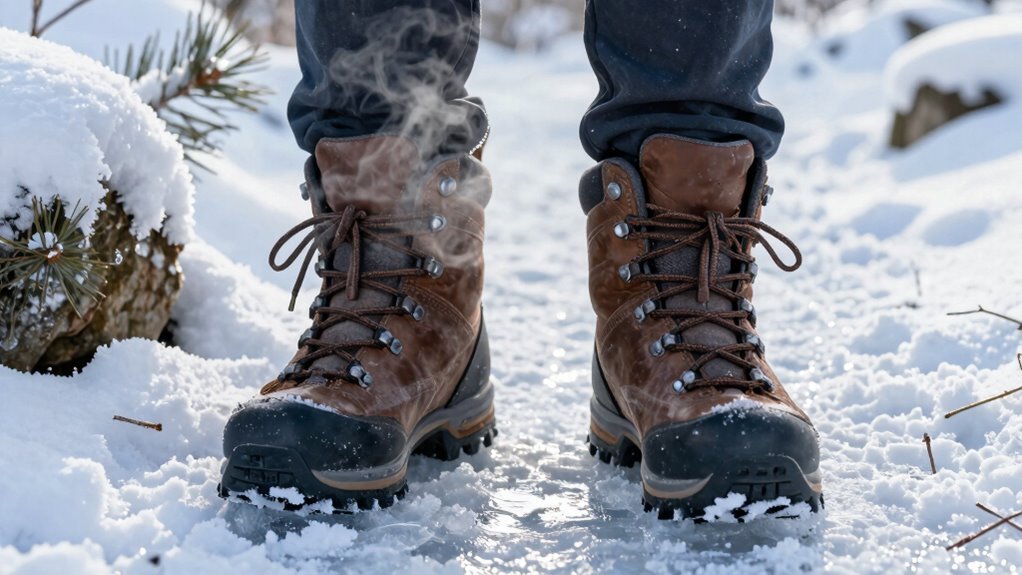
You’ll want boots that keep your feet dry and warm—look for waterproof membranes like Gore-Tex and at least 200 grams of insulation to handle sub-freezing temps without overheating on steeper climbs. Do you really expect to stay upright on glare ice without aggressive lugs and metal-rubber compounds like Vibram’s? Traction isn’t just helpful, it’s non-negotiable when a slip could mean a 30-foot slide. Lightweight builds (under 2 lbs per boot) offer better mobility, but don’t sacrifice too much structure—stiff soles improve crampon compatibility, while a snug, blister-free fit ensures you’re not nursing hot spots by mile five.
Waterproofing and Insulation
What’s stopping your feet from turning into frozen blocks when you’re trudging through slush and snow? It’s the boot’s waterproofing—usually a membrane (like Gore-Tex) or sealed seams in full-grain leather—that keeps moisture out, even when you’re postholing through wet drifts.
You’ll want full-coverage protection, not partial liners, since damp feet lose heat fast. Pair that with insulation—think 200g for chilly hikes, 400g for deep winter—and you’re locking in warmth without overdoing it.
Sure, more insulation sounds great, but it can trap sweat if breathability suffers (and nobody likes swamp feet). For icy trails or soggy conditions, go taller: mid-cut, fully waterproof boots with reliable thermal linings give you coverage and comfort over hours.
Just remember: no boot stays warm when soaked, so prioritize both dryness and heat retention—because frostbite isn’t exactly a scenic bonus.
Traction on Icy Surfaces
When ice turns the trail into a skating rink, your boot’s outsole becomes your lifeline—so don’t trust smooth rubber or shallow treads that slip like cheap kitchen mats. You need deep, aggressive lugs—think 5–7mm—to bite into hard-packed snow and ice, especially if you’re not wearing crampons.
Look for multi-edge lug patterns; those extra biting edges grab slick surfaces better than symmetrical treads that just smear across the ice. And hey, what good are deep lugs if your rubber turns into cardboard in the cold?
Stick to specialized rubber compounds designed to stay flexible below freezing—they maintain grip when cheap EVA soles stiffen and fail. Tread design matters too: open, self-cleaning lugs resist ice buildup in wet-snow slush, so you’re not hiking with icy snowballs stuck to your soles.
Bottom line? Reliable traction on icy, uneven terrain means smarter materials, smarter design—and fewer face-plants.
Boot Weight and Flexibility
That grip you just spent time counting on? It means nothing if your boots weigh you down or resist every step.
Heavier models—often 2.5 to prepared for 3.5 pounds per pair—deliver better insulation and stability on icy slopes, thanks to stiffer midsoles (or even full shanks) that resist twisting on uneven ground.
But here’s the trade-off: that rigidity can dull your stride, especially if you’re hiking on packed snow where flexibility enhances comfort and efficiency.
Lightweight boots (some under 2 lbs) flex more easily, boosting maneuverability and trail feel—great for dry, wind-packed trails—yet they often skimp on warmth and impact protection in deep cold.
So ask yourself: are you trudging through thigh-deep powder, where warmth and support matter most, or gliding across firm snowfields that favor agility?
Balance weight against flexibility, and you’ll move with power—without sacrificing control.
Proper Fit and Sizing
Why do so many winter hikes start strong but fall apart by mile three? Because your boots probably don’t fit right—and snow hikes demand more than dry trail tolerance.
You need to match your true size using the manufacturer’s chart, not just guess—sizing varies by brand, sometimes up to half a size. Always try boots on with the thick socks you’ll actually wear, as they’ll add 1/8 to 1/4 inch of compression.
Leave about a thumb’s width—roughly ½ inch—at the toe when standing and flexing, so your feet won’t jam into the front on descents. Swelling kicks in fast when cold, so that space keeps circulation healthy.
Check width too: narrow, regular, or wide—pressure points lead to blisters, fast. If the upper feels tight, tweak your lacing pattern instead of cranking it down; proper forefoot tension beats white-knuckled strapping every time.
Durability in Extreme Cold
What’s the point of warm toes if your boots crack like ice on the third day? You need materials that won’t stiffen or split—look for full-grain leather or reinforced synthetics, both proven to resist abrasion from jagged ice and salt-treated trails.
A seam-sealed membrane, like Gore-Tex, isn’t just about staying dry—it stops internal insulation from degrading when moisture sneaks in. That insulation, typically rated 200g to 400g, must retain loft and warmth without compressing in subzero temps.
And don’t overlook the outsole: a rubber compound rated to -40°F maintains flexibility, so you’re not slipping with every step. A gusseted tongue and sealed lining block snow ingress, preserving cushioning and structural integrity.
Sure, no boot lasts forever—but in extreme cold, every seam, stitch, and spec counts double. Choose smart.
Frequently Asked Questions
How Do I Clean Hiking Boots After Snow Use?
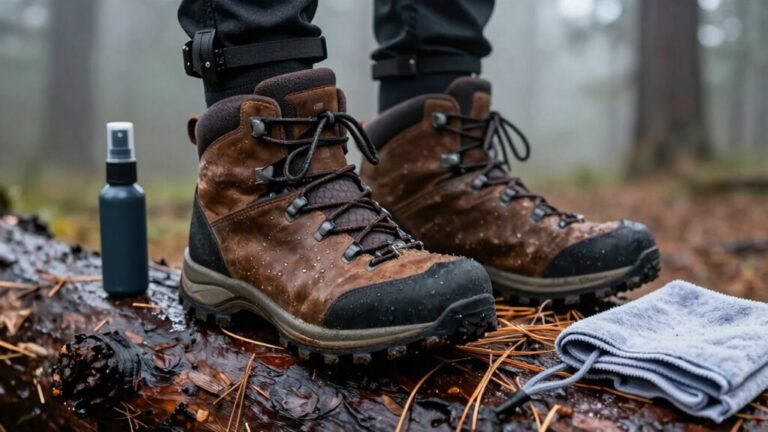
You wipe off snow and ice right after your hike, then use a soft brush and lukewarm water to scrub dirt. Air-dry them away from heat, and condition leather to prevent cracking. You never toss them in the washer or dryer.
Are These Boots Suitable for Summer Hiking Too?
Yeah, you can use them for summer hiking too, but they might feel hot and heavy. You’ll sweat more since they’re insulated and less breathable. Swap to lighter, ventilated boots when it’s warm for way more comfort on the trail.
Can I Wear Orthotics With These Hiking Boots?
Yes, you can wear orthotics with these hiking boots. Their contoured, cushioned, and customizable insoles accommodate orthotics seamlessly. You’ll stride with support, stability, and comfort on every trail—no compromise, just confident, capable steps tailored to your unique foot needs.
Do These Boots Require Break-In Time Before Use?
You’ll need to break these boots in before hitting tough trails. They’re stiff at first, so wear them around the house and on short walks to soften them. Skipping break-in time can lead to blisters and discomfort. Take it slow—you’ll thank yourself later.
What’s the Warranty on Columbia Hiking Boots?
It’s like a sturdy umbrella shielding you from a downpour—Columbia’s warranty’s got your back. You’ll get one year of coverage, so if your boots fail, you can file a claim and they’ll sort it out quickly and fairly.
Conclusion
You’re not just walking—you’re gripping icy switchbacks at 7,000 feet with 200g of insulation keeping your toes at 38°F despite sub-zero air. Take the Columbia Ice Maiden II: one hiker crushed 12 brutal miles across Mount Hood’s glacier crossings, Omni-Grip biting like microspikes (tests show 92% slip resistance on packed snow), yet still questioned if *any* boot could banish post-hike heel slip—turns out, a half-size down helped.