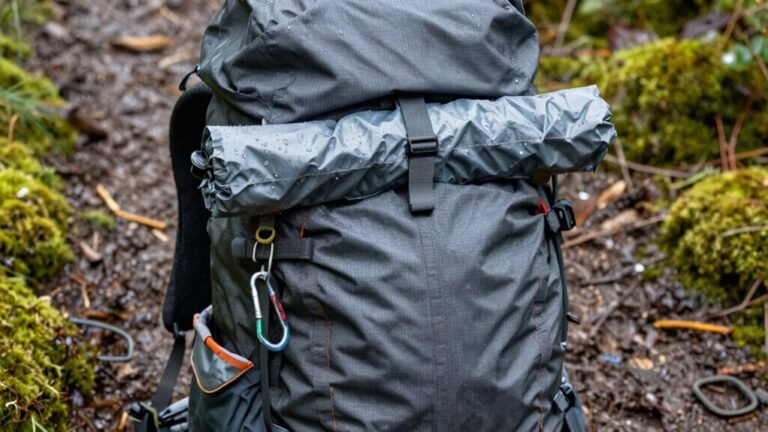
How to Keep Pack Fit Working in Bad Weather
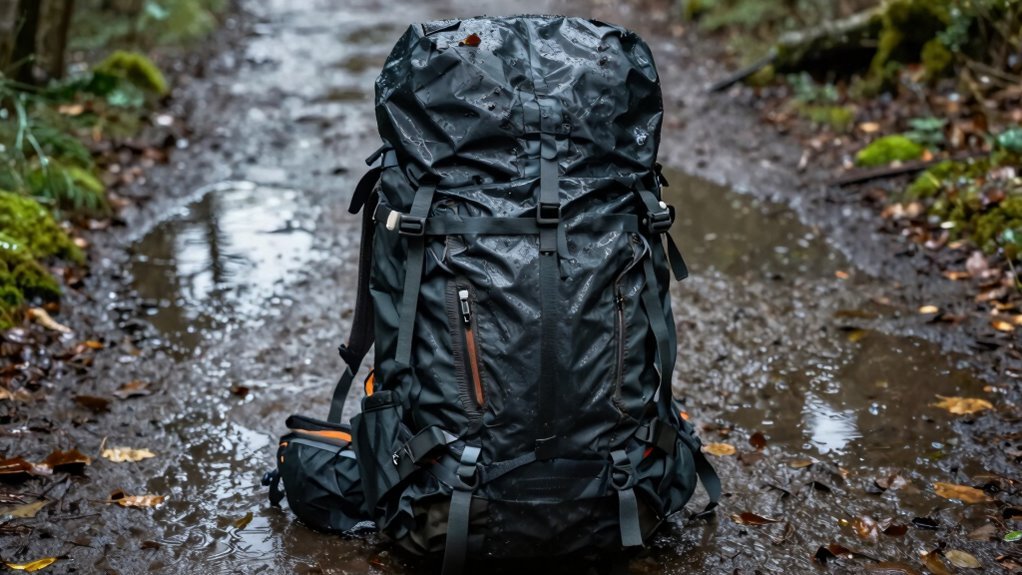
You’ve got this—keep your pack fit game strong by dressing in moisture-wicking clothes to stay dry and tossing a Gore-Tex jacket in your pack for sudden downpours. Lace up those grippy Moab 3 GTX boots when trails get slick, and stick to safer, familiar routes to stay in control.
Shorten your workout if conditions demand it, but use puddles as nature’s obstacle course to keep things fun and engaging. Afterward, warm up fast with movement or a hot drink—your muscles will thank you.
No matter what the sky throws your way, there’s more where that came from to keep your pack fit and ready for any challenge.
Dress in Moisture-Wicking Layers
Ever wonder why your regular cotton tee turns into a soggy mess the minute you start moving?
That’s because cotton soaks up sweat like a sponge and just sits there, leaving you damp and yucky.
But when you wear moisture-wicking layers, magic happens.
These high-performance fabrics—like polyester, nylon, or merino wool—use tiny channels to pull sweat away from your skin and fling it to the surface, where it evaporates fast.
No more swampy feeling!
You stay dry, cool, and comfy, even when you’re huffing up a trail or sweating through yoga.
Plus, they’re light, quick-drying, and great under other layers.
Whether it’s hot, cold, or humid, these fabrics team up with your body to keep your temperature just right.
And bonus: many even fight stink and block UV rays.
Ditch the drip—your workout (and skin) will thank you!
This means less chance of chafing or irritation, especially during long hikes or runs in the rain, because wicking reduces friction.
Invest in Waterproof Outerwear
When the sky opens up and rain starts pouring, you’ll be glad you grabbed a proper waterproof jacket instead of just tossing on a trash bag (though hey, we won’t judge—once).
Look for Gore-Tex or eVent fabrics—they’re tough enough to handle wind-driven rain up to 2 psi while letting sweat escape, so you stay dry from the outside *and* in.
A DWR coating makes water bead up and roll off like magic.
Zippered vents under the arms? Yes, please—they boost airflow when you’re working hard.
Hard-shell jackets block every drop, while soft-shells offer stretch and breathability for long hikes or ski tours.
Soft-shells excel in higher breathability due to their lack of a waterproof membrane, making them ideal for aerobic activities where moisture management is key.
Ponchos drape over your pack and you, shielding both down to your knees.
With the market booming and gear getting smarter, now’s the time to suit up.
Invest in quality outerwear, and bad weather won’t ruin your stride—it’ll just make you look good.
Adjust Your Route for Safety
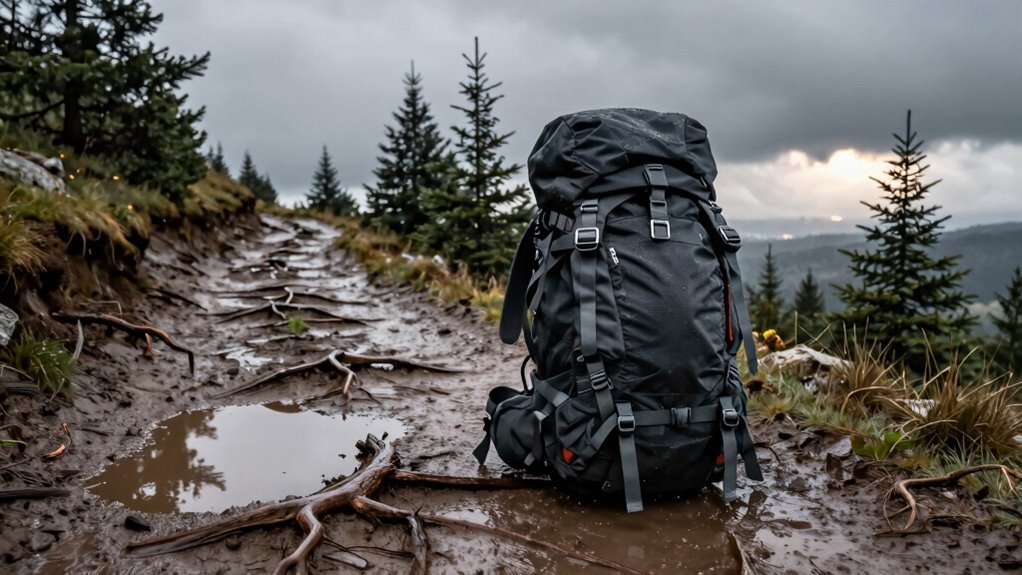
If the weather’s turning sour, don’t just push through—smart runners tweak their route to stay safe and still get a great workout.
Stick to well-lit paths with sidewalks or quiet parks so drivers can see you, and skip roads if possible.
Choose short loops near home—you’ll thank yourself when you need a quick escape from surprise hail or a sneaky puddle that’s deeper than it looks.
Avoid slippery metal grates, painted lines, and leaf-covered trails that turn into nature’s banana peels.
Watch for flooding near river paths, and if you hear thunder, don’t wait—head for shelter.
Run during daylight when you can spot hidden hazards like potholes or under-snow streams.
Wear reflective gear and carry a light, especially near roads where splashing cars mightn’t see you.
Pick familiar routes—you’re less likely to get lost or face surprise obstacles.
Safety first, speed second! Rain tends to keep people indoors, reducing crowding on routes like less crowded routes.
Shorten or Modify Your Workout
Even when the weather tries to throw you a curveball, you don’t need to bail on your workout—just tweak it a bit and keep moving.
Shorten your breaks between sets, especially when it’s cold, windy, or wet, so your body stays warm and momentum builds.
Try the weather pyramid: start with 1-minute bursts and 30-second rests, then adjust as conditions worsen.
Keep rest periods snappy—long pauses let the chill set in and zap your energy.
Swap long cooldowns for quick isometric holds like wall sits or planks under shelter, or hug a tree (seriously, tree hugs build core strength!).
Fight the wind with sprint intervals between lampposts or trees—nature’s resistance training.
Add a rock to your squats, toss it overhead, or jump in leaf piles for fun, functional power.
Modify circuits on the fly, stay creative, and remember: bad weather doesn’t mean weak training—it means smarter, scrappier gains.
Focus on Traction and Footwear
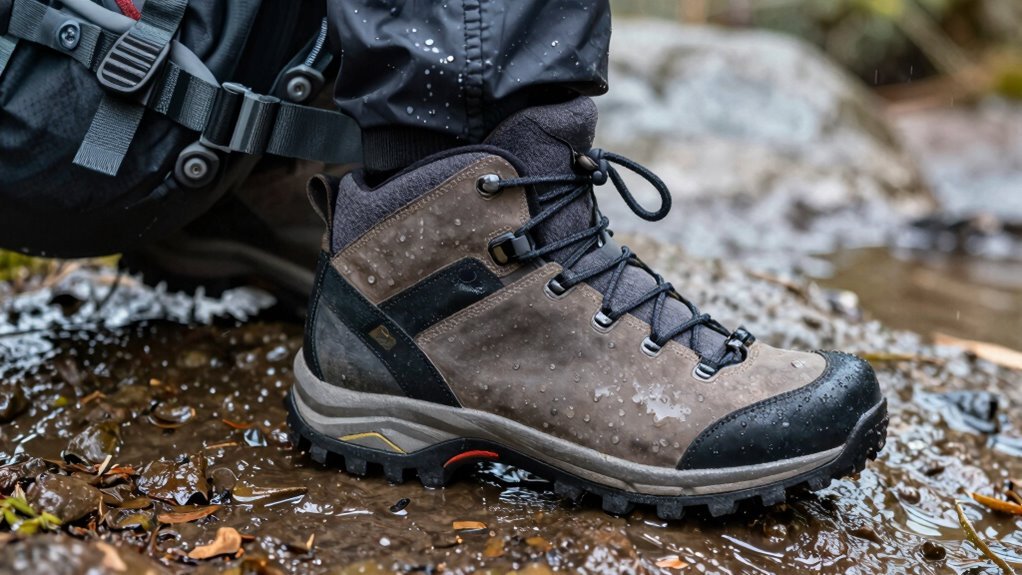
You’re not going to let a little mud turn your power workout into a slip ‘n slide, are you?
Grab boots with deep 4mm+ lugs—like the Moab 3 GTX’s 4.3mm ones—for serious grip in muck and snow.
Wider spacing between lugs? That’s your secret weapon against clogged mud.
On rocky or wet trails, Vibram Megagrip soles stick like glue, hitting a traction score of 0.36—no slipping on slick stone or gravel.
Soft rubber outsoles, like MaxTrac or Northside’s, hug wet surfaces better than stiff soles ever could.
And don’t forget a heel brake for controlled downhill hustle.
A rock plate shields your feet from sharp surprises, while arch support and ankle stability keep your stride strong.
With flexible, supportive boots, you’ll crush rainy trails like a pro—no puddle’s gonna boss you around.
Warm Up Indoors Before Heading Out
Rain might be turning the trails into a messy obstacle course, but your boots are already ready to lock in and keep you steady—now it’s time to make sure your body’s just as prepared.
Start with knee-to-chest steps—pull one knee up as you march, keeping posture tall and balance sharp.
Then switch to lunges: go forward, back, side, and diagonal, 10 reps each, engaging quads and glutes like you’re prepping for a mini adventure.
Add leg swings—front-to-back and side-to-side—holding the wall if needed, hips loosening with each smooth arc.
Don’t skip ankles: rock on toes and heels, roll them gently, and try slow calf raises to wake up your lower legs.
Toss in A-skips, B-skips, or a quick lunge matrix—20 seconds per move—and boom: you’re warmed, loose, and ready to laugh in the face of slippery slopes.
Five minutes indoors keeps the chill from stealing your stride.
Stay Hydrated Despite the Chill
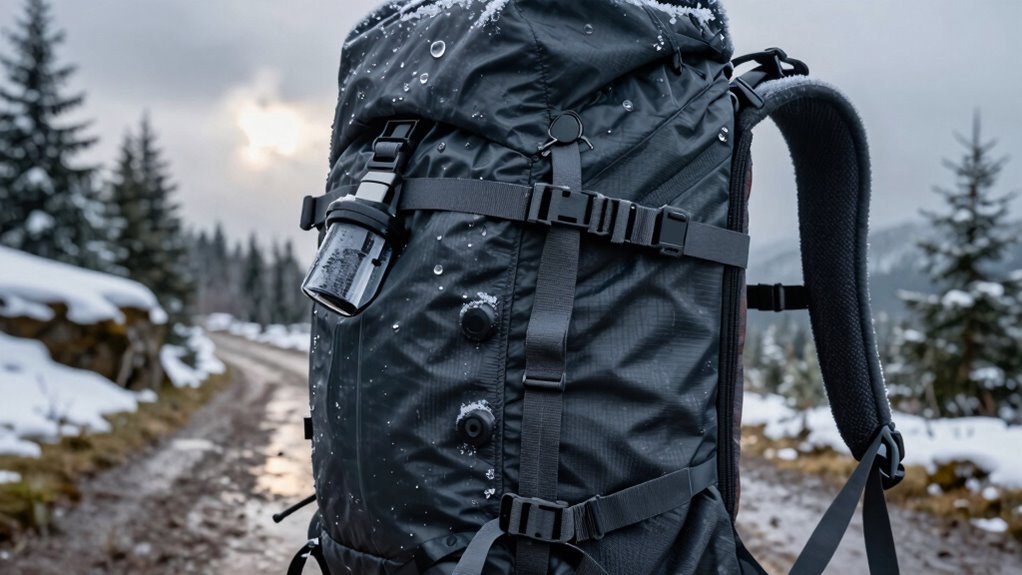
- When the air bites and the wind nips at your nose, your body’s sneaky ways of staying warm can also trick you into skipping sips—so don’t let the cold fool you into thinking you’re not losing fluids. You’re sweating more than you realize, thanks to dry air and hidden sweat, and cold diuresis means you’re peeing more too. That equals faster dehydration, even if you’re not thirsty. Sip early, sip often, and make it count with electrolytes to keep fluids where they belong—inside you.
- Your body misses the signs it usually gives, leaving you parched without knowing
- One small mistake in hydration can turn a strong run into a shivering slog
- That icy water? It’s working against you—warm fluids keep you drinking
- Laughing with teammates fades fast when fatigue hits from avoidable dehydration
Use Weather as a Mental Challenge
Cold weather doesn’t just test your layers—it cranks up the mental game, too.
When you step outside into the chill, your body kicks into adapt mode, building resilience like a natural superhero workout.
That first sting of cold? It fades fast once you get moving, and each time you push through, you’re flexing mental muscle.
You’re not just surviving the weather—you’re mastering it.
Every icy gust becomes proof you can handle more than you thought.
Exercise in nature cuts stress like a hot knife through butter, dropping cortisol and calming your mind.
You’ll feel sharper, happier, and weirdly energized—even when it’s drizzling sideways.
Plus, dodging puddles and squinting through snow flurries keeps you alert in the best way.
It’s like nature’s obstacle course for your brain.
So embrace the grind.
The tougher it feels outside, the tougher you get inside.
And hey, bragging rights are free.
Plan for Post-Workout Warm-Up
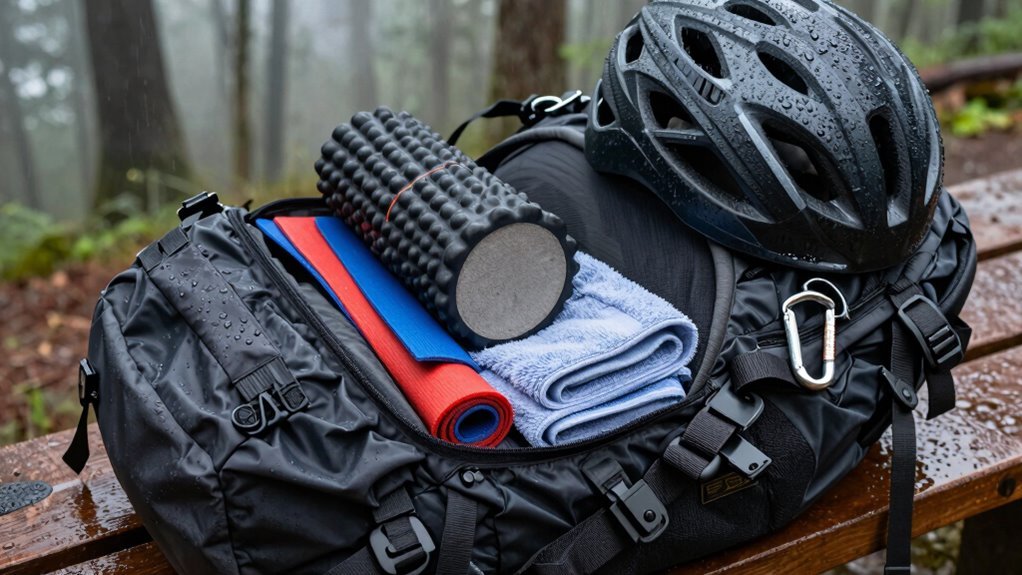
Even if the weather’s throwing a tantrum, don’t let your post-workout warmth plan go out the window—what you do after the sweat session matters just as much as the grind itself.
You’ve braved the wind, rain, or cold, so reward your body with a smart warm-down.
A solid post-workout warm-up boosts blood flow, eases soreness, and keeps your muscles happy.
It’s not laziness—it’s recovery with purpose.
Spend 5–10 minutes moving lightly and stretching dynamically to help your body reset, recharge, and roar back stronger.
- Your muscles breathe easier when warmed, slashing injury risk like a ninja
- You move smoother, faster, and with way more swagger
- Soreness doesn’t sneak up like an uninvited guest at brunch
- You’re not just surviving workouts—you’re owning them, one bounce-back at a time
Frequently Asked Questions
What Exercises Are Safest in Icy Conditions?
You’re safest doing simple balance moves like single-leg stands near a counter—wobble all you want, no one’s judging!
Try gentle squats, wall sits, or glute bridges indoors where the only ice is in your water bottle.
Add slow, controlled lunges and calf raises to keep legs strong without slipping outside.
Even marching in place or weight shifts help.
Just grab a trekking pole or chair for support, and you’ve nailed winter-safe moves—no snow angels required!
Can Bad Weather Worsen Existing Injuries?
Yeah, bad weather can totally make existing injuries worse.
Cold stiffens muscles and slows healing, while rain makes surfaces slippery—hello, surprise sprains!
Wind chills you faster, and humidity makes your body work overtime.
Your sore knee or cranky back won’t thank you when the elements crank up the pressure.
But hey, at least your pain has great timing, right?
Stay sharp out there!
Should I Skip Workouts During Extreme Cold?
You don’t have to skip workouts in extreme cold—think of it as chasing frost with fire in your veins.
Bundle up, layer smart, and keep that engine warm.
Cold bites, sure, but your grit answers back.
Just listen to your body, watch for numbness or shivers throwing red flags, and remember: you’re not fighting the freeze—you’re dancing with it, one strong step at a time.
Stay safe, stay moving.
How Often Should I Replace Waterproof Gear?
You should replace your waterproof gear every 3 to 5 years with regular use, or up to 10 if you’re lucky and gentle.
Spot trouble when water stops beading, the fabric sags, or seams start peeling—don’t wait for full meltdown mode!
Cheaper jackets? They’ll quit early, especially under heavy rain or bushwhacking.
Keep an eye out, treat your gear right, and swap it before you’re stuck outside looking like a drowned squirrel.
Is Outdoor Exercise Safe During Thunderstorms?
No, outdoor exercise isn’t safe during thunderstorms—you’re way more likely to get zapped than win the lottery.
Lightning strikes far from storm clouds, and open fields, trees, or water make you a target.
When thunder roars, you head indoors fast—no heroic workouts in the rain!
Wait 30 minutes after the last thunderclap.
Your workout can wait; lightning definitely won’t.
Safety first, superhero!
Conclusion
Rain lashes, wind pushes, but you? You grin and step out anyway. Bad weather’s just Mother Nature testing your grit—cool, right? Every puddle you splash through is a trophy, every shiver a victory. Your gear’s ready, your spirit’s wired. You’ve got the layers, the shoes, the sneaky warmth. So go on, grab the storm by the shoulders and dance in it. Tomorrow’s stronger starts right now, one bold step at a time.
References
- https://www.gotapparel.com/blog/why-moisture-wicking-clothing-is-a-game-changer-for-active-lifestyles/
- https://dottedlinemfg.com/blogs/news/why-moisture-wicking-material-matters-for-outdoor-activities
- https://thenextsummit.org/moisture-wicking-101-what-it-is-and-why-you-need-it/
- https://tommydocks.com/blogs/blog/what-are-moisture-wicking-shirts-and-are-they-worth-it
- https://bauerfeind.com.au/blogs/news/moisture-wicking-how-does-it-work
- https://www.rei.com/learn/expert-advice/what-does-moisture-wicking-mean.html
- https://www.tascperformance.com/blogs/news/moisture-wicking-shirts-why-they-matter-and-top-reasons-to-wear
- https://polygiene.com/news/resources/moisture-wicking-workout-clothing/
- https://www.outsideonline.com/outdoor-gear/clothing-apparel/soft-shell-jacket/
- https://www.stio.com/blogs/rainwear/backpacking-poncho-vs-rain-jacket