How to Train for Hiking Over 50
Start easy and hike early, letting your body set the pace—listen closely, because hiking over 50 means smart moves over big ego. Building stamina is key, so begin with regular walks and low-impact cardio to prepare your body for the trail.
Add strength exercises like squats, lunges, and planks to power uphill and support joint stability. These movements build the muscle needed for carrying your weight over uneven terrain while reducing strain.
Practice balance with heel-to-toe drills to prevent falls, especially on rocky or slippery paths. Stretch daily to maintain flexibility and improve recovery after each outing.
Hydrate consistently—before, during, and after your hike—because staying hydrated is crucial when hiking over 50. Recovery matters just as much as training; rest like a pro to keep your body resilient.
You’re not just prepping for trails, you’re unleashing a stronger version of yourself. Keep going—there’s more where that came from.
Set Realistic Hiking Goals Based on Your Fitness Level
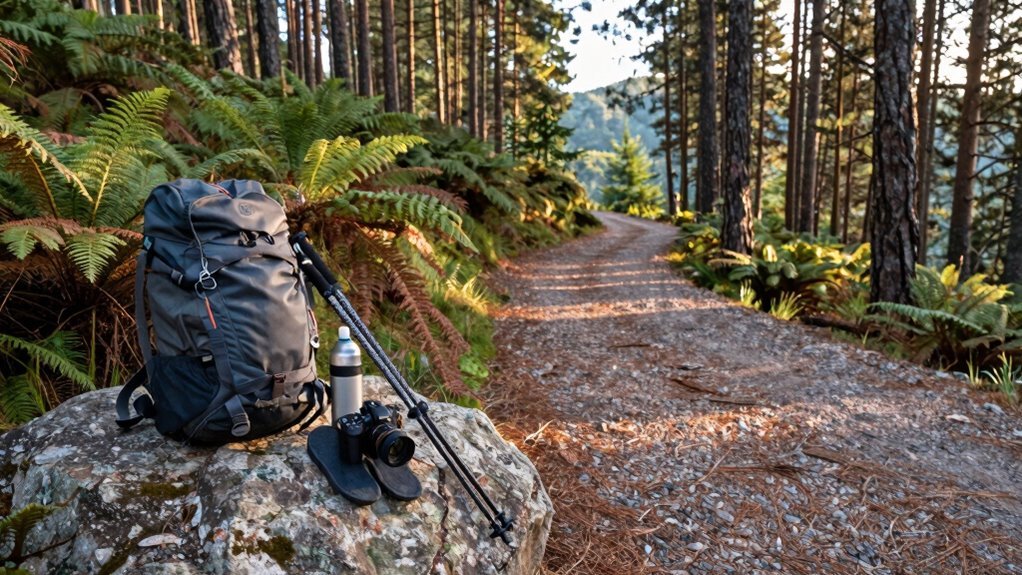
Where do you start when the trail calls but your body’s shouting, “Wait, let’s be smart about this”? You start by listening—really listening—to what your body tells you. Check your balance, strength, and stamina like you’re prepping for a reunion with an old friend—knowing both the good stories and the sore knees.
You’ve earned every wrinkle and wisdom, but let’s face it, muscles don’t bounce back like they did at 30. Start easy: pick flat, friendly trails—no Mist Trail heroics yet!
A 15-minute walk is a win, not a warm-up.
Match your goals to your fitness, not your ego.
And yeah, your dog might outlast you—adorable, but not helpful.
Track protein, talk to your doctor, and dream big… just slowly.
This isn’t about keeping up—it’s about showing up, safely, joyfully, and with snacks.
Improving leg muscle strength can make those inclines feel a lot less intimidating.
Build a Strong Foundation With Cardiovascular Training
You’ve set smart goals that match your rhythm, not your ego—now it’s time to get that heart pumping in the best way possible.
Your heart’s a champ, but let’s face it, it’s not 25 anymore.
Hiking boosts stroke volume and fights stiffening blood vessels, especially vital at altitude.
Aim for 180 weekly minutes of Zone 2 cardio—think brisk walks, stair climbs, or trail time with a pack.
Keep your heart rate between 40–85% of max to build real trekking stamina.
Toss in two 20-minute HIIT sessions weekly (8-second sprints, 12-second rest); yeah, even folks in their 80s crush it.
Love your veins? Snack on parsley and watercress—your capillaries will thank you.
Cycling, rowing, or rebounding add fun variety while sparing joints.
Consistency beats intensity—go long and often.
Your heart’s not just pumping blood—it’s powering adventure.
Let’s keep it strong, steady, and ready.
Lower stroke volume due to aging makes efficient blood flow harder, but regular hiking helps reverse the trend.
Strengthen Key Muscle Groups for Trail Stability
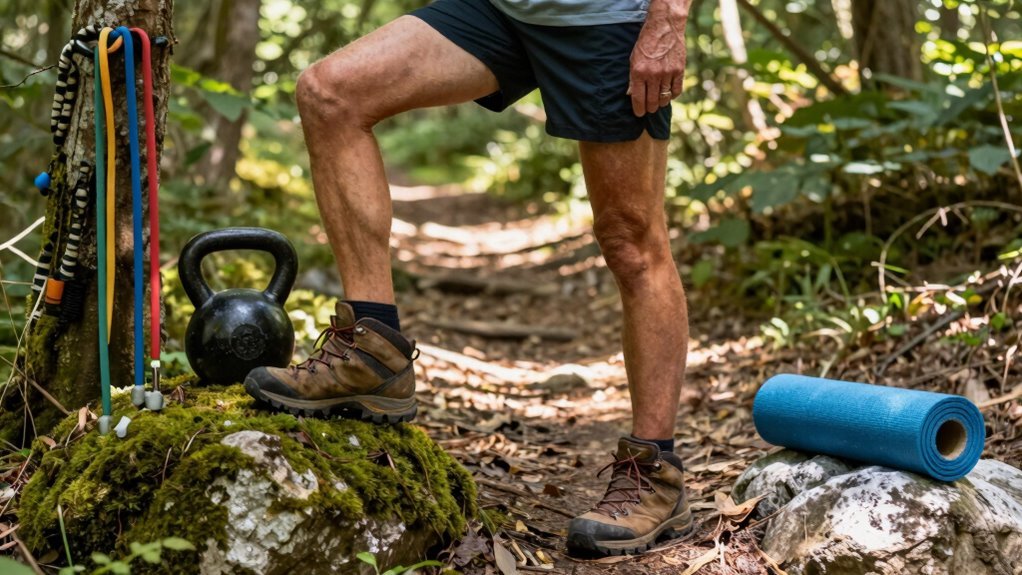
Fire up those glutes—they’re your powerhouse for conquering uphill trails and keeping you steady on rocky paths. You’re using them way more than you think, especially as you age, so squats, lunges, and deadlifts are your new best friends. Gluteus medius and minimus stabilize your hips with every step, especially on uneven terrain, helping prevent missteps and falls. Posterior chain engagement on uneven terrain boosts overall trail stability and reduces joint strain.
Don’t forget your hamstrings—they team up with your glutes to push you forward and handle those steep climbs. Reverse lunges? Perfect for building that behind-the-scenes strength.
Quads take the lead on rough terrain, so hit them hard with squats or boost endurance with biking—fun and joint-friendly!
Calves and ankles work overtime on roots and rocks, so throw in calf raises and reverse lunges for sharper stability.
And your core? It’s the unsung hero holding everything together. Planks, crunches, and twists keep your back happy under that pack.
Strengthen smart, laugh at the wobbles, and hike stronger—one powerful step at a time.
Improve Balance and Prevent Falls With Targeted Exercises
Staying steady on uneven trails starts long before you hit the dirt—building rock-solid balance is your secret weapon against slips, stumbles, and awkward “I meant to sit down” moments.
You’ve got simple moves like heel-toe walks, single-leg stands, and side leg raises that strengthen your core and legs while boosting stability.
Tandem balance and weight shifting train your body to handle tricky steps and uneven ground with confidence.
Practice near a counter just in case—safety first!
These exercises sharpen coordination, improve posture, and help you sense where your body is in space (thanks, proprioception!).
For fun, try tai chi or dual-task drills like counting while balancing—it mimics trail distractions and builds real-world agility.
Do them regularly, ramp up the challenge gradually, and laugh off wobbles.
Strong balance means fewer falls, more fun, and total trail triumph after 50!
Practice Hiking on Local Trails to Build Endurance
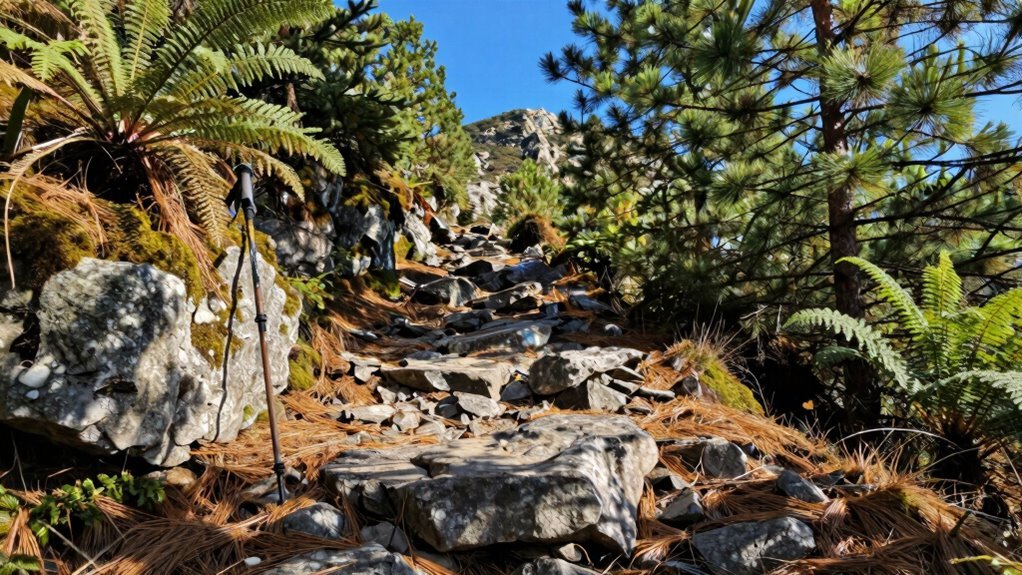
Now that you’ve been building steadier feet and a stronger sense of balance, it’s time to take those gains off the living room floor and onto real trails.
Start small—think 1-4 mile loops like the 1.3-mile Rocky Stream Bed or even the 0.5-mile Washington Monument trail.
Flat, easy paths beat steep scrambles when you’re just getting going. Apps like AllTrails are your new best friend—use them to find beginner-friendly hikes, check parking fees, or see if Fido can tag along (he’ll need a leash).
Gradually add distance and elevation, maybe tackling Manoa Falls or easing into Ballenger Creek’s 8.4 miles.
Mix it up with creek crossings, roots, and soft forest paths to keep things fun—your body (and mind) will thank you.
Invest in Proper Footwear and Gear for Comfort and Safety
Stepping into the right shoes might just be the most exciting (and pain-free) decision you make for your hiking journey.
Pick a size one or two bigger than usual—your toes will thank you going downhill.
Got wide feet? Keen or Vasque give you room to spread out.
Narrow feet? Merrell Moab or Danner’s female-specific fit will hug just right.
Look for removable insoles if you need orthotics, and don’t skip cushioned, breathable fabric—it cuts blisters.
Ahnu Montara’s arch support feels like a foot hug.
Vibram outsoles? Absolute heroes on slick mud.
Gore-Tex keeps you dry without sacrificing grip.
Lightweight matters—less weight, less ache.
Brands like Salomon, Lowa, and Altra offer all-day comfort, while Columbia’s under-$100 option rocks for casual trails.
Your feet won’t beg for mercy anymore—they’ll beg to keep hiking.
Gradually Increase Distance and Elevation Over Time
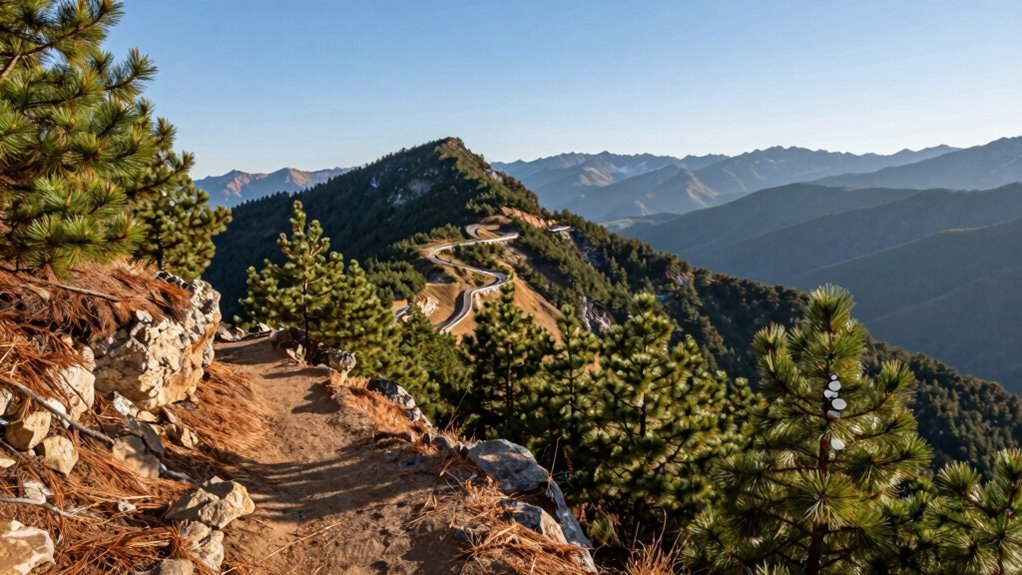
Lace up, because it’s time to stretch your limits—slowly and smartly! Start with your current walking routine, maybe 30 minutes or your usual step count, and build from there.
Add just 10% more steps or distance each week—small gains keep your body happy and avoid burnout.
If you’re mixing in strength training, ease up a bit; your body’s getting twice the workout.
Tackle hills gradually: begin with 20 step-ups per leg, add 5 weekly, and throw in stair climbs two at a time for that uphill kick.
After 6–8 weeks, try pack walks once or twice a week.
In 3 months, you’ll be ready for full-day hikes without gasping at mile three.
Think of progress like compound interest—tiny boosts now mean big trail rewards later.
And hey, even 87-year-olds see massive gains with smart training, so you’ve got this!
Focus on Flexibility and Mobility to Avoid Injury
While your muscles love a good workout, they’ll thank you even more for keeping them limber and loose—because nobody wants to hike like a rusty robot with squeaky joints.
Loosen up with simple moves like standing calf stretches and hip flexor lunges to keep your stride smooth and strong.
Try ankle circles and wrist bends to stay nimble from head to toe.
Spend 5–10 minutes daily on mobility drills like shoulder rolls, knee extensions, or seated leg lifts—they’re low-key but powerful.
These little efforts boost balance, protect your joints, and cut your fall risk, which is golden when you’re on uneven trails.
Stretch after warming up (never cold!) and hold each move 15–30 seconds—no bouncing, please, unless you’re auditioning for a cartoon.
Add Pilates or dynamic moves like squats to prep your body for real terrain.
Walk more, stretch daily, and your 50-plus bod will tackle hills like it’s got a secret youth potion—because movement is the real fountain.
Stay Hydrated and Fuel Your Body for Optimal Performance
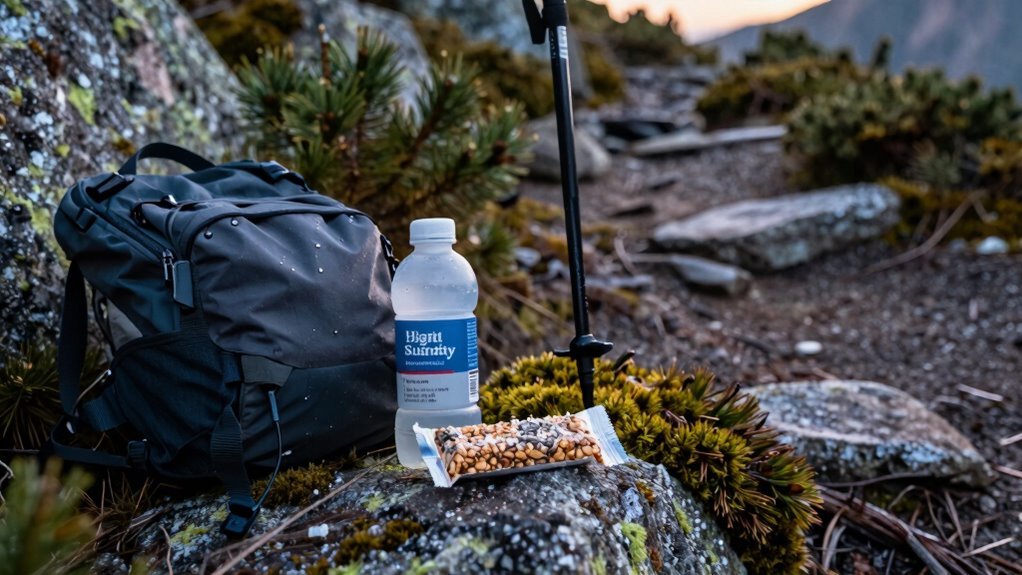
You’ve loosened up your joints and prepped your muscles to move freely—now let’s talk about what keeps that well-oiled machine running: water.
As you age, your body holds less water, thirst fades, and meds or heat crank up dehydration risk—so don’t wait to feel parched.
Aim for at least 2 to 3 liters daily, more if you’re hiking or sweating.
On the trail, sip every 15–20 minutes; bring over 1.5 liters for long or hot hikes.
Plain water works, but sports drinks help replace lost electrolytes.
Skip relying on thirst—it’s about as reliable as a broken compass after 50!
Staying hydrated boosts energy, cuts fatigue, and keeps your gut happy (bonus: fewer grumbles on the trail).
Your body will thank you with stronger climbs, sharper focus, and a smile that lasts all hike.
Drink up—your adventure runs on H2O!
Listen to Your Body and Prioritize Recovery
Sometimes your body speaks up with a loud ache, and sometimes it whispers—a little stiffness here, a twinge there—so it’s time to tune in and play detective. If your muscles are sore, you probably need more recovery.
Feeling tired or sleeping poorly? That’s your cue to take extra rest days. Sharp, regular pain means it’s time to find the cause before it turns into a bigger problem.
Balance issues? Try fun stuff like Tai Chi—it helps and feels great.
Aches from muscle imbalances? See a physiotherapist; they’re like hiking GPS for your body.
Schedule real recovery days every week, stretch daily (hello, IT band and hamstrings!), and roll out tight spots with a foam roller or even a cork ball—yes, really.
Try hot-cold showers, yoga, or a jacuzzi to bounce back faster.
Stay active with smart breaks and varied workouts, because nobody wants to hike their golden years from a couch.
Frequently Asked Questions
Can I Start Hiking if I’Ve Never Exercised Before?
You can absolutely start hiking, even if you’ve never exercised before—hiking’s never been off-limits just because you’re new!
Begin with short, flat trails and take breaks whenever you need.
Your body’ll adapt quickly, especially if you wear comfy shoes and bring water.
Think of it as adventure practice—every step counts, and hey, even sloths had to start somewhere!
Are Hiking Poles Necessary for Older Hikers?
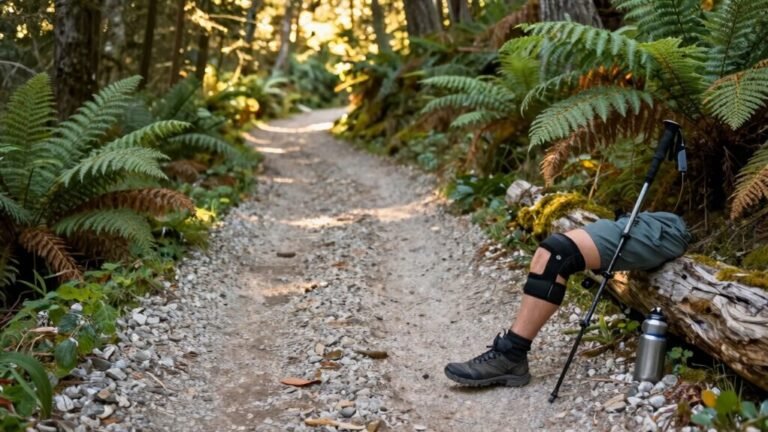
No, you don’t *need* hiking poles—but wow, do they help! Think of them as cheat codes for your knees and balance.
They cut joint stress, boost stability on tricky trails, and make you feel springier—like your 30-year-old self playing hiker.
You’ll dodge soreness, stride easier, and laugh when you remember how wobbly you used to feel.
Honestly, skipping poles is like hiking uphill in flip-flops—possible, but kinda nuts!
What Should I Do if I Feel Joint Pain While Hiking?
you feel joint pain while hiking?
stop and take a breather—your body’s waving a little red flag.
don’t tough it out, or you’ll turn your adventure into a waddle of regret.
assess the pain, loosen your pack straps, and stretch gently.
if it doesn’t ease up, turn back.
better safe than sore!
hydration and trekking poles might’ve helped—good ones are like trusty sidekicks.
listen, recover, and live to hike another day!
How Often Should I Hike Each Week to See Progress?
You’ll want to hike at least once a week to see real progress—think of it like planting seeds; consistency makes the gains grow.
Toss in daily walks of 3-5 miles, and boom, you’re building stamina without even trying.
Add a longer or steeper hike weekly to spice things up.
Your body’ll thank you, and hey, who knew getting stronger could feel this fun?
Is It Safe to Hike Alone at My Age?
Yeah, you can hike alone at your age—just play it smart.
Pack a personal locator beacon so help’s a push away, and stick to trails you know or ones that aren’t too dicey.
Falls are no joke after 50, but you’ve got this if you go slow, wear solid boots, and check conditions first.
Think of it like a solo dance with nature—graceful, aware, and ready to dip out if things get wobbly.
Conclusion
You’re not getting older, you’re getting trail-wise. Every step builds grit, not just muscle. Keep moving, stay curious, and let your boots do some talking. Think of hills as friendly challenges, not foes. Hydrate like you love your future self (because you do), stretch like a cat in sunshine, and rest like a pro. The path rewards patience—your adventure’s just warming up.
References
- https://hwypt.clinic/blog/hiking-nature-trails-for-seniors-active-aging-guide
- https://slowerhiking.com/health-and-wellbeing/multiday-hiking-for-seniors-part-1-practical-hacks-workarounds
- https://www.backpacker.com/skills/backpacking-fitness/fitness-special-mdash-hike-forever-age-65-up/
- https://www.bethesdaseniorliving.com/senior-resources/hiking-as-an-independent-senior-tips-for-fun-and-safety
- https://www.davidonearth.com/blog/older-hiker-training
- https://www.wta.org/news/magazine/features/hike-for-a-lifetime
- https://seniorsite.org/resource/the-hidden-benefits-of-hiking-for-seniors-from-a-70-year-old-explorer/
- https://www.backpacker.com/skills/cooking/fitness-special-mdash-hike-forever-age-50-65/
- https://backpackinglight.com/forums/topic/a-strategy-for-older-people-for-thru-hiking/page/3/
- https://www.youtube.com/watch?v=UHpu3crtQgs