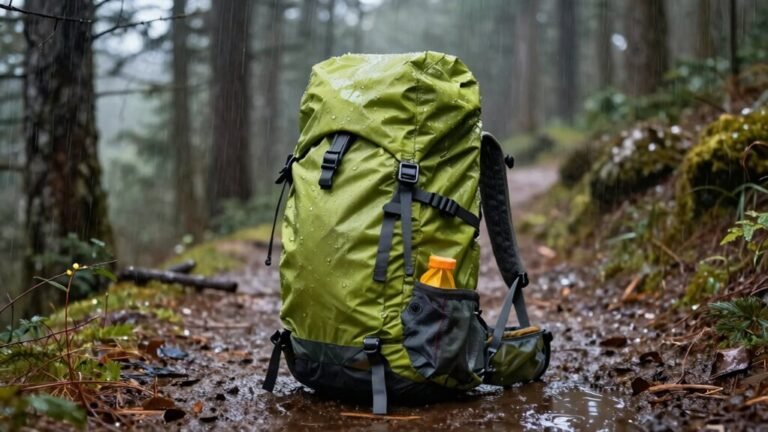
Quick Tips for Bear Canisters
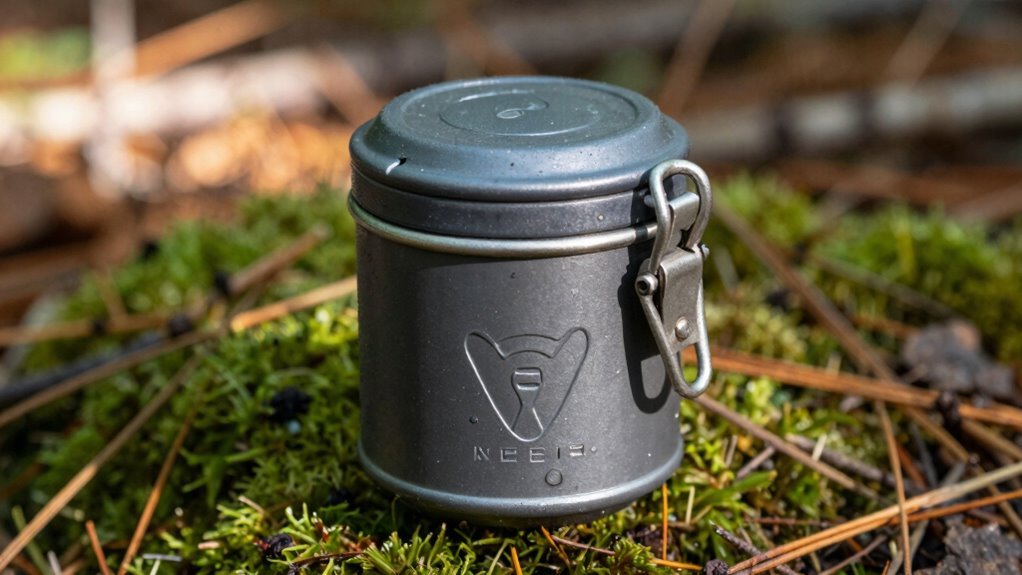
Pick a bear canister that fits your food and follows park rules—it’s your bear-proof pantry. This essential gear keeps wildlife away and ensures your trip complies with wilderness regulations.
Pack smart with zip-top bags, stash all smelly stuff inside (yes, even toothpaste!), and seal it with two solid clicks. Proper storage prevents attracting bears and other animals to your camp.
Place the bear canister 100 yards from camp, downwind, on flat ground. This reduces the chance of curious wildlife stumbling upon your supplies.
Practice opening and closing it at home so you don’t fumble in the cold. Get it right, and you’ll sleep easier—there’s more to mastering the wild than just packing in snacks.
Choose the Right Bear Canister for Your Trip
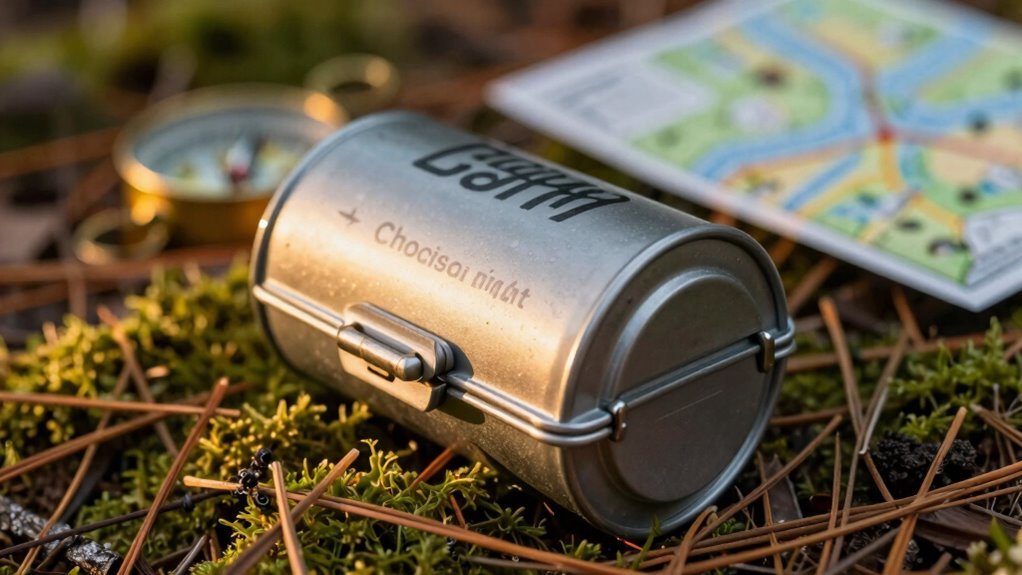
Ever wonder how to pick the perfect bear canister without turning your pack into a game of tetris?
You’ve got options: hard-sided canisters like BearVault keep critters out with proven toughness, while soft-sided bags like Ursack save weight and squish into tight spots—just check if they’re allowed where you’re headed.
Need space?
The BV500 holds a week’s food and is approved almost everywhere, while smaller models like the BV450 fit shorter trips.
Bigger canisters actually give you more volume per ounce, so you’re not hauling dead weight.
Lighter options like Garcia or Bearikade save bulk and slide into pack slots easier.
Clear models let you see snacks at a glance—no rummaging required.
Just twist the lid, stow it right, and hike on.
Smellyproof Bags add an extra layer of odor control when used inside any storage system.
Pick smart, sleep easy, and keep the bears out of your breakfast burrito.
Pack Smart to Maximize Space
How do you fit days’ worth of meals into a bear canister without turning it into a cluttered junk drawer?
First, repackage everything—ditch bulky boxes and vacuum-sealed bags, then transfer food into Ziplocs.
Squeeze out air (poke tiny holes if needed) and label each bag, because “mystery mush” isn’t appetizing.
Use clear liners to cut odors.
Pack in daily layers: stack meals by day, add a sweet treat (you’ve earned it!), and keep spices up top.
Tuck an inventory list with checkboxes—nothing beats checking off dinner like a mealtime scoreboard.
Load food sideways to create accessible layers, not a treasure hunt.
Place the canister in your pack’s center, snug against your back, for better balance.
Go horizontal if it fits—your hips will thank you.
Choose compact, calorie-dense foods; skimp on fluff.
With a BV450 holding 3–4 days and bigger models storing up to 7, smart packing means more trail, less junk drawer.
Always close and lock your canister after use to ensure bear safety.
Store Only Scented Items Inside
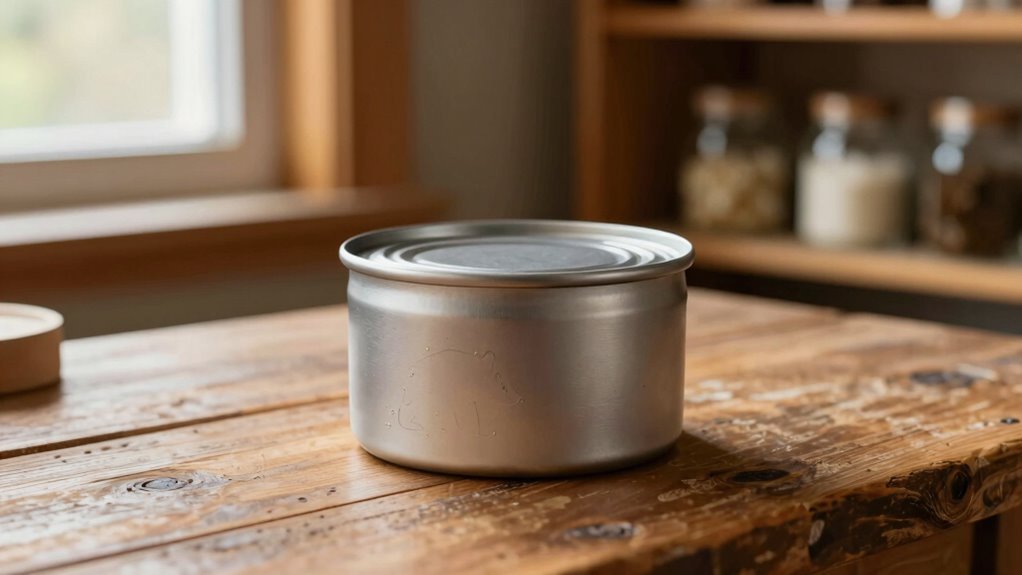
Always remember: if it smells like lunch to you, it screams dinner to a bear.
Keep every scented item—food, toothpaste, sunscreen, bug spray, even garbage—locked tight in your bear canister.
Bears can sniff out lunch from miles away, and you don’t want yours becoming theirs.
That half-eaten granola bar or leftover spice packet? Yep, that counts.
Store it all.
- Imagine a curious bear stumbling into your camp, just because you left sunscreen in your tent.
- Think of waking up to shredded bags and a raccoon buffet—your lunch, now their feast.
- Picture peacefully cooking dinner, knowing your sealed canister keeps everyone safe—bears and hikers alike.
It’s not just about rules—it’s about respect, safety, and keeping the wild wild.
Plus, no one wants to explain why their toothpaste started a forest standoff.
In areas like the Blood Mountain Wilderness, a bear canister is required by regulation during certain months to protect both wildlife and visitors.
Know the Proper Way to Seal the Lid
Snap that lid on with confidence, but not like you’re trying to win an arm-wrestling match against a grizzly.
Twist it clockwise with firm, even pressure until you hear that satisfying click of the stop tab locking into place.
Make sure you’re pressing evenly around the rim—no lopsided seals allowed!
Give the lid a gentle tug to test it; if it doesn’t budge, you’ve nailed it.
But ease up on the force—over-tightening can strip the threads over time, and plastic ain’t immortal.
Before hitting the trail, practice closing and opening a few times so you’re not fumbling in the dark.
Think of it like breaking in hiking boots, but way less painful.
A well-sealed canister keeps smells in and bears out—mission critical, no do-overs.
Do it right, and you’ve just made your backpack a lot safer (and snack-hoarders everywhere jealous).
Place Your Canister the Right Distance Away
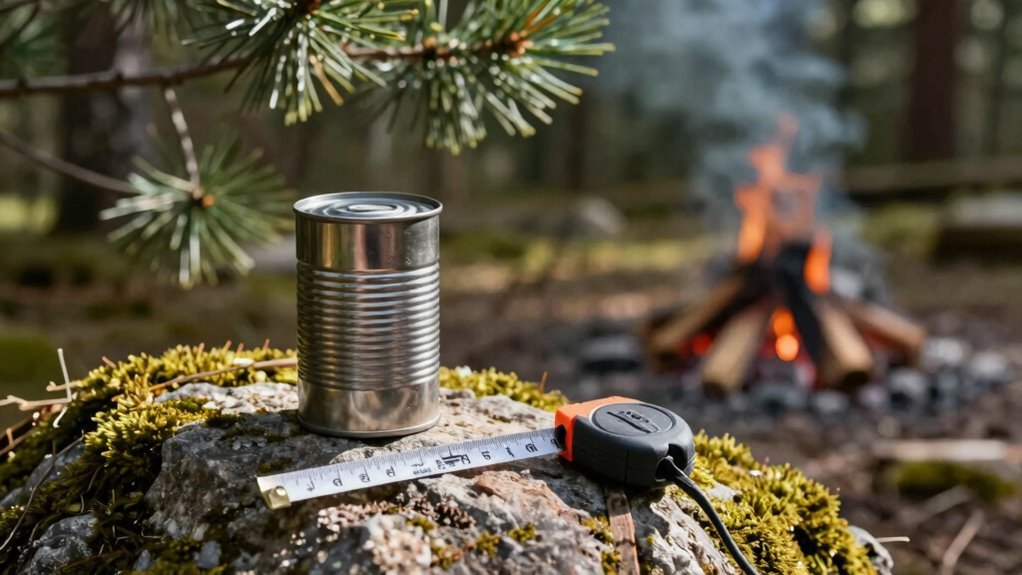
Now that your bear canister is sealed up tighter than a pickle jar at a family reunion, it’s time to think about where you’re plopping it down for the night.
You want your snacks safe, your sleep sound, and bears far from your tent—so stash that canister at least 100 yards away, on flat ground, and never near cliffs or water.
Keep it downwind too, so curious bears don’t follow dinner’s scent straight to your pillow.
And remember, cooking, eating, sleeping, and storing should all be in separate zones—like bears don’t like buffets.
- Your peace of mind is worth more than a midnight snack run.
- A bear-free camp means everyone, including wildlife, stays safe and happy.
- Doing it right means you’ll actually get some rest—no 3 a.m. rustling surprises.
Avoid Leaning It Against Trees or Rocks
While your bear canister might look tough enough to survive a wrestling match, propping it against a tree or boulder is like giving a bear a built-in can-opener. Those hard surfaces create pressure points that can crack the plastic over time—especially if a curious bear starts pushing or rolling it.
And guess what? Bears are clever pushers. Lean your canister, and it might just roll down the hill while you’re asleep, ending up in Snow Creek by sunrise. Ouch.
Trees and rocks also give bears leverage, letting them pry, chew, or bash the container more easily.
Instead, park it on flat, open ground about 20 feet from camp—ideally in a dip or under a bush. That way, it stays put, stays strong, and keeps your snacks where they belong: safely hidden, not helplessly handed over.
Use Dry Bags Inside for Extra Protection
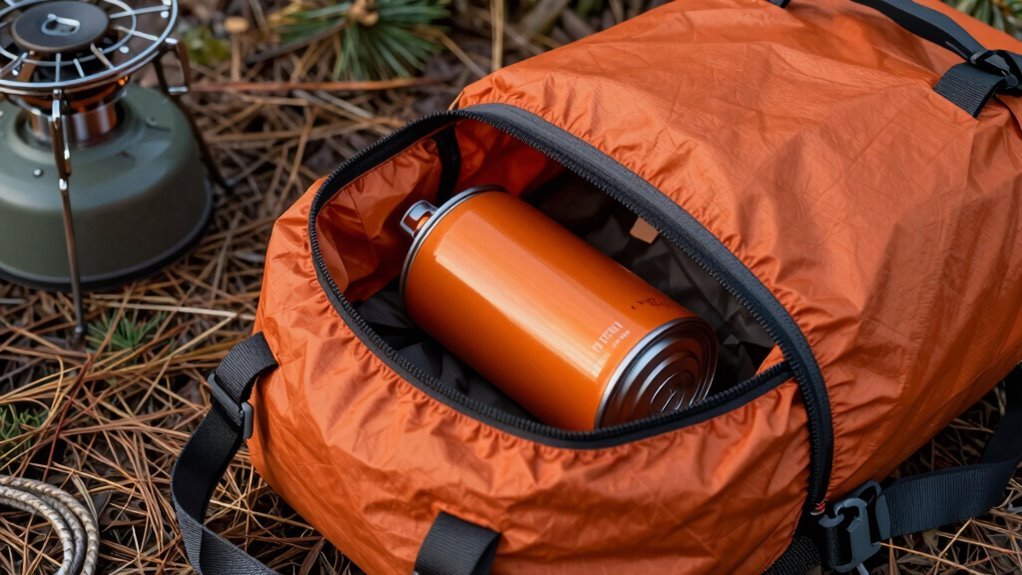
Keeping your food safe from bears and breakfast-hunting raccoons gets even better when you double down on protection—think of it as giving your snacks a cozy, armored bunker inside their already tough fortress.
Slip dry bags inside your bear canister and instantly boost moisture and odor defense, keeping everything from jerky to toothpaste dry, smell-safe, and organized.
Loksak bags add a smell-proof seal, while re-packed meals in smaller bags maximize space and minimize bulk.
Even if your canister gets damp or scuffed, your food stays fresh and protected.
- Imagine opening your canister after a rainy night and finding everything perfectly dry—like magic, but better.
- Picture a bear sniffing around, confused, because it can’t smell your chili through double-layered protection.
- Think of unpacking with ease, grabbing meals fast, no crushed granola or soggy oatmeal in sight.
Keep It Away From Sleeping Areas
Ever wonder why bears seem to have a built-in GPS for snack locations? It’s ’cause they’re crazy good at sniffing out food, so you’ve gotta keep your canister far from where you sleep—like 300 feet, or roughly 70 big steps away. Seriously, don’t shortcut it.
Pitch it on level, open ground away from cliffs, lakes, or ledges so it won’t roll if a bear gives it a shove.
Hide it behind a rock or in brush so it’s not just sitting out in plain sight, but still easy for you to find.
Flip it upside-down to protect the lid, and maybe add reflective stickers or a splash of paint so you don’t trip over it at night.
Store it separate from cooking, eating, and sleeping zones to keep bears from crashing your sleepover.
And always follow park rules—some spots absolutely mandate this stuff.
Your safety’s worth the extra walk, even if your snacks are extra tempting.
Practice Opening and Closing Before You Go
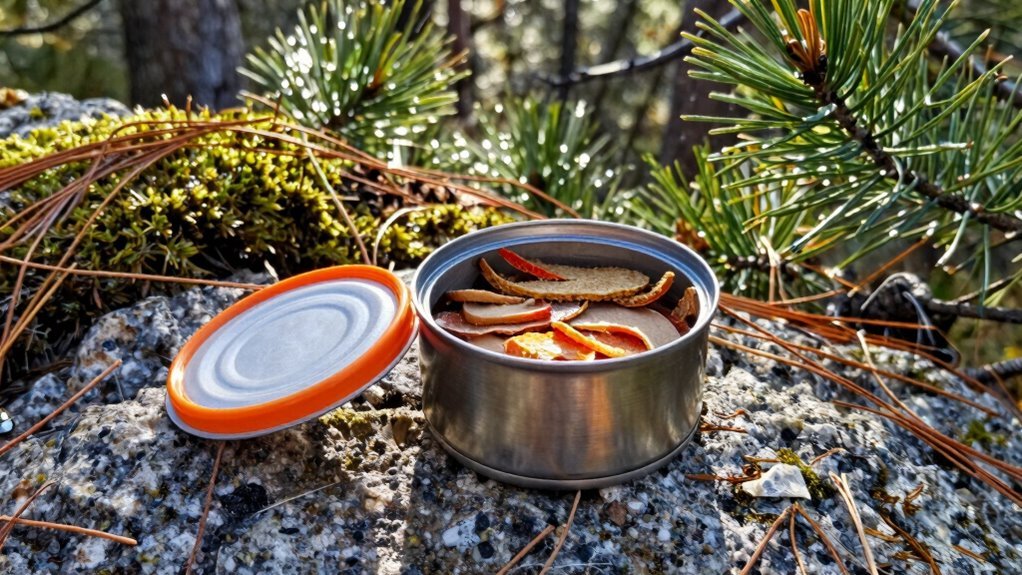
You’ve stashed your bear canister the right distance from camp, hidden it just enough, and picked a safe spot—awesome.
But can you actually open and close it when it counts?
Don’t wait until you’re hungry, tired, and bumbling with cold fingers to figure it out.
Practice at home first.
- Feel the panic of a stuck canister in freezing temps—avoid it with prep.
- Experience the joy of two smooth clicks—your dinner’s safe from bears!
- Avoid the facepalm moment when you over-tighten and get stuck.
Turn the lid counterclockwise just until the black nub hits the blue stopper, then push it past with your thumb.
Close it clockwise until you hear two solid clicks—no more, no less.
Cold makes plastic stiff and fingers clumsy, so warm up first.
Use a Gerber Dime or closed knife blade if needed (never an open blade—ouch!).
Practice builds confidence, prevents mistakes, and turns a fumble into a win.
Follow Park-Specific Storage Rules
While every trail you hike might feel wild, the rules for keeping critters out of your snacks aren’t one-size-fits-all—far from it.
In Olympic, you’ll need a canister on the coast or in Royal Basin, but hanging might fly elsewhere—if you’ve got the perfect tree.
Meanwhile, Rocky Mountain says nope to hangs entirely; April through October, only IGBC-certified canisters allowed, thanks to clever bears with snack cravings.
Grand Teton? Pack an IGBC-approved can and stash everything smelly—yes, even your minty lip balm.
Yosemite demands canisters parkwide unless you’re lucky enough to score a locker (last one’s at Glen Aulin—don’t miss it!).
Sequoia and Kings Canyon shrug at hangs and strongly nudge you toward canisters, especially on the PCT.
Bottom line: always check the park’s current rules online, grab the right gear, and keep your pantry locked down—your snacks (and the bears) will thank you.
Frequently Asked Questions
Can I Use a Bear Canister for Water Storage?
No, you can’t use a bear canister for water storage—it’s not watertight and’ll leak like a sieve.
It won’t float either, so it’ll sink straight to the bottom if it rolls into a stream.
Plus, it’s built just for keeping food safe from bears, not holding liquids.
Save yourself the soggy mess and stick to a proper water container.
Trust me, your backpack’ll thank you!
Do Bear Canisters Work Against Other Animals Like Raccoons?
Yeah, bear canisters absolutely work against raccoons—they’re total ninjas at getting food.
but even they can’t crack a properly sealed canister.
You’d be amazed how long they’ll fiddle and flop around before giving up.
Those tough walls and snug lids?
No match for little bandits.
Just make sure you latch it right, or you’re basically serving dinner on demand.
Are Bear Canisters Allowed on All Hiking Trails?
No, bear canisters aren’t allowed on all hiking trails—some don’t require them, others outright ban them.
But hey, you’re smart to ask!
In wild bear country, they’re often mandatory, while raccoon-heavy zones might just laugh at your canister.
Check rules before you go, because surprising a park ranger with your DIY food locker? Not cool.
When in doubt, pack one—it’s like a fanny pack for your snacks, but bear-proof!
How Do I Clean My Bear Canister After a Trip?
You clean your bear canister by rinsing it inside and out with hot water to zap leftover gunk.
Scrub gently with a sponge and unscented soap, then strain scraps so they don’t slip away.
Dry it completely in the shade—no musty surprises later.
Wipe it down, check for cracks, and stash it open in a cool, dry spot.
And hey, no pizza-scented air fresheners—bears aren’t fans of gourmet trash!
Can I Share One Bear Canister Between Two People?
Yes, you can share one bear canister with your buddy—plenty of pals do!
Pack food smartly, snugly, and secure everything before stashing.
As long as all your grub fits inside and rangers see you’re following rules, you’re ready to roam.
Just double-check destination details—some spots demand solo storage.
Otherwise, sharing’s simple, savvy, and saves space.
Smart moves mean sweet dreams, even if a curious bear rummages nearby—tight lids keep peace!
Conclusion
Pack it right, seal it tight, stash it far. Follow these steps, keep critters calm, and sleep sound. Store your snacks, secure your soap, save your sanity from midnight marauders. Practice at home, listen to park rules, and never, ever feed the bears—no matter how cute they look in your campfire tales. Stay smart, stay safe, and snack happy under the stars!
References
- https://www.cleverhiker.com/backpacking/best-bear-canisters/
- https://wildlandtrekking.com/blog/choosing-the-best-bear-cannister/
- https://trailtopeak.com/2015/09/06/gear-review-bear-canister-faceoff-the-bearvault-bv500-vs-the-garcia/
- https://www.greenmountainclub.org/bear-can-options/
- https://trailove.com/pages/articles/bear-canisters
- https://andrewskurka.com/food-bear-canisters-guide-approved-volume-cost/
- https://www.rei.com/learn/expert-advice/bear-resistant-canisters.html
- https://zpacks.com/blogs/news/everything-you-need-to-know-about-bear-canisters
- https://www.halfwayanywhere.com/trails/pacific-crest-trail/bear-canister-tips-strategies/
- https://faroutguides.com/12-tips-to-pack-a-bear-canister/