Quick Tips for Boot Fit
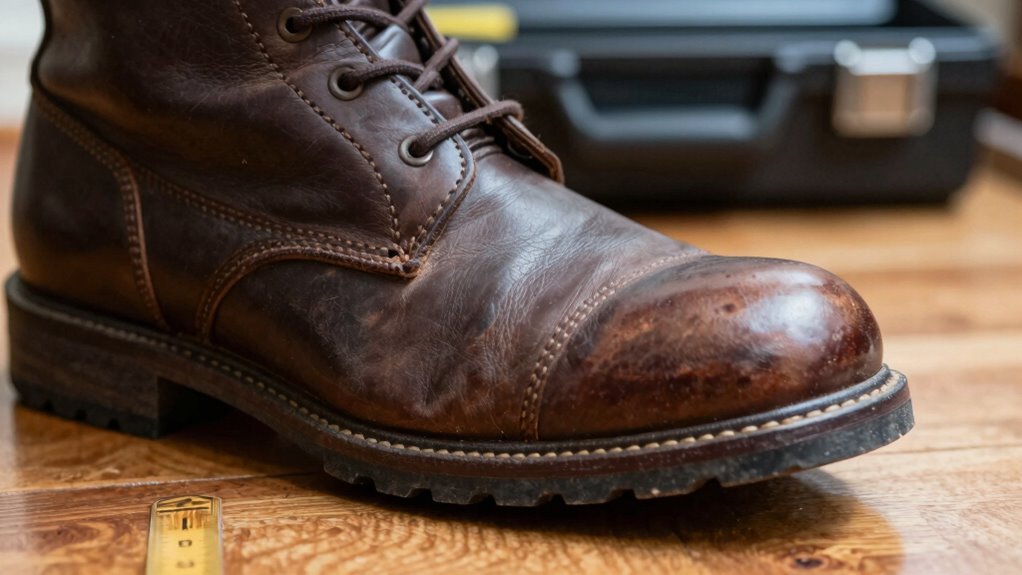
Check your heel fit—aim for a snug hug, not a dance party. A proper boot fit ensures comfort and prevents blisters, so make sure your heel stays put without slipping excessively.
Leave about an inch of wiggle room at the toes; that toe box won’t stretch, promise. This extra space accommodates natural foot movement and swelling over time.
Try boots on late in the day when your feet are tired and puff deputy—they actually expand, which helps you get a more accurate fit. Wear the socks you’ll actually use, skipping cotton in favor of moisture-wicking merino or synthetic blends.
Break them in slow, like a first date—no rushing. Gradual wear helps mold the boot to your foot without causing pain or damage. And hey, there’s a bit more magic where that came from.
Check for Proper Heel Fit
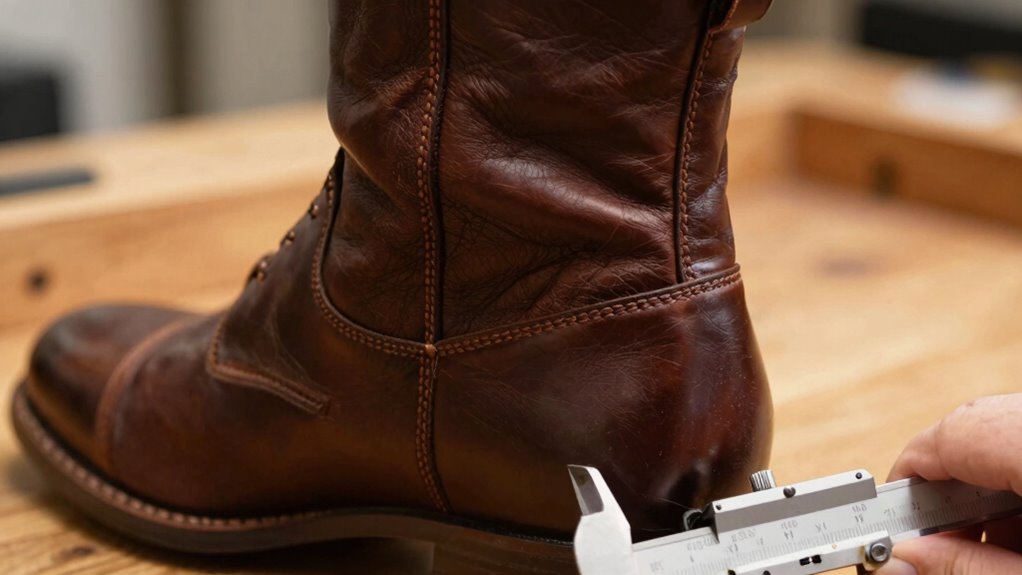
Ever wonder why your boots feel like they’re playing hopscotch with your heels?
That little lift—½ to ¾ inch—is normal at first, especially in pull-on styles, but it should settle as the boots mold to you.
You want no more than ¼ inch slip long-term; anything more means they’re too loose.
Walk around!
If your heel’s still dancing, they’re likely the wrong size.
To test fit, slip your finger behind your heel with the liner out—snug is good, loose means go a half size down, tight means size up.
A well-fitted heel hugs without pinching, stops blisters, and keeps you steady.
Too tight? You’ll know fast—ouch!
Too high? Hello, achy Achilles.
Measure both feet, wear real socks, and trust the chart, but always check the brand’s fit guide.
Proper heel fit helps prevent ankle sprains and foot fatigue.
Good heel love feels *just* right—like a hug, not a squeeze.
Allow Room for Toe Movement
When you’re lacing up, make sure your toes have room to dance—about an inch between your longest toe and the end of the boot, roughly the width of your thumb. That little gap lets your toes wiggle freely without smacking the front, even when you’re striding downhill.
Your toe box won’t stretch over time, so if it’s tight now, it’ll stay that way—no magical expanding like in fairy tales.
Keep the ball of your foot aligned with the boot’s widest part so every bend feels natural. Wiggle those piggies: they should move without cramping or touching the sides.
Enough space means fewer blisters, calluses, or sneaky bunions later. Think of it as giving your feet a happy home—good circulation, less fatigue, and no numbness.
A roomy toe box isn’t slacking off; it’s smart living. Your boots should support, not squeeze. Trust us, your toes will thank you with every step.
Test Fit at the End of the Day
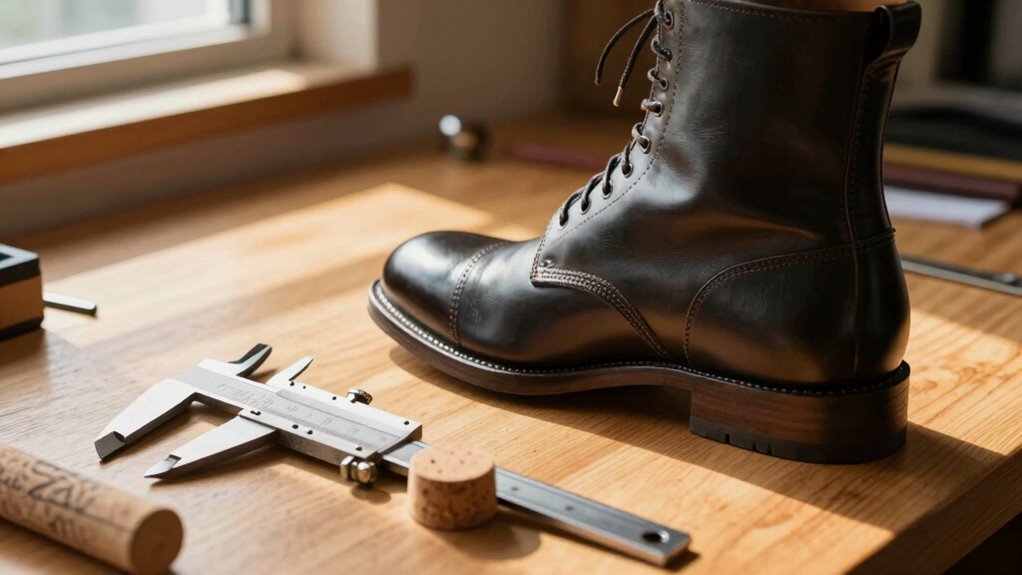
Since your feet aren’t morning people, save the boot test for the late afternoon when they’ve had time to puff up like rising dough.
By then, gravity and walking have plumped them up 2–5%, just like after a long day on the trail.
Warmth, muscle fatigue, and fluid buildup make feet wider and longer—up to half a size bigger!
Trying on boots now means you’re testing the real deal, not some sleepy morning version.
You’ll dodge surprises like pinched toes or heel slip that pop up once your feet wake up fully.
Bootfitters swear by post-4 PM fittings for this reason—92% of folks are happier with the fit.
Skip the shock of afternoon cramping or numbness; snug isn’t good if it turns into ouch.
Test late, ski right, and step easy knowing your boots can handle your feet at their fullest.
Game-changer? Absolutely.
Time of day does not matter for FIT sample.
Wear the Right Socks During Fitting
You’ve nailed the perfect time to try on your boots—late afternoon, when your feet are ready for action, not still rubbing sleep from their toes.
Now, don’t sabotage your fit with lousy socks!
Ditch the cotton—seriously, it’s like inviting blisters to a party.
Instead, grab merino wool or synthetics that wick sweat like a champ.
Your feet will stay dry, warm, and happy.
Pick cushioning that matches your boot: light for sleek Chelseas, heavyweight for steel toes.
And hey, crew-height socks love 8-inch boots, while over-the-calf rules for 10-inch models.
A good sock hugs your foot like it means it—thanks to heel locks, anatomical shapes, and no-slip grips.
Plus, features like moisture-wicking and odor-fighting keep things fresh.
Trust us, the right sock isn’t just an add-on—it’s your boot’s best friend.
Don’t step into a fitting room without one!
Break Them In Gradually
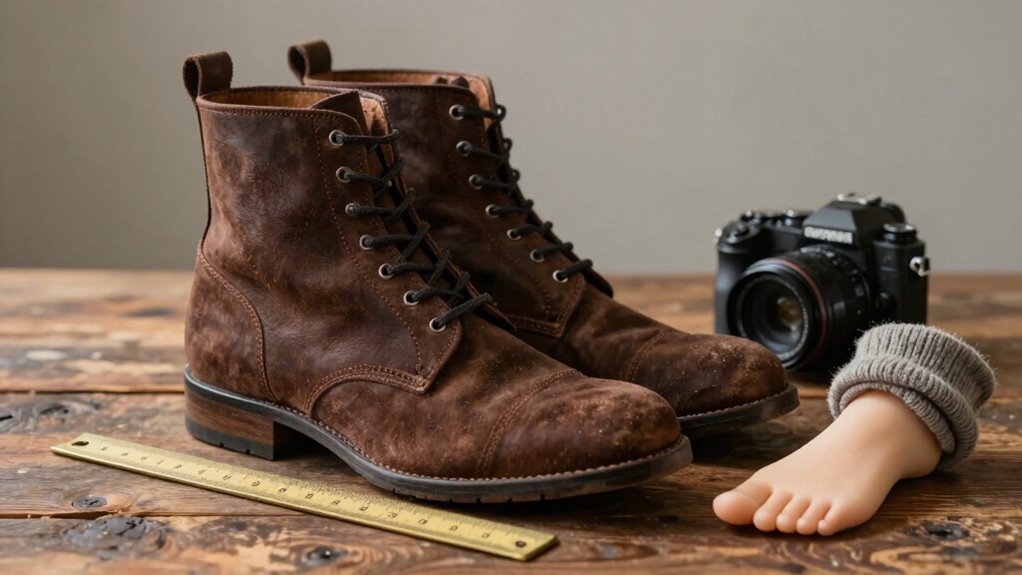
Just because your boots look amazing doesn’t mean they’re ready to conquer the world on day one—ease them in like a morning stretch, not a sprint.
Start by wearing them indoors for 1–2 hours on carpet; your feet (and boots) will thank you.
Short sessions let the leather adapt without drama, and you can ditch them fast if they pinch.
Gradually add more time over days—think slow and steady, not hero mode.
Skip daily marathons; let the boots rest between wears so they mold right.
Lace snug but not tight, and play with lacing tricks to beat pressure spots.
Patience isn’t just a virtue—it prevents blisters and saves your soles.
Every tweak helps them hug your feet perfectly.
Break-in isn’t a race, buddy.
In a couple weeks, you’ll be striding tall, blister-free, and boot-confident.
Frequently Asked Questions
How Do I Know if My Boot Is Too Wide?
Your boot’s too wide if your foot slides side to side or feels wobbly when you walk.
You’ll notice extra creasing on the upper or hear a squeaky boot liner rubbing.
Blisters on your heels or toes banging on descents? Yep, too roomy.
A loose fit might seem comfy now, but your foot’ll dance around like it’s at a party—no invite needed.
Secure heels stay put, not throw raves all day.
Can I Wear Orthotics in My Boots?
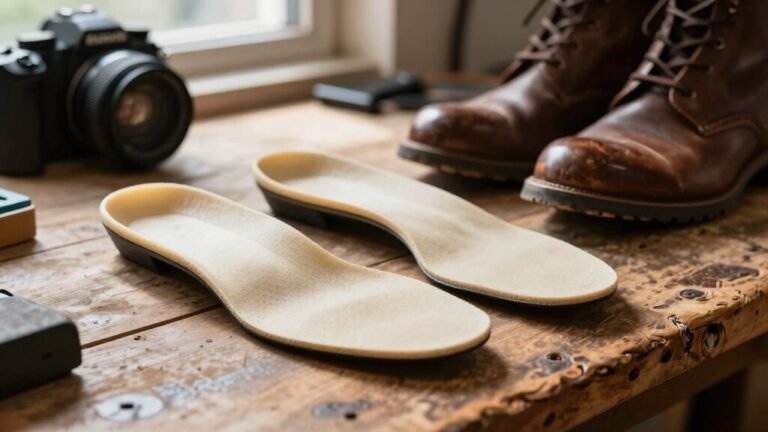
You bet you can rock orthotics in your boots—think of them as VIP guests needing a little extra room.
Just grab ¾-length ones so they fit without squishing your toes, and slip them into boots with removable insoles.
Size up a half-notch if things feel snug, and lace ‘em down snugly for a happy, supported fit.
Your feet will thank you with every step!
Should Boots Feel Tighter When New?
Yeah, boots should feel snug when new—like they’re giving your feet a little hug, not a death grip.
That tightness? Totally normal, especially with stiff leather.
You’ll need about 80-100 hours of wear before they loosen up and mold to your feet.
Think of it as a tiny breaking-in romance between your boots and your soles.
Just make sure you can still wiggle your toes.
What if One Foot Is Larger Than the Other?
You’ve got one foot bigger than the other?
Don’t sweat it—most people do!
Start by buying shoes to fit your larger foot, then tweak the smaller one.
Slide in an insole, snug it up with a tongue pad, or adjust straps.
If the gap’s big, grab two different sizes.
Smart fixes keep both feet happy, comfy, and ready to strut.
Who knew mismatched could feel so right?
Are Waterproof Boots Less Breathable?
Yeah, waterproof boots are less breathable—you’ll feel that when you’re hiking hard and your feet start sweating.
They trap moisture inside because the membrane that keeps water out also slows down vapor from escaping.
So while your feet stay dry from rain, they might get damp from your own sweat.
Breathable boots let heat and sweat out faster, keeping you comfy on hot or long hikes—think of it like wearing a raincoat on a steamy day!
Conclusion
Your boots should hug your heels like a good inside joke—snug and trustworthy. Leave toes room to wiggle, like they’re dancing at a tiny party. Try them on when your feet are cozy and full, usually late in the day. Wear the socks you’d actually live in—no tricks! Break them in slow, like dipping into warm soup. Boom, happy feet, happy trails!
References
- https://www.overlookboots.com/blogs/boots/boot-size-guide
- https://stompersboots.com/blog/the-ultimate-guide-for-boot-measurements-ensuring-the-perfect-fit-2/
- https://www.smigroupuk.com/insights/boot-sizing-guide-how-to-measure-your-feet-for-the-best-fit
- https://www.suedwind.com/en/more/footwear-size-guide/
- https://stridewise.com/how-boots-should-fit/
- http://whitesboots.com/pages/fitting
- https://www.cotswoldoutdoor.com/the-knowledge/walking/boot-fitting-guide.html
- https://www.clarks.com/en-gb/editorial/how-should-shoes-fit
- https://www.bootsbym.nl/en/blogs/blog/boot-fit-guide/
- https://www.tecovas.com/fit-guide