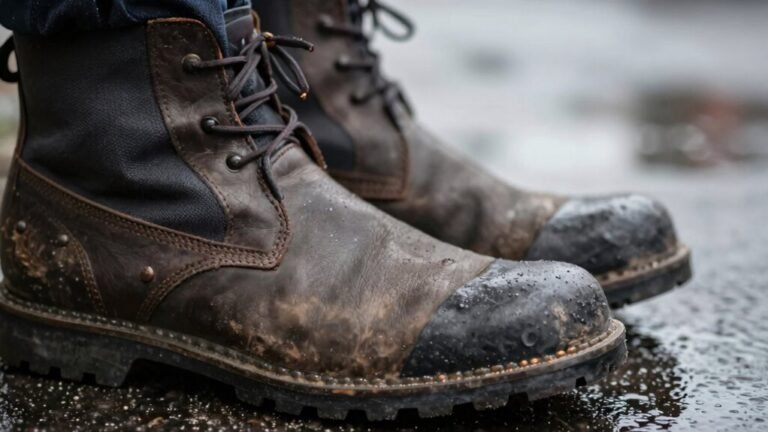
Beginner Guide to Blister Care
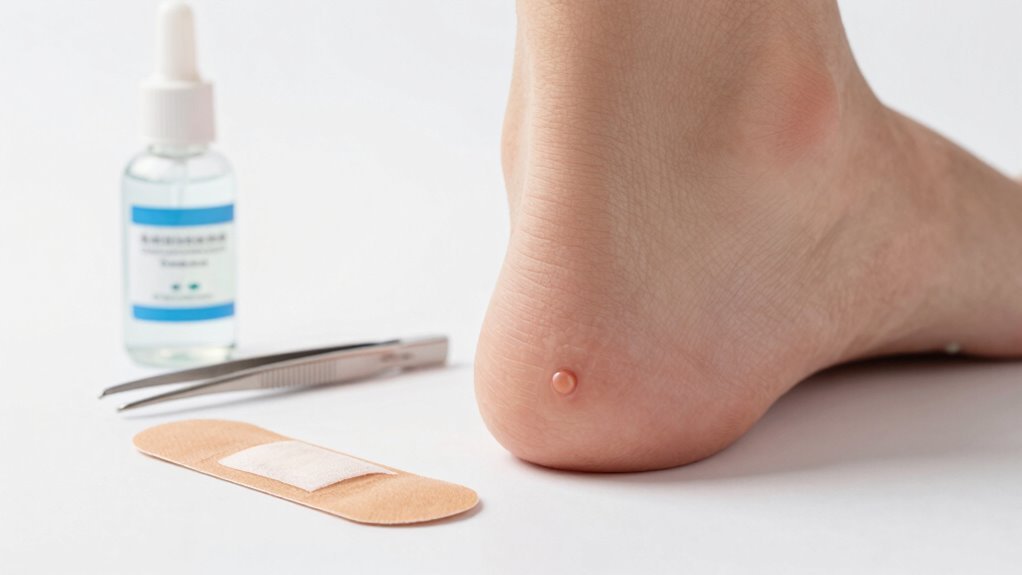
You’ve got blisters? No worries—they’re just your skin’s way of yelling, “Hey, that’s too much rubbing!” Blisters can pop up from sweaty socks, hot spots in new shoes, or even sunburns.
Keep feet dry with wicking socks and wear well-fitting shoes to prevent blisters. Always use a blister-ready bandage for added protection.
If a blister swells up, clean it gently and cover it with a sterile dressing. You may carefully drain it if needed, but avoid popping blisters unnecessarily. You’re doing great, and there’s a smarter way around every bubble.
Understanding What Causes Blisters
While you’re out hiking, breaking in new shoes, or even just going about your day, your skin might stage a tiny protest in the form of a blister—and yeah, it’s not always friction throwing a fit.
Sure, rubbing that new boot heel can whip up a blister fast, especially if your feet are sweaty—moist skin grips more, so oops.
Thick skin on palms and soles? Prime real estate for friction drama.
But heat’s a sneaky culprit too—sunburns, burns, or even frostbite can bubble things up.
And don’t forget germs: viruses like herpes or chickenpox love to crash the party with itchy blisters.
Allergies to poison ivy or harsh chemicals can also turn your skin into a bubbly mess.
Even your own immune system might start drama, attacking skin by mistake.
Wild, right?
Blisters aren’t just a shoe problem—they’re a “hey, pay attention!” signal from your body, in the most dramatic way possible.
Blisters are often shaped like a circle, making them easy to spot when they form.
Common Types of Blisters and Where They Form
You just learned that blisters aren’t always about bad shoes or sweaty socks—they’re your body’s quirky way of waving a red flag when something’s off.
Friction blisters pop up from repeated rubbing, often on your heels, soles, or palms—hello, new shoes or long hikes!
Blood blisters appear when you slam a finger or pinch the skin; they’re tough little survivors filled with blood, not just fluid.
Heat blisters? Those sneaky guys come from burns or even frostbite recovery, showing up wherever your skin got too hot.
Then there’s pemphigus vulgaris—autoimmune troublemakers starting in your mouth before spreading, leaving painful sores.
Bullous pemphigoid, mostly in older adults, brings firm, large blisters on the trunk, groin, or folds.
Each type forms in specific spots and for unique reasons—your body’s way of shouting, “Hey! Pay attention!” autoantibodies attack skin proteins.
How to Prevent Blisters During Daily Activities
What if you could outsmart blisters before they even start?
You totally can!
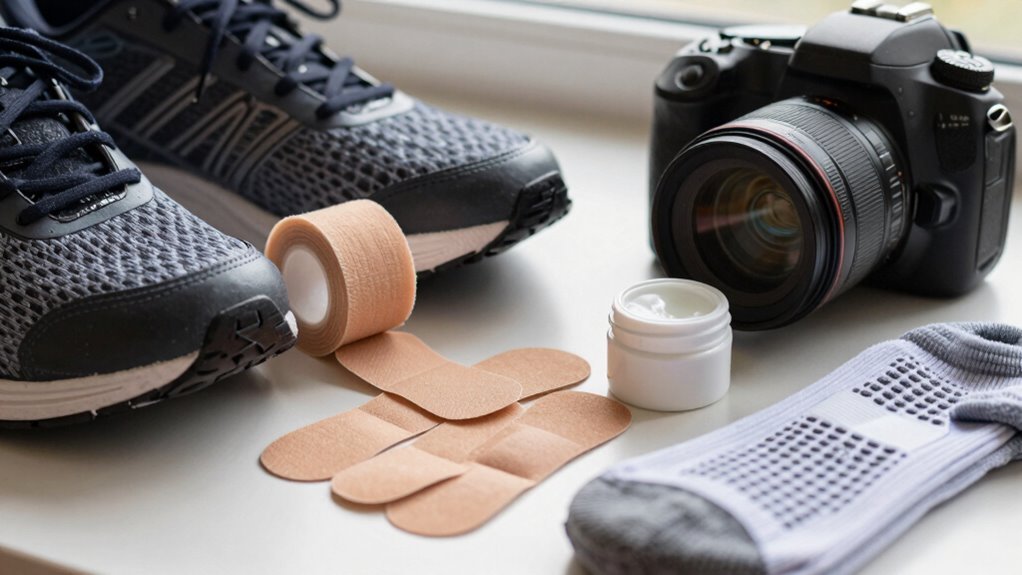
Wear moisture-wicking socks made of acrylic or polyester—they pull sweat away so your skin stays dry and happy.
Ditch cotton like last year’s fashion trend; it traps moisture and invites friction.
Slap on foot powder or use antiperspirant to keep sweat under control.
Throw on a thin liner sock under your regular one for double the protection and less rubbing.
If you’re hiking or walking a lot, change your socks halfway—your feet will thank you!
Use BodyGlide or tape on hot spots before they scream in pain.
Check your feet often, because spotting redness early means you can stop a blister before it ruins your day.
Proper shoe fit is essential to prevent excessive rubbing and pressure during activity.
Stay dry, stay smooth, and keep moving—blisters don’t stand a chance!
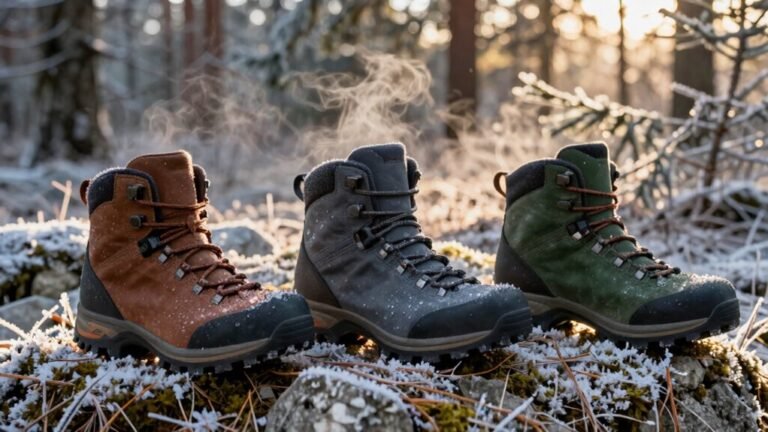
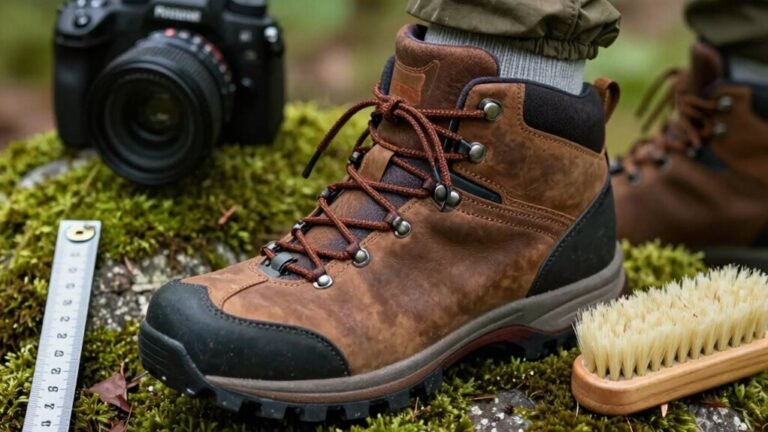
Choosing the Right Footwear to Avoid Friction
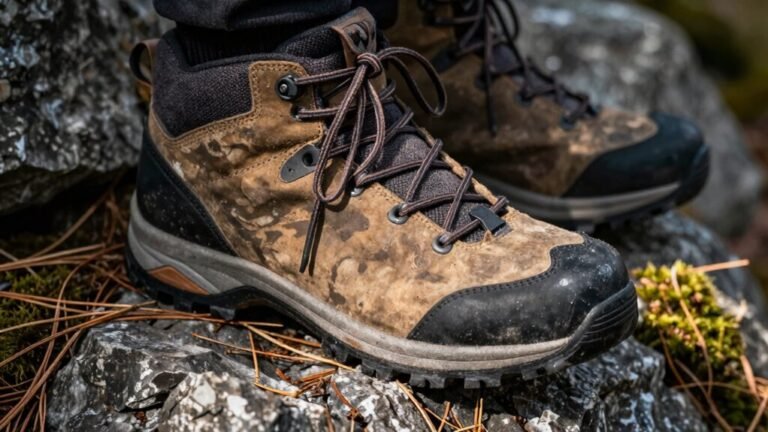
Socks are your first line of defense, but let’s not forget the real MVP—your shoes.
Snug heels, roomy toe boxes? Yes, please!
They keep your feet from sliding or squishing, which means less friction and fewer blisters.
Always try shoes on with the socks you’ll actually wear—no surprises later.
Breathe easy with mesh uppers or perforated panels that let heat escape and keep things dry.
Damp feet are grumpy feet.
Look for good arch support and cushy insoles; they spread out pressure like a comfy cloud for your soles.
Break in new kicks slowly—don’t go hiking 10 miles on day one unless you’re auditioning for a blister convention.
And hey, if the tread’s toast or the padding’s flat, it’s time to say goodbye.
Your feet will thank you with happy, blister-free vibes every step of the way.
Best Practices for Blister Treatment at Home
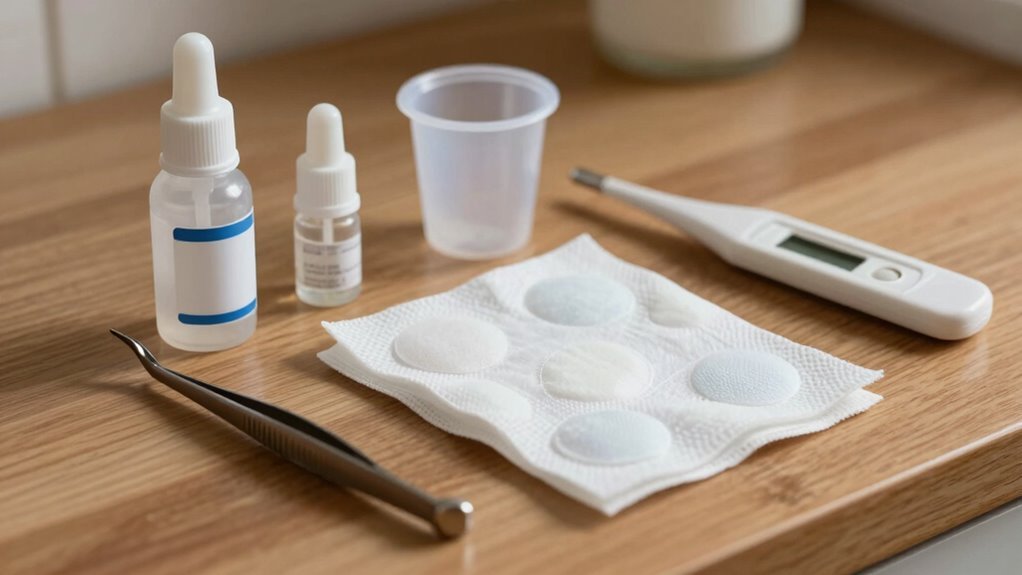
A single popped blister can turn a sunny stroll into a wincing workout, but don’t panic—treating it at home doesn’t have to be a pain in the foot. Just follow these simple steps to heal fast and get back on your feet with confidence:
- Clean gently with mild soap and water, then pat dry—skip harsh stuff like alcohol, which stings and slows healing.
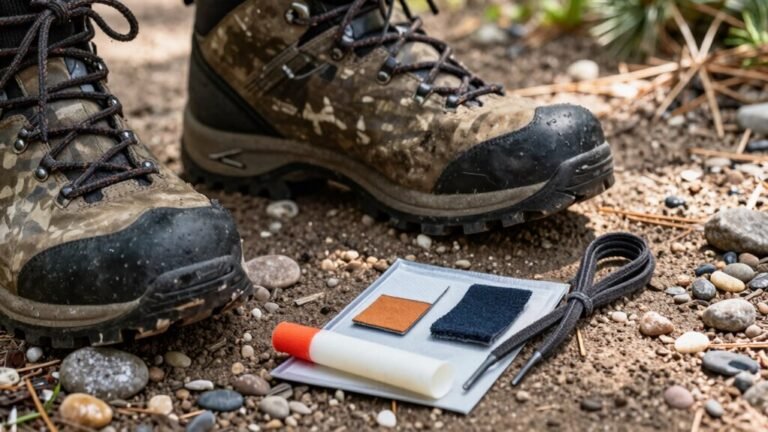
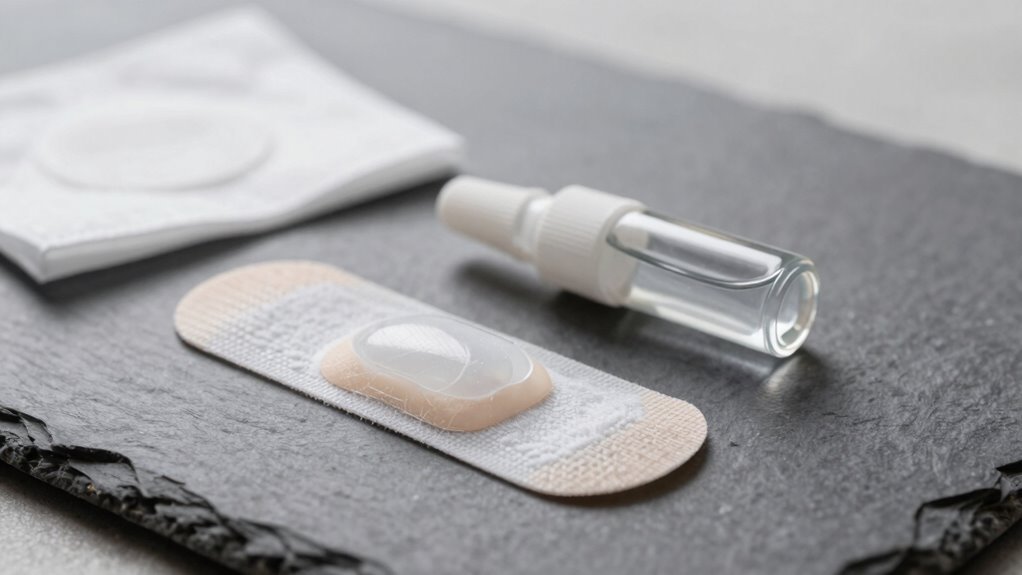
- Slap on a hydrocolloid or padded dressing—it’s like a cozy shield that locks in moisture and keeps germs out.
- Apply a dab of petroleum jelly or antibiotic ointment with clean hands, then cover up; this keeps things smooth, protected, and infection-free.
Leave the loose skin alone—it’s nature’s bandage!
Change the dressing daily, keep it clean, and watch it heal.
Soon, you’ll be stepping easy again, blister-free and grinning like you just won a sock duel.
When (and How) to Safely Drain a Blister
If that blister’s looking more like a water balloon ready to burst, it’s probably time to take action—especially if it’s big, painful, or planted right where your shoe rubs.
Go ahead and drain it—just not if you’ve got diabetes, HIV, cancer, or it’s a blood blister; then, let a pro handle it.
Start by washing your hands and the area, then swab the blister with iodine.
Sterilize a needle with alcohol (skip the hydrogen peroxide—it stings!).
Poke the edge in a couple spots, gently squeeze the fluid out, and leave the skin flap like nature’s bandage.
Don’t stab the center—think precision, not pop therapy!
Once it’s drained, slather on some antibiotic ointment, cover it with a nonstick pad, and tape it down.
Change the dressing daily, keep it clean, and give yourself a high-five—you just leveled up your foot care game!
Signs of Infection to Watch For
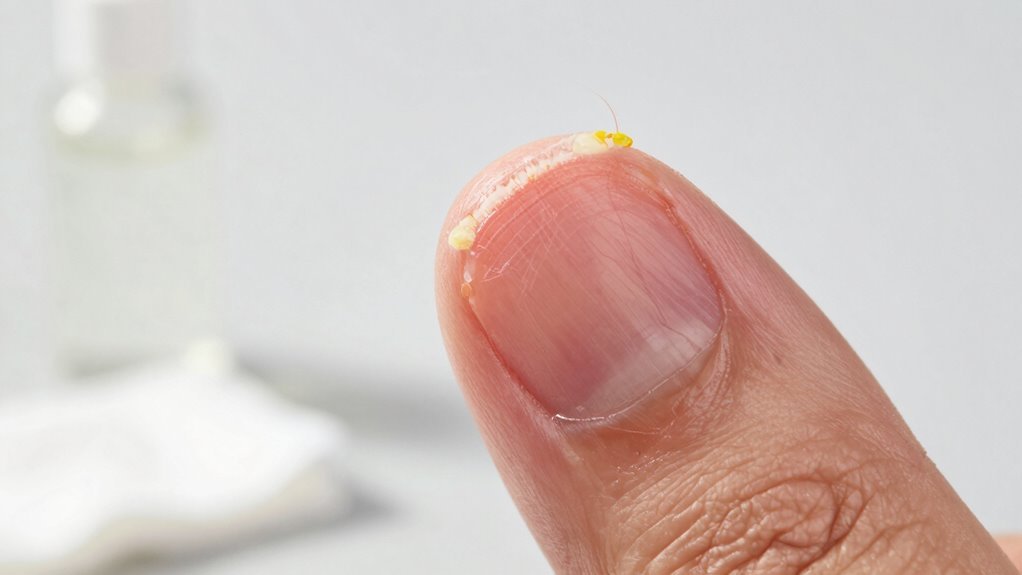
You’ve drained that blister like a pro and slapped on a fresh bandage—nice work!
But hold up: now’s the time to play detective and watch for sneaky signs of infection trying to crash the healing party.
Don’t panic—just stay sharp.
Here’s what to flag:
- Increasing redness, swelling, warmth, or pain around the blister (though on darker skin, warmth and swelling may be easier to spot than redness).
- Cloudy or pus-filled fluid, oozing liquid, or a yucky smell coming from the area—definitely not part of the plan.
- Red streaks spreading out, fever, chills, or feeling oddly unwell—your body’s waving a red flag.
If you see any of these, don’t wait it out.
That blister’s throwing a rebellion, and it’s time to call in backup (a.k.a. your healthcare provider).
Better safe than ouch!
Healing and Protecting the Area After Treatment
While that blister might’ve thrown a wrench in your day, the good news is your body’s already on it—kicking off a mini repair crew under the surface.
You’ll see fluid reabsorb in a day or two if the blister’s intact, and new skin starts growing right away.
Keep the area covered with a clean bandage or hydrocolloid plaster—it’s like a cozy shield for healing!
Change it daily or sooner if it gets wet.
Skip the creams; clean, dry skin heals best.
If the roof’s gone, hydrocolloid patches speed things up by nurturing new skin.
Avoid popping blisters—no shortcuts here!
Wear comfy shoes to cut friction, and keep weight off if needed.
Healing takes 1–2 weeks, sometimes longer on thick or weight-bearing skin.
Think of it as your body’s quiet comeback tour—give it the stage, and don’t mess with the encore.
Frequently Asked Questions
Can Blisters Be a Sign of a Fungal Infection?
Yeah, blisters can totally be a sign of a fungal infection—no joke!
If yours come with itching, redness, and scaly skin, especially between toes or in the groin, it’s likely fungus.
Athlete’s foot, jock itch, or yeast overgrowth love warm, moist spots and cause fluid-filled blisters.
They don’t clear up on their own, so treat ‘em early.
Keep things dry, clean, and don’t share towels—those fungi hate a good airing out!
Do Blisters Heal Faster if Covered or Exposed to Air?
You heal faster with bandaids, not fresh air—think of it like giving your blister a mini spa treatment.
Keep it covered, moist, and cozy, and watch it bounce back 30–50% quicker.
Dry scabs slow things down, like traffic on a road trip.
A good dressing shields germs, soothes pain, and keeps things moving smoothly—because even blisters deserve a little TLC, right?
Can Stress or Fever Cause Blisters in the Mouth?
Yes, stress or fever can totally trigger blisters in your mouth—thanks, sneaky herpes virus!
When you’re stressed or running a fever, your body’s defenses dip, and HSV-1 wakes up like it’s time for a party.
You’ll feel tingling first, then see those pesky, painful blisters.
Not fun, right?
But now you know it’s not just “bad luck”—your immune system’s just swiping left on germs less effectively!
Are Recurring Blisters a Symptom of an Autoimmune Condition?
Yes, recurring blisters can be a red flag your body’s sending—like smoke from an internal fire.
You’re not just dealing with random blips; your immune system might be mistakenly attacking your skin or mucous membranes.
Think of it as friendly fire gone wrong.
Conditions like pemphigus or pemphigoid love to crash the party, leaving sores in their wake.
If blisters keep showing up uninvited, it’s time to call in a dermatologist detective.
Can You Get Blisters From Sunburn or Extreme Cold?
You can absolutely get blisters from both sunburn and extreme cold—your skin’s just throwing up white flags!
Sunburn blisters mean UV damage went deep, like a mini battle your skin lost.
Frostbite blisters? That’s your body saying, “Hey, it’s way too cold in here!”
Both are serious signals to protect and treat your skin fast—no medals for toughness, okay?
Conclusion
You just survived a blister battle—congrats! Turns out, the thing you tried so hard to avoid now has a PhD in toughness. Wrap it like a tiny present, keep moving, and remember: the best adventure often starts with a little friction. Who knew pain could be this funny? Heal fast, walk proud, and hey—your foot’s tougher than your excuses. Next time, maybe even high-five your blisters. (Okay, maybe not.)
References
- https://www.urmc.rochester.edu/encyclopedia/content?contenttypeid=85&contentid=P00262
- https://www.medicalnewstoday.com/articles/264783
- https://www.atlantamedicaldermatology.com/blog/blisters-blistering-skin-disease/
- https://www.vchri.ca/stories/2018/09/04/saving-skin-research-identifies-enzyme-may-cause-blistering
- https://rarediseases.org/rare-diseases/autoimmune-blistering-diseases/
- https://pubmed.ncbi.nlm.nih.gov/8570998/
- https://www.uofmhealth.org/our-care/specialties-services/blistering-skin-disorders-immunobullous-disease
- https://my.clevelandclinic.org/health/diseases/16787-blisters
- https://www.merckmanuals.com/home/skin-disorders/blistering-diseases/overview-of-blistering-disorders
- https://dermnetnz.org/topics/blistering-skin-conditions