Quick Tips for Insoles
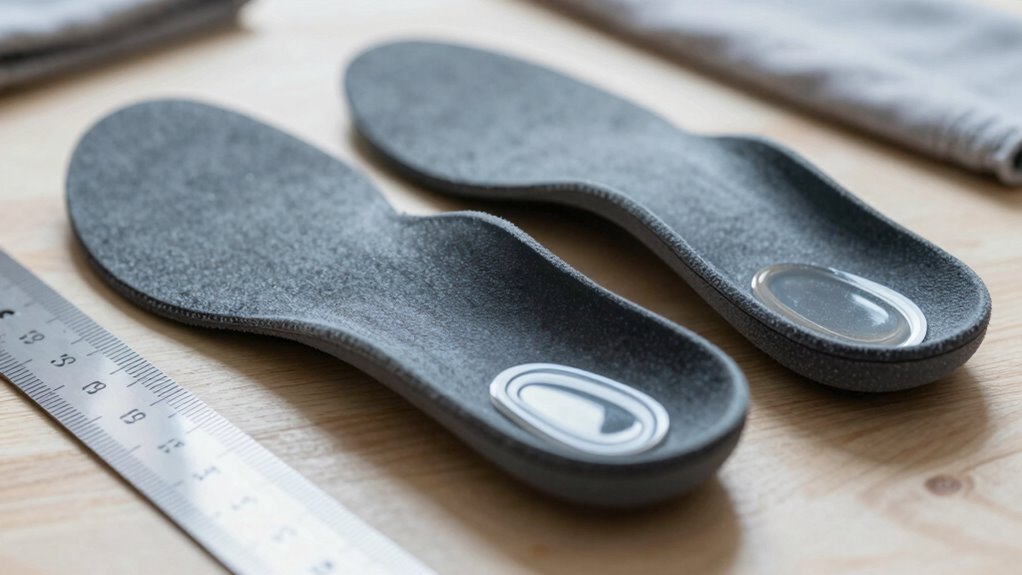
You’re not just guessing your size, right? Measure both feet and pick the bigger one—it’s shoe math, not rocket science. Insoles should fit perfectly, so getting the right size is essential for comfort and support.
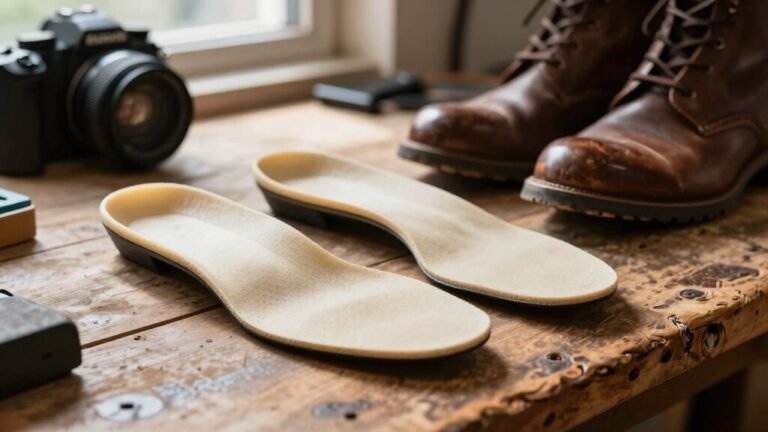
Choose cushiony memory foam for lounging and firm support for standing all day—match the insole material to your activity. Whether you’re on your feet at work or relaxing at home, the right insole makes all the difference.
Trim snugly to fit your shoes and replace every 6–12 months for optimal performance. Don’t wait until your arches cry for help—fresh insoles can prevent pain and boost energy.
Choose the Right Material for Your Needs
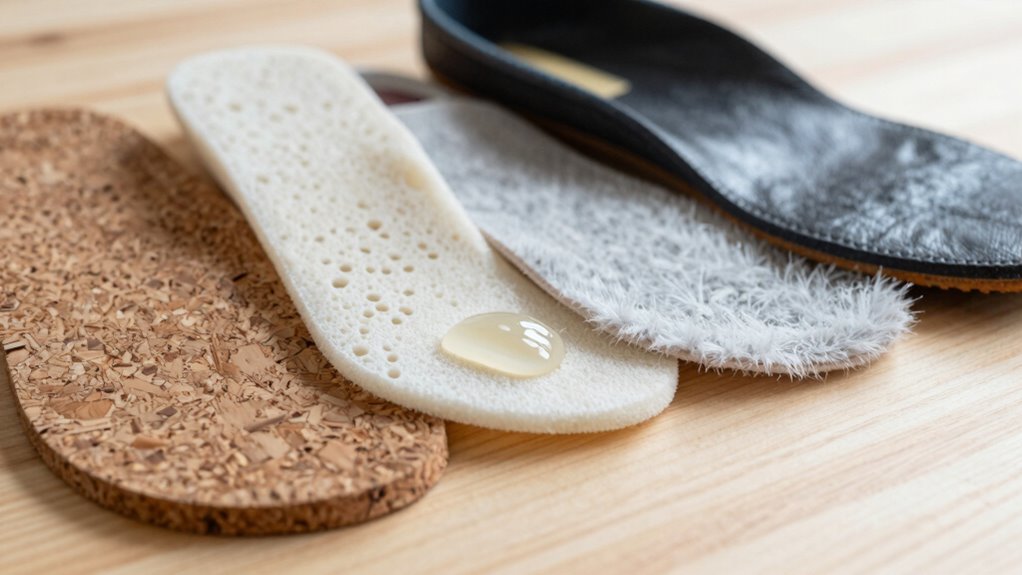
Ever wonder what’s really between you and the ground when you’re on your feet all day? It’s not just your shoe—it’s the insole doing the heavy lifting!
If you’re after cushioning, foam’s your go-to, especially EVA for light support or PU for plush comfort.
On the move? Gel insoles absorb shock like a champ, perfect for runners or anyone dodging foot fatigue.
Just don’t expect them to push back like springs.
For breathability and eco-vibes, cork molds to your foot and fights moisture—ideal for sandals or hot days.
Leather? That’s the classy pick, wicking sweat while adding luxury to dress shoes.
And if you want your insoles to *hug* your feet, memory foam or gel-foam hybrids contour perfectly.
Carbon fiber’s even in the mix for lightweight strength.
Pick your material match, and your feet will thank you—no tippy-toe regrets!
Manufacturers are now using plant-based materials to make foam insoles more sustainable without sacrificing support.
Measure Your Feet Before Buying
Before you jump into picking insoles, take a quick pit stop to measure your feet—you’ll skip the guesswork and hello to happy toes.
Get your gear ready and go with these steps:
1. Trace & measure both feet – Stand on a flat paper with even weight, trace the outline (ask a buddy for help!), then grab your ruler or tape measure.
2. Check length and width – Measure from heel to longest toe, then across the widest part—usually the ball of your foot.
Always go with the bigger foot’s size!
3. Match to insole charts – Use your numbers to compare with brand size guides, or measure your old insoles.
When you’re between sizes, size up a half.
It’s like a foot spa that starts with math—fun, fast, and totally worth it.
Using tools you already have at home makes it even easier—like a ruler or tape measure.
Now you’re ready to find your perfect fit!
Trim to Fit Your Shoe Perfectly
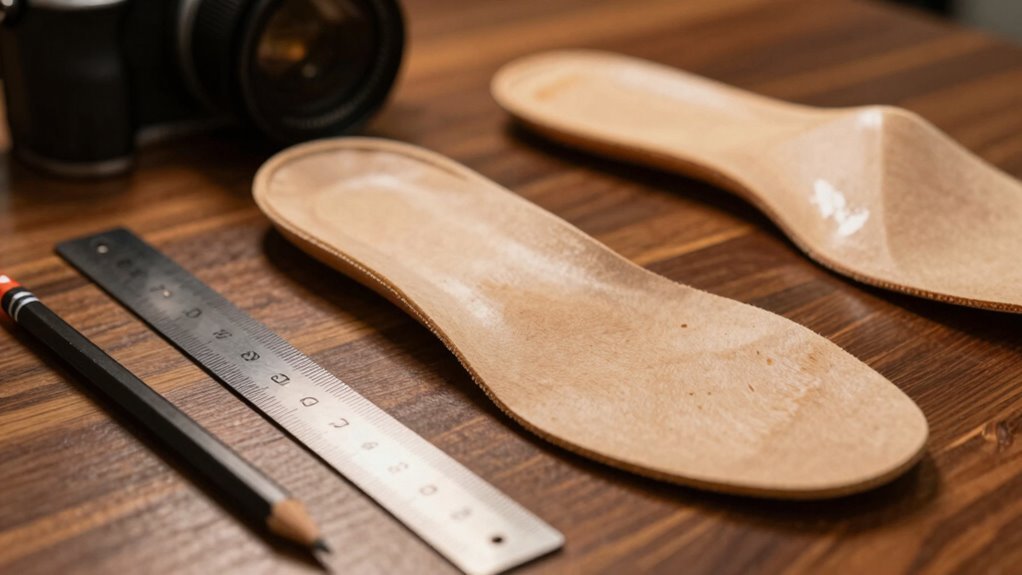
Grab those scissors and get ready to tailor your insoles like a pro—this is where they go from “pretty good” to “made just for you.”
Start by yanking out your shoe’s original insole to use as a stencil, then lay it upside down on top of your new one, lining up the heels just right.
Grab a pen and trace the outline, especially around the toe—just skip the middle if there are pesky soleholders.
Use sharp scissors to cut slightly inside the line; remember, you can’t glue it back on!
Trim a little at a time, especially up front.
Pop the insole in and check that it lies flat, fits snug, and doesn’t slide or wrinkle.
Walk around—your toes shouldn’t feel like they’re climbing a mountain.
If it’s close, shave off 1–2 mm more.
Most insoles are trimmable, but ¾ lengths usually skip the scissors altogether.
One size doesn’t fit all—your left and right shoes might need their own custom touch!
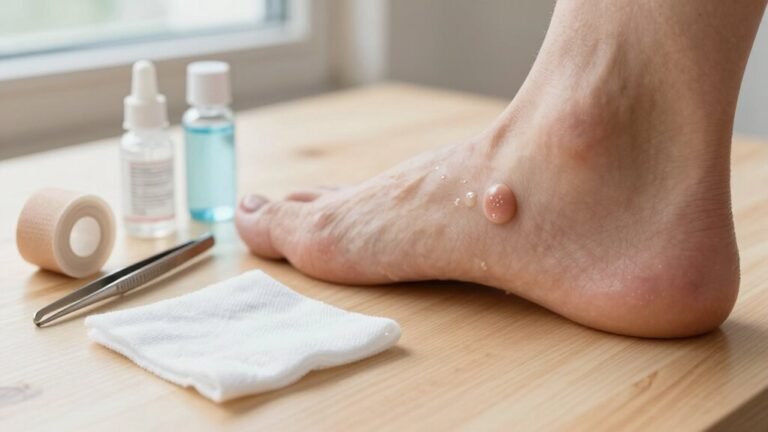
Trimming ensures proper fit for shoes and helps prevent discomfort and blisters, so take your time to achieve the best result. This small step makes a big difference in foot comfort and trimming ensures proper fit.
Replace Insoles Regularly
While your insoles mightn’t be the first thing you think about each morning, they’re working hard every step you take—so don’t let them hang on past their prime.
Most should be swapped out every 6 to 12 months, depending on your daily grind.
If you’re pounding the pavement or standing all day, you might need fresher support way sooner—like every few months.
Don’t wait until they’re held together by sheer willpower!
Here’s when it’s time to say goodbye:
- They’re flat as a pancake – no arch support left, just sad, squished foam.
- They smell like regret – even after cleaning, that stink means they’ve lived their best life.
- Cracks, tears, or holes appear – your foot shouldn’t be playing peekaboo with your shoe!
Keep your step springy and your feet happy—fresh insoles make all the difference.
Match Insoles to Your Activity Level
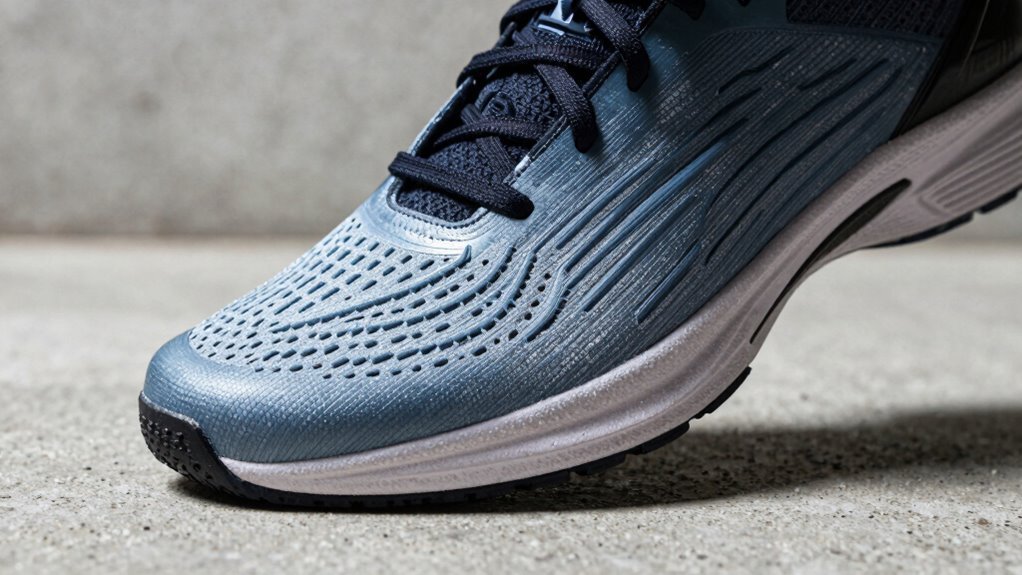
You’ve got moves, and your insoles should keep up—whether you’re sprinting down a court, clocking miles on a trail, or just strolling through your day, the right pair doesn’t just cushion your step, they supercharge it.
Hit the pavement running? Go for max cushioning and heel gel to soak up impact and keep your knees happy.
Playing basketball or tennis? Grab a hybrid insole—firm enough for cuts, soft enough for landings.
Just walking the dog? Medium cushioning with full-length support keeps things comfy without the bulk.
On your feet all day? Firm, breathable insoles with deep heel cups are your unsung heroes.
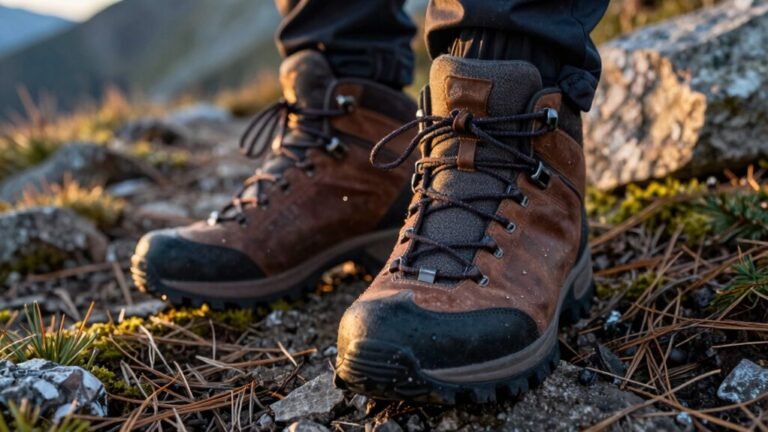
Hiking rocky terrain? Use hike-specific pairs with structured midsoles and extra padding.
Even cycling or skating needs special support—thin, stiff insoles help you power through.
Generic ones just won’t cut it.
Match your insole to your hustle, because your feet weren’t built for one-size-fits-all.
Look for Arch Support That Fits Your Foot Type
Your feet aren’t just along for the ride—you’re the foundation of every move you make, so giving them the right arch support is like upgrading from a wobbly stool to a rocking chair.
Don’t guess your type—find your fit with these quick tips:
- Take the wet test: Step on a paper bag barefoot—wide imprint? You’ve got low arches. Slender middle? Hello, high arches!
- Match the insole to your arch: Flat feet love Superfeet Black or Pinnacle Low, medium arches rock PowerStep Pinnacle or Superfeet Blue, and high arches need cushiony support like Superfeet Green or Pinnacle High.
- Check your shoes: Worn on the inside? Likely low arches. Center wear? You’re neutral. Outside edge? You’re high-arched and need shock absorption.
Your feet will thank you—one step at a time!
Break Them In Gradually
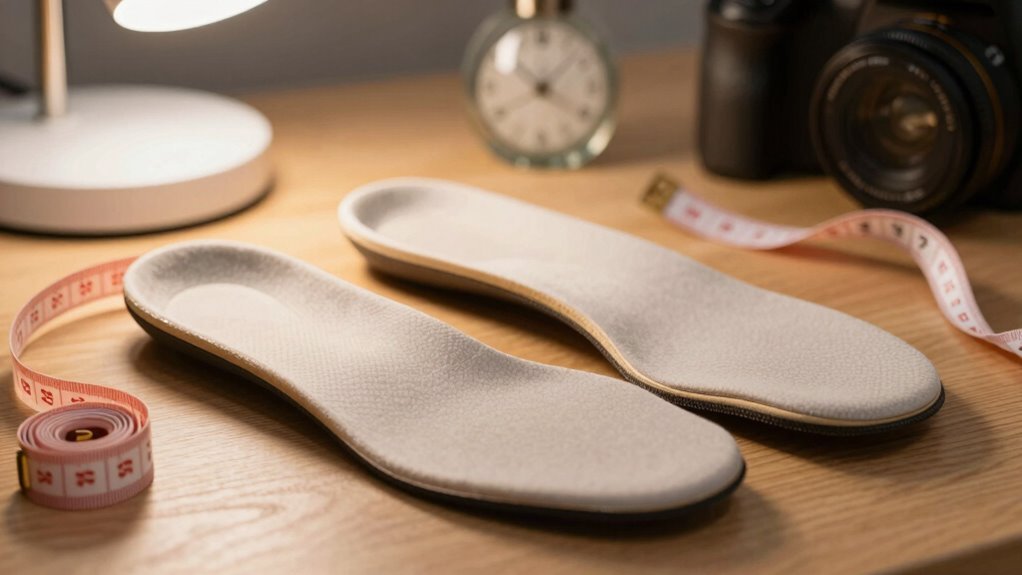
Breaking in new insoles is like training for a marathon—one step at a time gets you to the finish line without the drama.
Start at home with 1–2 hours on day one, then add 30–60 minutes each day.
Think of it as a foot-friendly boot camp—begin with easy moves like walking or standing, not full-on sprints.
Keep it chill at first so your feet, knees, and hips can adapt.
Mild soreness? Totally normal.
But if you get blisters or sharp pain, dial it back—no heroics!
Wear them every other day if you’re new to support.
And make sure your shoes have enough room—no squished toes!
Most people hit 5-hour comfort in 1–2 weeks, but full adjustment can take up to 8 weeks, especially with biomechanical upgrades.
Trust the process: go slow, stay steady, and your feet will thank you later—with fewer aches and way more pep!
Clean and Maintain for Longevity
Once your insoles are feeling more like cozy companions than awkward new acquaintances, it’s time to keep that bond strong with a little TLC. Cleaning them regularly keeps things fresh, prevents funk, and helps them last way longer.
Think of it as spa day for your soles’ best friends!
- Hand-wash with mild soap and lukewarm water – gently scrub dirty spots, then rinse without soaking.
- Fight odor naturally – sprinkle baking soda overnight or spritz with a 50/50 vinegar-water mix to kill stink-causing bacteria.
- Dry smart, not fast – air dry away from direct heat; never toss them in the dryer unless you want a sad, warped mess.
Give them a quick brush after wearing, and clean every few weeks—your feet (and nose) will thank you.
Keep ‘em fresh, and they’ll support you every mile.
Frequently Asked Questions
Can I Wear Insoles With Orthotics?
You can wear insoles with orthotics, but only if your shoes have extra space—otherwise, it’s a cramped mess.
Skip stacking unless your podiatrist says it’s cool.
Removing the original insole usually works better for fit and function.
Think of your shoe like a sandwich: too many layers and everything falls apart.
When done right, you’ll walk taller, feel lighter, and keep those feet happy and aligned—no ninja moves required.
Do Insoles Work for Flat Feet?
Yes, insoles work great for flat feet!
You’ll love this: transverse-arch insoles boost static balance with a jaw-dropping p<0.001 improvement—science-approved!
They reduce foot pressure, support your arches, and actually strengthen foot muscles over time.
No, they won’t make your feet lazy—that’s a myth.
Pair them with exercises and you’re golden.
Think of insoles as your feet’s new best friends: supportive, reliable, and always ready to help you step with confidence and comfort.
Are Heated Insoles Safe to Use?
Sorry, but heated insoles aren’t entirely safe—you’re risking burns even when they’re turned off.
Lithium-ion batteries can overheat, explode, or catch fire, especially trapped in shoes where heat builds up.
Real cases show serious injuries, needing skin grafts.
Yeah, they warm your toes, but surprise—your feet might pay the price.
Skip the sizzle; stick to wool socks and warm vibes instead.
Safety first, frosty friend!
Can Children Use Adult Insoles?
You shouldn’t use adult insoles for your kids—size matters, and one shoe doesn’t fit all.
Your child’s feet are growing fast, and squishing them into stiff adult inserts is like forcing a square peg into a round hole.
It can cause blisters, poor alignment, and even pain.
Go for custom pediatric insoles instead—they’re made for tiny feet, support arches properly, and keep your little runner happy, healthy, and blister-free!
Do Insoles Help With Balance Issues?
Yeah, insoles can really help with balance issues—you’ll feel more stable fast.
Textured ones nudge your feet gently, improving control, while vibrating styles boost sensory feedback like a stealthy high-five to your nervous system.
Whether you’re older, recovering, or just wobbly, studies show better test scores and steadier steps.
Best part? You don’t need fancy fit or hours of wear—just pop them in and stand tall with confidence (and maybe a little extra swagger).
Conclusion
Your feet carry you through life—give ’em a comfy co-pilot! Picking the right insoles isn’t just smart, it’s a tiny act of daily kindness to your soles. Think of them like fresh batteries for your feet: swap ’em often, fit ’em right, and let ’em support your rhythm. With the right pair, every step feels smoother, lighter, and way more fun. Your shoes aren’t magic—*you* are. But hey, a little in-sole magic doesn’t hurt!
References
- https://insiteinsoles.com/product-design/why-insole-materials-matter/
- https://theinsolestore.com/pages/insole-guide
- https://podime.com.au/blogs/news/types-of-insole-materials
- https://www.vivehealth.com/blogs/resources/best-insoles
- https://www.superfeet.com/blogs/health-wellness/soft-vs-firm-insoles-what-is-the-difference-and-how-to-choose-which-experience-is-right-for-you
- https://www.upstep.com/a/blog/best-materials-for-orthotics-how-and-why-orthotic-materials-differ
- https://www.rei.com/learn/expert-advice/insoles.html
- https://www.drscholls.com/blogs/expert-advice/the-difference-between-orthotics-insoles-and-shoe-inserts
- https://alineinsoles.com/blogs/news/insole-measurement-how-to-measure-insoles-for-shoes
- https://www.orthofeet.com/blogs/news/insole-measurement