Troubleshooting Hiking Socks on the Trail
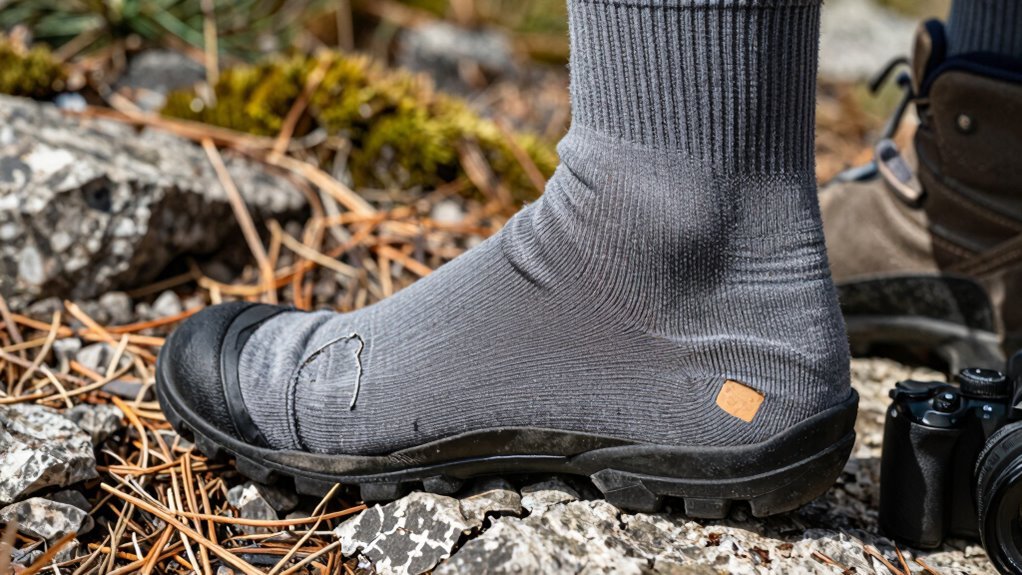
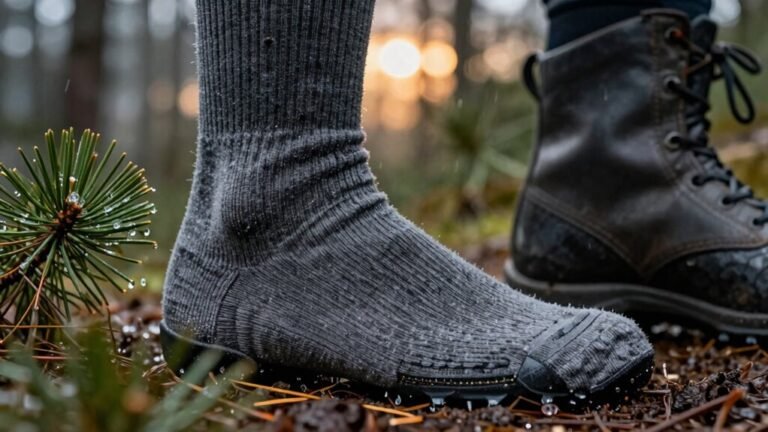
Keep your hiking socks snug like a glove—loose ones slip and beg for blisters. A proper fit prevents friction and keeps your feet comfortable on the trail.
Use moisture-wicking merino wool or synthetic hiking socks to stay dry, even when sweat kicks in. These materials help regulate temperature and reduce the risk of blisters.
Tackle friction with glide-friendly liner socks or toe socks that play nice between your toes. Prevent bunching with arch bands and a solid heel tab that won’t ghost into your boots.
Cold? Go thick and cozy with wool hiking socks that work even when damp. They retain warmth and keep your feet protected in chilly conditions.
And hey, a little antiperspirant trick might just save your hike—wait’ll you see what else actually works.
Sock Slippage: Keeping Your Feet Secure
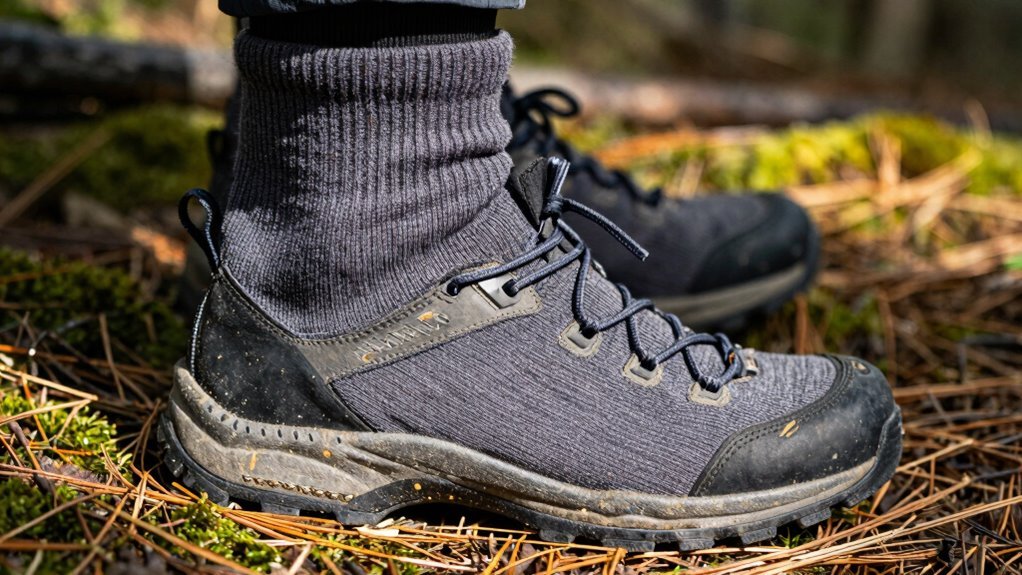
Slipping socks can turn a dream hike into a blister-filled disaster, so let’s get one thing straight—your socks should hug your feet like they mean it. If they’re too loose, they’ll slide, sag, and fold, turning your boots into friction zones. Go for a glove-like fit that stays put when you move.
Compression features in the ankle and midfoot lock things down, thanks to stretchy fibers like spandex or Lycra. A heel tab helps keep socks from disappearing into your boots—no one likes playing “find the sock.” And if your socks still slip, try a thin liner underneath; it’s like a secret handshake for stability.
Pick moisture-wicking materials like merino blends—they cling better and feel great. Avoid flimsy, no-show socks that surrender at the first uphill. Your feet work hard; give them gear that keeps up. Trust me, happy socks mean happy trails. Layering with liner socks can significantly reduce movement and prevent blisters when hiking.
Blisters From Friction: How to Prevent Hot Spots
Ever felt that sneaky rub before it turns into a full-blown hotspot?
Don’t ignore it—fight back fast!
Grab a sock with hydrophobic polyester; it slashes friction better than double layers and cuts blister risk to just 16%.
Slap on antiperspirant or Glide where trouble loves to start—hello, proud shoes are happy heels!
Toss in a thin liner sock to wick sweat and hug your foot smooth, no bunching allowed.
If you’re serious about defense, try Injinji toe socks—they wrap each toe like a cozy sleeping bag, stopping rubs before they RSVP.
Add thick, acrylic-blend cushioning to absorb shear and keep pressure low.
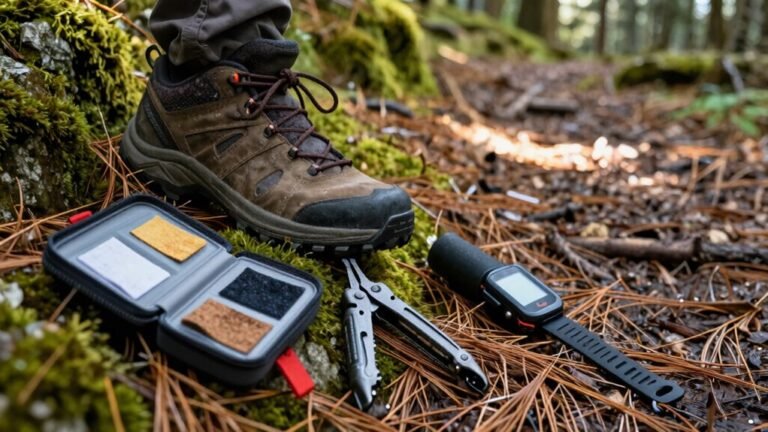
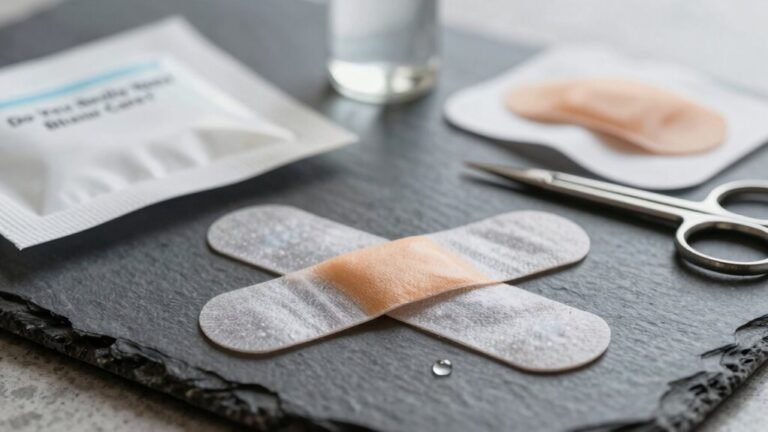
And hey, if you feel a hotspot tapping your shoulder, stop, air it out, and slap on Leukotape like it’s a trail medal.
Moisture-wicking liner socks help keep your feet dry by moving sweat away from the skin, reducing blister risk caused by dampness and friction.
Prevention’s your superpower—so suit up, laugh at friction, and march on, blister-free!
Moisture Management: Staying Dry in Wet Conditions
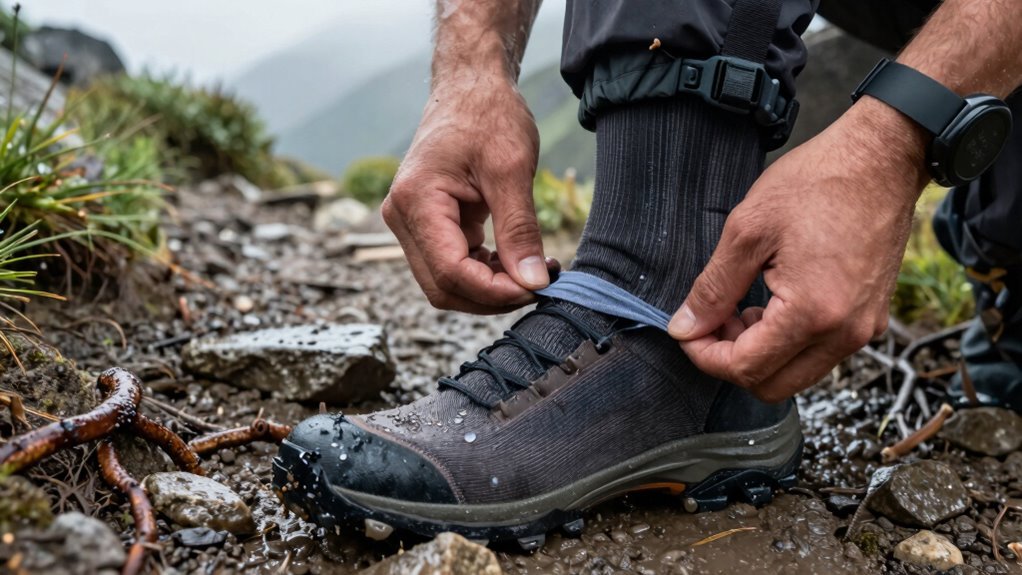
How do your feet stay dry when the trail turns soggy and your socks take on water? Merino wool’s got your back—it absorbs up to 35% of its weight in moisture before feeling wet, thanks to a hydrophilic core and water-repelling exterior.
Even when soaked, thin Merino socks keep wicking sweat away, letting it evaporate through breathable shoes.
Synthetic materials like Coolmax and Thermolite use clever channeling to move moisture out fast and dry quickly—perfect for stream crossings.
Toesocks with Coolmax? They dry faster than thick wool and fight dampness between toes.
Some socks even have Moisture-Vent tech that pumps humid air out with every step—talk about teamwork!
Blends of Merino and synthetic fibers balance softness, durability, and quick-drying power.
So yes, your feet might get wet, but they won’t stay swampy.
With the right socks, damp trails don’t mean damp feet—it’s like giving your shoes a breath mint!
This advanced moisture control is enhanced by Moisture-Vent technology that actively moves humidity away from the foot.
Bunching and Wrinkling: Getting the Perfect Fit
What if your socks just stayed put, no matter how rough the trail got?
You’d hike happier, blister-free, and way more confident.
The secret?
A perfect fit.
Socks that are too big sag and slide, while too-small ones pinch and wrinkle—both cause annoying bunching.
Go for snug, not tight, with no loose fabric.
Look for performance socks featuring arch support bands and ribbed tops—they hug your foot like a favorite playlist.
Pair them with properly fitting boots; floppy shoes ruin even the best sock game.
Use heel-lock lacing to lock down your heel and stop sneaky slippage.
Try garters, silicone grips, or even a liner-sock double for extra hold.
Fold your cuff over your boot top for grip, or add a dab of double-sided tape.
With the right combo, your socks won’t budge—even if you face-melt on a steep scramble.
Smooth socks, happy feet.
Win!
Cold Feet: Maintaining Warmth at Higher Elevations
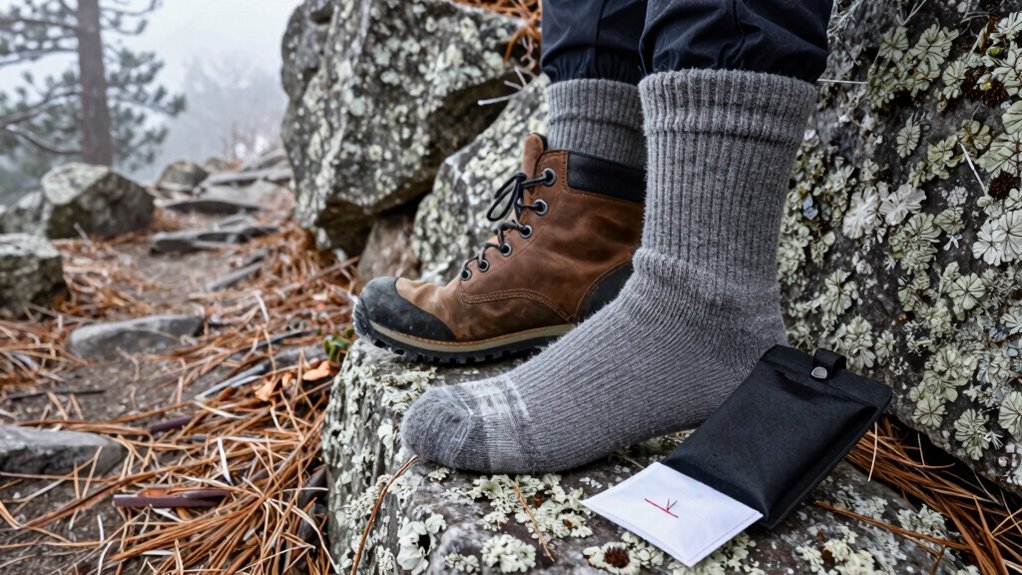
When the trail climbs and the temperature drops, keeping your feet warm isn’t just about comfort—it’s survival savvy with a side of stoke. You’ve got options, and your socks are your secret warmth weapon.
- Choose merino wool or alpaca—they trap heat even when damp, and let’s be real, nobody wants icy feet after summiting a peak
- Go thick, not thin—midweight to heavyweight socks hold warm air like nature’s down jacket for your tootsies
- Wick moisture like a pro—synthetics with nylon and Spandex pull sweat away fast, so your feet don’t turn into cold, soggy popsicles
- Size boots right—tight socks cut off circulation, and cold toes throw a serious trail party with zero invites
Warm feet mean happy trails—don’t let the mountain chill kill your vibe.
Frequently Asked Questions
How Often Should I Replace My Hiking Socks?
You should replace your hiking socks every 12–18 months if you’re hitting the trails regularly—think every 500 to 1,500 km depending on thickness.
Thinner pairs wear out faster, especially with heavy use.
Watch for holes, saggy elastic, or smells that won’t quit, even after washing.
When they feel stiff or bunch up, trust me, your feet will thank you for fresh pair—blister city isn’t fun for anyone!
Can I Wear Two Pairs of Socks to Prevent Blisters?
Yeah, you can definitely wear two pairs of socks to help prevent blisters—it’s a solid trick!
The inner sock slides against the outer one instead of your skin, which cuts down friction.
Just make sure you’re using a thin liner with a cushioned outer sock, not cotton.
Pick moisture-wicking materials like wool or synthetics, or you might end up with sweaty feet and more problems than you started with—talk about a hot mess!
Are Wool Socks Itchy for Sensitive Skin?
No, wool socks aren’t itchy for sensitive skin—especially merino wool.
You’ll find it’s crazy soft, like wearing clouds, not scratchy sweaters from your grandma.
The fibers are fine and smooth, so they won’t irritate your skin.
Plus, they fight stink, wick sweat, and keep your feet happy all day.
Trust us, your feet will thank you—no itch, just bliss!
Should I Choose No-Show or Crew-Length Hiking Socks?
You should choose crew-length socks—they’ve got your back like a trusty sidekick on rocky trails.
They protect your ankles, prevent blisters, and keep debris out, unlike no-shows that vanish when you need them most.
Plus, they wick sweat and stay comfy mile after mile.
No more Cinderella-ing it in socks that quit mid-hike!
Crew socks? More like trail heroes in disguise.
Do Hiking Socks Come in Different Left and Right Designs?
Yeah, many hiking socks come in different left and right designs—fitted like gloves for your feet!
You’ll spot little “L” and “R” tags, especially in top brands.
They hug your arches, cradle your toes, and stop slipping so you stay comfy mile after mile.
Think of them as BFFs for your boots—no more side-eye from squished pinkies or rogue wrinkles.
Your feet won’t just thank you, they’ll wanna high-five you—socks on, adventure on!
Conclusion
You’ve got this—think of your socks as backstage crew, not the spotlight, but everything falls apart if they mess up. Keep them snug, dry, and wrinkle-free, and your feet will thank you with every happy step. Blisters? Cold toes? Just bumps in the trail, not the end of the adventure. Tackle sock struggles like a pro, and your hike stays smooth, comfortable, and way more fun. Happy trails!
References
- https://hikemuch.com/socks-slipping-hiking-shoes/
- https://www.wrightsock.com/blogs/news/how-to-keep-short-socks-from-slipping-low-cut-socks-faqs
- https://hollowsocks.com/blogs/news/dos-donts-of-hiking-socks
- https://pmc.ncbi.nlm.nih.gov/articles/PMC10572164/
- https://darntough.com/blogs/the-alternate-stitch/no-slip-no-show-socks
- https://www.caminodesantiago.me/community/threads/stockings-for-blister-prevention.53842/
- https://pmc.ncbi.nlm.nih.gov/articles/PMC10783476/
- https://sectionhiker.com/do-sock-liners-prevent-hiking-blisters/
- https://darntough.com/blogs/the-alternate-stitch/how-to-prevent-blisters-when-hiking
- https://www.rei.com/learn/expert-advice/blister-prevention-care.html