Trail Runners Vs Boots: Which Should You Pick?
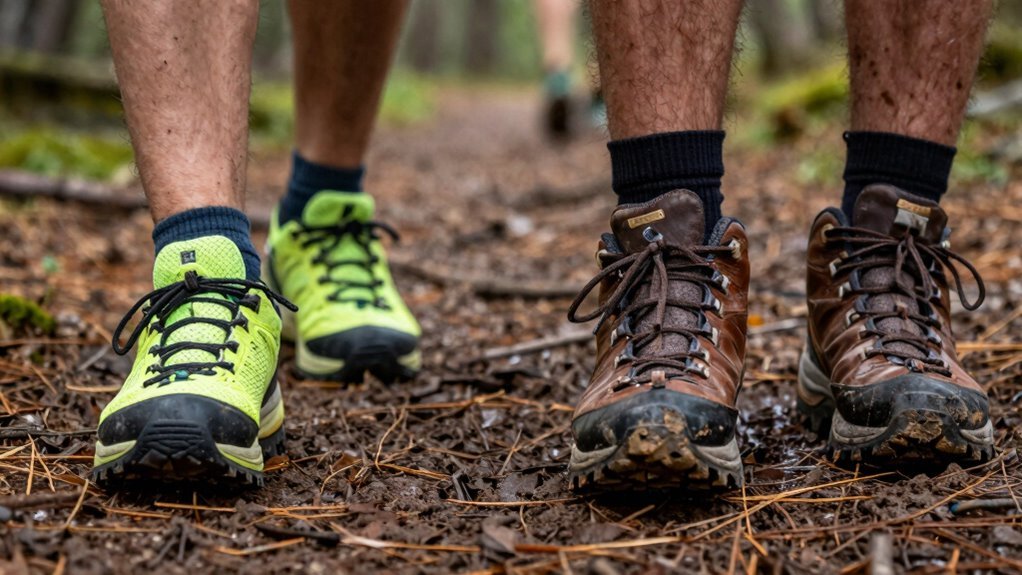
When it comes to choosing between trail runners and boots, your decision should align with the terrain and conditions you’ll face. Trail runners offer speed and agility, making them ideal for dry trails and sunny weather.
They’re lightweight and breathable, so you’ll hike faster and feel more comfortable on long summer outings. Trail runners are perfect if you prioritize mobility and ventilation on predictable, well-maintained paths.
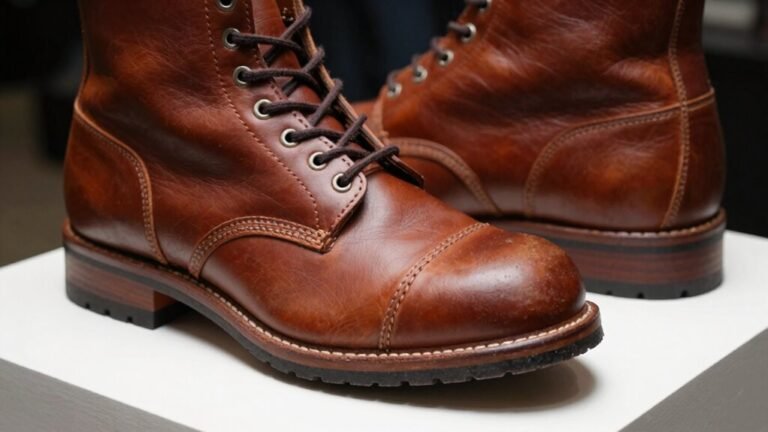
But when the trail turns muddy, rocky, or snowy, boots provide superior grip and protection. Their rugged build handles rough conditions better, keeping your feet stable and dry.
Think of trail runners as your nimble, speedy sidekick and boots as your tough, dependable co-pilot. Pick based on your adventure’s demands—light and quick or heavy-duty and wild—and you’ll get it right.
There’s a little more to the story though.
Weight and Agility on the Trail
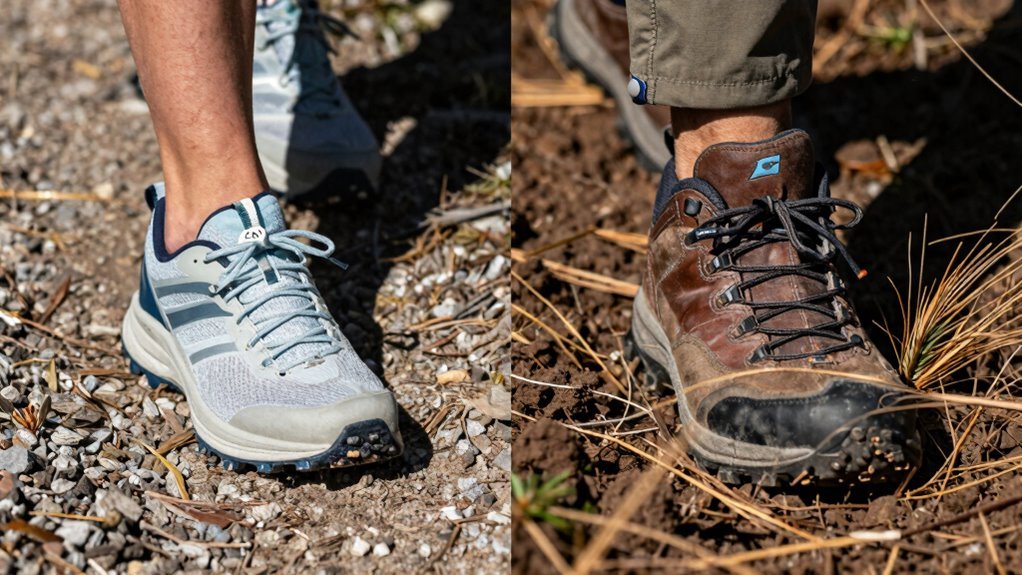
While you’re bounding down the trail like a mountain goat on a mission, the weight of your shoes matters more than you might think—and trail runners give you a serious advantage.
They typically weigh just 20–25 ounces per pair, nearly 40% lighter than stiff hiking boots.
That’s like strapping a pair of bricks to your feet or tossing a small dog in your pack—no thanks!
Lighter shoes mean less effort with every step, and science says one pound on your feet feels like five on your back.
Trail runners’ flexible soles move with you, not against you, helping you stay nimble on rocks, roots, and dirt sprints.
You’ll cover more ground, laugh at fatigue, and still have energy for summit selfies.
Who knew going light could feel so liberating?
Your legs will thank you after mile ten—guaranteed.
Ankle Support and Stability Differences
Even if you’re not scaling sheer cliffs, your ankles still crave the right balance of support and freedom—so let’s talk turkey about how trail runners and boots stack up.
Boots hug your ankles with stiff, high collars and firm lacing, great for heavy packs and rocky scrambles, but they can feel like ankle jail on long hikes.
They protect against rolls and scrapes, yet their rigidity might weaken muscles over time.
They’re agile rebels—low-cut, flexible, and free, letting your feet move naturally and build strength.
Sure, they offer less armor, but research shows they don’t cause more sprains.
Stability comes from stiff soles, not just height—so if you’re light on your feet and carry less than 30 pounds, these nimble shoes might be your ankle’s best friend.
Think of boots as bodyguards, trail runners as personal trainers—both helpful, just different vibes.
load-bearing stability is critical when carrying heavy gear, making boots the preferred choice for backpacking and rugged terrain.
Traction Across Varied Terrains
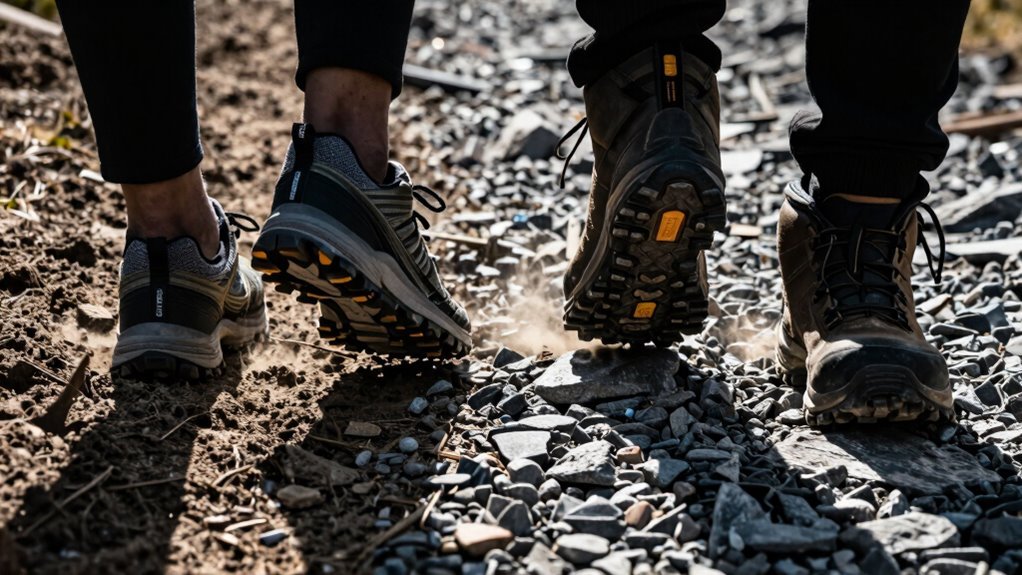
When the trail turns wild and your feet start searching for grip, having solid traction feels like holding a winning hand—so let’s break down how your footwear stacks up.
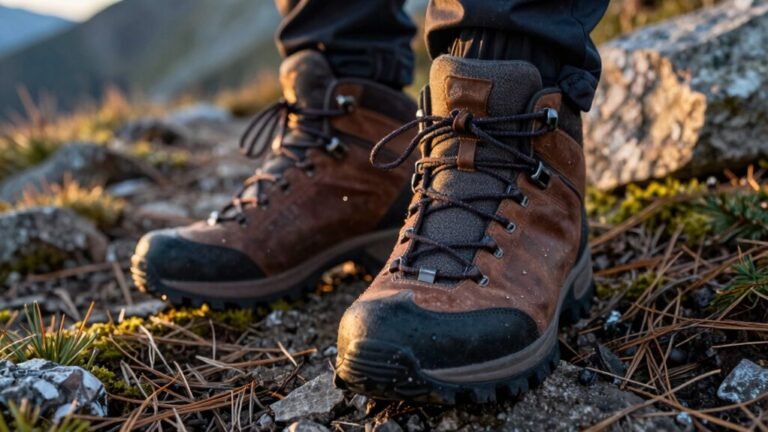
Hiking boots dominate with deep lugs and tough outsoles, giving you 5-star grip on muddy, rocky, or snowy messes.
They bite hard into slippery slopes and loose gravel like nature’s tank treads.
Trail runners? They’re nimble and grippy on dry, smooth paths but can slip when things get rowdy.
Think of them as sneakers with confidence—great for flat dirt, not so much for technical scrambles.
On rocky or unstable ground, boots keep you steady while runners might leave you tap-dancing for balance.
If the terrain’s wild, boots are your best bet; if it’s chill and dry, runners work just fine.
extra lugs enhance the outsole’s ability to maintain control in demanding conditions.
Pick your champion based on what the trail throws down!
Breathability and Weather Resistance
You’ve got your footing down when the trail gets dicey, but what about when the heat starts rising—both from the sun and your own two feet?
Trail runners shine here, thanks to their breathable mesh uppers that let your feet vent like a gossip at a coffee shop.
They wick sweat fast and dry quickly, keeping you cool on hot, dry hikes.
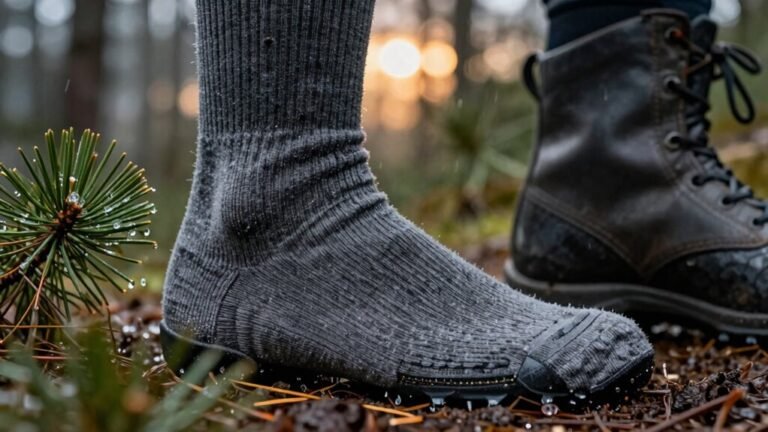
But when rain pours or snow kicks in, they give up fast—no real defense against puddles.
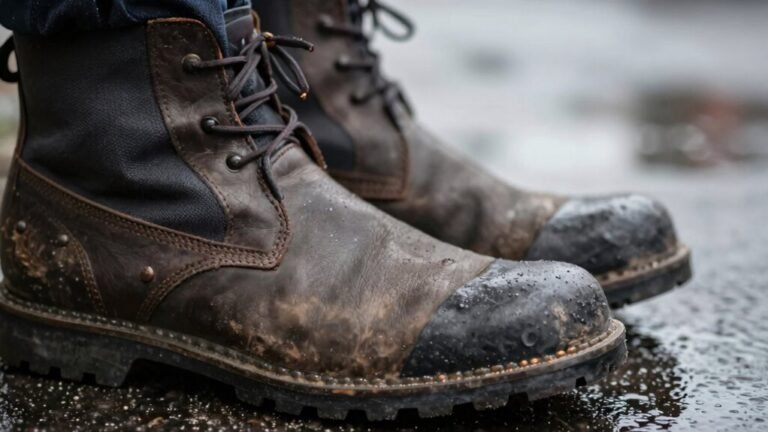
Hiking boots, though? They’ve got your back in storms, with waterproof linings that block wetness from rain or streams (though they trap sweat like a drama magnet).
Gore-Tex keeps feet dry from outside water but turns boots into mini greenhouses.
If you’re chasing airflow, trail runners win.
For wet-weather armor, boots take the crown.
Pick your breathability battle wisely!
Protection From Rocks and Debris
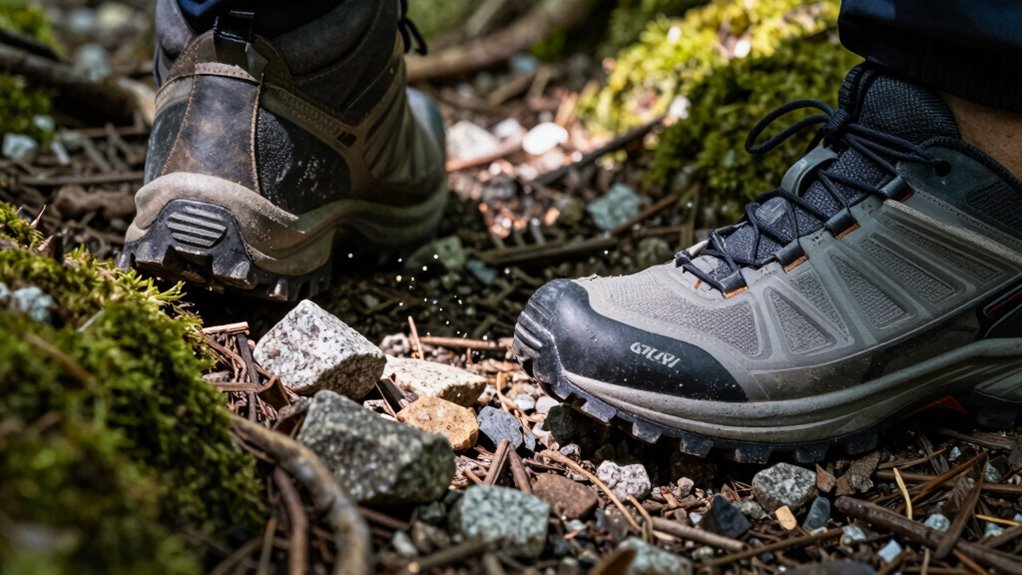
Let’s talk about what stands between your feet and a trail full of trouble—rocks, sticks, and all the sharp surprises nature throws your way.
Boots’ve got your back with thick, sturdy soles that laugh at jagged edges and rocky messes—thanks to beefy outsoles like Vibram, they handle punishment like champs.
Their tough uppers and high cuffs? Perfect for blocking pebbles, sticks, and surprise dirt bombs.
You’ll stride confidently, even when the trail gets gnarly.
Trail runners, though nimble and fun, need you to place each step carefully—like a dance on landmines.
Their flexible soles and mesh uppers leave you more exposed, and pebbles slip in easy unless you’re rocking gaiters.
Sure, runners let you pivot through creek beds with flair, but boots wrap your feet like bodyguards at a rock concert—safe, steady, and ready for anything.
Durability and Long-Term Wear
That rocky trail that tried to wreck your feet? It’s also testing your shoes’ toughness. When it comes to lasting power, hiking boots are the champions. You’ll likely squeeze 800+ miles out of a solid pair, while trail runners tap out around 500—no matter how much you baby them.
Here’s what really matters in the long run:
- Boots fight wear with tough leather, beefy soles, and rugged reinforcements
- Trail runners shed weight but lose durability, especially under heavy packs
- High-mileage hikers replace runners way more often—sometimes five times a trip!
- With proper care, boots keep going strong through seasons, scrambles, and surprise mud pits
Sure, tech advances help, but light and tough just don’t play nice yet. So if you hate shopping for new kicks every few months, boots might just save your soles—and your wallet.
Comfort During Long Distances
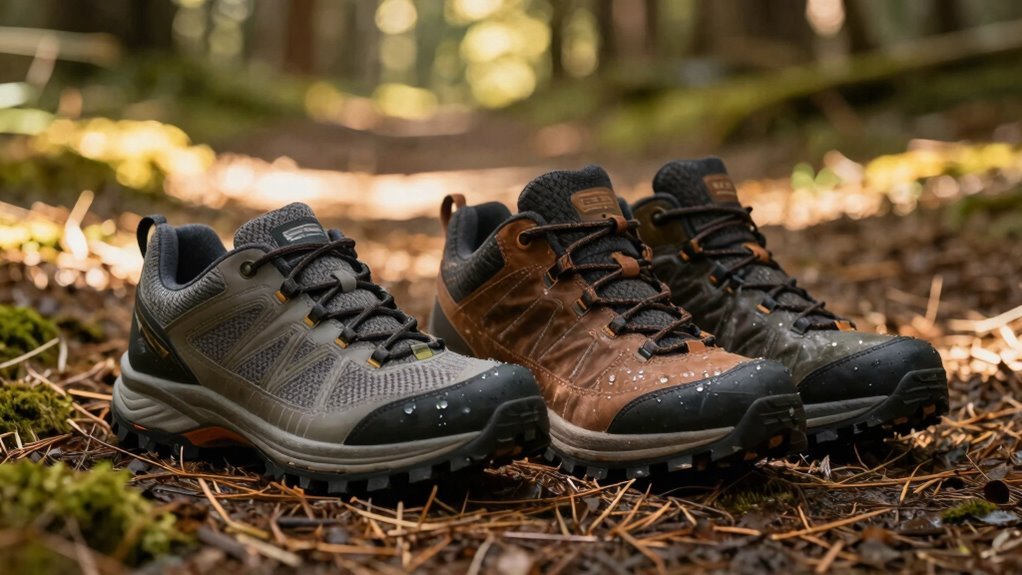
When the trail stretches longer than your playlist, every ounce on your feet starts to matter—and here’s where trail runners really shine.
You’ll feel the difference fast: they’re about 40% lighter than bulky boots, so your legs won’t scream at mile ten.
That cushioned EVA midsole? It hugs your foot and soaks up impact, mile after mile.
Breathable mesh keeps your toes from turning into sweat saunas, even when the sun’s cranking.
Plus, flexible soles move *with* you, not against you—no stiff break-in dance required.
Skip the blisters and heavy trudge; trail runners let you flow over rocks and roots like you’re built for this.
Sure, boots have their moment, but for long days where speed and comfort win, you’re better off light, airy, and blister-free.
Your feet will thank you—probably with a victory dance at the trailhead.
Fit and Foot Freedom Compared
Why do your feet feel like they’re on vacation in trail runners but stuck in a stiff-sided boot camp?
It’s all about fit and freedom.
- Trail runners hug your foot snugly, flex with every step, and need zero break-in—just lace up and go!
- Boots lock you in with heavy-duty support, great for rocky climbs but slow to adapt and often need weeks to feel comfy.
- Your toes get room to splay in both, but only trail runners let your forefoot bend naturally, making trails feel effortless.
- And let’s be real: at under 25 ounces, trail runners feel like clouds compared to 3-pound boots dragging you down.
You want agility and instant comfort?
Trail runners win.
Need max ankle armor on brutal terrain?
Boots still deliver.
Either way, your feet deserve to know what freedom feels like—don’t they?
Water Resistance and Drying Speed
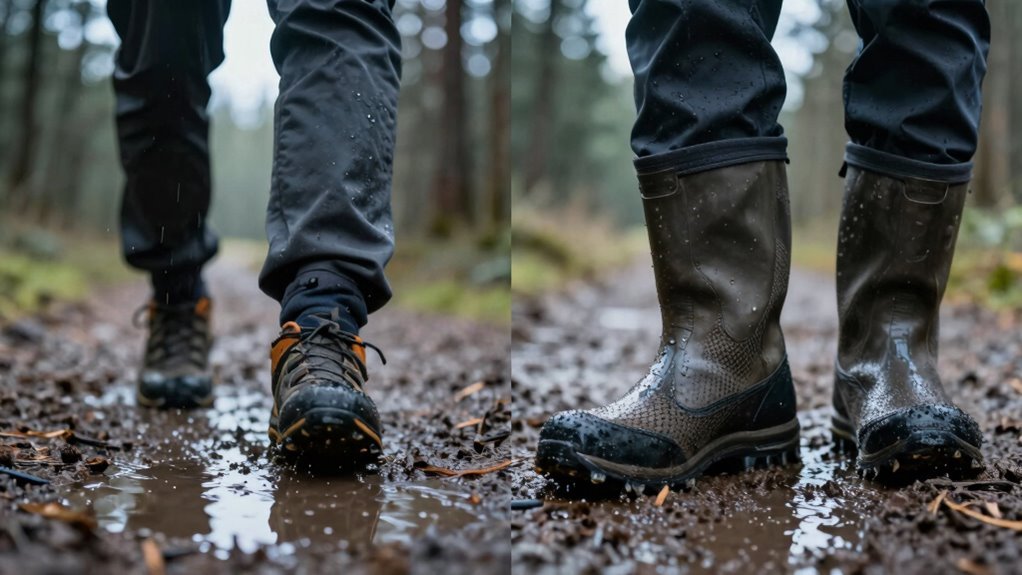
While your boots might brag about conquering Niagara Falls, trail runners are sipping lemonade during a drizzle and drying off before you even think about a towel.
Sure, boots pack Gore-Tex and sealed seams that laugh at deep puddles and snow, but they trap sweat like a sauna.
Once they’re wet inside, you’re stuck with soggy socks for hours.
Trail runners, though? They’re the quick-dry champs—wet them in a creek or rain, and they’ll air out in under an hour.
Mesh uppers breathe easy, wick moisture fast, and dump water like it’s nothing.
Even GTX-equipped runners, like the Salomon Speedcross 6 GTX, balance protection and breathability without the swampy aftermath.
Boots keep your feet dry longer in constant rain, but when comfort and speed matter, trail runners bounce back quicker.
They mightn’t win a deep river crossing, but they’ll have you high-fiving your dry toes way sooner.
Best Use Cases for Each Option
If you’re picturing a sunny day hike on well-worn trails, trail runners are your go-to—light as a feather and quick to react, they’ll have you skipping over roots
and darting through dry switchbacks like a nimble forest creature.
- Choose trail runners for fast, light hikes on smooth or moderately rocky terrain—you’ll feel fresh mile after mile.
- Grab boots when trekking through jagged ridges or muddy climbs—they’ve got your back (and ankles!) with tough support.
- Love warm weather? Trail runners breathe easy and won’t weigh you down like little cement blocks.
- Facing snow, ice, or rough off-trail scrambles? Boots bring the muscle, lasting longer and shielding feet like tiny armored tanks.
Both rock in their zone—just match your shoe to the adventure!
Frequently Asked Questions
Can Trail Runners Be Resoled When Worn Out?
Yeah, you *can* resole trail runners, but honestly, it’s tricky—most aren’t built for it.
The soles wear all over, and glued midsoles make repairs tough.
But hey, if your uppers are still solid and the tread’s just toast, some pro resolers with tricks like Vibram rubber and special presses might save ‘em.
It’s eco-friendly, quirky, and kinda cool—like giving your favorite kicks a second life.
Just don’t expect miracles on technical trails afterward!
Are Hiking Boots Suitable for Running on Trails?
You bet they are—but with a catch, like trying to dance in winter boots.
Hiking boots work for jogging short stretches, but their stiff, heavy build slows you down and can wear you out fast.
They’re built for stomping through mud and hauling gear, not gliding over trails.
For real trail runs, you’ll want something lighter and more nimble—your legs will thank you after mile three!
Do Trail Runners Stretch More Than Hiking Boots?
Yeah, trail runners stretch more than hiking boots—your feet kinda breathe a sigh of relief!
The lightweight, breathable uppers flex and adapt as you move, like comfy socks with soles.
Boots? Stiff from the get-go, barely loosening up, even after weeks.
You’re basically breaking them in, not breaking loose!
Trail runners hug your feet, move with you, and yeah, they stretch just enough to feel like they were made for your stride—no blister drama included!
Can I Use Trail Runners in Snow?
Yeah, you can use trail runners in snow—but pick the right ones!
If you grab a pair with Gore-Tex, like the Speedcross 6 GTX or Hoka Challenger 7 GTX, they’ll keep your feet dry and cozy.
Add deep lugs or ice studs, and you’ll grip slippery trails like a pro.
Just don’t expect them to replace big, burly boots in deep freeze chaos—unless you *enjoy* frosty toes and snowy socks!
Are Hiking Boots Too Heavy for Day Hikes?
You’re barking up the wrong tree if you think hiking boots are too heavy for day hikes—sometimes they are, though.
If you’re hauling 5-pound boots on a 5-mile stroll, you’re practically carrying bricks in your socks.
For light loads and dry trails, you’ll save energy and skip the sore feet with lighter kicks.
Keep it simple, stay nimble, and let your feet do a happy dance down the trail.
Conclusion
So, trail runners or boots? It’s like choosing between a nimble sports car and a trusty tank from the 1800s—both get you there, just differently. Want speed and breathability? Grab trail runners. Need ankle support and rugged protection? Boots win. Your trail, your call. Just lace up, laugh when you trip over a root, and keep moving. Adventure doesn’t care what’s on your feet!
References
- https://www.outdoors.org/resources/amc-outdoors/outdoor-resources/hiking-boots-vs-hiking-shoes-vs-trail-runners-choosing-whats-right-for-you/
- https://www.thehikinglife.com/2020/08/trail-runners-vs-hiking-boots-a-30-year-perspective/
- https://www.hoka.com/en/gb/hiking-boots-vs-walking-shoes-vs-trail-shoes/
- https://www.rei.com/learn/expert-advice/hiking-boots-vs-trail-runners-the-great-debate.html
- https://www.overlookboots.com/blogs/boots/hiking-boots-vs-trail-shoes
- https://www.skyhookadventure.com/blog/hiking-shoes-vs-boots
- https://www.youtube.com/watch?v=yrpkZktmCJg
- https://www.altrarunning.com/en-us/about-us/blog/hiking-shoes-versus-hiking-boots.html
- https://mountaineerjourney.com/blog/hiking-boots-vs-trail-runners
- https://cruxrange.com/blog/hiking-boots-vs-trail-runners/