Do You Really Need Trail Runners?
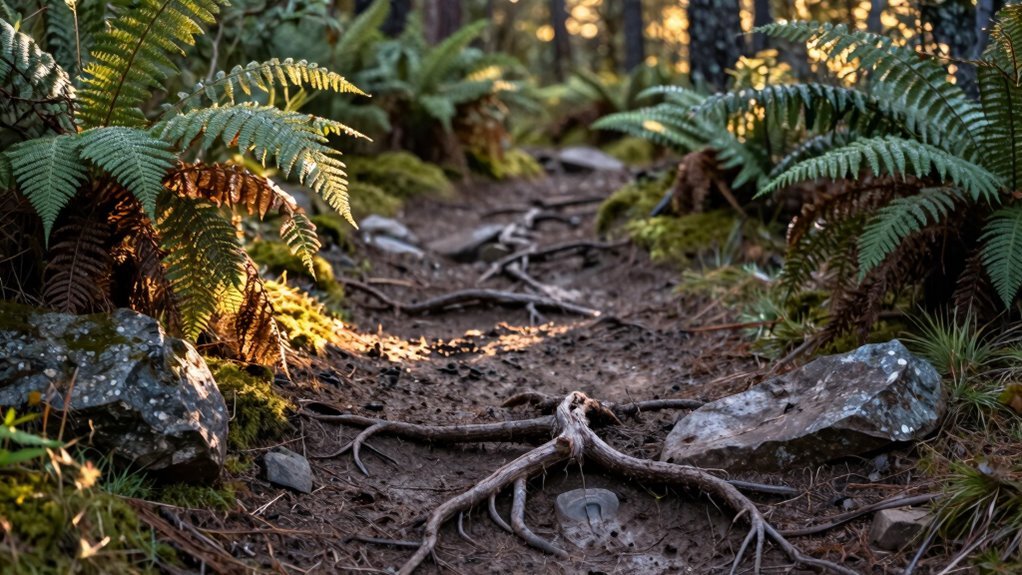
You do need trail runners if you’re hitting rugged trails—regular sneakers just can’t hack it. These shoes are built specifically for off-road terrain, making them essential for serious trail adventurers.
Trail runners grip muddy slopes, rock-hop like pros, and shrug off branches that’d shred flimsy uppers. Thicker lugs, waterproof liners, and snug fits keep you steady and dry, no matter the condition.
They’re designed for dirt, not sidewalks, turning slippery messes into your favorite playground. Think of trail runners as off-road armor for your feet. And hey, there’s more where that came from.
What Sets Trail Runners Apart From Regular Sneakers
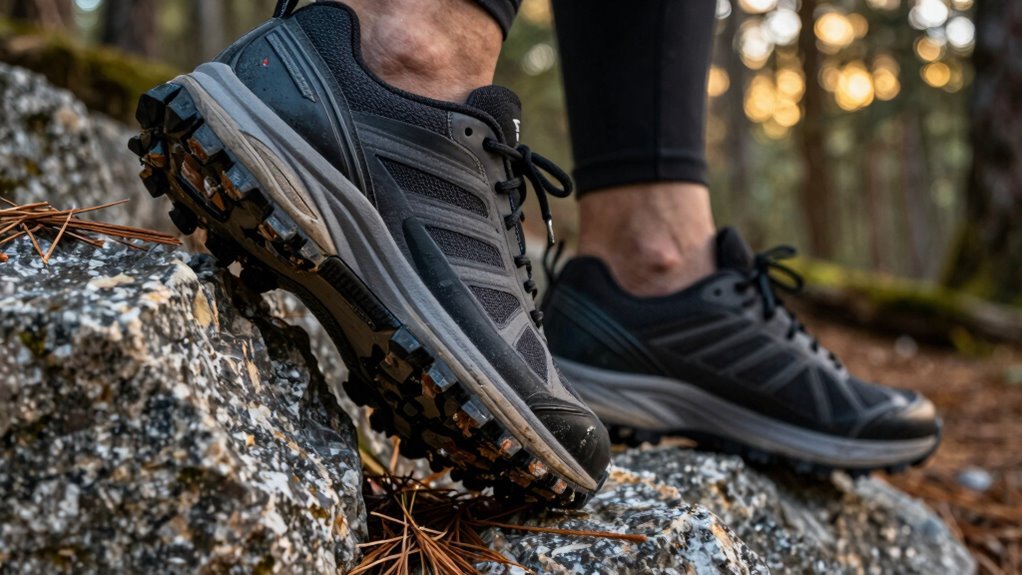
While your regular sneakers might work fine on smooth sidewalks, they’d struggle the moment you step onto a rugged mountain trail—enter trail runners, built from the ground up for off-road adventure.
You’ll notice the beefier outsole right away, with chunky lugs that dig in instead of slipping.
That soft rubber hugs rocks and roots like tiny hands, giving you grip where smooth soles would bail.
Up top, your feet are shielded with tough, reinforced material—no flimsy fabric tearing on branches.
Many even come with gaiter loops or waterproof liners, because soggy socks are *not* a vibe.
The fit’s snugger, too, so your foot stays put when you’re hopping over logs like a mountain goat (grace not guaranteed).
Sure, trail runners weigh a bit more, but you’re not setting sprint records on scree—you’re conquering the wild, one surefooted step at a time.
Directional lugs under the forefoot and heel provide targeted traction for uphill climbs and downhill control.
How Traction Makes a Difference on Uneven Terrain
You step off the pavement and suddenly the ground turns unpredictable—loose rocks shift underfoot, hidden roots snake across the path, and a slick patch of mud grins at you like it’s got a prank in mind.
But with trail runners, you laugh back—deep lugs grab dirt, rocks, and mud like they mean business.
Those chunky, durable outsoles keep you steady, slashing slip risks and saving energy so you don’t tire as fast.
It’s not just rubber—it’s science: real contact area and smart tread designs boost grip where it counts.
Tests prove big differences—some shoes outperform others by nearly double in traction.
Better grip means more confidence, cleaner footing, and fewer “oh no” moments on descents.
And whether it’s snow, gravel, or slop, directional lugs and patterned treads keep you charging forward, stable and sure.
You stay upright, efficient, and—dare we say—sleek on even the sketchiest terrain.
Continental rubber in some trail models has been shown to significantly improve grip and durability, especially in wet or muddy conditions.
Protection Features Built for the Elements
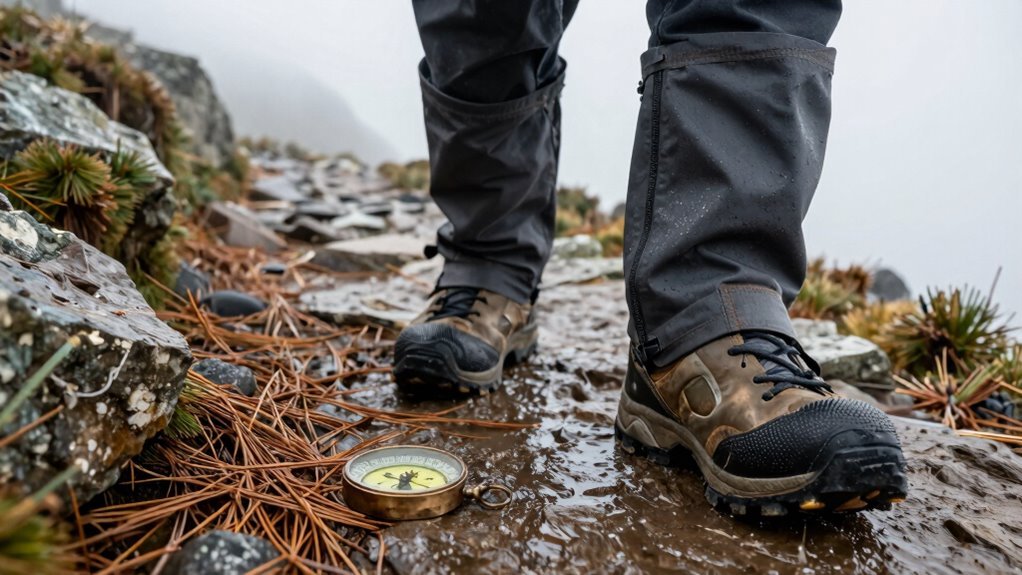
When the trail throws everything from puddles to prickly underbrush your way, your shoes better be ready to fight back—and trail runners don’t just shrug off the elements, they laugh in their face.
Thanks to waterproof membranes like GORE-TEX, wet grass and muddy splashes won’t soak your socks, and gusseted tongues keep water out when you’re hopping streams or scrambling through dew-heavy brush.
Need warmth? Waterproof liners trap heat without turning your feet into swampy saunas, and breathable fabrics like Polartec Windbloc block wind while letting steam escape.
Rocky trails? No problem—rock plates and 3D chassis structures guard your soles like armor, while dense uppers shrug off thorns and twigs.
These shoes are basically bunkers with grip, built to shrug off weather, rock, and anything else nature throws your way—because yes, your feet deserve that kind of protection.
For long-distance comfort in shifting conditions, features like Dynamic Comfort via LIGHTSTRIKE make all the difference.
When Regular Running Shoes Fall Short Off-Road
Those slick running shoes you love on the pavement? They’re not built for the wild stuff.
When dirt trails turn muddy, rocky, or steep, your road runners start slipping—fast.
No deep lugs mean zero grip on wet roots or gravel, and that smooth rubber sole? It’s basically a banana peel on downhill switchbacks.
You wobble on uneven ground because road shoes lack the stiff midsole and secure fit needed for stability.
Your feet slide around on slopes, and let’s be real, that lightweight upper rips if a branch even looks at it wrong.
Rocks chew up thin soles, puddles sneak in, and soon you’re hiking more than running.
Cushioning meant for sidewalks feels mushy and unhelpful off-road.
You lose control on technical bits, and suddenly trail precision feels like trying to dance in snow boots.
It’s not you—it’s the shoes.
They’re just out of their depth.
Can Trail Runners Improve Your Overall Running Experience
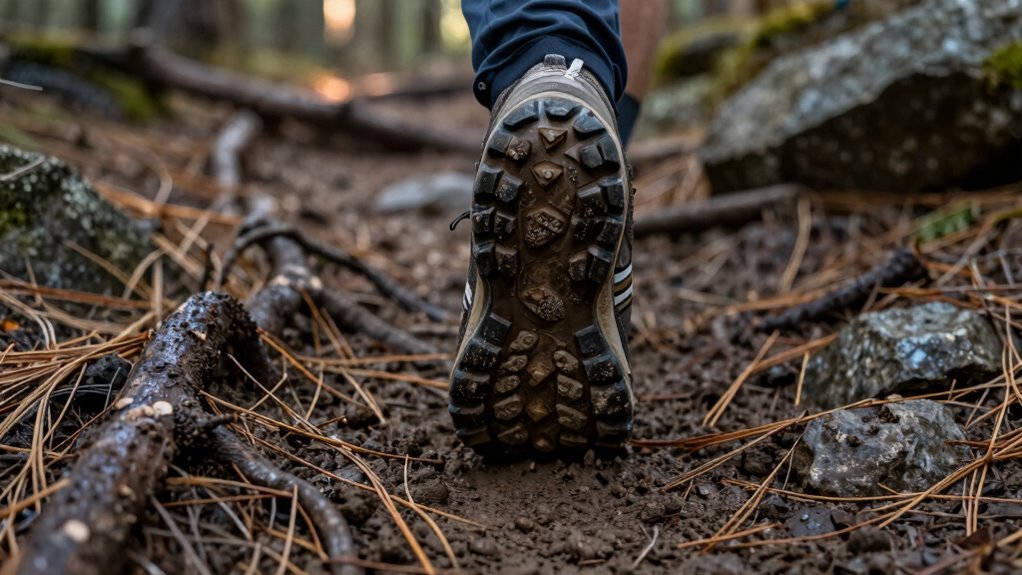
What if the secret to a better run isn’t just training harder—but stepping into the right shoe? Trail runners can seriously level up your experience, giving you grip on slick roots, cushion on rocky descents, and confidence when the trail gets wild.
Thanks to smart tech like grippy outsoles, secure BOA lacing, and springy foams, you’ll move more efficiently and feel less beat up.
Sure, gains aren’t as huge as race-day road shoes, but on rugged ground, these perks add up in a big way—keeping you steady, safe, and smiling.
- You’re no longer afraid to take that muddy, winding path
- Every step feels spring-loaded, not sore-loaded
- Your ankles stop wobbling like jelly on a hike
- You finally outrun that one smug squirrel who judges your pace
Frequently Asked Questions
Are Trail Runners Suitable for Everyday Walking?
You can walk in trail runners every day, sure—but you’re trading long-term shoe life for comfort.
They’re light, breathable, and cushy, perfect for zipping down paths or strolling through parks.
Just don’t wear them to Grandma’s fancy dinner—muddy lugs leave *statements*.
On pavement, they wear down faster, so save ’em mostly for trails.
Think of them as your fun-loving, rugged sneakers—they’ll stay spry longer if you let them do what they love.
Can I Use Trail Runners on Pavement Regularly?
Yeah, you can use trail runners on pavement regularly, but you’ll wear them out faster—those grippy lugs and soft rubber aren’t built for slapping sidewalks all day.
Think of it like using hiking boots on a treadmill—overkill and a bit silly.
They’ll work, sure, but your soles’ll say “ouch” sooner than expected.
Save ’em for trails when you can, and your feet—and shoes—will thank you!
Do Trail Runners Require a Break-In Period?
Yeah, trail runners need a break-in, even if they feel comfy right outta the box.
Don’t risk blisters or sore feet—wear them on short runs first.
Think of it as a first date: test things out before committing to a 10-miler.
Start with 2–3 miles, check for rubs or weird bends.
Your feet will thank you, and hey, no one wants surprises mid-hike—especially the painful kind!
How Often Should I Replace My Trail Runners?
You should replace your trail runners every 300 to 500 miles, or sooner if they’re lightweight—think 250 miles.
Rocky trails? They’ll wear ’em down faster.
Watch for flat tread, saggy cushioning, or if your legs start aching—your shoes are crying for retirement!
Rotate pairs, clean off dirt, and track miles like a pro.
And hey, if your dog steals them, that’s probably a sign too.
Are Trail Runners Worth the Extra Cost?
Yeah, trail runners are worth the splurge if you’re chasing adventures off-road.
Think of them as bodyguards for your feet—tough, loyal, and always got your back when things get muddy or rocky.
Sure, they cost more, but you’re paying for grip that won’t ghost you mid-hike, armor against surprise thorns, and a ride smooth enough to make trail monsters feel like forest fairies.
Totally worth it.
Conclusion
So, do you really need trail runners? Well, if you’ve ever slipped on mud like a cartoon character, then yeah—you probably do. With grippier soles, tough protection, and better support, they turn rugged paths from “no way” to “heck yes.” Think of them as bodyguards for your feet. Why tough it out in regular sneakers when you can fly over roots, rocks, and rain like a trail boss? Your runs just got way more fun—and way less messy.
References
- https://www.goruck.com/blogs/news-stories/trail-running-shoes-vs-running-shoes
- https://www.nike.com/a/trail-running-shoes-vs-running-shoes
- https://www.rei.com/learn/expert-advice/road-running-vs-trail-running-shoes.html
- https://www.adidas.com/us/blog/544321-trail-running-shoes-vs-running-shoes-whats-the-difference
- https://salomonsports.co.za/blogs/stories-guides/differences-between-trail-running-and-road-running
- https://www.youtube.com/watch?v=z5boNbIMRTE
- https://www.salomon.com/en-fi/sg/a/differences-between-trail-running-and-road-running
- https://digitalcommons.wku.edu/ijesab/vol2/iss17/98/
- https://therunhub.ie/blogs/the-run-hub-blog/the-importance-of-trail-walking-shoes-for-long-distance-comfort
- https://runrepeat.com/guides/insights-into-road-and-trail-running-shoe-outsoles