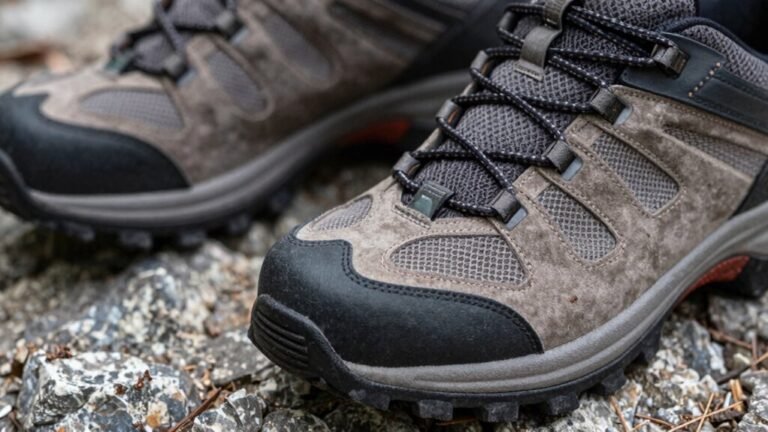
Do You Really Need Hiking Boots?
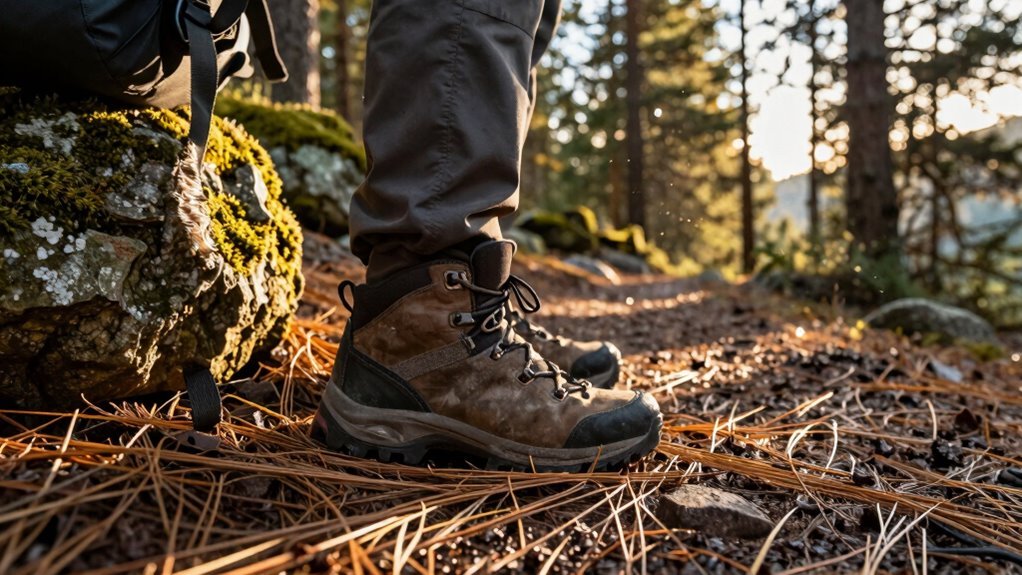
You don’t always need hiking boots—trail runners often do the job just fine, especially on smooth trails with light packs. They’re lighter, quicker to dry, and let your feet breathe, making them a solid choice for easier terrain.
But when the trail turns rocky, wet, or steep, or you’re carrying a heavy load, hiking boots offer support, grip, and protection your ankles will thank you for. Think of boots as your trail bodyguards.
There’s a sweet spot between comfort and capability—find yours. Whether you choose hiking boots or trail runners, match your footwear to the trail conditions and your pack weight.
The Evolution of Hiking Footwear
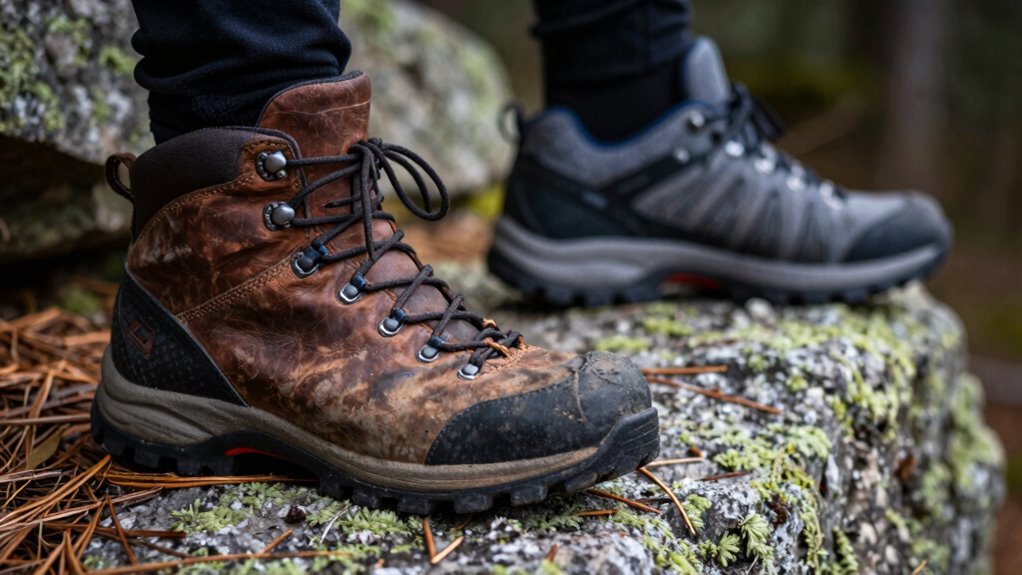
While you mightn’t think about it every time you lace up, the hiking boots on your feet today are the result of a wild journey that started way back when humans first decided they just didn’t want to walk on sharp rocks anymore.
You’ve come a long way from sagebrush sandals and bark shoes—seriously, imagine hiking the Rockies in tree bark!
By the 1700s, you were strapping on leather boots with iron nails, ready to conquer mountains (and probably stub your toes).
Then came rubber soles in the 1930s, thanks to a guy who said, “Enough slipping!” and invented Vibram.
Sagebrush bark sandals mark the earliest known footwear, dating back to around 8000 B.C. in Fort Rock Cave, Oregon, where durable plant fibers were woven to protect feet in rugged terrain.
Suddenly, you weren’t just surviving trails—you were gripping them.
Suede, nylon, EVA foam, and Gore-Tex rolled in, making boots lighter, comfier, and actually breathable.
You’ve got cushioning, waterproof magic, and soles that laugh at scree.
All this, and you still complain about blisters?
When Hiking Boots Are Worth the Weight
When the trail throws its worst at you—knee-deep mud, ankle-twisting rocks, or a backpack that feels like it’s smuggling bricks—your boots better be up for the fight, and that’s exactly when hiking boots earn their keep.
You’re hauling heavy gear? Boots’ve got your back—or, well, your feet—with stiff midsoles that laugh at 30-pound packs.
Rocky scramble or slippery descent? Their high ankle support and rugged soles keep you steady, while toe caps shrug off wayward boulders.
They’ll shield you from snow, mud, and rogue cactus pokes like a trusty trail tank.
And let’s be real: they last way longer than flimsy runners, surviving thousands of miles with tough leather and burly tread.
If you’re new to this whole hiking thing, they’ll even boost your confidence while you figure out which end of the compass points north.
Plus, that stitched welts construction means you can resole them instead of replacing them, extending their life even further.
The Rise of Trail Runners on the Trail
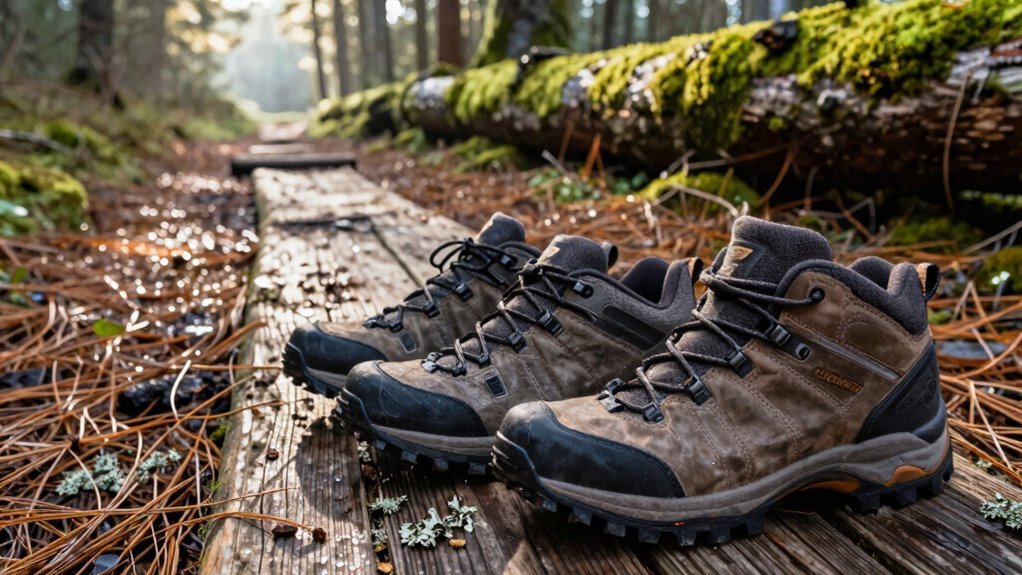
Those sturdy boots you’ve been leaning on? They’re getting serious competition. Trail runners are flying up the trail, and for good reason.
They weigh way less—like 40% less than clunky boots—so your legs won’t hate you after mile ten. No stiff soles, no painful break-in: you just grab ’em and go.
The breathable mesh keeps your feet cool, almost like they’re jogging in a breeze. Plus, cushioned midsoles eat up miles without a second thought.
Think sticky rubber can’t grip wet rocks? Think again. These lightweight stars stick like glue on dirt, roots, and even slick logs.
And let’s be real—when you’re power-hiking or sneaking a trail run before work, who’s got time for boot drama? More hikers, especially on long or hot trails, are ditching the weight and choosing speed, comfort, and freedom.
40% lighter means less strain on your legs and back over long distances. Your feet might just thank you.
How Terrain Influences Your Footwear Choice
What’s under your feet says a lot about how your hike’s going to go—especially when the trail stops playing nice.
Flat, smooth paths?
Your trail runners will do just fine.
But once things get rocky or steep, your shoes better step up.
Loose scree, boulder fields, or slickrock with exposure mean your ankles and feet need real support and grip.
Class 2 or higher terrain turns a simple walk into a balancing act where one wrong step can mean a tumble.
Boots start looking pretty smart when you’re scrambling with your hands, not just your feet.
- Walking on sand is like nature’s free leg workout—loose and wobbly underfoot
- Scree slopes laugh at flimsy soles, shifting like a bad relationship
- Rock hopping without protection feels adventurous—until you stub a toe
Backpacking With a Heavy Load: Boot Advantages
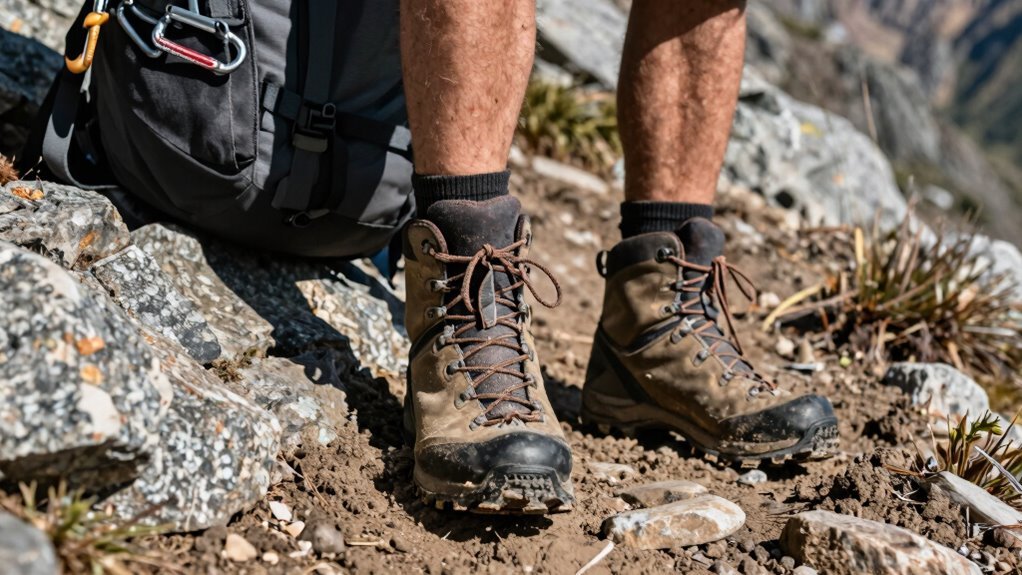
If you’re lugging a pack that feels like it’s packing its own backpack, your boots better be up for the job—because shaky ankles and sore feet won’t cut it on a multiday trek.
Heavy-duty boots laugh in the face of 40-pound loads, giving you the support to haul gear, snacks, and enough water to survive a desert crossing (or at least stay hydrated).
High-cut designs wrap your ankles like a hug from a concerned mom—keeping them safe on rocky descents and twisty trails.
Full-grain leather shrugs off thorns, roots, and rogue branches, while stiff soles take the punch of every step so your feet don’t have to.
Deeper lugs grip slick rocks like they’ve got sticky fingers, and the extra durability means your boots won’t quit before you do.
Sure, they weigh a bit more, but when you’re trudging uphill like a pack mule, you’ll thank yourself for the stability and grit.
Weather and Water Exposure: What Holds Up Best
When the trail turns into a watery obstacle course thanks to rain, dew-laden brush, or sneaky creek crossings, your boots had better keep the flood out—because soggy socks are the ultimate buzzkill on any hike.
Thankfully, modern hiking boots are built to handle wet conditions like champs.
Waterproof membranes like Gore-Tex and Merrell’s M Select DRY block puddles and rain while letting sweat escape—no swamp feet here.
Full-leather uppers, waxed nubuck, and synthetic overlays add extra defense in downpours and creek scrambles.
They’ve been tested in deep puddles, snow, and slippery rocks, and they *stay* dry.
Plus, high collars and gusseted tongues seal out water like a pro.
- Your boot’s secret weapon? A breathable liner that hates water but loves airflow.
- Leather and PU uppers don’t just repel water—they get tougher with every wet mile.
- Boots like the Salomon X Ultra 5 GTX or Merrell Moab 3 WP laugh at soggy trails.
Comfort and Agility vs. Support and Protection
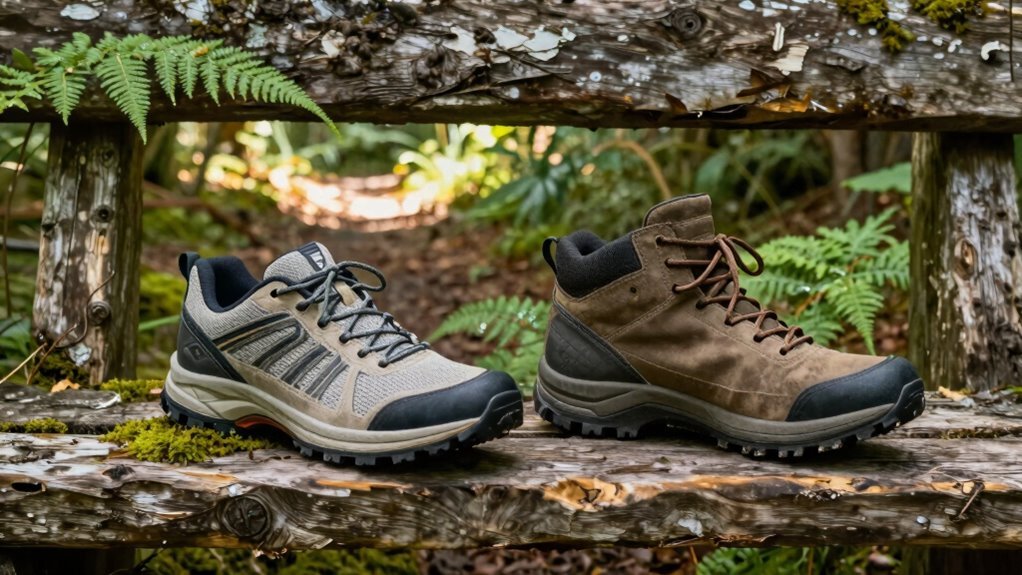
You’ve kept your feet dry through puddles, mud, and morning dew—now let’s talk about how your boots feel while doing it.
If you’ve ever worn hiking boots, you know they can weigh as much as bricks, while trail runners are like wearing clouds—light, bouncy, and ready to move.
That 40% less weight means less tired legs and more fun on long or speedy hikes.
Trail runners flex with your feet, let you pivot like a dancer, and hug the trail so closely you’ll feel every pebble (in a good way).
But flip the script: boots wrap your ankles like a security guard, great for wobbly rocks or a heavy pack.
Sure, they’re less nimble, but sometimes you want protection over parkour.
So ask yourself: are you chasing speed and freedom, or crawling over rugged ridges where stability rules?
Your feet, your call—but fun doesn’t have to mean sore.
Breaking In Boots: Myth or Necessity
Though your boots might look tough enough to survive a stampede, treating them like they’re ready for the wild right out of the box can leave your feet yelling for mercy.
But here’s the real talk: breaking in isn’t some mandatory rite of passage.
It depends on the boot—and you.
- Lightweight or flexible models? They might fit like a favorite sneaker from day one.
- Stiff leather boots? Yeah, they’ll need some love and slow mileage to soften up.
- Your socks matter too—wear the same ones you’ll hike in to get the real deal.
Start easy: walk around the house, then the block, then hit short trails.
Watch for hot spots, not heroics.
If they pinch now, they won’t magically feel better later.
Skip the shortcuts like soaking or marathon test hikes—your feet will thank you.
Lightweight Options for Day Hikers
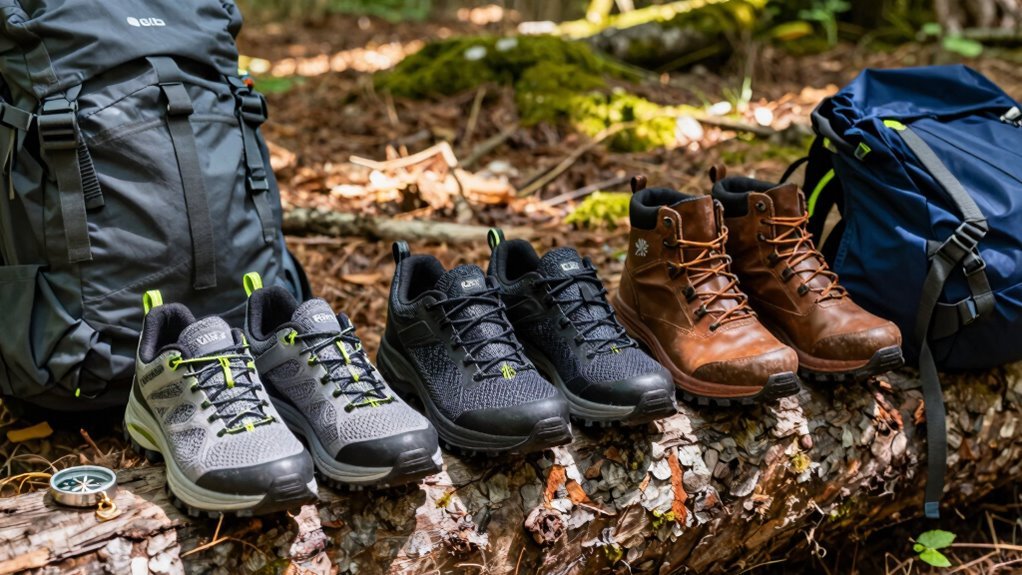
If you’re eyeing the trail with a daypack and a spring in your step, lightweight hiking shoes might just become your new best friend.
They weigh as little as a pound a pair, saving your energy over thousands of steps—way lighter than clunky boots.
With breathable mesh uppers, your feet stay cool and dry, even if you splash through a stream (oops, wrong turn?).
Trail runners and low-cut hikers dry fast and fight blisters, so hot spots don’t ruin your vibe.
On smooth or moderately rough trails, these nimble shoes grip gravel, dirt, and sand like they were born for it.
Flexible soles let you move fast and feel free, perfect for day hikes under 10 miles.
Ankle support? You’ll likely skip it—unless you’re auditioning for a sprain reenactment.
Lightweight options keep you zippy, comfy, and honestly, a little giddy.
Who knew hiking could feel this breezy?
Making the Right Choice for Your Adventure
Where to, adventurer?
Picking the right footwear means matching your kicks to your journey—not just the trail, but your pack, skill, and vibe.
You don’t want sore feet killing your sunset view or a surprise stream wrecking your dry socks.
Think about it: a lightweight trail runner feels like freedom on a smooth path, but when mud, rocks, or snow show up, boots bring the backup.
And hey, no shame in needing cozy ankles—some of us aren’t built like mountain goats.
- Rugged trail or winter hike? Boots win for support, warmth, and splashing through puddles like a kid.
- Well-maintained path with a light pack? Shoes are quicker, comfier, and way less “meh.”
- Big backpack or wonky ankles? Lace up those boots—and toss in trekking poles for superhero balance.
Frequently Asked Questions
Can I Use Regular Sneakers for Hiking?
Yeah, you can use regular sneakers for hiking—but only on easy, well-groomed trails.
They’re light and comfy at first, but don’t count on them for rocky paths or muddy patches.
Without ankle support or rugged soles, you’ll slip, twist, or wreck your feet.
Plus, they won’t last long.
Think of sneakers as hiking’s training wheels—fun for starters, but you’ll outgrow ’em fast when adventure calls!
Are Hiking Boots Bad for Flat Feet?
Nope, hiking boots aren’t bad for flat feet—they’re actually your secret weapon!
You just need the right pair.
Look for strong arch support, cushioning, and a stiff sole to stop overpronation.
They’ll keep your feet happy, knees quiet, and hikes fun.
Think of them as bodyguards for your soles.
With the right fit and features, you’ll step confidently, not achingly, on every trail twist.
Do Trail Runners Wear Out Faster Than Boots?
You bet they do—trail runners wear out faster than boots, no two ways about it.
You’ll see the midsole squish flat and soles flake away while your boots are still kicking.
That lightweight, flexible design? Great for speed, but it won’t hold a candle to a boot’s tough leather and stitched-on sole when you’re racking up miles on rocky trails.
You’ll burn through pairs quicker than snacks at a campsite, especially with heavy loads or rough terrain.
How Often Should I Replace Hiking Footwear?
You should replace your hiking footwear every 500 to 1,000 miles, depending on wear and terrain—think of them like trusty sidekicks that retire after a solid adventure.
Check for worn treads, cracked leather, or sad-looking soles.
If your feet ache or slide around, it’s time.
Store them right, clean them often, and they’ll outlast even your longest trail tales—no magic, just good care and a little love!
Can I Wear Hiking Boots in the Snow?
You bet you can wear hiking boots in the snow—they’re built for it!
With 200g of insulation, your toes stay toasty even below freezing.
Vibram Megagrip grabs slick trails like a penguin with confidence, and 3.2 mm lugs crunch perfectly through snow.
Waterproof membranes like Gore-Tex or PFAS-free Powertex keep slush out.
Plus, they’re 25.7% more flexible in the cold—your feet won’t stiffen up like a frozen banana!
Conclusion
Think of your hike as a dance across nature’s grand stage—sometimes you need sturdy boots, like ballroom shoes, to support your moves on rough terrain. Other times, trail runners are your nimble jazz shoes, light and quick. You wouldn’t wear heels to a hopscotch game, right? So match your footwear to the trail’s rhythm. Your feet will thank you, and the forest will sing beneath every step.
References
- https://thejamesguide.com/history-of-hiking-shoes
- https://www.sirioshoes.com/from-deer-hide-to-high-tech-the-journey-of-hiking-footwear/
- https://www.timetoast.com/timelines/evolution-of-hiking-shoes
- https://www.heddels.com/2018/06/evolution-of-hiking-boots/
- https://www.appalachianoutfitters.com/blogs/news/the-evolution-of-hiking-boots-from-past-to-present
- https://en.wikipedia.org/wiki/Hiking_boot
- https://www.lemsshoes.com/blogs/news/footwear-archaeology-unearthing-the-history-of-outdoor-shoes
- https://www.gore-tex.com/blog/step-into-history-of-hiking-shoe
- https://www.satra.com/bulletin/article.php?id=3029
- https://altaigear.com/altai-spotlight-the-history-of-the-hiking-boot/