How to Cross Streams Safely
Check the water first—toss a stick to test speed, and if it zips past, back up. Listen for loud splashing or clattering rocks as red flags that indicate dangerous conditions for crossing streams.
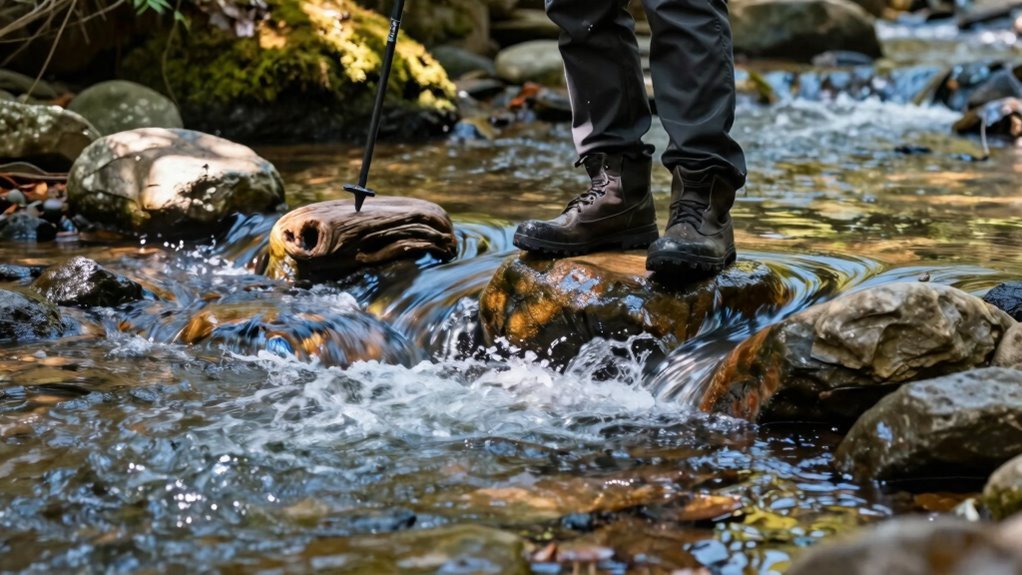
Cross at wider, straighter sections where the current is typically slower and more predictable. Use a sturdy stick planted downstream to help maintain balance while crossing streams safely.
Face upstream, shuffle sideways, and never cross your legs to stay stable in moving water. Remove soggy shoes if needed for better traction and comfort during the crossing.
When the water’s sketchy, cross with a buddy to improve safety and support. You’ll be amazed what comes next when you know how to cross streams safely.
Assess the Water Before Crossing

Before you step one foot into that stream, take a breath and remember: it’s not just water—it’s a moving puzzle waiting to be solved.
You’re not just crossing—you’re detective, scientist, and explorer.
Toss a stick: if it zips faster than you walk, back up!
Listen for that “roar” or clattering rocks—nature’s flashing neon sign saying “Danger!”
Clear water? Great—spy rocks and drop-offs.
Murky? That’s like walking blindfolded.
Probe depth with your pole, and if it’s above your thighs, rethink life choices.
Shout to your buddy, “How’s the water?” and watch for swirling foam or submerged logs ready to trip you.
No strainers, no frothy rapids—just smooth, shallow flow.
Churning water’s not your friend.
Stay smart, stay dry, and remember: the best crossing is the one you plan before your boots get wet.
Always scout for safer alternatives because you should avoid unsafe crossing conditions.
Choose the Safest Crossing Point
You’ve scoped out the stream like a pro, eyes sharp for danger signs and flow patterns, so now it’s time to pick your perfect crossing spot—think of it as choosing the VIP section of a river concert.
Aim for wider sections—they’re shallower and slower, which means less chance of getting swept off your feet.
Straight stretches beat curvy ones; no sneaky deep holes lurking here.
Plus, islands and sandbars? Total game-changers—they split the current and give you a breather mid-stream.
Always dodge rapids, waterfalls, and anything that sounds like a blender on high.
Scout both banks for easy exits—you don’t want to conquer the stream only to get stuck on the other side.
Test the flow with a step, then sidestep your way across.
Slow, steady, and smart wins this race.
Check depth by throwing a rock into the intended crossing spot—a ker-plunk sound means it’s likely too deep and risky.
Face Upstream While Crossing
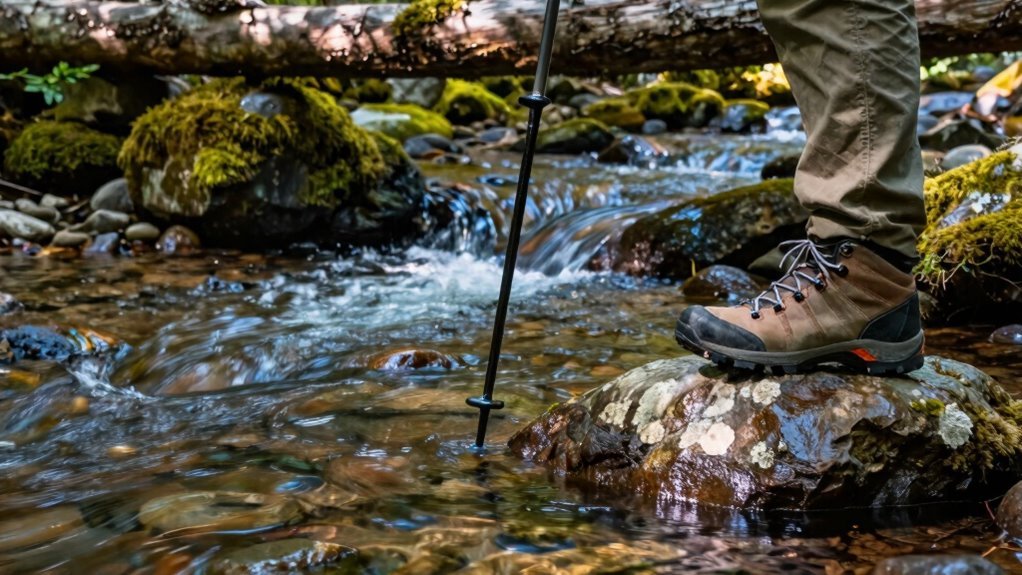
When the water starts pushing, you’ll want to face it like a champ, not let it sneak up and knock you flat—so turn upstream and meet the current head-on.
You’ll feel the flow hit your chest, bracing you like nature’s own seatbelt.
This lets you lean into it, staying stable instead of getting shoved from behind.
By facing forward, you can spot faster water ahead and adjust before things get wild.
Bend your knees slightly—lower center of gravity, remember?—and keep your feet shoulder-width apart.
Move sideways slowly, shuffling like you’re doing the river dance, and never cross your legs.
Use facing upstream to maintain balance and control as you navigate the current.
You’ve got this!
Just stay calm, anticipate the flow, and let your body work with the stream, not against it.
Think of it as a dance-off with Mother Nature—and you’re leading.
Use a Walking Stick for Balance
Now that you’re facing upstream like a pro, ready to tango with the current, let’s add a trusty dance partner: your walking stick.
Plant it on the downstream side to create a fourth leg—like nature’s tripod for wobbly legs.
It’s not just a stick; it’s your balance buddy, giving you extra contact points so you don’t end up doing the unintentional swim.
Use it to test depth and feel for sneaky, slippery rocks or muddy pits before you step.
On rocky terrain, it’s your anchor, offering traction and stability when the stream tries to shake you loose.
When the current picks up, lean on your pole to fight the push and keep your cool—and your dignity.
It reduces strain on your knees, too, so you’ll feel fresh long after the crossing.
Just keep it slightly ahead and to the side—perfect spacing means better support without the faceplant.
Who knew a stick could be so smart?
Remove Shoes if Necessary
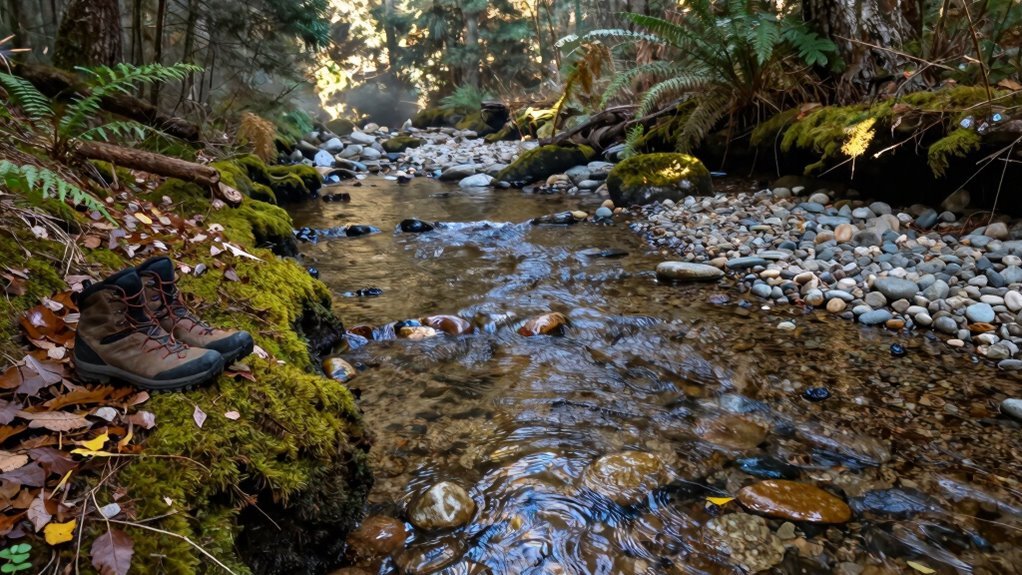
Though the water might look calm, ditching your shoes could be the smartest move you make—think of it as giving your boots a spa day while you sneak through the stream like a ninja.
You’ll keep your hiking footwear dry, avoiding soggy, waterlogged boots that weigh you down and cause blisters.
Toss your socks too, and stash everything safely on the bank.
Slide through barefoot? Nope—slip on water shoes, old sneakers, or sturdy sandals for grip.
They give traction and protect against sharp rocks or hidden logs.
Bare feet or flimsy flip-flops? Bad idea—they’re slippery and risky.
Your best bet is secure, quick-drying shoes with good laces.
Once across, dry feet mean comfort and warmth, especially with spare wool socks.
Shoes take a beating, sure, but dry feet keep you hiking strong.
Smart swap, right?
Your boots will thank you later.
Cross as a Group When Possible
You’ve stashed your shoes on the bank and slipped into something more stream-savvy, but don’t think the adventure stops there—teamwork just might be your secret weapon.
If you’ve got company, cross together!
Line up sideways to the current, link arms or grab pack straps, and shuffle across like a wobbly but determined conga line.
Put your strongest friend upstream—they’ll break the flow like a human boulder.
In a trio, form a triangle with arms locked; bigger groups go V-shaped, biggest up front.
Always step together, one foot at a time, and keep two points of contact.
Talk constantly—“I’m good!” or “Hold up!”—because nobody’s trying to audition for a waterfall stunt.
Practice the formation on dry land first (no one wants a face full of stream).
With a solid plan, you’ll cross smoother than a river otter on a water slide.
Watch for Hidden Hazards
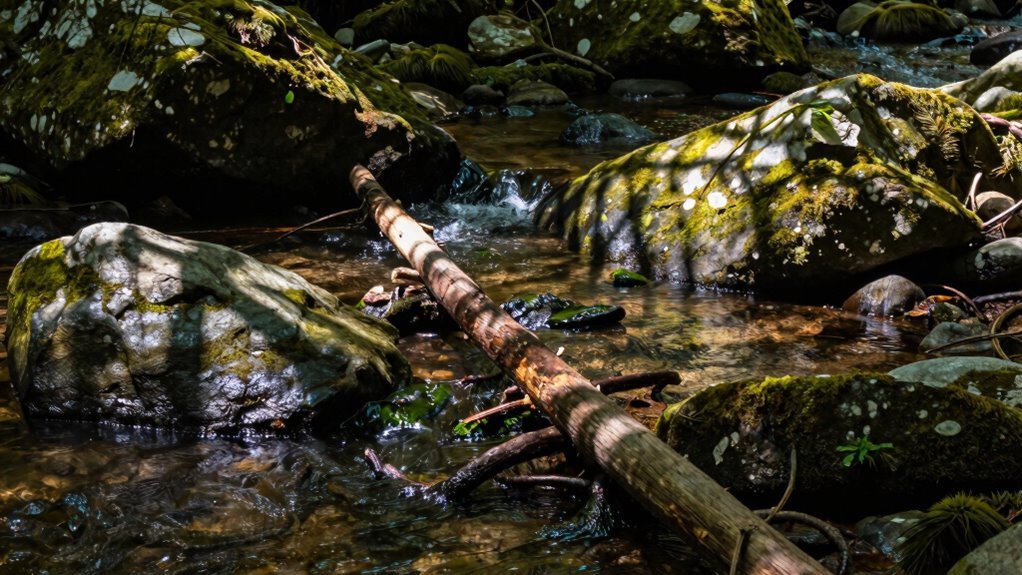
What’s lurking beneath that innocent-looking trickle?
More than you think—especially at night, when over half of low-water crossing deaths happen.
You can’t trust calm surfaces, because hidden hazards love to surprise you.
Murky water? That’s nature’s “do not enter” sign.
And if you hear rocks tumbling underwater, trust your ears—there’s serious power beneath.
Narrow spots crank up the current, turning gentle streams into knock-you-off-your-feet zones.
- Muddy, fast-moving water carrying branches means flood danger is real.
- Darkness hides rising water and weak roadbeds—what looks passable isn’t.
- Undercut banks and submerged boulders lurk where water meets land.
- That quiet pool? Could hide a waterfall or strainer ready to trap you.
When in doubt, turn around—your adventure doesn’t need a watery plot twist!
Secure Your Gear Before Entering the Water
That quiet stream might look harmless, but don’t let your guard down—what you carry matters just as much as where you step.
Waterproof your gear like you’re packing for a surprise swim—because you might get one!
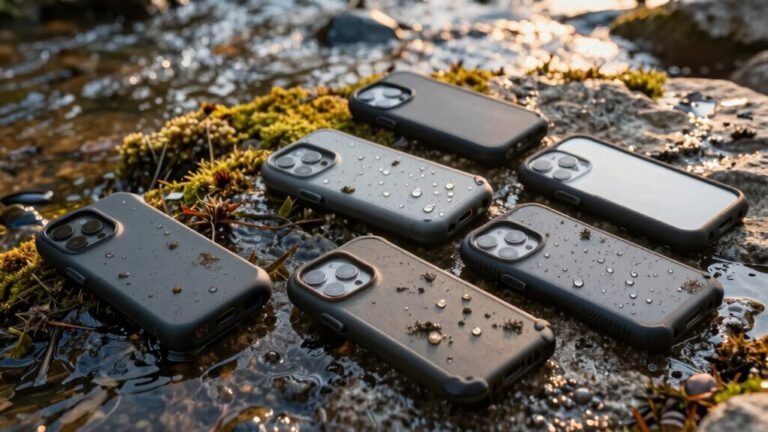
Slide valuables into dry bags or ziplock sacks, and double-bag everything like you’re nesting Russian dolls.
Keep fire starters or your phone in a coat pocket so they’re grab-ready.
Loosen those pack straps—hip, sternum, and shoulders—so you can ditch it fast if you take a tumble.
Leave cotton behind; it’s a cold, soggy trap.
Instead, stash warm wool socks and toss on nylon shorts—you’ll look ridiculous, but you’ll stay safe and dry.
Grab your trekking pole or a sturdy stick for balance, and keep your boots on—your feet will thank you when you’re not stepping on a sneaky rock or grumpy crawdad.
Gear secure? You’ve got this!
Frequently Asked Questions
What Should I Do if I Start to Fall While Crossing?
If you start to fall, keep your arms out, bend your knees, and stay calm—don’t flail!
Tuck your chin, bend your elbows, and brace for impact like a ninja rolling off a tumble.
Keep your gaze forward, shift weight to your strong leg, and try to step with your back foot to catch yourself.
Laugh it off, check your surroundings, and keep going—you’ve still got this!
Can Animals in the Water Make Crossing More Dangerous?
Yeah, animals in the water can totally make crossing trickier—imagine bumping into a moose mid-stream!
Did you know over 60% of wildlife encounters happen near water?
They’re basically nature’s cafes.
You might surprise an animal, or worse, tick off a mama bear with cubs.
Stay alert, make noise, and remember: you wouldn’t crash a wild party, so don’t sneak up on their splash zone!
Is It Safe to Cross During Rain or After Heavy Storms?
Nope, you’re not safe crossing during rain or right after storms—those streams turn into sneaky monsters.
Water rises fast, currents get strong, and muddy flow hides dangers like rocks or logs.
If it’s above your knees and moving quicker than you can walk, forget it.
Wait it out, grab a snack, and let things calm down.
Nature’s not going anywhere, but your balance might!
How Deep Is Too Deep to Attempt Crossing Safely?
Water above your knees is already flirting with danger, especially in glacial streams—think of it like dancing with a toddler having a tantrum, unpredictable and slippery.
You shouldn’t go deeper than mid-thigh, even if the current seems calm.
Fast water over your knees? Not a chance.
Remember, swift and shallow is trickier than deep and slow.
Test depth with your pole, keep your balance, and save the plunge for swimming holes, not crossings.
Should I Wear a Life Jacket When Crossing a Stream?
Yeah, you should absolutely wear a life jacket when crossing a stream—better safe than soggy!
Streams can be sneakier than they look, with strong currents or slippery rocks, and accidents happen fast.
Even if you’re a strong swimmer, a life jacket gives you peace of mind and could save your life.
Think of it as your watery wingman.
Plus, it’s way easier to stay afloat than try to find your shoes mid-current!
Conclusion
Stay smart, stay steady, and savor the splash. Pick your path, plant your pole, and proceed with purpose. Streams seem silly till they sweep you sideways—so secure your stuff, stand strong, and sidestep slippery spots. With savvy steps and a smile, crossing’s a cinch, not a crisis. Laugh at the little waves, lean into the current, and conquer the crossing with confidence. You’ve got this—go get wet, win the walk, and wow your friends!
References
- https://www.midnr.com/Publications/pdfs/ArcGISOnline/Guides/Stream_Crossing/Great_Lakes_Stream_Crossing_Inventory_Instructions.pdf
- https://www.gohunt.com/browse/tips-and-tricks/backpacking/stay-dry-and-safe-proven-methods-for-assessing-stream-crossings-when-hunting
- https://www.fws.gov/story/how-cross-river
- https://appalachiantrail.org/experience/hike-the-trail/essential-skills/safety/weather-hazards/river-stream-crossings/
- https://hilltoppacks.com/pages/how-can-i-safely-cross-a-river-or-stream-while-backpacking
- https://blog.doc.govt.nz/2025/10/23/if-in-doubt-stay-out-lessons-from-a-river-safety-course/
- https://www.pcta.org/discover-the-trail/backcountry-basics/water/stream-crossing-safety/
- https://wms.org/magazine/magazine/1263/Creek-and-River-Crossings/default.aspx
- https://remotemedicaltraining.com/blogs/remote-medical-journal/why-are-proven-water-crossing-protocols-essential
- https://www.alpineinstitute.com/how-to-safely-cross-a-river/