GPS Watch Vs Phone GPS: What’s Enough?
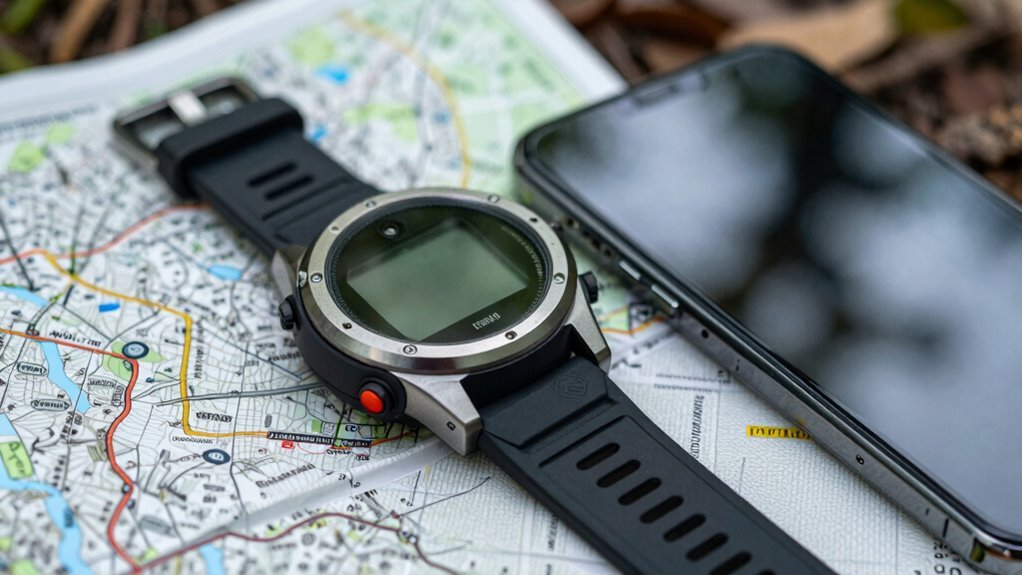
Your GPS watch beats your phone every time when it comes to reliable tracking on the trail. With tighter GPS accuracy, fewer signal drifts, and extended battery life, a GPS watch is built for endurance.
Phones often add extra miles on twisty trails and struggle with signal bounce near buildings. They lack the rugged reliability needed when conditions get tough.
In contrast, GPS watches lock onto signals faster and deliver cleaner, more accurate maps. They’re also designed to withstand spills, sweat, and sudden downpours without missing a beat.
Plus, GPS watches sync seamlessly with fitness apps and can last for days on a single charge. When the trail gets wild, your GPS watch is the tool that won’t quit.
Accuracy and Signal Reliability
Ever wonder why your phone says you ran a 7-mile loop when your watch insists it was barely 6?
That’s because phones and watches measure distance differently.
Your iPhone might add 13% more distance on twisty trails, turning a 6.25-mile run into a phantom 7.05, just from zigzagging on the map.
GPS watches like Garmin stay tighter to the actual path, with less wobble and fewer fake elevation spikes.
While your phone’s doing its best, its tiny antenna struggles near buildings, and its tracking bounces around like it’s had too much coffee.
Watches use better antennas and smoother algorithms, so they’re less jumpy.
Sure, smartphones are close—within 3% sometimes—but when precision matters, your trusty watch doesn’t fudge the miles.
Save the guesswork for trivia night, not your running stats.
Smartphones process GPS data in the cloud, enhancing accuracy through post-collection refinement.
Battery Life Comparison
How’s your phone holding up when the trail gets long and the battery starts blinking red? Not great, right?
While your smartphone taps out after 7–14 hours of GPS use, a dedicated GPS watch laughs at marathons, lasting 38 to 84 hours—or even longer with power-saving modes.
You can go full ultramarathon beast and still have juice left.
These watches optimize power like pros, using smarter chips and adjustable recording intervals.
Need 200+ hours? Just switch to 60-second intervals.
Plus, solar-powered models like the Garmin Instinct 2X Solar keep going as long as the sun shines—no plug needed.
Meanwhile, your phone’s begging for a charger after a single day.
For multi-day hikes or weekends in the wild, the watch wins hands-down.
It’s like comparing a scooter to a dirt bike.
One sputters out; the other just keeps grinning and going.
Even high-end models like the Coros Vertix 2S deliver up to 118 hours in standard GPS mode, making them ideal for long adventures without access to charging.
Portability and Practical Design
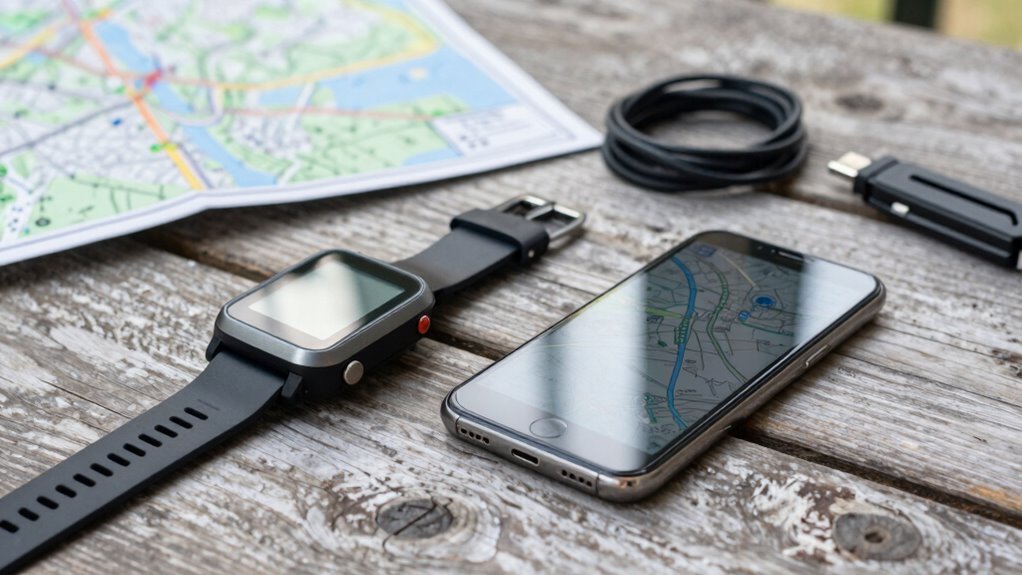
Convenience isn’t just a bonus when you’re miles from the trailhead—it’s a game-changer.
You want gear that works *with* you, not against you.
GPS watches win on sheer portability—slap one on your wrist and go, no pockets, no extra weight.
They’re tough, too, often waterproof and trail-ready without bulky cases.
Handhelds? Rugged and built to survive drops, mud, and downpours, with buttons that work even with gloves.
Phones, well, they’re slick—but toss yours around like a rock and you’ll cry.
They need clunky cases and constant charging.
Sure, your smartphone’s screen is gorgeous, but do you really want to fumble with it mid-sprint?
GPS devices let you focus on the path, not the gadget.
When it comes to design that just *gets it*, less fuss means more fun—and more adventure.
Battery life on GPS watches can outlast phones by several days or weeks.
Tracking Features for Runners and Cyclists
Chasing personal bests or mapping your favorite trail, you want gear that keeps up—no guesswork, no drift, just reliable tracking that matches your hustle.
You trust your phone, but it wobbles on sharp turns, adding fake distance like it’s padding its résumé.
Smartphones using Strava are close, sure, but your dedicated GPS watch?
That’s the precision beast—consistent within hundredths of a mile, every single time.
It nails elevation without the drama of phantom hills your phone keeps inventing.
Wrist gadgets like Garmin lock onto signals faster and stay locked, while phones drift like they’re daydreaming.
Sure, your iPhone’s fine for a casual log, but when you’re chasing splits or summiting climbs, you need truth.
GPS watches deliver tight, clean maps without the zig-zag nonsense.
Bottom line: if accuracy’s your game, the watch isn’t just better—it’s your secret weapon.
Environmental Performance in Extreme Conditions
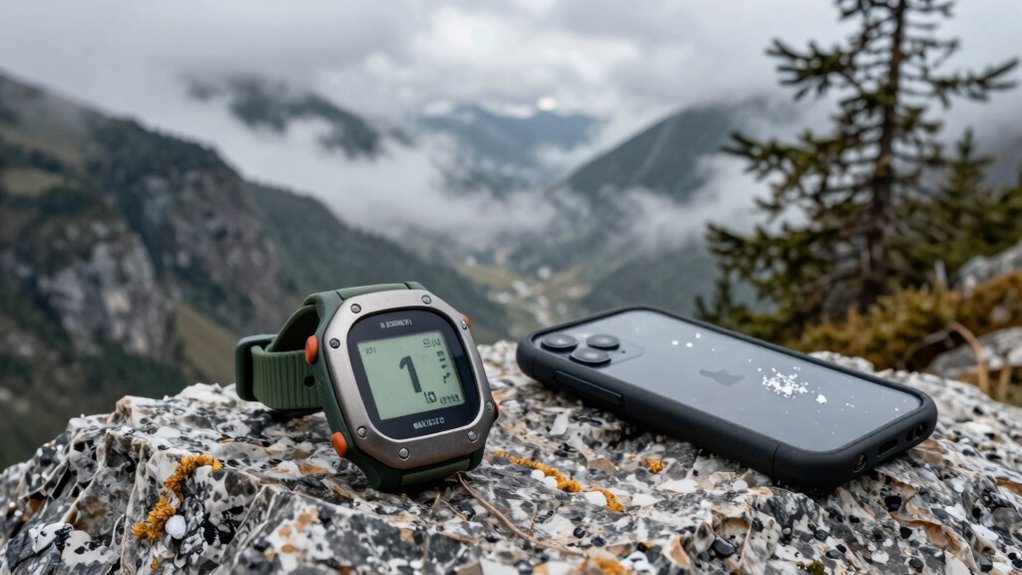
Ever wonder how your gear holds up when the weather turns nasty or the trail gets tough?
In rain or under thick tree cover, your GPS watch really shines—often outperforming your phone.
Watches like Garmin lock onto signals faster in forests and stay steady near buildings, while phones can lag, especially when tucked in a pocket.
Under canopies, watches nail those tricky checkpoints with just a tiny delay, often within 10 seconds.
In light rain, phones might log 5.11 km on a 5K route, but dedicated watches keep errors low—usually under 1%.
Their small antennas struggle too, but they’re built for this.
Plus, without cellular drain, watches last longer on backcountry trails.
In cities, the gap widens: phones bounce signals off buildings, but your trusty wrist warrior stays on course.
Rain, trees, or concrete jungle—your GPS watch’s got your back, no umbrella required.
Data Syncing and App Integration
While your GPS watch is busy tracking every twist and turn out on the trail, it’s also playing a quiet game of catch-up with your phone—because all that detailed data means nothing if it doesn’t make the leap to your app.
You’ve gotta sync daily, or that epic run might vanish like a ghost.
Watches grab GPS every second, so they nail tight turns, but if you forget to connect, poof—missing data.
Phones, on the other hand, auto-sync through the cloud like magic and rarely ghost you.
Apps like MapMyFitness keep things smooth, but your Apple Watch might bicker with your iPhone on distance.
Garmin plays nicer.
Background apps on phones cut corners to save battery, while watches fine-tune every signal.
Restart your gear, keep it charged, and don’t yank the watch off like a drama queen—it’s team effort time.
Cost Considerations and Value Over Time
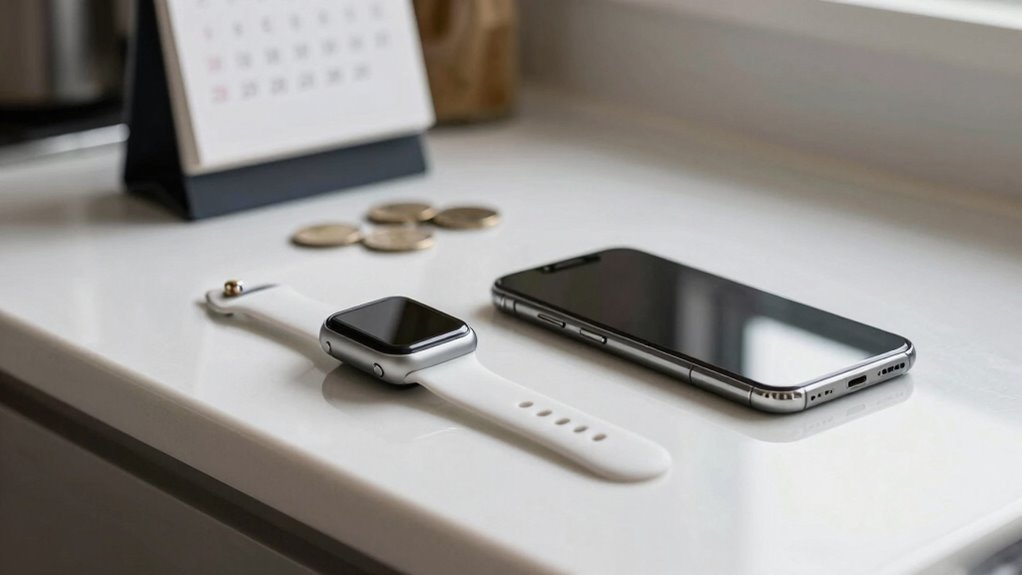
You’ve nailed the sync dance between your watch and phone, making sure every mile shows up where it should—now let’s talk numbers, because that shiny gadget on your wrist or the phone already in your pocket comes with a price tag that keeps giving… or taking.
Here’s how you win long-term:
- Skip monthly fees by choosing GPS-only watches—no cellular, no bill, just freedom.
- Use your phone to save big upfront, but watch out for battery drain and that $800 replacement if it flies out mid-run.
- Invest in a Garmin if you’re serious—pricier now, but tough, accurate, and built to last years, not seasons.
You’re not just buying gear—you’re choosing peace of mind, fewer charges, and more miles without surprise costs.
Smart moves today mean more high-fives tomorrow.
User Experience During Long Workouts
What if your watch or phone played tricks on you mid-run—adding phantom miles, turning smooth trails into rollercoaster routes, or making your pace look like a chaotic game of hopscotch?
With phone GPS, you might gain 13% extra distance out of nowhere or see elevation spikes that never happened.
Your iPhone could wobble off-trail on screen, while your Garmin holds steady.
Phones drift on flat stretches and struggle near buildings, but dedicated watches like your Forerunner stay consistent, lap after lap.
Sure, Strava on your phone nails accuracy sometimes, but try matching that reliability over hours.
Watches sample GPS faster, handle movement better, and won’t turn your 5K into a “mystery tour.”
Carrying your phone for music? Fine. But let your watch lead GPS duty—it won’t gaslight you with fake hills or phantom sprints.
Accuracy, consistency, sanity: that’s the long-run win.
Frequently Asked Questions
Can I Use a GPS Watch Without a Smartphone?
Yes, you can totally use a GPS watch without a smartphone!
Once set up, it tracks your runs, hikes, and workouts all on its own—no phone needed.
You’ll get GPS routes, heart rate stats, and even emergency alerts right from your wrist.
Some even let you stream music or make calls solo.
Think of it as your fitness buddy that doesn’t need constant phone drama.
Just wear, go, and crush your goals!
Do GPS Watches Work Underwater for Swimming?
You’re in luck—your GPS watch doesn’t *actually* track underwater, but it’s sneakily smart, grabbing signals when your wrist pops up between strokes.
It’s like winking at satellites!
While submerged, it pauses, then stitches data smoothly so your swim looks seamless.
Devices like Garmin Swim 2 or Coros Pace Pro are champs at this game, turning splashy chaos into solid stats—just don’t expect magic if you dive too deep or swim like a thrashing octopus!
Are GPS Watches Allowed on Airplanes?
Yes, you can totally bring your GPS watch on a plane—TSA says it’s perfectly fine in carry-on or checked bags.
Just know if it’s bigger than a phone, you’ll need to take it out at security.
Once on board, wear it all you like, but turn it off during takeoff and landing.
It won’t track mid-flight, but hey, you’re not missing much—just clouds and snacks anyway!
Can I Listen to Music on a GPS Watch?
You bet you can listen to music on a GPS watch—no phone needed!
With up to 32GB of storage, your Garmin Fenix 8 holds 2,000 songs, so you’ll never run out of jams.
Just sync Spotify, YouTube Music, or Deezer if you’ve got a subscription.
Pair Bluetooth headphones, and boom—you’re running beats without a phone in sight.
Some even play tunes aloud!
Music-powered workouts? Yes, please!
Do GPS Watches Require a Subscription to Function?
Nope, you don’t need a subscription to make your GPS watch work—cool, right?
Just grab it, power it up, and go track your runs or hikes without paying a monthly fee.
The basics—like location tracking and workout stats—are totally free.
Sure, some fancy extras like live coaching or streaming might need a paid plan, but you’re good to go without one.
Think of it like a burger: the patty’s included; the special sauce costs extra.
Conclusion
You’ve got this—whether you choose a GPS watch or your phone, both pack a punch. But a watch fits like a trusty sidekick, snug on your wrist, while your phone? It’s like bringing a backpack to a sprint. Watches win in battery, precision, and pure running joy. So lace up, grab your gear, and let every beat count—your perfect match is out there, waiting to move with you.
References
- https://www.youtube.com/watch?v=oZtwvdVDpuc
- https://forum.slowtwitch.com/t/garmin-gps-accuracy-vs-iphone-gps/814534
- https://gone.run/blogs/news/tracking-your-run-is-a-gps-watch-or-iphone-better
- https://forums.garmin.com/outdoor-recreation/outdoor-recreation-archive/f/fenix-5-series/127544/use-phone-gps-to-improve-accuracy
- https://www.youtube.com/watch?v=K0kVrB_4omo
- https://discussions.apple.com/thread/7013558
- https://www.irunfar.com/best-gps-running-watch
- https://www.androidcentral.com/wearables/best-smartwatches-for-battery-life
- https://andrewskurka.com/battery-life-comparison-gps-sport-watches/
- https://www.runnersworld.com/uk/gear/tech/a30513694/best-running-watches/