5 Best Solar Chargers for Hiking That Won’t Weigh You Down
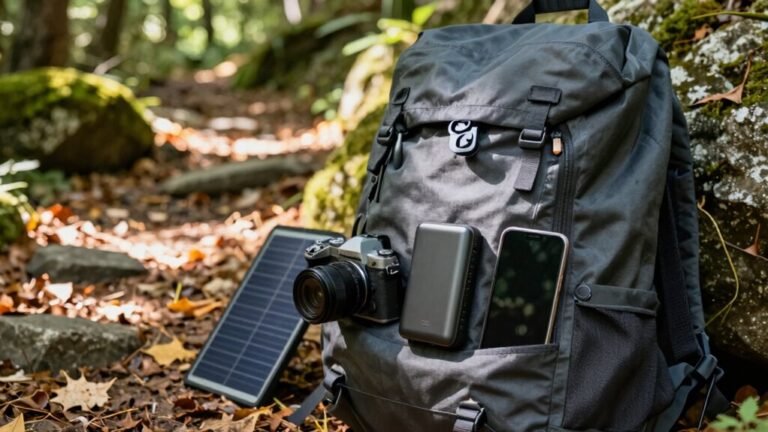
Sunlight glints off a folded solar panel as you tighten your backpack straps, wondering if this gadget will finally charge your phone without turning into dead weight.
The best solar chargers for hiking are designed to deliver reliable power without adding bulk, making them essential for long backcountry trips.
You’ve seen chargers fail on cloudy ridgelines or bulk up your pack like spare bricks—so why trust another?
These five models stand out for their balance of weight, efficiency, and durability, proving that the right solar charger can make all the difference outdoors.
| FlexSolar 40W Foldable Solar Panel Charger |  | Best Overall | Capacity (mAh or W): 40W (no battery storage) | Charging Ports: QC3.0 USB-A, PD2.0 USB-C, 19V DC | Fast Charging Support: QC3.0, PD2.0 | VIEW LATEST PRICE | Read Our Analysis |
| Solar Panels 30W Portable Foldable Charger |  | Lightweight Champion | Capacity (mAh or W): 30W (no battery storage) | Charging Ports: USB-A, Type-C | Fast Charging Support: Smart chip auto-optimization | VIEW LATEST PRICE | Read Our Analysis |
| 49800mAh Solar Power Bank with 4 Cables | 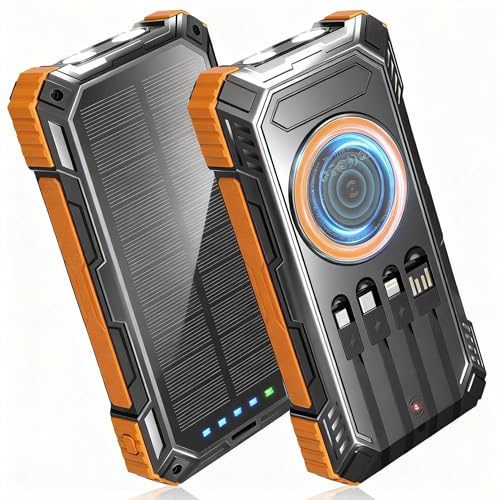 | High-Capacity Hero | Capacity (mAh or W): 49800mAh | Charging Ports: USB-C, USB-A, iOS, Micro, wireless | Fast Charging Support: PD 3.0, QC 3.0, 22.5W | VIEW LATEST PRICE | Read Our Analysis |
| BLAVOR Solar Power Bank 20000mAh Wireless Charger | 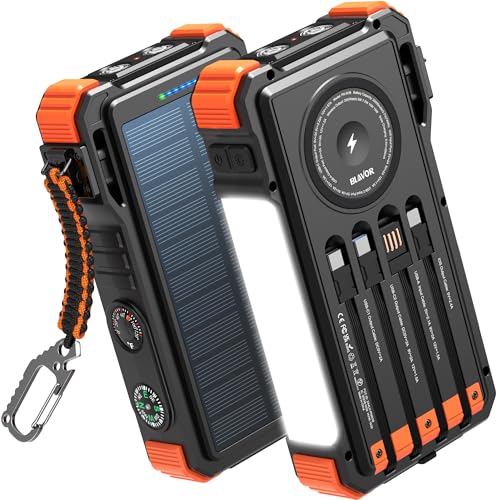 | Multi-Device Master | Capacity (mAh or W): 20000mAh | Charging Ports: USB-C, USB-A, iOS, wireless | Fast Charging Support: 20W USB-C fast charging | VIEW LATEST PRICE | Read Our Analysis |
| Solar Charger Power Bank 49800mAh 15W |  | Rugged Adventure Pick | Capacity (mAh or W): 49800mAh | Charging Ports: 2×USB-A, 1×USB-C (I/O) | Fast Charging Support: QC3.0, 15W | VIEW LATEST PRICE | Read Our Analysis |
More Details on Our Top Picks
FlexSolar 40W Foldable Solar Panel Charger
If you’re the type who pushes beyond day hikes into multiday backcountry treks—where every ounce in your pack matters and sunlight’s your only power grid—the FlexSolar 40W Foldable Solar Panel Charger isn’t just useful, it’s borderline essential. It delivers 40W of dual fast-charging power through QC3.0 USB-A and PD2.0 USB-C ports (18W max each), so you can juice up your GPS and headlamp at the same time.
That 19V DC output, capable of handling a full 40W, can directly power compact satellite messengers or small off-grid stations. But keep in mind, this is an instant-conversion device with no built-in battery, so unless the sun’s shining, you’re not charging.
You’re not wrong to wonder if solar is really “reliable” when clouds roll in—or if you’re just betting on clear skies. With 24% efficient mono-crystalline cells, IP67-rated durability (just don’t submerge it longer than 30 minutes), and a featherlight 1.76 lbs design that folds to just 8 x 11.1 inches, you’ve got serious power in a packable form.
Carabiners let you clip it to your backpack or tent, and smart IC protection guards against overcurrent and overheating. Still, shade can slash output by up to 70%, so angle it at 45° toward direct sun for best results.
Let’s be honest—no gear can magic energy from clouds, but this one comes close.
- Capacity (mAh or W):40W (no battery storage)
- Charging Ports:QC3.0 USB-A, PD2.0 USB-C, 19V DC
- Fast Charging Support:QC3.0, PD2.0
- Waterproof Rating:IP67
- Weight:1.76 lbs (0.8 kg)
- Included Carabiners:2 carabiners
- Additional Feature:19V DC port for stations
- Additional Feature:Smart load prioritizes single-port use
- Additional Feature:24% high-efficiency mono-crystalline cells
Solar Panels 30W Portable Foldable Charger
Who wouldn’t want a solar charger that keeps up when the trail gets tough? The SOLUPUP 30W Foldable Solar Panel—lightweight at just 2.4 lbs and folding down to 11.61 inches—gives you 23%+ energy conversion efficiency thanks to monocrystalline silicon, outperforming bulkier multi-crystalline panels.
With dual USB-A and Type-C ports (5V/3A, 15W max), it charges two devices at once—your phone and power bank—while a smart chip optimizes speed and guards against overcurrent or short circuits. Rain or dust? No problem—its IPX5 rating has you covered.
Clip it to your pack with the included carabiners, prop it on the adjustable stand, and let it auto-reconnect when sunlight returns—though real-world output still depends on angle, season, and cloud cover.
- Capacity (mAh or W):30W (no battery storage)
- Charging Ports:USB-A, Type-C
- Fast Charging Support:Smart chip auto-optimization
- Waterproof Rating:IPX5
- Weight:2.4 lbs
- Included Carabiners:2 carabiners
- Additional Feature:Auto-optimization after sunlight resumes
- Additional Feature:Adjustable stand included
- Additional Feature:23%+ conversion efficiency
49800mAh Solar Power Bank with 4 Cables
That rugged 49800mAh solar power bank with four built-in cables isn’t just for weekend hikers—it’s your go-to lifeline when you’re deep in the backcountry, relying on GPS, headlamps, and a charged phone for safety. You get 22.5W PD 3.0 and QC 3.0 fast charging—enough to juice your iPhone 14 to 60% in 30 minutes.
Plus, 15W wireless charging powers compatible devices like the Galaxy S24 or iPhone 15 without cables. The built-in cables—iOS, Type-C, Micro, and USB-A input—mean no lost cords and instant connectivity.
With an IP65 rating, this power bank shrugs off dust, drops, and showers, making it ideal for harsh environments. Solar recharging is slow but steady—it’s not fast, but it’s reliable when you need backup power.
Smart protection guards against overheating and surges, while the LED flashlight offers steady, SOS, and strobe modes for emergencies. The included carabiner and storage bag make it easy to carry, with 12-hour support ready if you ever need help.
- Capacity (mAh or W):49800mAh
- Charging Ports:USB-C, USB-A, iOS, Micro, wireless
- Fast Charging Support:PD 3.0, QC 3.0, 22.5W
- Waterproof Rating:IP65
- Weight:Not specified
- Included Carabiners:1 carabiner
- Additional Feature:Built-in 3 output cables
- Additional Feature:15W max Qi wireless charging
- Additional Feature:LED flashlight with SOS mode
BLAVOR Solar Power Bank 20000mAh Wireless Charger
You’ll want the BLAVOR Solar Power Bank 20000mAh wireless charger if you’re the type who charges more than just your phone—think tablets, watches, headlamps, and even a MacBook Pro 14—without wanting to juggle five separate cables or worry about rain dampening your backup power. Though let’s be honest, solar charging in the wild still takes patience.
It’s got a hefty 20,000mAh capacity—enough for ~4.2 iPhone 15 charges or 45 full Apple Watch top-ups—and supports 20W fast charging via USB-C, getting your phone from empty to full in about 50 minutes. You can charge up to six devices at once using the built-in cables (dual USB-C, iOS, USB-A), three ports, and wireless pad—super handy when you’re powering a mix of gear.
The rugged, waterproof, dustproof shell handles drops and downpours, and built-in safety guards prevent overcharging or short circuits. Sure, it’s not that lightweight at 1.2 pounds—but when was the last time you found a power bank with a carabiner, compass, thermometer, and a camping light with three brightness levels?
And yes, the solar panel helps maintain charge between expeditions, but don’t count on it to fully refill the battery in a single day. Still, for off-grid trips where power scarcity is real, this multitasking beast is one of the most self-reliant solar chargers out there—just keep it in direct sunlight whenever possible.
- Capacity (mAh or W):20000mAh
- Charging Ports:USB-C, USB-A, iOS, wireless
- Fast Charging Support:20W USB-C fast charging
- Waterproof Rating:Waterproof (no IP rating specified)
- Weight:Not specified
- Included Carabiners:Carabiner with rope
- Additional Feature:Charges up to 6 devices
- Additional Feature:Built-in camping light
- Additional Feature:Includes compass, thermometer
Solar Charger Power Bank 49800mAh 15W
Built for backpackers who hate dead batteries but love counting every ounce, this 49800mAh solar power bank delivers serious juice without turning into a brick on your belt. The 15W fast charging refills your iPhone to 50% in just 30 minutes, ensuring you stay powered on the move.
Dual USB-A (QC3.0) and a USB-C port eliminate the need to juggle cords, offering versatile charging options for multiple devices. You’ll appreciate the rugged, silicone-wrapped build, which is IP67-rated to withstand drops, dirt, and rain.
Certified safe with CE, FCC, and RoHS standards, the power bank features smart IC protection to prevent overheating and overcharging. Even in harsh conditions, it maintains reliable performance and durability.
The built-in solar panel charges slowly—think days, not hours—but serves as a dependable backup when outlets are unavailable. It’s ideal for extended trips where grid power isn’t an option.
Flip on the LED flashlight for campsite visibility, with strobe, SOS, and steady modes to suit any situation. A simple three-second press turns the light on or off, making it easy to use in the dark.
Compatible with 98% of devices, including iPads, Android phones, and Bluetooth headsets, it’s a versatile companion from trailhead to emergency scenarios. No matter your gear, this power bank has you covered.
Durecopow backs the product with a 12-month warranty, 24/7 customer support, and a no-hassle refund policy. They also claim endorsement from over 80 million members of the American Outdoor Association, though that figure is hard to verify.
- Capacity (mAh or W):49800mAh
- Charging Ports:2×USB-A, 1×USB-C (I/O)
- Fast Charging Support:QC3.0, 15W
- Waterproof Rating:Waterproof (no IP rating specified)
- Weight:Not specified
- Included Carabiners:Carabiner included
- Additional Feature:Multi-function emergency flashlight
- Additional Feature:Smart IC temperature control
- Additional Feature:Trusted by 80M+ outdoor members
Factors to Consider When Choosing Solar Chargers for Hiking
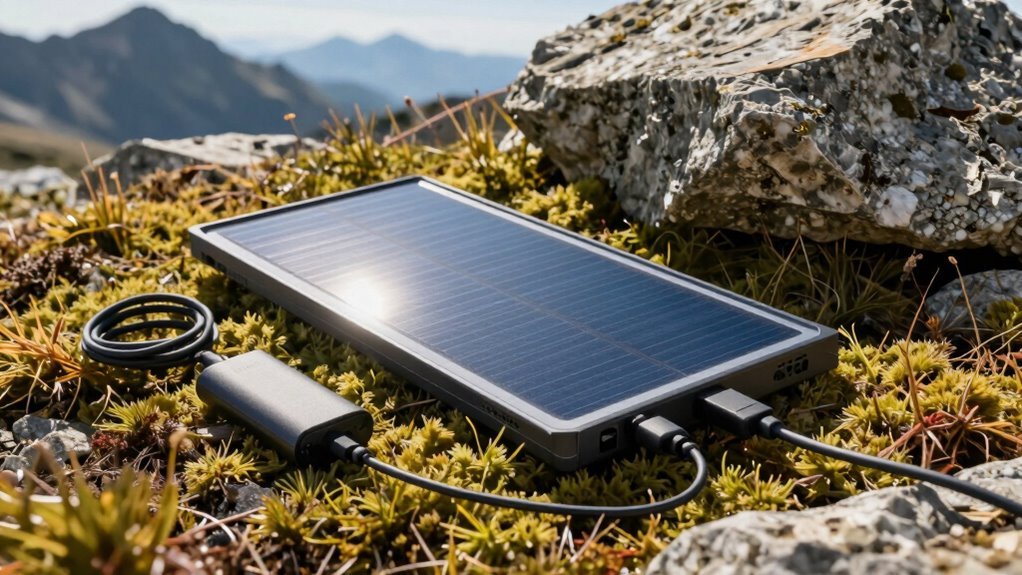
You’ll want to weigh wattage and power output—most hiking solar panels range from 10W to 20W, but is 15W really enough to charge your phone in under three hours? Portability and weight matter too, since a 1.2-pound charger might save you power but still weigh down your pack over 10-mile stretches. Don’t forget durability, charging efficiency in low light (some drop by 40%), and whether the USB ports actually play nice with your devices.
Wattage and Power Output
Ever wonder why your 40W solar panel doesn’t charge your phone as fast as the specs claim? Well, real-world conditions—like sun angle, partial shading, or afternoon clouds—can slash actual output by 30–60%, so that “40W” becomes more like 15–25W in practice.
Even then, your device only charges as fast as the port allows; a USB-C port capped at 18W PD 3.0 won’t push more, no matter how sunny it is. And while multiple ports let you charge your phone and GPS at once, their combined draw can’t exceed the panel’s total wattage—so adding devices slows each one down.
Fast-charging standards help, sure, but only if your gear supports them. Bottom line? High wattage gives you headroom, not guaranteed speed—think of it like engine size: bigger’s better, but only if road conditions cooperate.
Portability and Weight
A single watt won’t move the needle on your hike, but a bulky or fragile solar panel definitely will. Aim for foldable designs weighing between 0.8 and 1.5 kg (1.8–3.3 lb), since every ounce counts when you’re covering miles.
You’ll want compact folded dimensions around 11–12 inches by 9–11 inches—just small enough to slide into a standard backpack without crumpling your food pouch or first-aid kit. And let’s be honest, who wants to wrestle with a finicky setup mid-trail?
That’s why lightweight add-ons like carabiners or a collapsible stand matter—they clip on fast and save effort, all while barely nudging the scale. Panels with higher-efficiency cells give you usable power in a smaller, lighter package—fewer square inches, same output.
Isn’t that what smart packing’s about? You’re not just carrying gear—you’re carrying your future battery life.
Durability and Weather Resistance
Just because it folds small doesn’t mean it can take a beating—your solar panel might pack neatly beside your trail mix, but if it can’t handle a sudden downpour or a tumble on rocky switchbacks, that slim profile won’t matter much. Look for IP67 or IP65 ratings: they mean solid protection against dust and water (IP67 even survives brief immersion, though you shouldn’t make a habit of it).
Dustproof, waterproof builds with ETFE laminate coatings shrug off rain, grit, and scuffs on long alpine ridges. Rugged, shockproof housings and flame-retardant shells are non-negotiable—they absorb drops on rocky trails without failing.
Sealed junction boxes and reinforced connectors keep moisture out, because corrosion ruins everything. Sure, you’re not diving with it, but can it survive a river crossing or hailstorm?
Go for armor that works as hard as you do—because nature doesn’t care how light your gear is when the sky opens up.
Charging Speed and Efficiency
How fast your phone recharges at 10,000 feet, miles from an outlet, depends largely on your solar panel’s specs. Higher-wattage panels—like 40W compared to 30W—deliver noticeably faster charging in direct sunlight.
Monocrystalline solar cells, with around 23–24% efficiency, outperform cheaper alternatives, especially in low-light conditions. However, real-world factors like shade, cloud cover, and suboptimal sun angles can slash panel output by up to 70%.
Even a high-powered panel can become nearly ineffective under poor lighting. Built-in smart ICs help by optimizing power delivery for your device.
If you’re charging two devices at once, the total available wattage is split, slowing down both. Multiple ports (like PD and QC) add convenience but don’t compensate for low energy input.
Ultimately, charging speed depends not on port count or wattage claims, but on how much sunlight the panel can actually convert. Efficiency and environmental conditions are the real gatekeepers.
Compatibility With Devices
When you’re miles off-grid and your phone battery starts blinking red, whether you can actually recharge it comes down to compatibility—not just between charger and device, but between technology and terrain. You’ll want USB-A with QC3.0 and USB-C with PD2.0—each delivering up to 18–20W—to fast-charge compatible smartphones and tablets, assuming yours supports it (do you really still use Micro USB?).
Built-in cables—USB-C, Micro USB, even Lightning—cut down on clutter, letting you plug in without fumbling for adapters. Some solar chargers even offer a 19V DC output, pushing up to 40W for niche gear like portable power stations.
And if you’re all-in on convenience, wireless charging pads (up to 15W) work fine for Qi-enabled phones—though, let’s be honest, efficiency drops when you’re hiking and the panel isn’t perfectly angled.
Battery Capacity and Storage
Your solar charger’s battery capacity—measured in milliamp-hours (mAh)—acts as the fuel tank for your off-grid power needs. Choosing the right size means the difference between staying connected and going dark by midday.
A 20,000mAh unit might fully charge your phone twice, but a 49,800mAh powerhouse could manage five or more—though it’ll weigh more. To really compare, convert mAh to watt-hours (Wh) using the cell’s voltage (e.g., 3.7V); this gives a clearer picture of usable energy.
Some solar chargers integrate the panel and battery, storing sun-powered juice for cloudy hours or nighttime use. Pure solar panels, though lighter, won’t store anything, so you’ll need a separate power bank.
Look for models with built-in protection: an intelligent IC chip prevents overcharging, short circuits, and overheating, keeping your gear safe. Sure, more capacity sounds great—until you’re lugging it uphill.
Is it worth the trade-off? Maybe, if you’re out for days.
Solar Panel Efficiency
You’ve picked a battery with enough juice to keep your devices alive for days, but don’t forget—how fast that tank fills up depends largely on what’s feeding it. Solar panel efficiency, or how much sunlight gets turned into usable power, is key.
Monocrystalline panels hit 23%+, even 24% in top models, meaning they generate more watts in the same space—critical when hiking light. A higher-efficiency panel charges faster, especially useful when you’ve only got a sunny ridge break.
Efficiency peaks under direct sun at ideal angles (~45°), so tilting it right matters. Shade, cloud cover, or slanting placement? They’ll drag charging times down fast.
Sure, a 23% panel outperforms polycrystalline in the same watt class, but don’t expect miracles on a drizzly afternoon—physics always comes along for the hike.
Built-in Safety Features
Even if your solar charger boasts a 24% efficient panel and a 20,000mAh battery, none of it matters much if a sudden downpour or overheating fries the circuitry. Luckily, built-in safety features like protection ICs actively guard against overcurrent, overvoltage, and short circuits, guaranteeing your gear stays safe when the trail turns unpredictable.
These smart chips monitor temperature in real time, throttling power if things get too hot. Overheating protection kicks in during high-load sessions, while short-circuit and over-discharge safeguards shield both the power bank and your devices from faults.
An IP65 or IP67 rating means dust, rain, and splashes won’t sneak in, so a surprise storm won’t ruin your charge—or your hike. LED indicators let you see charging status at a glance, and automatic device detection guarantees only compatible, secure connections are made.
Because trust is good, but verification? That’s peace of mind.
Frequently Asked Questions
Can Solar Chargers Work in Cloudy Weather?
Yes, solar chargers work in cloudy weather, but they’re slower. You’ll get some power, just not full output. Place them in bright, indirect light and keep them uncovered. They won’t stop working—just expect less juice with those overcast skies.
How Long Do Solar Power Banks Last?
You’ll get 3 to 5 years from your solar power bank if you treat it right—avoid full discharges and extreme heat. They degrade slower than you’d think, even with daily hikes and sketchy weather. Just keep them charged and shaded when possible.
Are Foldable Solar Panels Durable Over Time?
Yes, they’re durable if you treat them right. You’ll keep them working for years by avoiding sharp bends, shielding them from extreme weather, and storing them properly. Regular care means reliable power when you need it most.
Can I Use Solar Chargers Indoors?
You can use solar chargers indoors, but they’re 90% less efficient than outdoors. You’ll need direct sunlight through a window, and even then, charging slows way down. You’re better off plugging into a wall. Sunlight just isn’t strong enough indoors.
Do Solar Chargers Need Direct Sunlight to Work?
No, solar chargers don’t need direct sunlight to work—you can still charge them on cloudy days or in indirect light, though they’ll charge slower. You’ll get the best results in direct sun, but they’ll still function without it.
Conclusion
You’re not just packing power—you’re trading grid dependence for sunlight and smart engineering. These chargers slip into your pack like spare layers, (FlexSolar’s 1.76 lb foldable frame, 49800mAh’s built-in cables) turning trails into charging stations. Sure, 30W won’t refill a phone in five minutes—nature doesn’t do miracles—but under open sky, they keep your gear breathing. Think of them as electrical trail snacks: lightweight, reliable, and just enough to get you home.