What to Wear for Winter Day Hikes
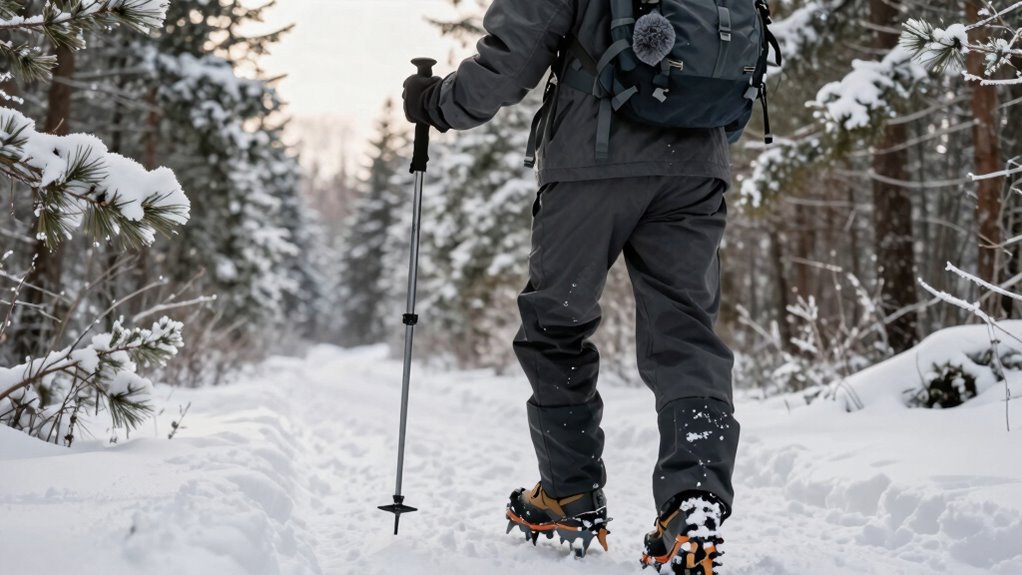
For winter day hikes, dressing appropriately can make the difference between a fun adventure and a miserable trek. Dress in layers so you can adjust as you move—start with a moisture-wicking base layer to stay dry.
Add a cozy fleece or insulated mid-layer for warmth, and top it off with a weatherproof shell that vents well. Skip cotton like the plague—it’s basically nature’s betrayal.
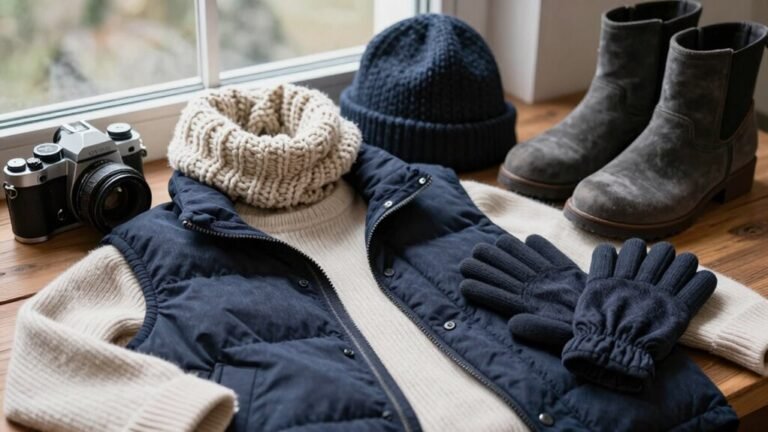
Warm socks, grippy boots, gloves, and a beanie are non-negotiable. Oh, and pack extras—because nobody plans to get soaked, but somehow it always happens.
You’ll want to know what else to bring, just in case.
Understanding the Layering System
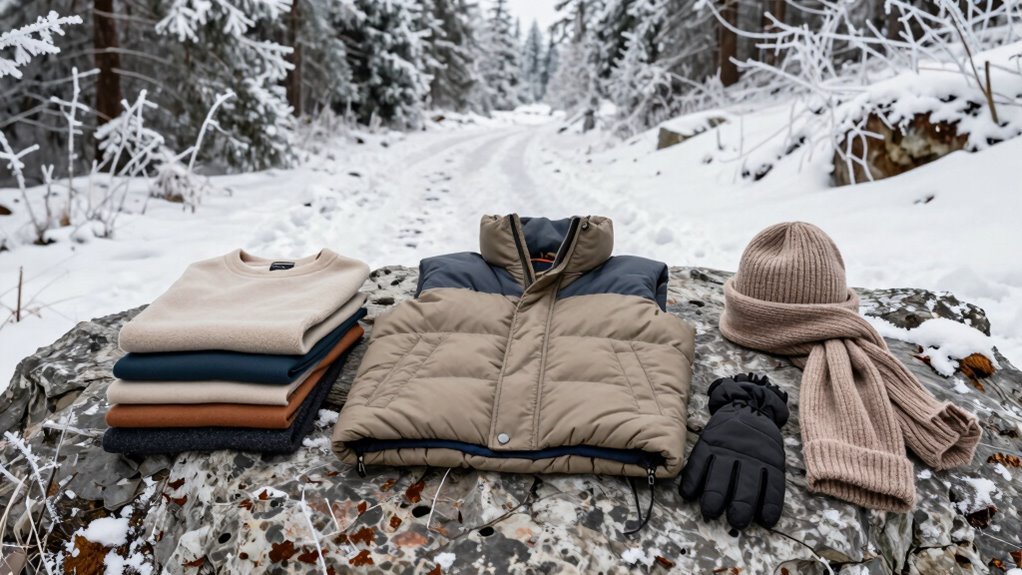
Ever wonder why some hikers stay cozy and dry while others freeze in their tracks? It’s all about the layering system, and once you get it, winter hikes feel way more fun. You’ve got three main jobs: trap heat, block the elements, and adjust as you go.
Your mid-layer, like a puffy jacket or fleece, keeps your body heat close—it’s basically a warm hug from your wardrobe. It works with your outer shell, which braves wind, rain, and snow like a superhero cape.
Together, they lock in warmth while letting sweat escape. You can even use your mid-layer as a camp pillow—bonus!
When you’re working hard uphill, strip a layer. When you stop, add it back. No one wants a sweaty chill or frozen fingers.
Master this mix, and you’ll laugh through the cold while others shiver. Layering isn’t just smart—it’s winter hiking magic. Each layer serves a distinct purpose, from moisture management to insulation and protection.
Choosing the Right Base Layer
You’ve got your mid-layer ready to trap heat and your outer shell prepped to fight off wind and snow—now let’s talk about the foundation of it all: your base layer.
This skin-hugging hero wicks sweat like a champion, so you stay dry, warm, and happy—even when you’re huffing up a snowy trail.
Go for merino wool if you want cozy warmth, natural odor control, and comfort when damp.
Or pick synthetic if you need tough, quick-drying fabric that won’t break the bank.
Blends? They’re the best of both worlds—strong, soft, and sweat-savvy.
For most winter hikes, a midweight option keeps you cozy without overheating.
Lightweight works for milder days; heavyweight’s for deep freeze missions.
Higher GSM means more warmth, perfect under layers.
A good base layer also helps regulate your body temperature by matching the three major functions of moisture management, skin protection, and thermal balance.
Trust us, picking the right base layer means no more “I’m too hot!” then “I’m freezing!”—just blissful trail vibes.
Selecting an Effective Mid-Layer
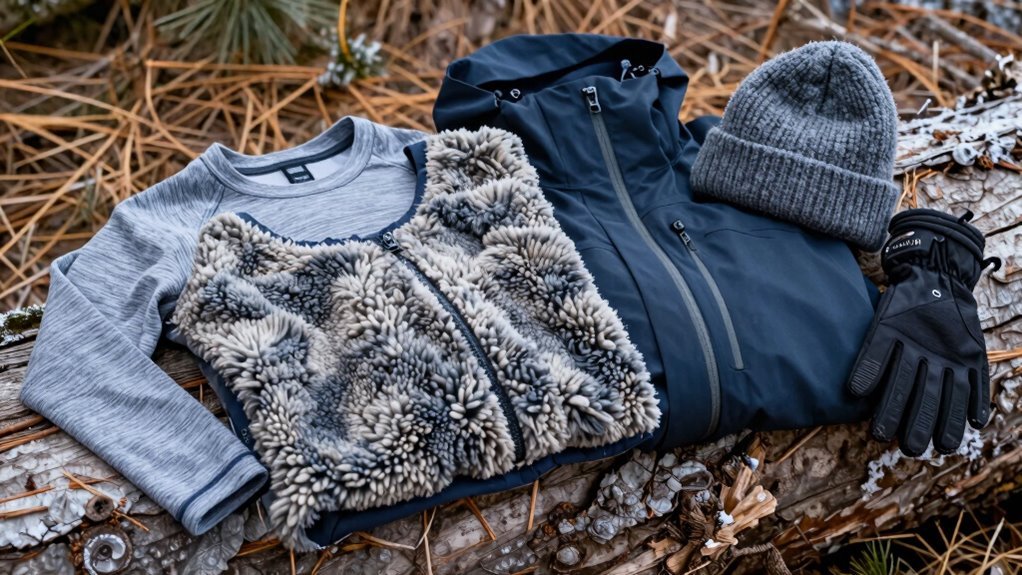
How do you stay cozy without turning into a sweaty mess on a winter hike?
You pick a smart mid-layer that traps heat but lets moisture escape.
Think of it as your personal warmth manager.
Fleece, merino wool, or synthetic insulation—like Polartec Alpha—keep you warm without bulk.
A medium fleece (around 240–290g) works great for most hikes, while ultralight options like the Ventus Hoodie save space when you’re moving fast.
Need more warmth?
Go heavy for slow moments, not sprints uphill.
Full-zips help dump heat fast, and hoods or collars guard your neck from chilly gusts.
Pockets? Yes, please—handwarmers are a trail lifesaver.
Look for breathable, tough fabrics that won’t quit when you’re grinding uphill or brushing past branches.
Mix warmth, breathability, and practicality, and you’ll laugh your way through snowdrifts—sweat-free.
The Outdoor Vitals Ventus Hoodie offers an excellent balance of ultralight insulation and weather resistance, making it a top choice for variable conditions.
Picking a Reliable Outer Shell
Here’s what your dream shell looks like:
- Gore-Tex Pro 2.0 shielding you like an invisible force field, breathability kicking in before you even break a sweat
- Reinforced 80D shoulders shrugging off backpack straps and driving rain like a pro
- Zippers down the sides letting you vent heat fast, so you’re not soggy from the inside out
Fit matters too—room for layers, hoods that stay put, and cuffs that don’t pinch. Think Arc’teryx Beta AR tough or Norrøna Trollveggen ready for alpine drama. Pick right, and you’ll laugh at storms.
Protecting Your Feet With Proper Socks and Boots
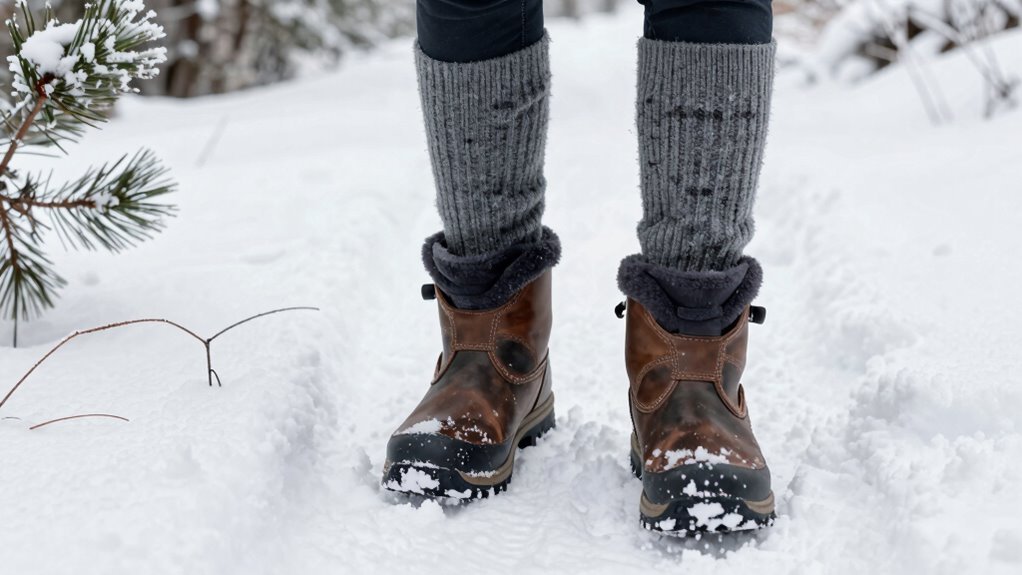
Cold feet can turn a winter wonderland trek into a frozen slog real fast, so gear up right from the ground up—because no one wants to play the “I can’t feel my toes” game halfway down the trail.
Ditch cotton—it’s a moisture magnet and leaves you cold. Instead, grab merino wool socks; they keep your feet warm even when damp, wick sweat like a champ, and don’t stink after miles.
Blends with nylon and spandex stay snug and last longer. Love extra warmth? Try alpaca or bamboo for softness and eco-friendly comfort.
For serious cold, double up with a silk or merino liner under a cushioned outer sock—hello, toasty toes!
Pick boots that fit your sock thickness, so there’s no pinching or slipping. Look for elastic arch support, seamless toes, and targeted padding to ward off blisters.
Your feet will thank you every step of the way—no frosty foot fails allowed!
Keeping Hands and Head Warm
You’ll definitely want to keep your hands and head wrapped up snug, because nothing kills a sweet winter hike faster than numb fingers and a frozen scalp.
Layer smart: start with a thin liner glove and add cozy fleece or waterproof mitts as the chill kicks in.
On your head, don’t skimp—half your body heat can escape from the top, so pull on a warm beanie or balaclava that hugs your ears and neck.
- Picture yourself adjusting zippers with touchscreen-friendly gloves, no icy fingers needed
- Imagine stopping at a snowy ridge, face shielded in a cozy balaclava, sipping hot cocoa without windburn
- Think of trudging uphill with toasty PrimaLoft mittens, knowing your hands won’t stage a frostbitten revolt
Stay warm, stay safe, and let your grin outshine the snow.
Packing Extra Layers and Emergency Gear
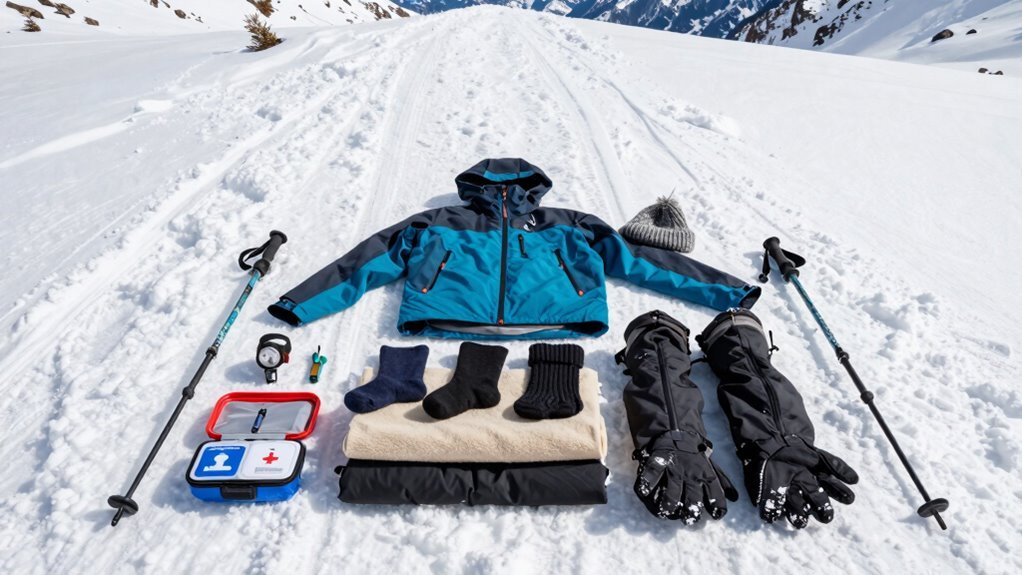
Even if you start your hike feeling toasty, winter’s mood can shift faster than a squirrel dodging a snowball, so packing extra layers and emergency gear isn’t just smart—it’s your backup plan for staying cozy and safe when the weather turns grumpy.
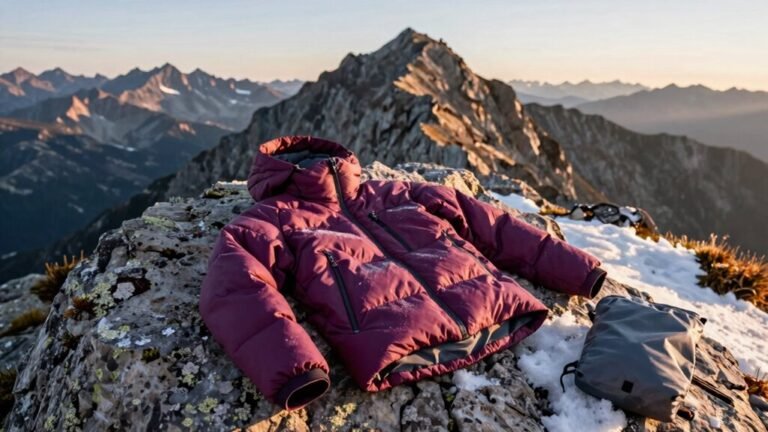
Toss in spare base layers, wool socks, and a puffy jacket—you’ll thank yourself if you get wet or stuck.
Don’t forget gloves, a balaclava, and a mid-layer for good measure.
Tuck an emergency blanket, mylar tarp, and foam pad into your pack for shelter and warmth, plus a fifty-foot cord for quick fixes.
Bring a lighter, waterproof matches, and lithium batteries—cold kills regular ones fast.
A solid first aid kit with duct tape, tools, and repair bits? Absolutely.
You’re not paranoid; you’re prepared.
Pack it all, stay ready, and keep your winter adventures fun, not frosty fiascos.
Frequently Asked Questions
Can I Wear Jeans on a Winter Hike?
No, you shouldn’t wear jeans on a winter hike—they soak up moisture, stay wet, and steal your body heat fast.
When they freeze, you’re basically wearing icy cardboard.
You’ll be cold, stiff, and miserable.
Swap them for fleece-lined or softshell pants that breathe, stretch, and keep you warm.
Your legs will thank you when you’re not shivering at the trailhead like a frozen popsicle!
How Do I Prevent My Glasses From Fogging Up?
You want clear vision, not a steamy mess—so skip the wrap-arounds; flat lenses are your fog-fighting heroes.
Rub a dab of soap on ’em, buff with your microfiber, and boom: anti-fog magic.
Keep your nose out of masks, unzip your jacket, and breathe easy—literally.
Oh, and running uphill? That’s not just exercise, it’s ventilation with attitude.
Who knew staying fog-free could feel this clever?
Is It Safe to Hike in Winter Alone?
You’re braving the wild solo, but winter hikes alone? Not the safest bet.
Snowdrifts can swallow you whole, trails turn sneaky, and help’s far if things go sideways.
Yeah, you’ve got grit, but Mother Nature’s got tricks—like surprise storms or icy missteps.
Buddy up when you can, play it smart, and keep the adventure epic, not emergency.
Stay daring, but don’t ditch the common sense!
What Should I Do if I Start Feeling Too Cold?
One in four hikers feels too cold at least once—don’t panic, you’ve got this!
You stop moving right away to save heat, then grab dry layers from your pack.
You zip on a fleece, pull up your hood, and cover every bit of skin.
You sip warm tea from your thermos and toss a snack in your mouth—yum, calories!
You laugh because, hey, you’re basically a burrito now, and that’s a good thing.
Are Snowshoes Necessary for All Winter Hikes?
Nope, snowshoes aren’t needed for every winter hike—you’d be surprised!
If trails are packed or icy, microspikes or crampons work better.
But when fresh powder’s deeper than your boot tops, you’ll sink fast without them.
Think of snowshoes like floaties: great for fluffy snow, useless on ice.
Check conditions first, and always bring them just in case—better safe (and dry) than soggy!
Conclusion
You’ve got this! With the right layers, you’ll stay cozy no matter how low the mercury drops. Did you know nearly 60% of body heat escapes through your head? Brrr—don’t let your ears freeze! Wear a warm hat, pack extra gloves, and keep those toes toasty. Hiking in winter isn’t just safe, it’s magical—snow-kissed trees, quiet trails, and fresh air. Just add hot cocoa afterward, and boom: perfection.
References
- https://www.52hikechallenge.com/blogs/blog/layering-for-hiking-what-to-wear-for-every-season-of-your-52-hikes
- https://www.andreaference.com/blog/beginners-guide-to-cold-weather-layering
- https://bearfoottheory.com/cold-weather-hiking-clothes-winter-layering-basics/
- https://www.gearx.com/pages/winter-layering-guide
- https://www.rei.com/learn/expert-advice/layering-basics.html
- https://sectionhiker.com/winter-pant-layering-for-hikers-who-sweat/
- https://www.youtube.com/watch?v=2YBE2_-FGmE
- https://katabaticgear.com/blogs/blog/how-to-layer-for-backcountry-adventures
- https://myoutdoorbasecamp.com/base-layer-materials/
- https://www.garagegrowngear.com/blogs/trail-talk/winter-clothing-layering-cold-hiking