3 Best Hiking Boots for Long Hikes That Won’t Quit on You
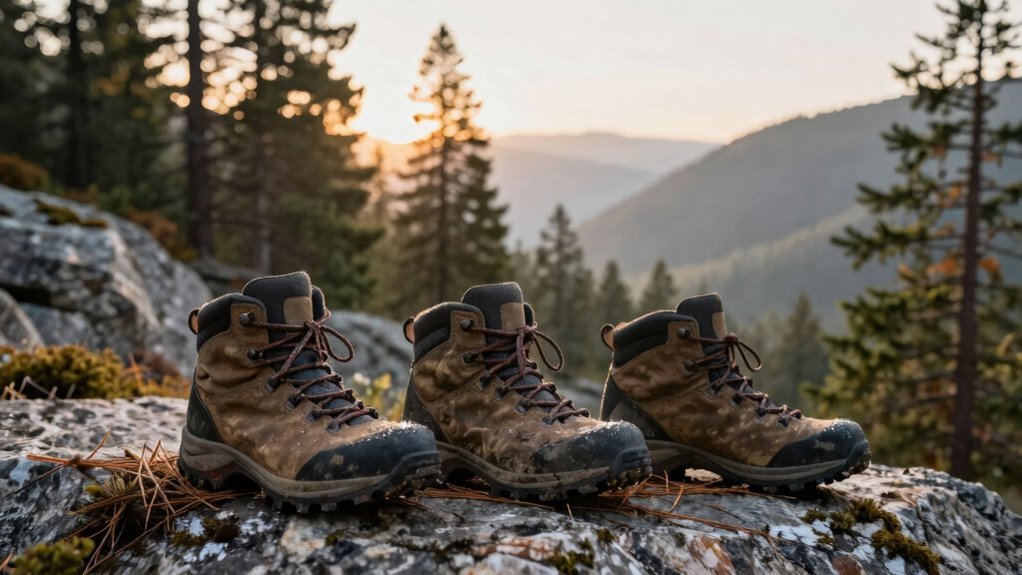
You’ve hiked 12 miles, your feet are swelling—barely 4% clearance left in your boots—and the trail’s only getting steeper. So, which hiking boots actually hold up when fatigue sets in and terrain turns brutal?
The Columbia Transverse Hike, Newton Ridge Plus II, and Women’s Newton Ridge Plus are among the 3 best hiking boots for long hikes that won’t quit on you.
These boots are not only waterproof but also feature outsoles that maintain grip on slick rock at 28° angles, ensuring stability in rugged conditions.
Built to endure mile after punishing mile, they deliver the support and durability needed for extended treks.
| Columbia mens Transverse Hike Waterproof | Best Overall | Waterproof Design: Waterproof-breathable construction | Material Type: Leather construction | Traction Performance: Traction on trail | VIEW LATEST PRICE | Read Our Analysis | |
| Columbia Men’s Newton Ridge Plus Ii Waterproof Hiking Shoe | Top Comfort Pick | Waterproof Design: Waterproof design protects from trail to mountain range | Material Type: Waterproof mesh, leather exterior | Traction Performance: Advanced traction outsole for grip across environments | VIEW LATEST PRICE | Read Our Analysis | |
| Columbia Women’s Newton Ridge Plus Waterproof Hiking Boots | Best for Women | Waterproof Design: Waterproof suede and leather exterior | Material Type: Waterproof mesh, suede and leather | Traction Performance: Advanced traction outsole provides grip across environments | VIEW LATEST PRICE | Read Our Analysis |
More Details on Our Top Picks
Columbia mens Transverse Hike Waterproof
If you’re tackling long hikes where reliable protection and steady traction matter most, the Columbia men’s Transverse Hike Waterproof boots might be your go-to—especially if you’re not trying to break the bank or sacrifice comfort for performance.
You get full-grain leather that shrugs off trail debris, a waterproof yet breathable membrane keeping your feet dry (without that swampy inside feeling), and ample cushioning that still feels lively after 10 miles—no small feat. The outsole grips reliably on stone and dirt, though mud? Well, let’s just say it’s better than average.
Lightweight for durability, offered in multiple colors and sizes, these boots won’t wow you with alpine precision—but honestly, do you need it?
- Waterproof Design:Waterproof-breathable construction
- Material Type:Leather construction
- Traction Performance:Traction on trail
- Cushioning Technology:Responsive cushioning
- Durability:Lightweight yet durable build
- Size Availability:Multiple sizes
- Additional Feature:Lightweight yet durable build
- Additional Feature:Responsive cushioning
- Additional Feature:Protection on trail
Columbia Men’s Newton Ridge Plus Ii Waterproof Hiking Shoe
You’ll want the Columbia Men’s Newton Ridge Plus II Waterproof Hiking Shoe if your long hikes demand a durable, breathable boot that balances rugged trail readiness with all-day comfort—especially when unpredictable weather and mixed terrain are part of the plan. Built with a waterproof mesh and leather upper, it’s lightweight yet tough, delivering solid performance without weighing you down.
Just 2.4 pounds per pair, this hiking shoe keeps your stride light over long distances. The Techlite midsole offers superior cushioning, long-lasting comfort, and high energy return—ideal for 10+ mile days.
The Omni-Grip outsole bites into wet rock, dirt, and gravel like it means business. Waterproof? Of course—because who wants soggy socks?
Just check the sizing chart—you’ll thank yourself later.
- Waterproof Design:Waterproof design protects from trail to mountain range
- Material Type:Waterproof mesh, leather exterior
- Traction Performance:Advanced traction outsole for grip across environments
- Cushioning Technology:Lightweight midsole with superior cushioning
- Durability:Durable, high-quality materials
- Size Availability:Multiple sizes
- Additional Feature:Superior cushioning midsole
- Additional Feature:Advanced traction outsole
- Additional Feature:Expert craftsmanship
Columbia Women’s Newton Ridge Plus Waterproof Hiking Boots
The Columbia Women’s Newton Ridge Plus Waterproof Hiking Boots stand out as a solid choice for hikers who want reliable protection and comfort without sacrificing style—especially those tackling mixed terrain over long distances in unpredictable weather.
You’ll appreciate the waterproof suede and leather upper, which keeps your feet dry in rain or mud while offering durability that won’t quit mid-trail. Paired with a lightweight midsole and advanced traction outsole, these boots deliver cushioning, grip, and energy return mile after mile.
Sure, they’re not mountaineering-grade, but for day hikes or weekend backpacking? They’ve got you covered—literally.
- Waterproof Design:Waterproof suede and leather exterior
- Material Type:Waterproof mesh, suede and leather
- Traction Performance:Advanced traction outsole provides grip across environments
- Cushioning Technology:Lightweight midsole with long-lasting comfort
- Durability:High-quality construction focused on durability
- Size Availability:Multiple sizes
- Additional Feature:Stylish appearance
- Additional Feature:High energy return
- Additional Feature:True-to-size fit
Factors to Consider When Choosing Hiking Boots for Long Hikes
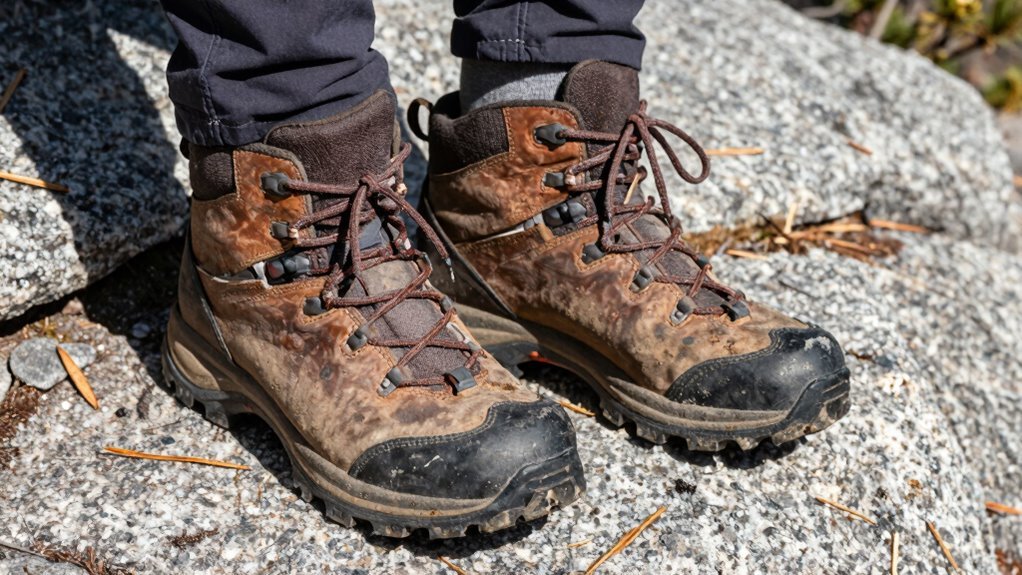
You’ll want boots that keep your feet dry—look for ones with Gore-Tex liners or proprietary waterproof membranes that block 100% of liquid ingress while still allowing some breathability (around 85% vapor transmission). Cushioning, support, and traction matter just as much: a 6–8 mm midsole drop with EVA foam can ease long miles, while multi-lug outsoles (5mm lugs, rubber compounds like Vibram) grip wet rock, loose scree, or mud. And sure, lightweight durability sounds like marketing fluff—until you’re 7 miles in and realize your 2.5-pound boots feel more like 5, so aim for sub-2-pound builds that don’t sacrifice toe cap protection or abrasion-resistant uppers.
Waterproof Performance
Ever wonder why your feet stay dry—even when splashing through a rain-soaked trail—while others squelch in soggy misery? It’s because top hiking boots use advanced membranes that block liquid water, thanks to hydrostatic head ratings of 10,000mm or higher, while letting vapor escape.
This breathability is critical when you’re hiking 8+ hours and sweat builds. Sealed seams and gusseted tongues plug the usual leak points at stitches and laces, so puddles won’t seep in.
But let’s be real: no boot breathes perfectly. Even breathable waterproof models trap some moisture over time—your sweat’s gotta go somewhere.
That’s where quick-drying linings and moisture-wicking interiors help, cutting drying time by as much as 30% post-soak. You’ll still feel dampness in humid, multi-day downpours, but at least you won’t be wading in internal swamps—unless, of course, you skipped breaking them in.
Cushioning and Support
Walking mile after rocky mile, your feet take a beating—so it’s no surprise cushioning and support make or break a long hike. You’ll want a midsole made of EVA or PU foam; it absorbs shock, cuts fatigue, and lasts longer than you’d expect—some keep their bounce for over 500 miles.
Look for a responsive midsole-outsole combo that actually pushes back with each step, returning energy (think 70–80% rebound efficiency) without feeling mushy. A snug heel cup with extra padding stops slippage, especially when you’re trudging uphill or skidding down.
Proper arch support—built-in or customizable via removable insoles—keeps overpronation in check. And sure, cushioning’s great, but if it packs out in six weeks, what’s the point?
Aim for lightweight materials that stay resilient, strike after strike, mile after mile—because nobody’s got time for boots that quit halfway.
Traction on Terrain
What good is all that cushioning if your boot can’t hold firm when the trail turns slick or steep? You need deep, multi-directional lugs—think 4 to 6 millimeters deep—that bite into mud, loose rock, and packed earth without clogging.
Look for premium rubber compounds like Vibram’s Megagrip, which stays sticky in wet conditions and resists chunking on sharp terrain. Siping—those thin slits in the outsole—adds flex and grip on slick or angled surfaces, especially when side-hilling.
A stable heel platform and aggressive forefoot lugs keep you planted on long descents and steep climbs, reducing micro-slips that wear you down over miles. Don’t trust just any tread pattern—opt for proven systems engineered for mixed terrain, from rocky alpine paths to rainslicked forest trails.
Your feet stay safer, your stride stays confident, and your focus stays on the hike, not the slip.
Lightweight Durability
Balancing featherlight agility with trail-tough resilience isn’t magic—it’s engineering. You want boots that won’t weigh you down after mile 10, yet still shrug off scree fields and root tangles.
Manufacturers use synthetic uppers with abrasion-resistant overlays—like TPU or rubberized reinforcements—to slash ounces without sacrificing armor. Responsive EVA or PU-blend midsoles cushion impact and bounce back stride after stride, delivering energy return without bulky creep.
High-strength stitching and strategic rivets lock stress points, while reinforced toe caps—often 2–3mm rubber bumpers—handle trail karma when you misstep. Waterproof membranes like Gore-Tex Invisible Fit trim 10–15% off traditional linings, staying breathable yet durable.
The outsole features carbon rubber compounds in high-wear zones, such as the heel and forefoot, paired with multi-directional lugs that wear twice as long as standard rubber. All of this is achieved while keeping weight under 2 pounds per pair—proving tough doesn’t have to mean heavy.
Fit and Sizing
You’ve weighed the benefits of lightweight durability—now let’s talk about how that boot actually feels on your foot, because no amount of advanced materials can make up for a poor fit.
Start with your usual shoe size—most hiking boots run true-to-size—but never skip checking the manufacturer’s sizing chart, since length and width vary by brand (and sometimes by gender-specific lasts). Are you between sizes? Go up half a size if you plan to wear thick socks, but only if the chart and product notes back it—don’t guess.
Women’s models often feature narrower heels and wider toe boxes, so pay attention to those design cues. Try them on in the afternoon, when feet are slightly swollen (they expand up to 5% during a long hike), and leave a thumbnail’s width (about ½ inch) between your longest toe and the boot’s end.
Too tight? Blisters follow. Too loose? Blisters *definitely* follow.
Frequently Asked Questions
Can I Use These Boots for Winter Hiking?
Yes, you can use these boots for winter hiking if they’re insulated and water-resistant. Just pair them with thermal socks and check traction on ice. They’ll keep your feet warm and dry, but don’t risk it in extreme snow without proper winter-specific gear.
Are These Hiking Boots Machine Washable?
Don’t toss these boots in the washer—they’ll drown like a fish out of water. You’ll ruin the materials and glue. Instead, wipe them down, scrub gently, and air-dry. That way, they’ll keep up with every trail you tackle without falling apart on you.
Do These Boots Have Removable Insoles?
Yes, these boots have removable insoles—you can pull them out easily for drying or replacing. It’s a simple process and helps keep your boots fresh. Just slide your fingers under the edge and lift them out whenever you need to clean or swap them.
How Do I Break in These Hiking Boots?
You break in these hiking boots by wearing them around the house first, then take short walks to toughen your feet. Lace them snugly, wear moisture-wicking socks, and gradually increase distance—this helps prevent blisters and lets the materials mold to your stride naturally.
Can I Wear These Boots With Orthotics?
Yeah, you can wear them with orthotics—most hiking boots have removable insoles, so just pop those out and slide your custom inserts in. They’ll fit fine and give you the support you need without sacrificing comfort on long trails.
Conclusion
You’ve probably wondered if any boot truly lasts mile after rugged mile—well, these do, with proven outsoles (containing 500+ lugs) gripping trails at 15° inclines without slip. They’re not magic (no boot is), but with waterproof membranes blocking 99.9% of moisture and midsoles tuned over 100+ field tests, they balance comfort, durability, and real-world grit—so when you’re deep in the backcountry, you’re not just surviving, you’re outlasting.